Tokyo Shopping · Guide №103
Don Quijote Tokyo Guide: Tips for Shopping at Japan’s Mega Store
A 2026 Don Quijote Tokyo guide: what Donki is, the best things to buy, tax-free tips, and the major branches with stations, hours, and 24-hour info.
目次 — Contents
- What is Don Quijote (“Donki”)?
- Best things to buy at Don Quijote
- Tax-free shopping at Don Quijote
- Major Don Quijote branches in Tokyo
- Tips for navigating the crowds
- The Donki app, majica and payment methods
- Japanese whisky, sake and food worth grabbing
- Suitcases, stationery and travel saviours
- Don Quijote vs other Tokyo stores
- A first-timer’s walkthrough
- Seasonal Donki: Halloween, New Year and the sales
- Is Don Quijote worth visiting?
- Frequently Asked Questions
- Photo Credits
This article contains advertising. Our booking links are routed through a partner that adds commission tracking automatically, so if you book through one we earn a commission from the provider, at no extra cost to you. It never affects what we recommend. Affiliate disclosure
This Don Quijote Tokyo guide covers everything you need to shop “Donki” like a local: what the chain is, how its maze-like stores work, the best things to buy, how the tax-free process runs in store, and which Tokyo branches are worth your time, with the nearest stations and which ones are open 24 hours. Don Quijote is Japan’s wildest discount store, stacking snacks, cosmetics, electronics, souvenirs, and the genuinely random under one neon-yellow roof, often around the clock.
Locals just call it “Donki,” and once you have braved one you understand the appeal: it is cheap, it is open when nothing else is, and you never quite know what you will find. This guide is part of our wider coverage of Tokyo shopping, and it pairs with our Tokyo tax-free shopping guide so you can claim back the consumption tax on your haul.
What is Don Quijote (“Donki”)?
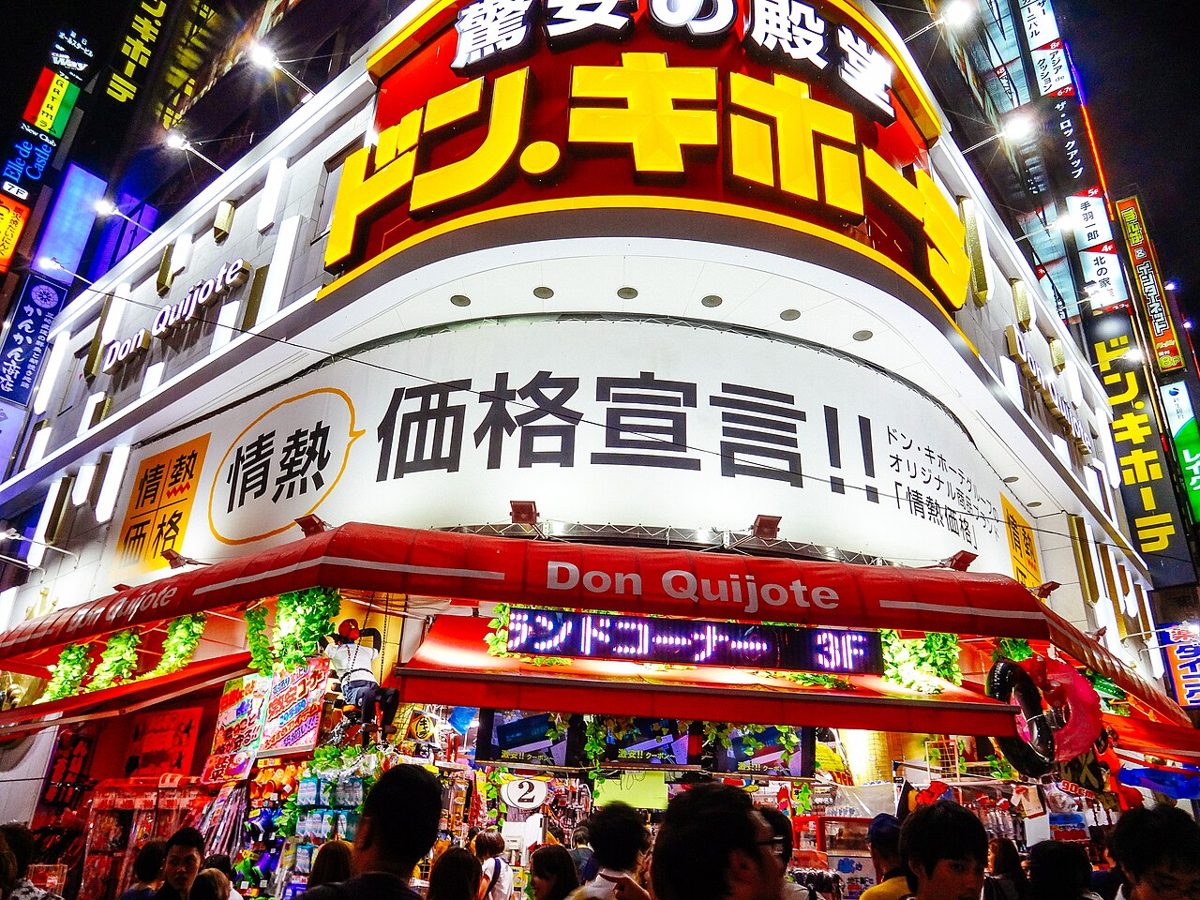
Don Quijote is a discount chain that opened its first store in Fuchu, western Tokyo, in 1989 and has since grown to more than 600 outlets across Japan, plus over a hundred overseas. The Japanese name on the signs reads “驚安の殿堂・ドン・キホーテ,” roughly “the palace of astounding bargains.” The format is unmistakable: bright yellow and black signage, a jingle that burrows into your brain (“Don-Don-Don, Donki!”), and shelves crammed so tightly you have to turn sideways to pass.
What sets Donki apart from a normal discount store is range. A single building might stack instant ramen next to designer handbags, cosplay wigs above kitchen knives, and a wall of Kit Kats beside a fridge of sake. Prices undercut department stores and convenience stores, packaging is plain, and the thrill is in the hunt. It is the natural place to do a bulk souvenir and snack run, which is why it features so heavily in our guide to what to bring home.
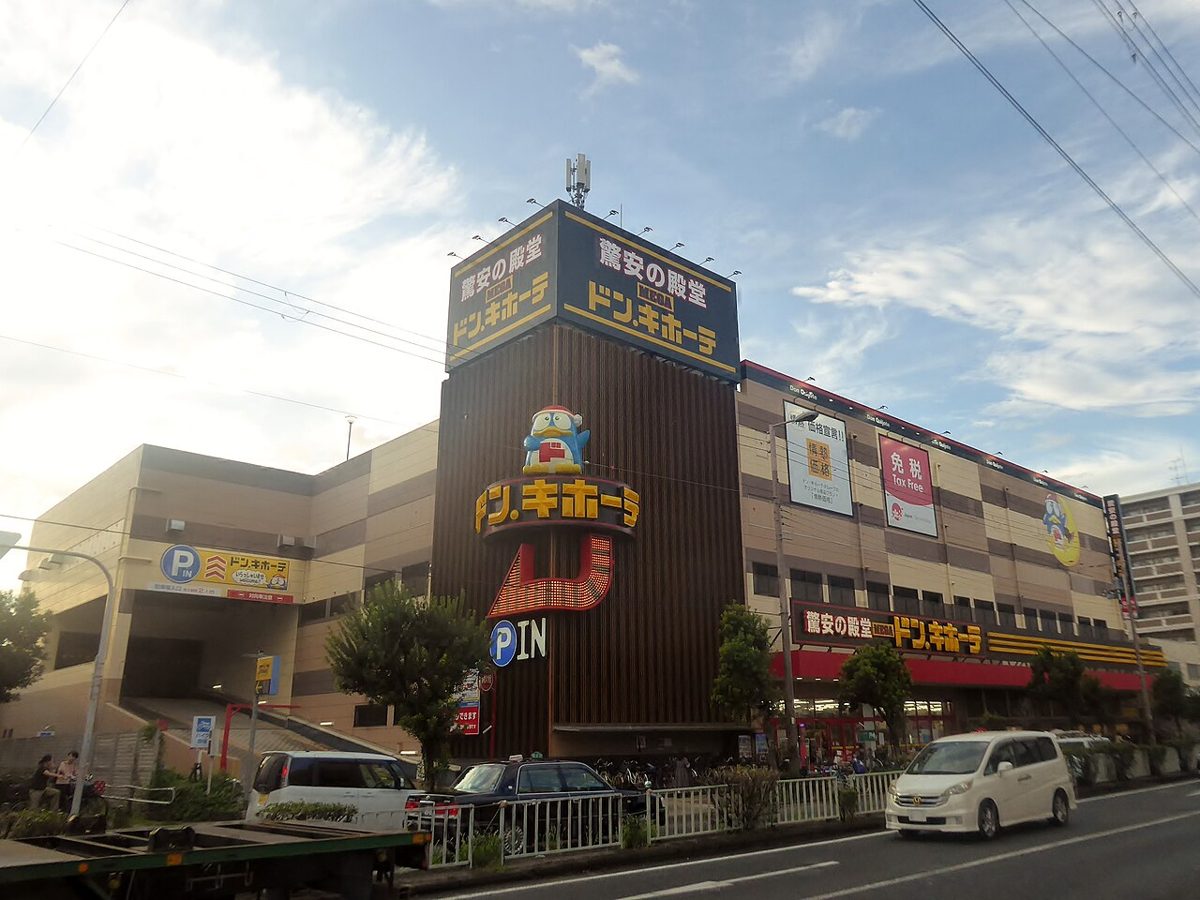
Donpen the penguin mascot
Donki’s mascot is Donpen, a blue penguin in a Santa hat with the katakana “do” (ド) on his belly, introduced in 1998; his partner is Donko. You will spot him on signs, bags, and the private-brand packaging. In December 2022 the company briefly announced it would replace Donpen with a new character, and the backlash on social media was so swift that the decision was reversed within days, which tells you how attached Japan is to the little penguin.
The “compression display” jungle
The deliberately overwhelming layout has a name: atsuryoku chinretsu, or “compression display.” Staff pack narrow aisles floor to ceiling, with hand-written pop signs screaming prices in every direction. It looks chaotic, and it is, but it is designed to make you slow down, browse, and stumble on things you did not know you wanted. Bigger MEGA Don Quijote branches widen the aisles and add fresh food, so they feel less claustrophobic if the classic jungle is too much.
One more practical note on format: Donki comes in several flavours. The standard yellow store is the original; MEGA Don Quijote is the supersized version with groceries and wider aisles; Picasso is a smaller, central-city format; Platinum Don Quijote (such as the Shirokanedai branch) is an upmarket version selling Matsusaka beef and premium goods; and there are snack-focused and other specialty formats too.
Best things to buy at Don Quijote
You can buy almost anything at Donki, but some categories are genuinely better value or harder to find elsewhere. These are the ones worth your suitcase space.
Snacks, Kit Kats and sweets
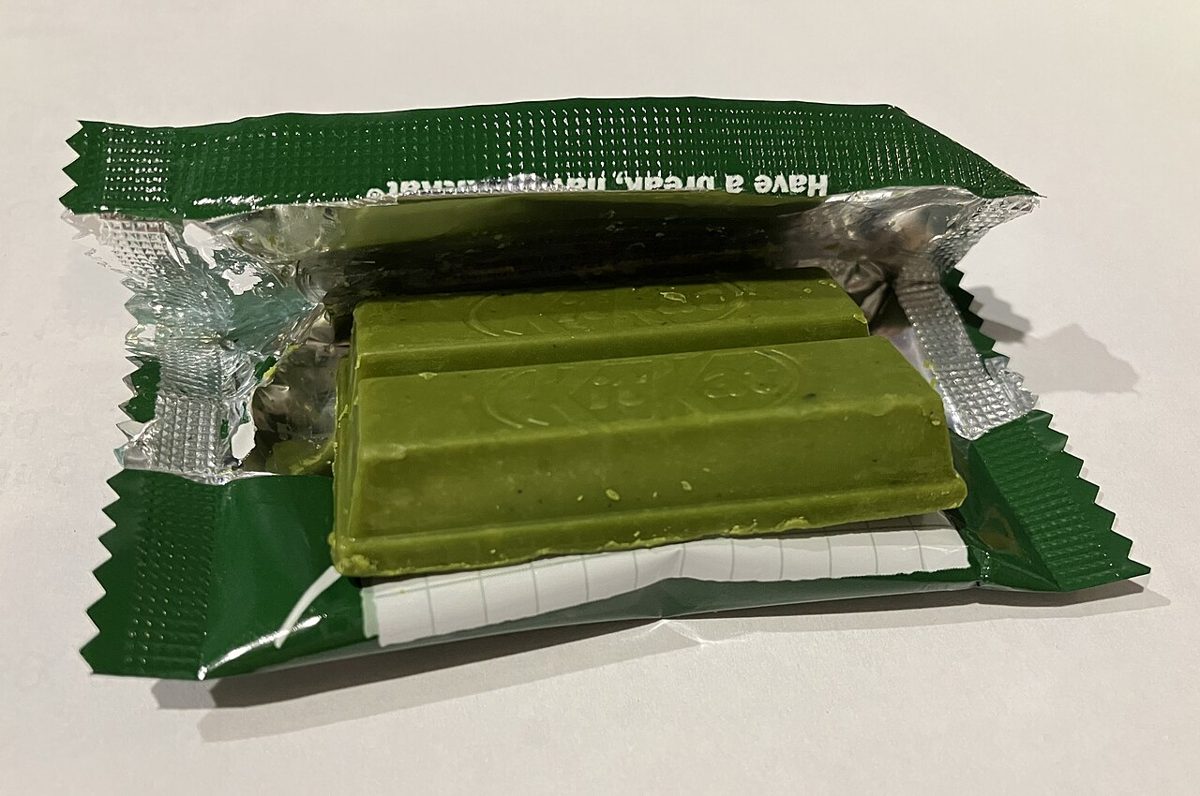
The souvenir snack corner is the single biggest draw. Donki carries a huge wall of Japan-exclusive Kit Kat flavours (matcha, strawberry, sake, regional editions), plus Pocky, Hi-Chew, senbei, and ramen kits, usually cheaper than at the airport. Multi-packs of mini Kit Kats run a few hundred yen to around ¥1,000, and individually wrapped snacks are ideal for handing out at the office. Buy non-perishable snacks early in your trip; they keep for months.
Cosmetics and skincare
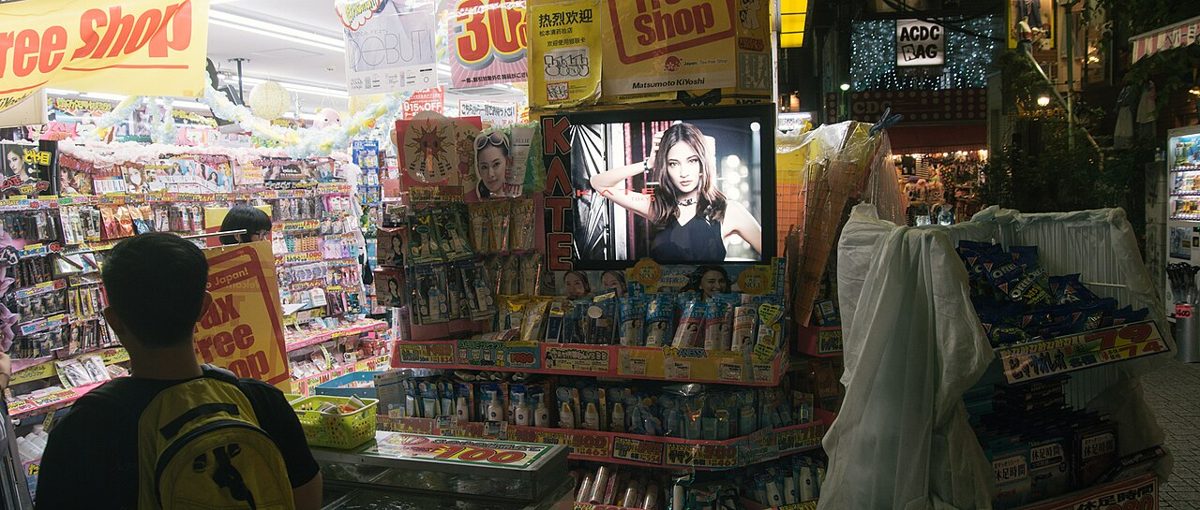
Japanese drugstore beauty is a cult buy, and Donki stocks it cheaply with a tax-free counter attached. Look for sheet masks (Lululun, Kose Clear Turn) in multi-packs, Biore and Anessa sunscreen, Hada Labo lotions, DHC cleansing oil, and self-warming Megurism steam eye masks. There are also fun Japan-only novelty masks featuring rice bran, sake lees, and ukiyo-e designs that make great cheap gifts. Most cost between ¥400 and ¥2,000.
Electronics and gadgets
Donki is not a specialist electronics store, but it is great for small, cheap gadgets: travel adapters, earbuds, phone accessories, mini fans, beauty devices, and quirky kitchen tools. Prices are keen and you can grab them at 3am. For serious cameras or laptops, BIC Camera or Yodobashi will serve you better, but for a ¥1,500 novelty gadget or a forgotten charger, Donki wins.
Costumes, cosplay and party goods
Donki is famous for its costume and cosplay floors, especially around Halloween, when Shibuya fills with people who kitted themselves out here. Year-round you will find wigs, animal onesies (kigurumi), maid and school-uniform outfits, face paint, and party props. The Akihabara branch has a particularly deep cosplay section. Even if you are not dressing up, it is worth a wander for the spectacle.
“Jonetsu Kakaku” private-brand goods
Keep an eye out for Donki’s own private label, Jonetsu Kakaku (“Passion Price”), marked with the Donpen penguin. It covers cheap basics and surprisingly good cult products: the brand’s clear plastic “Joetsu” suitcases are a budget traveller favourite when your bags overflow with souvenirs, and there are well-priced snacks, drinks, and household goods under the same label. The big “情熱価格” banners you see in store point you to it.
Souvenirs and the random stuff
Most large branches have a dedicated tax-free souvenir corner with chopsticks, fans, T-shirts, keychains, and Japan-themed novelties at lower prices than tourist shops. Beyond that, half the fun is the genuinely random aisles: Japanese stationery, kitchen knives, sake and whisky (Donki is a solid place to buy Japanese whisky), green tea, instant miso, and bizarre KitKat-adjacent limited editions. Give yourself time to wander.
Tax-free shopping at Don Quijote
Donki is one of the easiest places to shop tax-free. Spend ¥5,000 or more (before tax) in one store on the same day, bring your passport, and you can skip Japan’s 10% consumption tax (8% on food). Big branches have a clearly marked tax-free counter, usually near the entrance or on a set floor; you shop around the store, then take everything plus your passport there to process the exemption in one go. Under the current system, food and cosmetics are sealed in a bag you must not open until you leave Japan.
Donki also runs a tourist coupon that stacks on top of tax-free: spend ¥10,000 or more (excluding tax) and you typically get an extra 5% off, or 7% off above ¥30,000. You can usually find the coupon on the Don Quijote website, travel apps, or in free magazines, so grab it before you queue. One thing to note for trips from late 2026: Japan’s national tax-free system changes to a refund-at-the-airport model on November 1, 2026, which we explain in full in our tax-free shopping guide. If you are watching costs, combine the coupon and tax-free with the tactics in our guide to keeping costs down.
Major Don Quijote branches in Tokyo
Because Donki lets store managers choose a chunk of their own stock, branches differ a lot. Here are the most useful ones for visitors, with the nearest station, hours, and what each is known for.
| Branch | Nearest station | Hours | Known for |
|---|---|---|---|
| MEGA Donki Shibuya Honten | Shibuya (Dogenzaka) | 24 hours | 8 floors, huge range, tax-free 7F |
| Shinjuku Kabukicho | Shinjuku / Seibu-Shinjuku | 24 hours | Souvenirs, cosmetics, central |
| Shinjuku Higashiguchi Honten (Okubo) | Shinjuku / Shin-Okubo | 24 hours | Flagship, 40,000+ items |
| Akihabara | Akihabara | 24 hours | Cosplay, anime, maid cafe |
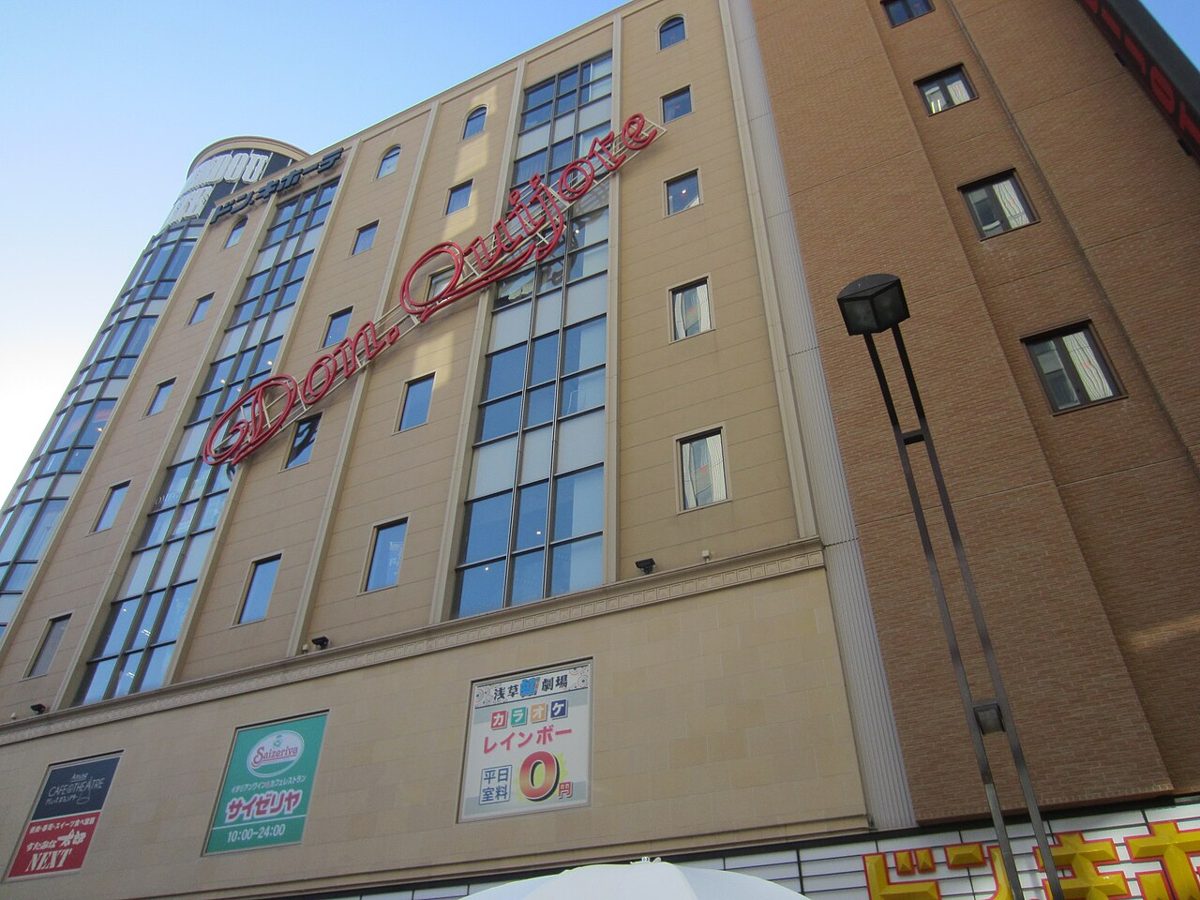
| Asakusa | Tsukuba Express Asakusa (1 min) | 24 hours | Souvenirs near Senso-ji |
| Roppongi | Roppongi | 24 hours | Late-night nightlife-district run |
| Ginza Honten (Ginza Nine) | Shimbashi / Ginza | 7:00–2:00 (not 24h) | Wine, luxury, cosmetics |
| Ikebukuro Higashiguchi | Ikebukuro (East Exit) | 24 hours | Anime and character goods |
Shibuya and Shinjuku: the big all-rounders
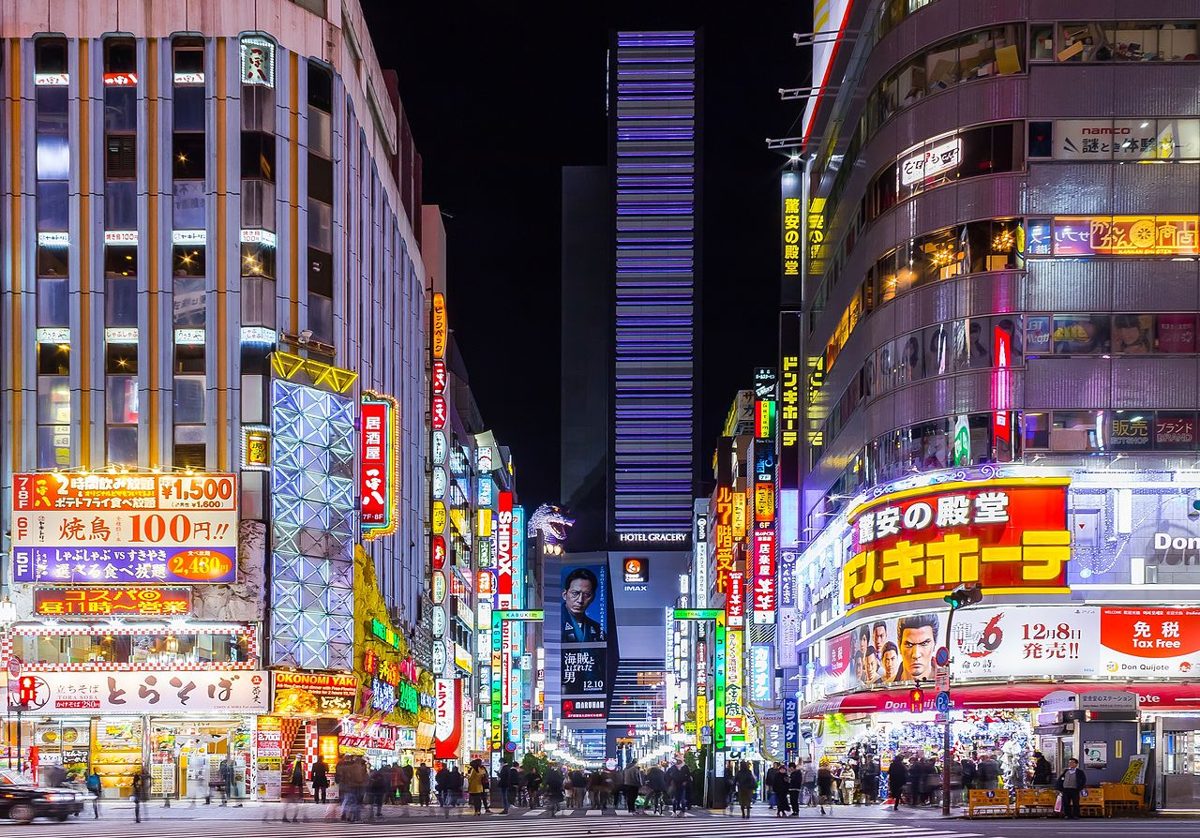
The MEGA Don Quijote Shibuya Honten on Dogenzaka, near the Scramble Crossing, is the flagship most visitors should pick: eight floors and over 5,000 square metres, with food and character goods in the basement, cosmetics and confectionery mid-building, and a tax-free counter plus souvenir corner up on the 7th floor. It is open 24 hours. For more on the area, see our Shibuya guide. In Shinjuku you have two strong options: the Kabukicho branch right at the entrance to the nightlife district (great for souvenirs and cosmetics), and the sprawling Higashiguchi Honten near Okubo, the long-standing flagship with more than 40,000 items. Both run 24 hours.
Akihabara, Asakusa, Roppongi and Ueno
The Akihabara branch leans into its neighbourhood, with a deep cosplay section, anime and character goods, a maid cafe inside, and the AKB48 theatre upstairs; it is a sight in itself. The Asakusa store sits about a minute from Tsukuba Express Asakusa Station and four floors of souvenirs, cosmetics, and snacks make it the obvious late-night stop if you are staying near Senso-ji. Roppongi has a 24-hour branch tuned to the nightlife crowd, handy for anything you need at 4am. There are also convenient stores around Ueno and Ameyoko for a quick souvenir grab. The one branch that is not 24 hours is the Ginza Honten in the Ginza Nine complex near Shimbashi, open 7:00 to 2:00, which trades the usual chaos for wine and a more upmarket selection.
The theme-park flair (and the Osaka Ferris wheel)
Donki leans into spectacle. Stores blast the famous jingle, pile up seasonal displays, and some branches add attractions. The most famous is not in Tokyo: the Dotonbori branch in Osaka has the Ebisu Tower, the world’s first oval Ferris wheel, bolted to its facade over the canal. Tokyo’s branches keep things at street level, but the sheer sensory overload of a flagship like Shibuya at midnight is an experience in its own right, worth doing once even if you buy nothing.
Tips for navigating the crowds
- Go off-peak. Late morning on a weekday is calmest; evenings and weekends, especially in Shibuya and Shinjuku, get packed. The 24-hour branches are blissfully quiet after midnight.
- Know the floor plan. Big stores post a directory by the entrance and lifts; snacks and souvenirs are often on a specific floor, with the tax-free counter near the top or the entrance.
- Use a basket and shop the whole store before paying, then process tax-free once at the counter rather than queuing twice.
- Travel light through the aisles. They are genuinely narrow; a big backpack worn on your front saves a lot of bumping.
- Budget time. A flagship can swallow an hour or two. Set a limit if you are on a schedule, because it is easy to lose track.
- Keep your passport ready if you plan to spend ¥5,000-plus, and grab the discount coupon before you reach the till.
The Donki app, majica and payment methods
Don Quijote has its own prepaid e-money called majica, which gives around 1% cashback plus extra bonuses on monthly “majica day” promotions; you can register through the official app, including with a passport for visitors. The Don Quijote app is also where you will often find digital coupons and the tourist discount. For most travellers, though, the practical wins are simpler: bring the printed or in-app tourist coupon, and pay however suits you.
On payment, Donki is flexible. Major credit cards (Visa, Mastercard, JCB, Amex), IC transit cards like Suica and PASMO, and the big QR-pay apps are widely accepted, alongside cash. Tax-free is processed against your passport regardless of how you pay. If you are weighing cards versus cash for the wider trip, our playbook for spending less covers the trade-offs.
Japanese whisky, sake and food worth grabbing
Donki is an underrated drinks shop. The alcohol aisles carry Japanese whisky (look for Suntory and Nikka bottles that are pricey or unavailable abroad), sake, plum wine, and Japanese craft beer, often cheaper than at the airport and eligible for tax-free once you clear ¥5,000. Whisky in particular is worth checking: a bottle that would be a collector’s item back home can sometimes be found at a normal shelf price. Just remember alcohol counts toward your home country’s duty-free allowance, and bottles over 100ml must go in checked luggage.
On the food side, beyond snacks, Donki stocks instant ramen multipacks, Japanese curry roux, furikake rice seasoning, matcha, dashi stock, and green tea, all of which travel well and make practical gifts for a home cook. MEGA branches add fresh produce, bento, and even roasted sweet potatoes by the entrance in season. It is a one-stop shop for edible souvenirs, and pairs neatly with the picks in our souvenir roundup.
Suitcases, stationery and travel saviours
One of the most useful things you can buy at Donki is a suitcase. When your bags overflow with souvenirs, the chain sells cheap hard-shell cases, including the cult clear-plastic Jonetsu Kakaku ones, often for a fraction of department-store prices. Travellers regularly buy an extra case here on the last night of a trip. While you are at it, the stationery aisle carries the gel pens, notebooks, and washi tape that Japan is famous for, and the household section has the kind of clever, cheap gadgets, organisers, and beauty tools that make great low-cost gifts.
Don Quijote vs other Tokyo stores
Where does Donki fit against Tokyo’s other options? It is not always the cheapest on every single item, but its combination of low prices, 24-hour opening, tax-free, and sheer range is unmatched. Here is how it stacks up:
| For… | Best choice | Why |
|---|---|---|
| Cheap snacks & souvenirs in bulk | Don Quijote | Huge range, low prices, tax-free, open late |
| Cheapest tiny trinkets | 100-yen shops (Daiso, Seria) | Everything ¥110–¥330 |
| Serious cameras & laptops | BIC Camera / Yodobashi | Specialist range, warranties, expert staff |
| Premium gift wrapping & quality sweets | Department store depachika | Best presentation, top-tier brands |
| Late-night anything | Don Quijote | Many branches open 24 hours |
In short, use the 100-yen shops for the very cheapest novelties, the electronics giants and depachika for big or premium purchases, and Donki for the broad, fun, late-night middle ground where you knock out most of a souvenir list in one stop.
A first-timer’s walkthrough
If it is your first Donki, here is how a smooth visit goes. Walk in, grab a basket, and take the lift to the top floor, then work your way down, since the directory by the entrance shows which floor holds snacks, cosmetics, and the tax-free counter. Do not try to see everything; pick your two or three target categories (say snacks, cosmetics, and souvenirs) and let the rest wash over you. The pop signs in red and yellow flag the best deals and the Jonetsu Kakaku private label. When your basket is full, head to the tax-free counter with your passport and the discount coupon, pay once, and let staff seal any consumables. Expect a short queue at peak times; it moves faster than it looks.
A few honest warnings. Not everything is a bargain, so glance at the price on big-ticket electronics before assuming Donki beats a specialist. The stores are loud, bright, and tightly packed, which can be a lot if you are tired or claustrophobic; the calmer MEGA branches or a quiet post-midnight visit help. And it is genuinely easy to overspend on impulse buys, so a rough budget keeps the fun from turning into excess baggage fees.
Seasonal Donki: Halloween, New Year and the sales
Donki shifts with the calendar, and timing your visit can pay off. In the run-up to Halloween the costume and party floors explode, and the Shibuya store becomes the unofficial staging ground for the city’s street celebrations, so expect crowds but also the widest selection of outfits and face paint. Around New Year, branches sell fukubukuro “lucky bags,” sealed grab-bags of discounted goods worth more than the price you pay, which are a fun gamble. Christmas brings novelty gifts and decorations, and summer fills the entrances with festival goods, portable fans, and cooling products. If you want the calmest shop and the best stock, aim for a weekday outside these peaks; if you want the spectacle, lean into them.
It also helps to understand why Donki feels the way it does. The chain built its reputation on late-night shopping and the deliberately cluttered “treasure-hunt” layout, betting that browsers who linger will buy more than shoppers who march to one shelf. Giving store managers control over a large share of the stock means each branch reflects its neighbourhood, which is why Akihabara leans cosplay, Shirokanedai leans premium, and Ikebukuro leans anime. That local tailoring, plus round-the-clock hours, is exactly what turned a single Tokyo discount shop into a national institution with hundreds of branches.
Is Don Quijote worth visiting?
For most visitors, yes, at least once. As a place to buy snacks, cosmetics, souvenirs, and the odd forgotten essential, cheaply and at any hour, with tax-free and a stackable coupon, Donki is hard to beat, and the chaotic, neon, jingle-blaring atmosphere is a slice of modern Tokyo you will not get in a polished department store. Go in with a short list and a rough budget, pick a flagship like Shibuya or a branch near your hotel, and treat the rest as entertainment. Combine it with the rest of your retail plans in our Tokyo shopping roundup, and you will leave with full bags and a story.
A quick word on etiquette and practicalities. Photography rules vary by branch, and some areas discourage it, so ask or look for signs before snapping the displays. Staff at the big tourist branches usually speak enough English to handle tax-free, and signage is increasingly multilingual, but a translation app smooths any tricky product questions. Bags are not always free, so keep a few coins or your own tote handy, and if you buy fragile items like sake or ceramics, ask for extra wrapping at the counter.
Frequently Asked Questions
What does Don Quijote (Donki) sell?
Don Quijote sells almost everything under one roof: Japanese snacks and Kit Kats, cosmetics and skincare, electronics and gadgets, costumes and cosplay gear, household goods, souvenirs, alcohol including Japanese whisky, and its own Jonetsu Kakaku private-brand products. Prices undercut department and convenience stores, and the range changes by branch.
Is Don Quijote open 24 hours?
Many Tokyo branches are open 24 hours, including the MEGA Donki Shibuya, Shinjuku Kabukicho and Okubo flagships, Akihabara, Asakusa, Roppongi, and Ikebukuro stores. Some smaller or residential stores close in the small hours, and the Ginza Honten runs 7:00 to 2:00, so check the specific branch before a late-night visit.
How does tax-free work at Don Quijote?
Spend ¥5,000 or more before tax in one store on the same day, then take your goods and passport to the tax-free counter to skip the 10% consumption tax (8% on food). A tourist coupon often stacks on top for an extra 5% off above ¥10,000, or 7% above ¥30,000. From November 2026 Japan switches to an airport refund system.
Which Don Quijote in Tokyo is the best?
For visitors, the MEGA Don Quijote Shibuya Honten near the Scramble Crossing is the best all-rounder: eight floors, open 24 hours, with a tax-free counter and souvenir corner on the 7th floor. The Shinjuku Kabukicho and Okubo flagship branches are excellent alternatives, and the Akihabara store is best for cosplay and anime.
Who is the Don Quijote penguin?
The mascot is Donpen, a blue penguin in a Santa hat with the katakana character ‘do’ on his belly, introduced in 1998; his partner is Donko. He appears on signage, bags, and the Jonetsu Kakaku private brand. When the company floated replacing him in December 2022, public backlash reversed the decision within days.
Photo Credits
- The Don Quijote Higashiguchi store lit up at night, declaring its Passion Price bargains — Photo: Dick Thomas Johnson / CC BY 2.0 via Wikimedia Commons
- A MEGA Don Quijote with the Donpen penguin mascot and a Tax Free sign — Photo: ud2002 / CC BY-SA 3.0 via Wikimedia Commons
- Don Quijote Asakusa, a handy 24-hour souvenir stop near Senso-ji — Photo: Kakidai / CC BY-SA 4.0 via Wikimedia Commons
- Cosmetics and skincare stacked under a tax-free sign, a top Donki category — Photo: bongs Lee / CC BY 2.0 via Wikimedia Commons
- Japan-exclusive Kit Kats are a Don Quijote souvenir staple — Photo: Hameltion / CC BY-SA 4.0 via Wikimedia Commons
- Don Quijote’s neon signage lights up the Tokyo night, tax-free sign included — Photo: Basile Morin / CC BY-SA 4.0 via Wikimedia Commons