Tokyo Nightlife · Guide №133
Tokyo Game Centers & Arcades: Best Spots for Retro & Modern Gaming
A first-hand guide to Tokyo's game centers and arcades: the best spots in Akihabara, Shinjuku, Shibuya, Ikebukuro and Odaiba, real prices, crane-game tactics, and the etiquette to know.
目次 — Contents
- What is a Japanese game center?
- Floor by floor: what’s on each level
- The big chains and what each is known for
- Best Tokyo arcades by neighbourhood
- How much it costs
- Crane game strategy that actually works
- Etiquette and mistakes to avoid
- Tokyo arcades compared at a glance
- Building one perfect arcade evening
- Frequently Asked Questions
- Photo Credits
This article contains advertising. Our booking links are routed through a partner that adds commission tracking automatically, so if you book through one we earn a commission from the provider, at no extra cost to you. It never affects what we recommend. Affiliate disclosure
Tokyo game centers and arcades are multi-floor buildings stuffed with crane games, rhythm machines, fighting cabinets and photo booths, most open from 10:00 until around 23:30 and free to enter. The best are clustered in Akihabara, Shinjuku, Shibuya, Ikebukuro and Odaiba, and a single ¥100 coin gets you started.
I have lost more hours and more ¥100 coins inside Tokyo arcades than I will ever admit. They are loud, bright, slightly absurd, and unlike almost anywhere else in the world, they are thriving. Western arcades mostly died in the 2000s. In Japan the game center, or gēsen (ゲーセン), evolved instead, and walking into one is still one of the most instantly fun things you can do in this city. This guide covers what to expect floor by floor, which chains do what, the best arcades by neighbourhood, what it actually costs, and the etiquette that trips up most first-timers. Game centers are a huge slice of the after-dark scene, so it pairs naturally with our wider guide to Tokyo after dark.
What is a Japanese game center?
A game center is a vertical entertainment building, usually three to six floors, with each floor given over to a different kind of machine. The ground floor is almost always crane games. Climb up and you hit rhythm games, then fighting and video games, sometimes a medal-game floor, and often photo booths near the top. There is no entry fee. You pay per play, machine by machine, and you can stay as long as you like.
For a visitor this is close to a perfect activity. You need no Japanese, no reservation, and no plan. You can spend ¥200 or ¥10,000 depending on how deep you fall in. They stay open late, which makes them ideal after dinner or as a break from temple-and-museum days. And they are spotlessly safe: well lit, staffed, and full of everyone from schoolkids to suited salarymen decompressing on the way home.
Floor by floor: what’s on each level
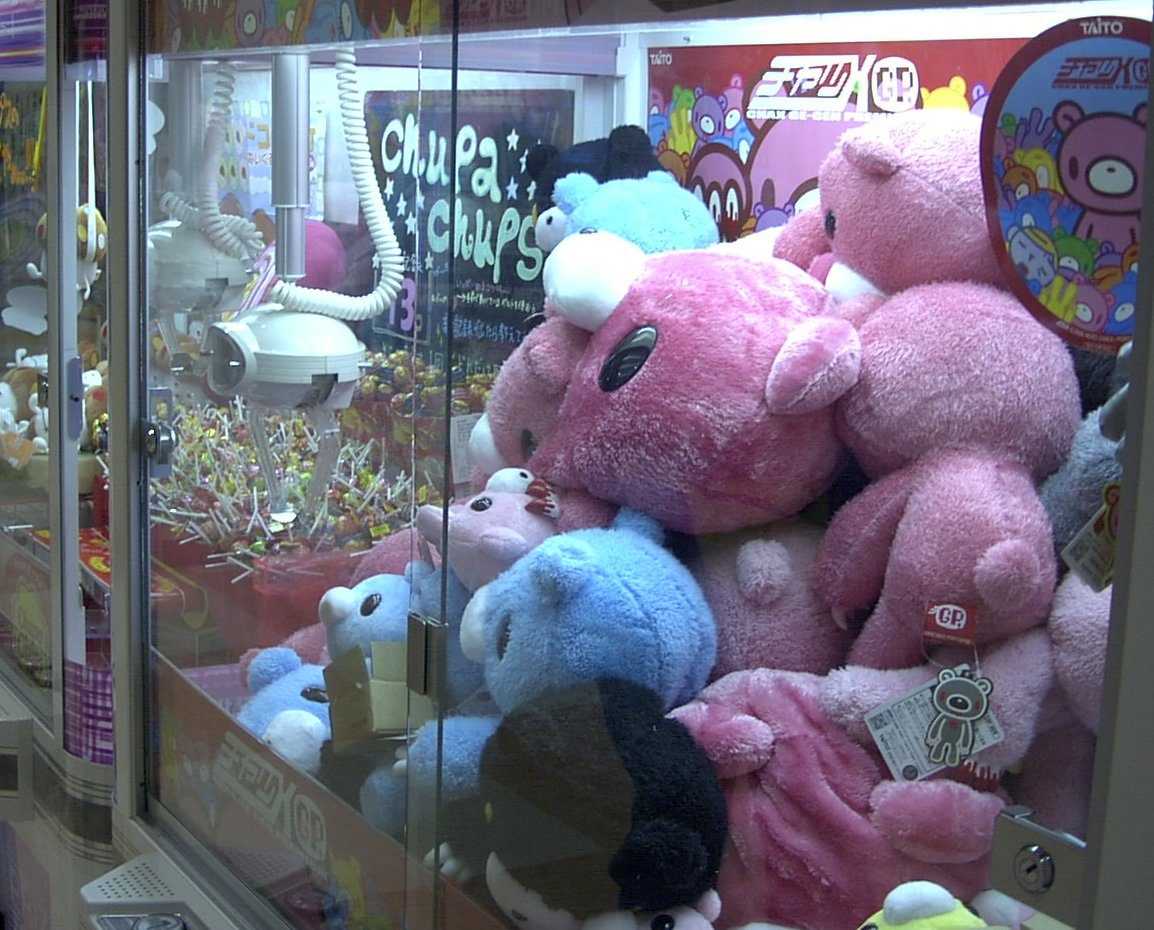
Crane games / UFO catchers (ground floor)
This is what pulls most people in off the street, and it is the part that empties your wallet fastest. Japanese crane games, called UFO catchers, are nothing like the rigged claws back home. Instead of one weak grab, the machines use dozens of mechanics: bridge setups where you nudge a boxed prize until it drops between two bars, push games where you shove it off a ledge, ring hooks, three-peg balances, and more. The prizes are the real draw, officially licensed anime figures, plush toys and limited items you genuinely cannot buy in a shop.
A play runs ¥100–¥500, most commonly ¥100 or ¥200. Crucially, these machines are built to be winnable, because the business depends on repeat customers who trust the games are fair. Staff are trained to help. If you have sunk ¥500 or more without a win, flag one down. They will routinely reposition the prize to a friendlier angle, demonstrate the technique, or hand you a free go. This is completely normal, not special treatment.
Rhythm games (typically 2F–3F)
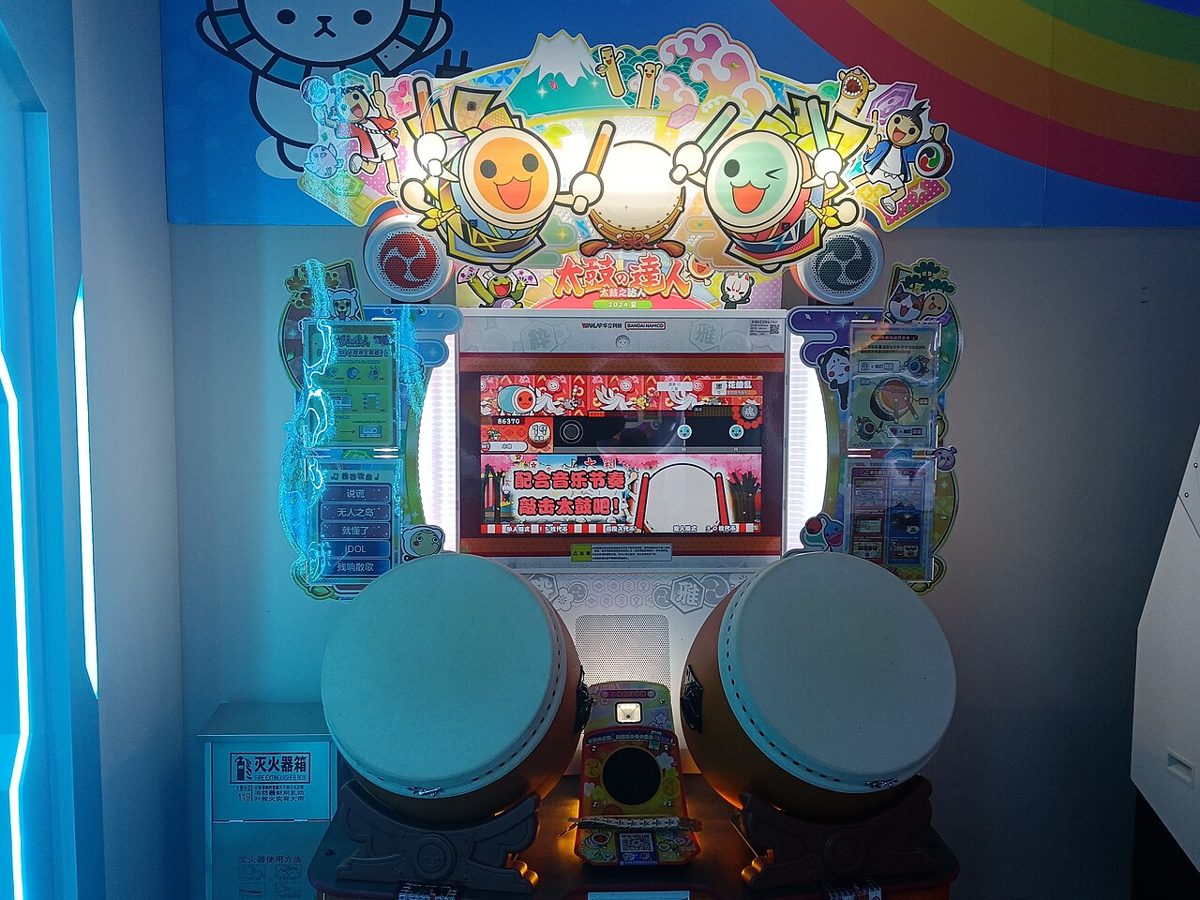
Japan’s rhythm-game scene lives in arcades, and the cabinets are extraordinary. These are not simple press-the-button machines. maimai DX is a circular screen you tap and slide around; CHUNITHM is a flat panel you sweep your hands across with an air sensor above; Taiko no Tatsujin is the famous drum game and the easiest first pick; SOUND VOLTEX mixes knobs and buttons over heavy electronic tracks; and Dance Dance Revolution and DANCERUSH put your whole body to work. Most cost ¥100 per play, usually three songs. Buy an Amusement IC card (around ¥300) if you want to save scores.
Fighting and competitive games (3F–4F)
This is where competitive gaming was effectively born. The fighting-game community still treats arcades as home turf, and you will find cabinets for Street Fighter 6, Tekken 8, Guilty Gear Strive and the Gundam VS series. Even if you do not play, these floors are worth a look just for the atmosphere, deadly serious regulars with their own arcade sticks, fully locked in. You can jump in for ¥100. You will probably get demolished. That is part of it.
Medal games
Medal floors use tokens rather than cash. You buy medals (roughly ¥1,000 for 200), then play coin-pusher machines, horse-racing sims and slot-style games. You cannot exchange medals back for money, which is precisely how Japan keeps these games legal. Leftover medals get stored on a card for next time. The giant mechanical coin-pushers are weirdly mesmerising and the floors are usually calm, drawing an older crowd.
Purikura photo booths (usually an upper floor)
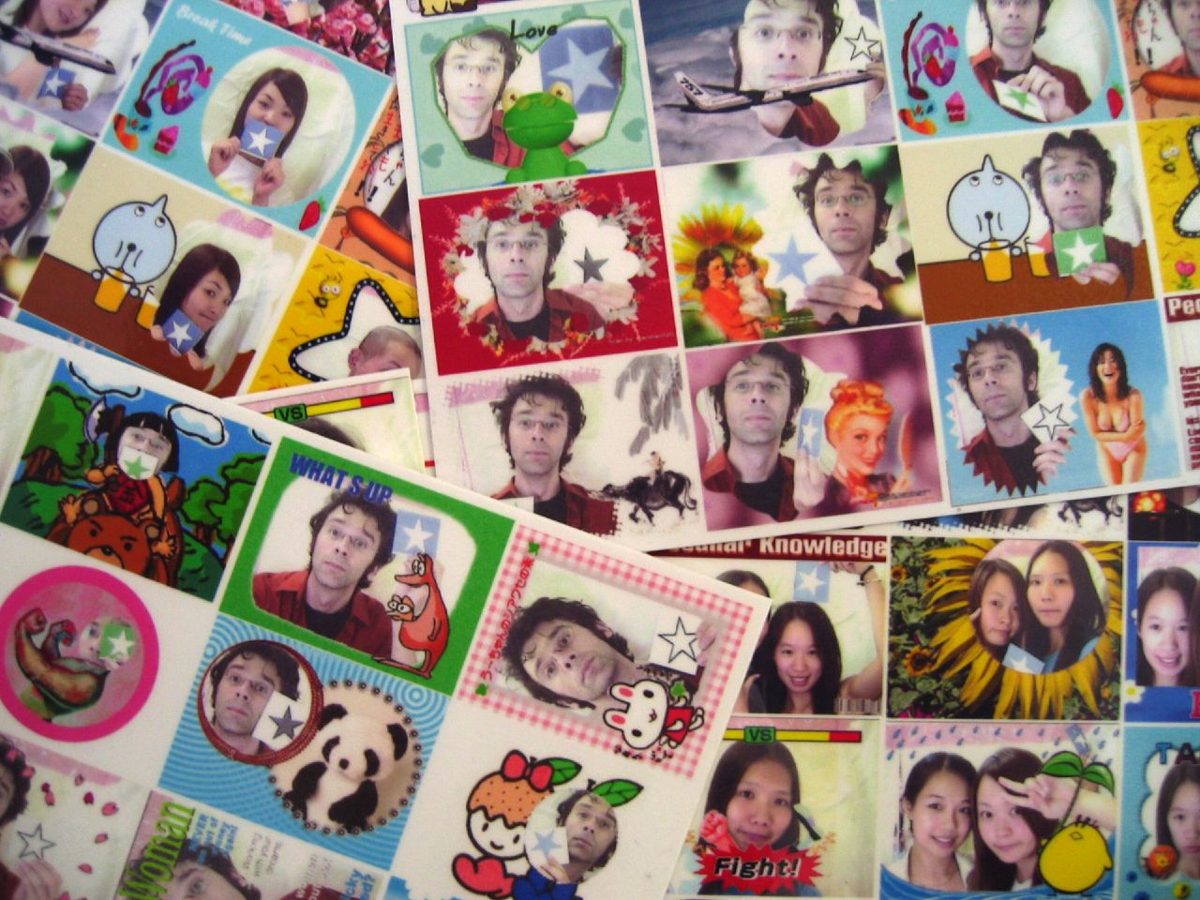
Purikura (プリクラ) booths photograph you and then let you smother the shots with stamps, filters, enormous eyes and glittery text before printing them as sticker sheets. It is a genuine social ritual here, especially for groups of friends. A session runs ¥400–¥600 and is built for two or more people. One thing to know before you head up: many purikura floors are women-only or mixed-groups-only, and solo men or all-male groups are often turned away. More on why below.
The big chains and what each is known for
A handful of operators run most of Tokyo’s game centers, and once you learn the logos you can read a street at a glance.
| Chain | Look for | Known for |
|---|---|---|
| GiGO (formerly SEGA) | Blue-and-white GiGO signage on ex-Sega buildings | Crane games, latest prizes, big rhythm-game floors |
| Taito Station | Pixel Space Invader logo | All-rounder: cranes, rhythm, retro, racing sims |
| Round1 / Spo-Cha | Red-yellow-blue facade | Arcade plus bowling, karaoke, darts, sports; some 24h |
| Namco / Bandai Namco | Clean, modern interiors | Beginner-friendly, English-labelled cabinets, gacha |
| Adores / Leisureland | Smaller neighbourhood signage | Purikura, cranes, good value |
| HEY & independents | Orange HEY building in Akihabara | Retro shooters and 90s fighting games |
The SEGA-to-GiGO change confuses people, so it is worth spelling out. SEGA sold its arcade business to GENDA in 2022 and the venues were rebranded GiGO. If a guidebook says “Sega arcade,” it now means GiGO. There is a further wrinkle in Akihabara, covered in the next section.
Best Tokyo arcades by neighbourhood
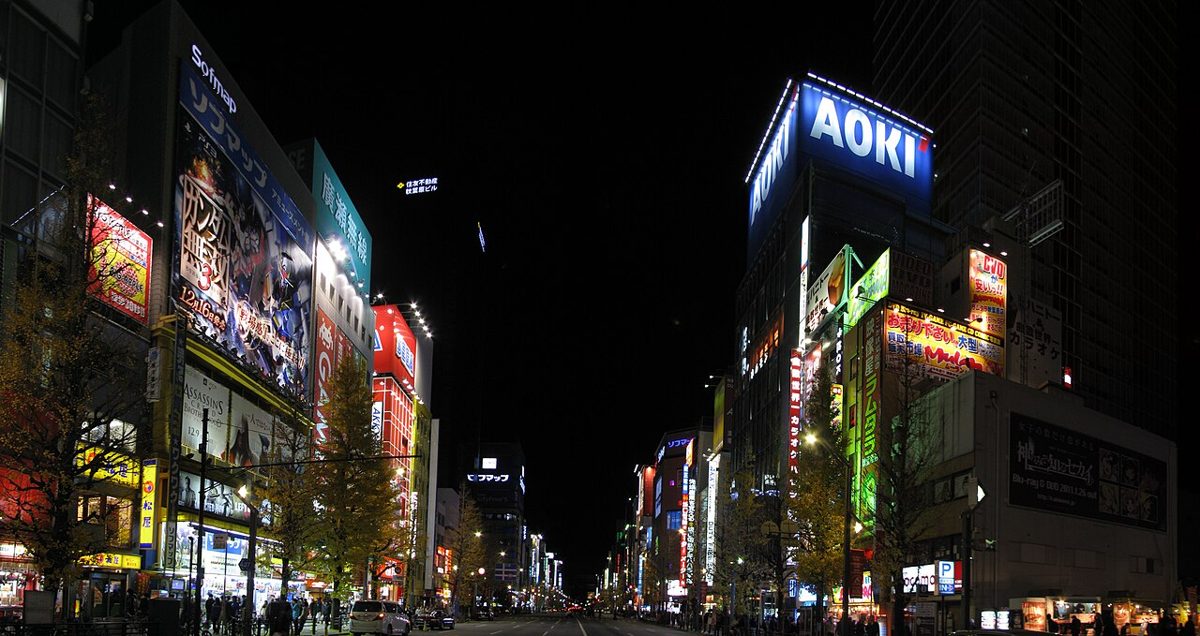
Akihabara: the densest concentration in Japan
If you only have time for one arcade district, make it Akihabara. Within a ten-minute walk of the station you can hit a dozen game centers, most open 10:00–23:30. The neighbourhood is also the heart of Tokyo’s anime and electronics district, so it pairs perfectly with figure shopping and maid cafes.
Silk Hat Akihabara is the headline change. The iconic red building beside the Electric Town exit, known for over three decades as Club SEGA and then GiGO Building 1, closed permanently in August 2025 when its lease expired. It reopened in November 2025 as Silk Hat Akihabara under operator Matahari Entertainment, bigger than before across nine floors: four full floors of crane games, card games, two rhythm-game floors and a large Gundam EXVS2 setup, open until midnight. If you read an older guide pointing you to “GiGO Akihabara” as a single landmark, this is the building they mean.
GiGO Akihabara 3rd and 5th still operate nearby, with the 3rd building especially strong for crane games and purikura. Taito Station Akihabara sits right on Chuo-dori with the Space Invader sign and a deep mix of cranes, rhythm and retro. HEY (Hirose Entertainment Yard), in the orange building, is a beloved independent and a pilgrimage site for retro shoot-em-ups and old fighting games. And while it is a shop rather than a true arcade, Super Potato nearby keeps playable classic cabinets on its top floor, a good stop on a retro day. If you want to dig deeper into the area’s shops, our Akihabara shopping guide maps the electronics and figure stores street by street.
Shinjuku: open latest
Shinjuku is where you go when it is already late. Taito Station Shinjuku East, on the edge of Kabukicho, is one of the chain’s biggest and runs until around 01:00, with enormous crane floors. There is also a large GiGO in Kabukicho. Because the entertainment district is right here, a game center slots neatly into a bigger night out.
Shibuya: casual and central
Shibuya’s arcades are well-kept and tourist-friendly, perfect for a quick session between shopping and the scramble crossing. Taito Station Shibuya keeps its crane floors freshly stocked, and Adores Shibuya skews younger and is a solid purikura stop.
Ikebukuro: Round1 and a 24-hour option
Round1 Ikebukuro, about four minutes from the station, is the rare Tokyo arcade whose ground-floor amusement area runs 24 hours. It is really an entertainment complex: alongside cranes and cabinets there is bowling, karaoke, darts, table tennis and a Spo-Cha sports zone you access with a time pass (roughly ¥2,500–¥2,800 for a few hours). Late night, after 23:00, is one of the quietest and best-value windows for crane games anywhere in the city. Check the floor board at the entrance, as bowling and Spo-Cha keep their own hours.
Odaiba: Tokyo Joypolis
Tokyo Joypolis in Odaiba is SEGA’s indoor amusement park, closer to a theme park than a coin arcade. Expect VR attractions, an indoor coaster and large-scale games. There is an admission charge, around ¥1,500 to enter or about ¥5,800 for a passport covering the rides. Worth it if you are already in Odaiba or it is raining, and good with kids, but go elsewhere for ¥100 cranes and Taiko.
One more for the social-media crowd: if you have searched for a “70-floor game tower,” the real thing is RED° TOKYO TOWER, an e-sports park spread across three floors inside Tokyo Tower with 70-plus attractions (the “70 floors” line is a mistranslation). It is a pass-based VR and AR venue near Akabanebashi Station, roughly ¥2,900 for two hours, with no crane games or classic cabinets, so treat it as a separate outing rather than a traditional arcade.
How much it costs
Game centers are deceptively good at extracting money, so it helps to set expectations before you walk in.
- Crane games: ¥100–¥500 per play (usually ¥100–¥200). Budget ¥500–¥1,000 per prize you actually want.
- Rhythm games: ¥100 per play, normally three songs.
- Fighting / video games: ¥100 per credit.
- Medal games: ~¥1,000 for 200 medals (non-refundable).
- Purikura: ¥400–¥600 per session, shared between a group.
- Quick visit (30 min): ¥500–¥1,000 is plenty for the experience.
- Moderate session (1–2 hrs): ¥2,000–¥4,000.
- Deep dive (3+ hrs): ¥5,000–¥10,000+, which happens more often than you would think.
On payment: most machines still run on physical ¥100 coins, but 2026 has seen a clear shift toward IC cards. Many newer cabinets at Taito Station and GiGO take Amusement IC cards, Suica and Pasmo, and even credit cards at charging stations. Still, carry a pocketful of ¥100 coins, because older machines and smaller arcades remain coin-only. Every game center has a change machine, and most now accept Suica top-ups too.
Crane game strategy that actually works
Because the machines are genuinely beatable, a little technique goes a long way. Here is what I do.
Watch before you spend
Stand back for a minute. Look at the discard bin near the machine, full boxes mean people are winning here. Check the current prize’s position: is it already tipped toward the chute, or buried? Pick a machine that looks close, not one freshly loaded.
Learn the three common types
Bridge (橋渡し): the boxed prize rests across two bars; nudge one end at a time, alternating left and right, until it slips through. Push (押し): the prize sits on a ledge and you shove it forward on the claw’s downswing. Three-peg: the prize balances on three pins and you knock it off by targeting one. Bridge is the most common for tourists and the most learnable.
Ask the staff, and set a limit
This is the single best tip: after ¥500 or so, ask. Staff routinely reset a prize to a winnable angle or grant a free go. And decide your per-prize budget in advance, ¥500–¥1,000 is sensible, then walk away when you hit it. The “one more try” feeling is engineered. Treat it with suspicion.
Etiquette and mistakes to avoid
Purikura is often groups- or women-only
Many purikura floors post clear signs: women only, or mixed groups only. Solo men and all-male groups are frequently refused. This is not arbitrary, it is a long-standing response to past incidents of covert photography and harassment, and it is taken seriously. If you are a guy who wants the sticker-photo experience, go with at least one woman in your group and you will be fine.
Mind the age and time rules
Under Japan’s entertainment-business law, players under 16 must leave by 18:00 unless with a parent (then 22:00), and 16–17 year-olds must leave by 22:00. Staff do check IDs on evening rounds. This is national law, not store policy, so do not expect flexibility.
Other things first-timers get wrong
- Do not touch a machine someone has “claimed.” A bag, drink or towel left on the controls means a player is on a break and coming back.
- No smoking inside by law; a few older centers keep a sealed smoking room, but floors are non-smoking.
- Travel light. Big stores have a few lockers, but the safest bet is the coin lockers inside JR Akihabara or your nearest station.
- Photos of machines are fine; people are not. Never photograph other players without asking, especially near purikura.
- Crane prizes are fine through customs, they are legitimate goods. Pack fragile figures in your carry-on, and ship overflow home via a konbini courier.
- Ignore street touts near Akihabara arcades. Anyone on the pavement offering “free entry” or a “great deal” in English is steering you to an overpriced bar or cafe. Legitimate game centers never use touts. Politely decline and keep walking.
Tokyo arcades compared at a glance
| Arcade | Area | Known for | Hours (approx.) | Vibe |
|---|---|---|---|---|
| Silk Hat Akihabara | Akihabara | 9 floors; cranes, rhythm, Gundam | 10:00–24:00 | Flagship, busy, all-ages |
| Taito Station Akihabara | Akihabara | All-rounder, retro, racing | 10:00–23:30 | Classic, tourist-friendly |
| HEY | Akihabara | Retro shooters & 90s fighters | 10:00–23:30 | Hardcore, nostalgic |
| Taito Station Shinjuku East | Shinjuku | Huge crane floors, late hours | 10:00–01:00 | Late-night, lively |
| Taito Station / Adores | Shibuya | Cranes, purikura | 10:00–23:30 | Casual, central |
| Round1 Ikebukuro | Ikebukuro | Arcade + Spo-Cha, 24h floors | 24h (amusement) | Group fun, great value |
| Tokyo Joypolis | Odaiba | VR rides, indoor theme park | 10:00–22:00 | Theme park, ticketed |
Hours shift with holidays and renovations, so glance at the floor board or each chain’s site before a special trip. As a rule, weekday afternoons are quietest, weekends and evenings busiest, and after 22:00 the serious rhythm and fighting players take over, great to watch, harder to get machine time.
Building one perfect arcade evening
Here is the route I give friends. Start in Akihabara around 18:00 after the under-16 cut-off thins the crowd. Warm up on the cranes at Silk Hat, then cut across to HEY for ten minutes of retro chaos, then hit a rhythm floor at GiGO 3rd. Grab cheap ramen on Chuo-dori, take purikura if your group qualifies, and if you still have energy, ride out to Shinjuku where Taito Station East runs past midnight. If your group still is not done by then, the trains have stopped anyway, so cap the night with an hour of Tokyo karaoke nearby until the first train. Set a hard cash limit before you start. You will need it.
Arcades are one stop on a bigger anime day. Akihabara’s game centres sit a short walk from its figure towers and retro game shops, and Ikebukuro’s are around the corner from Animate and Otome Road. For the districts, museums and events that complete the picture, see our guide to anime and manga in Tokyo.
Almost every game centre keeps a bank of capsule toy machines by the entrance, and two of them have entire floors given over to it. If you are budgeting a session, our gachapon guide covers the big halls, current prices and the coin problem that catches most visitors out.
Frequently Asked Questions
Do I need to speak Japanese to play in a Tokyo arcade?
No. Most games are insert-coin-and-go, rhythm games use visual cues, and crane games are self-explanatory. A few menu screens are Japanese-only but you can tap through them. Staff at the major chains in tourist areas usually manage basic English, and at Namco many cabinets carry English labels.
How much money should I bring to a game center?
For a fun 30-minute taste, ¥500–¥1,000 is plenty. A proper one-to-two-hour session runs ¥2,000–¥4,000, and a deep dive can hit ¥5,000–¥10,000. Carry ¥100 coins as backup even though IC cards and Suica increasingly work.
Why are men not allowed in some purikura areas?
Many purikura floors are women-only or mixed-groups-only because of past problems with covert photography and harassment of female customers. Solo men and all-male groups are commonly refused, and the rule is enforced. Going with at least one woman in your group solves it.
What happened to the SEGA arcades in Akihabara?
SEGA sold its arcade business to GENDA in 2022 and the venues became GiGO. In Akihabara, the famous red GiGO Building 1 (originally Club SEGA) closed in August 2025 and reopened in November 2025 as Silk Hat Akihabara under a new operator, with nine floors. Other GiGO locations still trade nearby.
Are Tokyo game centers open late or 24 hours?
Most run roughly 10:00 to 23:30, with some Shinjuku locations until around 01:00. There are no 24-hour arcades in Akihabara, but Round1 Ikebukuro keeps its ground-floor amusement area open 24 hours, the best bet for very late or very early play.
Photo Credits
- Akihabara at dusk, where game centers stack five and nine floors high — Photo: Aimaimyi / CC BY-SA 3.0 via Wikimedia Commons via Wikimedia Commons
- UFO catcher crane games on the ground floor, the gateway drug of any Japanese arcade — Photo: Unknown / CC BY-SA 3.0 via Wikimedia Commons via Wikimedia Commons
- Taito Station, marked by its pixel Space Invader, is one of the big national chains — Photo: MaedaAkihiko / CC BY-SA 4.0 via Wikimedia Commons via Wikimedia Commons
- Taiko no Tatsujin, the friendliest rhythm game for first-timers — Photo: Fumikas Sagisavas / CC0 via Wikimedia Commons via Wikimedia Commons
- Tokyo Joypolis in Odaiba is SEGA’s indoor theme park, more rides than coins — Photo: Dave Pape / Public domain via Wikimedia Commons via Wikimedia Commons
- Purikura photo booths, usually on an upper floor and often groups-only — Photo: slavin_fpo from (optional) / CC BY 2.0 via Wikimedia Commons via Wikimedia Commons