Tokyo Nightlife · Guide №137
Tokyo Izakaya Bar Hopping: A Local’s Guide to Pub Crawling
A local's guide to Tokyo izakaya bar hopping (hashigo-zake): the best yokocho alleys, how otoshi and seat charges work, what to drink, a sample crawl route, etiquette and mistakes to avoid.
目次 — Contents
- What “izakaya bar hopping” (hashigo-zake) actually is
- How it works: otoshi, seat charges and nomihoudai
- What to drink and what to eat
- The best districts for Tokyo izakaya bar hopping
- Yokocho comparison table
- Standing bars (tachinomi) for cheap, fast rounds
- A sample 4-stop Shinjuku crawl
- Etiquette: oshibori, kanpai, tipping and cash
- Budgeting per stop
- English-friendliness and how to order without Japanese
- Mistakes to avoid
- Frequently Asked Questions
- Photo Credits
This article contains advertising. Our booking links are routed through a partner that adds commission tracking automatically, so if you book through one we earn a commission from the provider, at no extra cost to you. It never affects what we recommend. Affiliate disclosure
Tokyo izakaya bar hopping — hashigo-zake, literally “ladder drinking” — means stringing together three or four tiny bars in one night instead of camping in one. You start with a cold draft and a couple of yakitori skewers at a standing counter, move to an izakaya for sashimi and sake, then finish with a whisky highball in a five-seat Golden Gai bar. It is the single best way to drink in Tokyo, and you can do it cheaply if you know how the charges work.
I have spent more late nights than I can count threading through Shinjuku’s alleys, and the pattern barely changes: short stops, small orders, a fresh room every 30–40 minutes. This guide covers exactly how Tokyo izakaya bar hopping works in 2026 — the otoshi and seat charges that catch people out, the best yokocho (alley) districts with their nearest stations, what to order, a sample crawl route, the etiquette that keeps it smooth, and the mistakes that turn a fun night into an argument at the register. For the wider after-dark picture, start with our overview of Tokyo nightlife.
What “izakaya bar hopping” (hashigo-zake) actually is
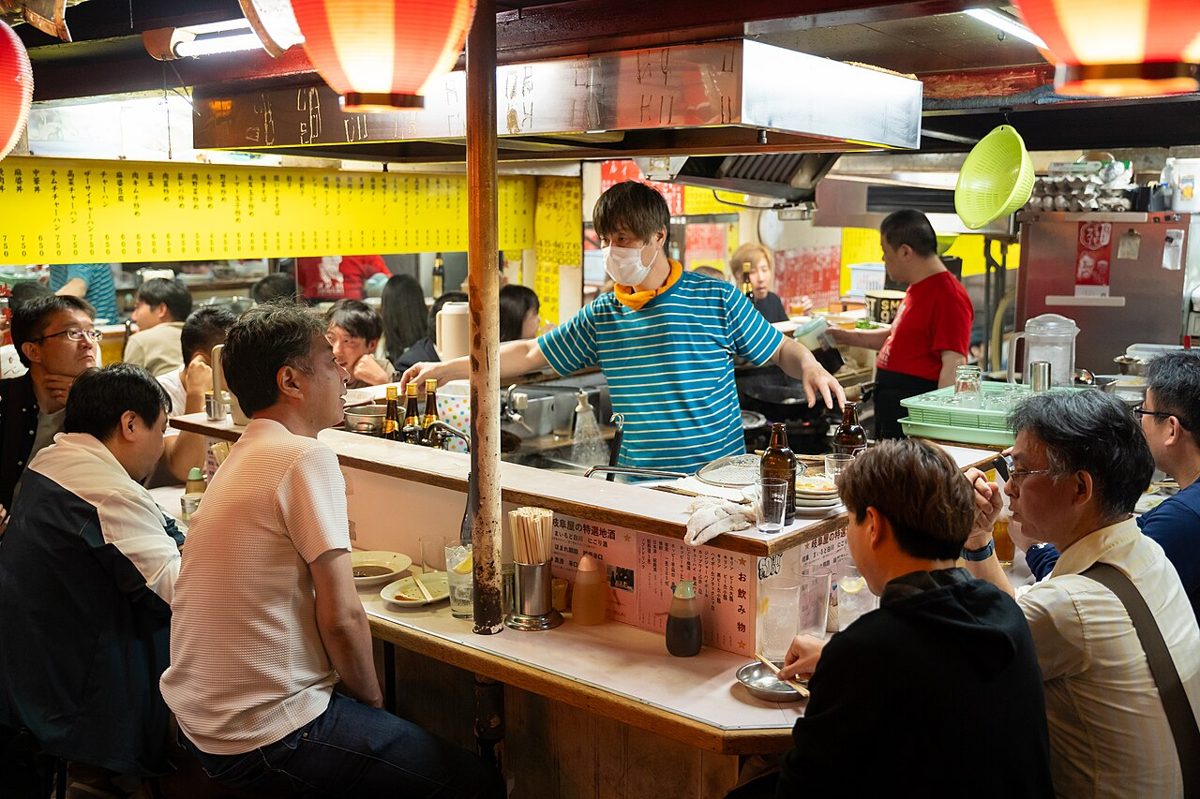
An izakaya is a Japanese pub: you eat and drink, ordering many small plates rather than one big meal. Hashigo-zake is the local habit of not settling in — you have a drink and a bite, pay, and walk thirty seconds to the next place. The appeal is variety. One counter does grilled chicken and cheap beer; next door is a sake specialist; around the corner is a bar the size of a closet where the owner plays vinyl. Hopping lets you sample all three in the time it would take to read one English menu.
The natural habitat for this is the yokocho: a cluster of narrow alleys lined with miniature bars, most seating 6 to 12 people, many with counter seats only. Most grew out of post-war black markets and never got torn down, which is why they feel like a different decade the moment you step in. Walking a few steps takes you from a yakitori joint to a sushi counter to a ramen window — that density is the whole point, and it makes Tokyo izakaya bar hopping easier here than anywhere else in the city.
How it works: otoshi, seat charges and nomihoudai
Three money mechanics decide whether your night is cheap or a nasty surprise. Learn them once and you will never be caught out.
Otoshi (the compulsory appetizer)
Sit down at most izakayas and a small dish you didn’t order — edamame, pickles, a spoon of stewed something — lands in front of you. This is otoshi (also called tsukidashi), and it is effectively a table charge, usually ¥300–¥700 per person. It is not a scam; it is standard, and it appears on the bill. By law you can decline it the moment it is offered, but in practice most people just accept it as the cost of sitting down. Budget for it at every seated stop.
Seat charges (especially in Golden Gai)
Some bars add a seki-ryo (seat charge) or cover on top of drinks. In ordinary izakayas this is rare. In Golden Gai it is the norm: expect a cover of ¥500–¥1,000 per person, sometimes up to ¥1,500 at the more famous spots, and a few tourist-aware bars now post the number in English by the door. It is not a rip-off as long as it is displayed — it is how a bar with eight seats pays its rent. The fix is simple: check the sign or ask “seat charge?” before you sit. Reputable places will tell you straight.
Nomihoudai (all-you-can-drink)
Nomihoudai is a fixed-price, time-limited free-drink plan: typically ¥1,500–¥3,000 for 90 to 120 minutes, covering draft beer, highballs, shochu, sake and soft drinks. It is brilliant value if you will have four or more drinks and you actually want to sit still — but it is the opposite of hopping. If your goal is to move every half hour, skip it and pay per drink. I use nomihoudai for the long final stop of the night, not the crawl itself. Note the time limit is enforced; staff call last orders about 30 minutes before it ends.
What to drink and what to eat
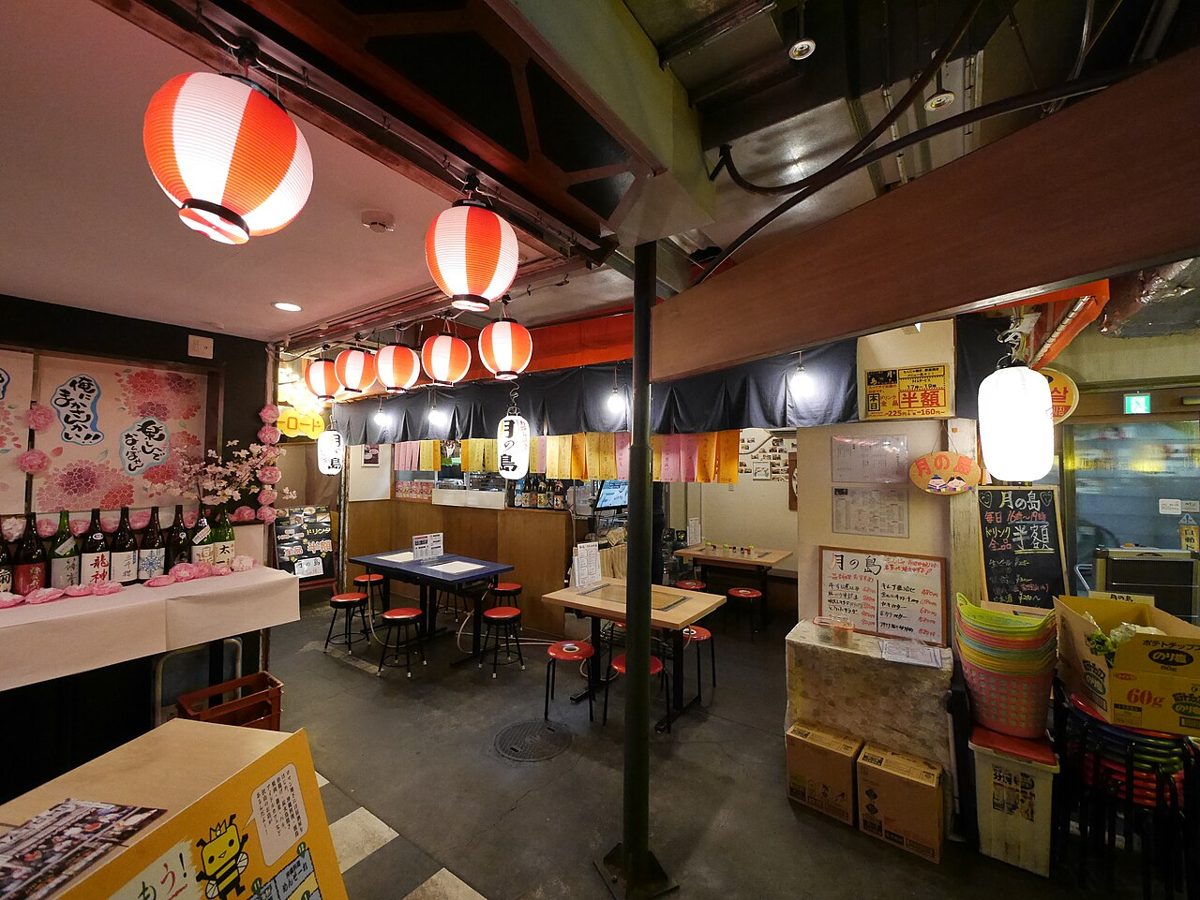
Yokocho bars do not do elaborate cocktails. Order the Japanese standards and you will be fine everywhere.
- Nama biiru (draft beer) — the default first drink. Asahi, Kirin or Sapporo on tap, usually ¥500–¥700.
- Highball — whisky and soda over ice, light and food-friendly. The dominant izakaya drink of the last decade; cheap at ¥400–¥600.
- Chu-hi / sour — short for “shochu highball”: shochu, soda and a flavour (lemon is king). Easy-drinking and cheap. A canned Strong Zero from a konbini is the budget street version.
- Sake (nihonshu) — ask for it cold (reishu) in summer or warm (atsukan) in winter; a glass runs ¥400–¥800 and far more for premium pours.
- Shochu — distilled from barley, sweet potato or rice, stronger than sake. Order it mizuwari (with water) or oyuwari (with hot water).
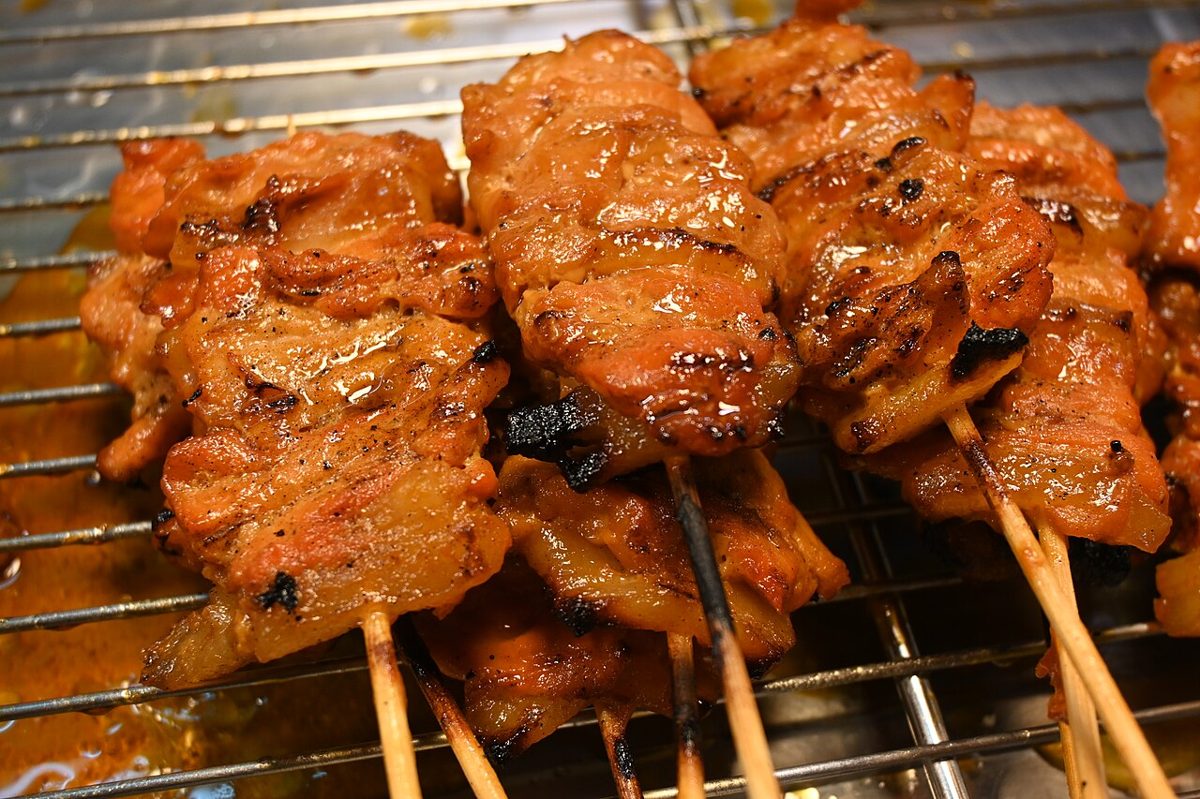
For food, order two or three small plates per stop and move on. Reliable hits: yakitori (chicken skewers — try momo thigh, negima chicken-and-leek, and tsukune meatball), motsuni (slow-stewed offal in miso, the classic Omoide Yokocho dish), oden in winter (daikon, egg and fishcakes simmered in dashi), edamame, grilled fish, and karaage fried chicken. If you want to go deeper on the dishes themselves, see our guide to the best izakaya in Tokyo, and for everything you can eat on the move between bars, our street-stall snack guide.
The best districts for Tokyo izakaya bar hopping
You can hop almost anywhere with an office crowd, but a handful of named alleys do it best. Here are the ones I send people to, roughly in order of how easy they are for a first-timer.
Omoide Yokocho — Shinjuku (the easy start)
Tucked beside the tracks on the west side of Shinjuku Station, “Memory Lane” — nicknamed “Piss Alley” from its rougher post-war days — is the most beginner-friendly yokocho in the city. Red lanterns, hand-painted signs, smoke pouring off the yakitori grills. Many counters are standing-style and used to foreigners, so you can squeeze in, point at skewers, drink a beer and leave without a word of Japanese. It is the obvious first stop: 2 minutes from the West Exit / Omoide Yokocho exit. Expect a small seat or otoshi charge at sit-down spots.
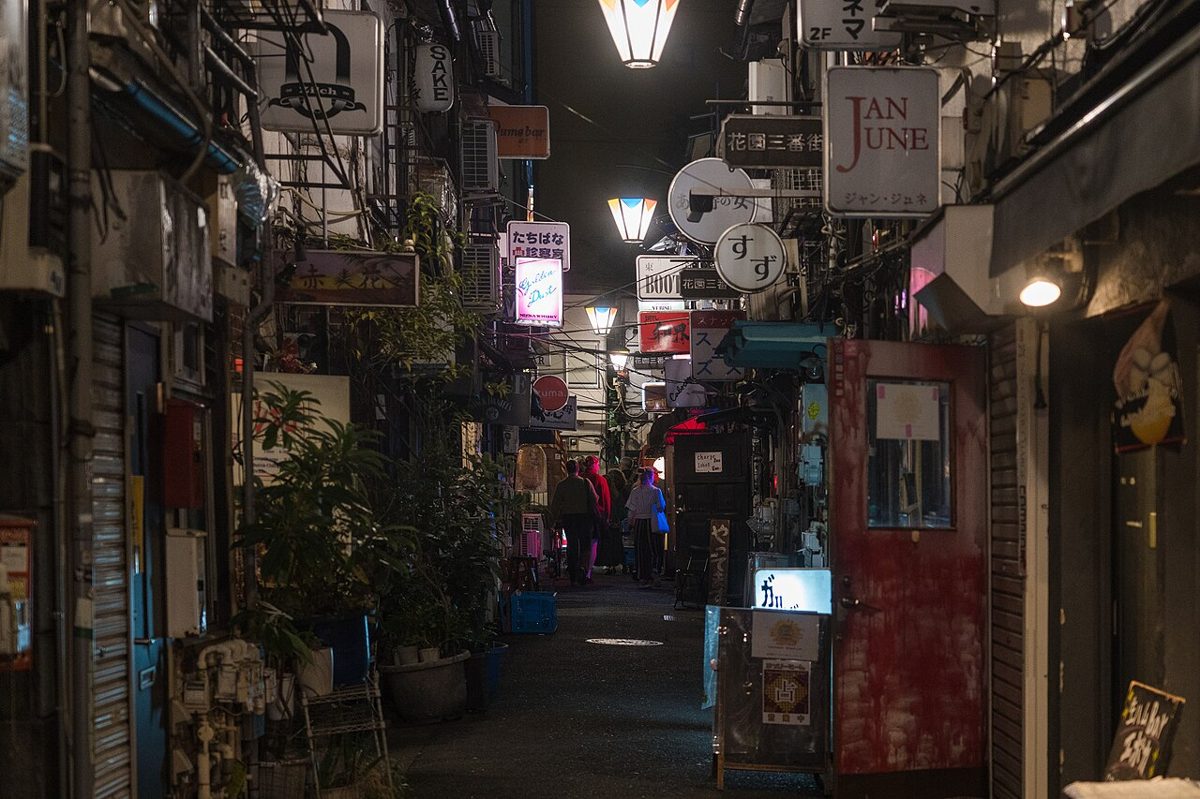
Golden Gai — Shinjuku (the iconic one)
A few minutes east, on the edge of Kabukicho, Golden Gai is six narrow lanes holding roughly 200 micro-bars (the official Tokyo guide counts more than 270 establishments across its seven alleyways). Most seat only 5–8 people, each with its own theme — punk, jazz, film, horror. This is the postcard image of Tokyo drinking, and it is wonderful, but read the door first: many bars charge a ¥500–¥1,500 cover, some are “regulars only,” and plenty ban photography. Look for the “English OK” or “tourists welcome” stickers, go in a group of two or three (nobody fits more), and don’t barge into a place with no English menu and a regulars-only sign. Nearest: Shinjuku Station East Exit, ~7 minutes, or Seibu-Shinjuku. Golden Gai sits right beside Kabukicho, so it pairs naturally with a wander past the Godzilla head.
Nonbei Yokocho — Shibuya
“Drunkard’s Alley,” right against the tracks by Shibuya Station, dates to the early 1950s and squeezes about 38 tiny counters across two floors into a sliver of land. Each holds four to eight people; the mama-san can often pass your drink without standing up. It is famous for yakitori and you can get a highball for around ¥500. Service or space charges sometimes apply, but they are reasonable and the drink prices are fair. A great hop if you are already in Shibuya — 2 minutes from the Hachiko side.
Ebisu Yokocho — Ebisu
An indoor food alley a short walk from Ebisu Station’s east side, Ebisu Yokocho is the foodie’s hop. Stalls jammed shoulder to shoulder, most open very late, a younger and more mixed crowd than the Shinjuku alleys, and a genuinely social atmosphere where tables blur together. Great for grazing across cuisines — grilled meats, seafood, oden — without leaving one roof. Easier to read than Golden Gai and friendlier to bigger groups.
Ameyoko under-track bars — Ueno
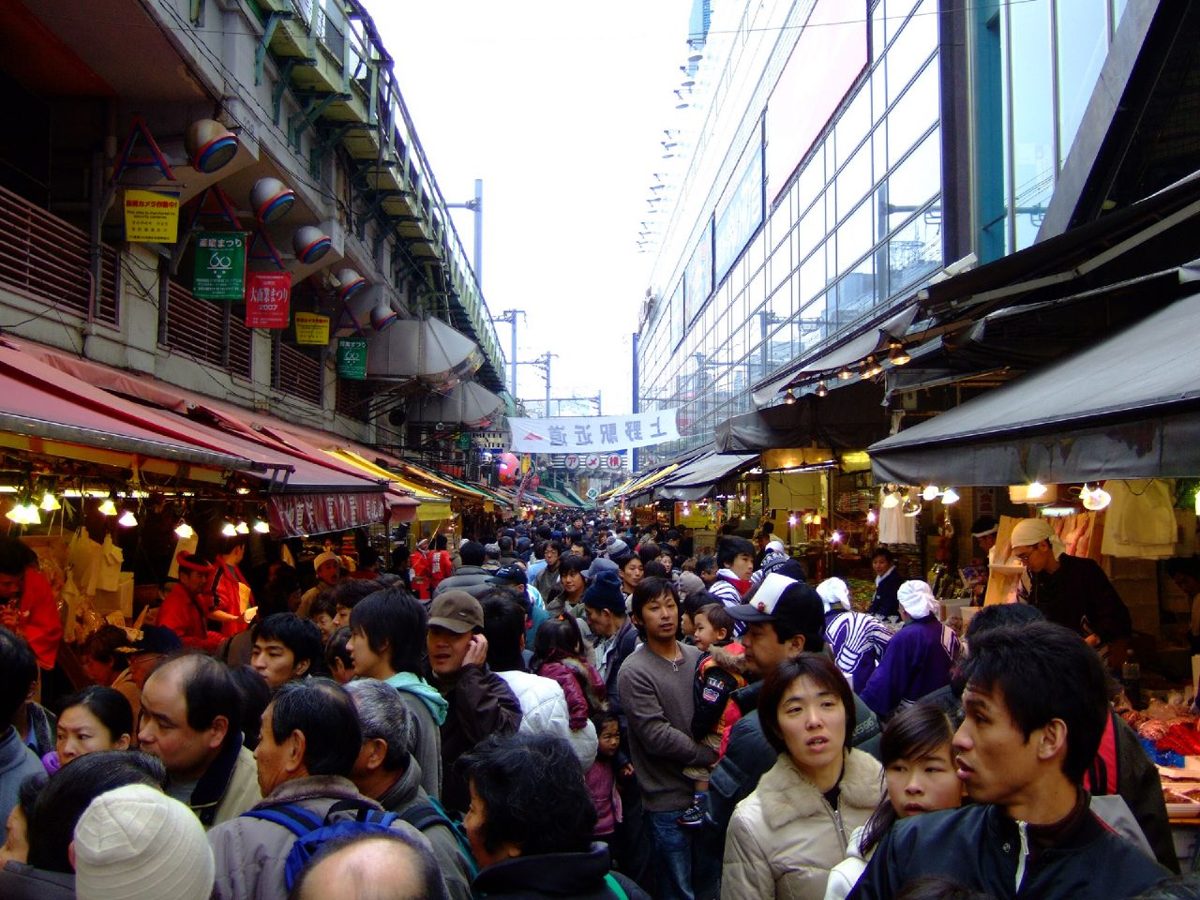
Ameyoko is a market running under the JR tracks between Ueno and Okachimachi. By day it sells fish, fruit and sneakers; by evening the seafood stalls double as standing bars, and vendors who were selling tuna at lunch are pouring sake by 6pm. It is loud, cheap, open-air and completely unpretentious — beer in a plastic cup, fresh sashimi, zero attitude. One of the best-value places in Tokyo to drink, and a totally different flavour from the Shinjuku polish. Right outside Ueno or Okachimachi stations.
Harmonica Yokocho — Kichijoji, and Sangenjaya
If you want the local, no-tourists version, ride out a few stops. Harmonica Yokocho, just outside Kichijoji Station on the Chuo line, is a warren of tiny bars and stalls named for the way its stalls line up like the reeds of a harmonica — bohemian, busy and almost entirely Japanese. Sangenjaya (“Sancha”), two minutes from Shibuya on the Den-en-toshi line, has a maze of back-alley izakayas around the Sankaku-chitai (triangle zone) that locals love precisely because tourists rarely make it there. Neither is as English-friendly, but both reward a bit of nerve.
Yokocho comparison table
| Area | Nearest station | Vibe | Budget per stop | English-friendly? |
|---|---|---|---|---|
| Omoide Yokocho | Shinjuku (West / Omoide Yokocho exit) | Retro yakitori alley, smoky, touristy but fun | ¥1,000–¥2,000 | Yes — used to visitors |
| Golden Gai | Shinjuku East / Seibu-Shinjuku | 200+ themed micro-bars, intimate, iconic | ¥1,500–¥3,000 (incl. cover) | Mixed — look for “English OK” |
| Nonbei Yokocho | Shibuya (Hachiko side) | 38 tiny counters by the tracks, ~¥500 highballs | ¥1,000–¥2,000 | Some — small but welcoming |
| Ebisu Yokocho | Ebisu (East exit) | Indoor food alley, young, social, open late | ¥1,500–¥2,500 | Yes — good for groups |
| Ameyoko | Ueno / Okachimachi | Under-track market turns standing-bar strip, cheap | ¥800–¥1,500 | Some — point and pay |
| Harmonica Yokocho | Kichijoji | Bohemian local warren, almost no tourists | ¥1,000–¥2,000 | Limited |
| Sangenjaya | Sangenjaya (Den-en-toshi) | Back-alley izakaya maze locals love | ¥1,000–¥2,000 | Limited |
Standing bars (tachinomi) for cheap, fast rounds
A tachinomi is a standing-only bar, and it is the secret weapon of an efficient crawl. No seat charge, no otoshi at many of them, faster turnover, and some of the cheapest good alcohol in the city: a glass of house wine for around ¥300, a beer for ¥400, sake for ¥350. You drink on your feet at a high counter, neck a round, and you are gone in fifteen minutes. Slot one or two tachinomi between your sit-down stops to keep the pace up and the spend down. Omoide Yokocho, Nonbei Yokocho and Ameyoko all have standing options; you will also find them scattered around every major station, often right under the tracks.
A sample 4-stop Shinjuku crawl
Here is a route I have run dozens of times. It is all on foot, takes roughly three to four hours, and lands you back at the world’s busiest station for your train home. Budget around ¥6,000–¥9,000 per person depending on how much you drink.
- Stop 1 — Omoide Yokocho (warm-up, ~7pm). Start standing at a yakitori counter. Draft beer, three skewers, a bowl of motsuni. Easy, smoky, no pressure. Pay and walk east toward Kabukicho.
- Stop 2 — a tachinomi or izakaya off Yasukuni-dori (~8pm). Grab a quick highball standing, or duck into a proper izakaya for sashimi and cold sake. One otoshi, a couple of plates, move on.
- Stop 3 — Golden Gai (the centrepiece, ~9:30pm). Pick a bar with an “English OK” sticker and an open seat. Pay the cover, have one or two drinks, talk to the master. Don’t bar-crawl Golden Gai itself too hard — one or two bars here is plenty given the covers.
- Stop 4 — late ramen or a nomihoudai finish (~11pm). Either close out with a bowl of ramen to soak up the night, or settle into one last izakaya on a nomihoudai plan if you still have stamina. Then walk back to Shinjuku Station.
Mind the last train, which on most lines runs around midnight to 12:30am. Miss it and you are choosing between a pricey taxi, a capsule hotel, or drinking through to the 5am restart — all of which are valid, but plan deliberately rather than by accident.
Etiquette: oshibori, kanpai, tipping and cash
- Oshibori. You will be handed a hot or cold hand towel on arrival. Wipe your hands only — not your face, neck or the table — then fold it dirty-side-in and set it down. Wiping your face with it reads as rough.
- Kanpai before you sip. Wait until everyone has a drink and say “kanpai!” together. Drinking before the toast is poor form, and it is polite to pour for others rather than yourself.
- Never tip. There is no tipping in Japan; leaving cash will confuse staff or get chased down the street. The otoshi and any seat charge already cover the table. Pay the exact bill and that is it.
- Cash first. Many small yokocho bars are cash-only. Carry enough yen for the whole night plus a buffer, and use the ATMs inside 7-Eleven or FamilyMart, which reliably take foreign cards.
- Pay at the register by the door, not at your seat, and don’t smoke or drink in the street outside — it is prohibited in much of central Tokyo.
- Keep it small. These rooms hold 6–12 people. Roll up as a duo or trio, not a stag party of nine.
Budgeting per stop
A realistic per-stop spend, including one or two drinks and a small plate, is ¥1,000–¥2,500 at a normal izakaya or standing bar, rising to ¥2,000–¥3,500 in Golden Gai once the cover is added. Four stops therefore land most people somewhere around ¥6,000–¥10,000 for the night. You can do it for far less by leaning on tachinomi and konbini chu-hi between bars, or far more if you settle into premium sake. The single biggest budget killer is not the drinks — it is sitting down somewhere with an undisclosed cover, which the next section helps you dodge.
English-friendliness and how to order without Japanese
Plenty of yokocho bars run fine on gestures. Omoide Yokocho, Ebisu Yokocho and the tourist-aware corners of Golden Gai see foreigners nightly and will point at a menu or hold up fingers for the price. Useful phrases: “Nama hitotsu” (one draft beer), “Kore kudasai” (this one, please, while pointing), “Osusume wa?” (what do you recommend?), and “Okaikei onegaishimasu” (the bill, please). A translation app and a smile cover the rest. The deeper-local spots — Harmonica Yokocho, Sangenjaya, plenty of Golden Gai — are harder, and some are openly regulars-only; respect the door and you will be welcomed where you are wanted.
Mistakes to avoid
- Not checking the seat charge. The number one source of “I got ripped off” stories. Ask before you sit. A displayed cover is fine; a refused-to-tell-you cover is a red flag — leave.
- Following a tout into an unadvertised bar. Reputable yokocho bars do not need someone dragging you off the street. If a man in Kabukicho promises “cheap beer, free drink, girls,” walk on — that is how the bottakuri (overcharge) trap works.
- Forcing into a “regulars only” bar. If there is no English menu and a regulars-only sign, that bar is not for you tonight. There are 200 others.
- Photographing strangers or bar interiors without asking. Many Golden Gai bars ban it outright. Ask first, every time.
- Going too big, too fast. Small orders, one or two drinks per stop. The joy is the variety, not getting wrecked at bar one.
- Carrying no cash. A card-only traveler will be stuck at the cutest cash-only counter in Tokyo. Bring yen.
- Missing the last train without a plan. Decide in advance whether you are catching it or pulling an all-nighter.
Get those right and Tokyo izakaya bar hopping is just about the most fun you can have after dark in the city — cheap, sociable, and endlessly varied. If you would rather end the night somewhere with a view, our Tokyo rooftop bars guide is the natural follow-on once the alleys close.
Frequently Asked Questions
How much does bar hopping in Tokyo cost?
Budget roughly ¥1,000–¥2,500 per stop at a standard izakaya or standing bar, and ¥2,000–¥3,500 in Golden Gai once the ¥500–¥1,500 seat charge is added. A typical four-stop night runs about ¥6,000–¥10,000 per person. Lean on tachinomi standing bars and konbini chu-hi between stops to keep it cheap.
What is otoshi and do I have to pay it?
Otoshi is a small compulsory appetizer served when you sit at most izakayas, acting as a table charge of about ¥300–¥700 per person. It is standard and appears on the bill, not a scam. You are legally allowed to decline it the moment it is offered, but most people simply accept it as the price of a seat.
Is Golden Gai good for first-timers, or is Omoide Yokocho better?
Start at Omoide Yokocho — its standing yakitori counters are used to foreigners and need no Japanese. Golden Gai is more atmospheric but trickier: many bars charge a cover, some are regulars-only, and photography is often banned. Visit both in one night, but use Omoide as your warm-up and pick a Golden Gai bar with an “English OK” sticker.
Do I need to speak Japanese to go bar hopping in Tokyo?
No. Omoide Yokocho, Ebisu Yokocho and tourist-aware Golden Gai bars run fine on pointing and gestures. Learn a few phrases like “nama hitotsu” (one draft) and “okaikei onegaishimasu” (the bill, please), carry a translation app, and you will manage. Deeper-local alleys like Harmonica Yokocho are harder and some are regulars-only.
What should I drink and eat when bar hopping?
Order the Japanese standards: draft beer, a whisky highball, a lemon chu-hi, or sake (cold in summer, warm in winter). For food, two or three small plates per stop — yakitori skewers, motsuni offal stew, oden in winter, edamame and karaage. Keep orders small so you have room and budget for the next bar.
Photo Credits
- Omoide Yokocho, the lantern-lit yakitori alley beside Shinjuku Station — Photo: Dick Thomas Johnson from Tokyo, Japan / CC BY 2.0 via Wikimedia Commons
- Golden Gai’s six alleys pack in roughly 200 micro-bars — Photo: Alexkom000 / CC BY 4.0 via Wikimedia Commons
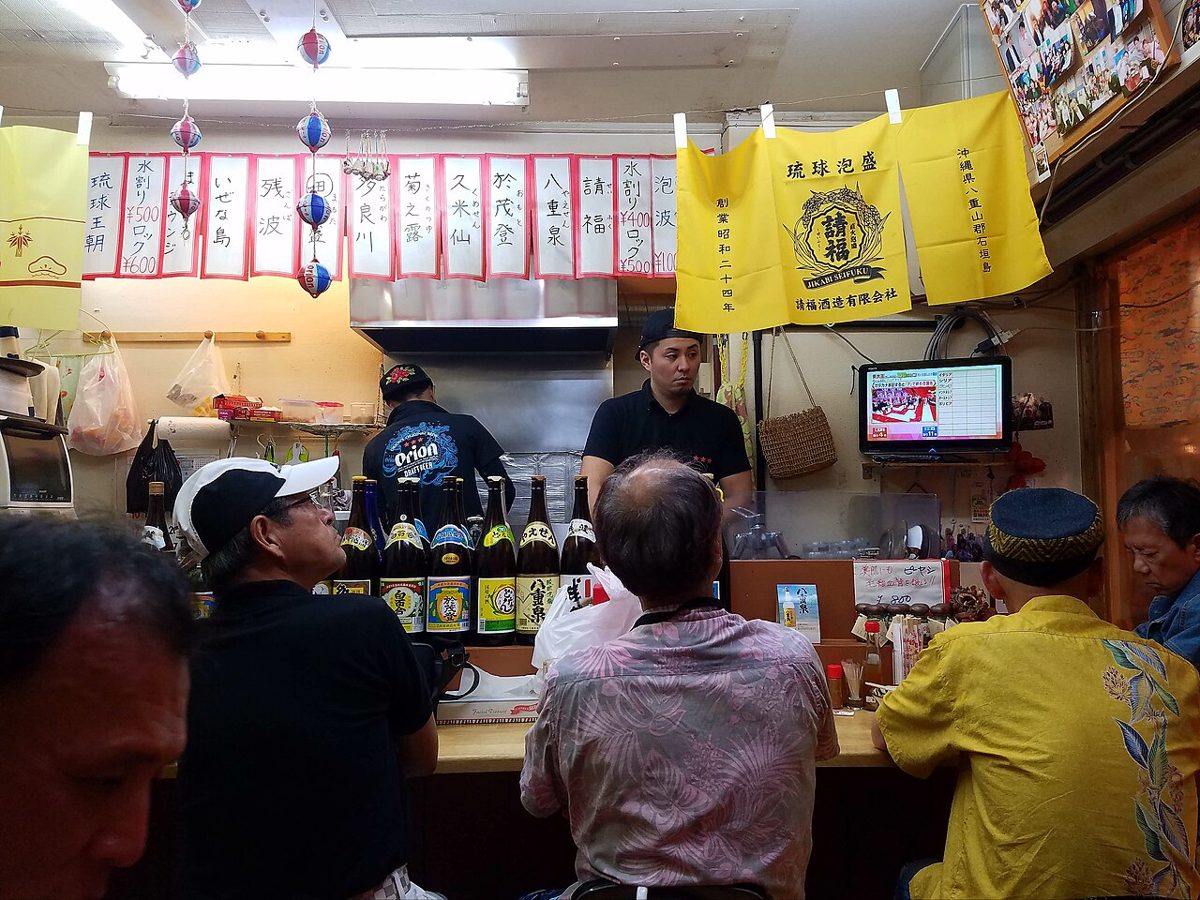
- A typical izakaya counter, where most of the hopping happens — Photo: 運転太郎 / CC BY 3.0 via Wikimedia Commons
- Yakitori over charcoal, the classic between-stops snack — Photo: PattayaPatrol / CC BY-SA 4.0 via Wikimedia Commons
- Sake, shochu and highballs make up the standard yokocho lineup — Photo: Hajime NAKANO / CC BY 2.0 via Wikimedia Commons
- Ameyoko, under the JR tracks in Ueno, turns into a standing-bar strip after dark — Photo: Ghost of Kuji from Ameya-yokocho (Ameyoko), Ueno, Taito, Tokyo / CC BY 2.0 via Wikimedia Commons