Tokyo Anime & Pop Culture · Guide №168
Pokemon Centers in Tokyo: Every Store Compared (and Which to Skip)
Tokyo has four Pokemon Centers and one reservation-only cafe. Which branch has the deepest range, what is actually exclusive, how the cafe booking works, and which store is not worth a special trip.
目次 — Contents
This article contains advertising. Our booking links are routed through a partner that adds commission tracking automatically, so if you book through one we earn a commission from the provider, at no extra cost to you. It never affects what we recommend. Affiliate disclosure
Search Pokemon Center Tokyo and you get four separate stores scattered across the city, plus one reservation-only cafe. They are not interchangeable. Mega Tokyo is in Ikebukuro’s Sunshine City, Tokyo DX is attached to the cafe, Shibuya sits inside PARCO, and Skytree Town exists mainly because you were going up the Skytree anyway.
This page is about that one retail network — which branch to give your time to, what is genuinely exclusive, and where the merchandise is identical enough that you should just go to whichever is nearest. For character goods in general across Tokyo, from Sanrio to Studio Ghibli to Jujutsu Kaisen, our anime shopping guide covers the wider field.
The four stores at a glance
| Store | Where | Hours | Size | Go if |
|---|---|---|---|---|
| Mega Tokyo | Sunshine City ALPA 2F, Ikebukuro | 10:00–20:00 | Largest in Japan | You want the full range in one hit |
| Tokyo DX | Nihonbashi Takashimaya S.C. East 5F | 10:30–21:00 | Large | You have a cafe booking |
| Shibuya | Shibuya PARCO 6F | 10:00–21:00 | Medium | You are already in Shibuya |
| Skytree Town | Tokyo Solamachi East Yard 4F | 10:00–21:00 | Medium-small | You are doing the Skytree |
One thing that matters for a 2026 trip: Mega Tokyo closed in late March 2026 following an incident at the store, and reopened on 24 August 2026 after partial renovation, together with the Pikachu Sweets counter next door. Check the official store list for current opening hours before you build an afternoon in Ikebukuro around it.
Mega Tokyo, Ikebukuro
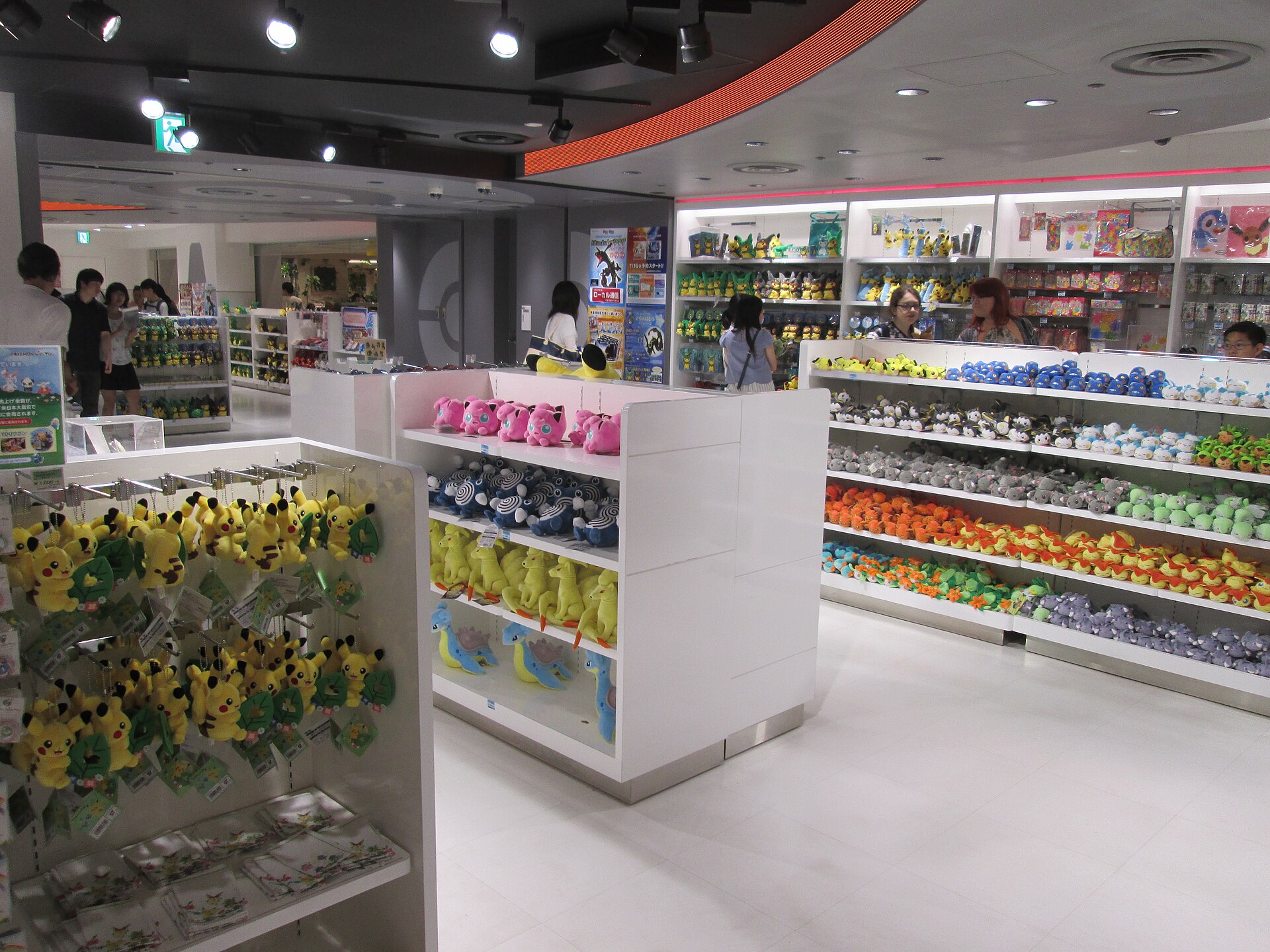
The flagship, and on any normal day the correct answer if you are only doing one. It sits on the second floor of the ALPA section of Sunshine City, which is itself a fifteen-minute walk from Ikebukuro Station through an underground passage that is better signposted than it looks. Allow the walk; Sunshine City is not attached to the station in the way department stores usually are.
Adjacent is Pikachu Sweets by Pokemon Cafe, a walk-in dessert counter — no reservation, unlike the cafe proper. Drinks and desserts with character decoration, priced as you would expect for a licensed cafe, and a queue on weekends. It is a reasonable consolation prize if you failed to get a cafe booking, which most people do.
Sunshine City also holds an aquarium, an observation deck and a Namja Town, so this is the one branch that slots into a self-contained half-day with children. Our Ikebukuro guide maps the complex properly.
Tokyo DX, Nihonbashi
On the fifth floor of the Takashimaya shopping centre’s East Building, reached from Nihonbashi Station on the Ginza and Tozai lines, with the Toei Asakusa line station four minutes away on foot. It opened in 2018 as the first “DX” concept store and it is noticeably more design-led than the others: darker fit-out, a bar-style counter, a slightly more adult presentation of what is nominally a children’s brand.
Its real distinction is that the Pokemon Cafe is attached. If you have a booking, this is where you are going, and you can shop before or after without leaving the floor. If you do not have a booking, the store still stands on its own — the range is close to Mega Tokyo’s and the location is far more convenient for anyone staying near Tokyo Station or Ginza.
Nihonbashi is also one of the more pleasant parts of central Tokyo to be stuck in for an hour: the department stores are old-school, the bridge itself is a national landmark buried under an expressway, and the food halls in the basement are excellent. That is a more interesting hour than the equivalent hour in Ikebukuro.
Shibuya
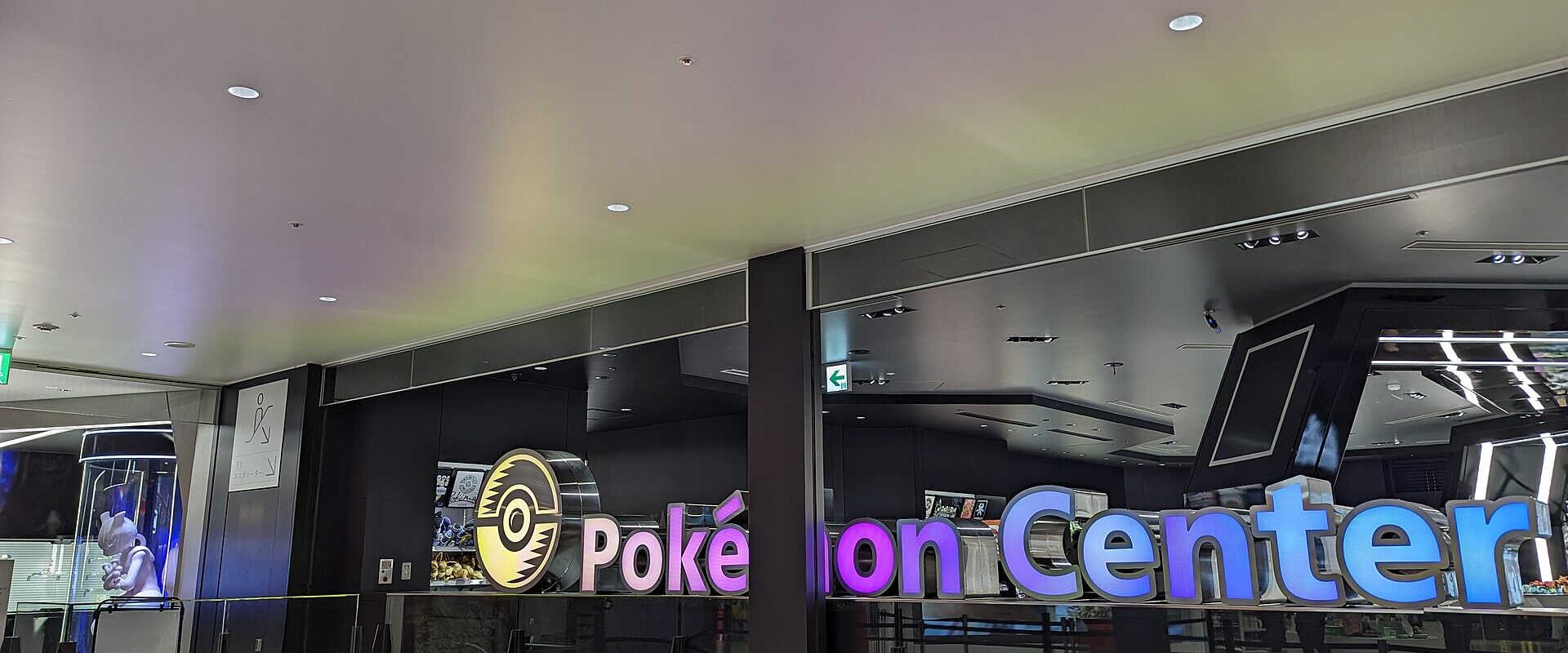
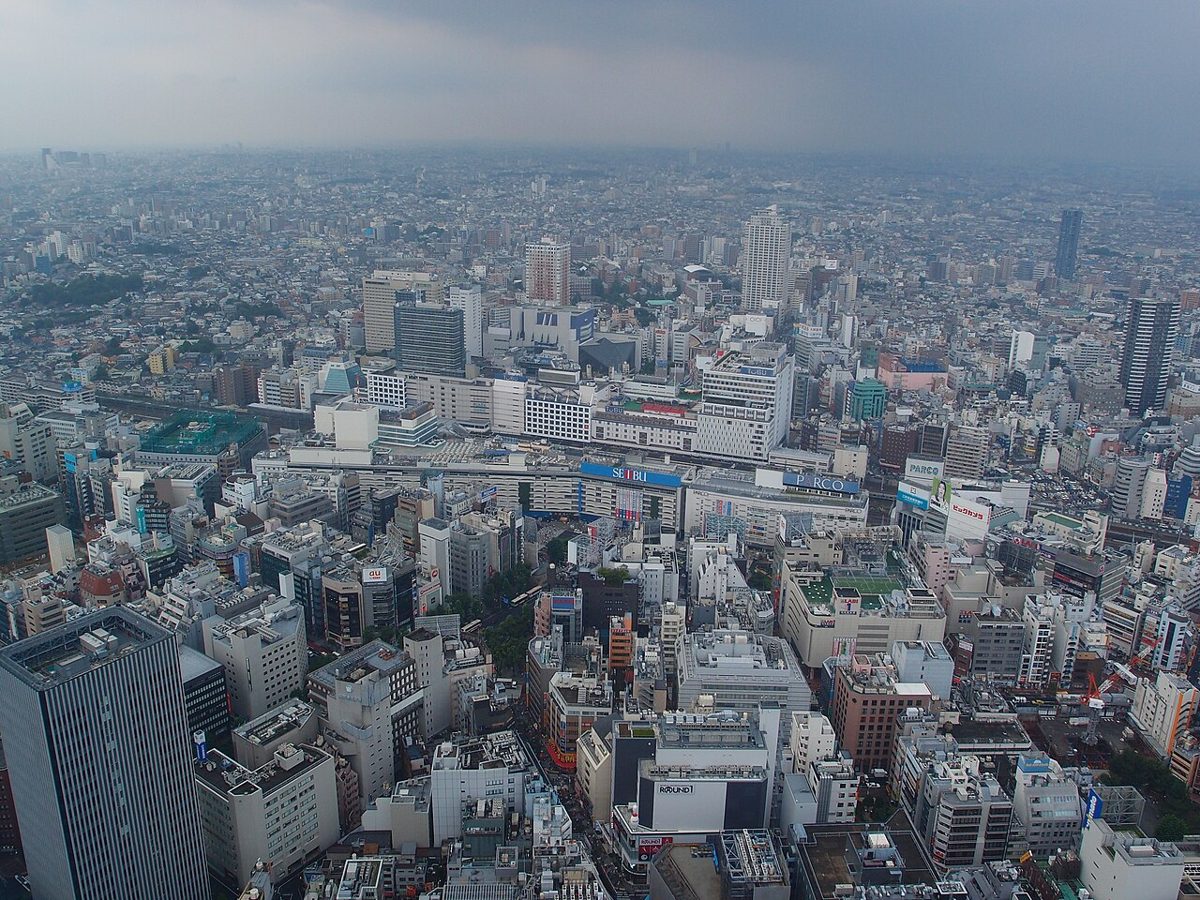
Sixth floor of Shibuya PARCO, about five minutes’ walk up from Shibuya Station and the crossing. Easy to fold into a day in Shibuya.
The same floor of PARCO holds a Nintendo Tokyo store, a Capcom Store and Jump Shop, which makes this the most efficient floor in Tokyo for anyone shopping across several Japanese game and manga franchises in one visit. That clustering, not the Pokemon store itself, is the argument for coming here. Expect queues to enter the whole floor at weekends and during any launch period.
Range is thinner than Mega Tokyo or Nihonbashi. If you are hunting something specific, this is the branch most likely to disappoint you. Our Shibuya guide covers what else is worth the detour while you are up there.

Skytree Town
Fourth floor of the East Yard at Tokyo Solamachi, the mall wrapped around the base of the Skytree, directly connected to Tokyo Skytree Station on the Tobu line and a short walk from Oshiage on the Metro.
Honest verdict: do not make a special trip. This branch exists to catch the enormous captive traffic going up the tower, and its range reflects that — strong on Skytree-adjacent souvenirs and the crowd-pleasing lines, thin on everything else. If you are already doing the Skytree, half an hour here is a perfectly good use of the time, and Solamachi is a far better mall than it needs to be, with a Studio Ghibli shop, a Rilakkuma store and one of the better food floors in east Tokyo. If you are not doing the Skytree, go to Ikebukuro or Nihonbashi.
If you have not decided whether the tower itself is worth it, our Skytree versus Tokyo Tower comparison settles that argument before you buy a ticket.
The Pokemon Cafe, and whether to bother
There is one in Tokyo, at Nihonbashi Takashimaya S.C. East Building 5F, open 10:30 to 21:00 with last orders at 20:30. It reopened in mid-2026 after a refurbishment. It is reservation only, bookings go through the official website and nowhere else, and phone or email requests are not accepted.
How the booking actually works
Reservations open online at 18:00 Japan time on the 1st of the month for the whole of the following month — so for a table on 20 November, you are online at 18:00 on 1 October. Weekend lunch slots are the hardest; weekday mid-afternoon is obtainable if you are punctual.
Practical advice that works: be logged in and on the page before the hour, have your party size decided, and accept any slot on your target day rather than holding out for a better time. Cancellations do get released, so a check the evening before is worth ninety seconds.
Is it worth the effort?
For adults, honestly, no. It is a licensed character cafe: the food is decorated rather than good, prices are roughly double what the same plate costs elsewhere, and you are on a seating time limit. The draw is the show — a short Pikachu appearance at intervals, the plating, the exclusive tableware you can buy.
For a child who cares about Pokemon, it is a different calculation entirely and a genuinely good memory. That is the test. If nobody in the party is under twelve or genuinely sentimental about the franchise, the Pikachu Sweets counter at Ikebukuro delivers eighty per cent of the experience with none of the booking stress. The same logic applies across the city’s other character cafes, which our themed cafe guide ranks by how much they actually give you.
What is genuinely exclusive
This is where most guides go vague, so plainly: the great majority of the stock is identical between branches. The same plush, the same stationery, the same seasonal range, produced centrally and distributed across every Pokemon Center in Japan. Travelling across Tokyo from one branch to another to “see what is different” is largely a wasted journey.
What does vary:
- Depth of range. Mega Tokyo carries species and sizes that smaller branches simply do not stock. This is the real difference.
- Location-tagged goods. Small runs of items branded to a specific store or city — a Pikachu in Skytree livery, that kind of thing.
- Japan-exclusive lines. A large share of what is on the shelves does not reach overseas Pokemon Centers at all, including most of the stationery, the food-adjacent goods and the seasonal campaigns. This is the actual reason to shop here rather than online at home.
- Trading cards. Japanese-language sets, different print runs, and periodic restrictions on purchase quantity during hyped releases. Card stock varies branch to branch more than anything else, and resellers clear shelves early.
Prices are fixed nationally — no branch is cheaper than another, and there is no outlet pricing. What you can control is the tax.
Centers versus Stores
One distinction that trips people up constantly: a Pokemon Center and a Pokemon Store are not the same thing. The Stores are small kiosk-format shops in stations, airports and shopping centres — there are several around Tokyo, including Tokyo Station’s underground character street and the airports — and they carry a heavily reduced range aimed at travellers buying a present on the way out. They are useful for exactly that, and a genuine trap if you have gone out of your way expecting the full catalogue. Check which format you are heading to before you commit half a morning.
Airport branches deserve a specific mention: if your entire Pokemon shopping is a gift for one child at home, buying it at Narita or Haneda on departure day is completely reasonable and saves carrying it around Japan for a fortnight. You lose the range and you lose the tax-free saving, but you also lose nothing you would have noticed.
Buying trading cards
Cards are the one category where the branch, the day and the hour genuinely matter. Japanese sets release on Fridays, resellers queue, and popular products are gone from the shelves of every Tokyo branch within the morning. Stores impose per-customer limits during hyped releases, sometimes with numbered entry tickets handed out before opening. If you are here casually, buy what is on the shelf mid-week and do not build expectations around a specific set. If you are here seriously, the specialist card shops in Akihabara and Nakano hold singles and older sealed product that no Pokemon Center carries.
Practicalities
Tax-free shopping
Tax-free shopping is generally available for qualifying purchases with a passport, so check at the till. Bring the physical passport, not a photograph — an image on a phone will be refused. The counter and queue are usually separate from the normal tills, so factor in extra time at busy periods. From 1 November 2026 tax-free becomes a refund system: you pay the tax-inclusive price and the tax is refunded once you show the goods at customs on departure. The rules and the recent changes are set out in our tax-free shopping guide.
Payment and queues
Cards and the usual IC and QR payments are accepted everywhere. Weekend afternoons at Shibuya and Ikebukuro run to genuinely long till queues; if you can shop on a weekday morning, do. Card releases and campaign launch days are a different order of busy again, with numbered entry and purchase limits.
Getting it home
Plush is light but bulky and will eat your luggage allowance in volume rather than weight. If you have overshot, forwarding a box home or to your next Japanese hotel by takkyubin is cheap and reliable. Our luggage guide covers how that works from a convenience store counter.
Poke Lids
Japan has a national series of Pokemon-decorated manhole covers, several of which are in the Tokyo area, each tied to a specific spot. They are free, they are outdoors, and hunting one is a decent excuse to walk somewhere you would not otherwise go. The official Poke Lid site is the place to look for the locations.
So which one?
- One store, best range: Mega Tokyo, Ikebukuro — assuming it has reopened.
- One store, central and pleasant: Tokyo DX, Nihonbashi.
- Shopping several franchises at once: Shibuya PARCO 6F, for the Nintendo and Capcom stores on the same floor.
- Already at the tower: Skytree Town, and no special trip.
- Travelling with a Pokemon-obsessed child: Ikebukuro for the store and Sunshine City’s other attractions, or Nihonbashi if you won the cafe booking.
Two branches is plenty for anybody. Four is a completist’s itinerary, and by the third you will be looking at the same plush wall for the third time. The city’s wider anime geography — Akihabara, Nakano, Otome Road, the museums — is a far better use of a second day, and our Tokyo anime guide lays out how those fit together. If you are building a family itinerary around this, Tokyo with kids has the rest of the day covered.
Frequently Asked Questions
How many Pokemon Centers are there in Tokyo?
Four: Mega Tokyo in Ikebukuro’s Sunshine City, Tokyo DX in Nihonbashi, Shibuya in PARCO, and Skytree Town in Tokyo Solamachi. There are also Pokemon Store outlets — smaller kiosk-format shops in stations and airports, including Tokyo Station and Narita — which carry a much reduced range and should not be confused with the full Centers.
Which Pokemon Center in Tokyo is the biggest?
Mega Tokyo, on the second floor of the ALPA mall inside Sunshine City in Ikebukuro, closed in late March 2026 and reopened on 24 August 2026 after partial renovation, so check current opening hours before travelling.
Do I need a reservation for the Pokemon Cafe in Tokyo?
Yes. The Pokemon Cafe at Nihonbashi is reservation-only, bookings are made exclusively through its official website, and walk-ins are not accepted. Slots open at 18:00 Japan time on the 1st of the month for the whole of the following month. The Pikachu Sweets counter beside the Ikebukuro store is walk-in, and is the fallback most people end up using.
Is the merchandise different at each Pokemon Center?
Mostly not. The core catalogue is national and identical across branches. What differs is depth of stock, a small number of location-branded items, and trading card availability, which fluctuates a lot. Visiting several branches hoping to find different products is not a good use of a day in Tokyo.
Can I claim tax-free at a Pokemon Center?
Generally yes, on qualifying purchases when you present a physical passport, but check at the till. A photo of your passport will not be accepted. Tax-free processing usually happens at a dedicated counter rather than the ordinary till, so allow extra time at busy periods. From 1 November 2026 tax-free becomes a refund system: you pay the tax-inclusive price and the tax is refunded once you show the goods at customs on departure.
Photo Credits
- Pokemon Center Shibuya entrance – 2024.01.22 Pokémon Center Shibuya 02 by 人人生來平等, CC BY-SA 4.0, via Wikimedia Commons.
- Plush displays inside Pokemon Center Mega Tokyo – Mega Tokyo Pokémon Center wares 2 by Maplestrip, CC BY 3.0, via Wikimedia Commons.