Tokyo Anime & Pop Culture · Guide №166
Anime Pilgrimage in Tokyo: Real Locations From 20+ Series
The real Tokyo shrines, stairs, stations and streets from Your Name, Suzume, Love Live!, Bocchi the Rock! and 20 more series, grouped into routes, with the manners that keep these neighbourhoods welcoming.
目次 — Contents
- What an anime pilgrimage is
- Anime pilgrimage Tokyo: locations at a glance
- Makoto Shinkai’s Tokyo
- Akihabara, Kanda and Ochanomizu
- Western Tokyo: Shimokitazawa and Koenji
- Ikebukuro, Azabu-Juban and central Tokyo
- Eastern Tokyo: statues in Katsushika
- Anime pilgrimages beyond Tokyo
- Pilgrimage etiquette: how not to be a problem
- How to plan a route
- Is an anime pilgrimage worth it?
- Frequently Asked Questions
- Photo Credits
This article contains advertising. Our booking links are routed through a partner that adds commission tracking automatically, so if you book through one we earn a commission from the provider, at no extra cost to you. It never affects what we recommend. Affiliate disclosure
An anime pilgrimage in Tokyo means visiting the real streets, shrines, stations and bridges that appear in anime, and the city is full of them. The best known are the Suga Shrine stairs from Your Name, Shinjuku Gyoen from The Garden of Words, Kanda Myojin from Love Live! and Shimokitazawa from Bocchi the Rock!. Most are free and a short train ride apart.
This guide lists real locations from more than twenty series, grouped by area so you can plan a route, with what you will actually find there, which scenes to recreate, and the manners that matter, because many of these places are homes, schools and working shrines. For the wider anime scene, from shops to museums and events, start with our Tokyo anime guide.
What an anime pilgrimage is
In Japanese, it is called seichi junrei, “pilgrimage to sacred places”. Fans travel to the real-world spots that inspired the backgrounds of an anime, stand where a character stood, take a comparison photo, and often leave a message. Many anime studios photograph real locations as reference for their background art, so the match between screen and street can be remarkably precise.
Local areas have noticed. Some shrines sell anime-themed prayer plaques, shopping streets put up posters, and the Anime Tourism Association publishes an annual selection called “88 Anime Pilgrimage Sites of Japan.” Other places, particularly residential ones, have had to put up signs asking fans to be quieter. Both reactions matter to how you visit.
Anime pilgrimage Tokyo: locations at a glance
| Series | Location | Area | Nearest station | Tip |
|---|---|---|---|---|
| Your Name | Suga Shrine stairs | Yotsuya, Shinjuku | Yotsuya-sanchome or Yotsuya | Residential; go early and be quiet |
| Weathering With You | Kisho (Weather) Shrine at Koenji Hikawa Shrine | Koenji | Koenji | Weather-themed charms and plaques |
| The Garden of Words | Shinjuku Gyoen rest pavilion and pond | Shinjuku | Sendagaya or Shinjuku-gyoenmae | Paid garden; best in rain |
| 5 Centimeters per Second | Railway crossing near Sangubashi station | Yoyogi | Sangubashi (Odakyu) | Active crossing; stay off the tracks |
| Suzume | Hijiribashi bridge view | Ochanomizu | Ochanomizu | Look from the bridge over the Kanda River |
| Love Live! | Kanda Myojin and its side steps | Akihabara | Suehirocho, Ochanomizu or Akihabara | Working shrine; collab goods at times |
| Steins;Gate | Radio Kaikan and Akihabara streets | Akihabara | Akihabara | Combine with shopping |
| Bocchi the Rock! | Shimokitazawa streets and live houses | Shimokitazawa | Shimokitazawa | Go in the evening for live music |
| Durarara!! | Streets around Ikebukuro station | Ikebukuro | Ikebukuro | Pair with Otome Road |
| Sailor Moon | Azabu-Juban | Minato | Azabu-Juban | Quiet, old shopping street |
| March Comes in Like a Lion | Tsukishima and the Sumida River bridges | Chuo | Tsukishima | Eat monjayaki after |
| Kochikame | Character statues around Kameari | Katsushika | Kameari | Statue-hunting walk |
| Captain Tsubasa | Character statues around Yotsugi | Katsushika | Yotsugi (Keisei) | Combine with Kameari |
Makoto Shinkai’s Tokyo
No director has put Tokyo on screen more lovingly than Makoto Shinkai, and his films are the backbone of most Tokyo pilgrimage routes. Rain, light through windows, train crossings and staircases are all recognisably real.

Your Name (Kimi no Na wa): Suga Shrine stairs, Yotsuya
The red-railed staircase leading up to Suga Shrine in Yotsuya is where Taki and Mitsuha finally pass each other in the film’s final scene, and it is the single most visited anime location in Tokyo. The stairs are in a quiet residential neighbourhood, about ten minutes’ walk from Yotsuya-sanchome station on the Marunouchi line or a little further from JR Yotsuya.
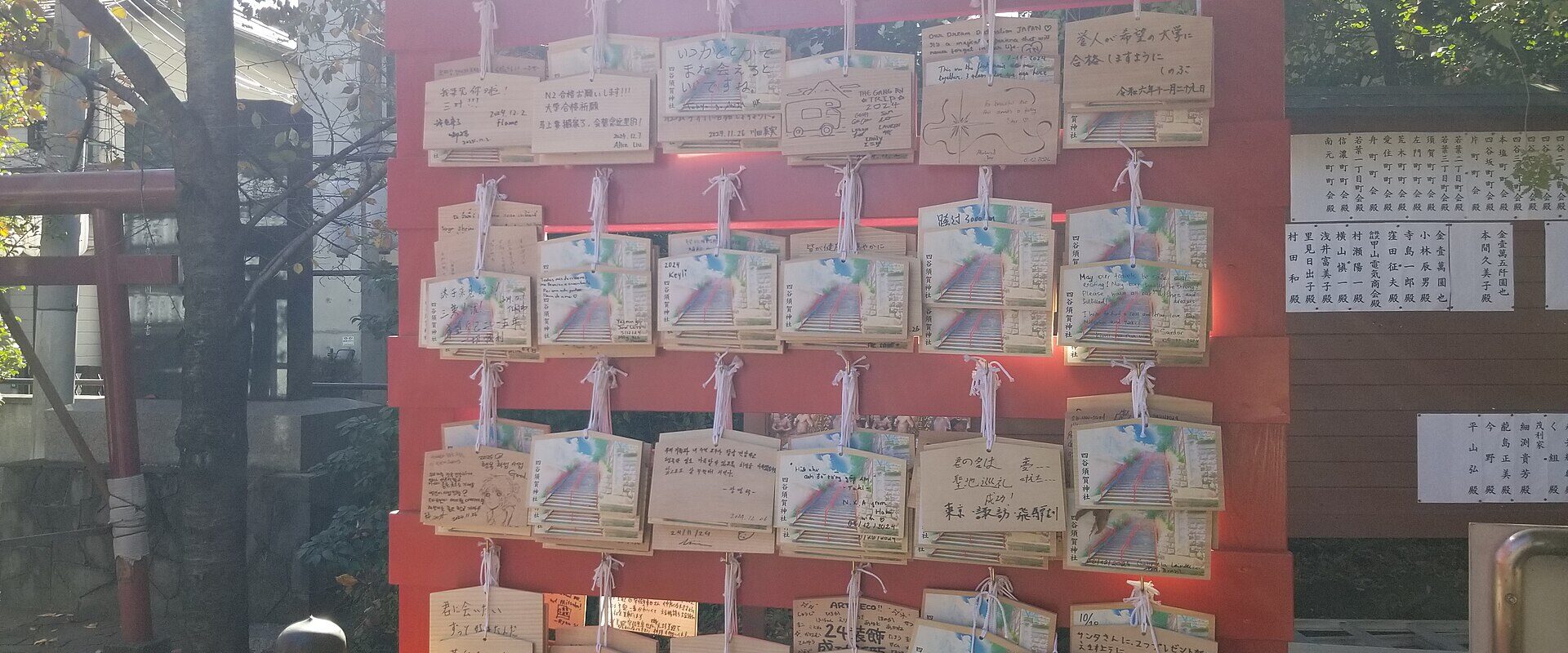
The shrine itself has embraced its fame: its wooden ema prayer plaques carry an illustration of the famous stairs, and the racks are covered in messages in dozens of languages. Take your photo from the bottom of the stairs, keep the pavement clear, and remember that people live in the houses around you. Early morning is best for both light and quiet. Yotsuya station and the nearby streets also appear in the film.
Weathering With You: Koenji Hikawa Shrine
Inside the grounds of Koenji Hikawa Shrine, a few minutes’ walk from JR Koenji station, is the Kisho Jinja, a tiny shrine dedicated to the weather. It was built in 1944 by the army’s meteorological department and is said to be the only shrine of its kind in Japan. It plays a central role in Weathering With You, whose heroine can make the sun shine. The shrine offers weather-themed charms and plaques shaped like sandals, a traditional Japanese wish for good weather. Koenji itself is a relaxed, second-hand-shop neighbourhood that makes a good afternoon.
The Garden of Words: Shinjuku Gyoen
Much of this 2013 film takes place in Shinjuku Gyoen, where a schoolboy skipping class meets a mysterious woman in a rain shelter on rainy mornings. Fans head for the traditional Japanese garden area and its rest pavilion by the pond, which closely matches the film’s shelter. Sendagaya station, on the JR Chuo-Sobu line, also appears.
Shinjuku Gyoen charges ¥500 for adults and is closed on Mondays (or the next weekday when Monday is a public holiday), except that it opens daily from 25 March to 24 April and from 1 to 15 November. Go on a rainy weekday morning if you want the film’s atmosphere: you will have the garden almost to yourself. Our Tokyo parks and gardens guide covers the rest of the park.
5 Centimeters per Second: Sangubashi railway crossing
A scene in Shinkai’s 2007 film is set at a small railway crossing near Sangubashi station on the Odakyu line. In the film, cherry petals drift across the tracks as two trains pass between the characters. It is beautiful in spring, and a recent live-action adaptation of the film has brought a new wave of visitors.
This is an active level crossing with frequent trains. Never stand on the tracks or linger in the crossing for photos, and stay well back when the barriers come down.
Suzume: Ochanomizu
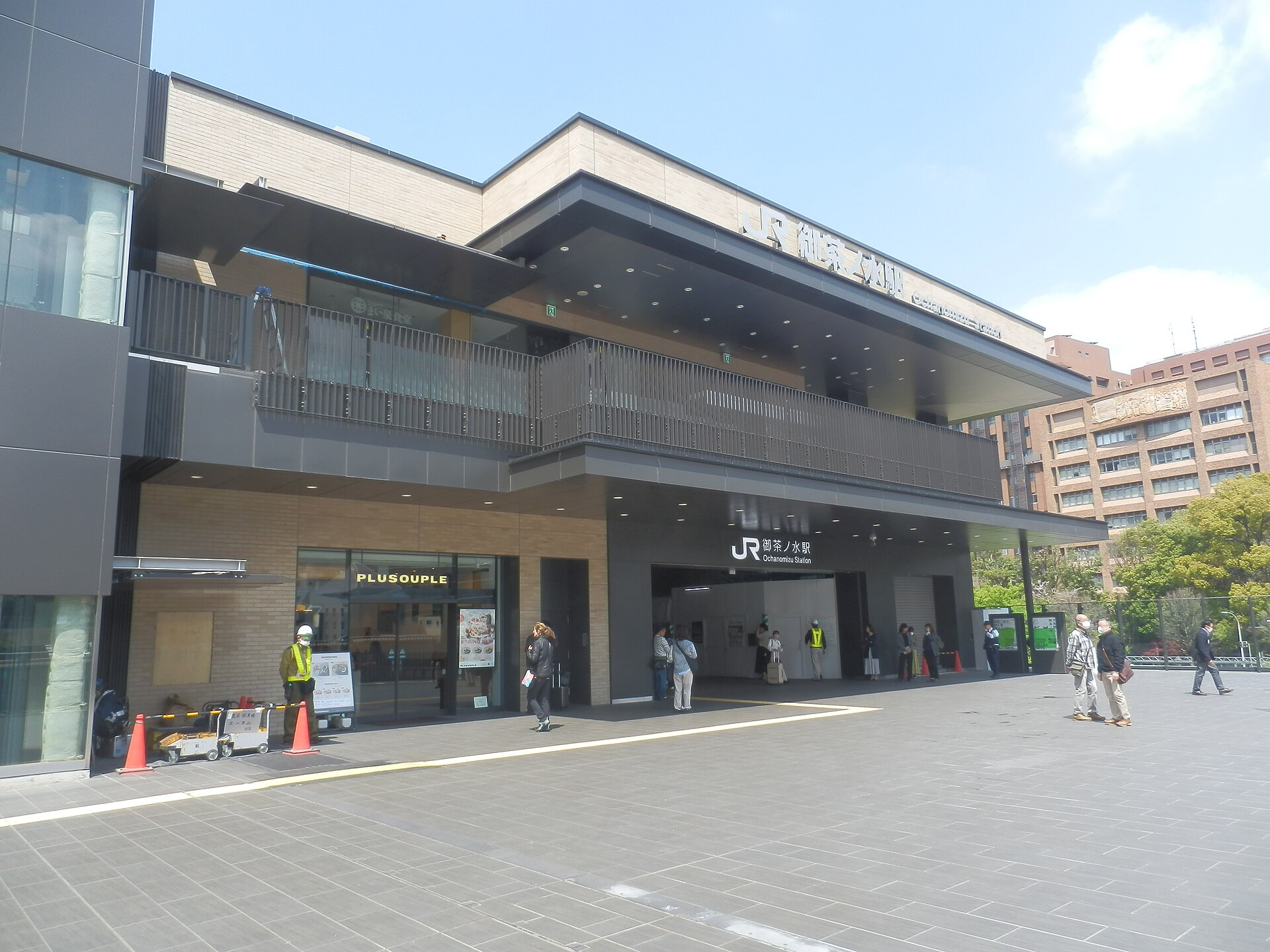
In Suzume, the Tokyo scenes centre on Ochanomizu, a student and hospital district one stop from Akihabara. The most recognisable view is from Hijiribashi bridge, looking along the deep Kanda River gorge to Ochanomizu station, with the Marunouchi line’s red trains briefly crossing in the open between tunnels. The station has been extensively rebuilt in recent years, so some angles look different from the film, but the view down the river remains. Combine it with a walk to Kanda Myojin and Akihabara, below.
Akihabara, Kanda and Ochanomizu
Love Live!: Kanda Myojin
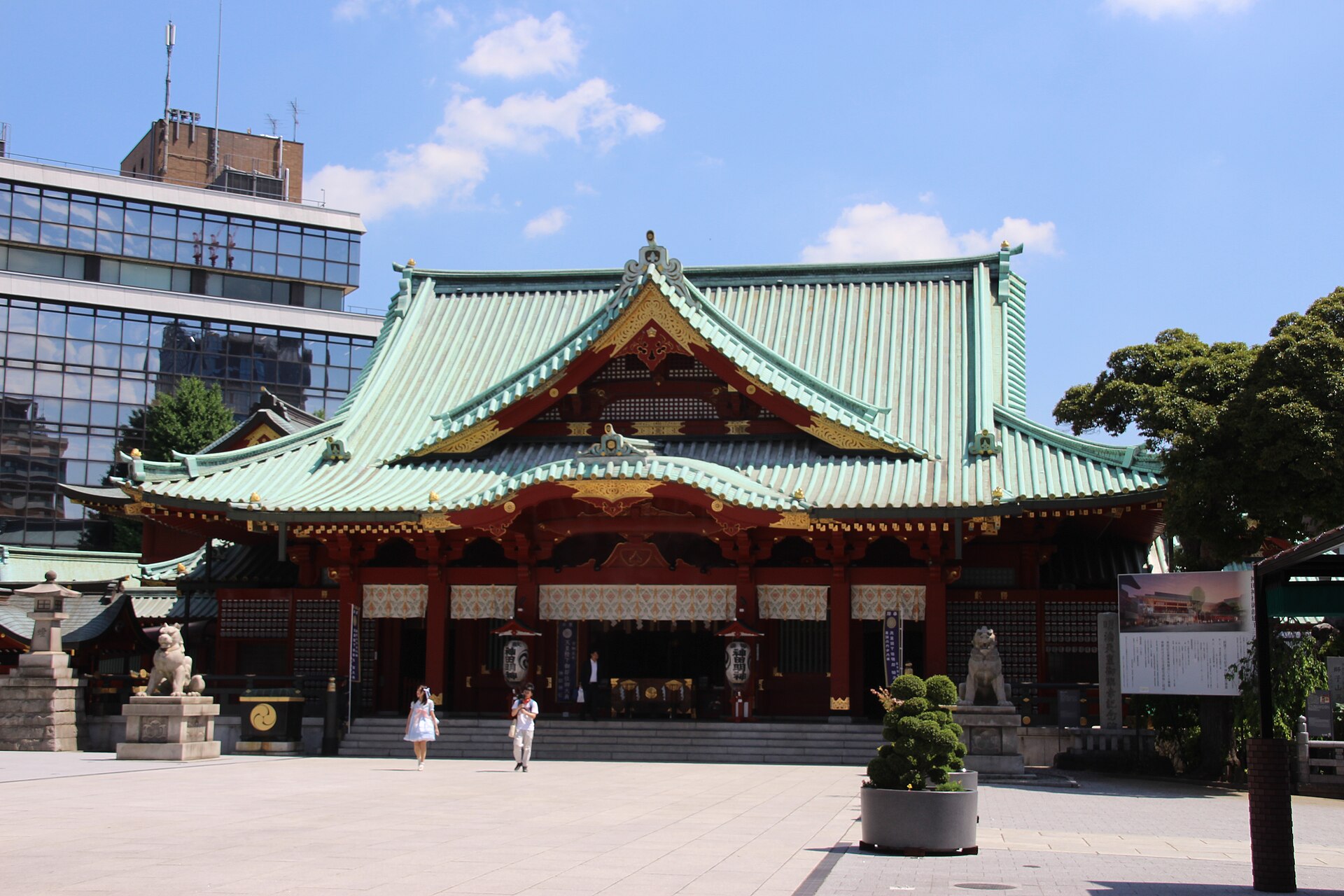
Kanda Myojin, a large and colourful shrine with a history going back more than a thousand years, is the most anime-friendly shrine in Tokyo. In Love Live! School Idol Project, Nozomi Tojo works there as a shrine maiden, and the idol group μ’s trains by running up and down the steep stone stairs at the shrine’s side entrance, known to fans as the “Otokozaka”. The shrine has hosted several anime collaborations over the years, with special plaques and charms, and it is also the patron shrine of Akihabara’s businesses, so you will see electronics companies’ names on its lanterns.
It is a working shrine with weddings, prayers and festivals, including the large Kanda Matsuri in May of odd-numbered years. Our Tokyo temples and shrines guide explains how to visit respectfully.
Steins;Gate: Akihabara
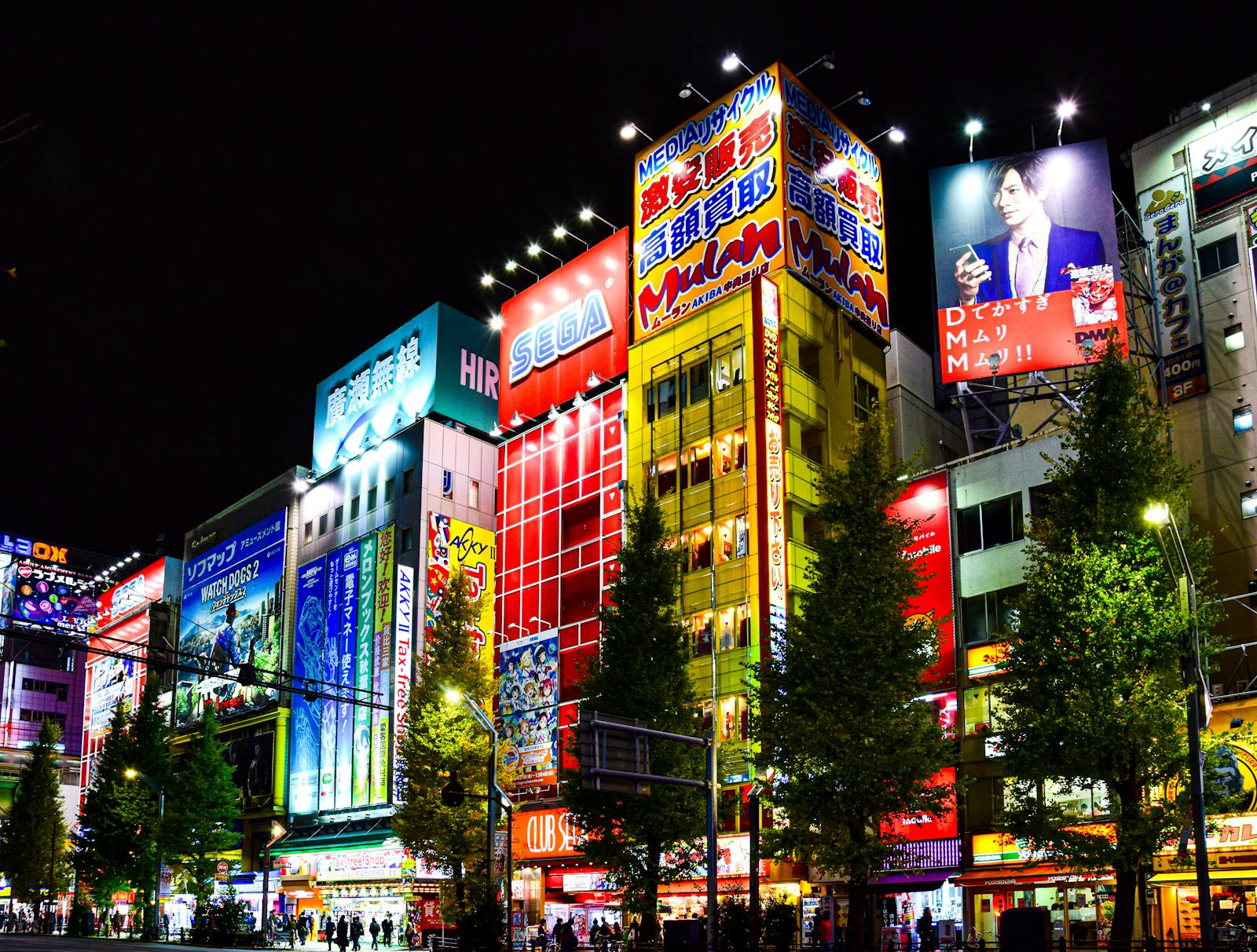
The time-travel thriller Steins;Gate is set in Akihabara. Fans also visit the small Yanagimori Shrine by the Kanda River, which appears as the shrine in the series. Akihabara appears in countless other anime too, so a pilgrimage here pairs naturally with a shopping day; see our Akihabara guide.
Western Tokyo: Shimokitazawa and Koenji
Bocchi the Rock!: Shimokitazawa
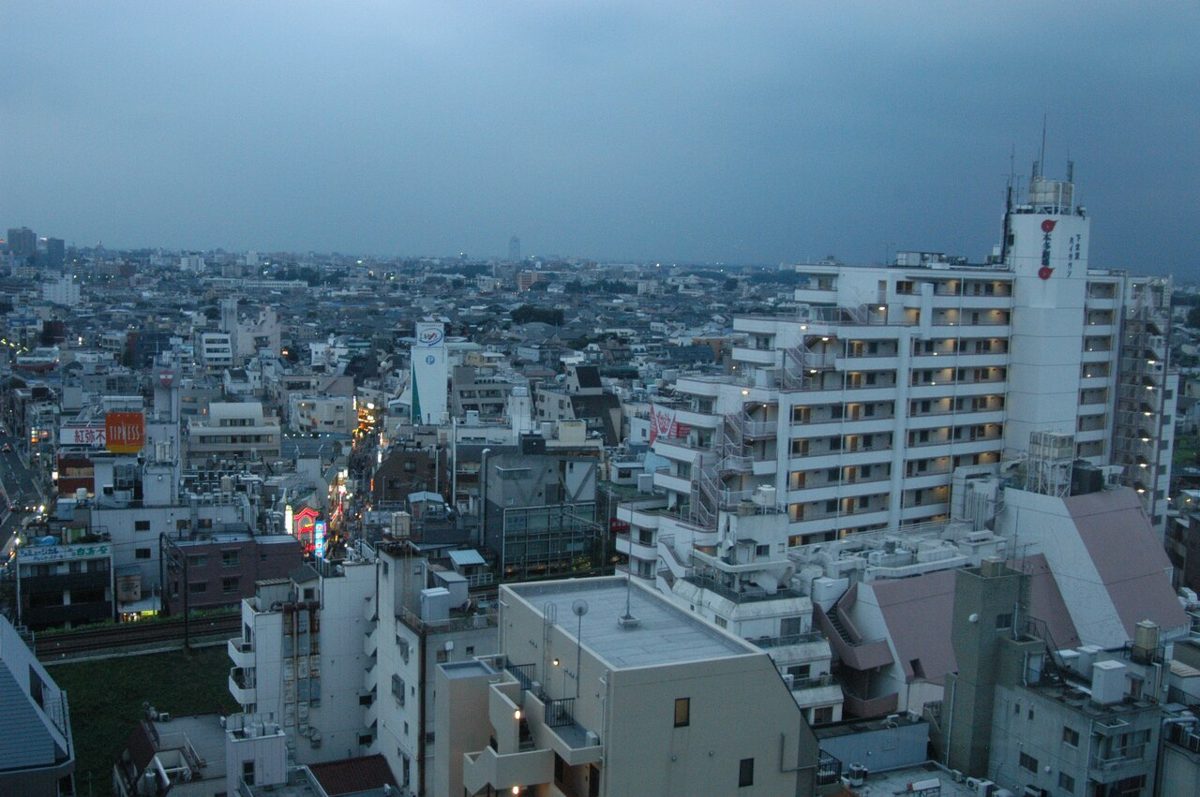
The 2022 hit about a painfully shy guitarist is set in Shimokitazawa, Tokyo’s small-venue music neighbourhood, and fans now walk its streets looking for the stations, shops, crossings and parks from the series. The band’s home live house, STARRY, is modelled on Shelter, a real basement live house close to Shimokitazawa station. The series has been so popular that the Senrogai development above the old railway tracks has hosted themed pop-ups.
The best way to do this pilgrimage is in the evening: walk the locations in daylight, eat, and then catch a show at one of the neighbourhood’s live houses. Our Shimokitazawa guide covers the vintage shops and cafes too.
Ikebukuro, Azabu-Juban and central Tokyo
Durarara!!: Ikebukuro
Durarara!! is set in Ikebukuro and built around the district’s streets, gangs and urban legends, so a walk around the station area suits it well. It fits easily into an Ikebukuro shopping day; see our Ikebukuro guide.
Sailor Moon: Azabu-Juban
Usagi and her friends live in Azabu-Juban, a real, slightly old-fashioned neighbourhood of shopping streets between Roppongi and Tokyo Tower. The Hikawa Shrine where Rei is a shrine maiden is often linked by fans to a real shrine of the same name in the area. There are no big displays here, just the atmosphere of the setting, which makes it a quiet, pleasant detour. Pair it with Tokyo Tower, a regular sight in the series.
March Comes in Like a Lion: Tsukishima
This gentle series about a young shogi player is set in the Tsukishima area beside the Sumida River. Walk from Tsukishima across to the riverside paths at dusk, and end with monjayaki, the district’s gooey griddle speciality, on Monja Street.
Blue Period: Ueno
The art-school drama Blue Period revolves around the entrance exams for a university modelled closely on the Tokyo University of the Arts in Ueno Park. The campus sits among the park’s museums, so it is an easy detour on a museum day. Please remember it is a working university; view it from the public areas only.
Digimon and Odaiba
The first Digimon Adventure series set its dramatic Tokyo battles around Odaiba. Odaiba is easy to combine with other sights; our Odaiba guide has details.
Eastern Tokyo: statues in Katsushika
Katsushika ward, in Tokyo’s east, honours manga artists with statues of their characters, making for a fun, easy walk.
- Kochikame in Kameari. The long-running manga and anime about a lazy police officer at a Kameari police box ran in Weekly Shonen Jump for four decades. More than a dozen bronze statues of its characters are scattered around Kameari station on the JR Joban line; a map is posted at the station.
- Captain Tsubasa in Yotsugi. Creator Yoichi Takahashi grew up in the area, and statues of Tsubasa and his teammates stand in local parks around Yotsugi station on the Keisei Oshiage line.
Both can be combined in a half day, with a stop at Shibamata, home of the classic film series Otoko wa Tsurai yo, and its old temple street.
Anime pilgrimages beyond Tokyo
Some of the most famous anime locations are a day trip away. These pair naturally with the day trips we already cover.
| Series | Location | From Tokyo | Related guide |
|---|---|---|---|
| Slam Dunk | Kamakura and the Enoden line | Check train times | Kamakura day trip |
| Bocchi the Rock!, Tari Tari and others | Enoshima island and the Shonan coast | Check train times | Enoshima day trip |
| Neon Genesis Evangelion | Hakone, the setting for “Tokyo-3” | About 85 minutes from Shinjuku to Hakone-Yumoto | Hakone day trip |
| Laid-Back Camp | Lake Motosu and the Fuji Five Lakes | Check train times | Kawaguchiko day trip |
| Anohana | Chichibu, Saitama | About 80 minutes by limited express from Ikebukuro | — |
| Lucky Star | Washinomiya Shrine, Saitama | Check train times | — |
A special note on Slam Dunk: the crossing near Kamakurakokomae has become so crowded that local authorities have had to post guards and ask visitors not to stand in the road. If you go, keep to the pavement, let residents and traffic pass, and do not step into the crossing for the shot.
Pilgrimage etiquette: how not to be a problem
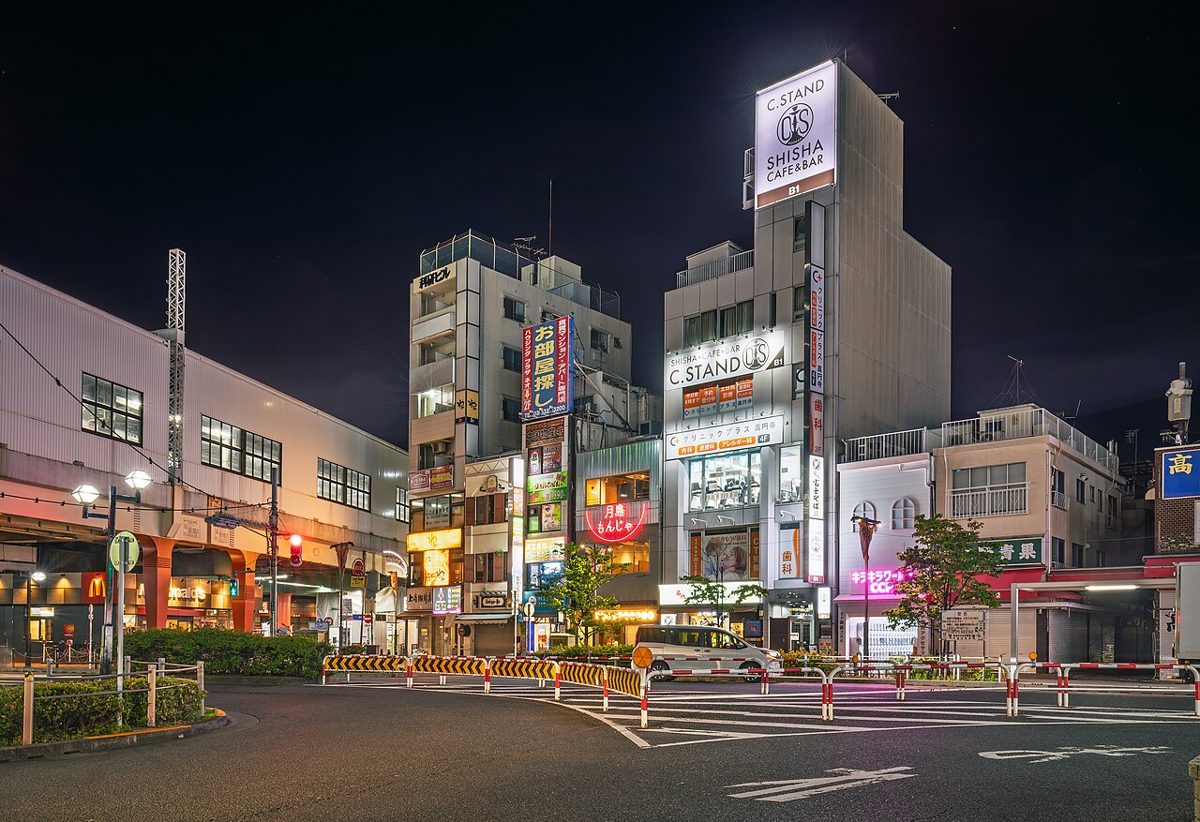
- Residential streets are homes. Keep your voice down, do not block driveways or pavements, and do not photograph people or houses.
- Never enter school grounds. Many anime schools are real. Photograph from the public street, briefly, and never when students are arriving or leaving.
- At shrines, you are a guest. Bow at the torii, do not sit on steps where people pray, and make a small offering if you take photos. Buying the anime-themed ema supports the shrine.
- Stay safe at railway crossings. Never stand on the tracks or in the crossing.
- No tripods or large groups on narrow streets.
- Leave nothing behind. Some locations have had problems with fans leaving figures, notes and litter.
- Go early. Mornings are quieter for residents and better for your photos.
Our Japanese etiquette guide covers the rest.
How to plan a route
Tools that help
- Pilgrimage map websites and apps such as AniTabi and Anime Pilgrimage collect screenshots side by side with real-world photos and map pins, which is by far the easiest way to find exact angles.
- The Anime Tourism Association’s 88 spots list highlights officially welcoming locations across Japan.
- A screenshot folder on your phone for each series, so you can line up your shot on location.
- An IC card. Pilgrimages involve lots of short train rides; see our Suica vs Pasmo guide.
A one-day Makoto Shinkai route
- 08:30, Suga Shrine stairs, Yotsuya (Your Name), before the neighbourhood gets busy.
- 09:30, Shinjuku Gyoen (The Garden of Words), from opening, via Shinjuku-gyoenmae or Sendagaya.
- 11:30, Sangubashi crossing (5 Centimeters per Second), two stops from Shinjuku on the Odakyu line.
- 13:00, lunch in Shinjuku, the district where The Garden of Words is set.
- 14:30, Koenji Hikawa Shrine (Weathering With You), a ride west on the JR Chuo line.
- 16:30, Ochanomizu and Hijiribashi (Suzume), reached on the Chuo line, finishing at Kanda Myojin and Akihabara for the evening.
It is a full day with plenty of walking. For more on the neighbourhoods, see our Shinjuku guide. If you want to collect comparison photos with good light, the Tokyo photo spots guide has timing tips.
Is an anime pilgrimage worth it?
For fans, yes, and often more than they expect. The real value is not the photo but the way it takes you into neighbourhoods most tourists never see: residential Yotsuya, Koenji’s shrine, Tsukishima’s river bridges, Katsushika’s shopping streets. You see everyday Tokyo through a story you already love.
If you have not seen the series, most locations are just pleasant streets, a staircase or a level crossing, and not worth a special trip on their own. In that case, fold one or two into your normal sightseeing: Kanda Myojin with Akihabara, Shinjuku Gyoen with Shinjuku, Shimokitazawa for its own sake.
Frequently Asked Questions
Where are the Your Name stairs in Tokyo?
The stairs from the final scene of Your Name lead up to Suga Shrine in Yotsuya, Shinjuku ward. They are about ten minutes’ walk from Yotsuya-sanchome station on the Marunouchi line. The area is residential, so visit early in the day, keep the stairs and pavement clear, and keep noise to a minimum.
What is anime pilgrimage?
Anime pilgrimage, or seichi junrei in Japanese, means visiting real-world locations that appear in or inspired anime, such as shrines, stations, streets and bridges. Fans take comparison photos and often leave messages on prayer plaques. Tokyo has locations from dozens of series, including many films by Makoto Shinkai.
Which shrine in Tokyo is in Love Live?
Kanda Myojin, near Akihabara, appears in Love Live! School Idol Project. Nozomi Tojo works there as a shrine maiden, and the idol group trains on the steep steps at the shrine’s side entrance. The shrine has run several collaborations with the series and remains a popular stop for fans.
Where is The Garden of Words filmed?
The Garden of Words is set mainly in Shinjuku Gyoen National Garden, especially the rest pavilion by the pond in its Japanese garden area. Sendagaya station also appears. Shinjuku Gyoen charges ¥500 for adults and is closed on Mondays (or the next weekday when Monday is a public holiday), except that it opens daily from 25 March to 24 April and from 1 to 15 November. A rainy weekday morning matches the film’s atmosphere best.
Is it rude to visit anime locations in Japan?
No, most places welcome respectful visitors, and some shrines and shopping streets actively embrace fans. Problems arise when visitors block roads, enter schools, stand on railway crossings, photograph residents or make noise in residential areas. Visit early, stay on public pavements, and treat shrines as places of worship.
Photo Credits
- Your Name ema at Suga Shrine, Yotsuya – Ema at Suga Shrine in Shinjuku, Tokyo, 9 December 2024 by Yuet Man Lee, CC BY-SA 4.0, via Wikimedia Commons.
- Hijiribashi exit of Ochanomizu station – JRE-Chuo-Line-Ochanomizu-Sta-Hijiribashi 2025 by Kaze315, CC BY-SA 4.0, via Wikimedia Commons.
- Main hall of Kanda Myojin – Kanda-Myojin grand hall by Hyppolyte de Saint-Rambert, CC BY-SA 4.0, via Wikimedia Commons.