Tokyo on a Budget · Guide №127
Tokyo 100 Yen Shops Guide: Best Daiso, Seria & Can Do Finds
How to shop Tokyo's 100 yen shops: Daiso vs Seria vs Can Do, the best buys and souvenirs, flagship branches, the real 110-yen price, tax-free and payment tips.
目次 — Contents
- The big three 100-yen chains, and how they differ
- Daiso vs Seria vs Can Do: a quick comparison
- The “100 yen” that’s really 110 yen
- Best 100-yen shop buys for tourists
- Flagship and large Tokyo branches worth a detour
- Beyond the 100-yen shops
- Tax-free, payment and etiquette
- A sample ¥2,000 souvenir haul
- Mistakes to avoid at Tokyo 100-yen shops
- How to find a 100-yen shop in Tokyo
- Seasonal finds worth timing your visit for
- Frequently Asked Questions
- Photo Credits
This article contains advertising. Our booking links are routed through a partner that adds commission tracking automatically, so if you book through one we earn a commission from the provider, at no extra cost to you. It never affects what we recommend. Affiliate disclosure
This Tokyo 100 yen shops guide covers the big three chains — Daiso, Seria and Can Do — and how to shop them like a local. The short version: Daiso has the widest range, Seria is the design-led one where everything really is ¥100, and Can Do is the place for character goods and clever kitchen tools. All three are tourist goldmines for souvenirs, snacks and travel kit.
Walk into a Daiso when you actually needed Seria and you’ll waste an afternoon, so it pays to know which chain does what. Below you’ll find a side-by-side comparison, the best buys for visitors, the flagship Tokyo branches worth a detour, the truth about that “100 yen” price (spoiler: it’s usually ¥110), and how tax-free and payment work. For the bigger picture on saving in the city, this sits under our guide to doing Tokyo cheaply.
The big three 100-yen chains, and how they differ
Japan has hundreds of 100-yen shops, but three chains dominate, and each has a distinct personality. Knowing the difference is the single most useful thing in this guide.
Daiso — the everything store
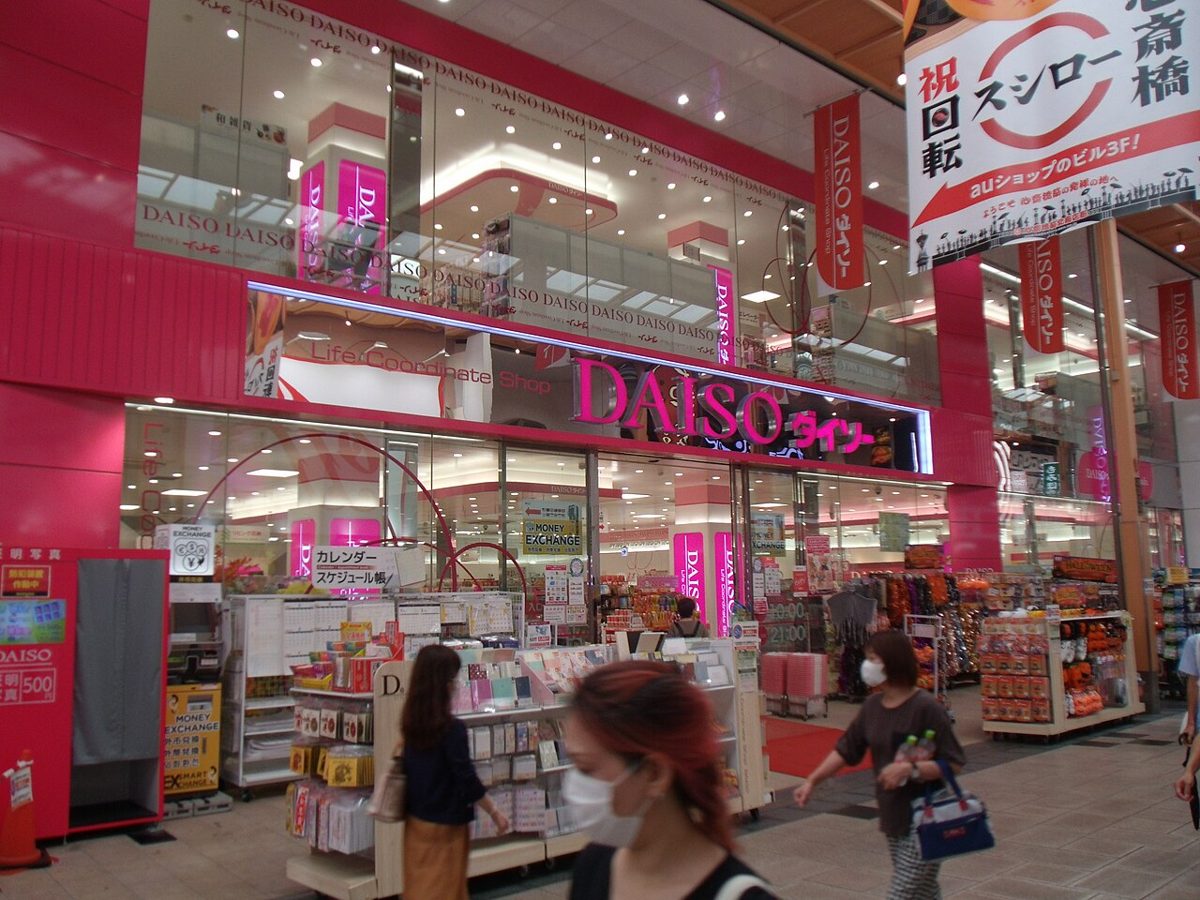
Daiso is the 800-pound gorilla of the hyaku-en (100-yen) world, with roughly 4,600 stores across Japan and well over 100,000 different products. If you forgot a phone charger, need a rain poncho for a wet day at DisneySea, or want to buy fifty bags of matcha Kit Kats for the folks back home, Daiso is your first stop. Crucially, Daiso has moved beyond the pure 100-yen model — you’ll see ¥200, ¥300 and even ¥500 lines, which lets them stock surprisingly good Bluetooth speakers, power banks and camping gear. In larger branches, look for the “Standard Products” section: it’s their minimalist, MUJI-style range at a fraction of MUJI prices.
Seria — the design-led one
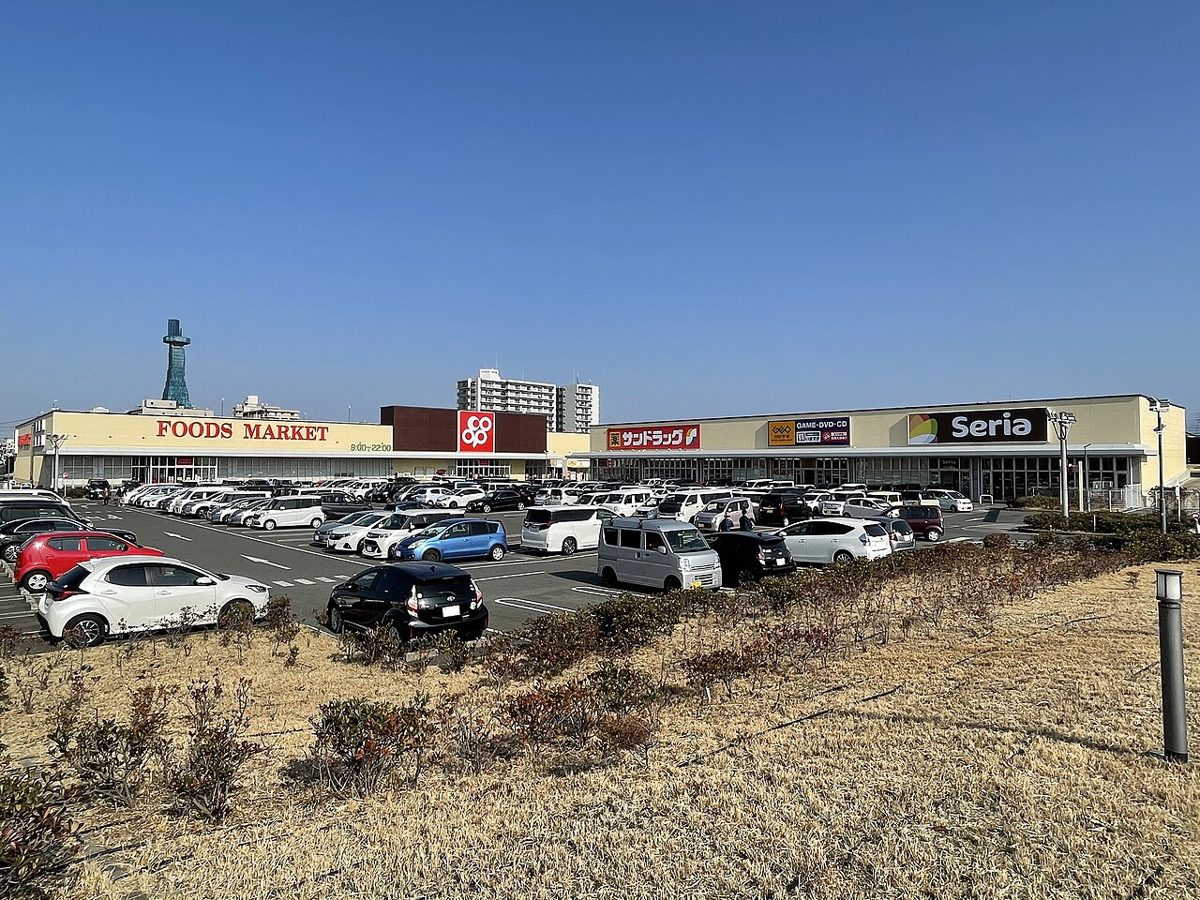
If Daiso is a warehouse, Seria is a boutique. With around 2,000 stores nationwide, Seria sticks strictly to the ¥100 price point — everything in the shop really is one coin — and pours its energy into looks. The palette leans white, ecru, grey and muted natural tones, displays are themed and tidy, and the ceramics genuinely look like they came from a craft studio rather than a discount bin. Japanese home-decor and DIY influencers swear by Seria for stationery, gift wrap and kitchenware that photographs like it cost ten times the price.
Can Do — the character and kitchen specialist
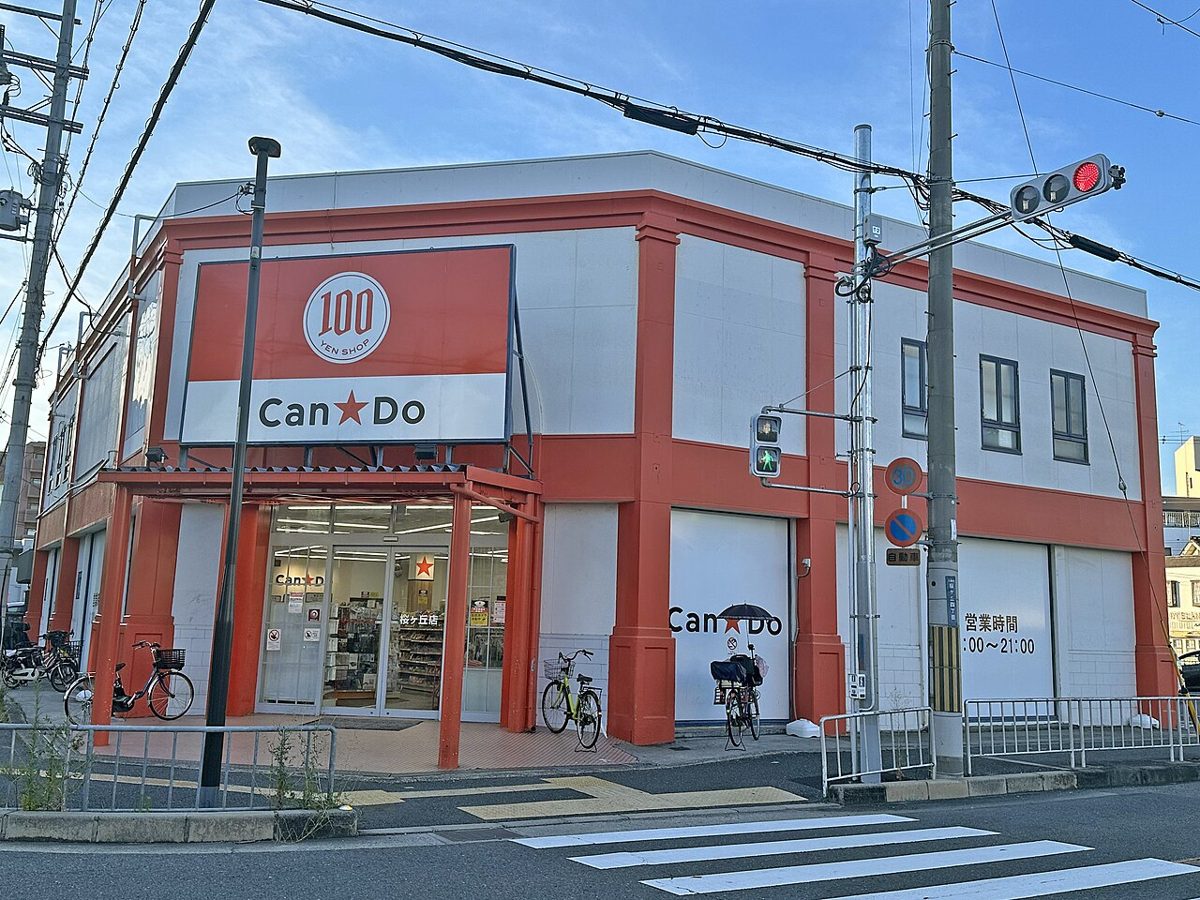
Can Do occupies the clever middle ground. It’s famous for official collaborations — Sanrio (Hello Kitty, Pompompurin, Cinnamoroll), Disney and popular anime — so it often has exclusive ¥100 character merchandise you genuinely can’t find elsewhere at that price. Can Do is also a foodie’s secret: its kitchen aisle is full of small ingenious gadgets, from tools that peel ginger perfectly to clips that turn a milk carton into a pitcher. Branches tend to feel more like a friendly local shop than a tourist mega-store, which is part of the appeal.
Daiso vs Seria vs Can Do: a quick comparison
Here is how the three chains stack up on the things that matter to a visitor — vibe, pricing, what to buy, and where to find the standout Tokyo branches.
| Chain | Vibe | Price model | Best for | Notable Tokyo branches |
|---|---|---|---|---|
| Daiso | Supermarket of stuff; huge, busy, English labels in tourist areas | Mostly ¥110, but with ¥220-¥550 lines | Travel kit, electronics, bulk snacks, one-stop shopping | Marronnier Gate Ginza (global flagship, 6F); Harajuku/Takeshita; Shibuya Center-gai |
| Seria | Stylish, calm boutique; cohesive natural palette | Strictly ¥110 (everything one coin) | Stationery, ceramics, gift wrap, home decor, “expensive-looking” souvenirs | Branches in shopping malls and station buildings citywide |
| Can Do | Friendly, local feel; less touristy crowds | Mostly ¥110 | Character goods (Sanrio/Disney/anime), kitchen gadgets, party items | Seibu Shinjuku PePe (8F, Kabukicho); branches across the wards |
In practice, locals mix and match: Daiso for travel tech and snacks, Seria for the desk and the kitchen shelf, Can Do for character gifts. If you only have time for one and want maximum variety, make it a large Daiso. If you want souvenirs that look high-end, go to Seria.
The “100 yen” that’s really 110 yen
Here is the thing first-timers always get caught by: the shelf price is ¥100, but the price you pay at the register is ¥110. That’s Japan’s 10% consumption tax added on. Food and drink items are taxed at 8%, so those ring up at ¥108. It’s a small difference per item, but it adds up across a basket, so don’t be surprised when a “1,000 yen” haul of ten items comes to ¥1,100.
At Daiso especially, remember the higher-price lines exist. That nice power bank or storage box might be ¥330 or ¥550, not ¥110 — the price is printed on the shelf tag and often on a coloured sticker on the product itself. Glance at the tag before you assume everything is one coin. For more on stretching your yen across the whole trip, see our Tokyo money-saving tips.
Best 100-yen shop buys for tourists
This is where 100-yen shops shine for visitors: genuinely useful, genuinely cheap, and full of things you simply can’t get at home. Here are the categories worth filling your basket with.
Souvenirs that punch above ¥110
You can assemble a brilliant souvenir haul for almost nothing. Look for tenugui (printed cotton hand towels), ceramic chopstick rests, folding fans, furoshiki wrapping cloths, sakura-themed stationery, and small lacquer-look dishes. Seria’s versions in particular look far more expensive than they are. Our Tokyo souvenirs guide goes deeper on what to bring home and where.
Snacks and Japan-only sweets
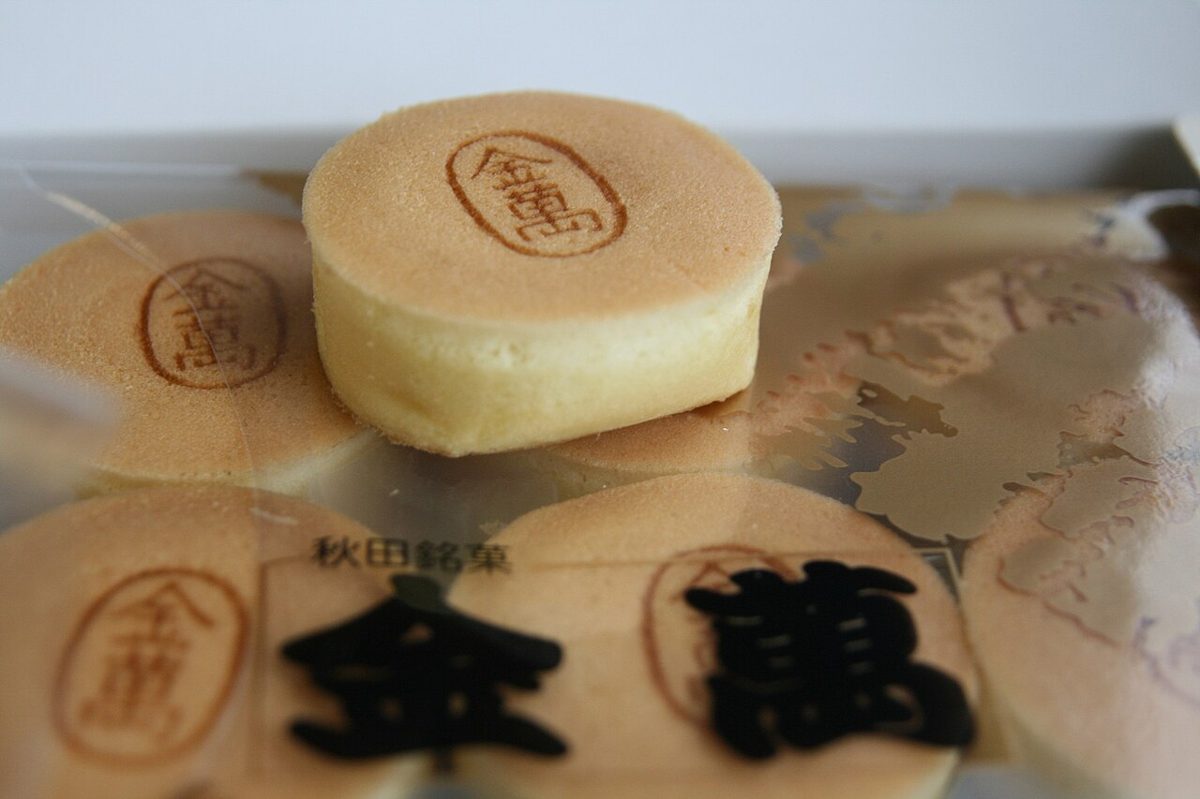
The snack aisle is a souvenir department in disguise. Regional and seasonal Kit Kats (matcha, sake, wasabi), Japanese candies, rice crackers, furikake rice seasoning, and instant miso or ramen all make cheap, packable gifts — and they ring up at the 8% food-tax rate, so they’re even better value. Stock up here before the airport, where the same items cost double.
Stationery and kawaii goods
Japanese stationery is world-class, and the 100-yen shops carry an absurd amount of it: gel pens, washi (decorative tape), sticky notes, notebooks, stickers and craft supplies. Seria is the connoisseur’s pick for design-forward stationery, while Can Do nails the character-licensed pencil cases and notebooks. This is the easiest category to overspend on, in the best way.
Travel and kitchen goods
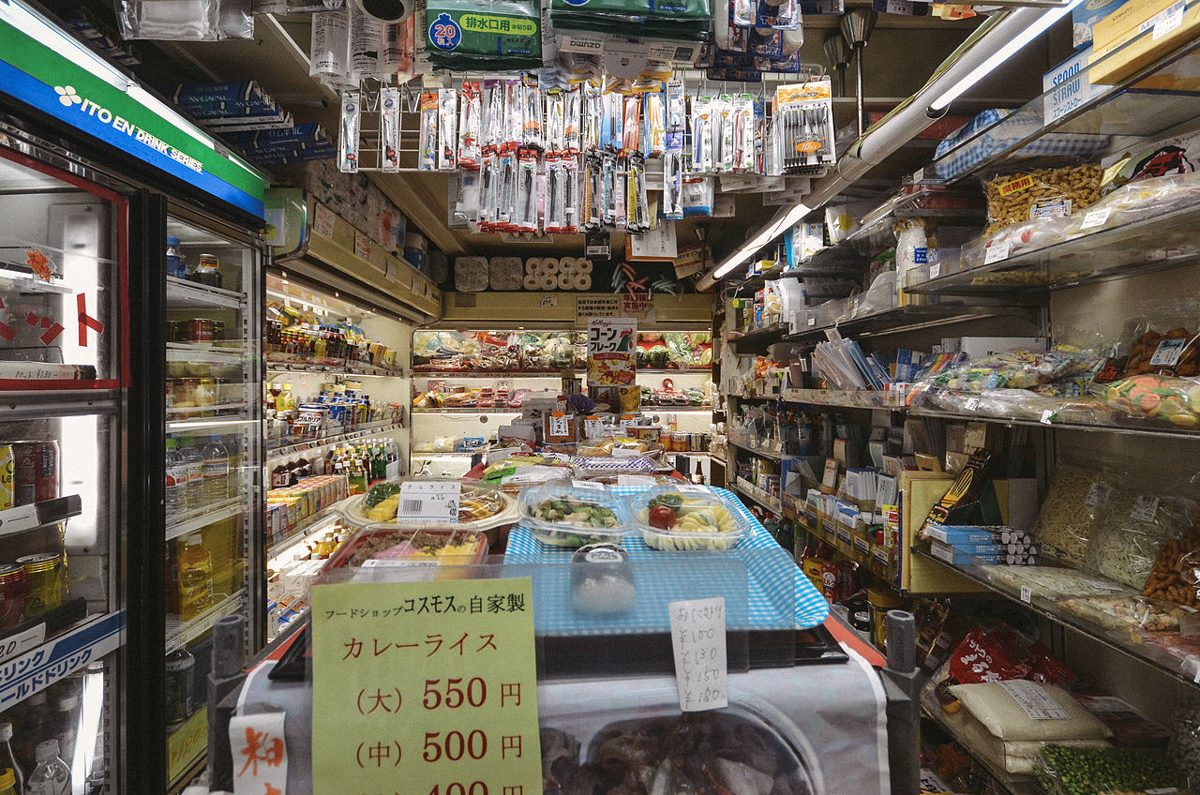
If your bag is bulging, the 100-yen shop is your friend. Packing cubes, compression bags, leak-proof bottles, foldable totes, portable fans, phone stands, universal-ish adapters and laundry bags are all here. The kitchen aisle — Can Do’s strength — is full of clever gadgets: onigiri (rice-ball) molds, silicone tools, sink strainers and bento accessories that make charming, practical gifts.
Cosmetics and self-care
Don’t overlook the beauty section. Daiso and Seria carry sheet masks, blotting papers, makeup sponges, nail files, hair accessories and skincare basics — handy if you packed light or want to try Japanese products without committing to a full-size purchase. They’re also fun, cheap stocking-fillers to take home.
Flagship and large Tokyo branches worth a detour
Most 100-yen shops are small neighborhood stores, but a handful of flagship and mega-branches in Tokyo are destinations in themselves. These are the ones to seek out, especially if you want English labels and a full product range. (Hours and exact floors change, so check current details before a long trip across town.)
Daiso global flagship — Marronnier Gate Ginza
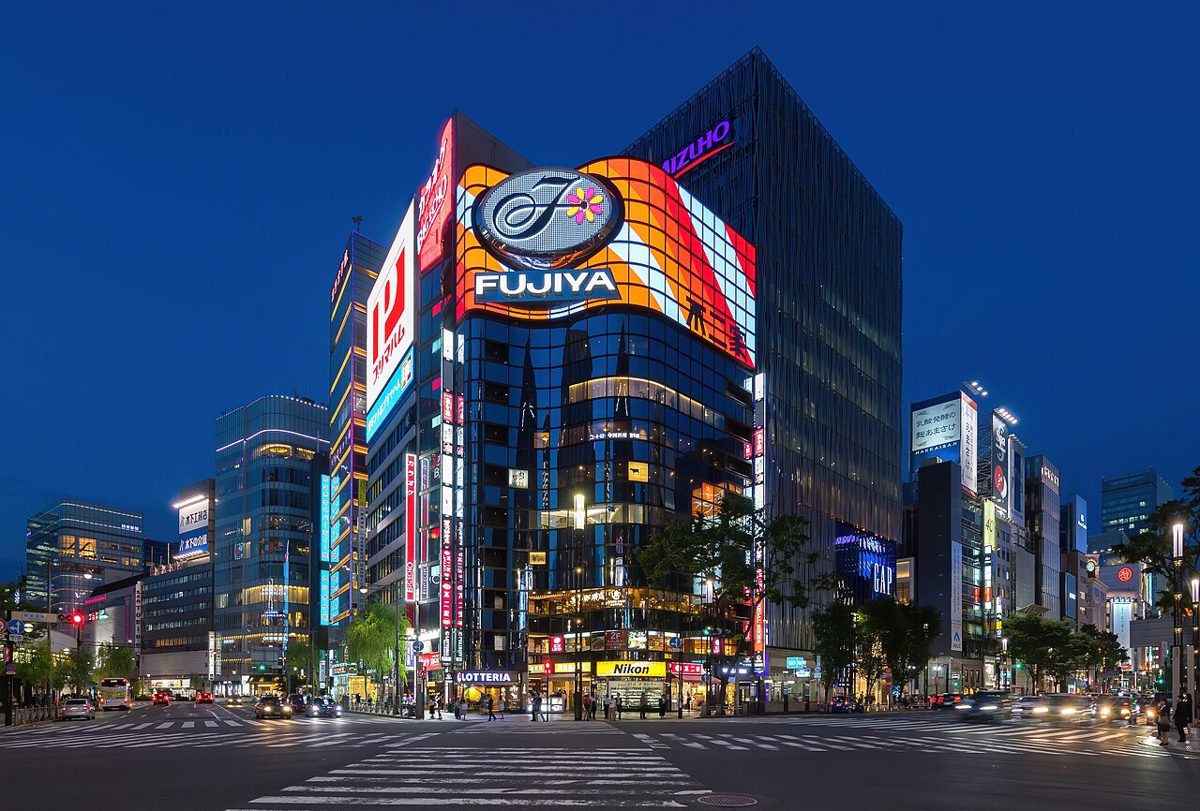
Daiso’s global flagship opened on the 6th floor of Marronnier Gate Ginza 2 (about a three-minute walk from Tokyo Metro Ginza Station). It’s a vast, polished space of around 1,000 square metres with roughly 23,000 items, and it shares the floor with Daiso’s sister brands Standard Products and Threeppy. If you want the full Daiso universe in one upmarket spot, this is it.
Daiso Harajuku — top of Takeshita Street
The Harajuku Daiso, a multi-floor store at the top of Takeshita Street, steps from Harajuku Station, is one of the most tourist-friendly branches in the city — English product labels, central location, and the energy of Harajuku right outside. It’s typically open late morning to around 9pm. Combine it with a Takeshita Street wander and you’ve got an easy half-day.
Daiso Shibuya — Center-gai
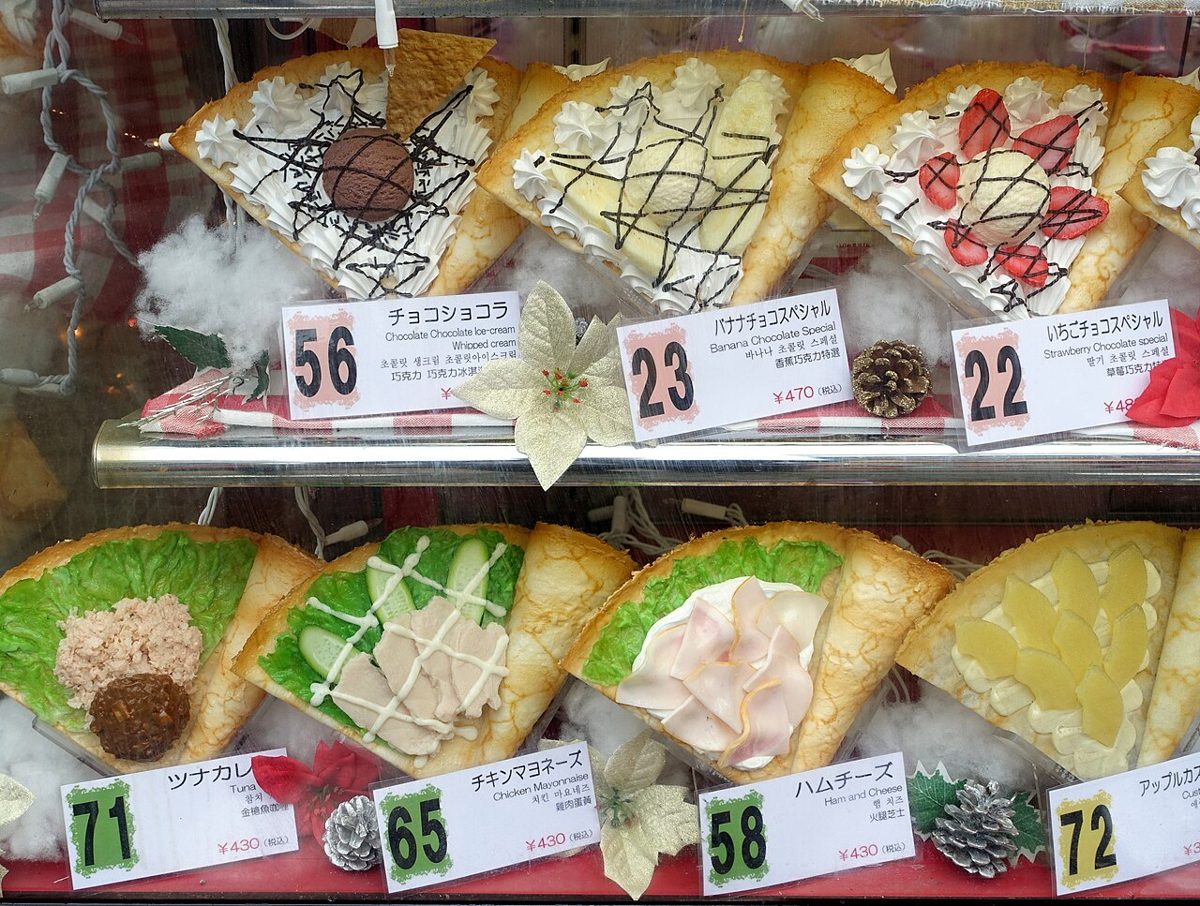
The Shibuya branch on and around Center-gai is large, central, and a good place to find the Standard Products minimalist line in action. It’s a five-minute walk from the Scramble Crossing, so it slots neatly into a Shibuya afternoon.
Can Do at Seibu Shinjuku PePe
For Can Do, the branch on the 8th floor of Seibu Shinjuku PePe (in Kabukicho) is a convenient, sizeable option in the heart of Shinjuku — ideal for character goods and kitchen gadgets when you’re already exploring that side of the city.
Where to find Seria
Seria tends to live inside shopping malls and station buildings rather than on flagship high streets, so the easiest way to find one is to search the map while you’re out — there are branches across the wards, often a floor or two up in a mall. They’re smaller than the Daiso mega-stores but reliably stocked with the design pieces Seria is loved for.
Beyond the 100-yen shops
If you’re hunting cheap variety goods, the 100-yen chains aren’t your only stop. The sprawling discount chain Don Quijote stacks everything from snacks to electronics to cosmetics under one roof, often open very late — our Don Quijote guide explains how to shop it. For the full retail picture, from depachika food halls to electronics towns, our complete guide to shopping in the city maps out where to go for what.
Tax-free, payment and etiquette
Can you shop tax-free?
Larger 100-yen shops in tourist areas — the Ginza, Harajuku and Shibuya Daiso flagships, for example — commonly offer tax-free shopping when you spend over the ¥5,000 minimum on the same day and show your passport. Smaller neighborhood branches usually don’t. Look for the “Tax-Free” signage and a dedicated counter; if you’re planning a big souvenir haul, do it at a flagship to get the 10% (or 8% on consumables) knocked off.
Cash or card?
Daiso has the best tech and generally accepts credit cards and IC cards like Suica and Pasmo. Seria and Can Do are catching up, but smaller branches can still be cash-only, so keep a few ¥1,000 notes on you. As a rule: assume the big flagships take cards, and assume a tiny mall branch might not.
A few etiquette points
- Bring your own bag. Most 100-yen shops no longer give free plastic bags; you’ll pay around ¥3-5 for one, or carry your own eco-bag.
- Don’t open packaging. Browse, but don’t unseal products to test them.
- Queue and pay calmly. Lines move fast; have your cash or card ready at the register.
- Check the price tag, not your assumption. Especially at Daiso, where not everything is ¥110.
- No tipping, ever. The marked price (plus tax) is all you pay.
A sample ¥2,000 souvenir haul
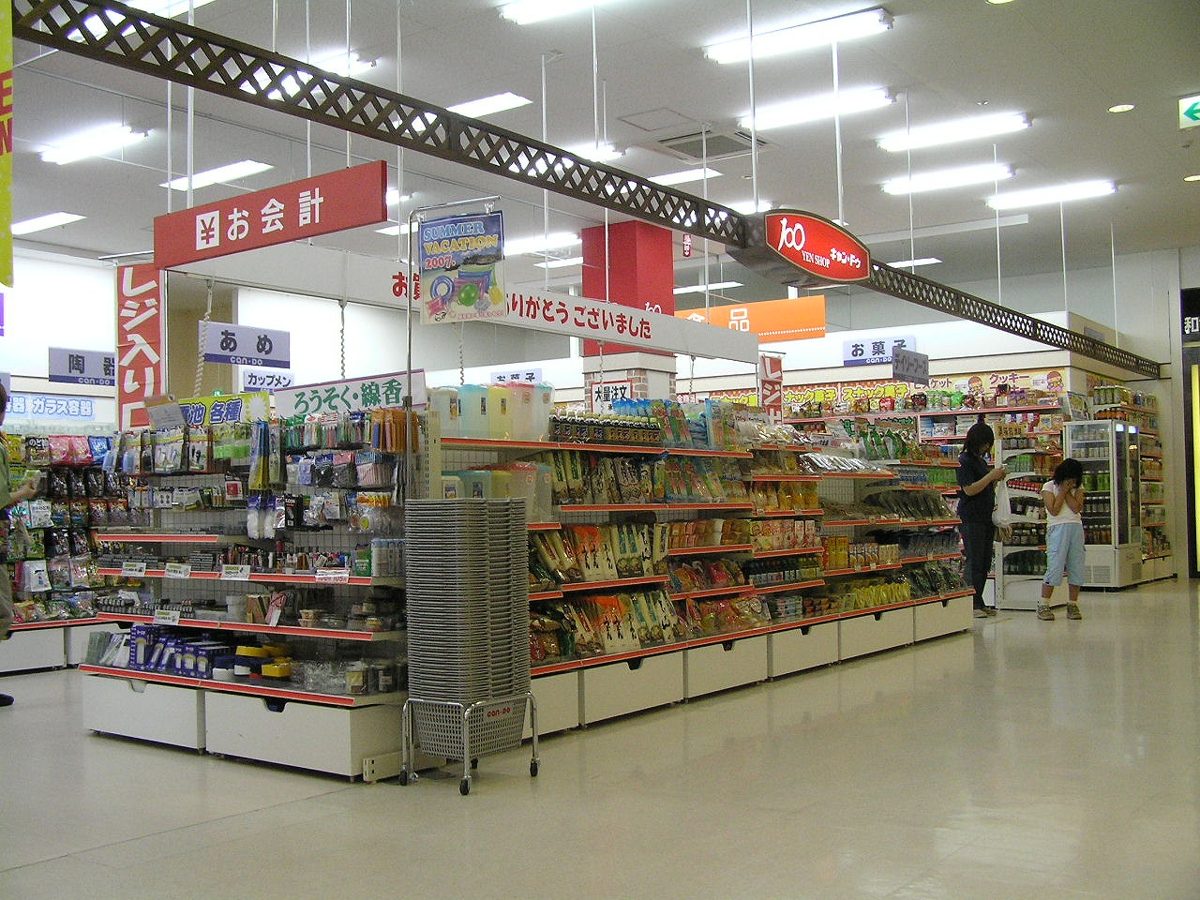
To show how far the money goes, here’s a realistic basket a traveler might fill for friends and family — everything below is one-coin (¥110 at the till) unless noted, so the whole lot lands around ¥2,000 including tax. It is the kind of haul that looks like you spent far more.
- Two tenugui printed hand towels with traditional patterns — light, flat, and genuinely useful gifts.
- A set of ceramic chopstick rests in a little box — the classic “looks expensive” Seria find.
- Three regional Kit Kat packs (matcha, sake, and a seasonal flavour) at the 8% food-tax rate.
- A pack of washi decorative tape and a couple of design notebooks for the stationery lovers.
- A folding fan (sensu) for summer — a charming, packable keepsake.
- A small furoshiki wrapping cloth, which doubles as the gift wrap for everything else.
- A character pencil case or pouch from Can Do for a younger relative.
Pack the fragile ceramics in the middle of your bag wrapped in the tenugui and furoshiki, and the whole haul survives the flight home with room to spare.
Mistakes to avoid at Tokyo 100-yen shops
A few easy traps catch first-time shoppers. Steer clear of these and you’ll shop faster and spend smarter:
- Assuming everything is ¥110. At Daiso, the ¥220-¥550 lines look identical on the shelf; always glance at the tag before the register surprises you.
- Skipping the flagship for a big haul. If you’re buying a lot, the Ginza, Harajuku or Shibuya flagships offer tax-free over ¥5,000 and the full range — a tiny branch can’t.
- Forgetting a bag. No free plastic bags means juggling an armful of goods, or paying for a bag you didn’t need to.
- Going only to one chain. Daiso, Seria and Can Do each do different things best; hit two if you can.
- Buying snacks at the airport instead. The exact same Kit Kats and candies cost far more in departures than at a 100-yen shop in town.
- Not carrying cash. Smaller Seria and Can Do branches may be cash-only, so a card alone can leave you stuck at the till.
How to find a 100-yen shop in Tokyo
You are rarely more than a few minutes from one. Look for the kanji 十円 (hyaku-en, “100 yen”) or the chain colours, Daiso’s red, Seria’s blue and Can Do’s green. They cluster in and above train stations, along covered shopping streets (shotengai), and on the upper or basement floors of station buildings and malls. Many big-city branches hide on the 5th or 6th floor of a building you would otherwise walk past, so it pays to check the floor directory at the entrance.
Most shops open around 10:00 and run to 20:00 or 21:00, though branches inside a mall follow the building’s hours. Google Maps works well, just search “Daiso”, “Seria” or “Can Do” plus your nearest station name, and Daiso’s own store locator lists every Tokyo branch. If your time is tight, point yourself at one large Daiso near your base; it will carry almost everything the smaller shops do.
Seasonal finds worth timing your visit for
Stock turns over fast, and that is half the fun. Spring fills the shelves with cherry-blossom prints on chopsticks, furoshiki wrapping cloths and bento boxes, light and cheap souvenirs that travel well. Autumn leans into Halloween and maple motifs; from late December the displays switch to New Year decorations, and January brings small good-luck charms. Limited collaborations with Sanrio, Disney and popular anime appear without much warning and sell out quickly, so if you spot a character item you like, buy it on the spot rather than hoping to find it again.
Frequently Asked Questions
Are 100-yen shops in Tokyo really 100 yen?
The shelf price is ¥100, but you pay ¥110 at the register once Japan’s 10% consumption tax is added — or ¥108 for food and drink, which are taxed at 8%. Seria sticks strictly to the ¥100 (¥110 paid) price for everything, while Daiso also sells higher-price lines at ¥220, ¥330 and ¥550, so check the tag.
Which 100-yen shop is best: Daiso, Seria or Can Do?
It depends what you want. Daiso has by far the widest range and the most stores, making it best for travel kit, electronics and one-stop shopping. Seria is the design-led choice for stationery, ceramics and souvenirs that look expensive. Can Do is the pick for character goods (Sanrio, Disney, anime) and clever kitchen gadgets.
Can tourists shop tax-free at 100-yen shops in Tokyo?
Often yes at larger tourist-area branches, such as the flagship Daiso stores in Ginza, Harajuku and Shibuya, where you can claim tax-free shopping on purchases over ¥5,000 in a single day with your passport. Smaller neighborhood branches usually don’t offer it, so save a big souvenir haul for a flagship.
What are the best things to buy at Tokyo 100-yen shops?
Top buys for visitors are Japan-only snacks and Kit Kats, design-led stationery and washi tape, tenugui towels and ceramic chopstick rests as souvenirs, travel kit like packing cubes and foldable bottles, kitchen gadgets, and cheap cosmetics such as sheet masks. Seria is strongest for souvenirs; Daiso for travel goods.
Do 100-yen shops in Tokyo take credit cards?
Daiso generally accepts credit cards and IC cards (Suica/Pasmo), especially at flagship branches. Seria and Can Do are increasingly card-friendly, but smaller branches can still be cash-only, so carry a few ¥1,000 notes just in case. Also bring your own bag, as free plastic bags have mostly been phased out.
Photo Credits
- Daiso is the biggest of Japan’s 100-yen chains, with over 100,000 products — Photo: Mr.ちゅらさん / CC BY-SA 4.0 via Wikimedia Commons
- Seria keeps strictly to the 100-yen price and leans into a clean, kawaii aesthetic — Photo: Tokumeigakarinoaoshima / CC BY-SA 4.0 via Wikimedia Commons
- Can Do is known for character collaborations and clever kitchen gadgets — Photo: Tokumeigakarinoaoshima / CC BY-SA 4.0 via Wikimedia Commons
- 100-yen shops are a cheap source of Japan-only souvenirs — Photo: sodai gomi / CC BY 2.0 via Wikimedia Commons
- Japanese stationery is a top 100-yen-shop buy for tourists — Photo: Eddy Milfort / CC BY-SA 2.0 via Wikimedia Commons
- Daiso’s global flagship sits in Ginza’s Marronnier Gate building — Photo: Basile Morin / CC BY-SA 4.0 via Wikimedia Commons
- Daiso’s multi-floor Harajuku branch sits at the top of Takeshita Street — Photo: Daderot / CC0 via Wikimedia Commons
- A typical 100-yen shop aisle, where almost everything is 110 yen with tax — Photo: Akiyoshi’s Room / CC BY 2.5 via Wikimedia Commons