Tokyo Cafes & Coffee · Guide №151
Tokyo Dessert Cafes: Parfaits, Matcha, Kakigori and Fruit Sando
Fruit parlour parfaits, century-old sweet shops, kakigori and its summer queues, matcha, fruit sando and soufflé pancakes: where to order what, what it costs, and which famous desserts are not worth the wait.
目次 — Contents
- Why Tokyo is so good at dessert
- Tokyo desserts at a glance
- Fruit parlours and parfaits
- Fruit sando
- Kanmidokoro: Tokyo’s old sweet shops
- Kakigori: shaved ice done seriously
- Matcha desserts
- Soufflé pancakes, crêpes and the Instagram desserts
- Sweets on the go
- A seasonal dessert calendar
- What is and is not worth the wait
- Frequently Asked Questions
- Photo Credits
This article contains advertising. Our booking links are routed through a partner that adds commission tracking automatically, so if you book through one we earn a commission from the provider, at no extra cost to you. It never affects what we recommend. Affiliate disclosure
The best Tokyo dessert cafes fall into two traditions: the fruit parlours and Western-style salons that turned perfect fruit into parfaits and sandwiches, and the kanmidokoro, old Japanese sweet shops serving anmitsu, zenzai and shaved ice. Expect ¥800 to ¥2,000 for most desserts, and several thousand yen for a luxury melon parfait.
This guide covers what to order and where: the fruit parlours worth the splurge, the century-old sweet shops, kakigori and its summer queues, matcha, fruit sando, soufflé pancakes and the sweets you can eat standing up. It also says when the famous option is not worth the wait. For coffee first and cake second, see our Tokyo cafe guide.
Why Tokyo is so good at dessert
Two things explain it. The first is fruit. Japan grows fruit as a luxury product — melons raised one to a vine, strawberries graded by size and shape, grapes sold in single boxed bunches — and a whole category of shop, the fruit parlour, exists to serve it at its peak. A parfait in Tokyo is often less a sundae than a showcase for a piece of fruit that cost the kitchen a great deal.
The second is seasonality. Japanese sweets change with the calendar in a way desserts elsewhere rarely do: strawberries in winter and spring, sakura in March, peaches and kakigori in summer, chestnuts and muscat grapes in autumn. The same cafe can have an entirely different menu in October from the one it had in June. That makes Tokyo’s dessert scene a moving target — and means the specific thing a blog raved about may not be on the menu when you arrive.
If you are visiting in the autumn, you are in luck: chestnuts, Shine Muscat grapes, pears and persimmons are all in season, and it is peak time for mont blanc, the chestnut-cream dessert Tokyo’s patisseries take very seriously.
Tokyo desserts at a glance
| Dessert | What it is | Typical price | Best season | Where to try it |
|---|---|---|---|---|
| Fruit parfait | Layered cream, ice cream and seasonal fruit in a tall glass | ¥1,500–3,000; luxury melon ¥4,000+ | Year-round, fruit changes | Sembikiya, Takano, Shiseido Parlour |
| Fruit sando | Whipped cream and whole fruit in soft white bread | ¥500–1,500 | Strawberry, winter to spring | Fruit parlours, bakeries, konbini |
| Kakigori | Finely shaved ice with syrups, fruit or matcha | ¥1,000–3,000 at specialists | Summer; some shops year-round | Himitsudo, summer festival stalls |
| Anmitsu | Agar jelly cubes, red bean, fruit and black sugar syrup | ¥800–1,500 | Year-round | Old kanmidokoro in Asakusa, Kanda, Ningyocho |
| Zenzai / oshiruko | Warm sweet red bean soup with mochi | ¥800–1,300 | Winter | Kanmidokoro |
| Matcha desserts | Gelato, parfaits and puddings made with green tea | ¥400–2,000 | Year-round | Asakusa, Kagurazaka, tea houses |
| Soufflé pancakes | Tall, wobbly, cooked-to-order pancakes | ¥1,200–1,800 | Year-round | Omotesando, Jiyugaoka |
| Taiyaki | Fish-shaped cake filled with red bean | ¥200–300 | Best in cold weather | Azabu-Juban, shopping streets |
Fruit parlours and parfaits
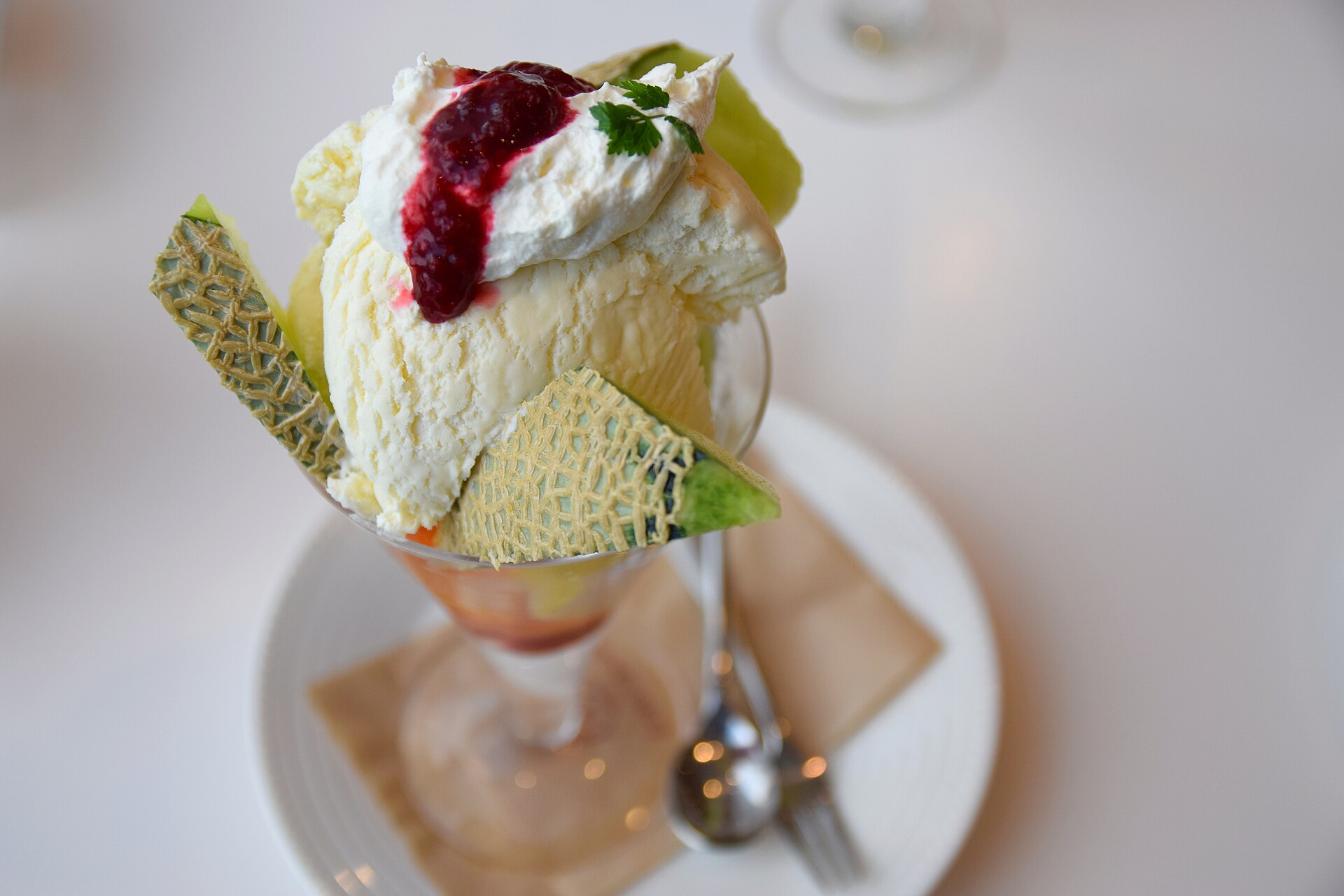
A fruit parlour is part fruit shop, part cafe. The shop sells gift-boxed fruit at prices that make first-time visitors laugh out loud — a single premium musk melon can cost more than a nice dinner — and the parlour next to it turns fruit that is ripe today into parfaits, sandwiches and fruit plates. It is the best way to taste what all the fuss about Japanese fruit is about, for the price of one dessert rather than one melon.
Sembikiya
Nihonbashi Sembikiya Sohonten was founded in 1834 and is the grandest name in Japanese fruit. Its fruit parlour in the Nihonbashi Mitsui Tower serves parfaits, fruit sandwiches and fruit plates in a calm, formal room, a short walk from Mitsukoshimae station. Prices match the reputation: a musk melon parfait at its Azabudai Hills branch is ¥4,510.
One point of confusion worth clearing up: there are several shops called Sembikiya in Tokyo, including ones in Ginza and Kyobashi, and they are separate businesses that split from the same family a long time ago. All of them sell excellent fruit, so it does not much matter, but do not expect the same menu at each.
Takano Fruit Parlour
Takano, founded in Shinjuku in 1885, runs its fruit parlour upstairs in its building by Shinjuku station’s east side. The menu is broader and more casual than Sembikiya’s, with parfaits running from about ¥1,100 for a simple banana-chocolate to over ¥3,000 for a Shizuoka musk melon. Its sister venue runs a reservation-only fruit buffet with a 90-minute limit, priced by season at several thousand yen for adults. It sounds like the better deal. Unless you can eat a great deal of fruit, it usually is not: one excellent parfait is more satisfying than an hour and a half of competitive grazing.
Shiseido Parlour, Ginza
Before it was a cosmetics company, Shiseido was a Ginza pharmacy, and in 1902 it opened a soda fountain there. Today Shiseido Parlour’s Ginza building has a Salon de Café serving elegant parfaits and ice cream sodas, and a restaurant above known for Western-Japanese classics. It is the most old-Ginza dessert experience in the city, and the right choice on a rainy afternoon of window shopping — our Ginza guide covers the rest of the district.
Neighbourhood parlours
Beyond the famous names, many older neighbourhoods have a family-run fruit parlour where the parfaits are nearly as good and the prices far lower. Asakusa’s Fruits Parlor Goto is a well-known example, attached to a fruit shop and busy at weekends. A good sign is a greengrocer’s display at the front: if the family is selling the fruit, they are using the best of it upstairs.
Fruit sando
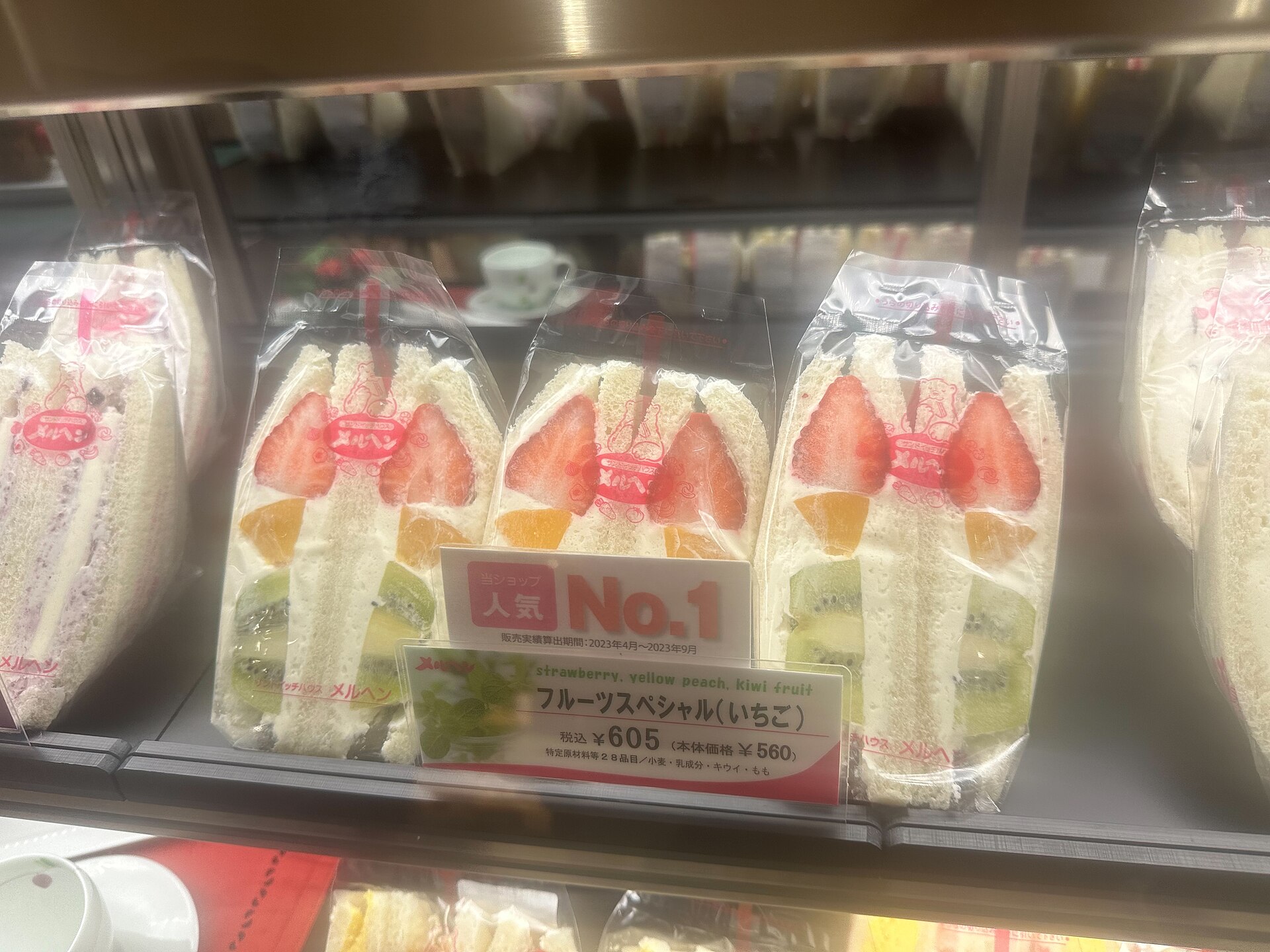
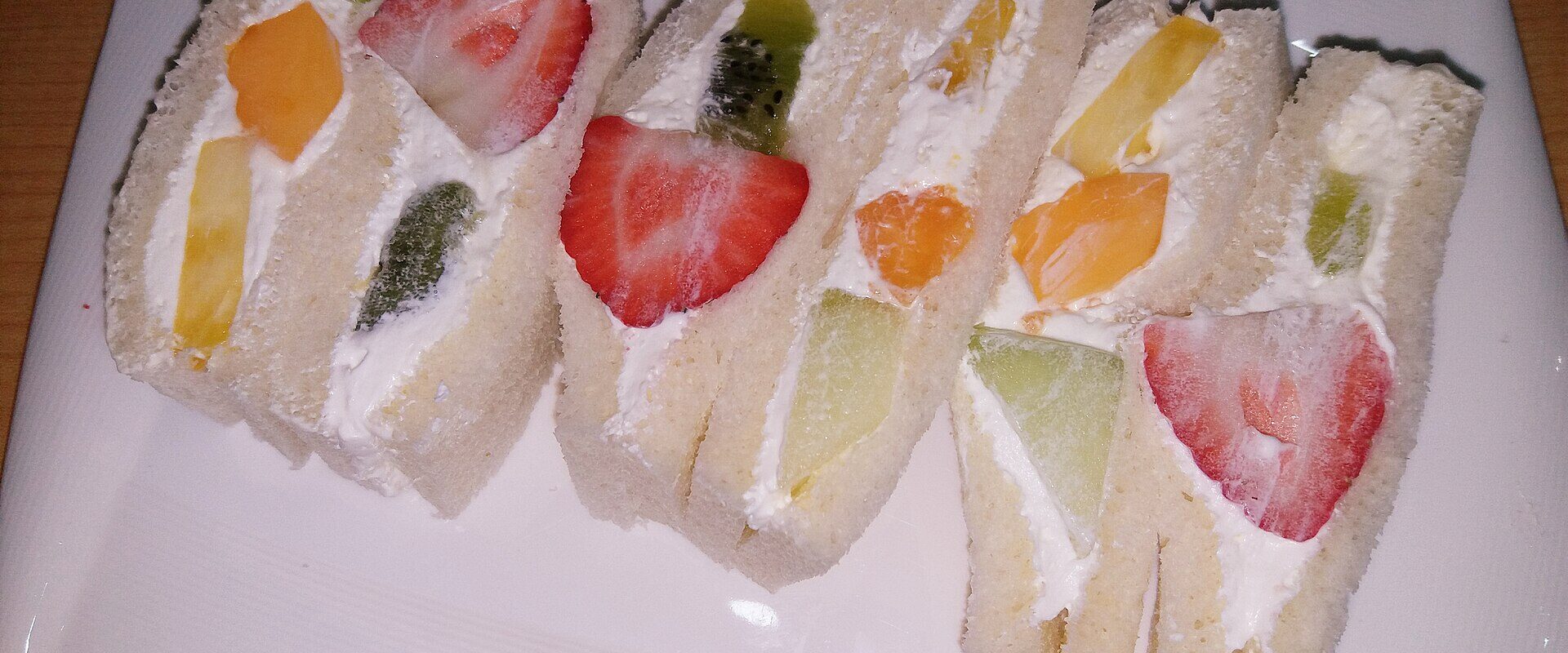
The fruit sandwich — furūtsu sando — sounds like a misunderstanding and turns out to be one of the best things you can eat in Tokyo. Soft, crustless white bread, lightly sweetened whipped cream, and whole pieces of fruit laid out so that when the sandwich is cut, the cross-section forms a pattern. Strawberry is the classic, kiwi and mango are common, and luxury versions use melon, Shine Muscat grapes or white peach.
Where to get one depends on how much you want to spend:
- Fruit parlours — Sembikiya, Takano and the neighbourhood parlours make the best, with premium fruit. ¥1,000 to ¥2,000 a portion in the parlour.
- Bakeries and department store basements — excellent takeaway versions from about ¥500 to ¥900. The food halls under the big department stores are the easiest place to compare several at once; see our depachika guide.
- Convenience stores — 7-Eleven, Lawson and FamilyMart all sell fruit sandwiches, usually for a few hundred yen. They are good, not great, and a fair introduction. Our konbini food guide covers the rest of the sweets aisle.
Eat them the same day, cold, and ideally within an hour of buying. The cream and bread do not travel well.
Kanmidokoro: Tokyo’s old sweet shops
A kanmidokoro is a traditional Japanese sweet shop with seats — the ancestor of the dessert cafe. The menu is built around red bean paste, agar jelly, mochi and brown sugar syrup, and the best of them have been doing the same few things for over a century. They are calm, reasonably priced and very Tokyo, and they are the place to go if you want dessert that is not a Western import.
What to order
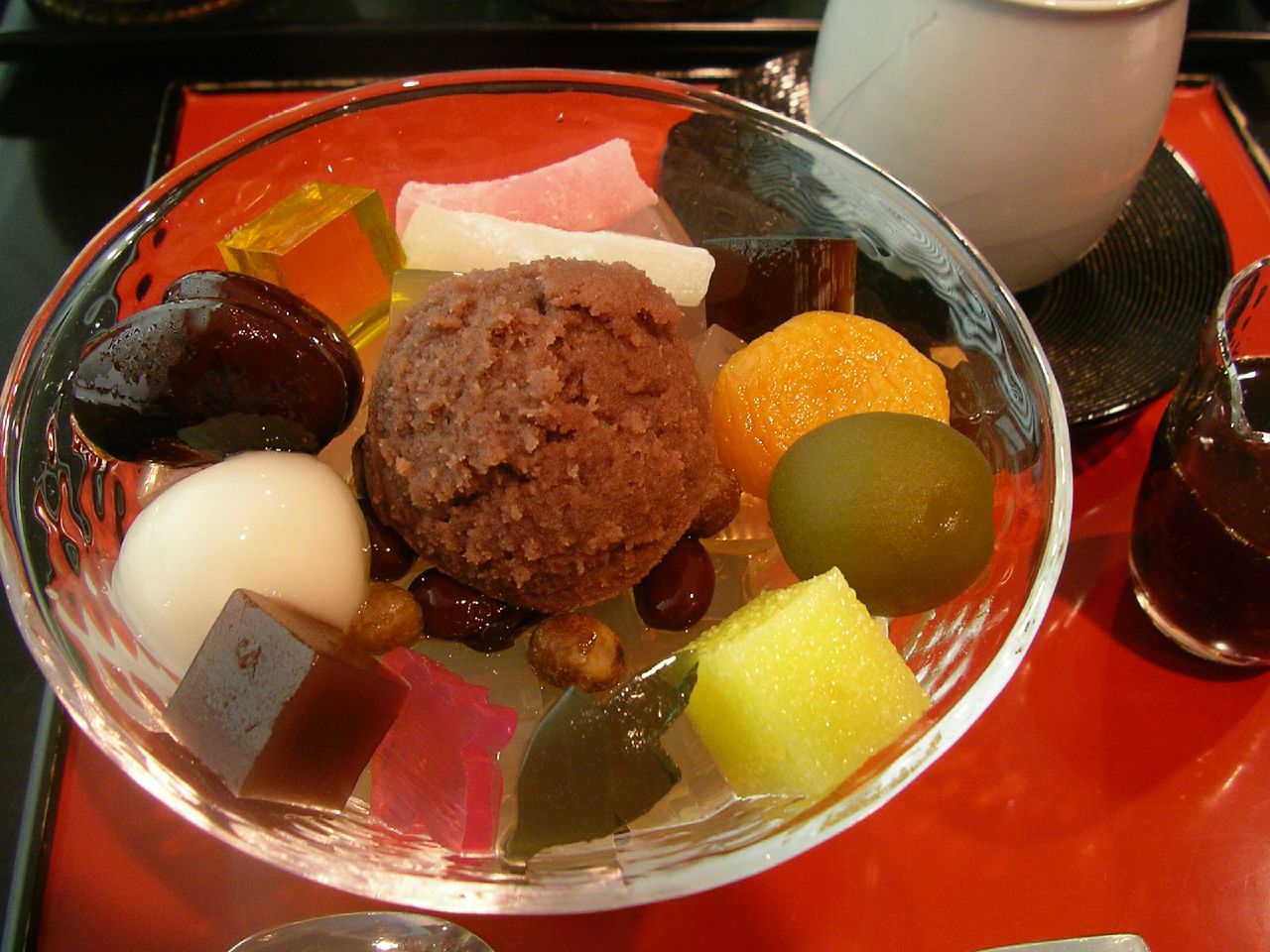
- Anmitsu — cubes of agar jelly, sweet red bean paste, fruit and sometimes mochi, with kuromitsu, a dark brown sugar syrup, poured over at the table. Cream anmitsu adds a scoop of ice cream. The most refreshing order on a warm day.
- Zenzai and oshiruko — hot, sweet red bean soup with toasted mochi. Warming, filling and exactly right in January.
- Mitsumame — anmitsu without the red bean paste, lighter and simpler.
- Warabi mochi — soft, wobbly bracken-starch mochi dusted with toasted soybean flour, often with black syrup.
- Dango — skewered rice dumplings, with sweet soy glaze (mitarashi) or red bean.
Where to go
- Umezono, Asakusa — founded in 1854, famous for awa zenzai, warm millet mochi under smooth red bean paste. A few minutes from Sensoji, and a far better stop than most of Nakamise. Our Asakusa guide has the rest of the area.
- Takemura, Kanda — a sweet shop in a pre-war wooden building near Awajicho, known for deep-fried age-manju and a warm, unchanged interior. A good pairing with Jimbocho’s bookshops.
- Hatsune, Ningyocho — a long-established shop in one of Tokyo’s best old neighbourhoods for traditional food, serving anmitsu and zenzai in a small, old-fashioned room.
- Kinozen, Kagurazaka — best known for its matcha bavarois, a green tea mousse served with red bean and cream, in a quiet shop on a pretty, sloping street.
- Toraya, Akasaka — the flagship of the famous yokan makers, whose history reaches back to Kyoto in the sixteenth century, with a tearoom serving seasonal sweets and kakigori in summer.
Kakigori: shaved ice done seriously
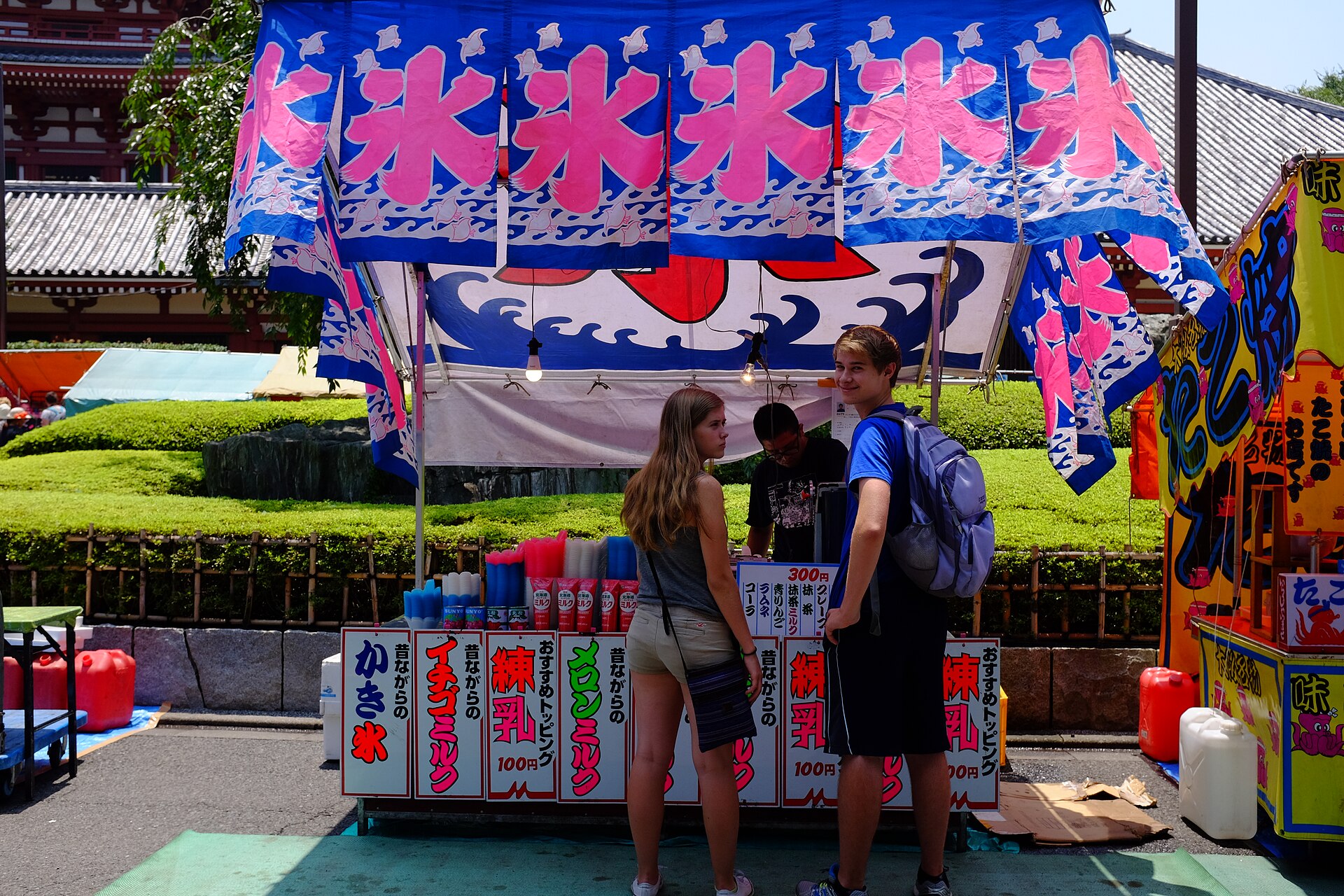
Forget the syrup-drenched snow cones you may know. Japanese kakigori at its best is shaved from a block of ice so finely that it melts on the tongue, piled into a soft mound and finished with fresh fruit purée, matcha, condensed milk or seasonal toppings. The specialists treat it as a craft, and in summer the good shops have queues measured in hours.
Himitsudo, Yanaka
The most famous kakigori shop in Tokyo is Himitsudo, just off Yanaka Ginza, a short walk from Nippori station. It shaves ice with a hand-cranked machine, uses fresh fruit syrups made in-house, and serves kakigori all year, not only in summer. Expect to pay roughly ¥1,000 to ¥3,000 depending on the fruit and toppings.
Himitsudo is walk-in only, takes no reservations and sells out every day. In summer, waits of anything from thirty minutes to two hours are normal. Base hours have been around 09:00 to 18:00, with weekends starting at 08:00 and longer hours in the hottest weeks, but check its social media on the day. The honest advice: go on a weekday, arrive before it opens, and if you are visiting in cooler months, enjoy the fact that you can walk straight in to the same kakigori. Pair it with a walk through Yanaka — our Yanaka guide has a route.
Kakigori elsewhere
From June to September, kakigori appears on menus all over the city — in kanmidokoro, tea houses, department store cafes and at every festival stall. Festival and stall versions cost a few hundred yen and are the simple, syrupy kind, which is fine for what it is. For the fluffy, fruit-heavy version, look for the word かき氷 on a shop’s summer menu board and expect to pay at least ¥1,000.
Matcha desserts
Matcha turns up in almost every dessert category in Tokyo, from kakigori and parfaits to soft serve, cake rolls and chocolate. A few are worth seeking out specifically.
- Suzukien in Asakusa sells matcha gelato made with Nanaya, a tea company from Shizuoka, in seven strengths, from mild to what is marketed as the world’s richest matcha gelato. Prices are a few hundred yen, with level seven costing a little more. Try level one and level seven side by side to understand what the grading means.
- Matcha parfaits at tea shops and kanmidokoro usually layer matcha ice cream, matcha jelly, red bean, mochi and cornflakes, which provide crunch and are a Japanese parfait tradition.
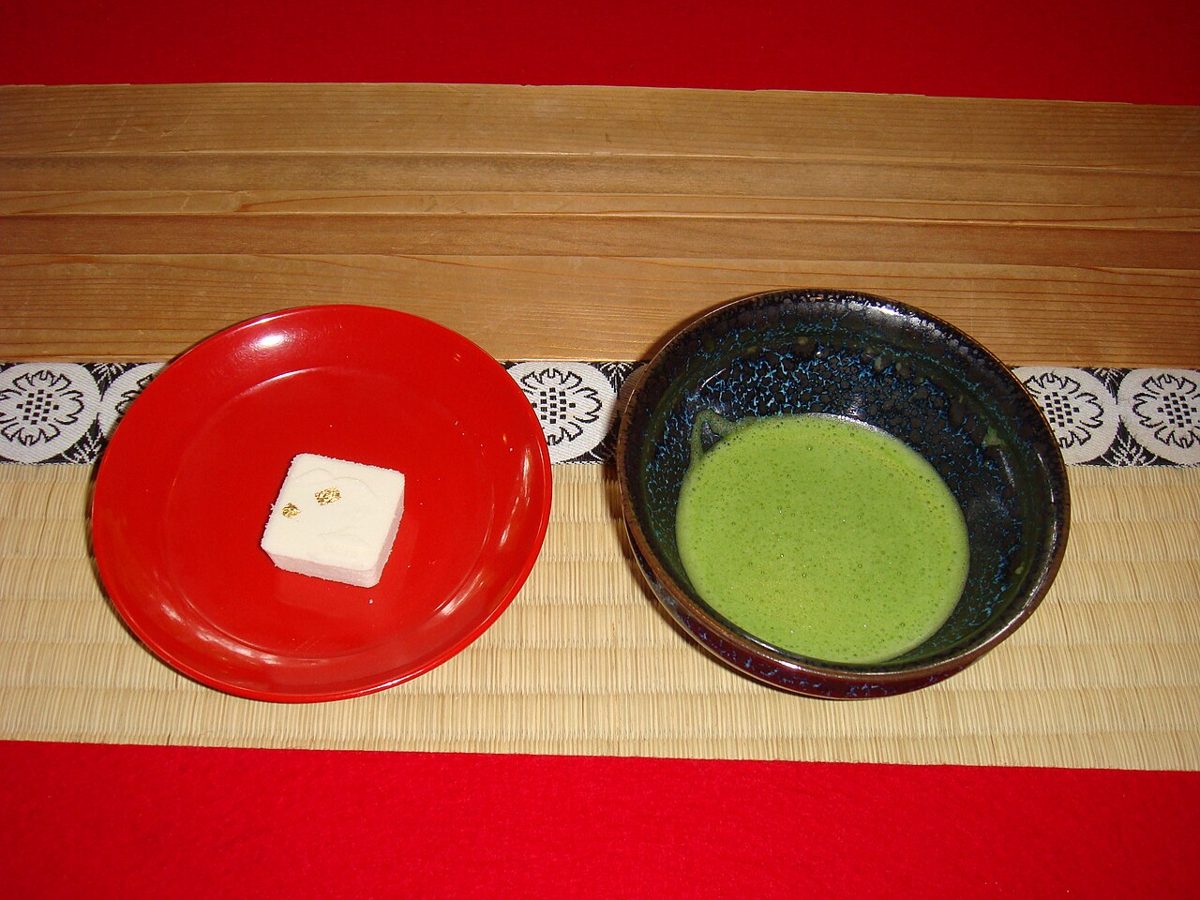
- Matcha with a sweet is the original matcha dessert: a bowl of whisked tea and a seasonal wagashi. Several gardens and tea houses serve this, and our tea ceremony guide explains where you can have it with some ceremony attached.
Soufflé pancakes, crêpes and the Instagram desserts
Some Tokyo desserts are famous because they photograph well, and a few of those are also genuinely good.
Soufflé pancakes are the best of them: tall, light, custardy stacks that wobble when the plate is set down, cooked to order in about twenty minutes. Chains such as A Happy Pancake and Flipper’s have branches in Omotesando, Jiyugaoka and other districts, and a plate costs about ¥1,200 to ¥1,800. Worth doing once, ideally on a weekday morning; at weekends the queues rarely justify the wait.
Harajuku crêpes are the classic walking dessert. Takeshita Street’s long-running stands, such as Marion Crêpes and Santa Monica Crêpes, fold whipped cream, fruit, ice cream and occasionally whole slices of cheesecake into a paper cone. They cost less than a sit-down dessert, and they are fun rather than refined. Our Harajuku guide has the rest of the street.
Rainbow and giant novelty sweets — the candyfloss the size of a head, the rainbow cheese toast — come and go with social media trends. They are the one category where we would suggest skipping the queue: most are sugar and colouring, made for a photograph rather than for eating.
Sweets on the go
Not every Tokyo dessert needs a chair.
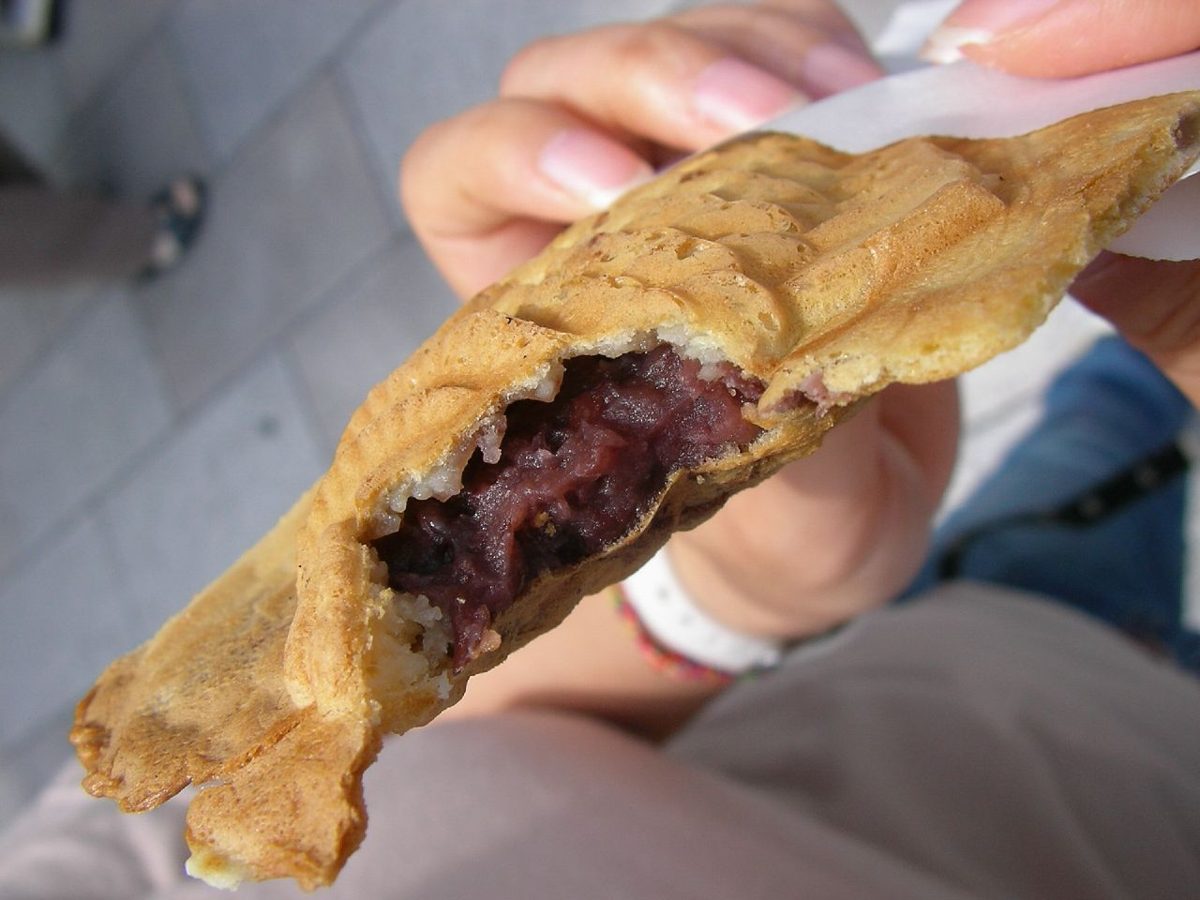
- Taiyaki — fish-shaped cakes filled with red bean, cooked in iron moulds. Naniwaya Sohonten in Azabu-Juban has been making them since 1909 and is credited with the first. A couple of hundred yen each.
- Dorayaki — two small pancakes sandwiching red bean paste, sold in wagashi shops across the city.
- Soft serve — in flavours from matcha and hojicha to black sesame, sweet potato and seasonal fruit. Shopping streets and temple approaches are full of it.
- Ningyo-yaki — little cakes shaped like faces, lanterns and birds, often baked in front of you in Asakusa and Ningyocho.
For more of what to eat while you walk, see our Tokyo street food guide.
A seasonal dessert calendar
| Months | What is in season | What to order |
|---|---|---|
| January–April | Strawberries | Strawberry fruit sando, strawberry parfait, strawberry daifuku |
| March–April | Cherry blossom | Sakura mochi, sakura-flavoured lattes and soft serve |
| June–September | Heat | Kakigori, anmitsu, warabi mochi, fruit jellies |
| July–August | Peaches, melon, mango | White peach parfait, melon parfait, mango kakigori |
| September–November | Chestnuts, grapes, pears, persimmons | Mont blanc, Shine Muscat parfait, chestnut desserts |
| December–February | Citrus, cold weather | Zenzai, oshiruko, hot taiyaki, mikan desserts |
What is and is not worth the wait
Worth it: one fruit parlour parfait with whatever fruit is at its peak; a kanmidokoro anmitsu in Asakusa, Kanda or Ningyocho; a proper fruit sando; Himitsudo on a quiet weekday; a bowl of matcha and a seasonal sweet.
Worth it with conditions: soufflé pancakes, on a weekday; a luxury melon parfait, if you understand you are paying for one very expensive melon; kakigori specialists in summer, if you arrive at opening.
Not worth it: the fruit buffet, unless you really love fruit; any dessert whose queue is driven by a viral video; festival kakigori if you have the option of a specialist shop instead.
And one practical note: the best dessert cafes are busiest at weekend afternoons and after lunch. Morning and late afternoon on a weekday are the calm windows almost everywhere.
Frequently Asked Questions
What desserts is Tokyo famous for?
Tokyo is known for fruit parfaits and fruit sandwiches made with premium Japanese fruit, kakigori shaved ice, traditional sweets such as anmitsu, zenzai, taiyaki and dango, matcha desserts, and soufflé pancakes. Seasonal specialities, from strawberry desserts in spring to chestnut mont blanc in autumn, are a big part of the scene.
How much do dessert cafes in Tokyo cost?
Most sit-down desserts cost ¥800 to ¥2,000. Traditional sweet shops are at the lower end, with anmitsu around ¥800 to ¥1,500. Fruit parlour parfaits are usually ¥1,500 to ¥3,000, and luxury melon parfaits can pass ¥4,000. Street sweets such as taiyaki cost a couple of hundred yen.
Where can I get kakigori in Tokyo?
Himitsudo in Yanaka is the most famous kakigori shop and serves it year-round, walk-in only, with long queues in summer. From June to September, many traditional sweet shops, tea houses and cafes add kakigori to their menus, and festival stalls sell simple syrup versions.
What is a fruit sando?
A fruit sando is a Japanese sandwich of soft white bread, lightly sweetened whipped cream and whole pieces of fruit, cut to show a neat cross-section. Strawberry is the classic filling. Fruit parlours make the most luxurious ones, department store basements and bakeries sell excellent takeaway versions, and convenience stores sell cheaper ones.
Is the Takano fruit buffet worth it?
For most people, no. The reservation-only buffet has a 90-minute limit and seasonal pricing of several thousand yen per adult, so you need to eat a great deal of fruit to come out ahead. A single parfait in the fruit parlour, made with whatever fruit is at its peak, is usually the more satisfying choice.
Photo Credits
- A plate of Japanese fruit sandwiches – Fruit sandwich by Pauloleong2002, CC BY-SA 4.0, via Wikimedia Commons.
- A melon fruit parfait – Fruits parfait in Sendai (42205067715) by Raita Futo, CC BY 2.0, via Wikimedia Commons.
- Fruit sandwiches in a Tokyo shop display – Fruit sandwiches – in Tokyo – 2024 feb 13 various 17 44 39 842000 by Nesnad, CC BY 4.0, via Wikimedia Commons.
- Cream anmitsu in Akasaka – Anmitsu by jetalone in Akasaka, Tokyo by jetalone, CC BY 2.0, via Wikimedia Commons.
- A kakigori stall at a temple festival – Buying Kakigori (19853354820) by leighklotz, CC BY 2.0, via Wikimedia Commons.