Tokyo Cafes & Coffee · Guide №138
Tokyo Cafe Guide: Where to Drink Coffee in Every District
Tokyo has five kinds of cafe and knowing which you have walked into changes everything. Districts, prices, the unwritten rules, and which themed cafes to skip.
目次 — Contents
- Why Tokyo is a coffee city
- The five kinds of Tokyo cafe
- District by district
- What it costs
- What to eat in a Tokyo cafe
- Cafes with something extra
- The rules nobody tells you
- The chains, ranked honestly
- Themed cafes: the honest verdict
- Where to work, and the wifi situation
- Coffee to take home
- Best cafe for each situation
- A coffee day that works
- Frequently Asked Questions
- Photo Credits
This article contains advertising. Our booking links are routed through a partner that adds commission tracking automatically, so if you book through one we earn a commission from the provider, at no extra cost to you. It never affects what we recommend. Affiliate disclosure
Tokyo cafes fall into five distinct kinds, and knowing which one you have walked into is the difference between a ¥400 coffee and a ¥2,000 one. The city has more coffee shops than any other on earth, a domestic brewing tradition that predates the third wave by seventy years, and a set of unwritten rules about seat charges and time limits that nobody explains at the door.
This guide covers what the five kinds are, which districts are worth a dedicated coffee morning, what everything costs, the etiquette that is not obvious, and which of the famous themed cafes are worth your money — including the ones that are not.
Why Tokyo is a coffee city
Japan’s coffee culture is older than most visitors assume. Café Paulista opened in Ginza in 1911 with Brazilian government-subsidised beans, and by the 1960s Tokyo had tens of thousands of kissaten — owner-run coffee houses where a single cup was brewed by hand, usually by siphon or cloth-filter drip, and where you were expected to sit for two hours.
That tradition never went away. It just got old, quietly, while the country moved to convenience stores and chains. Then in 2015 Blue Bottle opened its first overseas branch in Kiyosumi-Shirakawa, the international specialty-coffee scene noticed Tokyo, and a generation of Japanese roasters who had been doing this properly for decades suddenly had an audience.
The practical result is that Tokyo now runs two excellent coffee cultures in parallel — one built on 1960s master craftsmen and dark roasts, one on single-origin light roasts and imported espresso machines — plus a chain scene that is genuinely better than its equivalent almost anywhere else. Hario and Kalita, whose pour-over equipment sits in specialty cafes worldwide, are both Japanese.

The five kinds of Tokyo cafe
| Type | Typical price | How long you can stay | Best for |
|---|---|---|---|
| Kissaten | ¥600–1,200 a cup | As long as you like | Atmosphere, a slow hour, no wifi |
| Specialty / third wave | ¥600–900 | 30–60 min; often standing | The actual best coffee |
| Chains | ¥250–500 | 1–2 hours, sometimes signed | Working, wifi, power, value |
| Themed and animal cafes | ¥1,500–4,000 | Timed, usually 30–60 min | Varies wildly; see below |
| Hotel and department store lounges | ¥1,200–2,500 | Unlimited in practice | Rain, luggage, a proper sit-down |
The single most useful thing to internalise: price does not track quality here. A ¥400 hand-drip at a standing bar in Shibuya is frequently better than a ¥1,800 hotel lounge coffee. What you pay for at the top end is the seat, not the cup.
District by district
Tokyo’s coffee is not evenly distributed. Four or five neighbourhoods carry most of what is worth a special trip, and they are each a comfortable morning’s walking.
Kiyosumi-Shirakawa — the roasting district
A quiet, low-rise, warehouse-and-canal neighbourhood in Koto ward, east of the centre, which became Tokyo’s specialty coffee capital more or less by accident: cheap high-ceilinged industrial space with the floor loading for roasters. Blue Bottle’s first store outside the United States opened here in 2015 and the rest followed.
What to do: get off at Kiyosumi-Shirakawa on the Hanzomon or Oedo line, walk in a loop of about ninety minutes, and drink three coffees. Arise Coffee Roasters, The Cream of the Crop and Blue Bottle are the obvious three. Add the Museum of Contemporary Art Tokyo and Kiyosumi Garden and you have a full, uncrowded day in a part of Tokyo almost no visitor sees.
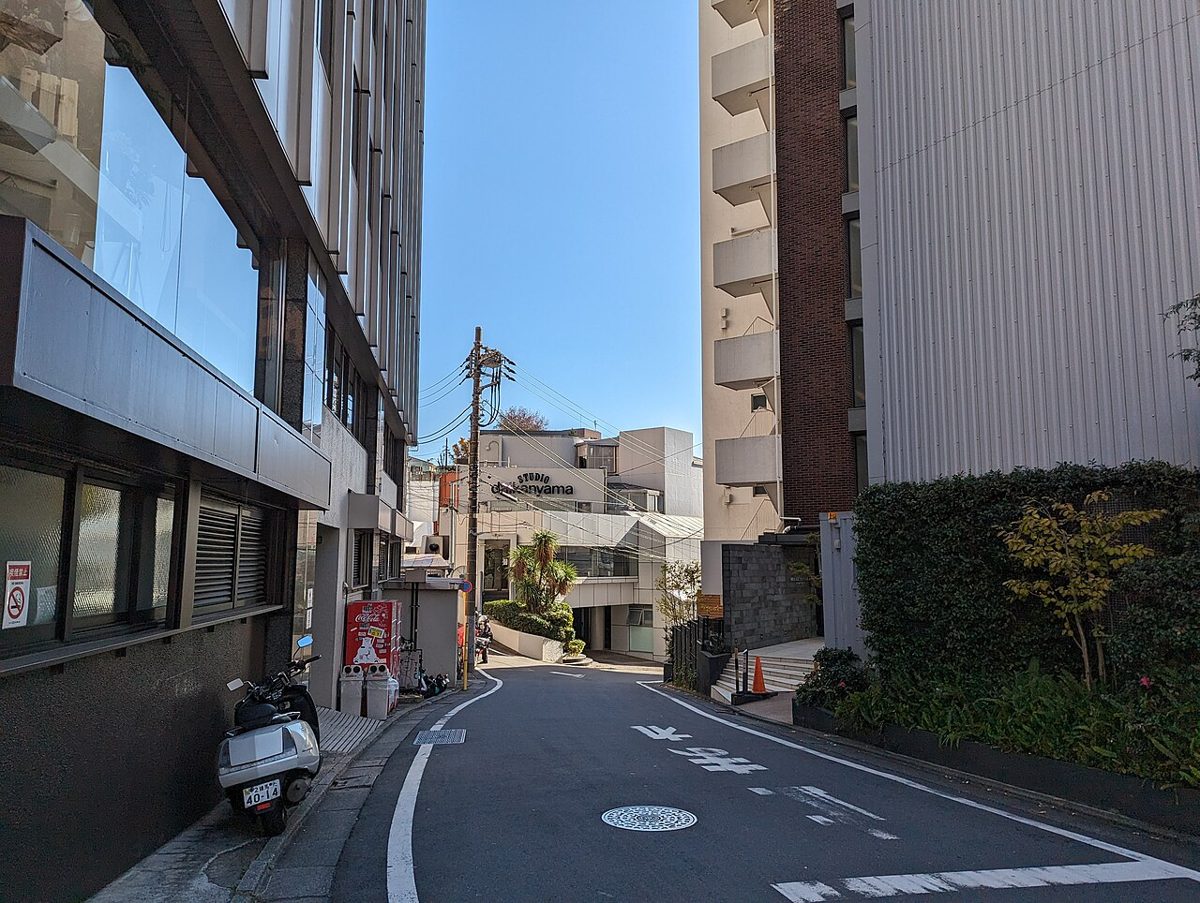
Nakameguro and Daikanyama — the walk
The Meguro river canal, lined with low buildings and cherry trees, is the most pleasant coffee walk in the city. Onibus Coffee’s Nakameguro branch — a tiny converted house next to the railway, with a first-floor seat that puts you at eye level with passing trains — is the one people photograph. Sidewalk Stand and a dozen others fill the streets between there and Daikanyama.
The Starbucks Reserve Roastery on the riverbank is worth mentioning separately: four floors, a working roaster, a cocktail bar on the top level, and a queue at weekends. It is not the best coffee in the neighbourhood — Onibus is — but it is a genuinely impressive building and free to walk through.
Shibuya and Tomigaya — standing bars and third wave
Behind the noise of the crossing, the backstreets running north-west towards Tomigaya and Yoyogi-Uehara are dense with small, serious coffee. About Life Coffee Brewers near the station is a standing counter with no seats and a queue that moves fast. Fuglen Tokyo in Tomigaya is a Norwegian-owned cafe that turns into a cocktail bar after dark and has become a fixture of the neighbourhood.
This is the most convenient coffee district for most visitors, because you are already going to Shibuya. The trick is to walk ten minutes away from the station in any direction — the density of good cafes rises sharply and the prices fall.
Shimokitazawa — the sit-and-stay district
Low-rise, no chain domination, and a culture built around sitting for hours. Bear Pond Espresso is the famous one, small and idiosyncratic, with its own rules about when it makes certain drinks. But the district’s real appeal is the sheer number of unremarkable-looking independent cafes where a ¥600 coffee buys you an afternoon.

Combine it with the vintage shopping and the theatres — our Shimokitazawa guide covers the district properly.
Ginza — old money and older coffee
Ginza has the most concentrated kissaten heritage in Tokyo. Café de L’Ambre, founded in 1948, still specialises in aged beans — coffee deliberately stored for years before roasting, which is a genuinely unusual thing to be able to try anywhere in the world. Tricolore and Ginza Renoir represent the other end: comfortable, formal, and unhurried.
Prices in Ginza run higher — expect ¥800 to ¥1,500 a cup — and that is buying you a chair in one of the most expensive districts in Japan for as long as you want it. On a rainy afternoon it is good value.
Shinjuku, Jimbocho and Yanaka — the ones worth the detour
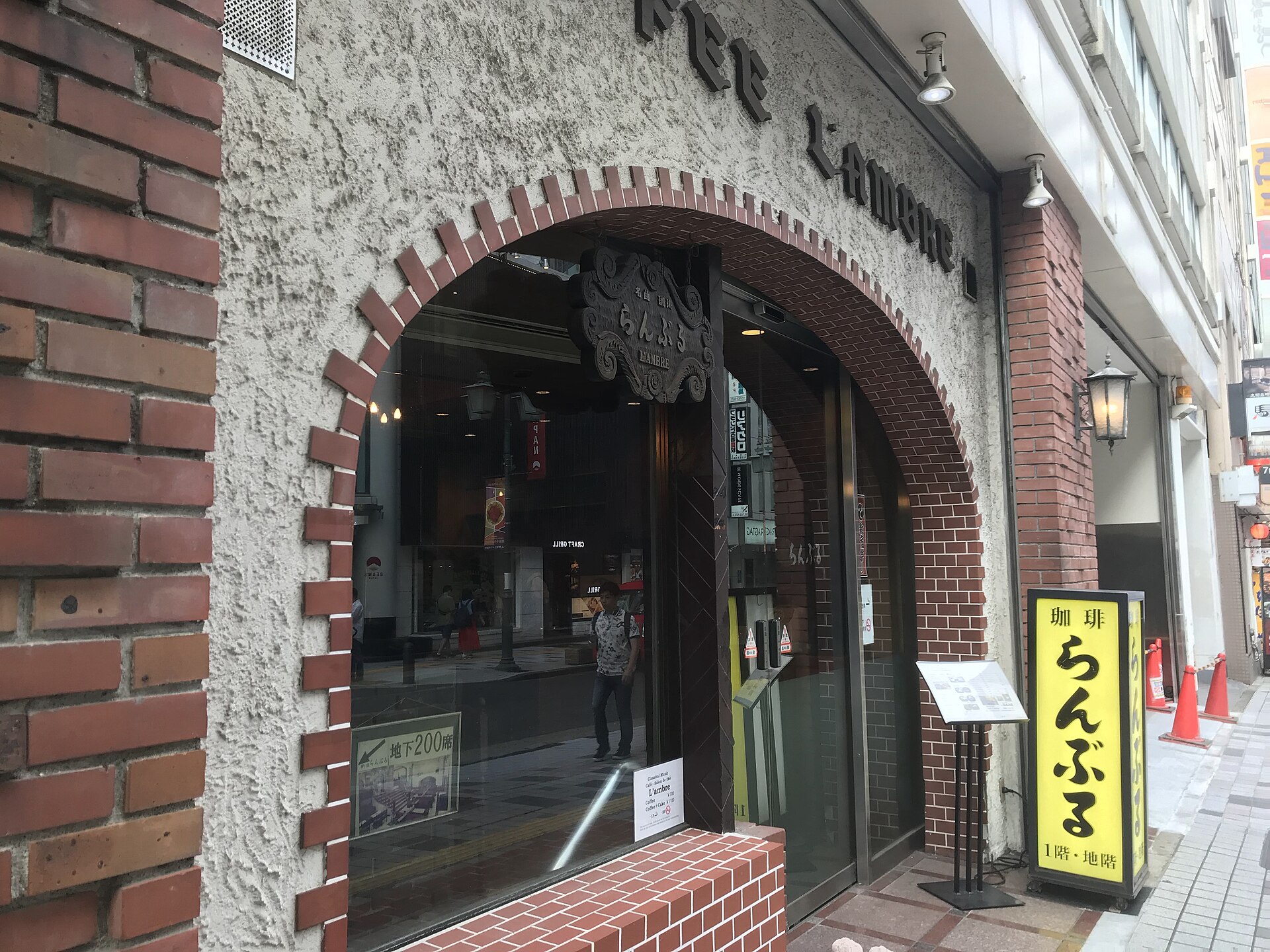
- Shinjuku — Meikyoku Kissa Lambre, a 200-seat basement classical-music cafe where conversation is discouraged and the sound system is the point. Also Berg, a standing coffee-and-beer bar inside the station’s east exit that has been resisting redevelopment for decades and serves a ¥250 coffee that shames most of the city.
- Jimbocho — the second-hand book district, and therefore the reading-cafe district. Sabouru, with its log-cabin frontage, and Ladrio, which claims to have introduced Vienna coffee to Japan, are both unchanged since the 1950s.
- Yanaka — Kayaba Coffee occupies a restored 1938 building at the edge of the old town and does a good line in traditional egg sandwiches. Pair it with a walk through the cemetery and the shopping street; the Yanaka guide has the route.
- Kichijoji — Nerken and a cluster of classical kissaten near the station, plus Inokashira Park across the road.
One standing caveat for all of it: Tokyo cafes close without warning and often without announcement. Anything named here should be checked on the day before you make a special trip across the city for it.
What it costs
| What | Chain | Specialty | Kissaten |
|---|---|---|---|
| Black coffee | ¥250–400 | ¥550–750 | ¥600–1,200 |
| Latte | ¥400–550 | ¥600–850 | ¥700–1,000 |
| Hand drip, single origin | Not offered | ¥700–1,200 | ¥900–2,000 |
| Cake or toast | ¥300–500 | ¥500–800 | ¥600–1,000 |
| Morning set (drink plus toast and egg) | ¥400–600 | Rare | ¥600–900 |
The morning service deserves its own line. Order a coffee before about 11:00 in a kissaten or an older chain and you often get toast, a boiled egg and sometimes a small salad thrown in for nothing or close to it. It is one of the best-value breakfasts in the city and it is almost never advertised in English — see our Tokyo breakfast guide for the alternatives.
What to eat in a Tokyo cafe
Japanese cafe food is its own cuisine — a set of dishes invented in post-war kissaten, largely unchanged since, and served nowhere else in the world. Ordering only coffee means missing most of the point.
- Naporitan — spaghetti in ketchup with sausage, onion and green pepper, cooked in a frying pan and served on a hot iron plate. It was invented in Yokohama in the late 1940s and it is comfort food in the purest sense. ¥800 to ¥1,200 and available in almost every kissaten.
- Tamago sando — the egg sandwich, either chopped boiled egg in mayonnaise or a thick folded omelette between crustless white bread. ¥500 to ¥900. The convenience store version is famously good and costs ¥250.
- Fruit sandwich — whipped cream and cut fruit between white bread, which sounds like a mistake and is not. Strawberry season, from January to April, is when to try it.
- Purin — a firm caramel custard pudding, dense and eggy rather than wobbly, usually with a cherry on top. ¥500 to ¥800.
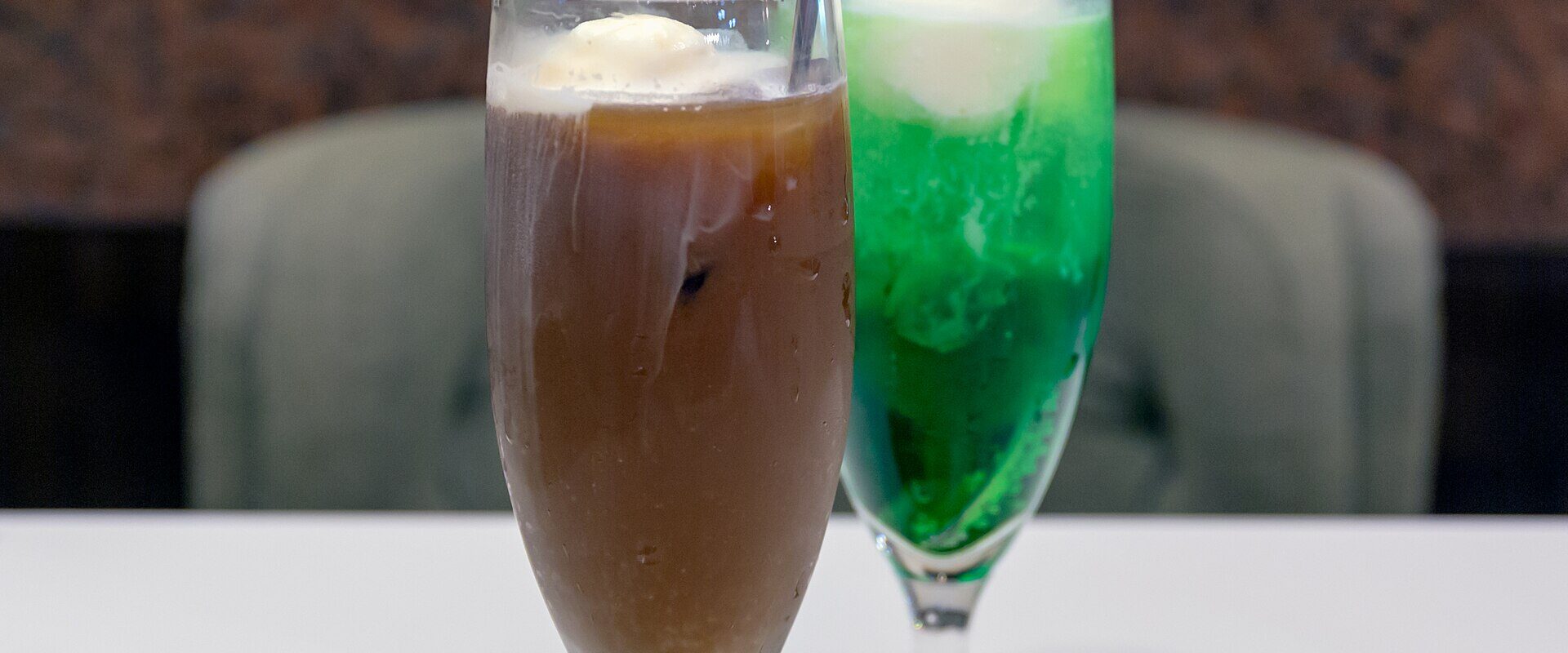
- Cream soda — melon syrup, soda water and a scoop of vanilla ice cream in a footed glass. Aggressively green, entirely artificial, and a genuine Showa-era icon.
- Shokupan toast — thick-cut white bread, four or six slices to a loaf, toasted and served with butter or an-butter, the sweet red bean paste and butter combination. Free with a morning set in a lot of places.
- Souffle pancakes — the modern one. Tall, wobbly, take twenty minutes to cook, and generate the longest cafe queues in Harajuku and Omotesando. ¥1,200 to ¥1,800 and worth doing once.
None of this is expensive, and a kissaten lunch of naporitan and coffee at ¥1,400 is one of the better cheap meals in central Tokyo. The wider food landscape is in our Tokyo food guide, and cheap eats covers the rest of the low-cost options.
Cafes with something extra
A handful of Tokyo cafes are worth visiting for reasons other than the coffee.
- The Shibuya Tsutaya Starbucks — the second-floor window that looks directly down on Shibuya Crossing. It is the best free view of the scramble in the city, it costs the price of a coffee, and every seat by the glass is taken from about 11:00. Go at opening. See the Shibuya Crossing guide for the other vantage points.
- Bookshop cafes in Daikanyama and Jimbocho — where you can take unpurchased books to the table. A genuinely civilised idea and a good rainy afternoon.
- Museum and garden cafes — the ones inside Shinjuku Gyoen, the Nezu Museum and the Museum of Contemporary Art all have views you cannot get from the street, and admission is often required to reach them.
- Hotel lounges — expensive at ¥1,200 to ¥2,500, but they solve the two problems Tokyo cafes are worst at: luggage and quiet. Between hotel check-out and an evening flight, a lounge seat is money well spent.
- Standing coffee bars — no seats, ¥250 to ¥400, ninety seconds in and out. Berg in Shinjuku station is the famous one; there is a version of it inside most major stations.
The rules nobody tells you
- Some places charge for the seat. A seki-ryo or table charge of ¥300 to ¥800 is uncommon in cafes but does appear in older kissaten and in music cafes. It should be posted; ask if you cannot see it.
- One drink per person, minimum. Sharing a single coffee between two people at a table is a genuine breach almost everywhere.
- Time limits are real but signed. Busy chains post a 60- or 90-minute limit at peak times. Nobody will throw you out, but the sign means what it says.
- Laptops are not always welcome. Many specialty cafes ban them outright, especially at weekends, and the good ones say so at the door. Chains are where you work.
- Cash still matters. Card acceptance has improved enormously, but small independent kissaten remain cash-only more often than any other category of Tokyo business. Carry ¥3,000 in notes. Our Tokyo money guide covers where to withdraw it.
- Smoking. The 2020 indoor smoking law made most venues non-smoking, but very small owner-operated premises were exempted — which describes a lot of old kissaten precisely. If a place smells of smoke on entry, that is why.
- You clear your own table in chains, and you do not in kissaten. Watch what everyone else does.
The broader ground rules are in our Japanese etiquette guide, and none of this is enforced aggressively — Tokyo is a forgiving city about foreign visitors getting details wrong.
The chains, ranked honestly
Tokyo’s chains are not a compromise. Several of them are better than the independent average in most other countries, and they solve problems — wifi, power, a seat at 08:00, a bathroom — that the good independents mostly do not.
| Chain | Coffee | Seats | Wifi / power | Verdict |
|---|---|---|---|---|
| Doutor | Decent, dark | Cramped | Patchy | Cheapest, everywhere, fine |
| Ginza Renoir | Average | Large armchairs | Both, reliably | The best place to sit and work |
| Komeda Coffee | Average | Booths | Yes | Morning service, and a free bean-paste toast |
| Starbucks | Consistent | Varies | Both | Reliable; some spectacular branches |
| Excelsior / Veloce | Cheap and thin | Plenty | Patchy | Functional only |
| Convenience stores | Genuinely good | None | n/a | ¥120–180, and better than it should be |
The convenience-store line is not a joke. 7-Eleven, Lawson and FamilyMart all grind and brew to order from a machine by the till at ¥120 to ¥180 a cup, and the result beats a lot of paid café coffee in Europe. If you are moving fast and just want caffeine, that is the answer — see the konbini guide for what else is worth buying while you are in there.
Themed cafes: the honest verdict
This is where Tokyo’s café scene meets its tourism industry, and the quality range is enormous.
Cat cafes — usually fine
Expect ¥1,200 to ¥2,000 for an hour, often with a drink included. The decent ones are calm, have clearly posted rules about not waking sleeping cats, keep numbers low, and several work with rescue organisations and rehome animals. The bad ones are cramped, overbooked and have visibly stressed animals. You can tell within thirty seconds of walking in, and you are allowed to leave.
Owl, hedgehog, otter and reptile cafes — do not
This is the honest bit. Owls are nocturnal, solitary and are kept tethered to perches in a lit room full of people during their sleeping hours. Otters are semi-aquatic, highly active, extremely loud, and there is a documented illegal trade feeding this business. Hedgehogs are nocturnal too. None of these animals can behave normally in a café and no amount of framing changes that. Skip them; there is no version of this that is fine.
Maid cafes — an acquired taste
Concentrated in Akihabara, priced at roughly ¥1,000 entry plus ¥800 to ¥1,500 per item, usually with a photo package on top. The performance is the product and the food is incidental. Some people love it; plenty find it forty minutes they will not get back. Photography of the staff is restricted and there is a set of house rules you agree to at the door.
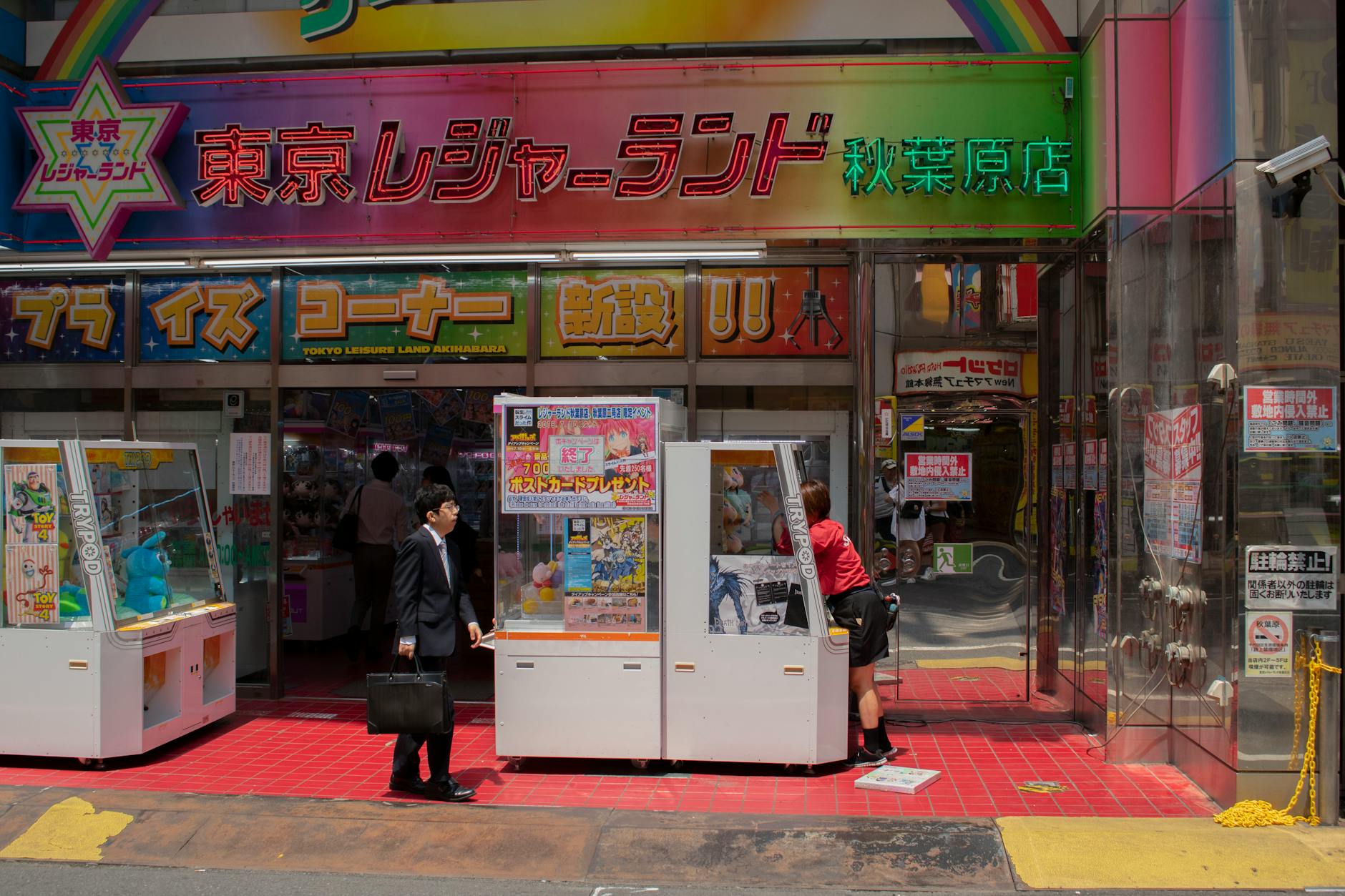
If you want to try one, our Akihabara guide covers the district and which end of the street to start at.
Character and collaboration cafes — book ahead or forget it
The Pokémon Cafe in Nihombashi, the Kirby Cafe, and the constant churn of limited-run anime collaboration cafes all work the same way: online reservation opening a fixed number of days ahead, selling out in minutes, no walk-ins. Food is expensive and average; the draw is the exclusive merchandise and the setting. If you are travelling with a fan, set an alarm for the reservation window. If not, skip it entirely.
Where to work, and the wifi situation
Tokyo is worse for laptop work than its reputation suggests. Specialty cafes often ban laptops, kissaten have no wifi and no sockets, and the co-working culture that fills cafes in other cities happens here in dedicated paid spaces instead.
What works:
- Ginza Renoir — large chairs, power at most seats, reliable wifi, and a culture of people staying for hours. The single best answer.
- Starbucks — consistent, and a few branches have proper desks.
- Hotel lobbies — most upmarket hotels will not challenge someone sitting in the lobby lounge with a ¥1,200 coffee.
- Paid work cafes — chains charging by the minute, typically ¥8 to ¥15 a minute with free drinks. Better value than it sounds for a three-hour session.
Public wifi in Tokyo is patchy and often requires registration. If you are here for more than a couple of days, a data SIM or pocket wifi removes the problem entirely — see our SIM card and wifi guide.
Coffee to take home
Beans from a Tokyo roaster are one of the better souvenirs available: light, compact, and unavailable at home. Most specialty cafes sell their own at ¥1,200 to ¥2,000 for 200g and will grind to order if you ask. Kiyosumi-Shirakawa is the obvious place to buy.
Beyond beans, the department store basements sell drip-bag coffee sets — individually wrapped single-serve pour-over sachets — which travel perfectly and cost ¥800 to ¥2,000 for a box. Japanese brewing equipment is the other good option: Hario V60 drippers, Kalita Wave filters and Kinto glassware all cost meaningfully less here than abroad. Our Tokyo souvenirs guide has the rest, and the depachika guide covers the food halls.
Best cafe for each situation
- Best coffee, full stop: the specialty roasters of Kiyosumi-Shirakawa, or Onibus in Nakameguro.
- Best atmosphere: a Shinjuku or Jimbocho kissaten, ideally a classical music one.
- Best for a rainy afternoon: Ginza. Big chairs, no rush, covered walkways — see our rainy day guide.
- Best for working: Ginza Renoir, anywhere.
- Best value: a kissaten morning set before 11:00, or a ¥150 convenience-store coffee.
- Best with children: a chain with booth seating — Komeda or a large Starbucks. Themed cafes rarely suit small children as well as the marketing suggests.
- Best for a walk: the Meguro river between Nakameguro and Daikanyama.
A coffee day that works
If you want one dedicated day: start at 08:00 with a kissaten morning set in Jimbocho or Shinjuku. Take the metro east to Kiyosumi-Shirakawa by 10:30 and do the roaster loop with the Museum of Contemporary Art in the middle. Cross the city to Nakameguro for the late afternoon and walk the river to Daikanyama. Finish at Fuglen in Tomigaya, which stops being a cafe and starts being a bar around 19:00.
That is four coffees, about ¥3,000, three neighbourhoods almost no tour group visits, and a considerably better day than most people have in Tokyo. For fitting it into a wider trip, see our neighbourhoods guide and the Tokyo food guide.
The kissaten deserves more than a category line, because it is the one kind of Tokyo cafe that is actively disappearing — the owners are in their eighties, the buildings are worth more as redevelopment sites, and a famous name closing with two weeks’ notice is a normal event here. Our Tokyo kissaten guide covers the rooms worth crossing the city for while they are still open.
If the specialty side is the reason you are here, the district overview above only scratches it. Our Tokyo specialty coffee guide goes roaster by roaster — Glitch, Koffee Mameya, Onibus, Leaves — with what a pour-over actually costs, how to read a menu that is a list of farms, and which famous names are more pilgrimage than coffee.
Cat cafes get a page of their own because the gap between the good ones and the bad ones is so wide. Our cat cafe Tokyo guide covers what an hour really costs once drinks and treats are added, the rescue cafes where your fee pays for the cats, and the handful of signs that tell you within a minute whether to stay or walk out.
The booking windows are where most people come unstuck, and they are all different: the Pokémon Cafe releases dates 31 days ahead at 18:00 Japan time, the Kirby Café opens the whole of the next month on the 10th, and collaboration cafes often run a lottery first. Our guide to themed cafes in Tokyo walks through each system step by step, with time-zone conversions and what to do when you miss out.
If the cake matters more than the coffee, Tokyo has a whole second cafe culture built around dessert: fruit parlours that turn one perfect melon into a parfait, century-old sweet shops serving anmitsu and zenzai, and kakigori specialists with two-hour summer queues. Our Tokyo dessert cafes guide covers what to order, where, and which famous desserts are not worth the wait.
If you need more than an hour at a table, the details matter: which chains cap wifi sessions, what the no-laptop signs on independent cafes say in Japanese, and where to take a video call in a city where talking on the phone indoors is frowned upon. Our guide to Tokyo cafes with wifi and power covers all of it, plus the coworking day passes that cost about the same as three coffees.
Frequently Asked Questions
What is a kissaten and how is it different from a cafe?
A kissaten is a traditional Japanese coffee house, generally owner-run, dating from the pre-war to mid-century era. Coffee is brewed to order by siphon or hand drip, roasts are dark, interiors are unchanged since the 1960s, and you are expected to sit for as long as you like. There is usually no wifi and often no card payment. A modern cafe is faster, lighter-roasted and built for turnover.
How much does coffee cost in Tokyo?
A convenience-store coffee is ¥120 to ¥180 and genuinely good. Chains run ¥250 to ¥550. Specialty cafes charge ¥550 to ¥900 for filter or espresso drinks and up to ¥1,200 for a single-origin hand drip. Kissaten and hotel lounges run ¥600 to ¥2,000, where much of what you pay for is the seat and the time.
Can you work on a laptop in Tokyo cafes?
Sometimes, and less often than you would expect. Many specialty cafes ban laptops, particularly at weekends, and traditional kissaten have neither wifi nor sockets. Chains are where laptop work happens — Ginza Renoir is the best of them for power, wifi and comfortable seating, followed by Starbucks. Paid by-the-minute work cafes are the reliable alternative.
Are animal cafes in Tokyo ethical?
Cat cafes can be, and some work with rescue organisations. Owl, hedgehog, otter and reptile cafes are not — those species are nocturnal, solitary or semi-aquatic, and cannot behave normally in a café environment; the otter trade in particular has a documented illegal supply problem. If you visit a cat cafe, judge it on arrival: calm animals, posted rules and low visitor numbers are the signs of a good one.
Which Tokyo neighbourhood is best for coffee?
Kiyosumi-Shirakawa for specialty roasters, since the district became Tokyo’s coffee capital after Blue Bottle opened there in 2015. Nakameguro for the most pleasant walk between good cafes. Shibuya and Tomigaya for convenience and standing bars. Ginza, Jimbocho and Shinjuku for old kissaten. Shimokitazawa if you want to sit for three hours and nobody to mind.
Photo Credits
- A coffee float and melon cream soda at Ginza Renoir – Coffee float and ice cream soda 2017 Ginza Renoir 2 by Morio, CC BY-SA 4.0, via Wikimedia Commons.
- The entrance to Meikyoku Kissa Lambre in Shinjuku – Cafe Ramble by Eugene Ormandy, CC BY-SA 4.0, via Wikimedia Commons.