Tokyo Transportation · Guide №063
Best Tokyo Subway Passes for Tourists: 24hr, 48hr & 72hr Compared
Every Tokyo subway pass compared for 2026: the Tokyo Subway Ticket (24/48/72hr), Metro 24-hour, Common One-Day, Toei and Greater Tokyo passes, with break-even math and whether a pass beats an IC card.
目次 — Contents
- Tokyo subway passes compared at a glance
- The Tokyo Subway Ticket (24, 48 and 72 hour)
- The Tokyo Metro 24-Hour Ticket
- The Common One-Day Ticket
- The Toei One-Day Pass
- The Greater Tokyo Pass
- Does a pass actually beat just tapping an IC card?
- Pass or IC card: how to decide
- How these passes interact with JR and the Yamanote Line
- So should you even buy a pass?
- Common mistakes with Tokyo subway passes
- Frequently Asked Questions
- Photo Credits
This article contains advertising. Our booking links are routed through a partner that adds commission tracking automatically, so if you book through one we earn a commission from the provider, at no extra cost to you. It never affects what we recommend. Affiliate disclosure
The best Tokyo subway pass for tourists is, for most people, the Tokyo Subway Ticket: unlimited rides on all 13 Tokyo Metro and Toei lines for 24, 48 or 72 hours, costing ¥1,000, ¥1,500 and ¥2,000 in 2026. But it only pays off if you actually ride a lot, and it does not cover JR. This guide compares every Tokyo subway pass, does the break-even math, and tells you when to skip the pass entirely.
I have bought these passes, done the days where they saved me real money, and the days where I would have been better off just tapping a card. The honest answer to “should I get a pass?” is “sometimes,” and below I will show you exactly how to tell which kind of day you are having.
Tokyo subway passes compared at a glance
There are more passes than you would expect, and the names blur together. Here is the whole field in one table, with 2026 adult prices, so you can see how they differ before we dig into each one.
| Pass | Covers | Price (adult) | Validity | Best for |
|---|---|---|---|---|
| Tokyo Subway Ticket | Tokyo Metro (9) + Toei (4) | ¥1,000 / ¥1,500 / ¥2,000 | 24 / 48 / 72 hours from first use | Most tourists doing subway-heavy sightseeing |
| Tokyo Metro 24-Hour Ticket | Tokyo Metro only (9 lines) | ¥700 | 24 hours from first use | Days spent only on Metro lines |
| Common One-Day Ticket | Tokyo Metro + Toei | ¥1,100 | One calendar day | Residents / anyone who can’t buy the tourist ticket |
| Toei One-Day Pass | Toei subway + bus + tram + Nippori-Toneri | ¥700 | One calendar day | Toei-line and Toei-bus heavy days |
| Greater Tokyo Pass | 13 private railways + Toei buses | ¥6,500 | 5 consecutive days | Lots of private-railway day trips |
None of these cover JR, and that single fact decides a lot of itineraries. If your days lean on the JR Yamanote loop rather than the subway, a subway pass is the wrong tool, and our JR Pass vs subway pass comparison is the better read. With that flagged, let us go through each pass.
The Tokyo Subway Ticket (24, 48 and 72 hour)
This is the pass the question is usually about, and for good reason. It buys unlimited rides on the entire Tokyo subway, both companies, for a set number of hours. It is the one I recommend to most first-time visitors who plan to bounce between neighborhoods.
Prices and what it covers
The 2026 adult prices are ¥1,000 for 24 hours, ¥1,500 for 48 hours and ¥2,000 for 72 hours. Children aged 6 to 11 pay exactly half (¥500 / ¥750 / ¥1,000), and under-6s ride free. For that you get unlimited travel on all 9 Tokyo Metro lines and all 4 Toei Subway lines, which between them reach the overwhelming majority of central Tokyo sights.
Note these are higher than the figures floating around older blogs (which still quote ¥800 / ¥1,200 / ¥1,500). Fares went up, so the numbers above are what you actually pay in 2026.
It runs on hours, not calendar days
This is the detail that makes it so good. The clock starts the moment you first insert the ticket into a gate, and runs for a full 24, 48 or 72 hours, not until midnight. Activate a 72-hour ticket at 11am on Friday and it stays valid until 11am on Monday. If your time runs out while you are mid-journey, you can still finish that ride and exit. The expiry date and time are printed on the back, so you can check at a glance.
Who can buy it
This is a visitor product. Officially it is sold to people entering Japan on a short-term stay, and when you buy it in Tokyo the staff will physically check your passport for that short-stay entry stamp. A photocopy will not do; bring the actual passport. (If you came through the automated immigration gates and have no stamp, ask a staffed counter for one.) In practice, foreign tourists on a normal tourist entry qualify easily; Tokyo-area residents do not.

Where to buy it
You can pick one up at a satisfying number of places:
- Narita Airport — Terminal 1 and Terminal 2 arrival lobbies (1F).
- Haneda Airport — the International (Terminal 2) arrival-floor visitor information center, plus the Keikyu tourist desk at Terminal 3.
- Tokyo Metro Pass Offices and tourist desks at major stations: Ueno, Ginza, Shinjuku, Omote-sando, Tokyo Station, Ikebukuro and others.
- BIC Camera and Sofmap electronics stores (showing the ticket even nets you an extra discount on tax-free shopping). Yodobashi is often assumed to sell it but is not on the official list.
- Many tourist information centers around Shinjuku, Shibuya, Asakusa and elsewhere.
- Online from outside Japan — buy a QR voucher in advance and collect the physical ticket from a machine or counter once you arrive.
What it does NOT cover
This is where people get caught. The Tokyo Subway Ticket does not cover:
- JR lines — including the Yamanote loop, the Chuo Line and the Sobu Line. On the map, JR stations carry square symbols; the circular-symbol stations are the ones your pass covers.
- Private railways — Tokyu, Odakyu, Keio, Tobu, Seibu, Keisei and the rest.
- The Yurikamome, the monorail, the Rinkai Line, the Toden streetcar and all buses.
- Airport transport. You cannot ride the pass to or from the airport; you need a separate ticket for that leg.
If you ride through onto a connecting private line, you simply pay the extra portion at the exit. The pass covers the subway part; you top up the rest.
How it physically works
The standard tourist version is a magnetic paper ticket. You insert it into the slot on a normal automatic gate, it pops out the far side, and you take it again. Do not try to tap it on the IC card pad, and steer clear of the “IC only” gates that have no slot. You insert it the same way at transfer and exit gates, so hang onto it for the whole journey. (A QR-code version and an IC-loaded version exist for some products, but the one you will most likely buy at the airport is the insert-the-paper-ticket kind.)

The Tokyo Metro 24-Hour Ticket
If your day happens to stay entirely on Tokyo Metro lines and never touches Toei, the Metro-only 24-Hour Ticket at ¥700 (¥350 for children) is the cheaper choice. Like the Tokyo Subway Ticket it runs for a rolling 24 hours from first use, and you can buy it straight from the ticket machines at almost any Tokyo Metro station. Tokyo Metro points out it pays for itself after just four rides even at the base fare.
The catch is the Toei exclusion. The moment your route needs the Toei Oedo or Asakusa Line, this ticket leaves you buying a separate fare, and the small saving over the Tokyo Subway Ticket evaporates. Anyone who qualifies for the tourist ticket and expects to roam widely is usually better off paying the extra ¥300 for full Metro-plus-Toei coverage.
The Common One-Day Ticket
The Common One-Day Ticket (also called the Toei and Tokyo Metro One-Day Economy Pass) covers the exact same 13 lines as the Tokyo Subway Ticket, for ¥1,100 (¥550 children). So why does it exist, and why would anyone pay ¥100 more than the 24-hour Tokyo Subway Ticket?
Two reasons. First, it is valid for one calendar day (first train to last train), not a rolling 24 hours. Second, and more importantly, anyone can buy it with no passport check. That makes it the natural pick for Tokyo residents and for any traveler who, for whatever reason, cannot buy the tourist-only Tokyo Subway Ticket. If you qualify for the tourist ticket, though, the 24-hour version is both cheaper and more flexible, so the Common One-Day Ticket is rarely the tourist’s best move.
The Toei One-Day Pass
The Toei One-Day Pass, sometimes called the Toei Marugoto Kippu, costs ¥700 (¥350 children) and covers a surprisingly broad slice of city transport: the four Toei subway lines, Toei buses, the Tokyo Sakura Tram (the old Toden Arakawa streetcar) and the Nippori-Toneri Liner. It is valid for one calendar day.
It is a niche pick, but a good one in the right hands. It pays off if your day is built around Toei-specific lines and buses, or if your hotel sits on a Toei line and you want to wander on the buses and the retro tram. It does not include Tokyo Metro or JR, so it is not a general-purpose pass. For a classic sightseeing loop, the Tokyo Subway Ticket usually wins; for a deliberately Toei-flavored day, this is the one.
The Greater Tokyo Pass
The Greater Tokyo Pass plays a completely different game. It is now a single digital pass: ¥6,500 for an adult, valid 5 consecutive days (¥3,250 for children aged 6 to 11). Instead of the subway, it covers 13 private railway companies plus Toei buses across the wider Kanto region, lines like Odakyu, Tobu, Keikyu, Keio, Seibu, the Yokohama Municipal Subway, the Minatomirai Line and the Yurikamome.
It works differently too. There are no paper tickets and no gates to insert anything into. You buy it online, activate it in the app, and show the live “in use” screen to the staff at the gate, the conductor or the bus driver. Each day runs from 3am to 3am, and you get five consecutive days from first use.
This is the pass for travelers planning a string of private-railway day trips, Yokohama and Minatomirai, the Odakyu line out toward Hakone, the Tobu line toward Nikko, that kind of thing. To justify ¥6,500 you need to cover real distance on private lines over several days. If you are staying central and sightseeing in the 23 wards, it is overkill, and the subway pass is what you want. Note it does not cover Tokyo Metro or JR, though it does include the Yurikamome, which the subway passes do not.

Does a pass actually beat just tapping an IC card?
This is the question that matters, and it comes down to arithmetic. The minimum subway fare is about ¥180 (a hair less, around ¥178, on an IC card), and most central hops cost ¥180 to ¥210. A 24-hour Tokyo Subway Ticket is ¥1,000. So:
- At the ¥180 minimum fare, ¥1,000 ÷ ¥180 ≈ 5.6, so you break even at about 6 short rides in 24 hours.
- At a more realistic ¥210–¥250 average (sightseeing hops often cross fare zones), break-even drops to roughly 4 to 5 rides.
- The longer passes break even faster per day: the 48-hour works out to ¥750 a day and the 72-hour to about ¥667 a day, so they pay off at around 4 rides a day.
The rule of thumb I use: if you expect to ride the subway four or more times in a day, get the pass. Fewer than that and pay-as-you-go usually wins.
A day where the pass wins
Picture a packed sightseeing day: Senso-ji in Asakusa, up to Tokyo Skytree, over to Ameyoko in Ueno, down to Tsukishima for monjayaki, into Ginza for the evening, then out to Shibuya. That is five or six subway hops, roughly ¥1,200 in single fares. The 24-hour ticket at ¥1,000 saves you a couple of hundred yen and removes any thought about per-ride cost, so you hop on and off freely. On a day like that the pass clearly wins, and across three such days a 72-hour ticket at ¥2,000 is an easy call.
A day where the IC card wins
Now picture a slower day: a long morning in Shinjuku Gyoen, lunch nearby, an afternoon wandering Harajuku and Omotesando on foot, dinner in the same area. That might be just two subway rides all day, around ¥400. A pass would waste ¥600. Tap a Suica or PASMO instead, pay only for what you ride, and keep total flexibility. The same logic applies if your day leans on the JR Yamanote loop, since no subway pass covers JR anyway.
Pass or IC card: how to decide
You do not have to choose once for the whole trip. Many travelers carry an IC card the entire time for buses, JR, shops and quiet days, and buy a Tokyo Subway Ticket only for the one or two days they know will be subway-heavy. That hybrid approach is often the smartest.
Lean toward the IC card when you ride only a couple of times a day, walk a lot between nearby sights, rely heavily on JR, or simply want one tap for trains, buses, vending machines and convenience stores with zero break-even pressure. As of 2026 the old chip shortage is over: regular Suica and PASMO are back on sale, the visitor Welcome Suica is available at the airports, and iPhone users can load a digital Suica before they land. (PASMO PASSPORT, the old tourist card, was discontinued in October 2024, so do not go looking for it.)
Lean toward the pass when you are doing dense, multi-stop sightseeing days across central Tokyo, four to six subway hops or more, especially over two or three days where the 48- and 72-hour tickets get cheaper per day. For the deeper case on how the system and the fares actually work, see our Tokyo Metro guide, and for the bigger transport picture, the Tokyo transportation guide pulls it all together.
How these passes interact with JR and the Yamanote Line
It bears repeating because it surprises so many people: not one of these subway passes covers JR. The beloved Yamanote loop, the green circle line that strings together Shibuya, Shinjuku, Harajuku, Ikebukuro, Ueno and Tokyo Station, is a JR line. Your Tokyo Subway Ticket will not open a JR gate.
In practice this is fine. You tap your IC card for the occasional Yamanote hop and insert your subway pass for everything underground. The only Tokyo day passes that bundle JR within the city are pricier combination tickets (the Tokyo Combination Ticket at ¥1,720 covers Metro, Toei and JR in the 23 wards), and they are almost never worth it because you rarely ride enough in one day to clear that price. If your trip is genuinely JR-heavy, the comparison you actually want is our JR Pass vs subway pass guide.
So should you even buy a pass?
Here is my plain advice. If you are a typical first-time visitor planning busy, subway-led sightseeing days, yes, and the Tokyo Subway Ticket in the length that matches your subway-heavy days (often the 72-hour) is the one to get. If your trip is slower-paced, walk-heavy, or built around the JR Yamanote loop, skip the pass and just tap an IC card.
When in doubt, default to an IC card for the whole trip and add a Tokyo Subway Ticket only for the days you know will be packed with subway rides. You will never badly overpay that way, and you keep the freedom to change plans on the fly, which, in a city as dense and tempting as Tokyo, you will.
Common mistakes with Tokyo subway passes
A handful of avoidable slip-ups cost travelers money or time. Watch for these.
- Expecting it to cover JR. The biggest one. Your subway pass will not open a JR gate, so the Yamanote loop is never included.
- Buying the wrong length. Match the pass to your subway-heavy days, not your whole trip. A 72-hour ticket is wasted on a trip with only one busy subway day.
- Activating it too early. The clock starts on first use, so do not insert it on a quiet travel day when you will barely ride.
- Forgetting the passport. Staff check it when you buy the tourist ticket in Japan, and a photocopy is not accepted.
- Trying to tap a paper pass on the IC pad. Insert it into the slot instead, and avoid the IC-only gates that have no slot.
- Assuming it reaches the airport. It does not; you need a separate ticket for the airport run.
Frequently Asked Questions
How much does the Tokyo Subway Ticket cost in 2026?
The adult prices are ¥1,000 for 24 hours, ¥1,500 for 48 hours and ¥2,000 for 72 hours. Children aged 6 to 11 pay half, and under-6s ride free. These are higher than older guides suggest because fares were revised; the figures above are current for 2026.
Is a Tokyo subway pass worth it for tourists?
Usually yes if you ride the subway around four or more times a day. The 24-hour Tokyo Subway Ticket breaks even at roughly 4 to 6 rides, and the 48- and 72-hour versions get cheaper per day. On slow, walk-heavy days, or days built around JR, pay-as-you-go with an IC card is better.
Does the Tokyo Subway Ticket cover JR and the Yamanote Line?
No. The Tokyo Subway Ticket covers only the 9 Tokyo Metro and 4 Toei Subway lines. JR lines, including the Yamanote loop, the Chuo and the Sobu, are a separate company and are not included. For JR you tap an IC card or buy a JR ticket.
Where can I buy a Tokyo subway pass?
The Tokyo Subway Ticket is sold at Narita and Haneda airports, Tokyo Metro pass offices and tourist desks at major stations, BIC Camera and Sofmap stores, many tourist information centers, and online in advance as a QR voucher you collect on arrival. You will need to show your passport when buying in Japan.
Should I get a subway pass or just a Suica/PASMO IC card?
Get a pass for dense, multi-stop subway sightseeing days; get an IC card for flexibility, buses, JR and slower days. Many travelers do both: carry an IC card all trip and add a Tokyo Subway Ticket only on the busiest subway days. In 2026 regular Suica and PASMO are available again after the chip shortage.
Photo Credits
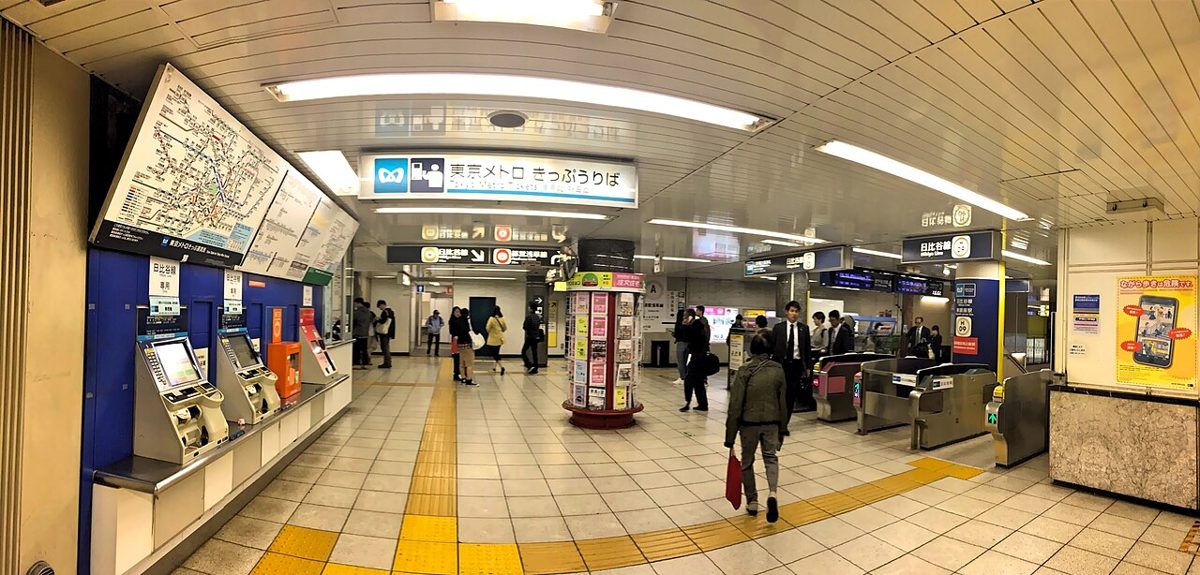
- Tokyo Metro ticket machines, where same-day passes and single tickets are sold — Photo: Nesnad / CC BY 4.0 via Wikimedia Commons
- The automatic ticket gates: insert a paper pass in the slot, or tap an IC card on the pad — Photo: Mister0124 / CC BY-SA 4.0 via Wikimedia Commons
- A Toei Subway train; the Tokyo Subway Ticket covers all four Toei lines as well as the nine Tokyo Metro lines — Photo: MaedaAkihiko / CC BY-SA 4.0 via Wikimedia Commons
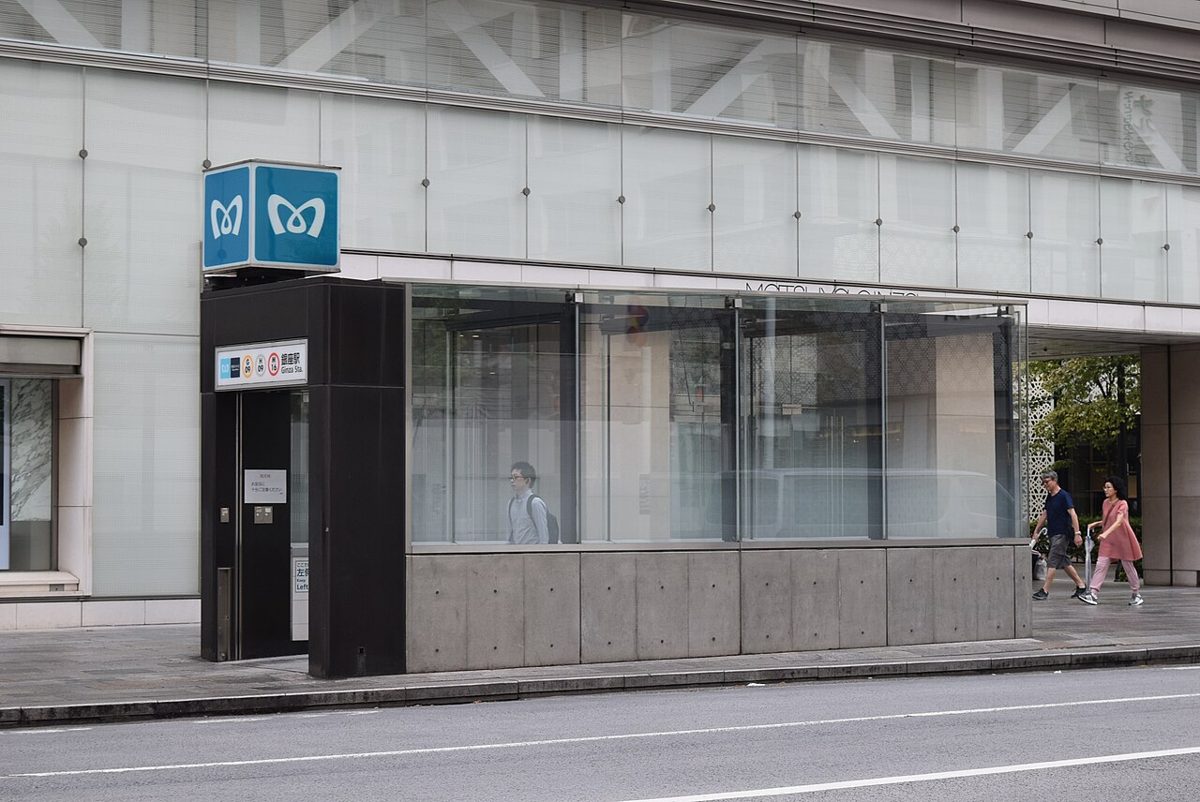
- A Tokyo Metro station entrance; the round ‘M’ marks the way down to the subway — Photo: Haydn Blackey from Cardiff, Wales / CC BY-SA 2.0 via Wikimedia Commons
- Insert a paper Tokyo Subway Ticket into the gate slot and grab it as it pops out; tap an IC card on the pad instead — Photo: MaedaAkihiko / CC BY-SA 4.0 via Wikimedia Commons