Tokyo Transportation · Guide №155
Shinjuku Station Survival Guide: Every Exit, Explained
How the world's busiest station is laid out, which exit leads where, where the Odakyu, Keio, Metro, Toei and Seibu gates are, how long transfers really take, and the mistakes that catch almost every first-time visitor.
目次 — Contents
- Why Shinjuku Station is so confusing
- The basic layout
- JR exits, one by one
- The other railways and their gates
- How long transfers really take
- Day trips that start at Shinjuku
- Luggage, lifts and accessibility
- Rush hour
- Eating, waiting and killing time in the station
- If something goes wrong
- The mistakes almost everyone makes
- How to navigate it like a local
- Is it a good idea to stay near Shinjuku Station?
- Frequently Asked Questions
- Photo Credits
This article contains advertising. Our booking links are routed through a partner that adds commission tracking automatically, so if you book through one we earn a commission from the provider, at no extra cost to you. It never affects what we recommend. Affiliate disclosure
This Shinjuku Station guide starts with the one thing that makes the world’s busiest station manageable: decide which exit you need before you arrive. East is for Kabukicho and the shops, West for the skyscrapers and Omoide Yokocho, South and New South for the Keio line, highway buses and Shinjuku Gyoen. Pick the wrong side and a two-minute exit becomes a fifteen-minute detour.
Below: how the station is laid out, which railway company’s gates are where, every major exit and what it leads to, realistic transfer times, the day-trip trains that leave from here, and the mistakes that catch nearly every first-time visitor. For the neighbourhood above ground, see our Shinjuku guide.
Why Shinjuku Station is so confusing
Shinjuku Station regularly tops lists of the world’s busiest railway stations, with roughly three million passengers passing through on a normal day. That number alone does not explain why people get lost. These things do.
- It is really several stations. JR East, Odakyu, Keio, Tokyo Metro and Toei all run services here, each with its own platforms and its own ticket gates, stitched together by corridors and underground malls.
- There are dozens of exits. Counting every staircase from the underground shopping streets, the total runs well into the hundreds, and several have similar names.
- Other stations share the name. Shinjuku-sanchome, Nishi-Shinjuku, Higashi-Shinjuku, Shinjuku-nishiguchi, Minami-Shinjuku and Seibu-Shinjuku are all separate stations, some a long walk away.
- The west side is a building site. The old Odakyu department store has been demolished and a new tower of about 260 metres is going up in its place, due to open in 2029. Walkways and entrances on the west side shift as construction moves.
The good news is that once you understand the basic shape, it becomes very logical. Almost nobody uses more than a handful of the exits.
The basic layout
Picture the JR platforms as a long north–south block running through the middle of the station, with tracks side by side. Everything else hangs off that block.
- East side: shopping streets, Kabukicho, Golden Gai, the department stores around Shinjuku-sanchome, and the Seibu-Shinjuku line a short walk north-east.
- West side: the skyscraper district, the Tokyo Metropolitan Government Building, Omoide Yokocho, big electronics stores, and the Odakyu and Keio railway terminals.
- South side: the Keio line gates, Koshu-kaido avenue, the Southern Terrace and the Toei subway lines to the south-west.
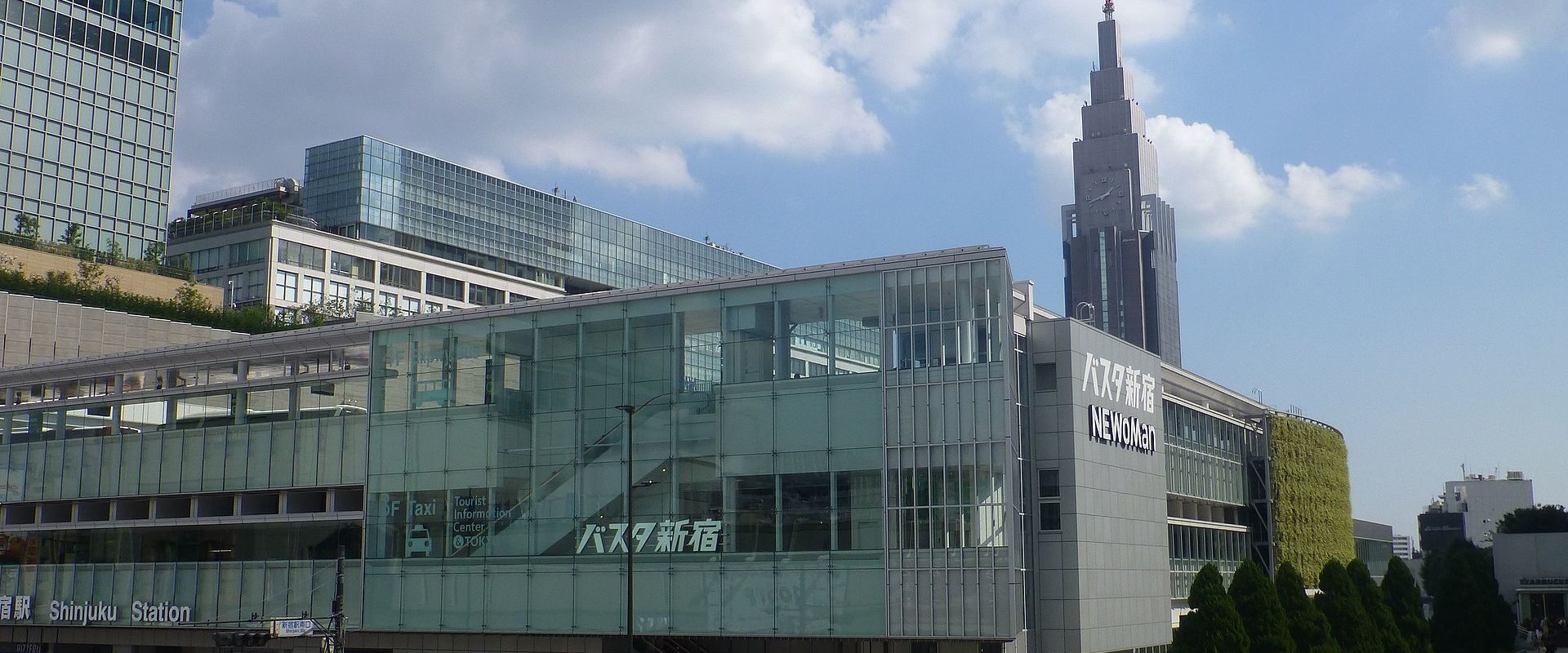
- New South area: the modern south-east extension, with the Busta Shinjuku highway bus terminal, NEWoMan shops and the walk to Shinjuku Gyoen.
Underground, the Tokyo Metro Marunouchi line crosses beneath the northern end, and long underground shopping streets run east towards Shinjuku-sanchome and west towards the skyscrapers. At ground level, the East-West Free Passage lets you cross from one side to the other without passing through ticket gates, which is the single most useful thing to know if you come out on the wrong side.
JR exits, one by one
| JR exit | Side | Use it for |
|---|---|---|
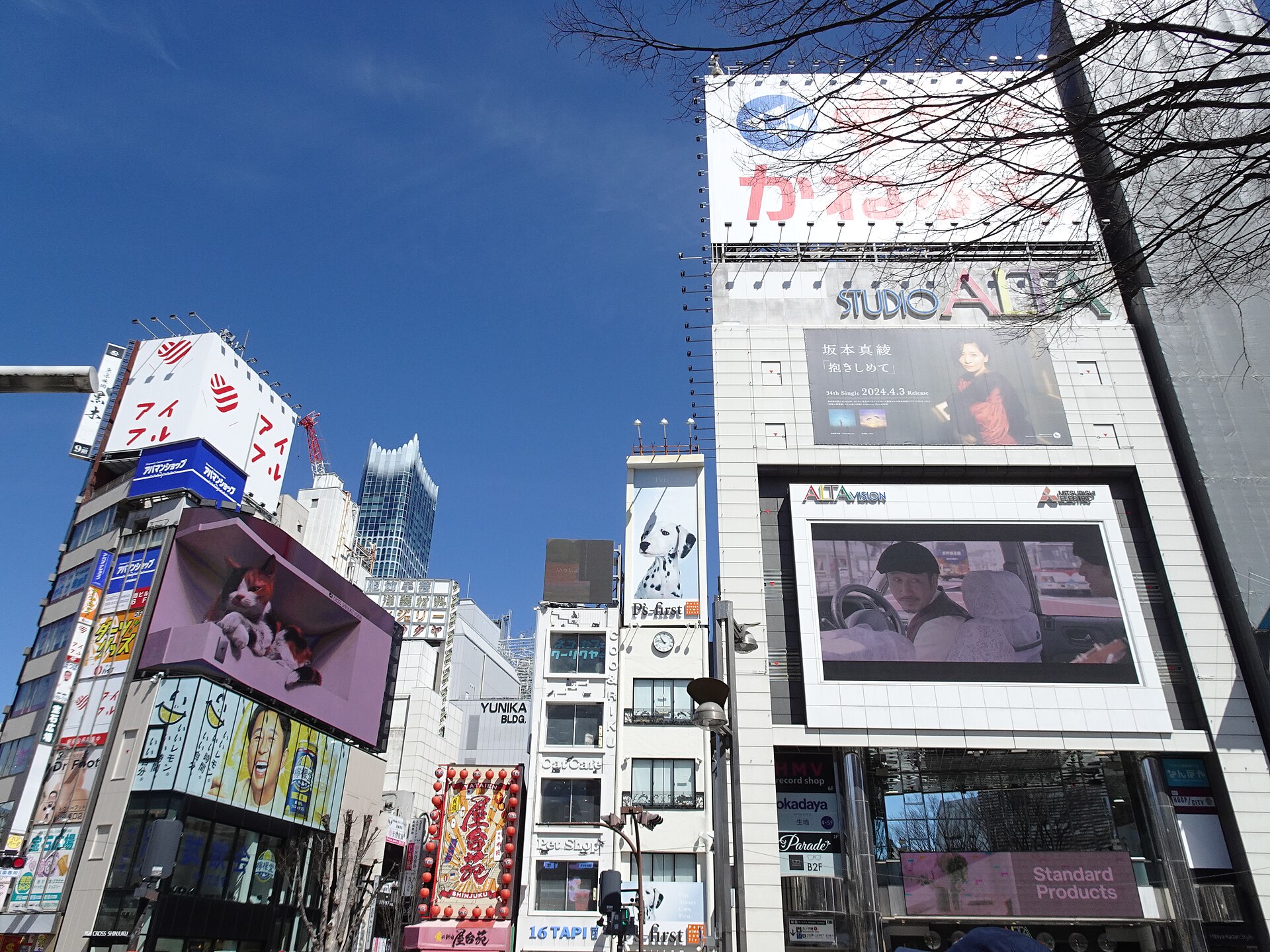
| East Exit | East | Shinjuku-dori shopping, Kabukicho, Golden Gai, the 3D cat billboard, Seibu-Shinjuku station |
| Central East Exit | East | Omoide Yokocho via the underpass, Kabukicho, the East-West Free Passage |
| West Exit | West | Skyscraper district, Tokyo Metropolitan Government Building, Omoide Yokocho, Odakyu line, electronics stores |
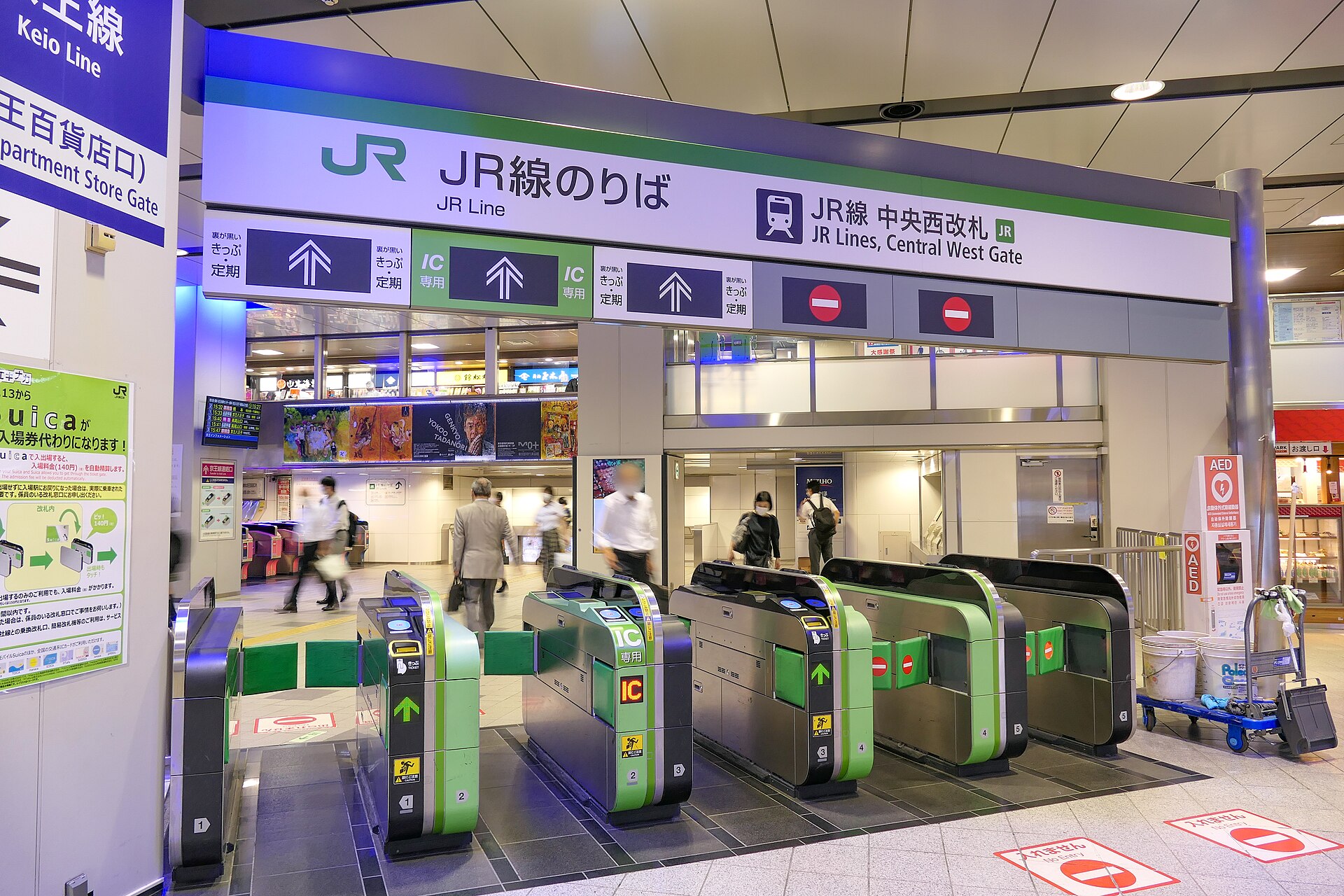
| Central West Exit | West | Keio and Odakyu lines, the Marunouchi line, the underground passage to the skyscrapers |
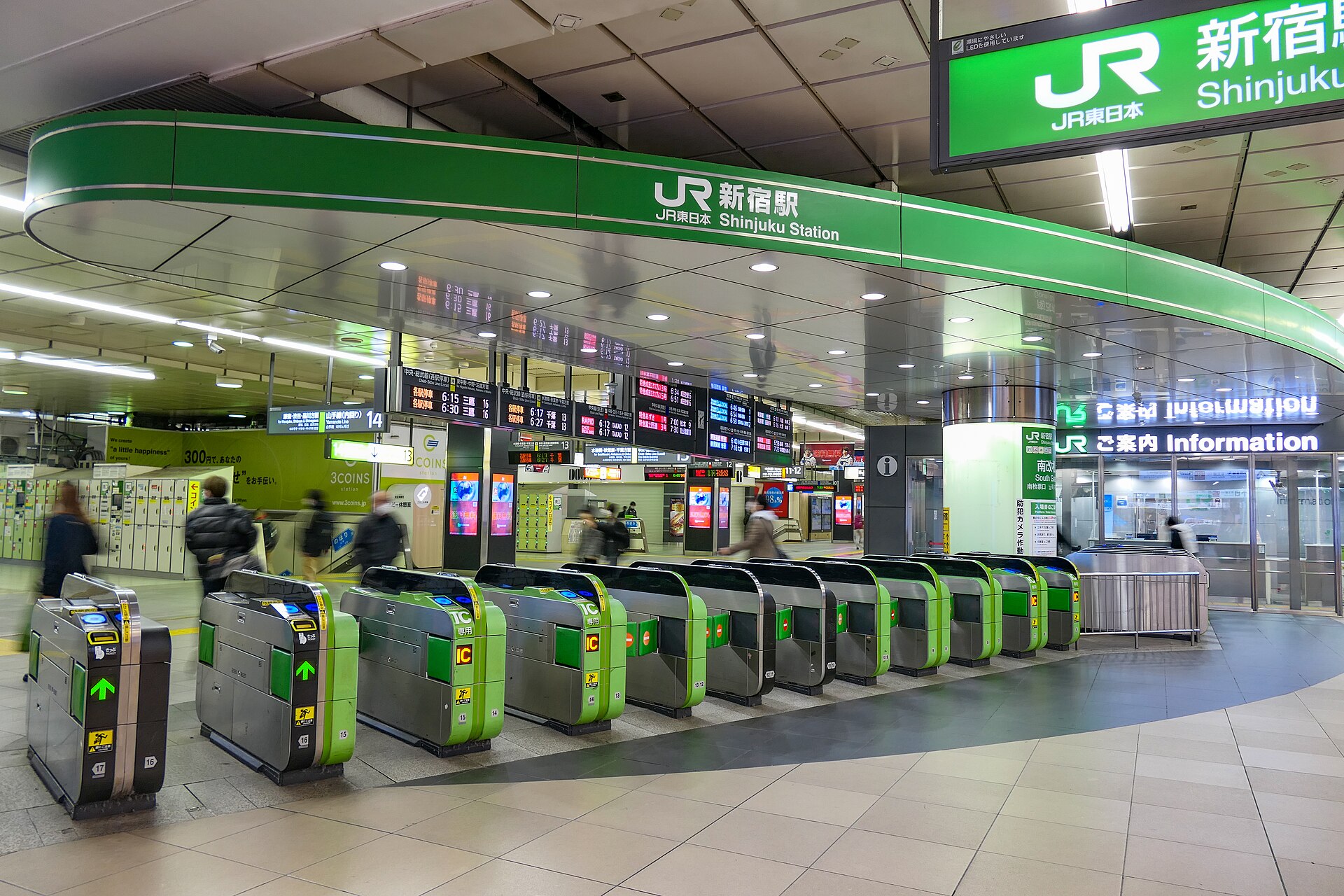
| South Exit | South | Keio line, Koshu-kaido avenue, Southern Terrace, Lumine |
| Southeast Exit | South | Shinjuku-sanchome side streets, Takashimaya direction |
| Koshu-Kaido Exit | South | Busta Shinjuku, Southern Terrace, Toei and Keio New lines to the south-west |
| New South Exit | South-east | Busta Shinjuku, NEWoMan, Takashimaya Times Square, Shinjuku Gyoen, the JR East Travel Service Center |
| Miraina Tower Exit | South-east | Miraina Tower, Busta Shinjuku, NEWoMan |
East Exit and Central East Exit
The East Exit is the one most people imagine when they think of Shinjuku: giant video screens, crowds, and shopping streets running off towards Shinjuku-sanchome. Across the plaza is the building carrying the huge 3D cat on a curved screen, which has become one of Shinjuku’s landmarks and is an easy meeting point. Walk north across Yasukuni-dori for Kabukicho, the nightlife district, and a little further for Golden Gai’s tiny bars. Our Kabukicho guide and Golden Gai guide cover both.
The Central East Exit is slightly further north and is the better exit for crossing to the west side through the East-West Free Passage, and for reaching Omoide Yokocho through the low underpass beneath the tracks.
West Exit and Central West Exit
The West Exit leads to the station’s west plaza and underground concourse, and onward to the Nishi-Shinjuku skyscraper district. This is the side for the Tokyo Metropolitan Government Building, whose observation decks on the 45th floor, 202 metres up, are free: the South deck is open 09:30 to 22:00 and the North deck 09:30 to 17:30, with last entry thirty minutes before closing and different closed days. The walk takes about ten to fifteen minutes through the underground passage, or take the Toei Oedo line one stop to Tochomae.
Omoide Yokocho, the lantern-lit alley of tiny yakitori bars, is immediately north of the West Exit, and Yodobashi Camera’s cluster of electronics stores is just to the west. The Odakyu line’s platforms are directly beside the JR West Exit, and the Keio line’s are beneath the Keio department store next to them. Because of the redevelopment, expect construction hoardings, temporary walkways and changed routes on this side for several years yet.
South Exit, Koshu-Kaido Exit and Southeast Exit
The South Exit opens onto Koshu-kaido, the wide avenue running over the tracks. It is the most direct exit for the Keio line and for Lumine’s shops, and it is the right choice for the Shinjuku Southern Terrace, a pleasant tree-lined promenade running south beside the tracks towards Yoyogi. The Koshu-Kaido Exit, a little to the east, is convenient for the bus terminal and for walking west along the avenue towards the Toei subway lines. The Southeast Exit is a small, useful exit for the streets of Shinjuku-sanchome.
New South Exit and Miraina Tower Exit
The New South area is the most modern part of the station, and the most straightforward: wide, bright and step-free. It has the JR East Travel Service Center, open 08:00 to 19:00, which helps with Japan Rail Pass exchanges, seat reservations and tickets. Directly above is Busta Shinjuku, the huge highway bus terminal, reached by escalators. Takashimaya Times Square is across the road, and Shinjuku Gyoen’s Shinjuku Gate is about a ten-minute walk.
The other railways and their gates
This is where Shinjuku trips people up. A JR ticket or JR Pass does not get you through Odakyu, Keio, Tokyo Metro or Toei gates, and each has its own entrance. An IC card such as Suica or PASMO works on all of them, which is the strongest argument for using one here — our Suica vs PASMO guide explains the difference.
| Railway | Where its gates are | Key destinations | Transfer from JR |
|---|---|---|---|
| Odakyu Line | West side, beside the JR West Exit | Hakone (Romancecar), Enoshima, Shimokitazawa | 5–10 minutes |
| Keio Line | West/south-west, beneath the Keio department store | Mount Takao, Chofu, Kichijoji (Inokashira line via Meidaimae) | 5–10 minutes |
| Keio New Line / Toei Shinjuku Line | South-west, under Koshu-kaido | Shinjuku-sanchome, Jimbocho, eastern Tokyo | 10 minutes |
| Toei Oedo Line | Deep underground, south-west | Tochomae, Roppongi, Tsukiji, Ryogoku | 10–15 minutes |
| Tokyo Metro Marunouchi Line | Underground, north-west of the JR block | Shinjuku-sanchome, Ginza, Tokyo Station, Ikebukuro | 5–10 minutes |
| Seibu-Shinjuku Line | Separate station, north-east near Kabukicho | Kawagoe (Hon-Kawagoe), Takadanobaba | 10 minutes, partly outdoors |
Stations that are not Shinjuku Station
- Seibu-Shinjuku — a separate terminus on the Kabukicho side, about ten minutes’ walk from the JR East Exit. Trains to Kawagoe leave from here; our Kawagoe day trip guide explains the routes.
- Shinjuku-sanchome — Tokyo Metro Marunouchi and Fukutoshin lines and the Toei Shinjuku line, under the Isetan department store area, connected underground to the east side of Shinjuku Station. The best station for Isetan and for Golden Gai.
- Nishi-Shinjuku — one stop west on the Marunouchi line, in the skyscraper district.
- Shinjuku-nishiguchi — the Toei Oedo line’s station near the West Exit, separate from the Oedo line’s main Shinjuku station.
- Higashi-Shinjuku and Minami-Shinjuku — separate stations some distance away. You almost certainly do not want them.
How long transfers really take
Journey planners assume you know the station and walk briskly. Add time if you have luggage, children, or it is rush hour.
| Transfer | Minimum | Realistic with bags or crowds |
|---|---|---|
| JR line to another JR line | 3 minutes | 5–8 minutes |
| JR to Odakyu or Keio | 5 minutes | 10–15 minutes |
| JR to Marunouchi line | 5 minutes | 10 minutes |
| JR to Toei Oedo line | 10 minutes | 15–20 minutes |
| JR to Busta Shinjuku buses | 5 minutes | 10–15 minutes |
| JR to Seibu-Shinjuku | 8 minutes | 15 minutes |
If you are catching a reserved long-distance train or a highway bus, arrive at Shinjuku at least twenty to thirty minutes before departure. Buses in particular do not wait.
Day trips that start at Shinjuku
Shinjuku is the gateway to the west of Tokyo and beyond, which is one of the reasons it is so busy.
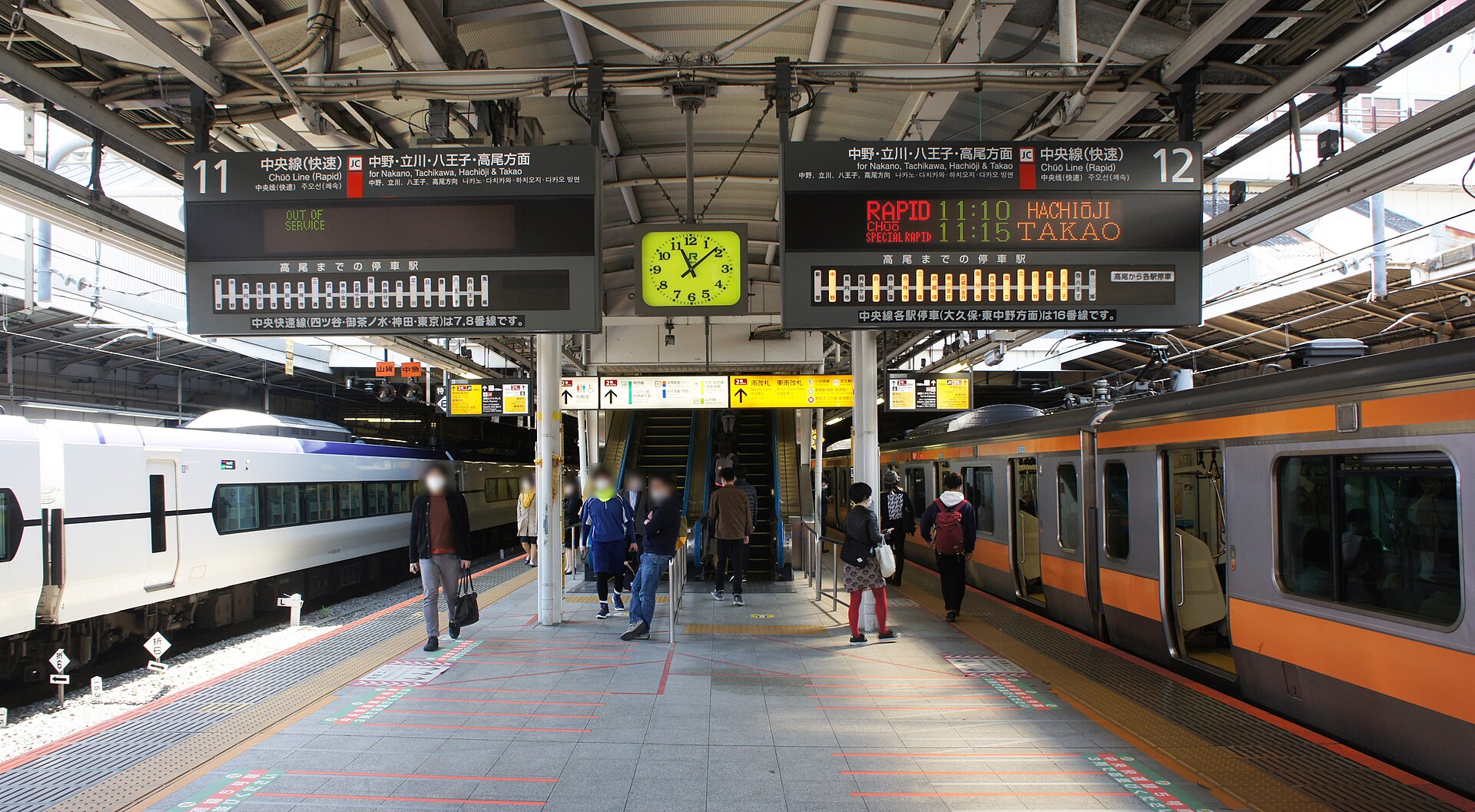
- Hakone — the Odakyu Romancecar limited express runs from the Odakyu side of the station to Hakone-Yumoto, with reserved seats. See our Hakone day trip guide.
- Mount Fuji and Kawaguchiko — JR limited expresses run west from Shinjuku towards Otsuki and on to Kawaguchiko, and highway buses from Busta Shinjuku are often the simplest option. Our Kawaguchiko guide compares them.
- Mount Takao — the Keio line reaches Takaosanguchi in about 54 minutes for ¥390, one of the best-value day trips from central Tokyo.
- Kichijoji and the Ghibli Museum — the JR Chuo line runs west to Kichijoji and Mitaka in well under half an hour.
- Narita Airport — some Narita Express trains start or call at Shinjuku. See our Narita airport guide.
Luggage, lifts and accessibility
Shinjuku is not an easy station with a large suitcase. Some older corridors involve stairs, the crowds make wheeling a case slow, and lifts can be hard to find.
- Use the New South area where you can. It is the most modern, step-free part of the station, with lifts and escalators to Busta Shinjuku.
- Look for the lift symbol on signs rather than following the crowd, which will lead you to stairs.
- Coin lockers are spread throughout the station and cost ¥400 to ¥1,000 a day, with a three-day maximum. The large lockers fill by mid-morning, so arrive early or use a staffed luggage service.
- Consider sending luggage ahead. Luggage delivery services send suitcases between hotels and airports, typically next day, which is often easier than dragging them through Shinjuku.
Rush hour
The morning rush, roughly 07:30 to 09:30, and the evening rush, roughly 17:30 to 19:30, are when Shinjuku is at its most intense. Platforms and corridors move in dense one-way streams, and stopping to look at a map in the middle of a passage causes real problems for everyone behind you. If you can, avoid changing trains here at those times. If you cannot, step to the side before you stop, keep to the left in corridors unless signs say otherwise, and let the crowd go first.
Eating, waiting and killing time in the station
One consolation for Shinjuku’s size is that you are never far from food, coffee or a seat.
- Station buildings. Lumine, Lumine Est and NEWoMan sit directly on top of or beside the JR station, with restaurant floors high up and cafes and food counters lower down. They are the easiest place to wait for someone, and the restaurant floors are calmer than the street at lunchtime.
- Standing coffee and beer. Berg, a long-running standing cafe-bar in the basement near the East Exit, is a Shinjuku institution for a quick, cheap coffee or beer between trains, and the kind of place that gives the station a human scale. Check it is open before planning around it.
- Department store food halls. The basements of the big department stores around the station, including Isetan at Shinjuku-sanchome, sell bento, sushi and sweets that are ideal for a long train ride. Our depachika guide explains how to shop them.
- Ekiben for the train. Before a Romancecar to Hakone or a limited express towards the mountains, buy a station bento from one of the shops near the gates. Eating on long-distance trains is completely normal; on commuter trains it is not.
- Convenience stores are inside and just outside most exits, for water, snacks and an ATM.
If something goes wrong
Lost property. Japan is remarkably good at returning lost items. If you leave something on a train or in the station, go to the nearest station office as soon as possible with the line, direction, approximate time and car position. Items are usually logged and sent to the railway’s lost-property centre within a day or two.
Separated from your group. Agree in advance on a specific gate to regroup at, and whether it is inside or outside the barrier. If you have data, share live locations before entering the station at busy times.
Wrong ticket or IC card problems. If a gate rejects your card or ticket, do not force your way through. Every set of gates has a staffed window beside it where staff can fix fares, charge the difference or let you out.
The mistakes almost everyone makes
- Taking the nearest exit. Coming out on the wrong side of the tracks can add fifteen minutes. Find your exit first.
- Arranging to meet “at Shinjuku Station.” It is not a meeting point; it is a small city. Name a specific gate, say whether you mean inside or outside the ticket barrier, and share a pin.
- Trying to use a JR ticket on the Odakyu or Keio gates. Different companies, different tickets. An IC card avoids the problem.
- Going to Seibu-Shinjuku by mistake, or to Shinjuku-sanchome when you wanted Shinjuku, or the reverse.
- Leaving too little time for a highway bus or reserved train.
- Following old directions for the west side. Construction changes routes. Trust current signs over a blog post from two years ago.
How to navigate it like a local
- Use a journey planner with exit information. Google Maps and Japanese transit apps often name the exit and even the best train car to ride in for the quickest exit.
- Follow the yellow signs. Exit signs in Tokyo stations are yellow; line signs use each line’s colour and letter. Look up for the exit name, not just the direction.
- Remember the landmarks. The cat billboard on the east side, Busta Shinjuku on the south, the Tokyo Metropolitan Government towers on the west.
- Ask at a station office. Staff at JR and subway offices are used to lost visitors and will point you the right way.
- If you are lost, go up. Getting to street level and orienting by landmarks is often faster than wandering underground.
For the bigger picture of getting around the city, our Tokyo transportation guide covers every line and ticket, and the Yamanote line guide explains the loop that runs through Shinjuku.
Is it a good idea to stay near Shinjuku Station?
For most visitors, yes. The station’s connections are superb — the Yamanote line, the Chuo line to the west, direct trains to Hakone, Takao and Fuji, airport buses and trains — and the area has more hotels, restaurants and nightlife than almost anywhere else in Tokyo. The trade-off is the station itself on your first day with luggage, and the crowds. Choose a hotel on the side of the station nearest the exit you will use most, ideally the west side for quiet or the south for day trips. Our best hotels in Shinjuku guide has specific recommendations.
Frequently Asked Questions
Which exit should I use at Shinjuku Station?
Use the East Exit for Kabukicho, Golden Gai and the main shopping streets; the West Exit for the skyscraper district, the Tokyo Metropolitan Government Building and Omoide Yokocho; the South Exit for the Keio line and Lumine; and the New South Exit for Busta Shinjuku highway buses, Takashimaya Times Square and Shinjuku Gyoen. If you come out on the wrong side, the East-West Free Passage crosses between them without passing through ticket gates.
How many exits does Shinjuku Station have?
JR alone has around ten main exits, and the station complex as a whole, including other railways, underground malls and passages, has many dozens more, with some counts reaching into the hundreds. In practice most visitors only need the East, West, South and New South Exits.
How long does it take to transfer at Shinjuku Station?
Between JR lines, allow three to eight minutes. Between JR and the Odakyu or Keio lines, allow ten to fifteen minutes. The Toei Oedo line, which is deep underground, can take fifteen to twenty minutes from the JR platforms, and the separate Seibu-Shinjuku station about ten to fifteen minutes. Add time at rush hour or with luggage.
Where is Busta Shinjuku?
Busta Shinjuku, Tokyo’s largest highway bus terminal, is directly above JR Shinjuku Station’s New South Exit and can be reached by escalator from the New South, Miraina Tower and Koshu-Kaido exits. Buses leave for Kawaguchiko and Mount Fuji, airports and cities across Japan. Arrive at least twenty minutes before departure.
Is the Tokyo Metropolitan Government Building observation deck free?
Yes. The observation decks on the 45th floor, 202 metres up, are free. The South deck is open 09:30 to 22:00 and the North deck 09:30 to 17:30, with last entry thirty minutes before closing, and each has its own closed days. It is about a ten- to fifteen-minute walk from Shinjuku Station’s West Exit, or one stop on the Toei Oedo line to Tochomae.
Photo Credits
- Busta Shinjuku above the New South Exit – BustaShinjuku-closer-Sept10-2016 by Nesnad, CC BY-SA 4.0, via Wikimedia Commons.
- JR Shinjuku Station South Gate – JRE-Shinjuku-STA South-Gate by MaedaAkihiko, CC BY-SA 4.0, via Wikimedia Commons.
- JR Shinjuku Station Central West Gate – JRE-Shinjuku-STA Central-West-Gate by MaedaAkihiko, CC BY-SA 4.0, via Wikimedia Commons.
- The east side of Shinjuku Station – JR-Shinjuku-Station-East—2024-03-27 08 by RuinDig/Yuki Uchida, CC BY 4.0, via Wikimedia Commons.
- JR Shinjuku Station platforms 11 and 12 – JR Shinjuku Station Platform 11・12 (20210410) by Mister0124, CC BY-SA 4.0, via Wikimedia Commons.