Day Trips from Tokyo · Guide №085
Hakone Day Trip from Tokyo: Hot Springs, Views & Lake Ashi
A complete one-day Hakone Loop guide from Tokyo: the train-cablecar-ropeway-pirate ship route, the Hakone Free Pass, Owakudani black eggs, Lake Ashi and onsen tips.
目次 — Contents
- Where Is Hakone — and Why Go for the Day?
- How to Get to Hakone from Tokyo
- The Hakone Free Pass: Is It Worth It?
- The Hakone Loop: Your Day, Step by Step
- Beyond the Standard Loop: Worthwhile Detours
- A Realistic One-Day Hakone Itinerary
- Onsen & Day-Soaking: How to Bathe in Hakone
- What & Where to Eat in Hakone
- What a Hakone Day Trip Costs
- Best Time to Visit Hakone
- Practical Tips & What to Pack
- Mistakes to Avoid on a Hakone Day Trip
- Frequently Asked Questions
- Photo Credits
This article contains advertising. Our booking links are routed through a partner that adds commission tracking automatically, so if you book through one we earn a commission from the provider, at no extra cost to you. It never affects what we recommend. Affiliate disclosure
A Hakone day trip from Tokyo takes about 80–90 minutes each way and packs a volcanic valley, a lake with Mount Fuji views, an open-air sculpture museum and a hot-spring soak into a single day. Take the Odakyu line from Shinjuku to Hakone-Yumoto, ride the “Hakone Loop” of mountain train, cablecar, ropeway, pirate ship and bus, then head home by early evening. With the Hakone Free Pass it costs roughly ¥7,100 in transport.
I have done this loop more times than I can count, dragging jet-lagged friends around it and still making the last Romancecar back to Shinjuku. It is the most satisfying day trip out of Tokyo precisely because you never repeat a mode of transport — you spiral up one side of the caldera and float back down the other. Below is exactly how to do it: the routes, the real yen prices, the order that avoids backtracking, where to eat, the etiquette, and the mistakes that cost first-timers an hour of daylight. For the wider picture, see our roundup of the best day trips from Tokyo.
Where Is Hakone — and Why Go for the Day?
Hakone sits in the mountains of Kanagawa Prefecture, less than 100 km southwest of Tokyo, inside the Fuji-Hakone-Izu National Park. It grew up around the hot springs that bubble out of an ancient volcanic caldera, and today it is one of the easiest ways to swap Tokyo’s neon for steaming valleys, cedar forest and a caldera lake. On a clear day Mount Fuji looms over that lake, which is why Hakone and Fuji are forever linked in travel brochures and on postcards.
You can absolutely stay overnight in a traditional ryokan with an in-room onsen — and if you have the time, you should. But the classic Hakone Loop is built for a day trip. The transport network forms a rough circle, so you start and finish at different gateway stations and see everything in between without doubling back. If your only goal is the mountain itself, compare this with a dedicated Mount Fuji day trip; if you want the lake-and-pagoda postcard, look at a Kawaguchiko day trip instead. Hakone wins when you want variety in one tidy loop.
A little orientation helps. Hakone is not a single town but a string of mountain villages — Hakone-Yumoto at the foot, Miyanoshita and Gora up the railway, Owakudani at the volcanic top, and Moto-Hakone and Hakone-machi down on the lake. The transport links these like beads on a necklace. Once you picture that shape, the whole day makes sense and you stop worrying about getting lost.
How to Get to Hakone from Tokyo
Every Hakone trip starts at Shinjuku Station on the Odakyu line. You have three sensible ways in, and the right one depends on how much you value comfort and speed over a few hundred yen.
The Odakyu Romancecar (fastest direct, most comfortable)
The Odakyu “Romancecar” is a reserved-seat limited express that runs directly from Shinjuku to Hakone-Yumoto in about 80–85 minutes with no transfers. It is the civilised option: wide seats, big windows, and on some trains a glass-fronted observation car right behind the driver that children fight over. The catch is that a seat reservation costs roughly ¥1,200 each way on top of the base fare (about ¥1,150 if you buy the e-ticket online in advance). If you hold a Hakone Free Pass, the base fare is already covered — you just add the reservation surcharge. On busy weekends, reserve a few days ahead because the best trains sell out.
Odakyu Express (cheapest, no reservation)
Regular Odakyu express trains also run Shinjuku to Hakone-Yumoto, usually with one easy cross-platform change at Odawara. Reckon on 95–110 minutes and no reservation needed — you just walk on. With the Hakone Free Pass these rides are free, so this is what most budget travellers use on the way out, saving the paid Romancecar for the tired ride home. The difference in comfort is real but not dramatic; the express trains are perfectly pleasant.
Shinkansen via Odawara (fastest of all, but pricier)
If you are short on time, the Tokaido Shinkansen from Tokyo or Shinagawa reaches Odawara in about 35 minutes, where you switch to the Hakone Tozan line. It is the quickest door-to-mountain option but the bullet-train fare is not covered by the standard Hakone Free Pass bought from Shinjuku, so you would buy an Odawara-version pass (¥6,000) plus the Shinkansen ticket separately. For a full breakdown of rail passes, IC cards and routes, see our guide to navigating Tokyo by rail.
Tokyo to Hakone at a Glance
| Route from Tokyo | Time (one way) | Approx. fare | Best for |
|---|---|---|---|
| Odakyu Romancecar (Shinjuku → Hakone-Yumoto) | ~80–85 min | ~¥2,470 (incl. ~¥1,200 seat) | Comfort, no transfers |
| Odakyu Express (Shinjuku → Hakone-Yumoto, change at Odawara) | ~95–110 min | ~¥1,270 (free with Free Pass) | Saving money |
| Tokaido Shinkansen (Tokyo → Odawara) + Tozan line | ~50–60 min total | ~¥3,600+ | Speed |
| Hakone Free Pass (2-day, from Shinjuku, round trip + loop) | — | ¥7,100 adult / ~¥1,100 child | Doing the full loop |
The Hakone Free Pass: Is It Worth It?
For a one-day loop, the short answer is yes — almost always. The Hakone Free Pass from Odakyu gives you a round trip between Shinjuku and Odawara plus unlimited rides on the Hakone Tozan railway, the Sounzan cablecar, the Hakone Ropeway, the Lake Ashi sightseeing boats (the pirate ships), and the Hakone Tozan and Odakyu buses inside the free area. It also shaves a little off admission at many attractions, including the Open-Air Museum.
Here is the math that makes it a no-brainer. A 2-day pass from Shinjuku is ¥7,100 for adults (children around ¥1,100); bought inside the free area at Odawara, where it excludes the Shinjuku round trip, it is ¥6,000. If you ride the full classic loop and pay per leg, the individual tickets for just the train, cablecar, ropeway, boat and buses easily top ¥8,000 — before you even add the round trip from Tokyo. So the pass pays for itself on the loop alone, and then keeps paying every time you hop a bus.
When does it not pay off? If you only plan to ride to Lake Ashi and straight back without using every mode — that out-and-back is roughly ¥5,000 by regular tickets, under the pass price. But for the spiral loop I describe below, buy the pass. There is also a longer 3-day version for a little more, and a separate Fuji Hakone Pass that adds the Fuji Five Lakes region if you want to combine Hakone with Kawaguchiko over two or three days.
You can get the Free Pass as a paper ticket at Shinjuku’s Odakyu Sightseeing Service Center on the ground floor, from ticket machines at Odakyu stations, or as a digital pass on your phone bought online before you travel. The digital version saves you queuing at the station and lets you flash your screen at each gate — my preferred option on a tight morning.
The Hakone Loop: Your Day, Step by Step
The genius of Hakone is that the sights connect in a circle, each on a different and slightly ridiculous form of transport. Run it clockwise (train up, boat across, bus back to Odawara) and you finish near the Shinkansen and Romancecar for an easy ride home. Here is the sequence, with realistic timings and what to actually do at each stop.
1. Hakone Tozan Railway (Hakone-Yumoto → Gora)
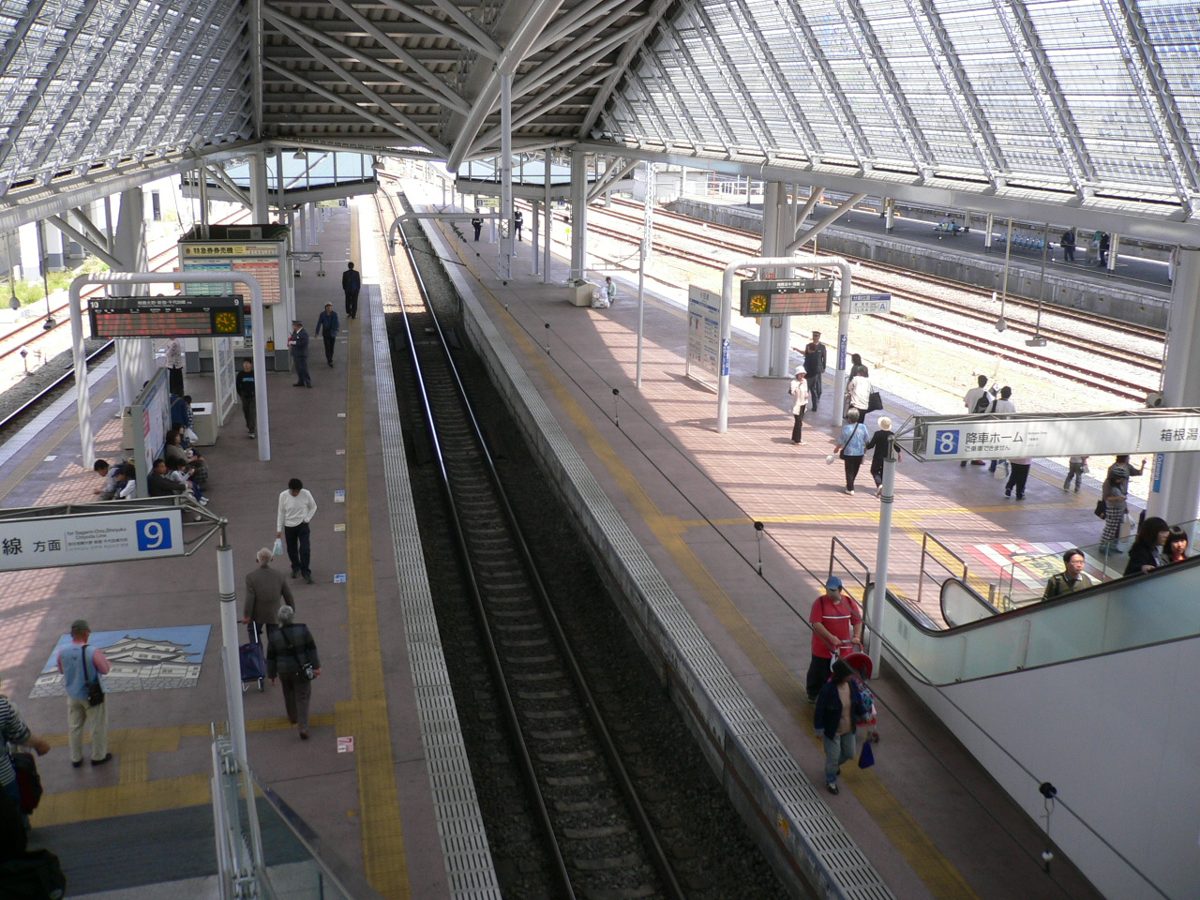
From Hakone-Yumoto you board Japan’s oldest mountain railway, the Hakone Tozan line, for the roughly 40-minute climb to Gora. The little two- and three-car trains are too steep to go straight up, so they zig-zag through three switchbacks where the driver and conductor swap ends and the train reverses direction up the next leg — it is genuinely fun to watch. In June and early July the trackside hydrangeas turn the whole line into a tunnel of blue and white, and locals ride the illuminated night service just to see them. Sit on the right heading up for the best valley views, and do not be surprised if the train stops to let another pass on the single-track sections.
2. Stop off at the Hakone Open-Air Museum
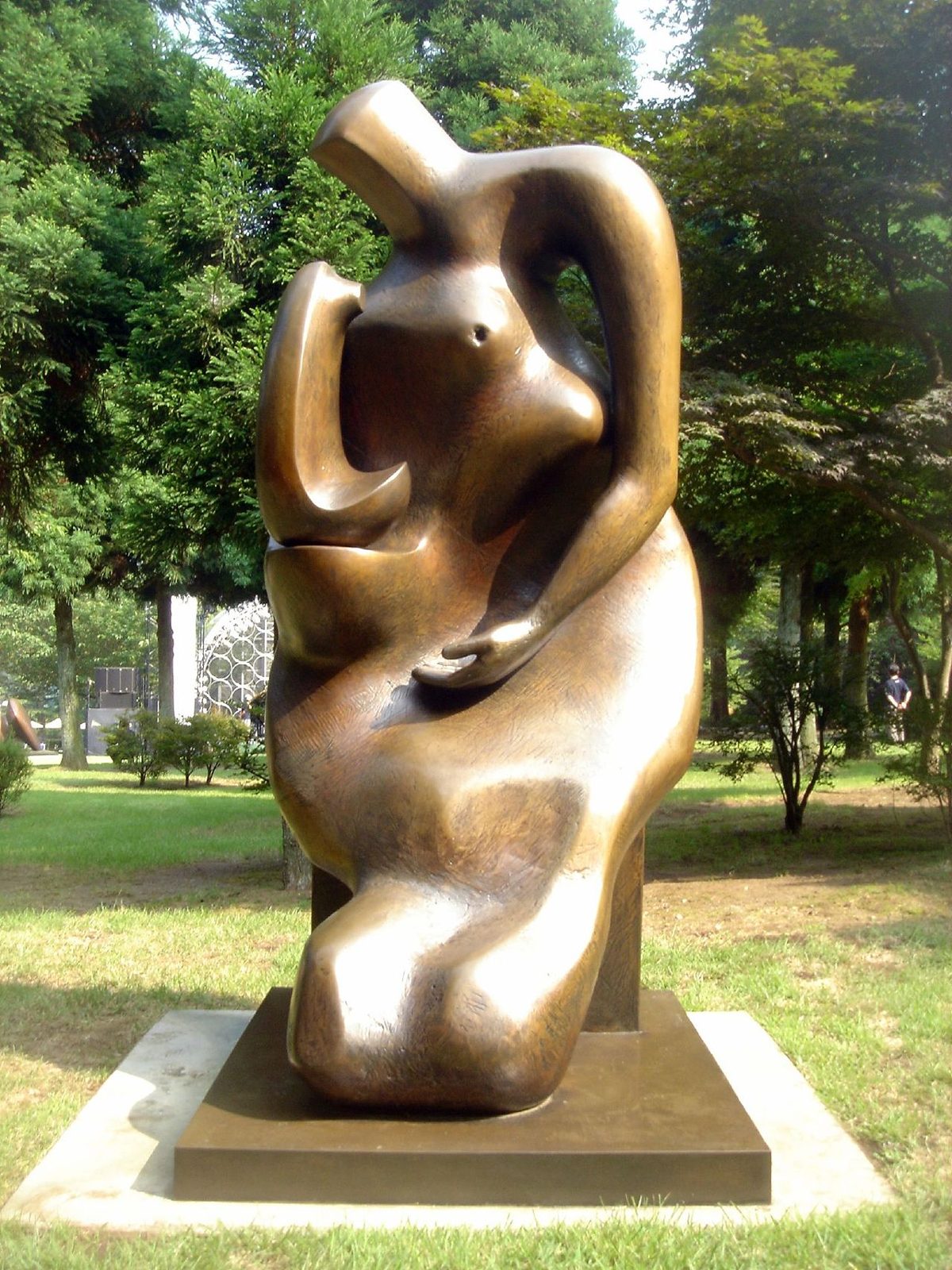
Get off one stop before Gora, at Chokoku-no-Mori, for the Hakone Open-Air Museum — in my opinion the single best thing in Hakone that is not a view. Opened in 1969 as Japan’s first open-air art museum, it scatters more than a hundred large sculptures across landscaped lawns with the mountains as a backdrop: Henry Moore bronzes, kinetic pieces, a children’s play sculpture, and a stained-glass “Symphonic Sculpture” tower you climb by spiral staircase for a 360-degree view. There is a dedicated Picasso Pavilion holding some 300 works — ceramics, prints and paintings — and, my favourite touch, a free foot-bath fed by hot-spring water where you can soak your feet halfway round. Adult admission is ¥2,000 (a little less with the Free Pass), open 9:00–17:00 with last entry at 16:30. Budget at least 90 minutes; it is easy to lose two hours here.
3. Sounzan Cablecar (Gora → Sounzan)
Back on at Gora, you switch to the funicular cablecar that hauls you up a steep grade to Sounzan in about 10 minutes, stopping at little intermediate stations where you could detour to the landscaped Gora Park or the Hakone Museum of Art with its famous moss garden if you have spare time. Most day-trippers just ride it straight through to the top, watching the gradient outside the window tilt to something that feels almost vertical.
4. Hakone Ropeway (Sounzan → Owakudani → Togendai)
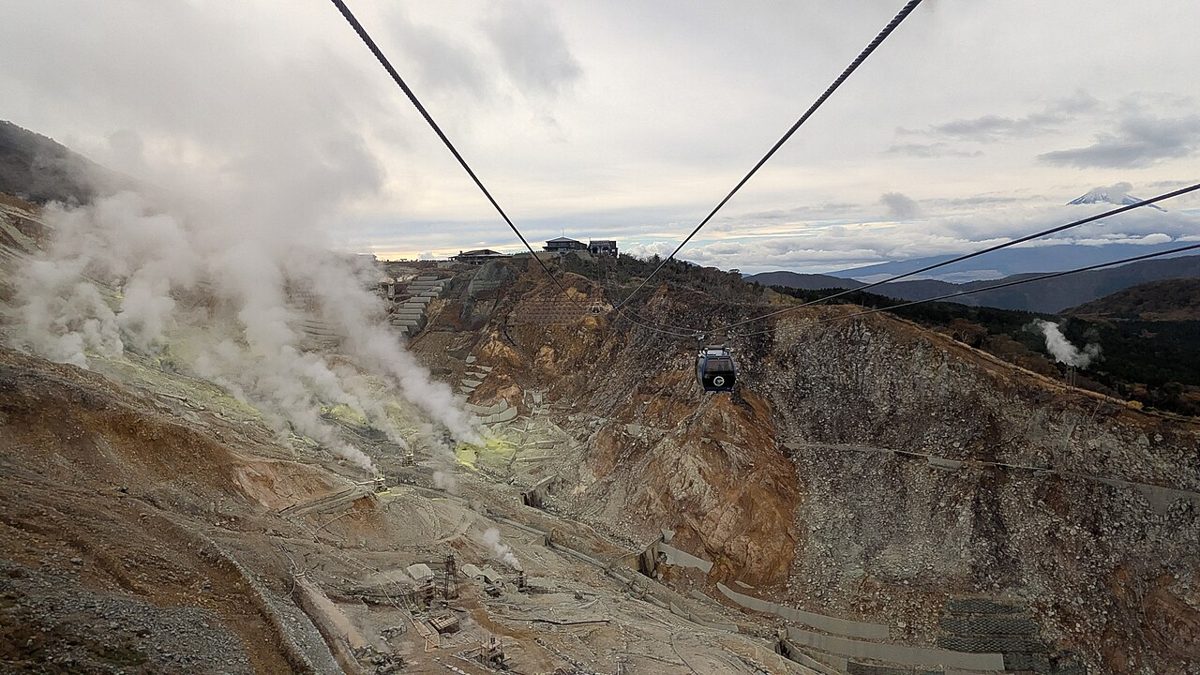
This is where the day gets dramatic. The Hakone Ropeway gondola lifts you over the ridge and, as you crest it, the whole steaming caldera of Owakudani opens up beneath your feet — vents hissing, the hillside streaked yellow with sulfur — and on a clear day Mount Fuji fills the window behind you. The full ride from Sounzan to Togendai on Lake Ashi takes about 25–30 minutes, with a change of gondola at Owakudani. The cabins run frequently, so you rarely wait long. Note that the ropeway occasionally closes at short notice when volcanic gas levels or wind rise; if it does, replacement buses cover the same route and are included with the Free Pass, so your day is not derailed — you just trade the view for a road.
5. Owakudani & the Famous Black Eggs
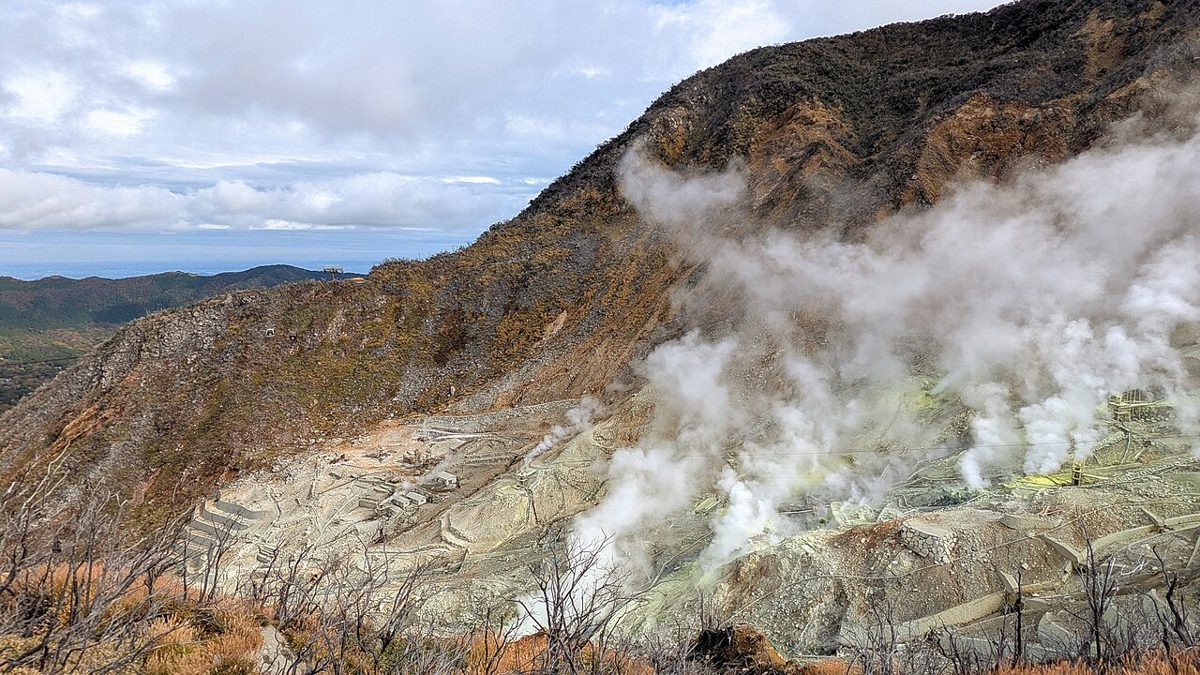
Owakudani — the “Great Boiling Valley” — is the scarred remains of Hakone’s last big eruption around 3,000 years ago, all hissing fumaroles, yellow sulfur crusts and a smell of struck matches. Get off the ropeway here to walk the viewing area near the upper station. The local ritual is to buy kuro-tamago, black eggs hard-boiled in the sulfurous hot springs until the shells turn coal-black from a reaction between the iron and hydrogen sulfide in the water. A bag of about four or five runs roughly ¥500, and legend says each egg you eat adds seven years to your life. They taste like a perfectly ordinary boiled egg; you eat them for the story, the steam and the view. Egg sales generally run 9:00–16:20, and on poor-air days the walking trails above the station may be roped off — the ropeway and shop stay open.
6. Lake Ashi Sightseeing Cruise (Togendai → Moto-Hakone)
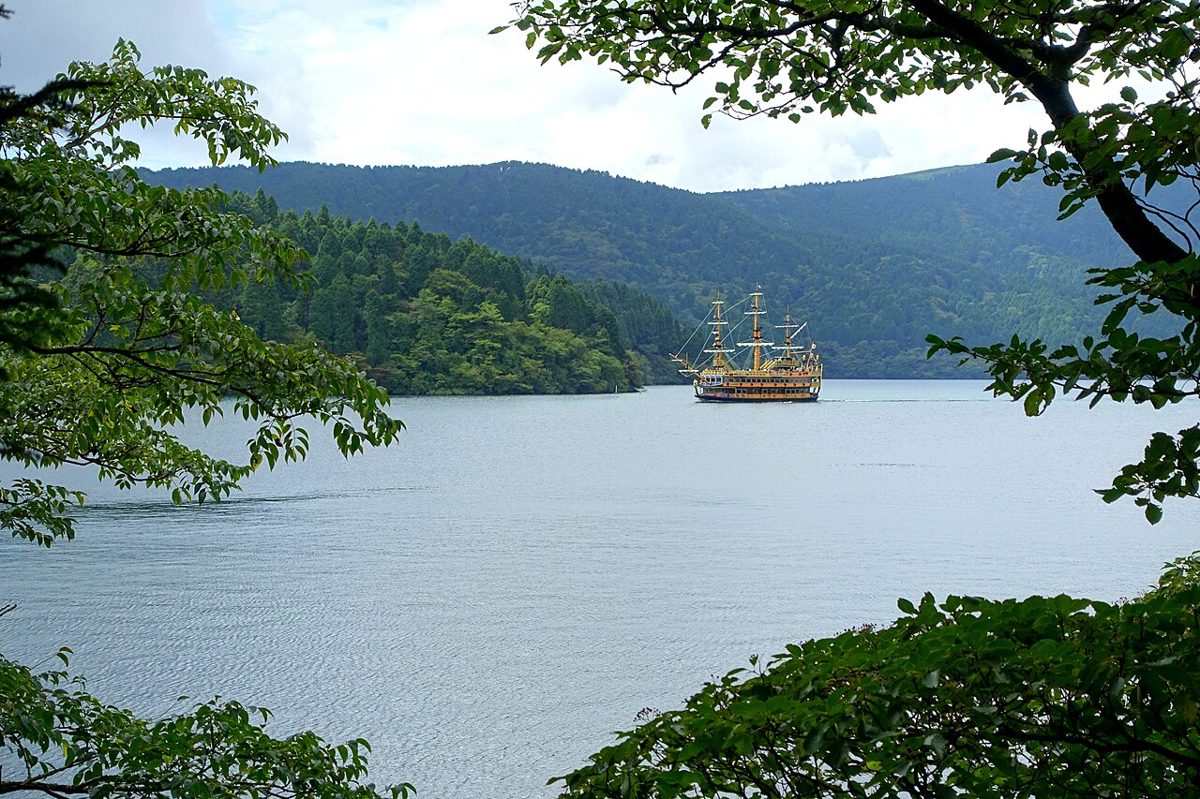
At Togendai you board one of the gloriously over-the-top “pirate ship” sightseeing boats for the cruise down Lake Ashi (Ashinoko), the caldera lake formed in that same ancient eruption. The crossing to Moto-Hakone or Hakone-machi takes about 25–40 minutes depending on the route. Stand on the open top deck and, weather permitting, you get the money shot of the trip: Mount Fuji rising at the head of the lake with the red torii of Hakone Shrine in the water below. The boats are fully covered by the Free Pass; without it the cruise is around ¥1,200 one way. There is also a slower, more sedate alternative — the Hakone Sightseeing Cruise vessels — but the pirate ships are the iconic ride and run frequently through the day.
7. Hakone Shrine & the Lakeside Torii
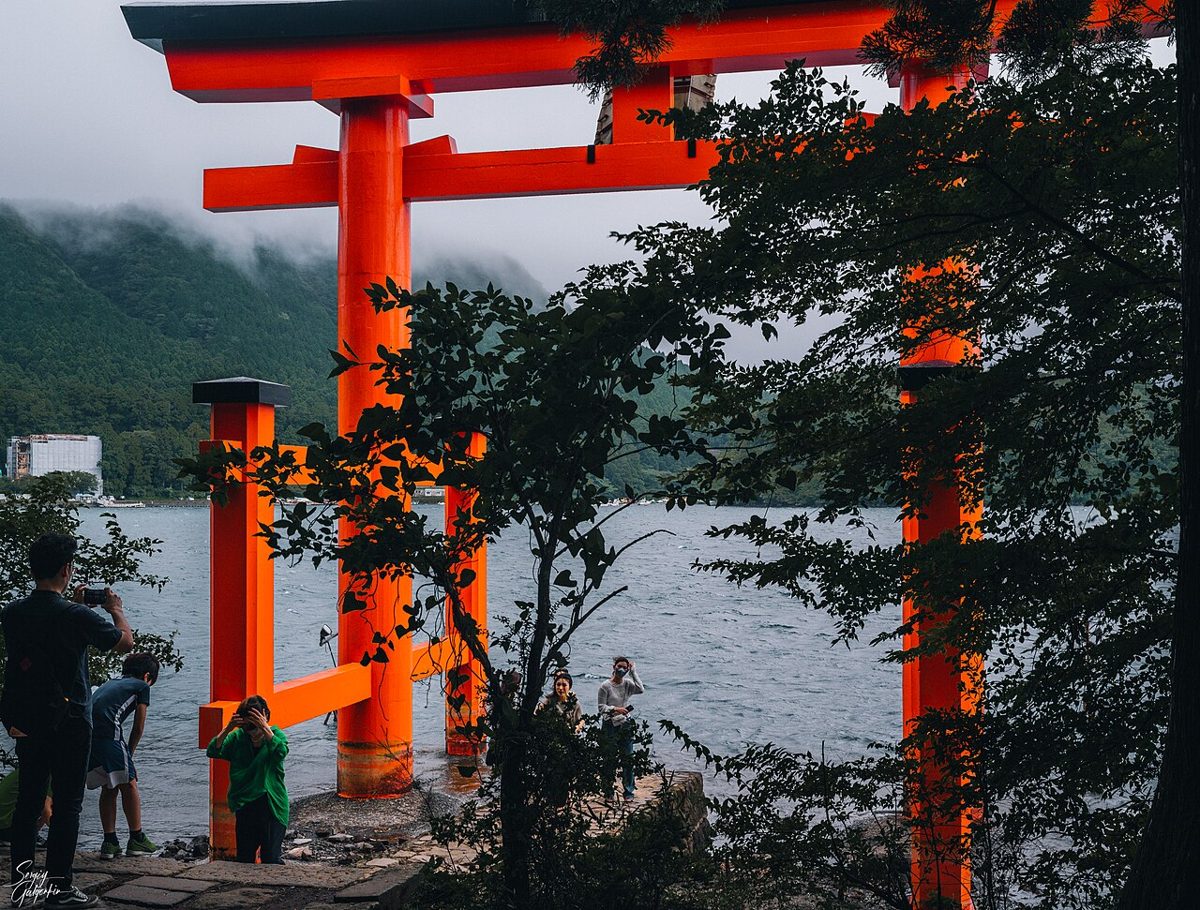
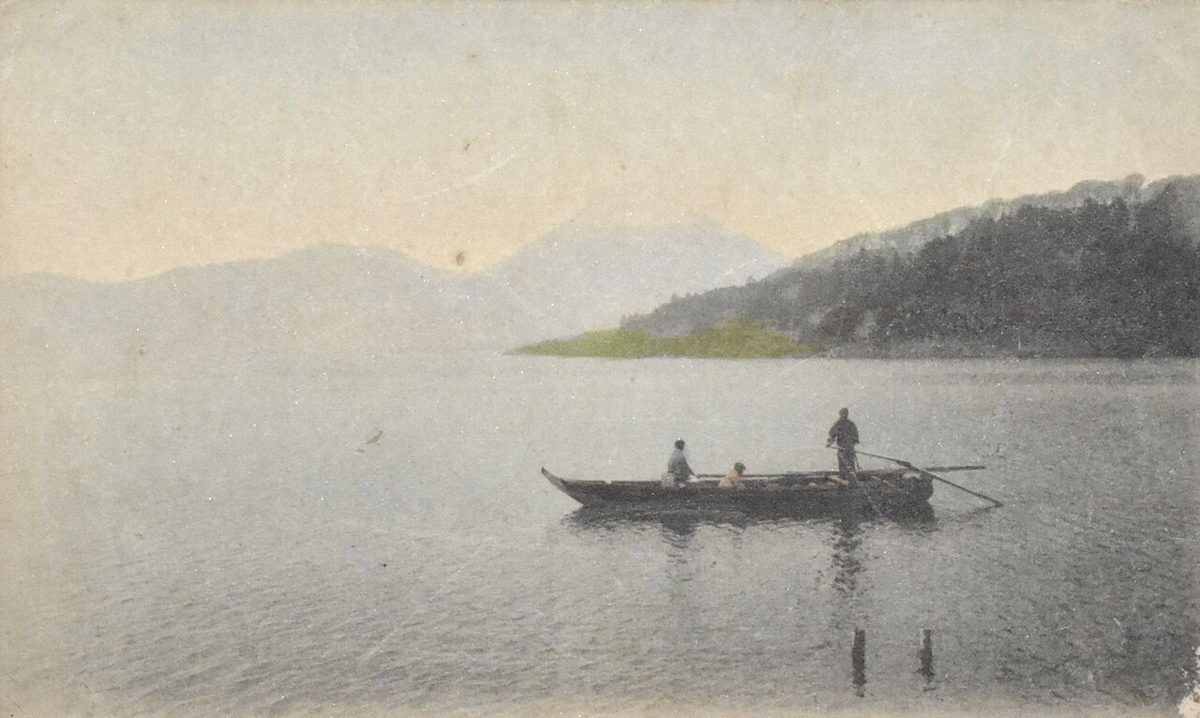
From the Moto-Hakone pier it is a short, pretty walk along the lake to Hakone Shrine, a moss-and-cedar Shinto sanctuary founded in 757 AD at the foot of Mount Hakone. The approach climbs a stone staircase under towering cryptomeria trees that feels a world away from the lakeside bustle. The shrine grounds are free and open year-round; the small Treasure Hall is ¥500 if you want to see its artifacts. The reason everyone comes, though, stands out in the lake itself: the vermilion Heiwa no Torii (Torii of Peace), erected in 1952 to mark Japan’s post-war sovereignty after the San Francisco Peace Treaty. There is almost always a queue on the little lakeside jetty for the iconic photo of the gate floating on the water — go early or late to skip the worst of it, and bring patience and a wide-angle lens.
8. Bus Back to Odawara (or Hakone-Yumoto)
To close the loop, catch a Hakone Tozan bus from Moto-Hakone or Hakone-machi. Buses run back to Hakone-Yumoto (about 35–40 minutes) and on to Odawara (about 50 minutes), both included with the Free Pass. From either station you pick up your Romancecar or Shinkansen home. Running the loop in this clockwise direction means you end the day rolling downhill toward Tokyo instead of fighting back up the mountain — and if you have energy left, Hakone-Yumoto is the place to stop for a soak before the final train.
Beyond the Standard Loop: Worthwhile Detours
If you have done Hakone before, or you simply want to dodge the crowds, a few stops reward the effort.
Komagatake Ropeway
From the lakeshore near Hakone-en, a separate ropeway climbs Mount Komagatake to a windswept summit with a small mountaintop shrine (Hakone-Mototsumiya) and, on a clear day, sweeping views over the lake to Fuji. It is quieter than the main Owakudani ropeway and not covered by the standard Free Pass, so you pay separately — but the panorama from the top is arguably the best in Hakone.
The Old Tokaido Cedar Avenue
Between Moto-Hakone and the Hakone Checkpoint runs a preserved stretch of the old Tokaido highway, lined with 400-year-old cedar trees planted to shade travellers walking between Kyoto and Edo. The reconstructed Hakone Checkpoint (Sekisho) shows how the shogunate controlled movement along the road. It is a calm, historical 20-minute walk and almost no day-trippers bother — their loss.
The Art Museums of Gora
Hakone is unusually rich in art. Beyond the Open-Air Museum, the Pola Museum of Art (Impressionist and modern works in a building half-buried in the forest), the Okada Museum of Art, and the Hakone Museum of Art with its moss garden could each fill an afternoon. Pick one if museums are your thing; do not try to do them all on a single day trip.
A Realistic One-Day Hakone Itinerary
Here is a timetable that actually works if you leave Shinjuku mid-morning. If Hakone is one stop in a longer trip, our extended ten-day Tokyo plan shows exactly where it slots in. Shift it earlier in summer to beat the crowds and the afternoon cloud that so often swallows Fuji.
| Time | Where | What you’re doing |
|---|---|---|
| 8:00 | Shinjuku | Board Odakyu express or Romancecar to Hakone-Yumoto |
| 9:30 | Hakone-Yumoto | Switch to the Hakone Tozan railway up to Chokoku-no-Mori |
| 10:15 | Open-Air Museum | Sculptures, Picasso Pavilion, hot-spring foot bath |
| 12:00 | Gora | Quick soba lunch, then cablecar up to Sounzan |
| 12:45 | Owakudani | Ropeway over the caldera; eat a black egg, photograph Fuji |
| 14:00 | Lake Ashi | Pirate-ship cruise from Togendai to Moto-Hakone |
| 14:45 | Hakone Shrine | Lakeside torii photo, shrine grounds, cedar avenue |
| 16:00 | Moto-Hakone | Bus to Hakone-Yumoto; optional day-onsen soak |
| 18:00 | Hakone-Yumoto | Romancecar back to Shinjuku, arrive ~19:30 |
If you only have part of a day, the loop still works — just skip the Open-Air Museum and one art detour, and you can complete the circuit in roughly five hours. But honestly, the museum is half the reason to come, so I would rather you started earlier than cut it.
Onsen & Day-Soaking: How to Bathe in Hakone
You cannot leave Hakone without getting in the water — the town exists because of its hot springs, and there are seventeen distinct spring sources feeding baths across the area. If you are not staying overnight, plenty of ryokan and bathhouses open their baths to day visitors (look for higaeri onsen, literally “day-return hot spring”). Tenzan Tohji-kyo near Hakone-Yumoto is a beloved rustic complex of outdoor rock pools tucked into a wooded gorge; Hakone Yuryo offers public and bookable private baths a short free shuttle from Yumoto Station; and Yunessun, also in Yumoto, is a more theme-park affair with wine, coffee and green-tea baths plus a traditional nude zone. Day entry typically runs ¥1,000–¥2,500. If Hakone tempts you into staying the night, a hot-spring inn with its own bath and a kaiseki dinner is the natural upgrade — see our guide to the best ryokan near Tokyo for standout options.
Onsen etiquette in one minute
- Wash first. Sit at the shower stations and scrub thoroughly before you ever get in the communal bath. The bath is for soaking, not cleaning.
- No swimsuits. Onsen are nude and gender-separated. The small towel you carry is for modesty and is kept out of the water — most people rest it on their head.
- Tie up long hair so it does not touch the water, and rinse off sweat before re-entering the bath.
- Tattoos: some traditional baths still refuse them. Check ahead, choose a tattoo-friendly onsen, or book a private family bath (kashikiri).
- Hydrate and go slow. The water is hot, often 40–42°C; step out if you feel light-headed, and do not soak straight after a big meal or alcohol.
For more on the customs behind ryokan stays, kaiseki dinners and bathing, our guide to Tokyo culture and traditions goes deeper into the etiquette that makes these experiences click.
What & Where to Eat in Hakone
Hakone food leans rustic-mountain, built around the clean spring water. Around Gora and Hakone-Yumoto you will find soba buckwheat noodles, simmered onsen tamago (soft hot-spring eggs), and tofu and yuba (tofu skin) dishes the area is quietly famous for. Hatsuhana in Yumoto is a long-running soba institution worth the wait. On the main Hakone-Yumoto shopping street, snack on freshly steamed manju buns, hot karinto doughnuts and fish cakes as you walk back to the station — Yumoto is genuinely fun for street snacking.
Up the mountain, at Owakudani the black eggs are the obvious bite, and the upper station has a simple restaurant with valley views. Down on Lake Ashi, the cafes around Moto-Hakone and Hakone-machi serve curry rice, grilled fish and Hakone’s own craft beer with a Fuji view you partly pay for in the price. If you only do one sit-down meal, make it a bowl of mountain soba in Gora before the cablecar — it sets you up for the climb and you will not want to stop once the views start.
What a Hakone Day Trip Costs
Here is a realistic per-person budget for a day from Tokyo, using the Free Pass and eating modestly.
| Item | Approx. cost |
|---|---|
| Hakone Free Pass (2-day, from Shinjuku) | ¥7,100 |
| Romancecar seat reservation (return) | ~¥2,400 (optional) |
| Open-Air Museum admission | ¥2,000 |
| Owakudani black eggs | ~¥500 |
| Lunch + snacks | ¥1,500–¥2,500 |
| Day-onsen entry | ¥1,000–¥2,500 |
| Typical day total | ¥12,000–¥17,000 |
Hakone is not the cheapest day trip from Tokyo — the transport-heavy loop sees to that — but the Free Pass keeps it predictable, and you are paying for an extraordinary amount of variety. Travelling as a couple or family, the per-person numbers hold; children’s passes and admissions are heavily discounted.
Best Time to Visit Hakone
Hakone is a year-round destination, but the season changes the experience. Autumn (mid- to late November) is the showstopper, when the maples around Gora and the Open-Air Museum blaze red and orange and the air is crisp enough to see Fuji clearly. Late June to mid-July brings the hydrangeas along the Tozan railway, one of the prettiest train rides in the Kanto region. Winter offers the clearest, most reliable Fuji views and the best reason to sink into a steaming outdoor bath while it is freezing out. Spring adds cherry and azalea colour to the lower slopes.
Whatever the season, go on a weekday if you can. Hakone is one of the most popular escapes from the capital, and on weekends and national holidays the ropeway and the torii-gate photo queue can swallow real chunks of your day. The single biggest factor in your Fuji odds is the time of day: the mountain is usually clearest in the early morning and gets veiled by haze and cloud through the afternoon, especially in summer. Start early, and you tilt the dice in your favour.
Practical Tips & What to Pack
- Layers. Owakudani sits above 1,000 m and is markedly cooler and windier than the lake or Tokyo. Even in summer, carry a light jacket.
- Cash. Most transport takes IC cards, but some buses, the black-egg stand and small eateries prefer coins — carry a few thousand yen.
- Comfortable shoes. Between the museum, the shrine staircase and the cedar avenue you will walk more than you expect.
- Luggage forwarding. If you are continuing on after Hakone, send your big bag ahead by takkyubin rather than hauling it round the loop. Hakone-Yumoto Station has coin lockers too.
- Check the ropeway status on the day; if it is closed for gas, the substitute bus still completes your loop.
- Mobile data. A pocket Wi-Fi or eSIM makes real-time train and bus times far easier to juggle on the move.
Mistakes to Avoid on a Hakone Day Trip
- Buying tickets leg by leg. On the full loop this costs more than the Free Pass and wastes time queuing at every transfer.
- Starting late. Leave Shinjuku by 8–9am. The afternoon haze hides Fuji and the queues build fast.
- Running the loop the wrong way on a tight schedule. Clockwise (train first, bus last) ends you near the fast trains home; counter-clockwise can leave you stuck up the mountain at closing time.
- Not checking the ropeway status. Volcanic gas or high wind can close it; build in the chance you may ride the substitute bus instead.
- Treating it as half a day. The loop genuinely fills 7–8 hours. Skipping the Open-Air Museum or the shrine to “save time” is the real waste.
- Forgetting cash. Some buses, small eateries and the black-egg stand prefer coins.
- Only chasing the photo. The torii queue can eat 30–45 minutes; if the light is bad or the line is huge, the cedar avenue and shrine itself are lovelier and emptier.
If a full day in the mountains will not fit your itinerary, the city itself has an answer. Several Tokyo bathhouses draw genuine hot spring water and charge as little as ¥550 for it — our guide to onsen in Tokyo covers which ones are real, and is honest about what you give up by staying put.
Hakone is not the only hot spring town within a day of Tokyo, and on a busy weekend it may not be the best one. Atami is closer by Shinkansen and noticeably quieter, and Kusatsu, further away in the Gunma mountains, has stronger water than anything in Hakone. Our guide to onsen day trips from Tokyo sets the three side by side.
Hakone is far better with a night in it. Stay over and you can do the loop at an unhurried pace on day two, have the baths almost to yourself after dark, and eat a proper kaiseki dinner in a yukata. Our guide to onsen ryokan near Tokyo covers where to stay in Hakone, from a 1630 inn in Tonosawa to the rooms with private outdoor baths up in Gora.
Frequently Asked Questions
Is a Hakone day trip from Tokyo worth it?
Yes. In one day you ride a switchback mountain railway, a cablecar, a ropeway over a volcano, and a pirate ship across a lake with Mount Fuji behind it — then soak in a hot spring before heading home. The variety packed into 80–90 minutes from Shinjuku makes Hakone one of the best day trips from Tokyo.
How many days do you need in Hakone?
One full day is enough to ride the complete Hakone Loop and see the headline sights. Staying overnight in a ryokan lets you slow down, enjoy a proper onsen and kaiseki dinner, and catch Fuji at dawn — but if time is tight, a single well-planned day works.
How much does the Hakone Free Pass cost in 2026?
The 2-day Hakone Free Pass is ¥7,100 for adults from Shinjuku (including the round trip), or ¥6,000 if bought inside the free area at Odawara. Children pay roughly ¥1,100. A 3-day version costs a little more. It covers the train, cablecar, ropeway, sightseeing boats and area buses.
Can you see Mount Fuji from Hakone?
On a clear day, yes — the classic view is from the Lake Ashi pirate ship and from the Owakudani ropeway, with Fuji rising beyond the lake and the Hakone Shrine torii. Visibility is best in the cooler, clearer months and in the early morning; summer afternoons are often hazy.
What is the best order to do the Hakone Loop?
Run it clockwise: Tozan railway up to Gora, cablecar to Sounzan, ropeway over Owakudani to Togendai, pirate ship across Lake Ashi to Moto-Hakone, then a bus back down to Hakone-Yumoto or Odawara. You never repeat a transport mode and you finish downhill near the fast trains home.
Photo Credits
- The Heiwa no Torii of Hakone Shrine on the shore of Lake Ashi — Photo: Sergiy Galyonkin from Raleigh, USA / CC BY-SA 2.0 via Wikimedia Commons via Wikimedia Commons
- Outdoor sculpture lawns at the Hakone Open-Air Museum — Photo: leon&mae / CC BY 2.0 via Wikimedia Commons via Wikimedia Commons
- Sulfur vents steaming across the Owakudani valley — Photo: Joli Rumi / CC BY-SA 4.0 via Wikimedia Commons via Wikimedia Commons
- A Hakone Tozan Railway train on the switchback climb to Gora — Photo: Syohei Arai / CC BY-SA 4.0 via Wikimedia Commons via Wikimedia Commons
- One of the Hakone sightseeing cruise’s pirate ships on Lake Ashi — Photo: Daderot / CC0 via Wikimedia Commons via Wikimedia Commons
- Mount Fuji seen across Lake Ashi on a clear morning — Photo: Anonymous author / Public domain via Wikimedia Commons via Wikimedia Commons
- The Hakone Ropeway gliding over Owakudani toward Togendai — Photo: Joli Rumi / CC BY-SA 4.0 via Wikimedia Commons via Wikimedia Commons