Tokyo Transportation · Guide №062
Tokyo Metro Guide: Maps, Lines, Tickets & Survival Tips
A practical, first-person guide to the Tokyo subway: how Tokyo Metro, Toei and JR differ, all 9 Metro lines by color and code, 2026 fares, IC cards, transfers, etiquette and the exits that trip everyone up.
目次 — Contents
- Tokyo Metro vs Toei vs JR: the confusion explained first
- All 9 Tokyo Metro lines, by color and letter code
- Which line gets you to Tokyo’s top sights
- How to read the map and station numbers (the G-09 system)
- Single tickets vs IC cards: just get an IC card
- Your first subway ride, step by step
- Current Tokyo Metro fares (2026)
- Transfers between Metro, Toei and JR (and the extra cost)
- Rush hour, women-only cars and the famous crush
- Subway etiquette: the unwritten rules
- The apps that make the subway easy
- Finding the right exit (this is the real challenge)
- Luggage on the subway
- Accessibility and elevators
- Operating hours and the last train
- Mistakes tourists make on the Tokyo subway
- Frequently Asked Questions
- Photo Credits
This article contains advertising. Our booking links are routed through a partner that adds commission tracking automatically, so if you book through one we earn a commission from the provider, at no extra cost to you. It never affects what we recommend. Affiliate disclosure
The first time you stare at a Tokyo metro subway guide map, it looks like someone dropped a bowl of colored spaghetti on the wall. It is not as bad as it looks. Tokyo runs two separate subway companies plus a web of JR trains, and once you understand which is which, the system becomes one of the fastest, cleanest and most punctual ways to get around any city on earth. This guide walks you through the lines, the fares, the tickets and the small habits that separate confident riders from lost ones.
I have ridden these trains in rush hour with a suitcase, at midnight chasing the last train, and at 6am with the carriage to myself. The mistakes below are ones I made or watched other travelers make. Skip them, and you will move through Tokyo like you live here.
Tokyo Metro vs Toei vs JR: the confusion explained first
Here is the single most important thing to understand before you tap a card or buy a ticket. Tokyo does not have “one subway.” Underground, there are two different companies, and they are not the same as the JR trains running on the surface.
Tokyo Metro: the big one (9 lines)
Tokyo Metro is the larger subway operator, with 9 lines, around 180 stations and roughly 195 km of track. It carries close to 6.8 million passengers on an average weekday. These are the lines most tourists ride most of the time, because they hit Ginza, Asakusa, Ueno, Shibuya, Roppongi and Omotesando. When people picture “the Tokyo subway,” they are usually picturing Tokyo Metro.
Toei Subway: the other subway (4 lines)
Toei is run by the Tokyo Metropolitan Government (the word “Toei” literally means “metropolitan-operated”). It has 4 lines: Asakusa, Mita, Shinjuku and Oedo. Together with Tokyo Metro that makes 13 subway lines and more than 280 stations. The catch is that Tokyo Metro and Toei are separate companies with separate fares, even though their trains share many stations and the map shows them side by side.
JR: not the subway at all
The famous green Yamanote Line loop, plus the Chuo and Sobu lines, belong to JR East. These run mostly above ground and are a third, completely separate fare system. This matters for two reasons. First, a Japan Rail Pass does not work on either subway company. Second, when you transfer from a subway to a JR line, you are switching companies and you pay both fares with no combined discount.
Why this costs tourists money
Because Tokyo Metro and Toei are separate, a single paper ticket bought for one will not carry you onto the other. If your route uses both, a paper ticket means buying two tickets, and the two short fares add up to more than one continuous journey would. The clean fix is to ride on a Suica or PASMO IC card, which spans Metro, Toei and JR on a single tap and even gives you a small transfer discount between the two subway companies (more on that below). This is exactly the kind of thing the wider Tokyo transportation guide is built to untangle.
All 9 Tokyo Metro lines, by color and letter code
Every line has a name, a color and a single letter. You do not need to read or pronounce the Japanese. If you can match a color and a letter, you can ride. Here is each Tokyo Metro line and what it is actually useful for as a visitor.
| Line | Code | Color | Useful for tourists |
|---|---|---|---|
| Ginza | G | Orange | The classic sightseeing line. Asakusa, Ueno, Ginza, Shibuya all on one ride. Tokyo’s oldest line (1927). |
| Marunouchi | M | Red | Tokyo Station, Ginza, Shinjuku, Ikebukuro and Korakuen (for the gardens and Tokyo Dome). |
| Hibiya | H | Silver-grey | Ginza, Tsukiji (outer market), Roppongi, Ebisu, Naka-Meguro and Akihabara. |
| Tozai | T | Sky blue | The east–west crosstown line. Otemachi, Nihombashi and atmospheric Kagurazaka. |
| Chiyoda | C | Green | Meiji-jingumae (Harajuku), Omotesando and the Imperial Palace edge. Links to the Odakyu line for Hakone. |
| Yurakucho | Y | Gold | Ikebukuro, Iidabashi, Ginza-itchome and Toyosu (the fish market). |
| Hanzomon | Z | Purple | Shibuya, Omotesando, Otemachi and Kinshicho. Note the code is Z, since H was taken by Hibiya. |
| Namboku | N | Emerald | Meguro, Roppongi-itchome and Korakuen. Fully platform-screened and modern. |
| Fukutoshin | F | Brown | Shibuya, Shinjuku-sanchome and Ikebukuro. The newest line (2008); deep and fast. |
For reference, the four Toei lines round out the map: Asakusa (A, rose), Mita (I, blue), Shinjuku (S, leaf green) and Oedo (E, magenta). Toei deliberately avoided reusing Metro letters, so Mita is “I” rather than “M.” The Oedo Line loops around central Tokyo and runs the deepest of all, which is why some of its platforms feel like a journey to the center of the earth. The Asakusa Line is genuinely useful because it through-runs to both Narita and Haneda airports via connecting railways.
Which line gets you to Tokyo’s top sights
You will plan most trips in an app, but it helps to carry a rough mental map of which colors serve the big destinations. Here is the cheat sheet I wish I had on day one.
- Asakusa and Senso-ji: the orange Ginza Line (G) or the rose Toei Asakusa Line (A).
- Shibuya Crossing: the orange Ginza Line (G), purple Hanzomon Line (Z) or brown Fukutoshin Line (F).
- Shinjuku: the red Marunouchi Line (M), brown Fukutoshin Line (F) or leaf-green Toei Shinjuku Line (S).
- Ginza shopping: the orange Ginza (G), red Marunouchi (M) and silver Hibiya (H) lines all meet there.
- Harajuku and Omotesando: the green Chiyoda Line (C) to Meiji-jingumae, then the Ginza or Hanzomon lines for Omotesando.
- Roppongi nightlife and museums: the silver Hibiya Line (H) or the magenta Toei Oedo Line (E).
- Ueno park and museums: the orange Ginza Line (G) or red Marunouchi-adjacent connections via Tokyo Station.
- Tsukiji and Toyosu markets: the silver Hibiya Line (H) for Tsukiji, the gold Yurakucho Line (Y) for Toyosu.
- Tokyo Station and the Imperial Palace: the red Marunouchi Line (M).
Notice how often the orange Ginza Line shows up. If you are doing a classic first-timer loop of Asakusa, Ueno, Ginza and Shibuya, that one line strings most of it together, which is why it is the line I point newcomers to first. For anything the subway cannot reach efficiently, the JR Yamanote loop usually fills the gap, and our Yamanote Line guide covers when to switch to it.
How to read the map and station numbers (the G-09 system)
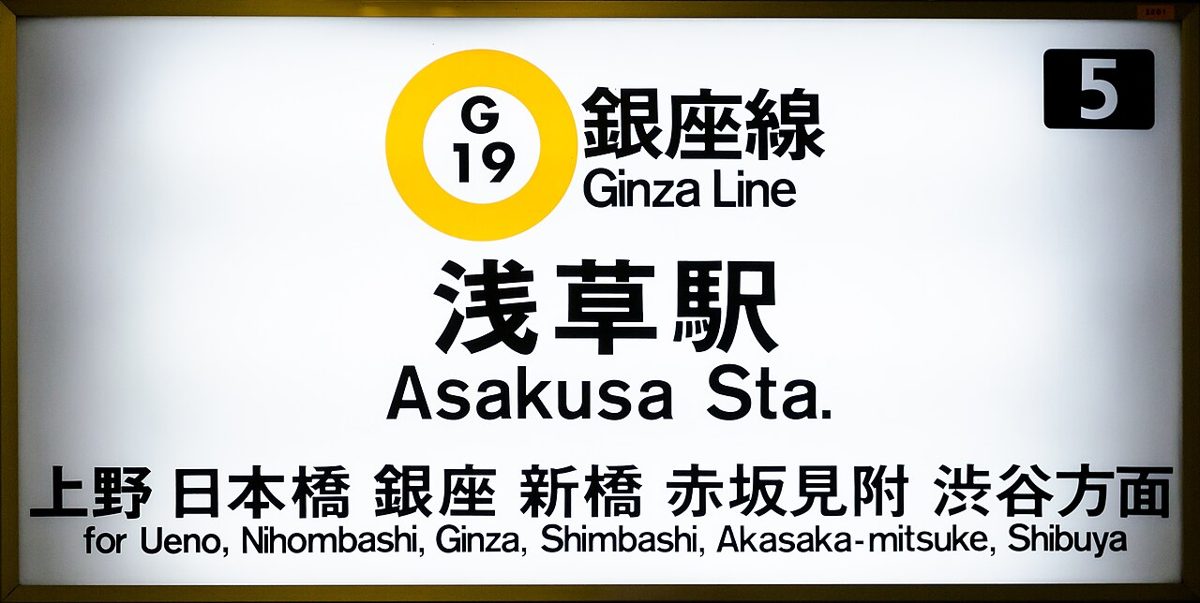
Once you accept that the map is color-coded, it becomes a tool instead of a threat, and this part of the Tokyo metro subway guide is the one I wish someone had explained to me first. Trace the color of your line from where you are to where you want to go, and count the stops. But the real cheat code is the station numbering system.
Every station on a line gets a letter plus a number. G-09 means Ginza Line, station 9, which happens to be Ginza Station itself. Because three lines serve Ginza, that one station carries three codes at once: G-09, M-16 and H-09 (Ginza, Marunouchi and Hibiya). These codes appear on every sign, every platform display and every map. You can navigate purely by them. If your hotel tells you “we are at C-04,” you ride the green Chiyoda Line to the station marked C-04 and you are home, no Japanese required.
The numbers also tell you direction. If you are at T-09 and you want T-14, you board the train heading toward the higher numbers. Glance at the end of the platform: the next two or three station codes are posted there, so you can confirm you are facing the right way before the doors open.
Single tickets vs IC cards: just get an IC card
You have two ways to pay: paper tickets bought per journey, or a rechargeable IC card you tap. For almost every visitor, the answer is the IC card. Here is the honest comparison.
Paper tickets
You buy these at the touchscreen machines above the gates. Switch the screen to English, look up your destination fare on the map above the machine, feed in coins or notes, and a small paper ticket prints out. You insert it into the gate slot, it pops out the far side, and you take it again to exit. The downsides: it is slower, it is fractionally more expensive than IC, you have to know the fare in advance, and a paper ticket bought on Tokyo Metro will not carry you onto a Toei line.
Suica and PASMO IC cards
An IC card is a contactless smart card preloaded with yen. You tap it on the blue pad at the gate when you enter and again when you exit, and it deducts the exact fare. The same card works on Tokyo Metro, Toei, JR, buses and even convenience stores and vending machines. As of 2026, after a long chip shortage, regular Suica and PASMO cards are freely on sale again (anonymous cards came back in March 2025). Tourists can also pick up a Welcome Suica, a visitor card valid 28 days with no deposit, sold at the airports. iPhone owners can skip the queue entirely and load a digital Suica into Apple Wallet before they even land. For the full breakdown, see our Suica vs PASMO comparison.
One more option arrived recently: many gates now accept a straight tap of a contactless Visa, Mastercard or Amex, so you can ride on your own credit card with no separate purchase. It is the easiest of all if your card supports it, though IC cards still rule on buses and small shops.
Your first subway ride, step by step
If you have never done it, here is the whole sequence so the first time feels familiar. It takes about ninety seconds once you have your IC card in hand.
- Find your line and direction. Match the color and letter (say, green Chiyoda Line, code C) and check the platform sign for the next station codes so you know you are heading the right way.
- Tap in. Touch your IC card flat on the blue pad on top of the gate. The gate flashes your balance and the doors stay open. Walk through.
- Wait behind the line. Stand on the platform floor markings, in the queue, and let arriving passengers off before you step on.
- Ride and count. Stations are announced in English and shown on the door-top displays with their codes, so you can count down to your stop.
- Tap out. At your destination, tap the same card on the exit gate. It deducts the exact fare and shows your remaining balance.
- Follow your exit number. Head for the specific exit code your app gave you, not just any way out.
That is genuinely it. Tap in, ride, tap out, find the right exit. Do it once and the mystery evaporates. The only thing that ever trips people up is a low IC balance at the exit gate, and even that is a non-event: a “fare adjustment” machine sits right by the gate, you feed it cash to top up, and you are through.
Current Tokyo Metro fares (2026)
Tokyo Metro fares are based on distance, not a flat rate. The base fare covers the first stretch and rises in bands as you travel farther. Tokyo Metro last revised these in 2023, and the figures below are what you pay in 2026. IC fares are charged to the single yen, so they come out a hair below the paper price, which is rounded up to the nearest ten yen.
| Distance | Paper ticket (adult) | IC card (adult) | Child (IC) |
|---|---|---|---|
| 1–6 km | ¥180 | ¥178 | ¥89 |
| 7–11 km | ¥210 | ¥209 | ¥104 |
| 12–19 km | ¥260 | ¥252 | ¥126 |
| 20–27 km | ¥300 | ¥293 | ¥146 |
| 28–40 km | ¥330 | ¥324 | ¥162 |
So most central trips cost between ¥180 and ¥260. Children ride for roughly half. Toei Subway fares work the same way but run a touch higher on longer trips, from about ¥180 up to ¥430. If you find yourself doing four or more subway hops in a day, it is worth checking whether a day pass beats paying per ride; we run the numbers in our guide to Tokyo subway passes for tourists.
Transfers between Metro, Toei and JR (and the extra cost)
This is where the multi-company setup bites. Transferring within a single company is free and seamless. Transferring between companies is where money leaks.
Metro to Metro, or Toei to Toei: seamless. You stay inside one fare, follow the signs to your next line, and your single journey fare is calculated end to end.
Metro to Toei (or the reverse): these are separate companies, so you are technically starting a second fare. The saving grace is the transfer discount of ¥70 off the combined fare when you use an IC card (or a contactless credit card) and complete the transfer within 60 minutes at a designated transfer gate. Pay with paper and you forfeit that discount. This is one of the strongest arguments for just using an IC card.
Subway to JR: no discount at all. JR is a different company with its own fares, so you pay the subway fare and then a fresh JR fare. An IC card handles both automatically, but it will not magically combine them. If a big chunk of your day is on the JR Yamanote loop, factor that in when deciding between a subway pass and pay-as-you-go.
Rush hour, women-only cars and the famous crush
Tokyo’s rush hour is real and it is intense. The morning peak runs roughly 7:30 to 9:30 and the evening peak about 17:30 to 19:30. Mornings are the bigger squeeze. On the busiest stretches, average congestion sits around 136 percent of capacity and the worst lines push far higher. Yes, the white-gloved platform staff who help pack people in still exist; operators even added more peak-hour staff in late 2025. If you can possibly sightsee outside those windows, do. Your day will be calmer and your photos less elbow-filled.
During the morning rush, many lines run women-only cars, usually the first or last carriage, marked with pink signs on the platform and the train. They are open to women, young boys of elementary-school age, and passengers with disabilities and their helpers. Not every line has them (the older Ginza and Marunouchi lines do not), so look for the pink floor markings rather than assuming. Enforcement is by courtesy, not law, but riders respect it.
Subway etiquette: the unwritten rules
Tokyo trains are famously quiet and orderly, and a few simple habits keep you on the right side of that. None of this is hard; most of it is just paying attention.
- No phone calls. Set your phone to silent (“manner mode”). Texting and scrolling are fine; talking is not.
- Queue and let people off first. Line up on the platform floor markings in two neat rows, and stand aside to let passengers exit before you board.
- Backpacks off. On a crowded train, swing your backpack around to your front or set it between your feet so it stops jabbing strangers.
- Mind the priority seats. The seats at the car ends are for elderly, pregnant, disabled and accompanied-by-small-children passengers. Give them up without being asked.
- Eating is frowned upon. A bottle of water is fine; a fragrant bento is not. Save the meal for the platform or the shinkansen.
- Stand on the left. On Tokyo escalators, stand on the left and leave the right side clear for people walking. (Osaka, confusingly, is the opposite.)
- Keep it quiet. Conversations are low and brief. You will notice how hushed a packed carriage can be.
The apps that make the subway easy
You do not need to memorize the map. Let an app do the routing and just follow it. That only works with a live connection, so sort out a SIM or pocket WiFi before you land. These are the ones worth having on your phone.
Google Maps is the workhorse. Type your destination, hit transit, and it gives you the line, the platform, the fare, the travel time and, crucially, often the exact exit number to use. For most visitors it is all you need.
Japan Travel by Navitime is the more train-savvy option and the one the official Tokyo tourism board recommends. It is excellent at naming which exit to take and covers every operator, not just the subway.
The Tokyo Metro app (look for “Tokyo Subway Navigation for Tourists”) is the specialist. Its standout feature is real-time, car-by-car crowding, so you can pick a less-packed carriage during rush hour. Use Google Maps or Navitime to plan door to door, and the Metro app to dodge the crush.
Finding the right exit (this is the real challenge)
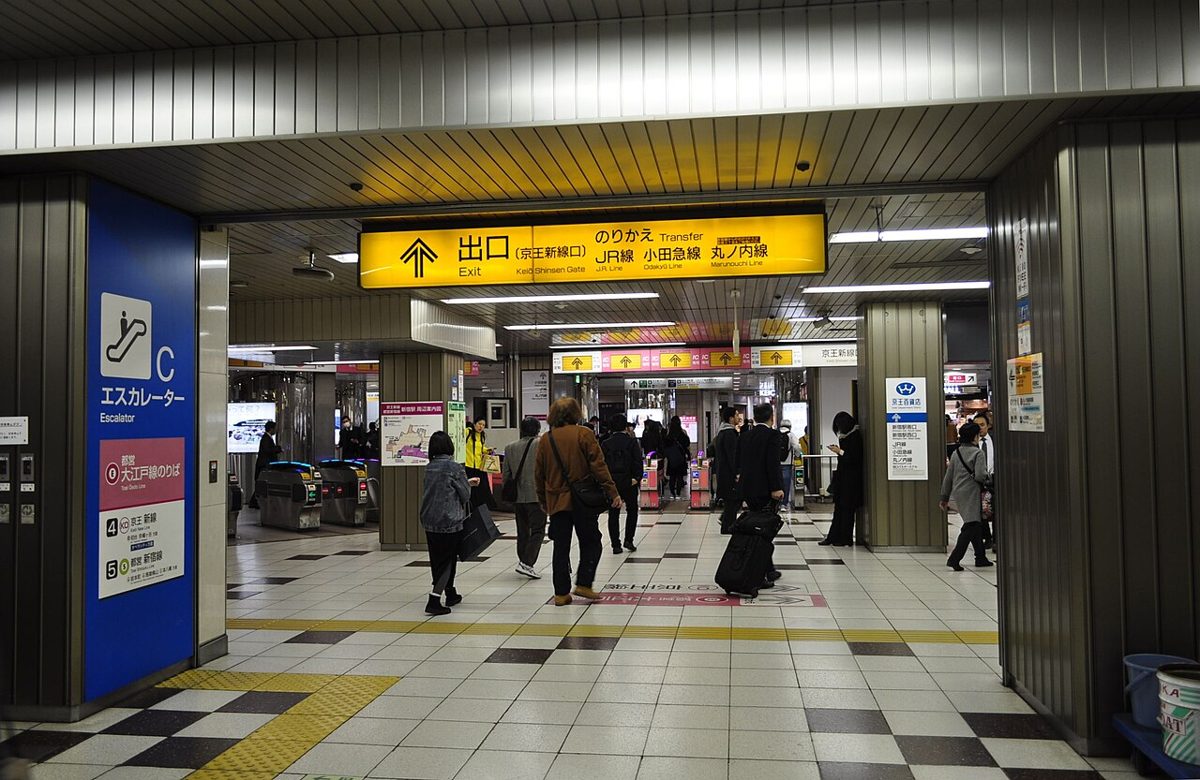
Veteran Tokyo riders will tell you the trains are the easy part. The hard part is the exits. Big stations are underground cities. Shinjuku is the busiest station in the world, with well over 200 exits across the complex (around 178 of them numbered). Tokyo, Shibuya, Ikebukuro and Otemachi are not far behind.
Exits are labeled by letter and number zones: A1, A2, B3 and so on, plus named cardinal exits like East, West, South and Central. Pick the wrong one and you can surface a 10 to 15 minute walk from where you wanted to be, sometimes on the wrong side of a busy road or the wrong side of the tracks entirely. I have lost twenty minutes this way more than once.
The fix is simple: note the exit number before you leave the train. Google Maps and Navitime name the specific exit for your destination, so follow that code, not just the generic “Way Out” signs. The yellow overhead signage in the station lists which landmarks each exit serves. Two minutes spent finding the right exit underground saves you a sweaty detour above ground.
Luggage on the subway
Dragging a big suitcase through a rush-hour subway is miserable for you and everyone around you, because commuter cars have almost no luggage space. A few ways to handle it:
- Avoid the peaks. If you must move with luggage, do it outside 7:30–9:30 and 17:30–19:30.
- Coin lockers are at nearly every station (about ¥300–¥700 by size), though the large ones fill up fast at major hubs. Stash bags and explore hands-free.
- Luggage forwarding (takkyubin). Services like Yamato will ship your suitcase from the airport to your hotel, hotel to hotel, or hotel to airport, usually overnight. A 20 kg case from a Tokyo airport to a Tokyo hotel runs around ¥2,000. It is the single best trick for a smooth arrival day.
One point of confusion worth clearing up: the much-discussed “oversized baggage” reservation rule (for bags over 160 cm total) applies to the Shinkansen bullet trains, not the subway. On the Metro and Toei there is no reservation system, just common sense and limited space.
Accessibility and elevators
Tokyo’s subway is among the most accessible big-city systems anywhere. Toei has installed elevators at every one of its stations, guaranteeing at least one step-free route from street to platform, and Tokyo Metro is similarly close to universal, with an online tool to check any station’s barrier-free route.
If you use a wheelchair, the service is genuinely good: tell the staff your destination and they bring a portable ramp to help you board, then phone ahead so a colleague meets you with a ramp at your arrival or transfer station. It is free and routine. Every bank of ticket gates has one wide gate for wheelchairs and strollers, and every train has a designated wheelchair space. Deep lines like the Oedo mean long lift rides, so build in a few extra minutes.
Operating hours and the last train
The Tokyo subway is not 24 hours. Trains run roughly from 5:00 in the morning until just after midnight, with the last train (the “shuden”) somewhere between about 23:30 and 00:30 depending on the line, the station and the direction. Within those hours, service is wonderfully frequent, every two to five minutes at peak.
But miss that last train and there is no night service to bail you out. Your options become a pricey taxi, a capsule hotel, or finding somewhere to wait out the night until the first train at 5am. The whole city runs on an awareness of the last train, and you should too. If your evening is running late, check the last departure in Google Maps and give yourself a buffer to reach the platform.
Mistakes tourists make on the Tokyo subway
Some of these I learned the hard way, and the whole point of this Tokyo metro subway guide is to spare you the same lessons. Save yourself the trouble.
- Confusing Metro, Toei and JR and overpaying, or assuming a Japan Rail Pass covers the subway. It does not.
- Buying paper tickets instead of using an IC card, which is slower, slightly pricier, and forfeits the ¥70 Metro-to-Toei transfer discount.
- Trying to buy a “PASMO PASSPORT,” which was discontinued in October 2024. Get a Welcome Suica, a regular IC card, or a mobile Suica instead.
- Taking the wrong exit at a mega-station and adding a long walk. Always check the exit number first.
- Standing on the wrong side of the escalator and blocking the walking lane. Stand left in Tokyo.
- Panicking at the gate when an IC balance is short. Just visit the “fare adjustment” machine by the gate to top up before you exit.
- Hauling big luggage through rush hour instead of using lockers or luggage forwarding.
- Assuming the subway runs all night and getting stranded after the last train.
If you use a wheelchair, the subway is more manageable than its size suggests. Tell staff at the ticket gate where you are going, and they will bring a portable ramp, help you board and phone ahead so a colleague meets you at the other end. Every Toei station has a step-free route, and Tokyo Metro publishes an English barrier-free station search. Our accessible Tokyo guide explains the whole system.
Frequently Asked Questions
What is the difference between Tokyo Metro and Toei Subway?
They are two separate subway companies that share the same map. Tokyo Metro has 9 lines and is the larger network; Toei, run by the city government, has 4 lines (Asakusa, Mita, Shinjuku and Oedo). Because they are separate companies, a single paper ticket on one does not carry you onto the other. An IC card spans both and even earns a ¥70 transfer discount between them.
Can I use a Japan Rail Pass on the Tokyo subway?
No. Both Tokyo Metro and Toei are independent of JR, so a Japan Rail Pass does not work on either subway. The JR Pass only covers JR lines such as the Yamanote loop. For the subway you use an IC card, a single ticket, or a subway day pass.
Is Suica or PASMO better for the Tokyo subway?
For the subway it makes no practical difference; both Suica and PASMO work identically on Metro, Toei, JR and buses, and both give the same fares and transfer discount. Pick whichever you can get hold of. iPhone users can load either into Apple Wallet before arriving, which is the smoothest option of all.
How much is the Tokyo subway and what is the minimum fare?
Tokyo Metro fares are distance-based and start at ¥180 with a paper ticket or ¥178 with an IC card, rising in bands to about ¥330 for the longest rides. Most central trips cost ¥180 to ¥260. Toei fares are similar but reach up to roughly ¥430 on longer journeys.
Is the Tokyo subway open 24 hours?
No. Trains run from about 5:00 in the morning until just after midnight, with the last train usually between 23:30 and 00:30 depending on the line. There is no overnight subway service, so if you are out late, check the last departure and leave a buffer to reach your platform.
Photo Credits
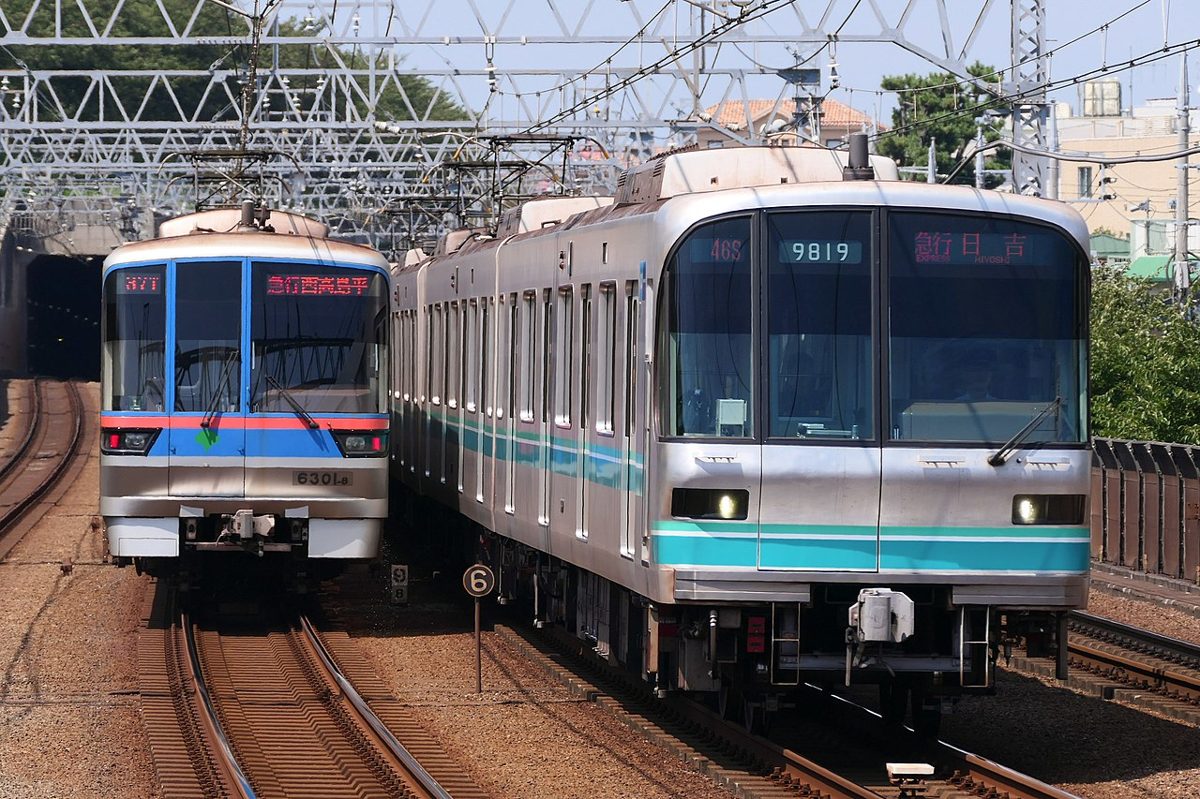
- A Tokyo Metro train pulls into the platform — Photo: MaedaAkihiko This photo was taken with Panasonic Lumix DC-FZ1000 II / CC BY-SA 4.0 via Wikimedia Commons
- A Tokyo Metro station sign: the orange band, line code and station number tell you exactly where you are, even if you can’t read Japanese — Photo: DXR / CC BY-SA 3.0 via Wikimedia Commons
- Inside Shinjuku Station, the world’s busiest, where finding the right exit is half the battle — Photo: 江戸村のとくぞう / CC BY-SA 4.0 via Wikimedia Commons
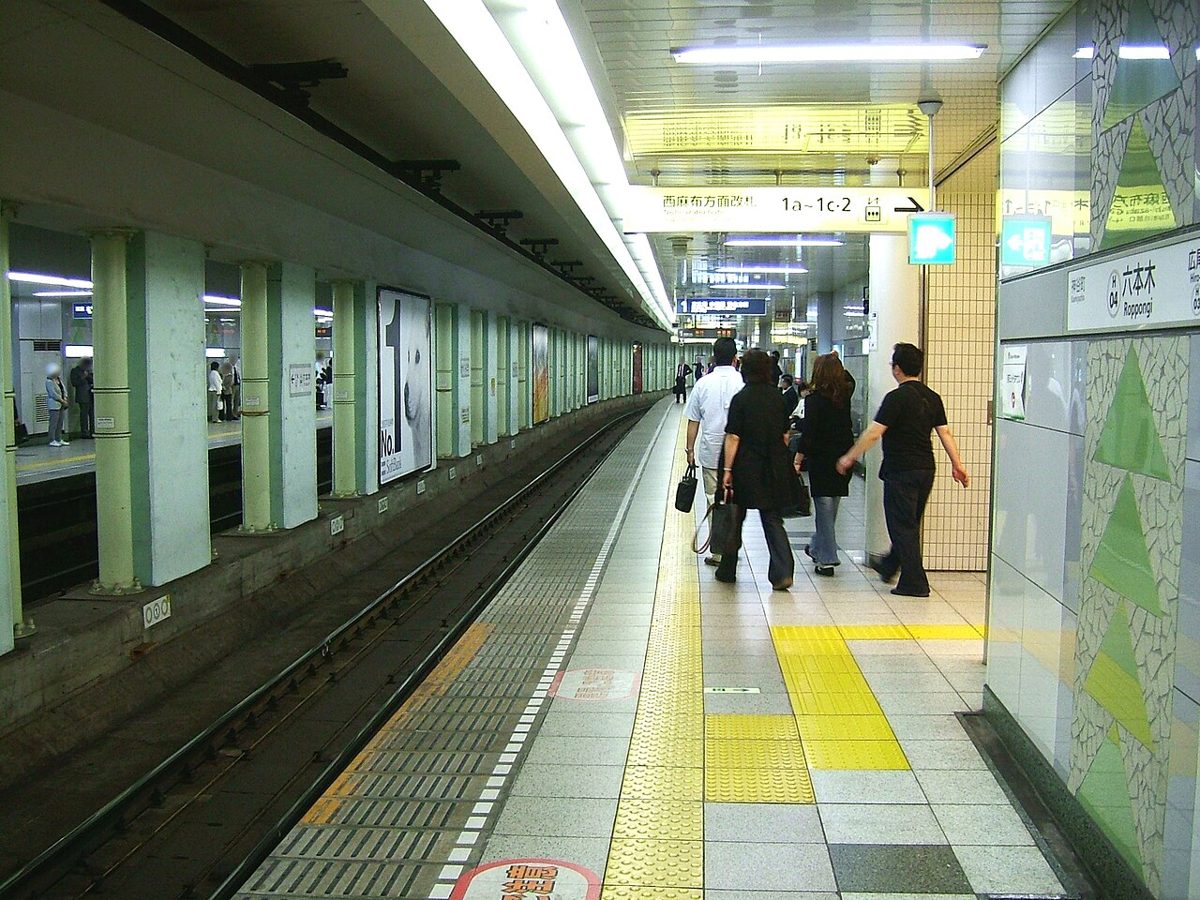
- A Tokyo Metro platform, with platform-edge doors and overhead signage in English and Japanese — Photo: LERK / CC BY 3.0 via Wikimedia Commons
- A Suica IC card, the simplest way to ride the Metro, Toei and JR on one tap — Photo: Cassiopeia sweet / Public domain via Wikimedia Commons