Tokyo Transportation · Guide №065
Tokyo Yamanote Line Guide: The Most Important Train Loop Explained
The JR Yamanote Line circles central Tokyo, linking Shinjuku, Shibuya, Ueno and Tokyo Station. Stops, directions, fares, hours and how it differs from the subway.

目次 — Contents
- What is the Yamanote Line?
- A quick history, and why it is green
- Clockwise vs counter-clockwise: sotomawari and uchimawari
- Every major Yamanote stop and what is there
- Frequency and hours
- IC cards and fares
- How the Yamanote differs from the Tokyo Metro subway
- Transfers: where the loop connects to everything else
- Rush hour reality
- Using the loop to sightsee
- Does a rail pass or the Tokunai Pass cover the Yamanote?
- Yamanote vs the subway: which to use
- How long between the popular stops?
- Tips and mistakes to avoid
- Accessibility and a few practicalities
- When the loop gets interesting: events and seasons
- Frequently Asked Questions
- Photo Credits
This article contains advertising. Our booking links are routed through a partner that adds commission tracking automatically, so if you book through one we earn a commission from the provider, at no extra cost to you. It never affects what we recommend. Affiliate disclosure
This Tokyo Yamanote Line guide covers the single most useful train in the city: the JR loop that circles central Tokyo, linking Shinjuku, Shibuya, Harajuku, Ueno, Tokyo Station and Ikebukuro in one continuous ring. About 30 stations, a full lap in roughly an hour, a train every few minutes. Learn this line and half of Tokyo opens up.
I lived a five-minute walk from a Yamanote station for two years, and I still think it is the best-value sightseeing tool in Tokyo. You can hop on with the same tap card you use everywhere, ride past the biggest neighbourhoods in the city, and get off wherever looks interesting. This guide walks through what the line is, every major stop, which direction to take, how it differs from the subway, and the rookie mistakes worth dodging. For the wider network, pair it with our Tokyo transportation guide.
What is the Yamanote Line?
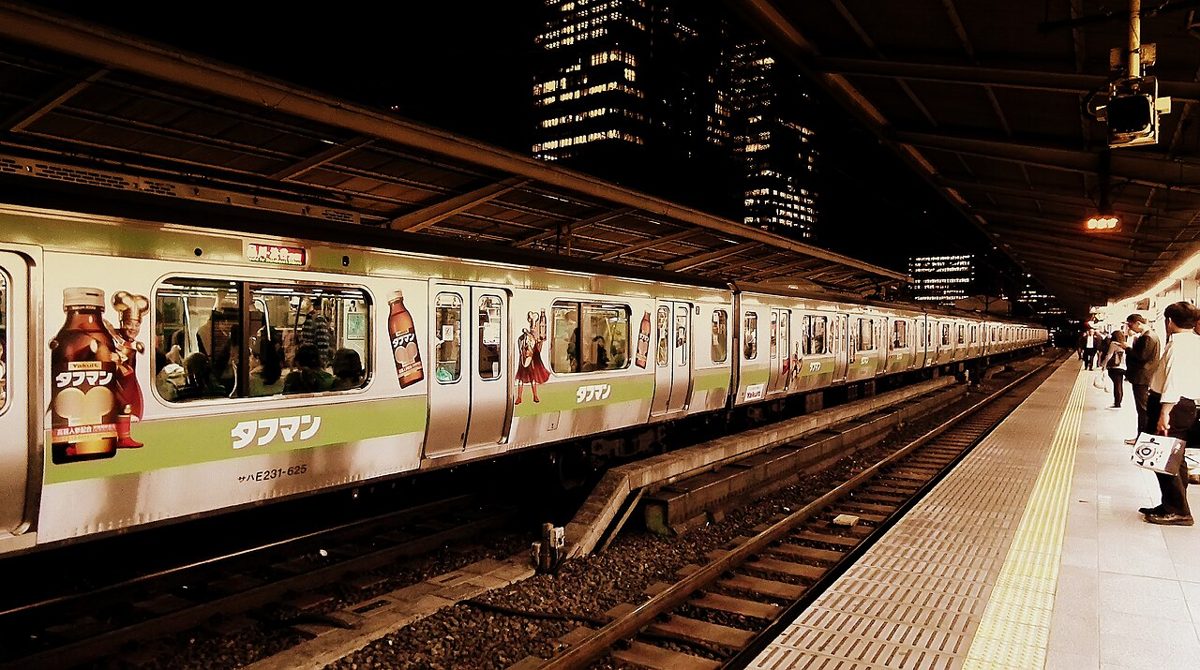
The Yamanote Line (山手線, Yamanote-sen) is a loop railway run by JR EAST that circles the heart of Tokyo. It has 30 stations around a ring of about 34.5 km, and a complete loop takes roughly 59 to 65 minutes. You will recognise its trains instantly: the light-green (uguisu) stripe is the line’s signature colour, worn today by the modern E235 series sets that run the whole loop. Every Yamanote train is a local that stops at every station, so there is no express to accidentally board.
What makes it matter is geography. The loop strings together nearly every major hub and entertainment district in the city — the places you have actually heard of. If your hotel is anywhere central, you are probably a short walk or one transfer from a Yamanote station, which is why locals and visitors alike treat it as the backbone of getting around. It connects the big districts so directly that our Tokyo neighbourhoods guide reads almost like a list of its stations.
The E235 trains
Since January 2020 the entire fleet has been the E235 series. Inside you get wide doors, air conditioning, and a bank of digital screens above each door showing the next stops, transfer lines and even how crowded each carriage is, in Japanese and English. The doors and floor are designed to move huge crowds quickly, which the line absolutely needs — it is one of the busiest urban rail lines on earth.
A quick history, and why it is green
The Yamanote name goes back to the late 1800s, when the first stretch opened as a freight and passenger route along the “hand of the mountains” on the western edge of old Tokyo. Over the decades the separate sections were joined into the continuous loop that opened in 1925, and the line gradually became the spine the modern city grew around — the major commercial sub-centres of Shinjuku, Shibuya and Ikebukuro all ballooned precisely because the loop served them. Today around four million passenger trips a day pass through its stations, which is why the platforms feel like a small country during rush hour.
The light-green colour is not decoration. Tokyo’s JR lines are each assigned a colour so you can identify them at a glance on maps, signs and the trains themselves: the Chuo Rapid is orange, the Keihin-Tohoku is blue, the Sobu is yellow, and the Yamanote is that distinctive uguisu green named after the Japanese bush warbler. Once you have clocked the colour, you can spot your line across a crowded platform without reading a word of Japanese — genuinely useful when two or three lines share the same island platform.
Clockwise vs counter-clockwise: sotomawari and uchimawari
Because it is a loop, the Yamanote runs in two directions on two tracks, and the platform signs name them rather than giving a single final destination.
- Sotomawari (外回り) — the outer loop, running clockwise. From Tokyo Station this heads to Shinagawa, then Shibuya, Shinjuku, Ikebukuro and Ueno before coming back round.
- Uchimawari (内回り) — the inner loop, running counter-clockwise. From Tokyo Station this heads to Ueno, Ikebukuro, Shinjuku, Shibuya and Shinagawa.
Here is the practical bit: since it is a circle, either direction gets you anywhere eventually — but one way is faster. If you are at Shibuya and want Shinjuku (two stops clockwise), take the outer loop; going the other way is the long way round through 27 stations. The platform displays and the in-car screens show both the next few stops and the minutes to major stations, so you can sanity-check you are not about to do a 50-minute lap for a five-minute hop. When in doubt, the screen above the door tells you exactly which stations are coming up next.
Every major Yamanote stop and what is there
Going clockwise from Tokyo Station, here are the stops that matter most and why you would get off at each.
- Tokyo — the red-brick Marunouchi facade, the Imperial Palace gardens, the shinkansen, and the Character Street and ekiben halls underground.
- Kanda — old-school izakaya alleys, with the secondhand bookshop district of Jimbocho nearby.
- Akihabara — electronics, anime, manga and maid cafes; Yodobashi Camera is right by the station.
- Ueno — Ueno Park with its museums, the zoo, the lively Ameyoko market under the tracks, and cherry blossoms in spring.
- Nippori — the gateway to the old-Tokyo Yanaka district, and the transfer to the Keisei Skyliner for Narita Airport.
- Ikebukuro — a huge entertainment and shopping hub: Sunshine City, big department stores, and Otome Road for anime fans.
- Shinjuku — the busiest station on the planet, opening onto the skyscraper district, the Metropolitan Government observation decks, the Kabukicho and Golden Gai nightlife, and the calm of Shinjuku Gyoen.
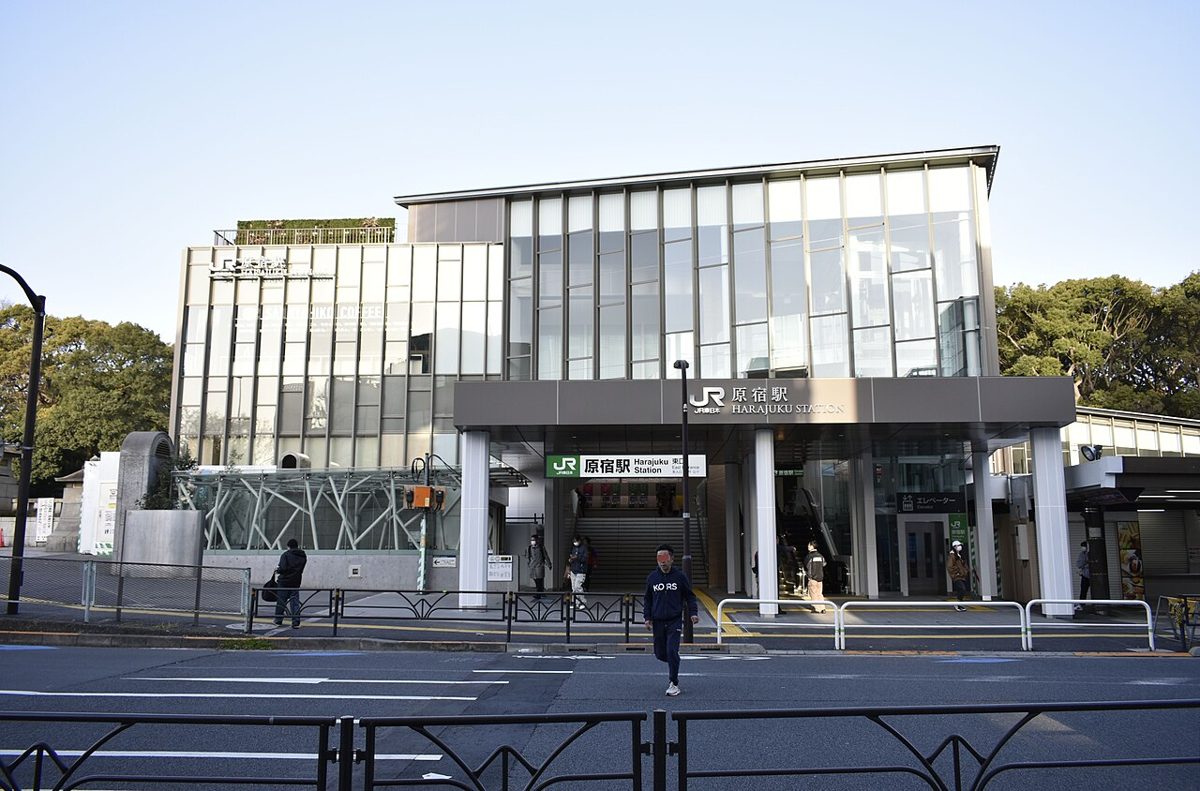
- Harajuku — youth fashion on Takeshita Street, the boutiques of Omotesando, and the forested approach to Meiji Shrine and Yoyogi Park.
- Shibuya — the scramble crossing, the Hachiko statue, Shibuya Sky, and a dense tangle of shopping and nightlife.
- Ebisu — a more grown-up evening scene, with Yebisu Garden Place and excellent restaurants.
- Shinagawa — a major shinkansen and transport interchange, and a quick run to Haneda Airport via the Keikyu Line.
- Hamamatsucho — the transfer to the Tokyo Monorail for Haneda Airport, and a walk to the gardens and the old Zojo-ji temple by Tokyo Tower.

That list alone is most of a Tokyo trip. You could spend a week doing nothing but stepping off at different Yamanote stations.
Frequency and hours
Service is relentless. Trains run roughly every 2–4 minutes through the day, dropping to about every 4–6 minutes late at night. You essentially never check a timetable; you turn up and a train arrives. The first trains start around 04:26 and the last trains run until about 01:04 the following morning, depending on the station and direction. That roughly 4am–1am window matters: once the last Yamanote train has gone, your options drop to night buses or a taxi, so keep an eye on the clock if you are out late. We cover the after-hours alternatives in our Tokyo taxi guide.
IC cards and fares
Just tap on with a Suica or PASMO IC card and the fare is deducted automatically when you tap off. Yamanote fares are distance-based and cheap: the minimum is ¥150 with an IC card for the first 1–3 km, rising in small steps. Even a long arc across half the loop only runs a few hundred yen. If you do not have an IC card yet, you can buy a paper ticket from the machines, but a tap card is far smoother and works on the subway, buses and convenience stores too. New to the cards? Our Suica vs PASMO guide explains which to get.
There is essentially no reason to overthink fares on this line. Tap in, ride, tap out; the system charges you the cheapest valid fare for your journey.
How the Yamanote differs from the Tokyo Metro subway
First-timers often lump all Tokyo trains together, but the Yamanote and the subway are run by different companies and serve different jobs.
- Operator. The Yamanote is a JR EAST line, running above ground in a loop. The Tokyo Metro and Toei subways are separate underground networks that crisscross the inside of the loop and reach areas the ring does not, like Asakusa, Roppongi and Ginza.
- Tickets. A single IC card (Suica or PASMO) works on all of them, so you tap through seamlessly — but a JR rail pass covers the Yamanote and not the Metro, while a Tokyo Subway Ticket covers the Metro and not the Yamanote.
- Shape. Think of the Yamanote as the ring road and the subway as the streets inside it. Most trips combine the two: ride the loop to the nearest big hub, then switch to the subway to reach a specific neighbourhood.
Transfers: where the loop connects to everything else
The Yamanote’s real power is interchange. At the big stations you can step across to almost any other line in the country.
- Shinkansen: change at Tokyo, Shinagawa or Ueno for the bullet trains. See our shinkansen guide.
- Chuo and Sobu lines: cut straight across the middle of the loop from Tokyo, Shinjuku, Yoyogi or Akihabara instead of riding the long way round.
- Tokyo Metro and Toei subway: nearly every major Yamanote stop connects to one or more subway lines.
- Airports: Nippori for the Keisei Skyliner to Narita; Hamamatsucho for the Tokyo Monorail to Haneda; Shinagawa for the Keikyu Line to Haneda.
Rush hour reality
The Yamanote at peak is a genuine experience. Roughly 07:30–09:30 in the morning and 17:30–19:30 on weekday evenings, the trains and platforms pack tight, especially around Shinjuku, Shibuya, Tokyo and Ikebukuro. It is orderly — people queue on the platform markings and let passengers off first — but you will be shoulder to shoulder. If you are carrying luggage or travelling with kids, try to avoid those windows. Off-peak and weekends the same line is calm and pleasant. Midday is the sweet spot for sightseeing: frequent trains, room to breathe, and a seat more often than not.
Using the loop to sightsee
Here is the trick locals know: the Yamanote is a sightseeing ride in its own right. Buy nothing special, tap on with your IC card, and treat it as a hop-on hop-off loop. Start at, say, Tokyo Station, ride to Ueno for the park and museums, back on to Akihabara for electronics, round to Shibuya for the crossing, then Harajuku for Meiji Shrine. Because a single tap-on charges you only for the distance you ride, you can plan a full day around the ring. If you expect to make a lot of JR hops in one day, the Tokunai Pass (see below) can be cheaper than paying each leg.
Does a rail pass or the Tokunai Pass cover the Yamanote?
Yes to both, with a catch on the rail pass. A nationwide Japan Rail Pass covers the Yamanote (it is a JR line), so pass holders ride it free — but for most people a JR Pass is overkill if you are only riding around Tokyo. The better local option is the Tokunai Pass (Tokyo Metropolitan District Pass), a one-day ticket for unlimited rides on JR local and rapid trains within the 23 wards, including the whole Yamanote Line. It costs ¥870 for an adult in 2026, and it pays off once you take four or more JR hops in a day. Note it does not cover the Tokyo Metro or Toei subway — only JR. For mixed JR-plus-subway days, compare it against the subway-focused options in our JR Pass vs subway pass comparison.
Yamanote vs the subway: which to use
A quick cheat sheet for deciding which network gets you there fastest.
| Feature | Yamanote Line (JR) | Tokyo Metro / Toei subway |
|---|---|---|
| Shape | One loop around central Tokyo | Web of lines crossing inside and beyond the loop |
| Best for | The big hubs: Shinjuku, Shibuya, Ueno, Tokyo, Ikebukuro | Inner districts: Asakusa, Ginza, Roppongi, Tsukiji |
| Stations | 30, all above ground | 180+ across many underground lines |
| Frequency | Every 2–4 min | Every 3–6 min on most lines |
| Minimum IC fare | ¥150 | ¥180 on the Metro and Toei |
| IC card (Suica/PASMO) | Yes | Yes |
| Covered by JR Pass | Yes | No |
| Covered by Tokyo Subway Ticket | No | Yes |
How long between the popular stops?
Because every Yamanote train stops everywhere and each hop is short, journeys between the headline stations are quick and predictable. These are approximate riding times in the faster direction, before you add a minute or two of waiting.
| From | To | Approx. time | Direction |
|---|---|---|---|
| Tokyo | Ueno | ~8 min | Inner (counter-clockwise) |
| Shinjuku | Shibuya | ~7 min | Inner (counter-clockwise) |
| Shibuya | Harajuku | ~2 min | Inner (counter-clockwise) |
| Tokyo | Shinjuku | ~14 min | Outer (clockwise) |
| Tokyo | Shibuya | ~25 min | Outer (clockwise) |
| Ikebukuro | Shinjuku | ~5 min | Inner (counter-clockwise) |
| Shinagawa | Tokyo | ~11 min | Inner (counter-clockwise) |
Notice how Tokyo to Shibuya is far quicker counter-clockwise via Shinagawa than the long arc through Ueno and Ikebukuro — a perfect example of why glancing at the direction first saves real time.
Tips and mistakes to avoid
- Going the long way round the loop. Check the in-car screen or platform sign for the faster direction — outer (sotomawari) or inner (uchimawari) — before you board.
- Confusing the Yamanote with the parallel Keihin-Tohoku Line. On the eastern side (Tokyo, Ueno, Shinagawa) a second line shares the platforms and skips some stops during the day. Make sure the train you board is the light-green Yamanote.
- Riding at peak with big luggage. Avoid 07:30–09:30 and 17:30–19:30 if you can; it is genuinely crushed.
- Assuming your subway pass works here. A Tokyo Subway Ticket does not cover the Yamanote, and a JR pass does not cover the subway. Carry a Suica or PASMO and you never have to think about it.
- Missing the last train. Around 01:00 the loop shuts for the night. Plan ahead or budget for a taxi.
- Eating a full meal onboard. Unlike the shinkansen, the Yamanote is a commuter line; a drink is fine, but a smelly bento is frowned upon.
Accessibility and a few practicalities
Every Yamanote station has elevators and escalators, and the gap between train and platform is small and level on the E235s, so the loop is manageable with a suitcase, a stroller or a wheelchair. Staff will lay a ramp if you ask — look for the station office near the gates. There are accessible toilets at the stations, multilingual signage throughout, and the in-car displays announce the side the doors will open so you can position yourself in advance.
A handful of habits make riding smoother. Stand on the correct side of the escalator (in Tokyo you stand on the left and walk on the right). Let passengers off before you board. Keep backpacks on your front or down by your feet in a crowd. Priority seats near the doors are for elderly, pregnant and disabled passengers, and locals will quietly keep them free. And if you tap in but change your mind, you can tap out at the same station within a short window without being charged a full fare. None of this is enforced harshly, but matching the local rhythm makes the busiest loop in the world feel surprisingly relaxed.
When the loop gets interesting: events and seasons
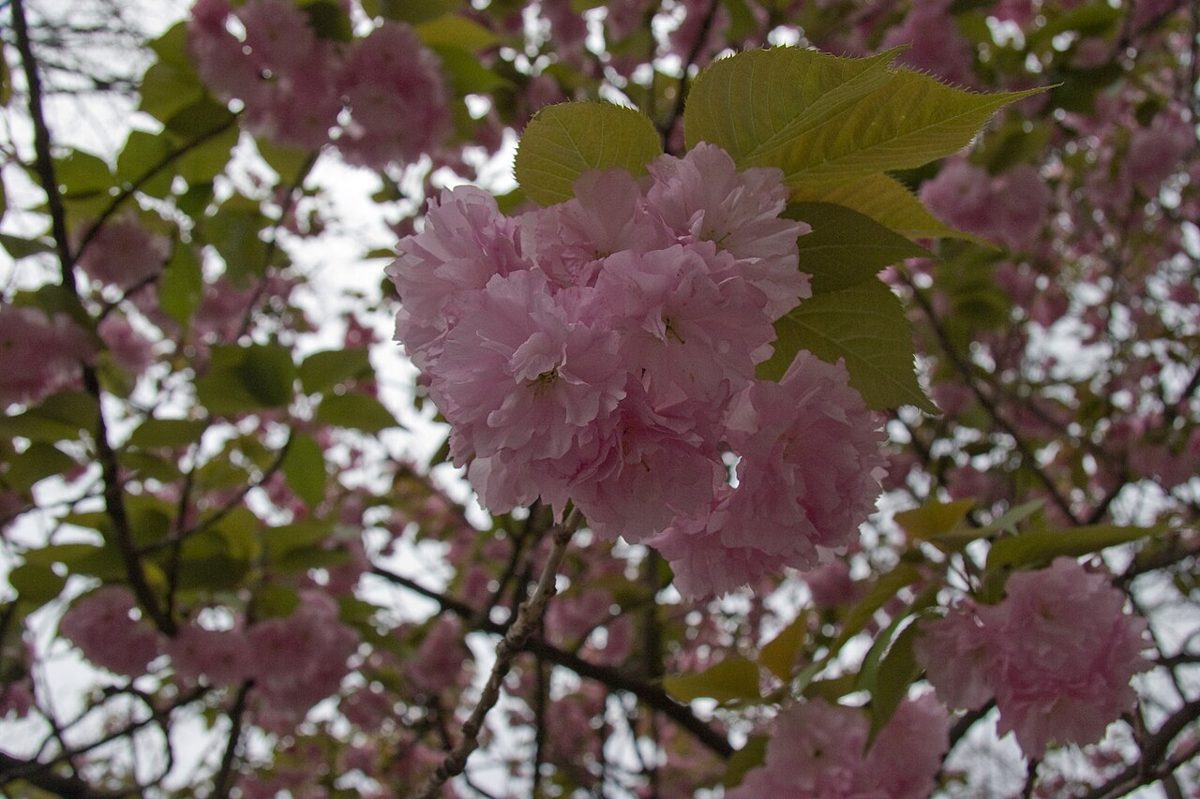
A couple of times a year the Yamanote becomes part of the show rather than just the way there. During cherry-blossom season the stretch around Ueno spills out into one of Tokyo’s great hanami parks the moment you leave the gates, and the trains fill with people clutching picnic supplies from the Ameyoko market below the tracks. On Halloween and New Year’s Eve, Shibuya turns into an enormous street party and the station and surrounding crossings get crowd-controlled, so expect detours and queues if you are passing through. Summer fireworks festivals along the Sumida River pull big crowds toward the eastern stations too.
None of this should put you off — it is part of the fun — but if you are simply trying to get from A to B on one of those evenings, give yourself extra time or pick a quieter station to change at. On any ordinary day, though, the loop is exactly what you want it to be: frequent, fast, predictable, and the cheapest sightseeing ticket in the city. Tap on, find a window, and let Tokyo scroll past.
Frequently Asked Questions
How long does it take to ride the full Yamanote Line loop?
A complete loop of the Yamanote Line takes about 59 to 65 minutes, stopping at all 30 stations. Trains run every two to four minutes, so you rarely wait long, and you can get on or off at any stop along the ring.
Which direction should I take on the Yamanote Line?
Look for sotomawari (outer loop, clockwise) or uchimawari (inner loop, counter-clockwise) on the signs. Since it is a circle, either reaches your stop, but one direction is much faster. The in-car screens show upcoming stations and times so you can pick the shorter way.
Does the Yamanote Line use Suica and PASMO?
Yes. Tap on and off with a Suica or PASMO IC card and the fare is deducted automatically. The minimum fare is about 150 yen, and the same card also works on the subway, buses and at convenience stores across Tokyo.
What is the difference between the Yamanote Line and the Tokyo Metro?
The Yamanote is an above-ground JR loop circling central Tokyo, while the Tokyo Metro is a separate underground network crossing inside and beyond the loop. A single IC card works on both, but a JR pass covers only the Yamanote and a subway ticket covers only the Metro.
What time do the first and last Yamanote Line trains run?
First trains start around 04:26 and last trains run until about 01:04, depending on the station and direction. Once the final loop service has gone for the night, your remaining options are night buses or a taxi.
Photo Credits
- An E235 series train in the Yamanote Line’s signature light-green livery — Photo: S5A-0043 / CC BY 4.0 via Wikimedia Commons
- Shibuya, one of the busiest stops on the Yamanote loop — Photo: David Kernan / CC BY 4.0 via Wikimedia Commons
- Shinjuku Station, the world’s busiest, is a major Yamanote interchange — Photo: Basile Morin / CC BY-SA 4.0 via Wikimedia Commons
- A Yamanote Line train calls at a central Tokyo platform — Photo: calflier001 / CC BY-SA 2.0 via Wikimedia Commons
- Harajuku Station opens onto Takeshita Street and Meiji Shrine — Photo: Tokuzo in Edomura / CC BY-SA 4.0 via Wikimedia Commons
- Ueno Station sits beside Ueno Park and its museums — Photo: KimonBerlin / CC BY-SA 2.0 via Wikimedia Commons