Day Trips from Tokyo · Guide №091
Kawagoe Day Trip: Exploring Tokyo’s Little Edo
How to plan a Kawagoe little Edo day trip from Tokyo: train routes and 2026 fares, the Kurazukuri warehouse street, Toki no Kane, Candy Alley, Kita-in, Hikawa Shrine and sweet-potato treats.

目次 — Contents
- Why They Call It “Little Edo”
- Getting to Kawagoe from Tokyo
- Kawagoe Access Compared
- Discount Passes: Worth It or Not?
- The Kurazukuri Warehouse Street
- Toki no Kane: The Bell of Time
- Kashiya Yokocho: Candy Alley
- Kita-in Temple and the 538 Rakan
- Hikawa Shrine: Wind Chimes and Matchmaking
- What to Eat: Sweet Potato Everything
- A Half-Day Kawagoe Itinerary
- The Kawagoe Festival
- Etiquette and Practical Tips
- Mistakes to Avoid
- A Quick History of Kawagoe
- Kawagoe Castle and the Honmaru Goten
- Getting Around Kawagoe Once You Arrive
- Souvenirs and the Best Photo Spots
- Frequently Asked Questions
- Photo Credits
This article contains advertising. Our booking links are routed through a partner that adds commission tracking automatically, so if you book through one we earn a commission from the provider, at no extra cost to you. It never affects what we recommend. Affiliate disclosure
A Kawagoe little Edo day trip is the rare Tokyo escape that takes barely 30 minutes and drops you three centuries back in time. Just north of Ikebukuro, this old castle town kept its Edo-era warehouse street, a wooden bell tower, a candy alley, and a sweet-potato obsession — all walkable in an afternoon.
I keep coming back to Kawagoe because it delivers so much character for so little effort. There is no bullet train, no early alarm, no pass you must agonise over. You ride a commuter line, walk out of a modern station, and twenty minutes later you are standing under clay-walled merchant houses that survived the fire which levelled most of the city in 1893. Here is exactly how to do it — routes, 2026 fares, the sights that matter, what to eat, and the rookie errors to skip. It sits within our wider guide to days out from Tokyo.
Why They Call It “Little Edo”
During the Edo period (1603–1868), Kawagoe was a prosperous castle town and a vital supply hub for the shogun’s capital, linked to Edo by river boat. Merchants here grew rich, and they built kurazukuri — fireproof, clay-walled warehouse-style townhouses with heavy tiled roofs. When much of Tokyo was rebuilt in concrete after war and earthquake, Kawagoe’s merchant district survived, which is why it now offers the most convincing streetscape of a working Edo town anywhere near the capital. That preserved atmosphere is the whole point of a Kawagoe little Edo day trip: it is less a list of attractions than a place to wander.
Getting to Kawagoe from Tokyo
Kawagoe is genuinely close — three different railways reach it, and the right one depends on where you are staying. There are two relevant stations: Kawagoe Station (Tobu and JR) and Hon-Kawagoe Station (Seibu), both a short bus ride or roughly 15–20 minute walk from the historic quarter, which clusters around its own Kawagoeshi Station on the Tobu line.
Tobu Tojo Line from Ikebukuro (fastest)
This is my default. A rapid or express on the Tobu Tojo Line from Ikebukuro reaches Kawagoe in about 30 minutes for roughly ¥490 one way, no reservation or surcharge needed. Get off at Kawagoeshi for the closest approach to the warehouse street. Through-trains from the Tokyo Metro Fukutoshin and Yurakucho lines also run onto the Tojo Line, so from Shibuya or Shinjuku-sanchome you can often ride direct without changing at Ikebukuro.
Seibu Shinjuku Line to Hon-Kawagoe
From Seibu-Shinjuku, the Koedo limited express runs to Hon-Kawagoe in about 45 minutes (base fare plus a roughly ¥600 reserved-seat charge), while ordinary trains take 60–75 minutes for around ¥520. Hon-Kawagoe is actually the most convenient station for walking straight into the Taisho-era shopping street and on to the warehouses.
JR Kawagoe Line (best for JR Pass holders)
If you hold a Japan Rail Pass, ride JR to Omiya and change to the JR Kawagoe Line; total time from Tokyo Station is about 50–60 minutes. Without a pass the JR route is slower and pricier than the Tobu Tojo Line, so most visitors stick with Tobu.
Kawagoe Access Compared
| Route | From | Arrives | Time | Fare (one way) |
|---|---|---|---|---|
| Tobu Tojo Line (rapid/express) | Ikebukuro | Kawagoe / Kawagoeshi | ~30 min | ~¥490 |
| Seibu Koedo Limited Express | Seibu-Shinjuku | Hon-Kawagoe | ~45 min | ~¥520 + ¥600 seat |
| Seibu Shinjuku Line (local) | Seibu-Shinjuku | Hon-Kawagoe | 60–75 min | ~¥520 |
| JR Kawagoe Line via Omiya | Tokyo Station | Kawagoe | 50–60 min | ~¥760 (free w/ JR Pass) |
Fares are 2026 estimates. For the full picture on IC cards, through-services and how the private lines connect, our wider Tokyo rail guide breaks it all down. (That hub is part of why a day trip here is so painless — you just tap an IC card and go.)
Discount Passes: Worth It or Not?
Two railways sell Kawagoe day passes, and both pay for themselves only if you plan to ride the local sightseeing buses a lot.
- Tobu KAWAGOE DISCOUNT PASS Premium — ¥1,200 adult / ¥600 child. Round-trip on the Tobu Tojo Line from Ikebukuro plus unlimited rides on local Tobu buses, including the handy Koedo Loop Bus that links the scattered sights, and discounts at around ten shops. Good value if you will bus rather than walk between the warehouse street, Kitain and Hikawa Shrine.
- Seibu Kawagoe Discount Pass — about ¥700 for foreign passport holders. Round-trip on the Seibu Shinjuku Line to Hon-Kawagoe plus shop discounts; a one-day bus add-on is available.
My honest take: the historic core is compact and a joy on foot, so if you are reasonably mobile you can skip the bus and therefore skip the pass — a plain return ticket is fine. Buy a pass mainly if you want the Koedo Loop Bus to shuttle you between Kitain, the warehouses and Hikawa Shrine without walking.
The Kurazukuri Warehouse Street
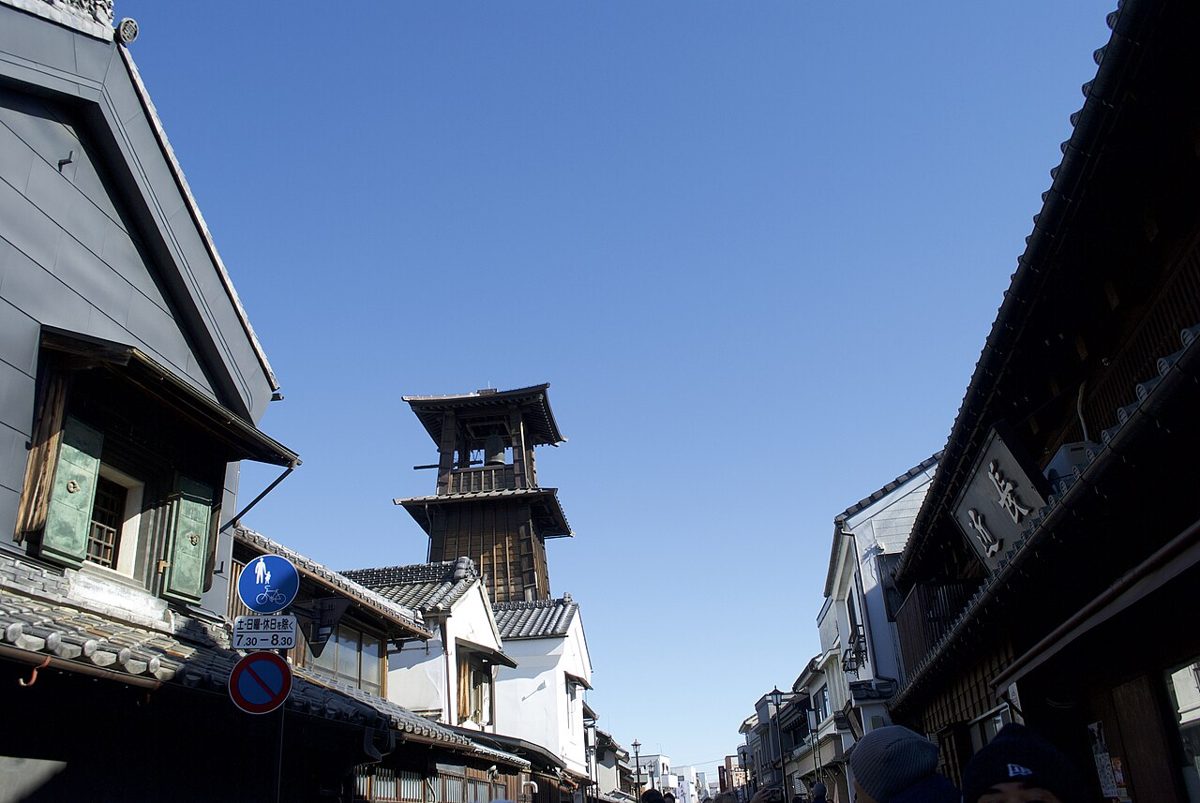
The heart of Kawagoe is Ichibangai, the main warehouse street, where two-storey kurazukuri merchant houses line both sides with their distinctive black plaster walls, fireproof shutters and heavy ridge tiles. Many now hold cafes, craft shops, miso and tea merchants, and sweet-potato stalls, so you can browse and graze as you stroll. Come early on a weekday if you want photos without crowds — by late morning on weekends the street fills up. Renting a kimono for the day is hugely popular here and genuinely fun against the Edo backdrop; several rental shops are a short walk from the warehouses.
Toki no Kane: The Bell of Time
Rising above the warehouse rooftops is Toki no Kane, the “Bell of Time” — a three-storey wooden tower about 16 metres tall and the enduring symbol of Kawagoe. A bell has stood on this spot for some four centuries; the current structure was rebuilt in 1894, the year after the great fire of 1893 destroyed the previous one. It still rings four times a day — 6:00, 12:00, 15:00 and 18:00 — and its chime is officially listed among Japan’s “100 Soundscapes to Preserve.” Time your walk to catch a ringing; it is a small, lovely moment. The lane just beneath the tower is one of the most photographed spots in town.
Kashiya Yokocho: Candy Alley
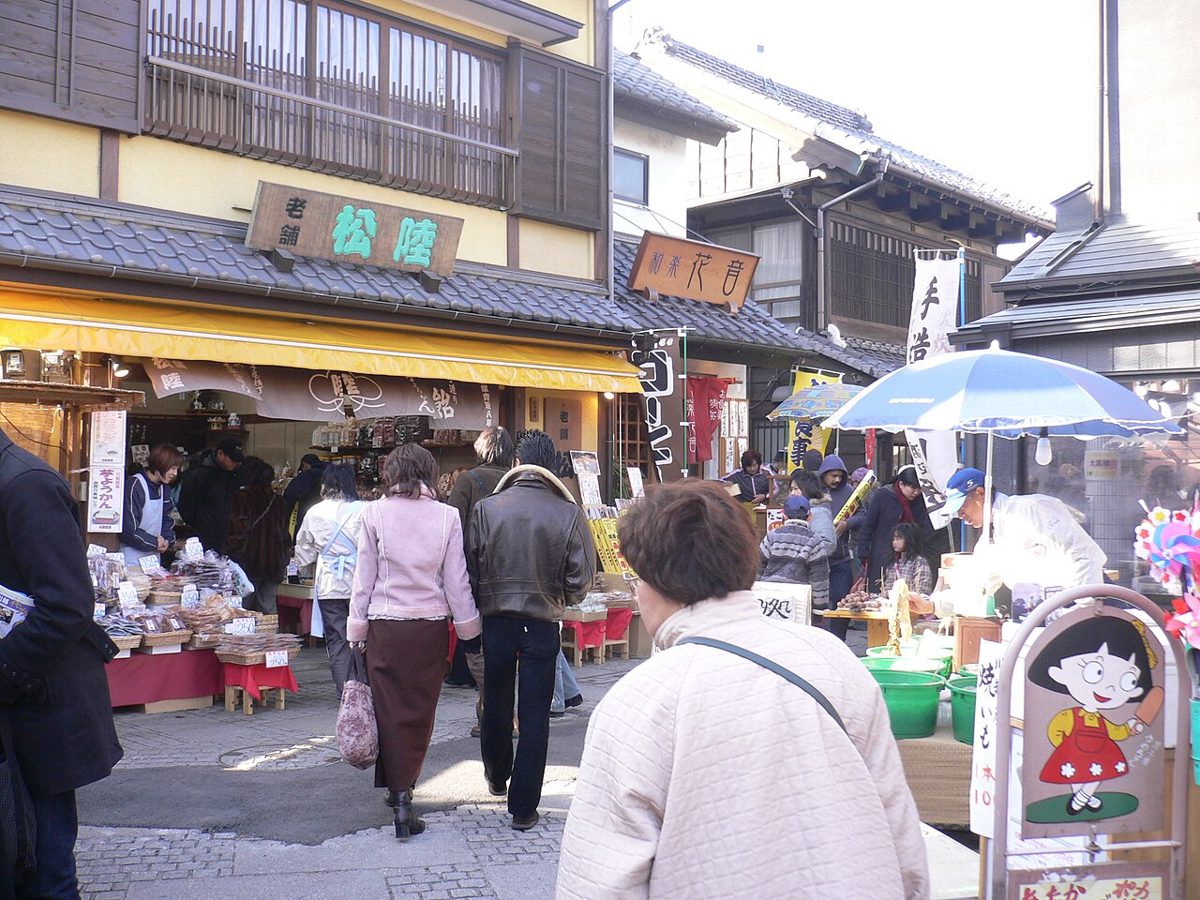
A couple of minutes north of the bell tower, Kashiya Yokocho — literally “candy shop alley” — is a short, cobbled lane crammed with around twenty traditional confectioners. The alley took its present form after the 1923 Great Kanto Earthquake, when Tokyo sweet-makers relocated here and began turning out old-fashioned candy in bulk for the recovering capital. Today it sells dagashi (cheap retro sweets), giant rice crackers, candy sticks, fu gluten snacks, and — this being Kawagoe — a parade of sweet-potato treats. It is nostalgic, photogenic and great with kids. Pick up a paper bag of penny candy and a stick of imo ice cream and wander.
Kita-in Temple and the 538 Rakan
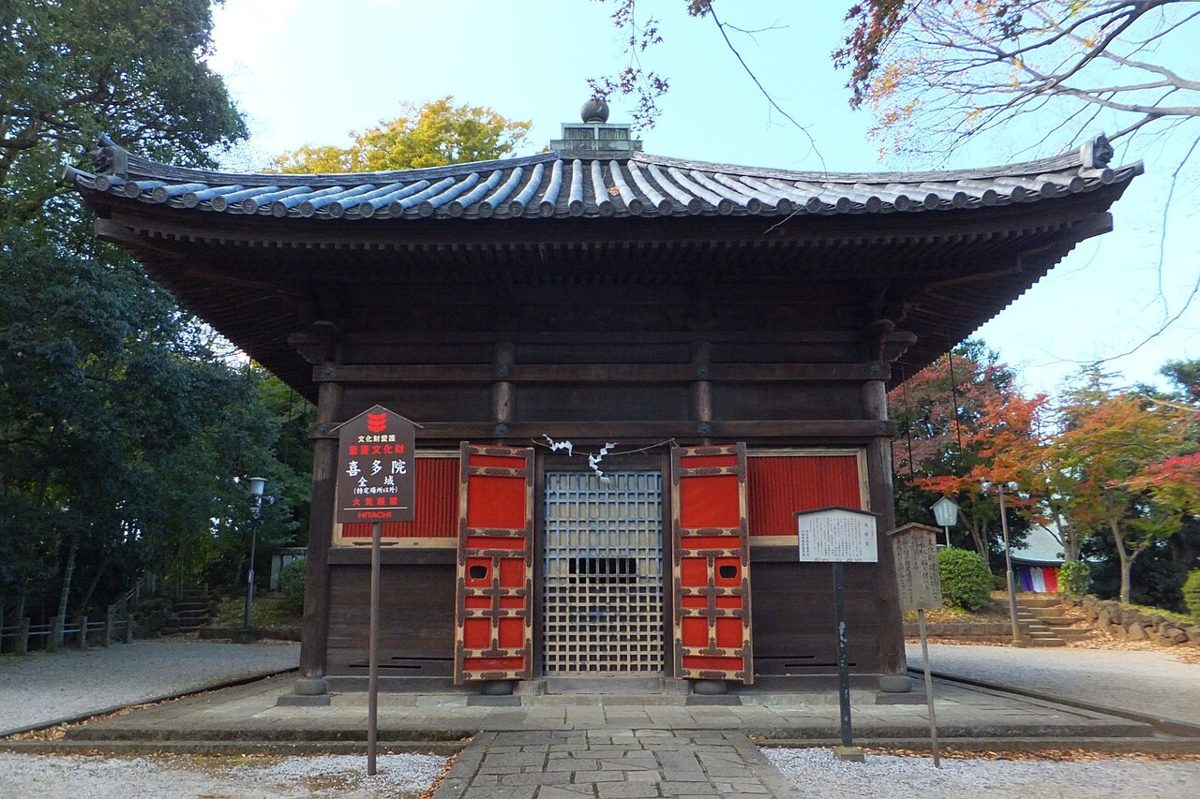
A short walk or a quick Loop Bus ride south brings you to Kita-in, Kawagoe’s most historically important temple and the head temple of the Tendai sect in the Kanto region. Its claim to fame is unusual: when Edo Castle partly burned in 1638, the shogun Iemitsu had several rooms moved here, so Kita-in holds the only surviving structures from the original Edo Castle — including the room where Iemitsu is said to have been born and the dressing room of Lady Kasuga, his powerful wet nurse.
The other highlight is the Gohyaku Rakan — a garden of 538 stone statues of Buddha’s disciples, carved between 1782 and 1825. No two faces are alike: some laugh, some scowl, some doze, some whisper to a neighbour, and local lore says if you feel the statues in the dark on New Year’s Eve, the one that is warm resembles you. Admission to the paid areas (the Edo Castle rooms and the rakan garden) is about ¥400 for adults and ¥200 for children; it opens 8:50–16:30 (until 16:00 from late November through February). Budget 45 minutes.
Hikawa Shrine: Wind Chimes and Matchmaking
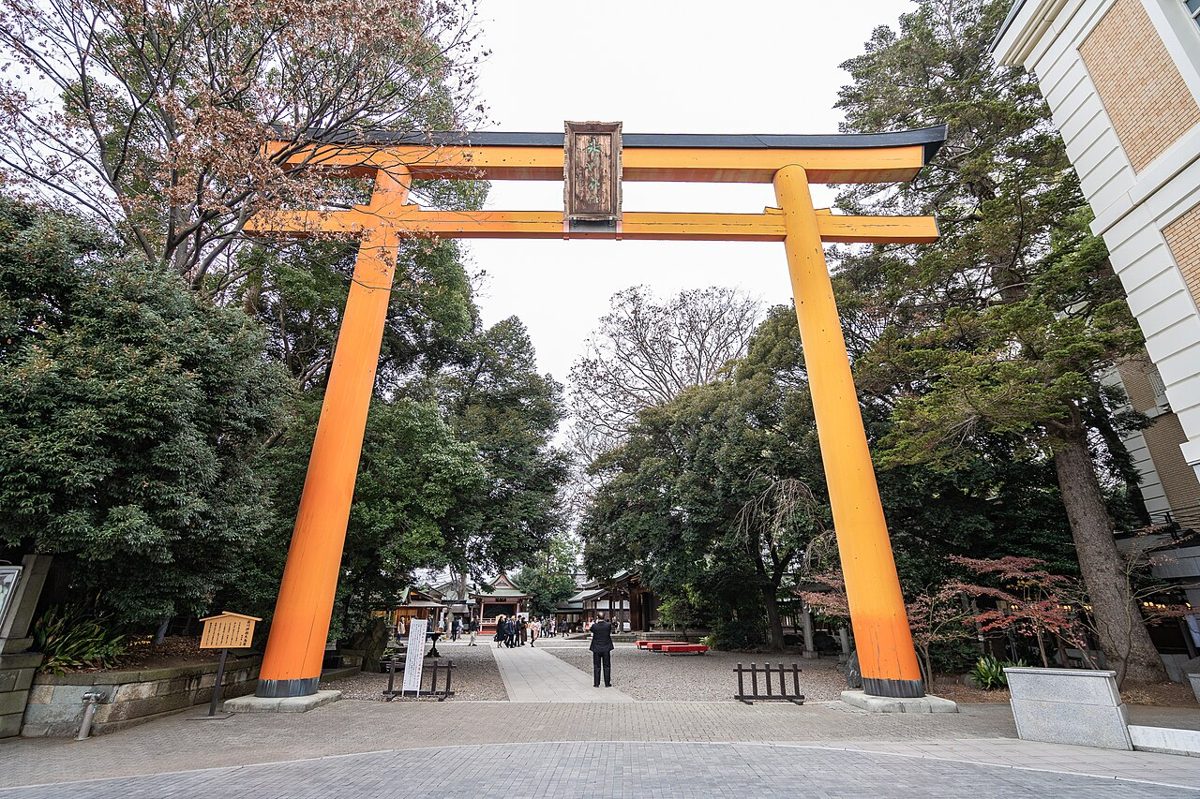
Kawagoe Hikawa Shrine, about 1.5 km north of the warehouses, is dedicated to enshrined deities associated with marriage and is one of the region’s most famous enmusubi (matchmaking) spots. It is striking year-round — you pass beneath a 15-metre wooden torii, one of the largest of its kind — but it is most magical in summer, when the Enmusubi Furin wind-chime festival drapes the grounds with around 2,000 colourful glass furin that shimmer and ring in the breeze, usually from July into September.
The shrine’s signature charm is the enmusubi-dama: each morning the shrine maidens gather a limited number of pebbles from the grounds, which are purified and offered as good-luck love charms — arrive early, as they often run out by mid-morning. Even if romance is not on your agenda, it is a beautiful, atmospheric stop and a natural turnaround point before heading back toward the station. To understand the rituals you will see here, our guide to Tokyo culture and traditions is worth a read.
What to Eat: Sweet Potato Everything
Kawagoe and the satsumaimo (sweet potato) are inseparable. The sandy soil of the surrounding plain has produced prized sweet potatoes since the Edo period, and the whole town leans into it. Walk the warehouse street and Candy Alley and you will find:
- Daigaku imo — “university potato,” chunks of sweet potato deep-fried and glazed in a glossy caramel syrup with black sesame.
- Imo-koi — a local sweet of sweet potato and red-bean paste wrapped in chewy mochi.
- Purple sweet-potato soft serve — vividly violet ice cream, sold from dozens of stalls; the colour comes from the purple variety, not dye.
- Sweet-potato chips — thin, crisp, often served with a choice of dipping sauces.
- Imo pudding and sweet-potato senbei — plus sweet-potato lattes and even sweet-potato beer.
For something savoury, Kawagoe also does excellent grilled unagi (eel) — a legacy of the river trade — and you will spot long-established eel restaurants near the warehouses. And yes, the local Coedo Brewery turns out craft beers (including a sweet-potato-tinged amber) that you will see on tap around town. For more on the city’s street-food culture, our wider guide to Tokyo food goes deeper on regional specialities.
A Half-Day Kawagoe Itinerary
Kawagoe rewards a relaxed pace; you can see the essentials in four to six hours. Here is a clean loop starting from Hon-Kawagoe or Kawagoeshi.
| Time | Plan |
|---|---|
| 9:30 | Arrive; walk the Taisho-roman shopping street toward the old town |
| 10:00 | Kita-in temple: Edo Castle rooms and the 538 rakan |
| 11:00 | Stroll up to the Kurazukuri warehouse street; browse and snack |
| 12:00 | Catch the Toki no Kane noon bell; sweet-potato lunch nearby |
| 13:00 | Kashiya Yokocho candy alley |
| 13:45 | Walk north to Hikawa Shrine for wind chimes and a love charm |
| 15:00 | Bus or walk back; head home (or stay for the 15:00 bell) |
Reverse it if you start at Hon-Kawagoe and want Hikawa first while the love charms last. Either way, a Kawagoe little Edo day trip slots neatly into a single morning-to-afternoon without rushing.

The Kawagoe Festival
If you can time your visit to mid-October, do. The Kawagoe Festival (Kawagoe Hikawa Matsuri) — held on the third weekend, 17–18 October in 2026 — is a UNESCO-recognised Intangible Cultural Heritage event dating to the mid-17th century. Towering, multi-tiered wooden floats, each crowned with a historical or mythological doll, are hauled through the warehouse streets by teams in happi coats. The climax is the Hikkawase: when two floats meet, their musicians face off in a battle of flutes, drums and bells, lanterns swaying, until the crowd roars. It is one of the great Kanto festivals and transforms the town. Expect big crowds and book transport early. For other seasonal happenings, see our Tokyo festival calendar.
Etiquette and Practical Tips
- Shrine manners: at Hikawa, bow twice, clap twice, make your wish, bow once; at Kita-in (a temple), press your palms together quietly without clapping.
- Don’t eat while walking in crowded stretches — step to the side of the street or use the small seating areas; it is the polite norm.
- Carry cash. Many small sweet shops, stalls and the temple ticket window prefer coins and small notes.
- Mondays: some museums and a few shops close, though the streets, shrine and most food stalls stay open.
- Go early. Morning light is best for photos, crowds are thinner, and Hikawa’s love charms are still in stock.
Mistakes to Avoid
- Getting off at the wrong station. Kawagoe, Kawagoeshi and Hon-Kawagoe are three different stops; Kawagoeshi (Tobu) and Hon-Kawagoe (Seibu) are closest to the old town.
- Arriving mid-afternoon. Many shops shut around 17:00–18:00, so a late start leaves you rushing; treat this as a morning trip.
- Buying a pass you won’t use. The historic core is walkable; only buy a bus pass if you actually plan to ride the Loop Bus.
- Visiting on a festival weekend unprepared. Mid-October is magical but mobbed — great if you want the festival, frustrating if you wanted quiet streets.
- Skipping Hikawa because it is “far.” It is only about 1.5 km and the wind chimes are a highlight; the Loop Bus covers it if you would rather not walk.
Pairing Kawagoe with other escapes is easy — its half-day length leaves room for more. Browse the full list of day trips around Tokyo to build a longer Kanto itinerary.
A Quick History of Kawagoe
Kawagoe’s wealth was built on logistics. From the early 1600s it sat at the head of the Shingashi River, the water highway that carried rice, timber and goods down to Edo, and its castle guarded the northern approach to the shogun’s capital. Merchants here handled that trade and grew prosperous, and the lords of Kawagoe Castle were trusted Tokugawa retainers, which is how a provincial town ended up with such grand architecture. The fireproof kurazukuri warehouses you admire today were a direct response to disaster: after the Great Kawagoe Fire of 1893 destroyed roughly a third of the town, merchants rebuilt in this thick-walled, tile-roofed style precisely because the few kura that survived the blaze had protected their contents. What began as insurance became the town’s signature look, and later its salvation as a tourist destination.
That trading-post heritage is also why people call it Koedo, or Little Edo: more than nostalgia, it reflects a real, documented closeness to the old capital. Walking the streets, you are essentially seeing the merchant Edo that Tokyo itself mostly lost to fire, earthquake and war.
Kawagoe Castle and the Honmaru Goten
History buffs should make time for the Honmaru Goten, the surviving palace hall of Kawagoe Castle and one of very few original castle residence buildings left anywhere in the Kanto region. The keep is long gone, but this 1848 hall lets you walk tatami corridors and audience rooms where the domain’s business was once conducted; admission is modest, around ¥100. It is a short walk or Loop Bus hop from the Hikawa Shrine area, so it pairs naturally with that end of the route. Nearby, the Kawagoe City Museum fills in the wider story if you want context before you wander the warehouse street.
Getting Around Kawagoe Once You Arrive
The sights form a rough north-south line, and the order you walk them depends on which station you used. From Hon-Kawagoe (Seibu) or Kawagoeshi (Tobu) it is a 10 to 15 minute walk to the warehouse street; from Kawagoe Station (Tobu/JR) it is a little further, about 20 minutes, or one stop on the bus. The two sightseeing buses, the retro Koedo Loop Bus and the Co-Edo Loop, trace the main attractions and are handy if you would rather not walk the full circuit, especially the 1.5 km out to Hikawa Shrine. A single ride is a few hundred yen; an all-day bus ticket is the better deal if you ride more than twice, and it comes bundled in the Tobu discount pass. Honestly, though, the walk between the warehouses, the bell tower and Candy Alley is short and full of distractions, so most people only want the bus for the Hikawa Shrine leg.
Souvenirs and the Best Photo Spots
Kawagoe is a strong souvenir town, and the warehouse street is where to shop. Look for Sayama tea (one of Japan’s top three green teas, grown nearby), hand-thrown pottery, fu wheat-gluten snacks, and of course every imaginable sweet-potato product, from chips and pies to bottled sweet-potato syrup. A fun, very Kawagoe stop is the Starbucks on Kanetsuki-dori, built in traditional kurazukuri style with a wooden interior and a small Japanese garden, proof that the town’s preservation rules apply even to global chains. For photographs, three spots stand out: the lane directly beneath Toki no Kane, the long sweep of black-walled warehouses on Ichibangai in early-morning light, and the cobbled curve of Kashiya Yokocho. Early on a weekday morning you can get all three nearly empty; by early afternoon, especially at weekends, expect crowds in every frame.
One more practical note for shoppers: many of the old shops keep short hours and a few still close one weekday a week, so anything you have your heart set on is safest bought before mid-afternoon. The streets stay lively into the early evening, but shutters start coming down around 5pm.
One weekend a year, everything above changes. On the third Saturday and Sunday of October the Kawagoe Matsuri fills these streets with towering wheeled floats and the after-dark hikkawase music duels, and the quiet warehouse-district walk described here becomes impossible. If your trip falls then, plan it deliberately — see Tokyo in October for the timings and what else is on that month.
Frequently Asked Questions
Is Kawagoe worth a day trip from Tokyo?
Yes. Kawagoe is only about 30 minutes from Ikebukuro and preserves a genuine Edo-era warehouse street, a historic bell tower, a candy alley and important temples — all walkable in half a day. It is one of the easiest and most rewarding little-Edo escapes near Tokyo, and you can easily combine it with another sight.
How do you get from Tokyo to Kawagoe?
The fastest route is the Tobu Tojo Line rapid or express from Ikebukuro, about 30 minutes for roughly ¥490 to Kawagoe or Kawagoeshi Station. The Seibu Shinjuku Line reaches Hon-Kawagoe in about 45 minutes by Koedo limited express, and JR Pass holders can ride via Omiya on the JR Kawagoe Line in about an hour.
How much time do you need in Kawagoe?
Plan four to six hours. That comfortably covers the Kurazukuri warehouse street, Toki no Kane bell tower, Kashiya Yokocho candy alley, Kita-in temple and Hikawa Shrine, with time to graze on sweet-potato treats. A full day lets you slow down or add a kimono rental and the eel restaurants.
What is Kawagoe famous for?
Kawagoe is famous as ‘Little Edo’ for its surviving clay-walled kurazukuri warehouses, the Toki no Kane bell tower, Kashiya Yokocho candy alley, the 538 rakan statues at Kita-in, the matchmaking Hikawa Shrine with its summer wind chimes, sweet-potato cuisine, and the UNESCO-listed Kawagoe Festival each October.
When is the Kawagoe Festival in 2026?
The Kawagoe Festival (Kawagoe Hikawa Matsuri) takes place on the third weekend of October — 17 and 18 October 2026. Expect huge multi-tiered floats topped with dolls paraded through the old town and the dramatic Hikkawase musical face-offs between float orchestras.
Photo Credits
- Kawagoe’s Kurazukuri street, lined with Edo-era clay-walled warehouses — Photo: Dandy1022 / CC BY-SA 4.0 via Wikimedia Commons via Wikimedia Commons
- Toki no Kane, the Bell of Time and symbol of Kawagoe — Photo: Balabd / CC BY 4.0 via Wikimedia Commons via Wikimedia Commons
- Kashiya Yokocho, Kawagoe’s nostalgic Candy Alley — Photo: Syohei Arai / CC BY-SA 4.0 via Wikimedia Commons via Wikimedia Commons
- Some of the 538 Gohyaku Rakan statues at Kita-in temple — Photo: tak1701d / CC BY-SA 3.0 via Wikimedia Commons via Wikimedia Commons
- Summer wind chimes at Kawagoe Hikawa Shrine, a matchmaking power spot — Photo: wongwt / CC BY-SA 2.0 via Wikimedia Commons via Wikimedia Commons
- The Ichibangai approach, busy with day-trippers and kimono rentals — Photo: Aimaimyi / CC BY-SA 3.0 via Wikimedia Commons via Wikimedia Commons