Best Time to Visit Tokyo · Guide №122
Tokyo in October: Weather, Events, Crowds and What to Pack
October is Tokyo's best all-round month: highs of about 20-24C, festival season at full tilt, and hotel rates below the November foliage rush. Here is what is actually on.

目次 — Contents
This article contains advertising. Our booking links are routed through a partner that adds commission tracking automatically, so if you book through one we earn a commission from the provider, at no extra cost to you. It never affects what we recommend. Affiliate disclosure
Tokyo in October is the month the city stops sweating. Highs slide from about 24°C at the start to about 20°C by the end, the humidity that made September miserable finally breaks, and although typhoon season is winding down, a storm can still disrupt travel. It is one of the two best months to be here — and one of the least understood.
The misunderstanding is autumn colour. Visitors book October expecting red maples and find green ones. Central Tokyo’s foliage does not peak until late November, sometimes the first week of December. What October actually gives you is different and arguably better: comfortable walking weather, festival season at full tilt, cosmos fields instead of maples, and hotel rates that have not yet been swallowed by the November foliage rush.
October weather in Tokyo, honestly
The month splits cleanly in two. The first ten days still feel like a soft extension of summer — highs around 24°C, short sleeves, the occasional sticky day. By the middle of the month you want a light layer after dark. By the last week, mornings are cool, with a normal low of about 13°C, and you will be glad of a jacket walking back from dinner.
| Period | Typical high | Typical low | What to wear |
|---|---|---|---|
| 1–10 Oct | About 24°C | About 17°C | Short sleeves; light layer at night |
| 11–20 Oct | About 22°C | About 15°C | Long sleeves, packable jacket |
| 21–31 Oct | 19–21°C | 13–15°C | Jacket or light coat, scarf optional |
Rain is the part people underestimate. October averages about 235 mm of rain, well above April’s or May’s total. That does not mean a washed-out month; a lot of it falls overnight or in short heavy bursts. But you should carry an umbrella every single day, and you should have a wet-weather plan that does not involve standing in a queue outside. Convenience stores sell cheap clear vinyl umbrellas and the whole city runs on them.
Typhoons: the risk is real but small
On the 1991–2020 normals, an average October brings 0.7 typhoons close to the Kanto-Koshin region, which includes Tokyo. When one does come, what that means in practice is rarely dramatic. Trains stop — JR East now announces planned suspensions (keikaku unkyu) a day in advance, which is useful — flights get cancelled, and the city goes quiet for eighteen hours. Then it clears and the next day is brilliantly blue, because typhoons scrub the haze out of the air. Some of the sharpest Mount Fuji views of the year come the morning after a storm.
The practical response: do not book an unrefundable day trip more than about four days ahead in early October, keep one indoor day in reserve, and if a typhoon is forecast, buy food the night before. Supermarket shelves empty fast. None of this is a reason to avoid the month — it is a reason to keep the itinerary loose.

What is actually in bloom and turning
Here is the honest calendar, because getting this wrong ruins more October trips than the weather does.
- Cosmos — the real October flower. Showa Kinen Park in Tachikawa plants millions of them across open hillsides and they peak mid-to-late October. Entry is ¥450 for adults, it is about 30 minutes from Shinjuku on the Chuo Line to Nishi-Tachikawa, and it is the single most reliably beautiful thing you can do outdoors this month.
- Higanbana (red spider lilies) — late September into the first week of October. Kinchakuda in Hidaka, Saitama, is the famous field; in the city, Koishikawa Korakuen has scattered clumps.
- Highland maples — Oku-Nikko, around Senjogahara and Yumoto, turns in mid-October. It is a long day. Later in the month, Showa Kinen Park and Lake Okutama can also start to colour, depending on conditions. The Nikko day trip is worth doing on its own merits regardless.
- Central Tokyo maples and ginkgo — not yet. Timings vary by spot and by year: the Icho Namiki avenue in Meiji Jingu Gaien usually peaks from mid-November to early December, Koishikawa Korakuen from late November into early December, and Rikugien keeps its colour into mid-December. If foliage is the point of your trip, our Tokyo autumn foliage guide has the timings and the specific spots; do not try to force October into that shape.

Shinjuku Gyoen deserves a specific mention. It is ¥500 and closed on Mondays (or the next weekday when a Monday is a public holiday), and in October it is doing nothing spectacular — which is exactly why it is pleasant. The lawns are empty, the temperature is perfect for lying on them, and the chrysanthemum display that draws crowds does not start until early November, when the garden opens every day from the 1st to the 15th. More on the city’s green space is in our Tokyo parks and gardens guide.
October events worth planning around
This is the month’s real argument. Autumn is festival season, and unlike the summer fireworks calendar, October’s events are mostly free, mostly uncrowded by Tokyo standards, and mostly ignored by foreign visitors.
Oeshiki at Ikegami Honmonji — 11 to 13 October
The best thing in October, and almost nobody outside Japan goes. Oeshiki marks the death of Nichiren, and on the night of 12 October people walk from Ikegami station up to Honmonji temple carrying mando — illuminated bamboo frames shaped like pagodas, hung with cascades of white paper cherry blossom. Drums, flutes, and a procession that takes hours to pass. In 2026 the procession set off at 18:00 and ran until about 23:00; Ikegami station is on the Tokyu Ikegami Line.

Go for the night of the 12th, not the 11th or 13th. Arrive around 19:00, position yourself on the approach road rather than inside the temple grounds, and be prepared for the crowd to be almost entirely Japanese — this is a religious observance that happens to be spectacular, not a tourist event.
Kawagoe Matsuri — 17 and 18 October 2026
Held in mid-October (17 and 18 October in 2026) and listed by UNESCO, this is one of the Kanto region’s great float festivals: enormous two-storey wheeled dashi carrying life-sized figures, hauled through the Edo-era warehouse streets, with rival floats meeting head-on at intersections for a music duel called hikkawase. That confrontation, after dark, is the reason to stay late. Kawagoe is about 30 minutes from Ikebukuro on the Tobu Tojo Line. It gets extremely busy on the Saturday night — the Kawagoe day trip guide covers the town on a normal day, which is a different and much calmer experience.
Tokyo International Film Festival — 26 October to 4 November 2026
The 39th edition runs across Hibiya, Yurakucho, Marunouchi and Ginza. Individual screening tickets go on sale to the public a couple of weeks beforehand and a good number of films carry English subtitles, since the festival programmes for an international jury. It is not a reason to build a trip around, but if you are already here it is a straightforward evening: a cinema seat in Hibiya for roughly the price of a normal ticket, and occasionally a director in the room.
Halloween — but not in Shibuya
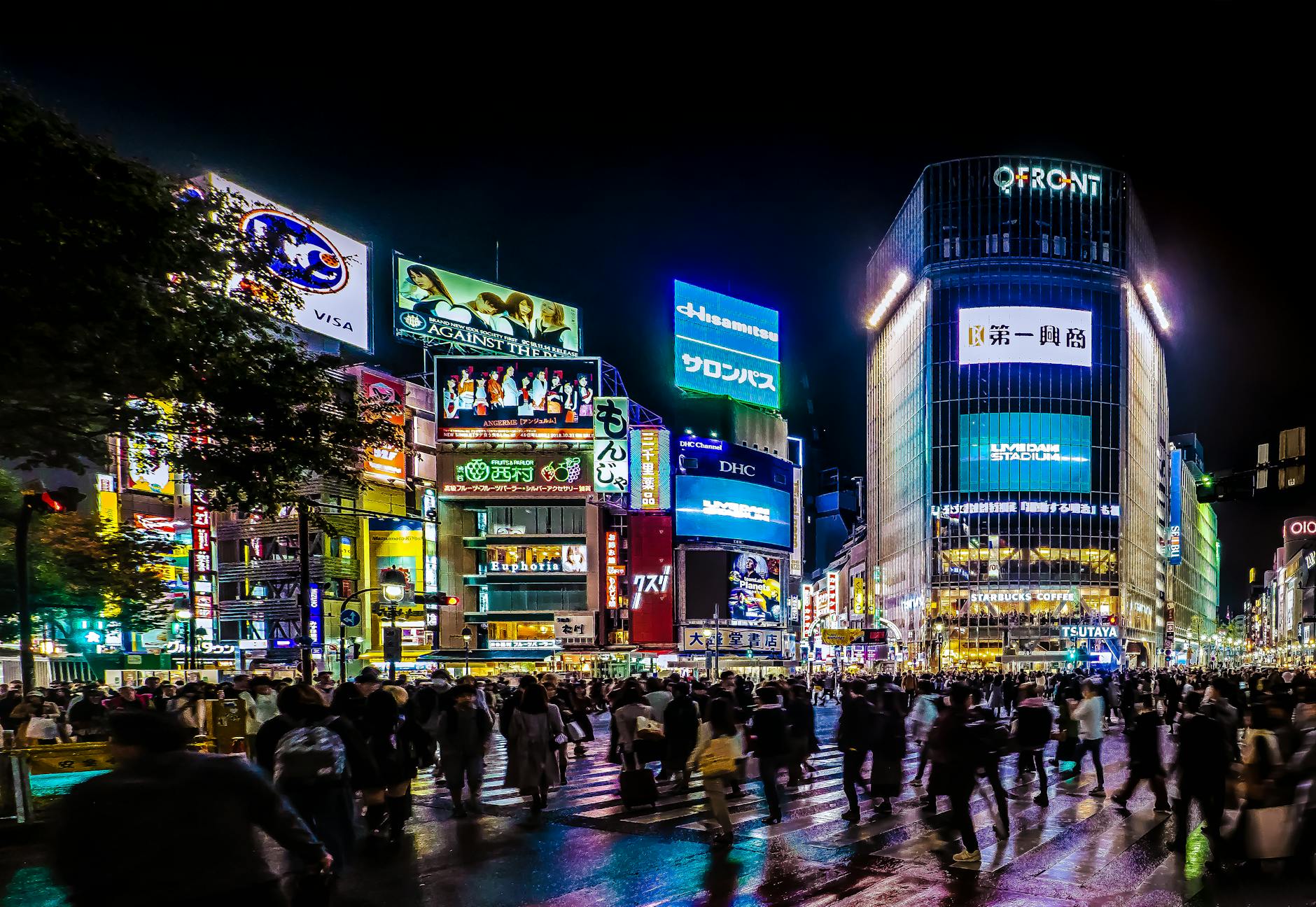
Shibuya has comprehensively cancelled itself. Street drinking is banned from 18:00 to 05:00 in the designated area around the station, selected roads close to traffic from 16:00 on both 30 and 31 October until early the next morning, and the ward has spent several years actively telling people not to come. Turning up expecting the old scenes gets you a police cordon and a lot of standing.
The alternatives are genuinely better: the Ikebukuro Halloween Cosplay Festival, which in 2026 runs 30 October to 1 November with a proper registration system and paid changing rooms; the Harajuku Omotesando Hello Halloween Pumpkin Parade, about a thousand costumed children walking Omotesando in late October; and the Disney and Universal seasonal events, which run all month. Our Tokyo events and festivals calendar tracks the rest of the year.
Other things happening this month
- Sports Day, Monday 12 October — a national holiday creating a three-day weekend. Domestic travel spikes; shinkansen reservations and popular ryokan get tight from the Friday.
- Baseball post-season — the Climax Series runs mid-October and the Japan Series late in the month. If the Yomiuri Giants advance, Tokyo Dome hosts, and the atmosphere is worth the ticket even if you do not follow the sport.
- Tokyo Ramen Show — Komazawa Olympic Park, late October into early November. Around 30 regional shops, a ticket-per-bowl system, roughly ¥1,000 a bowl.
- No sumo — Tokyo’s grand tournaments are January, May and September. October is the regional exhibition tour. If sumo is on your list, see the Tokyo sumo guide and shift your dates.
Crowds and prices
October is a shoulder month that stops being one partway through. The first three weeks are usually comfortable: attraction queues tend to be manageable, restaurant reservations are gettable, and hotel rates generally sit below both the cherry blossom peak and the late-November foliage peak. The exceptions are the Sports Day weekend and the back end of the month, when domestic autumn travel picks up and Halloween weekend fills central hotels.
| Window | Crowds | Hotel rates | Verdict |
|---|---|---|---|
| 1–9 Oct | Low | Low | Good value; typhoons still possible |
| 10–12 Oct (Sports Day) | High domestic | High | Avoid for day trips and shinkansen |
| 13–23 Oct | Low to moderate | Moderate | The sweet spot: cosmos, festivals, good weather |
| 24–31 Oct | Moderate to high | Higher | Halloween weekend; book central hotels early |
Compared with the rest of the year, October sits alongside late March and mid-November near the top for weather but well below them for cost. If you are choosing between months, our best time to visit Tokyo guide runs the full comparison, and the Tokyo trip cost breakdown shows what a week actually comes to.

What to pack for Tokyo in October
Layers, and fewer of them than you think. You will be indoors — trains, department stores, restaurants — for a good part of every day, and Tokyo’s interiors are kept warm once the weather cools. A heavy coat is a burden you carry rather than wear.
- Long trousers and a mix of short and long sleeves. Early October still runs warm.
- One packable jacket or fleece for evenings and the last week. A shell that handles rain does double duty.
- Genuinely comfortable, water-resistant shoes. Ten wet days, and you will walk 15,000 steps most days without noticing.
- A small umbrella, or buy a cheap konbini one on arrival and leave it behind.
- One smarter outfit if you have a good dinner reservation or plan on a rooftop bar.
Skip the thermals, skip the heavy knitwear, skip the second pair of shoes unless one pair is for a specific purpose. The full list, including the things genuinely worth bringing from home versus buying here, is in our Tokyo packing list.
A sensible October itinerary shape
Because rain is unpredictable and typhoons are possible, October rewards a flexible plan more than most months. The shape that works: pin one or two fixed things — an Oeshiki night, a Kawagoe Saturday, a booked restaurant — and leave the rest swappable between an outdoor version and an indoor version.
- Clear day, early in the trip: go out of town. Mount Fuji and the Five Lakes are at their most reliably visible in October, especially the day after a storm. Kamakura and Nikko both work.
- Clear day, in town: Showa Kinen Park for the cosmos, or a long walk through Yanaka and Ueno, or the Meguro river before the crowds arrive for maples that have not turned yet.
- Wet day: Toyosu Market in the morning, a department store basement for lunch, teamLab or a museum in the afternoon. Our rainy day guide exists precisely for this month.
If you want the whole structure worked out, the five-day Tokyo itinerary slots into October with almost no changes — you simply have better weather to do it in than a summer visitor would.
Is October the right month for you?
Yes, if you want to walk a lot in comfortable weather, care about festivals more than photographs of red leaves, and would rather pay November’s prices in October. It is arguably the best all-round month of the year in Tokyo, and the fact that autumn-colour searches push everyone into late November is quietly to your benefit.
No, if foliage is the actual point of the trip — in which case move to the third week of November and accept the crowds — or if you have a rigid, unchangeable itinerary in the first ten days and no tolerance for a typhoon rearranging it. And no if you were coming specifically for Shibuya on Halloween night: the ward asks people to stay away, restricts street drinking and shuts roads around the station.
For the months either side, see autumn foliage for November and the Tokyo winter guide for December onward. To start building the trip itself, the Tokyo travel planning guide is the place to begin.
If your dates land on the last weekend of the month, the Halloween question deserves its own answer rather than a line in a monthly guide. We have written it up in full: Halloween in Tokyo covers the Shibuya road closures, the Ikebukuro cosplay festival dates, Disney’s costume rules and where the actual party went.
If your dates slip a few weeks later, the calculation changes completely: colder, clearer, considerably more expensive, and finally the red maples everyone came for. Our guide to Tokyo in November covers the week-by-week foliage timings and where the crowds actually fall.
Frequently Asked Questions
Is October a good time to visit Tokyo?
Yes — it is one of the two best months, alongside late March and April. Temperatures are comfortable, with highs easing from about 24°C to about 20°C over the month, humidity has dropped, the festival calendar is busy, and hotel rates are usually lower than in the cherry blossom or late-November foliage peaks. The trade-offs are about 235 mm of rain over the month and the chance of a typhoon.
Can you see autumn leaves in Tokyo in October?
Not in central Tokyo. City maples and ginkgo usually peak from mid-to-late November into early December, depending on the spot. In October, colour is limited to the highlands — Oku-Nikko around Senjogahara and Yumoto turns mid-October. If you want autumn colour in the city itself, you need a November trip.
What should I wear in Tokyo in October?
Layers. Short sleeves plus a light jacket for the first ten days, long sleeves and a packable jacket mid-month, and a proper light coat for the last week, when mornings drop to around 13°C. Comfortable water-resistant shoes matter more than anything else, and carry an umbrella daily.
Will a typhoon ruin my October trip to Tokyo?
Probably not. The Kanto-Koshin region, which includes Tokyo, averages fewer than one approaching typhoon in October (0.7 on the 1991–2020 normals). If one is forecast, check JR East’s train information page and your other rail operators’ updates before you set out. Keep your plans flexible, avoid non-refundable day-trip bookings far in advance, and note that the day after a typhoon is often the clearest of the whole trip.
Is Halloween still worth it in Tokyo?
Yes, but not in Shibuya. The ward bans drinking on the street around the station from 18:00 to 05:00, and closes selected roads to vehicles from 16:00 on 30 and 31 October. Go instead to the Ikebukuro Halloween Cosplay Festival, which runs 30 October to 1 November 2026, the Harajuku Omotesando pumpkin parade for children in late October, or the Disney and Universal seasonal events which run through the whole month.
Photo Credits
- Cosmos fields at Showa Kinen Park, Tachikawa – Cosmos HIll @ Showa Kinen Park @ Tachikawa (10605827865) by Guilhem Vellut from Annecy, France, CC BY 2.0, via Wikimedia Commons.
- Mando lantern at the Oeshiki festival, Ikegami Honmonji – Oeshiki Mando 01 by tak1701d, CC BY-SA 3.0, via Wikimedia Commons.
Comments are closed.