Tokyo Cafes & Coffee · Guide №152
Tokyo Bakeries: Melonpan, Shokupan and Where to Find the Best Bread
Anpan, melonpan, curry bread and shokupan: the Japanese breads to try, how the tray-and-tongs system works, the historic bakeries that invented them, the French-trained bakers, and which queues are worth it.
目次 — Contents
- How Japan invented its own bread
- The Japanese breads to try
- How a Japanese bakery works
- The historic bakeries
- Shokupan: the milk bread specialists
- The French-style bakeries
- Department stores, stations and konbini
- Bakery mornings by neighbourhood
- When to go
- A bakery breakfast, and a picnic
- What is and is not worth the queue
- Frequently Asked Questions
- Photo Credits
This article contains advertising. Our booking links are routed through a partner that adds commission tracking automatically, so if you book through one we earn a commission from the provider, at no extra cost to you. It never affects what we recommend. Affiliate disclosure
Tokyo bakeries are some of the best in the world, and they fall into two traditions: the Japanese pan-ya, selling soft, sweet and savoury buns like anpan, melonpan and curry bread for ¥200 to ¥400 each, and a serious French-style scene producing baguettes and croissants that would pass in Paris. A bag of three buns makes one of the city’s best cheap breakfasts.
This guide covers what to try, how the tray-and-tongs system works, the historic bakeries that invented Japanese bread, the shokupan specialists, the French-trained bakers, and where the queues are and are not worth it. For somewhere to drink coffee with your bread, see our Tokyo cafe guide.
How Japan invented its own bread
Bread arrived in Japan with Portuguese traders in the sixteenth century and mostly left again with them. The modern story begins in the Meiji era, when Japan opened to the West and bakers set about making bread Japanese people actually wanted to eat. The breakthrough came in 1874, when Kimuraya in Ginza made a soft bun leavened with sake yeast and filled it with sweet red bean paste. That was the first anpan, and the moment Japanese bread went its own way.
The century and a half since has produced a whole family of breads found nowhere else: buns filled with custard or curry, milk bread so soft it tears like cotton, sandwiches stuffed with fried noodles. Alongside that, from the 1950s on, Japanese bakers trained in France and came home obsessed with getting a baguette exactly right. Tokyo now has both traditions at a very high level, often on the same street.
The Japanese breads to try
If you only know bread as sliced loaves and baguettes, a Japanese bakery can be bewildering: dozens of small, glossy buns, each labelled in Japanese. These are the ones worth knowing.
| Bread | What it is | Typical price | Sweet or savoury |
|---|---|---|---|
| Anpan | Soft bun filled with sweet red bean paste | ¥150–300 | Sweet |
| Melonpan | Sweet bun under a crisp, crosshatched cookie crust | ¥200–400 | Sweet |
| Kare pan | Curry-filled bun, breaded and deep-fried | ¥200–400 | Savoury |
| Cream pan | Bun filled with custard cream | ¥180–300 | Sweet |
| Shokupan | Soft, tall, milky white loaf | ¥400–1,000 a loaf | Neutral |
| Shio pan | Butter-rolled salt bread with a crisp base | ¥100–250 | Savoury |
| Yakisoba pan | Hot-dog roll stuffed with fried noodles | ¥200–350 | Savoury |
| Korokke pan | Potato croquette in a bun with sauce | ¥200–350 | Savoury |
| Chocolate cornet | Spiral horn of bread filled with chocolate cream | ¥180–300 | Sweet |
Anpan
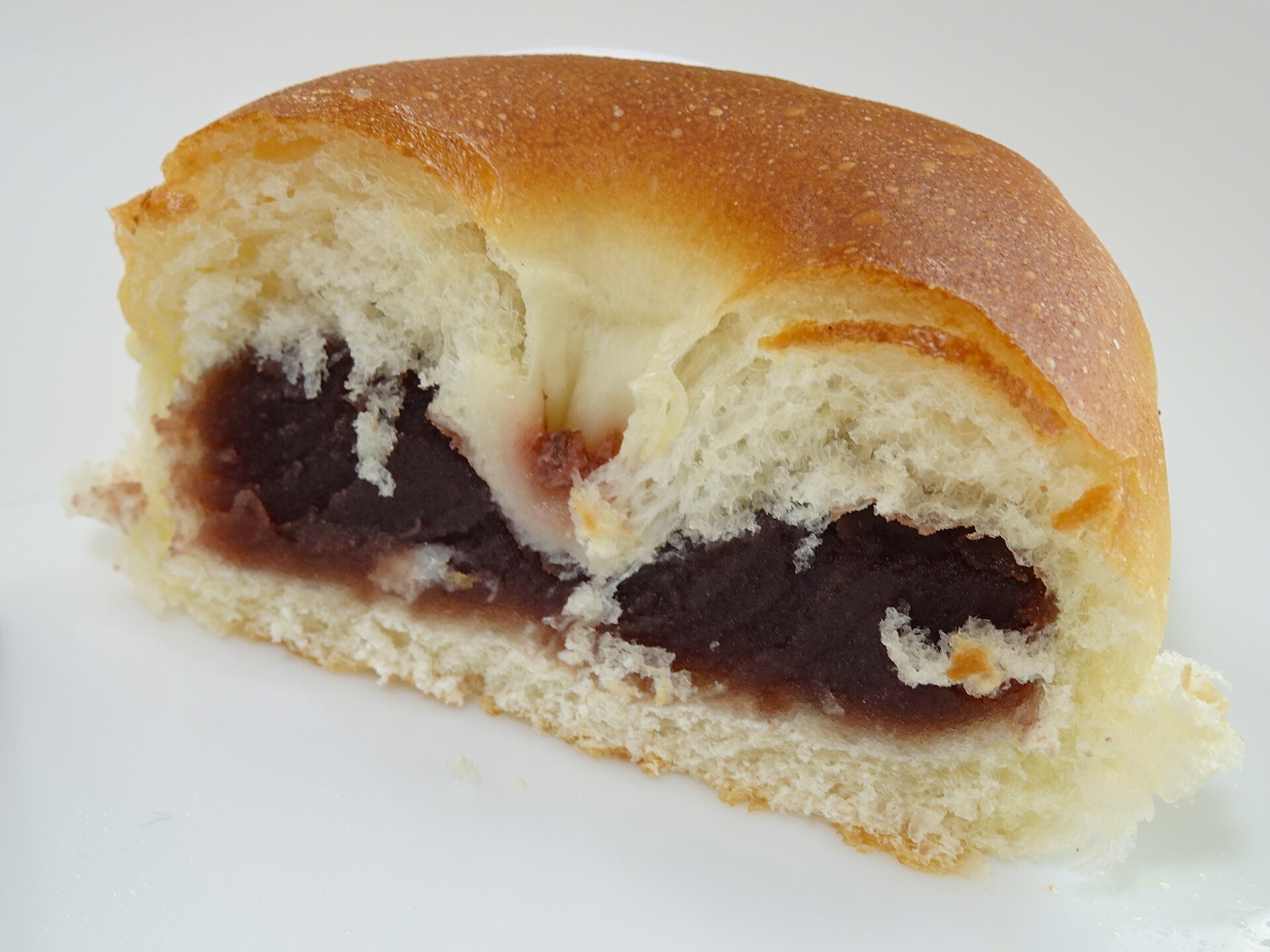
The original. A soft, slightly sweet bun around a filling of anko, sweet adzuki bean paste, either smooth (koshian) or chunky (tsubuan). The classic version is topped with a few sesame seeds or a salted cherry blossom pressed into the centre. If you have never had red bean paste, anpan is the gentlest introduction.
Melonpan
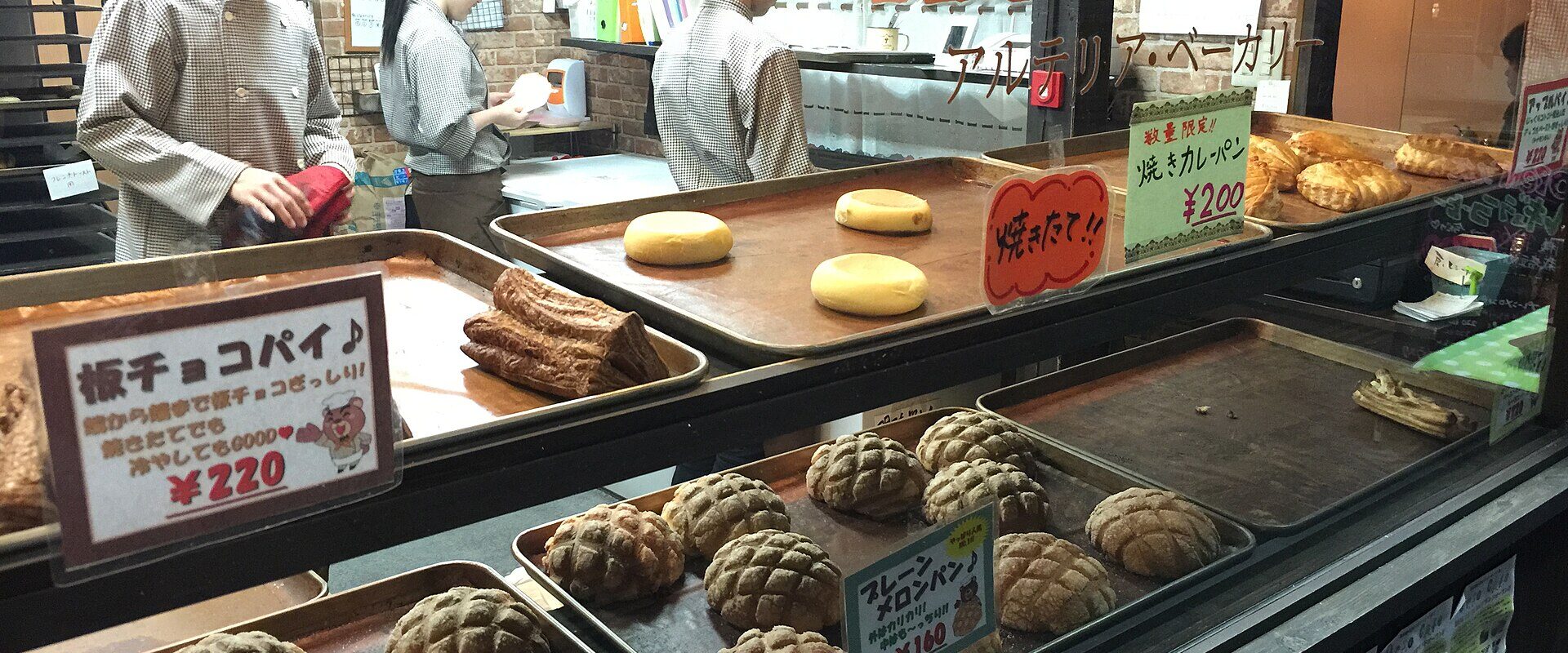
The most famous Japanese bread overseas, and a slightly misleading name: most melonpan contain no melon at all. The name comes from the look — a sweet bun covered with a thin layer of cookie dough, scored into a crosshatch that resembles a cantaloupe rind, which bakes into a crisp, sugary crust. Eaten warm, it is a revelation. Eaten cold from a plastic bag, it is still pretty good.
Kare pan
Japanese curry sealed into a dough, rolled in breadcrumbs and deep-fried. A warm curry bread is one of the great Japanese comfort foods and the thing to buy if you only buy one savoury bun. Cattlea, a long-running bakery in Morishita in eastern Tokyo, claims to have created it in 1927 and still sells it.
Cream pan and chocolate cornet
Custard-filled cream pan was created at Nakamuraya in Shinjuku in 1904, and the chocolate cornet — a spiral of bread piped full of chocolate cream — is the other childhood favourite. Both are soft, sweet and inexpensive.
Shio pan
The salt bread boom of the last two decades started at a bakery in Ehime prefecture in the early 2000s, and is now everywhere. A roll of dough is wrapped around a stick of butter, which melts during baking into a crisp, salty, buttery base. Some bakeries sell them in huge quantities for very little, and they are best within an hour of coming out of the oven.
Savoury sandwich breads
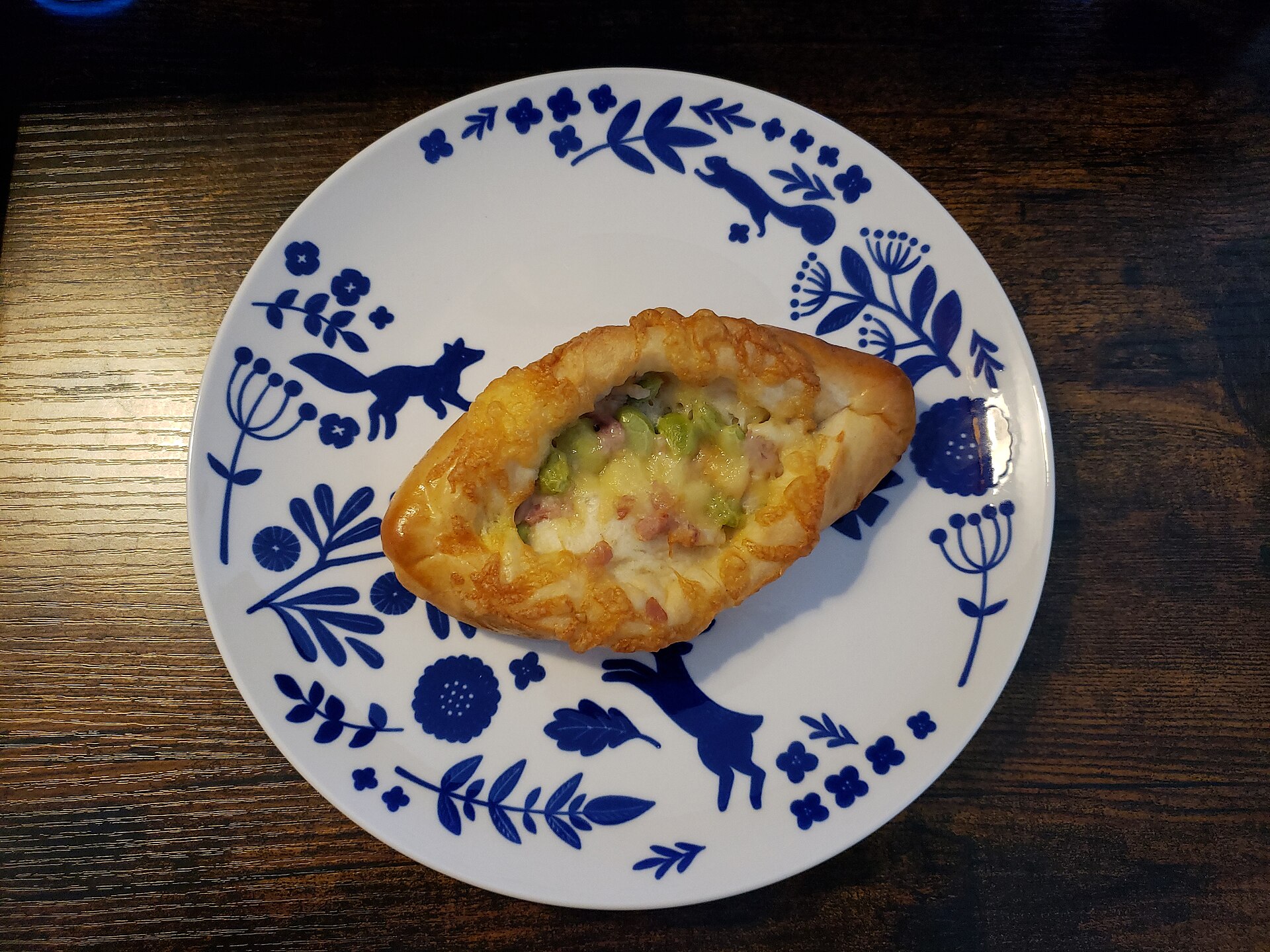
The Japanese bakery’s lunch counter: yakisoba pan (a soft roll stuffed with fried noodles, which is exactly as carb-heavy as it sounds and weirdly delicious), korokke pan with a potato croquette and brown sauce, egg-salad rolls, and katsu sando, a breaded pork cutlet sandwich. Most bakeries also make a daily range of sozai pan — breads topped or filled with ingredients like corn and mayonnaise, bacon and cheese, or teriyaki chicken.
How a Japanese bakery works
Almost every bakery in Tokyo uses the same self-service system, and once you know it, it takes about a minute.
- Pick up a tray and tongs at the entrance. They are usually stacked just inside the door.
- Choose with the tongs, never your hands. Each item has a label with its name and price, usually in Japanese, sometimes with a little English.
- Take the tray to the counter. Staff total the items, and wrap each piece individually in its own bag or paper. That is normal, not excessive.
- Pay. Cards and IC transport cards such as Suica are widely accepted; very small neighbourhood bakeries may be cash only.
- Mention if you want it warm. Some bakeries will reheat curry bread or offer to warm items if you ask.
Most small bakeries have no seating, so plan to eat elsewhere. It is considered bad manners in Japan to eat while walking along a busy street, and there is rarely a bin nearby. The usual solution is a park bench, a riverside, or a bakery with a small eat-in counter. Our Japanese etiquette guide covers the details.
The historic bakeries
A few Tokyo bakeries are worth visiting for their history as much as their bread, and all of them still sell very good versions of the breads they made famous.
Ginza Kimuraya
Founded in 1869 and widely regarded as Japan’s oldest Western-style bakery, Kimuraya created sake-yeast anpan in 1874. Its flagship on Ginza’s main street sells more than 130 kinds of bread every day, with anpan still at the centre, for a couple of hundred yen each. The sakura anpan, with a salt-pickled cherry blossom set into the top, is the one to try: it is based on the version the bakery presented to the Emperor Meiji. There are dining floors upstairs, but the bakery counter on the ground floor is the point. See our Ginza guide for the rest of the district.
Asakusa Kagetsudo
A couple of minutes from Sensoji, Kagetsudo is famous for one thing: a giant, freshly baked melonpan, crisp on top and fluffy inside, handed over warm for a few hundred yen. You can also have it split and filled with ice cream. Queues form at weekends but move quickly, and there is a small seating area. A warm melonpan on the way to the temple is a very good start to an Asakusa morning — our Asakusa guide has the full route.
Pelican, Asakusa
Pelican has been baking since 1942, and has made only two things for most of that time: a square white shokupan loaf and small bread rolls. That is the entire menu. The bread is plain, soft and excellent, sells out regularly, and can be reserved in advance. Its nearby Pelican Cafe serves thick toast made from the loaf, which is the easiest way to try it without buying a whole one.
Nakamuraya, Shinjuku
The Shinjuku institution that created the cream pan in 1904, and later popularised Indian curry in Japan. Its building beside the east exit of Shinjuku station has a shop and restaurants; the cream pan is a small, inexpensive piece of Tokyo food history.
Shokupan: the milk bread specialists
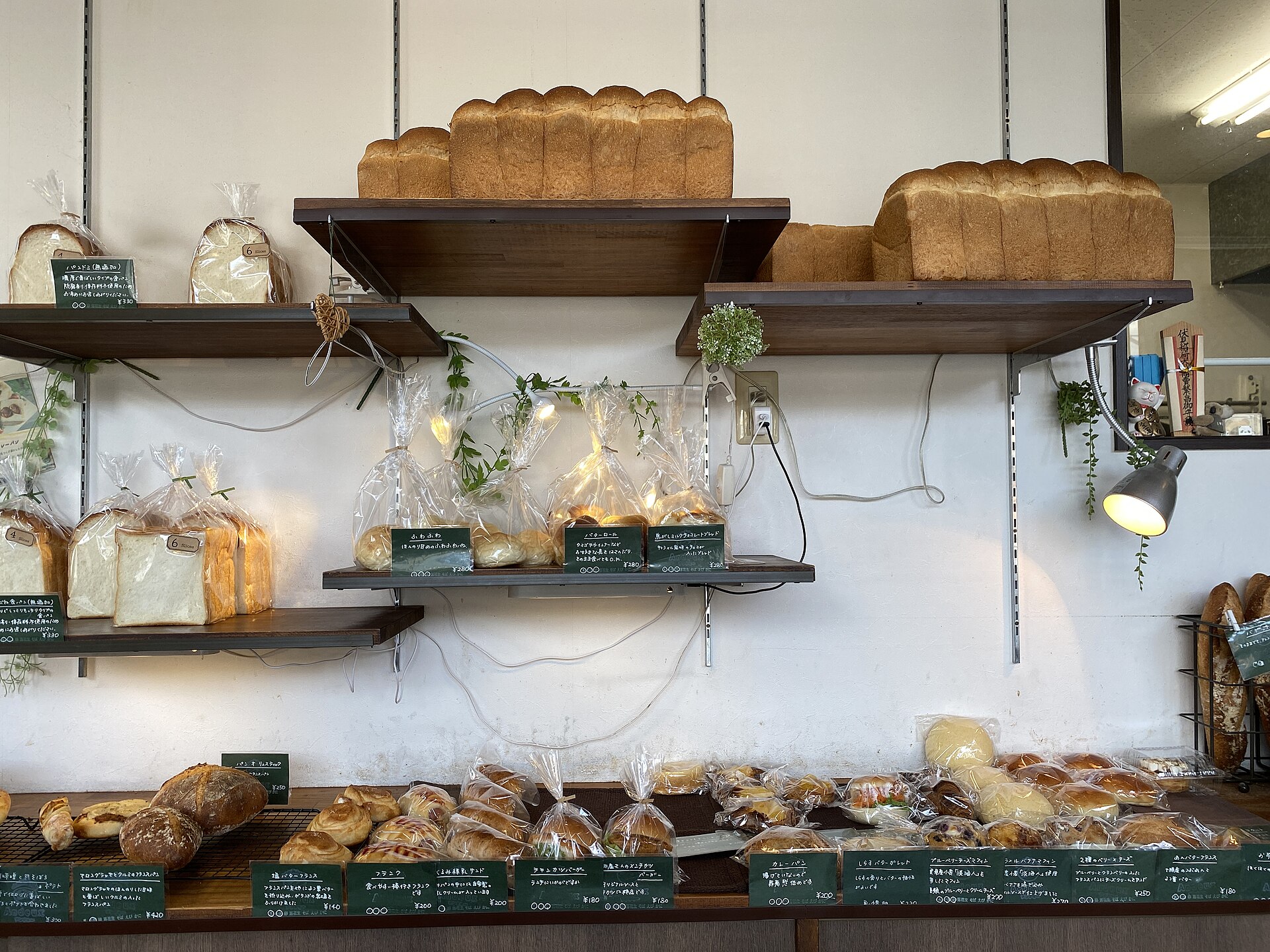
Shokupan, literally “eating bread”, is the Japanese white loaf: tall, square, cloud-soft, faintly sweet, with a thin crust. Its texture comes from milk, a little sugar and butter, and often a technique of cooking part of the flour with hot water or milk first, which lets the dough hold more moisture. Toasted thick, with butter, it is one of the best breakfasts in the country.
A few years ago Tokyo had a luxury shokupan boom, with specialist shops selling nothing but premium loaves in gift bags at high prices. Many of those shops have since closed, but the good specialists remain.
Centre the Bakery, Ginza
The best-known shokupan specialist in the city, near Ginza 1-chome. The shop sells loaves to take away, and the eat-in side serves toast sets where you choose between different loaves — including a firm British-style pullman and a light Japanese shokupan — with a selection of butters and jams, and a toaster at the table. Hours are 09:00 to 19:00, closed on Tuesdays, and it closes early if the bread sells out.
There is a queue at almost all times, commonly thirty to forty-five minutes for a seat. Is it worth that? For bread lovers, yes, once: it is the best way to taste the difference between shokupan styles side by side. If you just want good toast, the kissaten morning set is quicker and cheaper — see our Tokyo breakfast guide.
The French-style bakeries
Tokyo’s other bakery tradition takes European bread extremely seriously. Many of its leading bakers trained in France, and several French bakeries have opened Tokyo branches that are at least as good as the originals. Prices are higher than at a pan-ya — ¥300 to ¥600 for a croissant, ¥400 to ¥700 for a baguette — but the quality is exceptional.
- Viron — a French-style bakery with shops in Shibuya and near Tokyo Station in Marunouchi, known for baguettes made with French flour and a proper Parisian-style range of viennoiserie.
- Gontran Cherrier — the Parisian baker’s Shibuya flagship, with inventive breads and pastries alongside the classics.
- Signifiant Signifié — a small, serious bakery in Setagaya whose long-fermented breads are regularly counted among the best in Tokyo. Not a casual stop, but a pilgrimage for bread people.
- Bricolage Bread & Co. in Roppongi and 365日 in Yoyogi-Hachiman are also frequently named among the city’s best, with 365日 in particular admired for inventive Japanese-flour breads.
For an overview of the serious end of the scene, Tabelog, Japan’s leading restaurant review site, publishes an annual list of the top hundred bread shops in Tokyo. It is in Japanese, but a browser translation handles it well, and it is the list local bread enthusiasts actually use.
As ever, small bakeries change hours, move and close. Check a bakery’s own site or social media before crossing the city for it.
Department stores, stations and konbini

Some of the most convenient good bread in Tokyo is sold in places you pass anyway.
- Department store basements have branches of several well-known bakeries next to each other, which makes them the easiest place to compare. They also discount unsold items in the last hour before closing. Our depachika guide explains how to shop them.
- Station bakeries — every major station has at least one, and many are very good. Useful before an early train.
- Convenience stores sell packaged breads from big Japanese bakeries, restocked through the day. They are not artisan, but a konbini melonpan or egg sandwich is cheap and consistent. See our konbini food guide.
Bakery mornings by neighbourhood
Rather than crossing the city for a single loaf, it works better to pick a neighbourhood with two or three good bakeries and something else worth seeing, and make a morning of it.
Asakusa
The most tourist-friendly bread morning in Tokyo. Start with a warm melonpan at Kagetsudo, walk through Sensoji before the tour groups arrive, and finish with thick-cut toast at Pelican Cafe, a short walk towards Tawaramachi. Everything is within fifteen minutes on foot, and the whole thing is over by 10:30, leaving the rest of the day free.
Ginza and Tokyo Station
Kimuraya’s anpan on the main street, Centre the Bakery a few blocks north if you can face the queue, and Viron’s Marunouchi branch near Tokyo Station. It is the most convenient route if you are staying in the centre or catching a Shinkansen later, and the department store food halls along the way add a dozen more bakery counters to browse.
Morishita and Kiyosumi-Shirakawa
Eastern Tokyo’s low-rise neighbourhoods pair bread with coffee. Cattlea’s curry bread in Morishita is one stop on the Oedo line from Kiyosumi-Shirakawa, where several of Tokyo’s specialty roasters are clustered around the canals — our Tokyo specialty coffee guide has the roaster walk. A curry bread, a pour-over and a stroll in Kiyosumi Garden make a very good, very cheap morning away from the crowds.
Shibuya and Yoyogi
Viron and Gontran Cherrier in Shibuya itself, and 365日 in Yoyogi-Hachiman, a short walk from the west side of Yoyogi Park. Buy a picnic, walk into the park, and eat under the trees. On a clear weekend morning it is one of the nicest ordinary things to do in the city.
When to go
Timing makes more difference with bakeries than almost any other kind of food shop in Tokyo.
- Early morning is best. Many independent bakeries open between 07:00 and 08:00, and the first hours after opening are when the most bread is freshest and the choice is widest.
- Popular items sell out by midday. At the famous bakeries, the specific bread you came for may be gone by lunchtime.
- Watch for oven times. Some bakeries post the times particular breads come out of the oven. A warm shio pan or melonpan is worth a short wait.
- Check closing days. Independent bakeries commonly close one or two days a week, often early in the week.
- Department store bakeries open when the store opens, usually around 10:00, so they are no use for a very early breakfast.
A bakery breakfast, and a picnic
Buying three or four breads for breakfast is one of the cheapest and most enjoyable ways to start a day in Tokyo. A sweet one, a savoury one and something new — say a melonpan, a curry bread and whatever the bakery’s speciality is — comes to around ¥600 to ¥1,000. Add a coffee from a nearby cafe or a ¥150 convenience store coffee, and you have a better breakfast than most hotel buffets for a fraction of the price. Our cheap eats guide has more ideas in the same spirit.
Bread also makes the easiest picnic in the city. Buy on the way to a park, find a bench or a patch of grass, and eat. In spring that means hanami under the cherry blossom; the rest of the year it means a quiet lunch in Shinjuku Gyoen, Yoyogi Park or Inokashira Park — see our Tokyo parks and gardens guide. Take your wrappers with you, since park bins are rare.
What is and is not worth the queue
Worth it: a warm melonpan from Kagetsudo on the way to Sensoji; an anpan from Kimuraya, for history and flavour; a curry bread from anywhere that fries them fresh; a bakery breakfast from an independent neighbourhood bakery near your hotel.
Worth it for bread lovers: Centre the Bakery’s toast set, once, on a weekday morning; a special trip to one of the serious French-style bakeries.
Not worth it: luxury shokupan sold in gift bags at premium prices, which is more about the packaging than the loaf; any bakery whose queue exists because of a single viral video; waiting an hour for bread when there is a perfectly good bakery around the corner, which in Tokyo there nearly always is.
Frequently Asked Questions
What bread is Japan famous for?
Japan is famous for shokupan, a soft, tall white milk loaf, and for filled buns including anpan with red bean paste, melonpan with a crisp cookie crust, kare pan with curry, and cream pan with custard. Shio pan, a buttery salt roll, is a more recent favourite. Tokyo also has an excellent French-style bakery scene.
What is the oldest bakery in Tokyo?
Ginza Kimuraya, founded in 1869, is widely regarded as Japan’s oldest Western-style bakery. It created sake-yeast anpan in 1874 and still sells it at its flagship on Ginza’s main street, alongside more than 130 other breads.
Is melonpan flavoured with melon?
Usually not. Melonpan is named for its appearance: a sweet bun topped with a thin layer of cookie dough, scored in a crosshatch pattern that looks like a cantaloupe rind. Some bakeries make melon-flavoured versions, but the classic has no melon in it.
How do you buy bread at a Japanese bakery?
Take a tray and tongs from near the entrance, pick up the breads you want with the tongs, and take the tray to the counter. Staff will total the items and wrap each piece individually. Most bakeries take cards and IC transport cards; small neighbourhood bakeries may be cash only.
When is the best time to visit a bakery in Tokyo?
Early morning. Many independent bakeries open between 07:00 and 08:00, and the selection is best in the first few hours. Popular items at well-known bakeries often sell out by midday, and many independent bakeries close one or two days a week.
Photo Credits
- Bakers and fresh melon pan at a Japanese bakery counter – Arteria Bakery, Nagano (15673869167) by bryan…, CC BY-SA 2.0, via Wikimedia Commons.
- A Ginza Kimuraya sakura anpan – Ginza-Kimuraya-Sakura-Anpan—2023-11-28 002 by RuinDig/Yuki Uchida, CC BY 4.0, via Wikimedia Commons.
- Shokupan loaves on bakery shelves – Bakery lunch (54110780060) by mrpbps, CC BY 2.0, via Wikimedia Commons.
- Bacon, edamame and cheese bread – Bacon edamame cheese pan 2023-10-15 by Andy Li, CC0, via Wikimedia Commons.