Tokyo on a Budget · Guide №027
Cheap Eats in Tokyo: Best Meals Under ¥1,000
目次 — Contents
- The Best Cheap Meals Under ¥1,000
- Ramen (¥600-950)
- Gyudon & Rice Bowls (¥350-600)
- Japanese Curry Rice (¥500-900)
- Standing Soba & Udon (¥300-600)
- Conveyor-Belt Sushi (¥100-300 a plate)
- Convenience Store (Konbini) Food (¥300-800)
- Depachika at Closing Time (half-price gourmet)
- Teishoku Set Meals (¥700-1,000)
- Standing Bars & Budget Izakaya (¥350-1,000)
- Street Food & Market Snacks (¥100-500)
- Eating Cheap by Neighborhood
- Where to Eat Cheap Breakfast
- Supermarkets & Vending Machines
- A Sample Daily Food Budget
- Money-Saving Tips for Eating in Tokyo
- A Quick Cheap-Eats Glossary
- Budget-Eating Mistakes to Avoid
- Frequently Asked Questions
This article contains advertising. Our booking links are routed through a partner that adds commission tracking automatically, so if you book through one we earn a commission from the provider, at no extra cost to you. It never affects what we recommend. Affiliate disclosure

Here’s the secret budget travelers figure out within hours of landing: eating well in Tokyo is shockingly cheap. The city holds more Michelin stars than anywhere on Earth, yet it also runs an extraordinary machine of fast, delicious, genuinely good food that puts budget dining in most world capitals to shame. A filling, high-quality meal for under ¥1,000 (roughly $7) isn’t a sad compromise here — it’s what millions of Tokyoites eat every single day. This guide to the best cheap eats Tokyo serves up exactly where to find those meals.
From steaming bowls of ramen to perfectly seasoned gyudon, from convenience-store food that’s honestly delicious to standing soba bars where office workers slurp and go in five minutes, we cover the ways to eat properly in Tokyo without burning through your budget. Almost everything below buys a complete meal for ¥1,000 or less, and it all sits inside our master guide to Tokyo food if you want to graduate to splurges later. To see where food fits in your overall spending, our Tokyo budget travel guide breaks down the whole trip.
The Best Cheap Meals Under ¥1,000
If you remember nothing else, remember these categories. Each one reliably delivers a full meal for under ¥1,000, and between them they’ll feed you for an entire trip without repetition: ramen, gyudon and rice bowls, curry rice, standing soba and udon, conveyor-belt sushi, konbini food, depachika markdowns at closing, and standing bars. The rest of this guide takes them one at a time, with the chains worth knowing and rough prices for each.
Ramen (¥600-950)
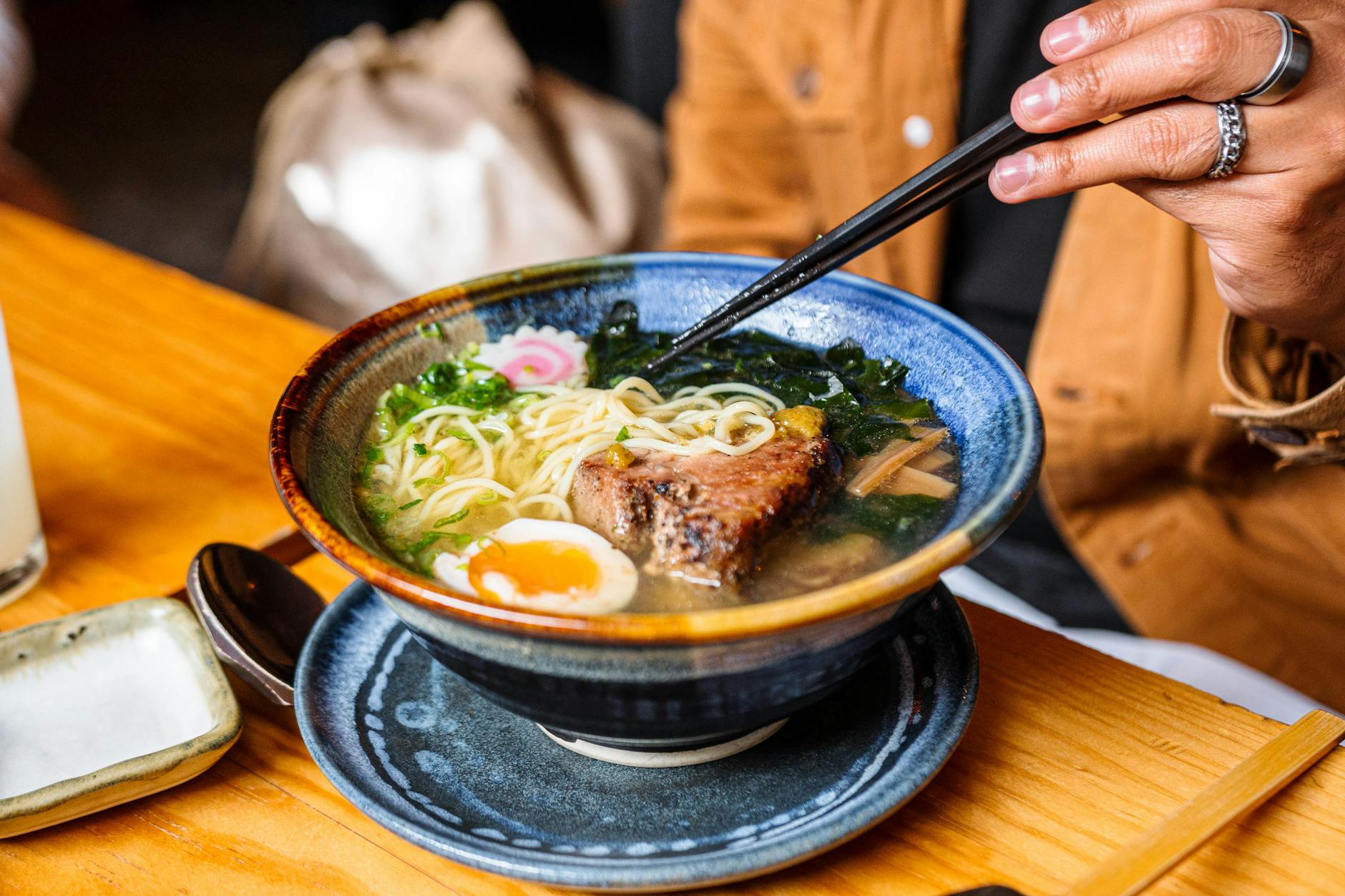
Ramen is Tokyo’s ultimate budget meal — a complete, filling, soul-warming bowl of noodles in rich broth for well under ¥1,000 at most shops. A basic bowl at the city’s best ramen shops runs ¥750-950, and even adding an egg (ajitama, ¥100-150) keeps you comfortably in budget.
How it works: most shops order through a ticket vending machine (kenbaiki) at the door. Insert money, press the button for your bowl (photos and English labels are increasingly common), hand the ticket to staff, and wait. Counter seating is the norm, which is perfect for solo diners. You’ll be in and out in 15-20 minutes — these shops are built for efficiency, not lingering.
Best budget ramen chains: Hidakaya (everywhere, basic ramen from ¥390), Kourakuen (another ubiquitous chain, bowls from ¥500), Fuunji (tsukemen near Shinjuku, around ¥850), and Ichiran (booth-style tonkotsu, ¥980 — just under the line). For where to find the truly great bowls, our full guide to cheap ramen and the best ramen in Tokyo goes shop by shop.
Gyudon & Rice Bowls (¥350-600)
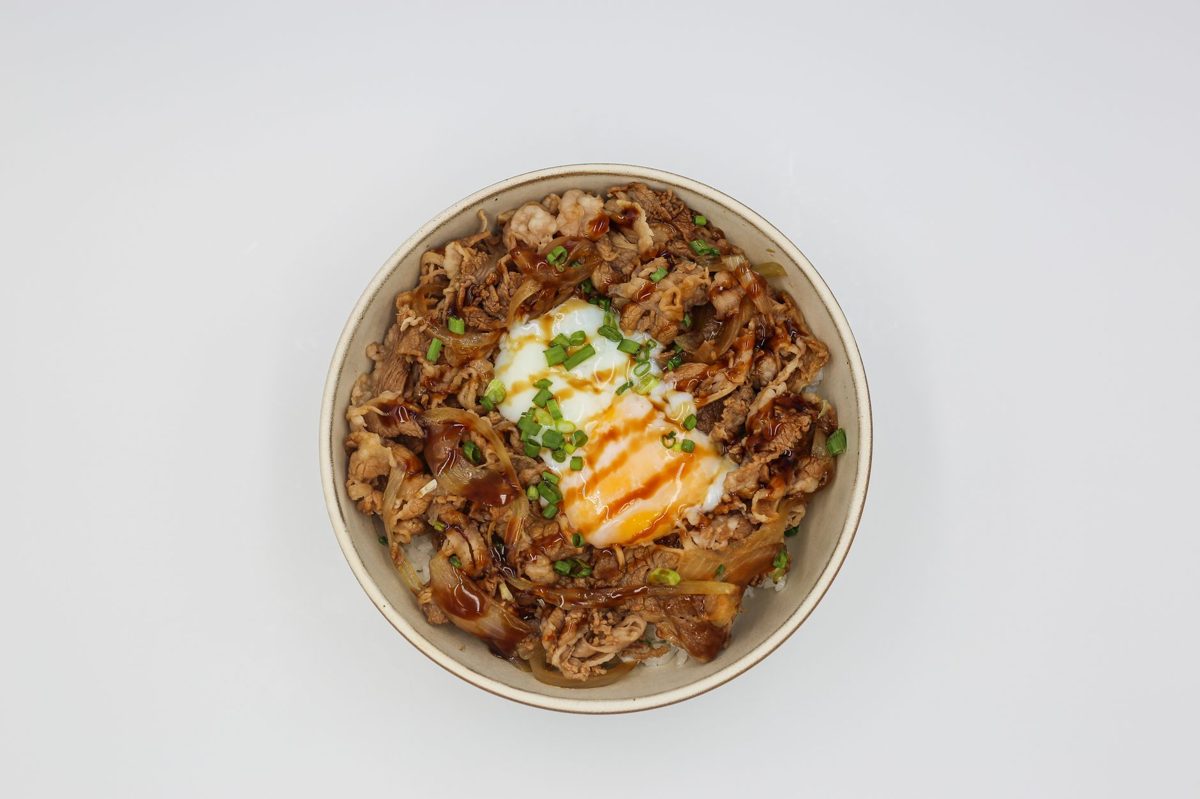
Gyudon (beef bowl) is arguably the cheapest genuinely satisfying meal in Tokyo. Thin-sliced beef simmered in a sweet-savory soy and dashi broth over steaming rice — simple, comforting, and available 24/7 across the city. A regular gyudon is just ¥400-500, and even a large with a side of miso soup stays under ¥700.
The big three gyudon chains: Yoshinoya (the original, going since 1899 — yoshinoya.com), Sukiya (the largest, with the most variety including curry don and seafood options), and Matsuya (free miso soup with every bowl, and a ticket machine at the door). All three are on practically every major street, open round the clock, and serve within two or three minutes. They also do other donburi: katsudon (breaded pork cutlet), oyakodon (chicken and egg), and tendon (tempura). Matsuya in particular is a budget traveler’s friend, because the machine ordering means no language barrier and no tipping confusion.

Japanese Curry Rice (¥500-900)
Japanese curry (kare raisu) is one of the country’s great comfort foods — thick, mildly spiced curry over rice, often with a breaded pork cutlet (katsu) or vegetables. It’s hearty, filling, and everywhere.
CoCo Ichibanya (“CoCo Ichi”) is the dominant chain, with hundreds of branches and a brilliantly customizable system: pick your rice amount (200-400g), spice level (1-10), and protein. A basic pork curry starts at ¥530, and a katsu curry with extras stays around ¥800-900. For something with more character, the Jimbocho neighborhood is famous for independent curry shops, and many station-area restaurants do a katsu curry set (curry, cutlet, salad, miso soup) for ¥800-950 at lunch.

Standing Soba & Udon (¥300-600)
Tachigui soba (standing soba shops) are Tokyo’s fastest, cheapest meal — a holdover from the Edo period, when merchants needed to eat between deals. No-frills counters serve buckwheat soba or wheat udon in hot broth, eaten standing, usually in under five minutes.
A basic kake soba (plain noodles in broth) starts at an almost unbelievable ¥300-350. Add a tempura fritter on top for ¥100-200 more, and a tempura soba comes to about ¥450-550 — one of the best food values in any major city anywhere. Look for these shops inside or beside JR stations; nearly every major one has at least one. Reliable chains include Fujisoba (open 24 hours, with photo menus), Komoro Soba, and Yude Taro. For a step up, Kanda Matsuya near Kanda Station serves handmade soba in a traditional room for ¥700-900 — not standing, but still a steal.


Conveyor-Belt Sushi (¥100-300 a plate)
Sushi has a reputation as a splurge, and the omakase counters absolutely are. But kaiten-zushi (conveyor-belt sushi) flips that completely. Plates circle past on a belt, each color-coded by price — often starting at ¥100-150 a plate (two pieces) — and you grab what you want, or order fresh from a touchscreen. Eat four or five plates and you’re full for ¥600-900.
The big chains do this remarkably well for the price. Sushiro and Kura Sushi are the giants, both with English touchscreens, plates mostly at ¥120, and gimmicks kids love (Kura’s capsule-toy reward for every five plates is genuinely fun). Hama Sushi is the cheapest of the lot, with many plates at ¥110 and free green tea powder at every seat. Genki Sushi, with its little delivery “trains,” is a Shibuya favorite. The trick to keeping the bill down: stick to the standard belt and touchscreen, skip the premium seasonal specials flagged on the menu, and tally your plate stack before you leave (the staff count the colors). It’s the easiest way to eat sushi in Tokyo on a budget without it being a letdown.
Convenience Store (Konbini) Food (¥300-800)
If you haven’t met Japanese konbini food, prepare to recalibrate. Tokyo’s three majors — 7-Eleven, Lawson, and FamilyMart — serve food that’s genuinely good, not “good for a convenience store.” Fresh stock arrives several times a day, standards are high, and the range is astonishing. For a budget traveler, the konbini is breakfast, a backup dinner, and a midnight snack all in one.
What to buy:
- Onigiri (rice balls): ¥120-200 each. Tuna mayo, salmon, and umeboshi (pickled plum) are the classics. Two onigiri plus a drink is a light meal under ¥500.
- Bento boxes: ¥400-700 for a full tray of rice, protein, and sides. The karaage (fried chicken) and hamburg-steak bentos punch well above the price.
- Sandwiches: ¥200-400. Impossibly soft white bread and generous fillings — the egg salad (tamago sando) is legendary, and Lawson’s is the cult favorite.
- Hot counter: fried chicken (FamilyMart’s “FamiChiki” is a rite of passage), nikuman (steamed buns), croquettes, and oden (simmered fishcake stew, especially good in winter) for ¥100-300 a piece.
- Pasta & noodle bowls: ¥350-600. Fresh pasta, yakisoba, and cold noodle salads, microwaved at the counter and ready to eat.
- Coffee: the ¥100-150 machine coffee at any konbini is genuinely good, and a fraction of a cafe.
The markdown trick: konbini and supermarkets discount bento and fresh items as they approach the sell-by time, slapping on discount stickers (waribiki) of 20-50% off. Evening, after about 8pm, is prime time. It’s not seen as cheap or shameful here — it’s seen as smart, and locals do it nightly.

Depachika at Closing Time (half-price gourmet)
This is the budget move locals don’t advertise. A depachika is the food hall in the basement of a department store — Isetan in Shinjuku, Mitsukoshi in Nihonbashi, Tobu in Ikebukuro — and it’s wall-to-wall gourmet: sushi platters, wagyu croquettes, French pastries, glossy bento, prepared salads, tempura. During the day it’s premium-priced. But in the last hour to ninety minutes before closing (most close around 8pm, so aim for 7-8pm), staff start marking down the perishable prepared foods, slapping on stickers that knock 20-50% off.
That ¥1,500 sushi set becomes ¥800. A beautiful department-store bento drops to ¥600. You’re eating food made to impress, at cheap-eats prices, often while watching the staff race to clear the cases. Bring cash, move quickly, and don’t be shy — a small crowd of in-the-know shoppers gathers for exactly this. Pair it with a konbini drink and you’ve got a genuinely impressive dinner for under ¥1,000.
Teishoku Set Meals (¥700-1,000)
Teishoku means “set meal” — a balanced lunch of a main dish, rice, miso soup, pickles, and often a small salad. It’s the Japanese prix fixe, and it’s how millions of Tokyo office workers eat every weekday.
Teishoku chains: Ootoya does home-style cooking (grilled fish, chicken, tofu) with excellent sets for ¥750-950. Yayoiken specializes in grilled fish and meat teishoku, ¥700-900, with free rice refills. Nakau (sister to Sukiya) runs teishoku alongside donburi. These places are clean, fast, and genuinely balanced — far healthier than the fast-food equivalent back home. For a more characterful version, small family-run shokudo near offices and universities serve lunch sets for ¥800-1,000 that rival restaurant cooking; look for handwritten menus in windows during the lunch rush (11:30am-1:30pm), when service is fast and prices are at their lowest.
Standing Bars & Budget Izakaya (¥350-1,000)
For dinner-plus-a-drink that still comes in cheap, Tokyo’s tachinomi (standing bars) and budget izakaya chains are unbeatable. Tachinomi are exactly what they sound like: no chairs, you stand at a counter or a barrel, order small plates and drinks, and pay as you go. They cluster under railway arches and around stations — the Shinbashi, Ueno (Ameyoko), and Yurakucho areas are legendary for them. Skewers, sashimi, and a beer run ¥200-400 each, and you can eat and drink well for ¥1,000-1,500 while rubbing shoulders with after-work locals. It’s also some of the best people-watching in the city.
Among the chains, Torikizoku is king: nearly everything — yakitori, sides, beer, highballs — is a flat ¥360-ish per item, so two items and a drink make a filling meal. For a sit-down feast, Saizeriya deserves its own mention: this Italian-Japanese chain charges almost comically little — pasta or doria (baked rice) for ¥300-500, appetizers from ¥200 — and a full meal with a drink lands well under ¥800. The food is simple but tasty, and it’s a cultural institution among students and young workers. Watami and Wara Wara offer all-you-can-drink (nomihodai) deals for ¥1,000-1,500 over 90 minutes if drinks are the priority.

Street Food & Market Snacks (¥100-500)
Tokyo isn’t a street-food city in the Southeast Asian sense, but there are excellent cheap snacks if you know what to grab:
- Takoyaki (octopus balls): ¥400-600 for 6-8 pieces. Crisp outside, molten inside, with sauce, mayo, and bonito flakes. Found at festivals, around Tsukishima, and at Gindaco branches.
- Taiyaki (fish-shaped pastry): ¥200-350. Filled with sweet red bean, custard, or seasonal flavors. Warm and satisfying.
- Yakitori: ¥100-200 a skewer from street vendors and tachinomi near stations. Three or four make a meal.
- Melon pan: ¥150-250. Sweet bread with a cookie-crust top, best warm from a bakery by a station exit.
- Depachika samples: the basement food halls hand out generous free samples. Not a meal plan exactly, but a tour of Isetan’s depachika on an empty stomach is an adventure in itself.

Eating Cheap by Neighborhood
Where you happen to be standing changes what the smart cheap meal is. A quick rundown of the areas you’re most likely to find yourself in:
Shinjuku
Wander into Omoide Yokocho (“Memory Lane,” also nicknamed Piss Alley) by the west exit for tiny yakitori and ramen counters where ¥1,000 buys skewers and a beer. The basement of any department store near the station does the closing-time markdown trick, and standing soba shops line the station passages for a ¥400 lunch.
Ueno & Asakusa
The Ameyoko market strip under the Ueno tracks is the budget eater’s playground: street snacks, cheap seafood bowls, kebab stands, and standing bars, all loud and cheap. In Asakusa, the streets around Sensoji sell ¥150 melon pan, menchi-katsu (fried meat patties), and ningyo-yaki cakes — graze your way through for a few hundred yen.
Shibuya & Harajuku
Touristy, so prices creep up, but the chains hold the line: Genki Sushi for conveyor sushi, Ichiran for ramen, and CoCo Ichi for curry are all here. Takeshita Street in Harajuku is snack territory — crepes (¥500-700) and cheap savory bites — though the best value is a few blocks off the main drag where locals actually eat.
Around Stations, Anywhere
The single most reliable rule in Tokyo: when in doubt, eat at or under a station. Eki-naka (inside-station) food courts and the shops under the tracks (gado-shita) are built for commuters, which means fast, cheap, and good. Almost every major station has standing soba, a gyudon chain, a konbini, and a bakery within a two-minute walk of the gates.
Where to Eat Cheap Breakfast
Breakfast trips up budget travelers because Western-style hotel breakfasts in Tokyo can run ¥2,000-3,000 — more than you’ll spend on lunch and dinner combined. Skip them. The cheap options are everywhere and genuinely good.
- Konbini, the default: onigiri, a tamago sando, a yogurt, and a ¥120 machine coffee comes to ¥400-600 and takes two minutes.
- Gyudon chains do breakfast sets: Yoshinoya, Sukiya, and Matsuya all serve a morning teishoku — rice, miso soup, grilled fish or egg — for ¥350-500 until around 10-11am.
- Cafe “morning sets”: the kissaten tradition means many cafes (and the chain Doutor) bundle a coffee with toast and a boiled egg for ¥400-500 if you arrive before 11am. Komeda’s Coffee throws in toast and egg free with any morning drink.
- Bakeries: station bakeries sell a curry pan or a melon pan for ¥150-250 — grab-and-go fuel before a day of sightseeing.
Supermarkets & Vending Machines
Two budget tools that travelers overlook. Supermarkets (look for Life, Maruetsu, Seiyu, or the basement food floors of department stores) are cheaper than konbini for the same prepared bento, sushi, and salads, and they run the same evening markdowns — often deeper, since they have more stock to clear. A half-price sushi platter at 8pm from a supermarket is one of the great Tokyo budget wins. If you have a kitchenette, a basket of fruit, yogurt, and ready meals here costs a fraction of eating out.
Vending machines are on practically every corner, and they’re priced fairly — ¥110-160 for a drink, hot or cold, including coffee, tea, and soup in winter. Buying water and drinks from machines rather than cafes quietly saves a few hundred yen a day, and the hot canned corn soup in January is an underrated comfort. Tap water in Tokyo is safe and free, so a refillable bottle cuts the cost further.
A Sample Daily Food Budget
Here’s what a full day of eating in Tokyo looks like for under ¥3,000 (about $20):
- Breakfast: two konbini onigiri + hot coffee = ¥400
- Lunch: ramen with an egg = ¥900
- Afternoon snack: taiyaki from a street vendor = ¥250
- Dinner: gyudon set with miso soup + salad = ¥650
- Total: ¥2,200 — with room left for a konbini dessert or a vending-machine drink.
On a slightly more generous ¥4,000-5,000 a day, you can fold in a teishoku lunch, a standing-bar dinner, and seasonal treats without ever feeling like you’re economizing. Food is one of the easier line items to control in Tokyo, and to see how it stacks up against transport, hotels, and attractions, our breakdown of Tokyo trip costs puts the whole budget in one place.
Money-Saving Tips for Eating in Tokyo
- Eat lunch, not dinner. Many restaurants serve the same dishes at lunch for 30-50% less. The “lunch set” (ranchi setto) is your best friend.
- Hunt the daily special (higawari). Teishoku places rotate a discounted daily set, often ¥700-800 for a meal that’d usually be ¥1,000-plus.
- Ticket machines mean cheaper. Shops that order by vending machine are almost always cheaper than table-service spots — and the system removes any tipping anxiety (tipping doesn’t exist in Japan anyway).
- Eat at stations. Eki-naka food courts and under-track shops are excellent and affordable. Tokyo Station’s underground Ramen Street has top bowls under ¥1,000.
- Chase the evening markdowns. Supermarkets and depachika discount prepared food, sushi, and sashimi by 20-50% in the last hour. Half-price sashimi at 8pm is astonishing value.
- Water and tea are free. Restaurants bring water or cold tea automatically and refill it without charge. You never need to order a drink, and nobody will think less of you for it — a small thing that quietly saves ¥300-500 a meal.
- Know the tax rule. Prices may be shown before or after Japan’s 10% consumption tax, so the figure on the menu isn’t always the final one — though takeaway food (including konbini items eaten outside) is taxed at the lower 8% rate. Tax-free shopping is for goods, not restaurant meals, so don’t expect a passport discount on lunch.
A Quick Cheap-Eats Glossary
A handful of words make ordering on a budget far smoother. Keep these in your back pocket:
- Teishoku / setto — a set meal; almost always the best value on the menu.
- Ranchi setto — lunch set, the discounted midday version of dinner dishes.
- Higawari — the daily special, usually the cheapest hot meal that day.
- Waribiki — discount; the magic word on those evening markdown stickers.
- Mochikaeri / tabe-koko — takeaway / eat-in; takeaway is taxed at the lower 8%.
- Okawari — a (often free) refill of rice; many teishoku chains offer it.
- Omori / nami — large / regular portion. Omori is frequently free or cheap.
- Kenbaiki / shokkenki — the ticket vending machine you’ll order from at most cheap shops.
None of it is essential — you can point and pay your way through Tokyo perfectly well — but recognizing “setto,” “higawari,” and “waribiki” alone will save you money at almost every meal.
Budget-Eating Mistakes to Avoid
- Eating in tourist-trap zones without looking. The restaurants with English touts and picture menus right outside Senso-ji or on Takeshita Street charge a premium. Walk two or three streets back and prices drop noticeably.
- Ordering drinks you don’t need. Free water is automatic. A ¥400 soft drink per person, twice a day, is ¥1,600 you didn’t have to spend.
- Paying hotel-breakfast prices. See above — almost any alternative is cheaper and more interesting.
- Assuming cards work everywhere. Many cheap shops, standing bars, and ticket machines are cash-only. Carry ¥5,000-10,000 in small notes and coins.
- Missing the lunch window. The same restaurant that’s ¥1,500 at dinner often does a ¥900 set at lunch. Plan your bigger meal for midday.
- Overlooking the depachika and supermarket at closing. If you’re out past 7pm, the markdown shelves are the best-value dinner in the city. Don’t default to a full-price restaurant.
One reassurance worth stating plainly: cheap does not mean risky here. Tokyo’s hygiene standards are exacting, the konbini and chain supply chains are tightly controlled, and even the humblest standing bar is clean. You can eat at the bottom of the price range for an entire trip without a second thought — which is exactly what makes the city such a gift for budget travelers.
Do not overlook bakeries. A Japanese pan-ya sells filled buns — curry, red bean, custard, fried noodles — for a couple of hundred yen each, and three of them make a filling lunch. Our Tokyo bakeries guide explains what to pick and the historic bakeries where these breads were invented.
For a hot meal in about two minutes, look for a standing soba counter near any station. Chains such as Fuji-soba sell a bowl for a few hundred yen from a ticket machine, and Marugame Seimen makes Sanuki udon in front of you cafeteria-style. If you have time for the real thing, our best soba and udon in Tokyo guide covers the historic noodle houses too.
Frequently Asked Questions
Is cheap food in Tokyo actually good?
Yes — and it’s what surprises most visitors. Japanese food culture doesn’t have the price-equals-quality assumption of many Western cities. A ¥800 bowl from a dedicated ramen shop can be a genuinely great meal; a ¥400 gyudon from Yoshinoya is honest, tasty comfort food; even konbini onigiri use good rice and fresh fillings. The floor for food quality in Tokyo is simply much higher than almost anywhere else.
Can I eat well as a vegetarian on a budget?
It’s more challenging but doable. Konbini stock vegetable onigiri, salads, and some noodle dishes; CoCo Ichibanya does a vegetable curry; soba and udon shops can serve noodles in a vegetable broth if you ask for “yasai dashi.” Be aware that many seemingly meat-free dishes use bonito-based dashi (fish stock). If strict vegetarianism matters, learn “watashi wa bejitarian desu” (I’m vegetarian) and “niku to sakana wa taberaremasen” (I can’t eat meat or fish).
Do I need to speak Japanese to order at budget restaurants?
Rarely. Most budget spots use ticket vending machines with photos, picture menus, or plastic food displays in the window — just point. Chains increasingly have English menus or tablet ordering with language options. The whole transaction is often wordless: buy a ticket, hand it over, eat, leave. Simple and stress-free.
How much should I budget for food per day in Tokyo?
A comfortable budget is ¥2,500-4,000 a day (about $17-27) eating the way locals do — konbini or a rice bowl for breakfast and lunch, and a ramen, teishoku, or standing-bar dinner. You can go lower, closer to ¥1,500, by leaning on konbini markdowns and standing soba, or higher if you want a sit-down dinner each night. Either way, food rarely has to be the expensive part of a Tokyo trip.