Tokyo Travel Planning · Guide №161
Luggage Storage in Tokyo: Coin Lockers, Ecbo Cloak and Takkyubin
Where to leave bags in Tokyo and what it costs in 2026: coin lockers and why they fill up, booking apps like ecbo cloak, hotel storage, courier delivery between cities and airports, and the Shinkansen big-suitcase rule.
目次 — Contents
- Tokyo luggage options compared
- Coin lockers: cheap, everywhere, and often full
- Luggage storage apps: ecbo cloak, Radical Storage and Bounce
- Staffed baggage counters at the big stations
- Hotel luggage storage
- Takkyubin: sending your suitcase ahead
- Airport luggage delivery
- The Shinkansen oversized baggage rule
- Luggage storage for common situations
- What not to do with your luggage
- Frequently Asked Questions
- Photo Credits
This article contains advertising. Our booking links are routed through a partner that adds commission tracking automatically, so if you book through one we earn a commission from the provider, at no extra cost to you. It never affects what we recommend. Affiliate disclosure
The best luggage storage Tokyo offers depends on the size of your bag and how long you need to lose it. Coin lockers at stations cost about ¥400 to ¥1,000 a day but fill up fast; booking apps such as ecbo cloak charge ¥400 to ¥700 a day and guarantee a space; and takkyubin courier delivery sends a suitcase to your next hotel for a few thousand yen.
This guide compares every option, with 2026 prices: how coin lockers really work and where they fail, the booking apps, staffed counters at the big stations, hotel storage, courier delivery between cities and to the airports, and the Shinkansen oversized-baggage rule that catches out visitors with large suitcases. For the rest of your trip logistics, see our Tokyo travel planning guide.
Tokyo luggage options compared
| Option | Price (2026) | Fits a large suitcase? | Can you book? | Best for |
|---|---|---|---|---|
| Coin lockers | About ¥400–1,000 per day by size | Only the largest lockers, and not always | No | Small bags, short stops, early mornings |
| ecbo cloak | ¥400/day bag, ¥700/day suitcase | Yes | Yes, in the app | Guaranteed space near where you are going |
| Radical Storage, Bounce | From a few hundred yen a day; roughly ¥700–850 in central spots | Yes | Yes | Similar to ecbo, with different partner shops |
| Staffed station counters | Several hundred to about ¥1,200 per item, by size | Yes | Sometimes | Big suitcases at Tokyo Station during opening hours |
| Your hotel | Usually free | Yes | Just ask | Before check-in, after check-out |
| Takkyubin courier | Roughly ¥2,000–3,700 per suitcase; more for same day | Yes | Yes | Moving between cities, airport runs, travelling light |
The short version: for a small backpack, use a coin locker. For a suitcase you need to leave for a few hours, book ecbo cloak or a similar app. For moving between hotels or cities, send the suitcase by courier and travel with a day bag.
Coin lockers: cheap, everywhere, and often full
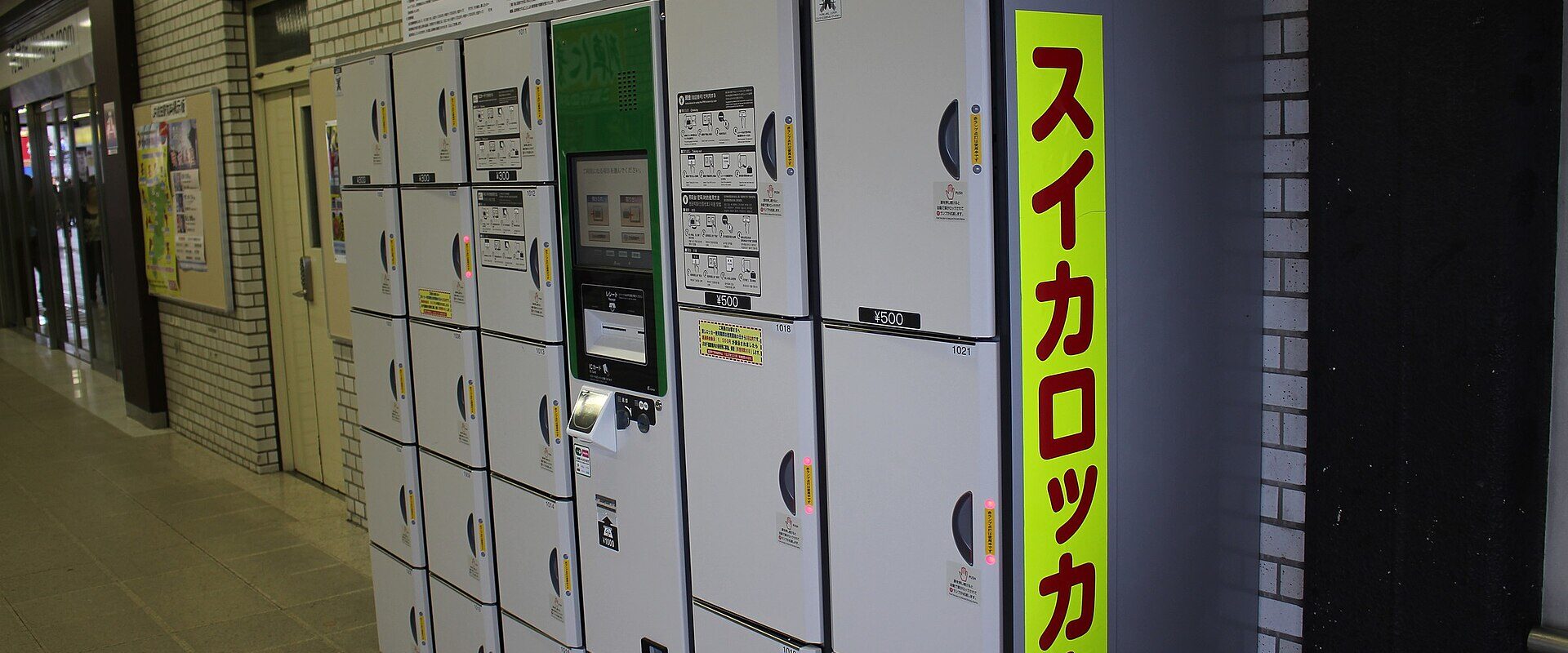
Almost every train station in Tokyo has coin lockers, as do many subway stations, department stores, shopping malls and big attractions. They are cheap, they need no booking, and for a small bag they are the easiest answer in the city.
Sizes and prices
| Locker size | What fits | Typical price per day |
|---|---|---|
| Small | Handbag, small daypack, shopping | About ¥400–500 |
| Medium | Large backpack, small carry-on | About ¥500–700 |
| Large | Cabin-size wheeled case, some medium suitcases | About ¥700–1,000 |
| Extra large (few) | Some full-size suitcases | Around ¥1,000 |
Prices vary by station and have crept upward in recent years, so treat these as a guide. The important column is the middle one. A full-size checked suitcase, the 28-inch kind most long-haul travellers carry, often will not fit in anything but the rare extra-large locker, and those are the first to go.
How to use a coin locker
- Find an empty one. Doors with a key in the lock, or a green light on IC card lockers, are free.
- Put your bag in and close the door.
- Pay. Older lockers take ¥100 coins; many newer ones have a central touch screen that accepts IC cards such as Suica or Pasmo, and some take cash or credit cards.
- Keep the key or the receipt. On IC card lockers, your card becomes the key, so you must tap the same card to open it. On PIN lockers, the receipt shows the code. Photograph it.
- Collect before the time runs out. If you go over, you pay the extra days when you open the door.
Two catches. First, a “day” on most lockers is a calendar day, which rolls over overnight rather than 24 hours after you drop your bag, so a bag left at 21:00 and collected at 09:00 can cost two days. Second, most lockers have a maximum of three days. After that, staff empty them and move the contents to a station lost property office, where getting your bag back involves paperwork, a fee and some patience.
Our Suica vs Pasmo guide explains the IC cards, which make lockers far easier because you do not need coins.
The real problem: availability
At the big stations, large lockers fill by mid-morning, especially at Tokyo, Shinjuku, Shibuya and Ueno, and at weekends and holidays. It is common to watch travellers dragging suitcases from bank to bank while every light glows red.
- Arrive before 09:00 for the best chance of a large locker at a major station.
- Look away from the main exits. Lockers down a corridor or on an upper level are often empty while the ones by the ticket gates are full.
- Try the next station along. One stop away from a tourist hub, lockers are often wide open.
- Check a locker finder. The Coin Locker Navi website maps lockers by station, with sizes and prices for many of them.
- Do not rely on lockers for a big suitcase on a tight schedule. Book one of the apps below instead.
Big stations are also mazes. Our Tokyo Station guide and Shinjuku Station guide explain the layouts, which helps when you are hunting for a locker with a suitcase in tow.
Luggage storage apps: ecbo cloak, Radical Storage and Bounce
These services turn shops, cafes, hotels, karaoke bars and even some temples into bag drops. You book a space in an app, pay online, walk in, show your booking, and the staff put your bag in a back room. For large suitcases they are usually a better answer than lockers, because the space is guaranteed.
ecbo cloak
ecbo cloak is the Japanese-run service and the most established in Tokyo. It charges ¥400 per day for a bag with a longest side under 45 cm, and ¥700 per day for a suitcase with a longest side of 45 cm or more. Partner locations include shops, cafes, hotels and spaces near stations, and the app works in English. Separately, 7-Eleven has begun offering booked bag storage at hundreds of its branches, which is worth checking if there is one near you.
Radical Storage and Bounce
These international platforms work the same way, with hundreds of partner locations in Tokyo each. Radical Storage advertises Tokyo prices from about ¥490 a day, with central locations such as Ginza around ¥700 and spots near Tokyo Station from about ¥850. Bounce advertises a lower headline starting price and more than a thousand locations across the city. Both usually include some damage protection in the booking.
Which to use
Open two apps and compare the location, not just the price. A shop two minutes from your station beats a cheaper one fifteen minutes away down a hill, particularly if you are dragging a heavy case. Check the partner’s opening hours carefully: a cafe that closes at 18:00 is no use if your evening train leaves at 20:00.
Staffed baggage counters at the big stations
Tokyo Station has staffed baggage services on the Yaesu side, including Sagawa Express’s Hands-Free Travel counter, which stores bags for the day and can also forward them to hotels and airports. Staffed counters take oversized and awkward items that lockers cannot, and prices run from a few hundred yen to around ¥1,200 per item depending on size. The catch is opening hours: most close in the early evening, so they suit a day of sightseeing, not a late-night departure.
Other big stations and department stores have similar counters or cloakrooms. Ask at the station’s information desk or tourist information centre.
Hotel luggage storage
This is the most overlooked option. Almost every hotel in Tokyo, from capsule hotels to five-star properties, will hold your bags for free before check-in and after check-out, usually for the whole day. Many will keep them for a day or two if you are coming back, or if you are heading off on a side trip and returning to the same hotel.
- Arrived at 07:00 on a red-eye? Drop your bags at the hotel before exploring, then check in later.
- Evening flight on your last day? Leave bags at the hotel, sightsee, come back, collect them and go to the airport.
- Going to Hakone or Nikko overnight? Ask your Tokyo hotel to keep your big case and travel with a small bag.
The one downside is geography. If your hotel is in Asakusa and your train leaves from Shinjuku, going back for the bag can eat an hour. That is when a courier or an app near the departure station makes more sense.
Takkyubin: sending your suitcase ahead
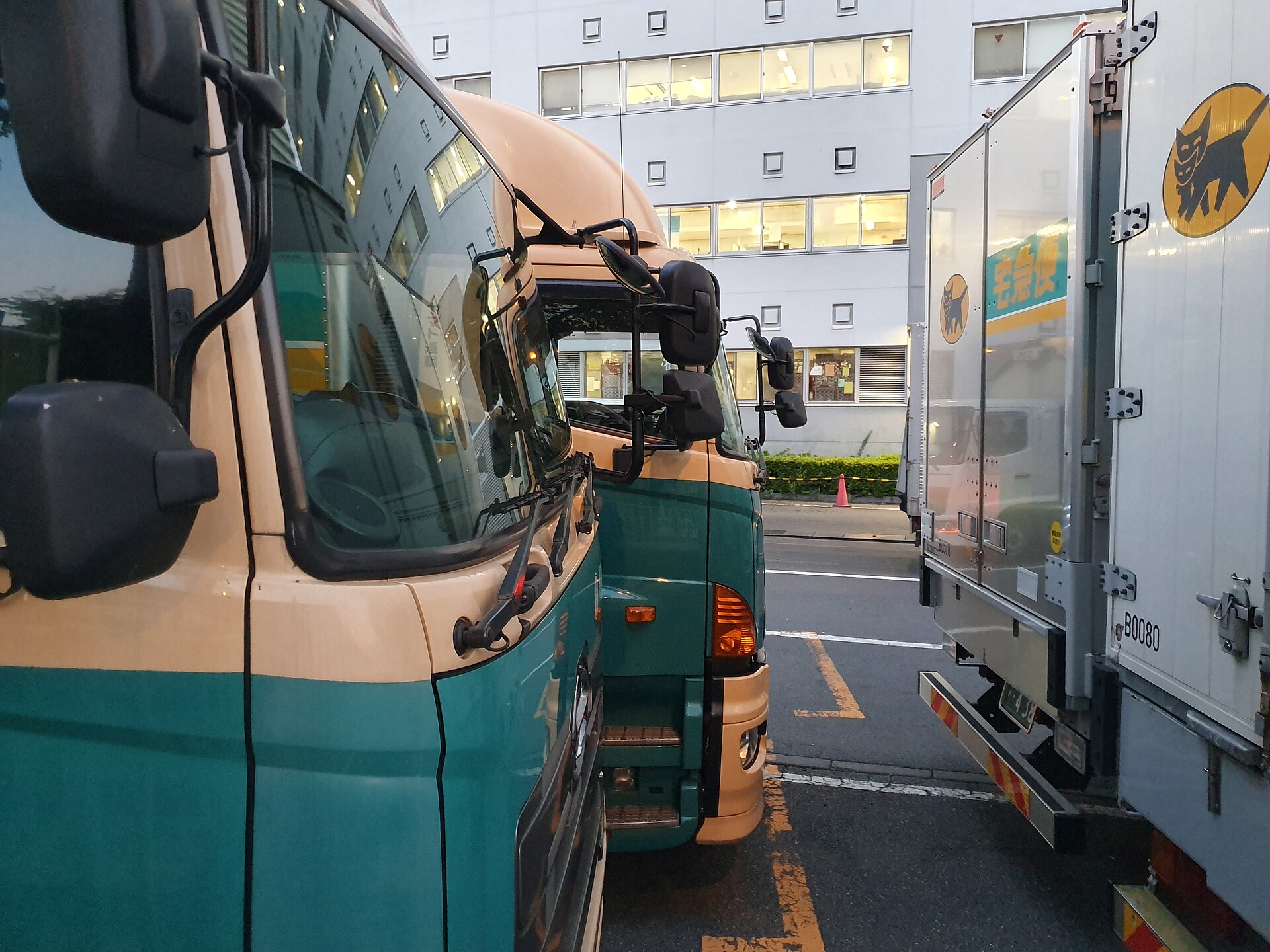
Takkyubin, door-to-door courier delivery, is the secret weapon of travelling in Japan. Instead of hauling a suitcase through stations and onto crowded trains, you hand it over at your hotel, and it arrives at your next hotel, usually the next day. Yamato Transport, the company with the black cat logo, calls its service TA-Q-BIN; Sagawa Express and Japan Post offer similar services.
How to send a bag
- Ask your hotel’s front desk. Most hotels in Tokyo handle takkyubin for guests, give you the form and call the courier. This is by far the easiest method.
- Fill in the delivery slip with the name and address of the destination hotel, the name the booking is under and the date you arrive. Staff can help.
- Tell the destination hotel a bag is coming. Most are used to it.
- Pay at the desk, usually in cash or by card.
Many convenience stores also accept parcels for one of the major couriers, and courier offices take walk-ins, but hotel desks remove the language problem.
Costs and timing
Price depends on the size of the bag (length plus width plus height) and the distance. As a guide, a standard suitcase from Tokyo to Kyoto or Osaka costs roughly ¥2,300, and delivery is next day for most of Honshu. Send your bag at least a day before you travel, and two days if the destination is far or the next day is a holiday.
The honest downside: you are without the bag for a night. Pack an overnight bag with medication, chargers, a change of clothes and toiletries. If you are going to Hakone for one night on the way to Kyoto, a common and clever approach is to send the big suitcase straight to Kyoto and take only the small bag to the ryokan. Our Hakone guide covers that route.
Airport luggage delivery
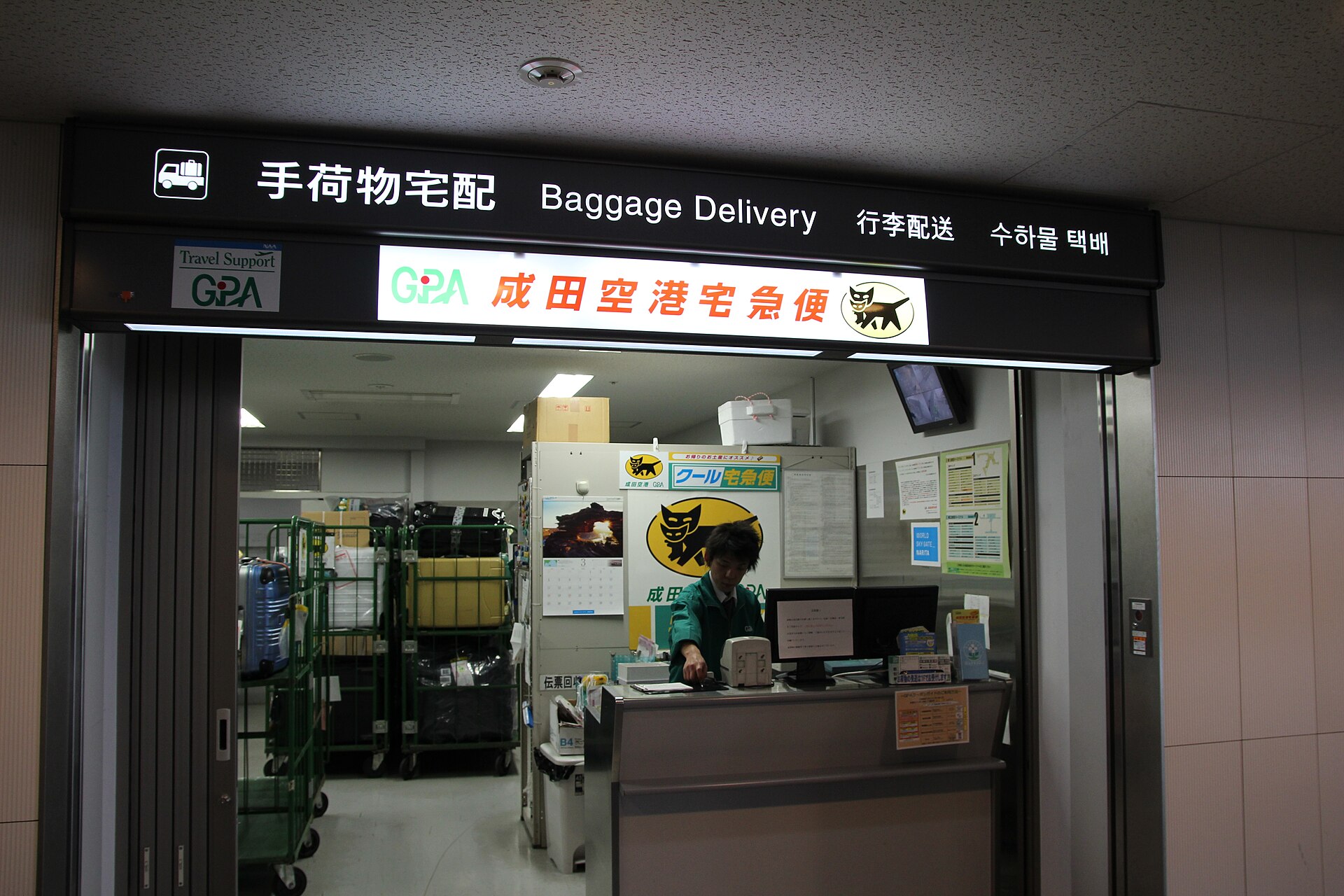
Both Tokyo airports have courier counters in the arrivals halls, where you can hand over suitcases as soon as you land and take the train into the city with only a day bag.
- Next-day delivery. From Narita or Haneda to a hotel in Tokyo’s 23 wards, Yamato’s standard service costs roughly ¥3,290 to ¥3,680 per suitcase in 2026, which is the delivery fare by size plus a ¥660 airport counter fee.
- Same-day delivery. Available from the airports if you drop the bag early enough, for considerably more. Yamato lists around ¥5,780 for a large suitcase from Haneda to the 23 wards.
- To the airport. On the way home, send the suitcase from your hotel to the airport a couple of days before your flight, and collect it at the counter before check-in. Check the deadline for your flight when you book.
At Haneda, Yamato’s counters are in Terminals 1 and 3, and bags sent to the airport for collection go to Terminal 3. At Narita there are counters in Terminals 1 and 2; Terminal 3 passengers use Terminal 2’s counter.
Is it worth it? From Haneda, which is 15 to 30 minutes from central Tokyo, often not: the Keikyu line and monorail are easy with a suitcase outside rush hour. From Narita, an hour or more out, and especially if you are arriving on a weekday morning into rush-hour trains, it can be the best ¥3,500 of your trip. See our Narita to Tokyo guide and Haneda to Tokyo guide.
The Shinkansen oversized baggage rule
This rule surprises a lot of visitors. On the Tokaido, Sanyo, Kyushu and Nishi-Kyushu Shinkansen, any bag whose length, width and height add up to more than 160 cm, and up to a maximum of 250 cm, needs a reservation for a “seat with an oversized baggage area”. That is a normal seat in the last row of a car, with the right to use the space behind it.
- The reservation costs nothing extra beyond a normal reserved seat.
- If you board with an oversized bag and no reservation, you pay a ¥1,000 handling fee on top of your ticket.
- Most large checked suitcases are over 160 cm. A typical 28-inch case measures about 75 × 50 × 30 cm, which adds up to 155 cm before wheels and handles. Measure yours.
- The rule does not apply to JR East Shinkansen lines heading north from Tokyo, although space is still limited.
Book the oversized-baggage seat when you reserve your ticket online or at the ticket office, and book early at busy times, because each car has only a few. Or, simpler still, send the suitcase by takkyubin and ride with a backpack. Our Tokyo Shinkansen guide covers tickets and seat choices.
Luggage storage for common situations
| Situation | Best option | Why |
|---|---|---|
| Early arrival, hotel check-in at 15:00 | Leave bags at the hotel | Free, and you do not have to come back to a station |
| Late check-out, evening flight | Hotel storage, or airport delivery sent the day before | No bags while sightseeing on your last day |
| Day trip on the way between hotels | Takkyubin to the next hotel | Travel with a day bag only |
| A few hours in Shibuya or Shinjuku with a suitcase | ecbo cloak or similar, booked in advance | Lockers for big cases are usually full |
| Backpack for an hour or two | Coin locker | Quickest and cheapest |
| Long layover | Airport lockers or baggage counters, or leave bags checked through | Avoid carrying bags into the city; see our Tokyo layover guide |
What not to do with your luggage
- Do not take a big suitcase onto rush-hour trains. Between about 07:30 and 09:30 on weekdays, central lines are packed. You will struggle, and so will everyone around you.
- Do not leave bags unattended anywhere in a station, even for a minute. Japan is safe, but unattended bags are treated as a security concern.
- Do not store valuables in lockers. Passports, cash, laptops and medication stay with you.
- Do not forget the three-day locker limit if you are leaving Tokyo for a side trip.
- Do not overpack in the first place. Tokyo has excellent laundries, convenience stores and cheap shops. Our Tokyo packing list helps you travel lighter.
Frequently Asked Questions
How much are coin lockers in Tokyo?
Coin lockers in Tokyo cost about ¥400 to ¥1,000 per day depending on size, with small lockers at the low end and large suitcase lockers near ¥1,000. Most charge by calendar day and have a three-day maximum, after which contents are removed. Many newer lockers accept Suica or Pasmo cards instead of coins.
Where can I store a large suitcase in Tokyo?
The most reliable options for a large suitcase are your hotel, which usually stores bags free before check-in and after check-out, or a booking app such as ecbo cloak, which charges ¥700 per day for a suitcase and guarantees a space. Large coin lockers exist but are often full at major stations by mid-morning.
Do coin lockers in Tokyo fit suitcases?
Large coin lockers fit cabin-size and some medium suitcases, but many full-size checked suitcases do not fit anything except the few extra-large lockers. Those fill quickly at busy stations such as Tokyo, Shinjuku and Shibuya, so book a luggage storage app if you need a guaranteed space for a big case.
How does luggage delivery work in Japan?
Ask your hotel front desk to send your suitcase by takkyubin courier to your next hotel. You fill in a slip with the destination address and your arrival date, pay, and the bag usually arrives the next day. A suitcase from Tokyo to Kyoto or Osaka costs roughly ¥2,300. Pack an overnight bag, because you will be without the suitcase for a night.
Do I need to reserve a seat for luggage on the Shinkansen?
On the Tokaido, Sanyo, Kyushu and Nishi-Kyushu Shinkansen, bags with total dimensions over 160 cm need a free reservation for a seat with an oversized baggage area. Without one, you pay a ¥1,000 fee. The rule does not apply to JR East Shinkansen lines, but luggage space is still limited.
Photo Credits
- IC card coin lockers at a Japanese station – スイカロッカー 2014 (16305010372) by sodai gomi, CC BY 2.0, via Wikimedia Commons.
- Kuroneko Yamato delivery trucks in Ariake, Tokyo – Kuroneko Yamato trucks in Ariake at ヤマト運輸東京主管支店 by Syced, CC0, via Wikimedia Commons.
- Baggage delivery counter at Narita Airport – 成田空港宅急便 (6801188522) by Hector Martin, CC BY-SA 2.0, via Wikimedia Commons.