Tokyo Travel Planning · Guide №154
Tokyo Layover Guide: What You Can See in 6, 10 or 24 Hours
The honest arithmetic of a Tokyo layover — immigration, trains and getting back — and realistic plans for 6, 10 and 24 hours from Haneda and Narita, including the temple town ten minutes from Narita.
目次 — Contents
This article contains advertising. Our booking links are routed through a partner that adds commission tracking automatically, so if you book through one we earn a commission from the provider, at no extra cost to you. It never affects what we recommend. Affiliate disclosure
A Tokyo layover is worth leaving the airport for if you have at least six hours at Haneda or eight at Narita, can enter Japan without a visa, and are happy with a short, focused visit. Haneda is fifteen minutes by train from the city; Narita is an hour away, but has a superb temple town ten minutes from the terminal.
This guide does the arithmetic honestly — how much time immigration, trains and getting back actually take — then gives realistic plans for 6, 10 and 24 hours from each airport, plus what to do with bags, money and data. For the full airport transfer options, see our Haneda and Narita guides.
First: which airport, and can you leave it?
Tokyo has two international airports, and for a layover they could hardly be more different.
| Haneda (HND) | Narita (NRT) | |
|---|---|---|
| Distance to central Tokyo | About 15 km | About 60 km |
| Fastest train | Keikyu to Shinagawa, 11–14 min, ¥327 by IC card; Monorail to Hamamatsucho from 13 min, ¥520 | Skyliner to Ueno, 41 min, about ¥2,500; Narita Express to Tokyo Station, about an hour, ¥3,070 |
| Minimum layover to go into Tokyo | About 6 hours | About 8–9 hours |
| Best short-layover alternative | Terminal observation deck and shops | Naritasan Shinshoji temple, 10 minutes away |
Entry requirements
To leave the airport you must pass through immigration and customs, which means you need to be allowed to enter Japan. Citizens of many countries, including the United States, the United Kingdom, most of Europe, Canada and Australia, can currently enter for short stays without a visa. If your nationality needs a visa, you may be able to get special transit landing permission in some circumstances, arranged through your airline, but do not count on it. Our Japan visa requirements guide explains the rules, and it is worth checking them again before you fly.
Things that rule a layover out
- Changing airports. If you arrive at Narita and leave from Haneda, or the other way round, the transfer alone takes one and a half to two hours each way. Unless your layover is very long, use the time for the transfer.
- Separate tickets. If your flights are not on the same booking, you will need to collect and re-check bags, which adds time and risk.
- Checked bags that do not go through. Ask at check-in whether your luggage is tagged to your final destination.
- Very late or very early hours. A layover between midnight and 06:00 leaves you in a city whose trains have stopped. That is a job for an airport hotel, not sightseeing.
The layover arithmetic
The mistake most people make is to count the whole layover as time in Tokyo. Here is where the hours really go.
| Stage | Haneda | Narita |
|---|---|---|
| Deplane, immigration, customs, get a transport card | 1–1.5 hours | 1–1.5 hours |
| Travel into the city | 20–45 minutes | 45–75 minutes |
| Travel back | 20–45 minutes | 45–75 minutes |
| Be back at the airport before departure | At least 2 hours | At least 2–2.5 hours |
| Total overhead | About 4–4.5 hours | About 5–6 hours |
Take that overhead away from your layover and what is left is your real time in Tokyo. A six-hour Haneda layover gives you roughly two hours in the city. A six-hour Narita layover gives you almost nothing in Tokyo itself, which is why the Narita plan below does not go there.
Immigration queues vary a great deal. Arriving at the same time as several long-haul flights can mean an hour in the queue on its own; arriving early in the morning may mean fifteen minutes. Filling in the Visit Japan Web immigration and customs forms online before you fly, and having the QR codes ready on your phone, speeds up the process noticeably.
Before you leave the airport
- Get a transport card. An IC card such as Suica, including the Welcome Suica designed for visitors, pays for trains, subways, convenience stores and many cafes, and saves buying tickets for every journey. Our Suica vs PASMO guide explains the options.
- Get some cash. Card acceptance is good, but small temples, food stalls and older restaurants may be cash only. Airport ATMs accept foreign cards; ¥10,000 is plenty for a layover.
- Get connected. An eSIM installed before you fly is easiest, or pick up a data SIM or pocket wifi at the airport. Maps and train times are much easier with data. Our SIM and wifi guide compares them.
- Store your bags. Coin lockers in the arrivals area take carry-on bags, and staffed baggage storage counters take larger items. Do not drag a suitcase through Tokyo’s stations. City-centre coin lockers cost ¥400 to ¥1,000 a day and fill up by mid-morning at busy stations, so the airport is the better place to leave things.
- Note the time of your last safe train back, working backwards from when you must be at the airport, and set an alarm.
Haneda layover plans
Haneda is one of the most convenient big airports in the world for a layover. The Keikyu Line and Tokyo Monorail both run from the international terminal, and Keikyu trains continue directly onto the Toei Asakusa subway line, so you can reach Asakusa without changing trains on many services.
6 hours at Haneda: Zojoji and Tokyo Tower
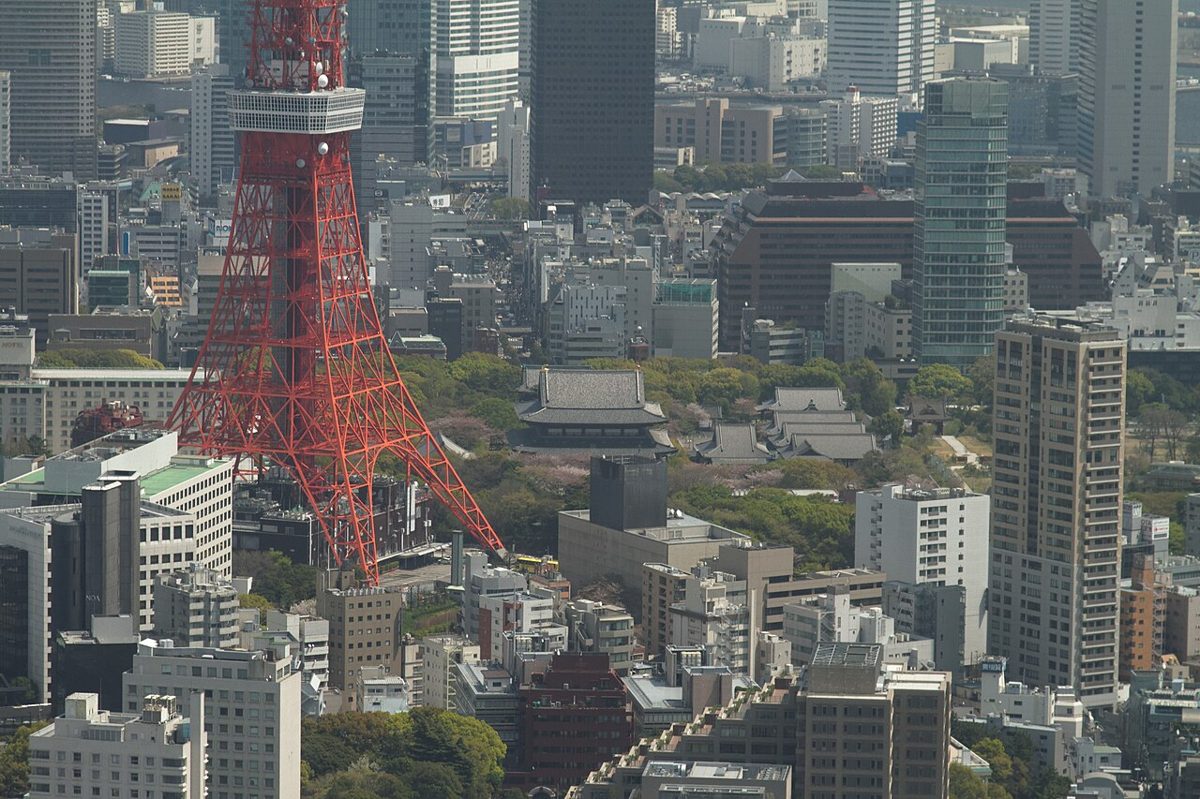
With around two hours in the city, go for a single, close sight that looks like Tokyo. Take the Tokyo Monorail from the international terminal to Hamamatsucho, about fifteen minutes. From there, walk about fifteen minutes west to Zojoji, a large Buddhist temple and the burial place of several Tokugawa shoguns, with Tokyo Tower rising directly behind the main hall. It is one of the classic Tokyo photographs, and entry to the temple grounds is free.
If you have spare time, go up Tokyo Tower, or simply walk around its base and back. Grab a bowl of noodles or a konbini snack on the way, and head back to Hamamatsucho with plenty of margin. The whole trip is almost entirely above ground and very hard to get lost on. Our Skytree vs Tokyo Tower guide explains whether the observation deck is worth the money.
10 hours at Haneda: Asakusa and the old city
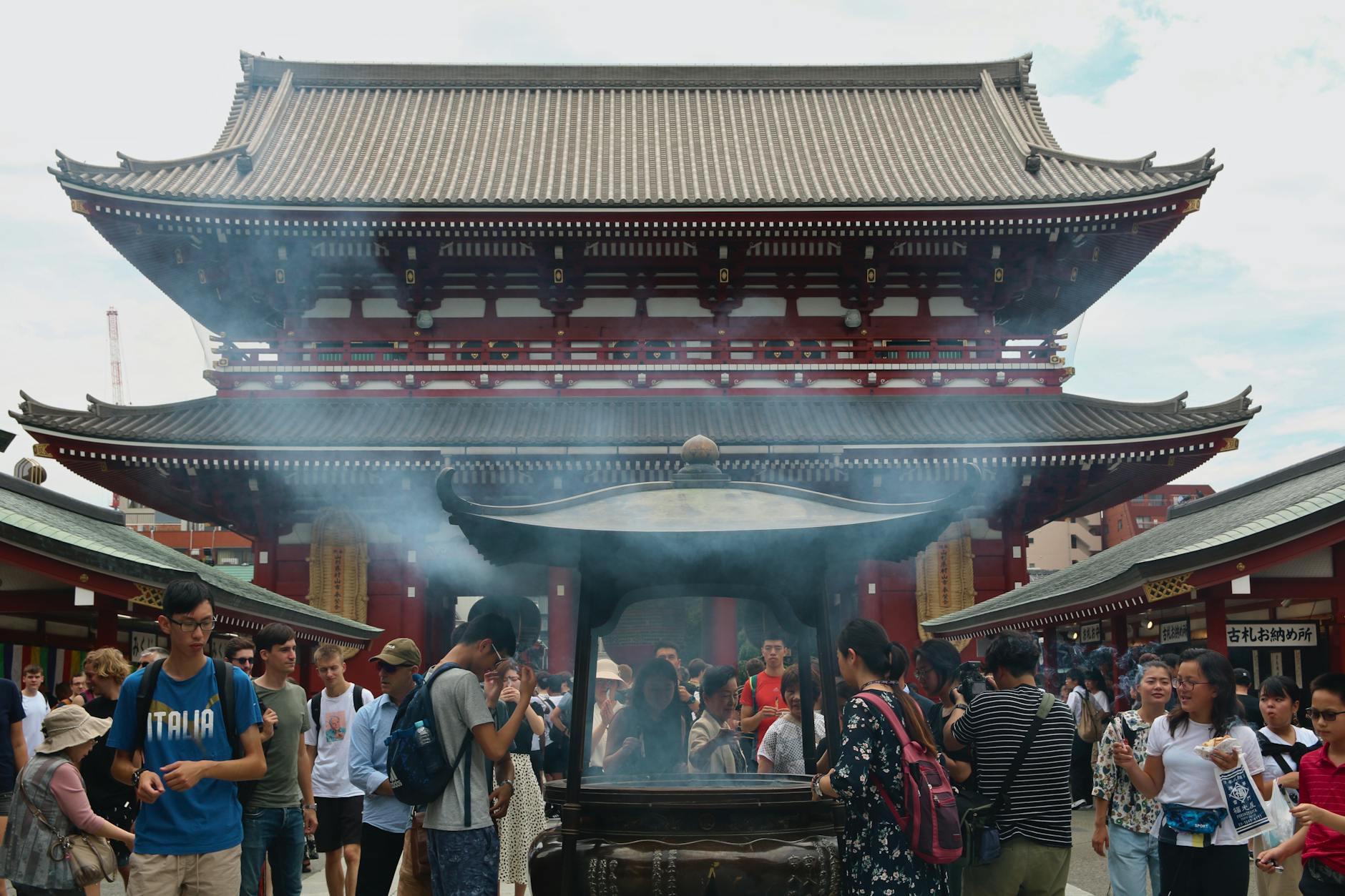
With four to five hours in the city, go to Asakusa. Take the Keikyu Line towards Asakusa; many trains go straight through, taking around 40 minutes. Walk through the Kaminarimon gate and down Nakamise shopping street to Sensoji, Tokyo’s oldest temple, then explore the backstreets around it.
From there, choose one add-on depending on energy and weather:
- Sumida river and Skytree — walk across the river for the view of the Asahi building and Skytree, or go up Skytree itself, one stop away.
- Ueno Park — a short subway ride on the Ginza line, with museums, a pond and a very local weekend atmosphere.
- A long lunch — tempura, soba or sushi in Asakusa’s older restaurants, which is as good a use of a layover as any sight.
Our Sensoji guide and Asakusa guide cover the area in detail.
10 hours at Haneda, second option: Shibuya
If you would rather see modern Tokyo, go to Shibuya instead: Keikyu to Shinagawa, then the JR Yamanote line, around 40 to 45 minutes altogether. Cross the scramble, walk up to Harajuku and Meiji Shrine, and time your return for the evening lights. For the view from above, Shibuya Sky costs ¥2,700 before 15:00 and ¥3,400 later, with timed entry. See our Shibuya Crossing guide for the best free vantage points.
Narita layover plans
Narita is a long way from Tokyo, and that shapes everything. The good news is that the airport’s nearest town has one of the finest temple complexes in the Kanto region, and a short Narita layover can be more rewarding than a rushed dash into the city.
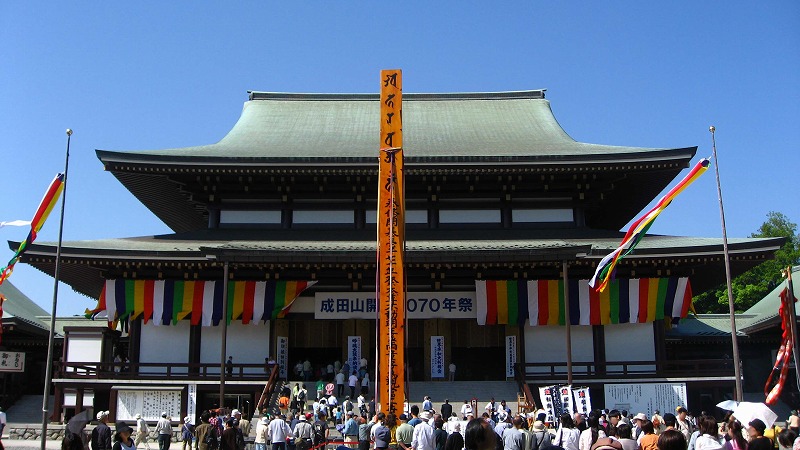
6 hours at Narita: Naritasan Shinshoji
Naritasan Shinshoji is a large and very active Buddhist temple founded over a thousand years ago, with a great main hall, a three-storey pagoda, and extensive gardens and woodland behind it. It is one of the most visited temples in Japan, and it is right next to the airport.
Take a Keisei or JR train from the airport to Narita station, a journey of about seven to ten minutes and a few hundred yen. From either station, walk down Omotesando, the old approach street, which takes around fifteen minutes and is the best part of the visit for many people: wooden shops, pickles, crackers, sweets and the famous eel restaurants, whose cooks prepare unagi in the shop windows.
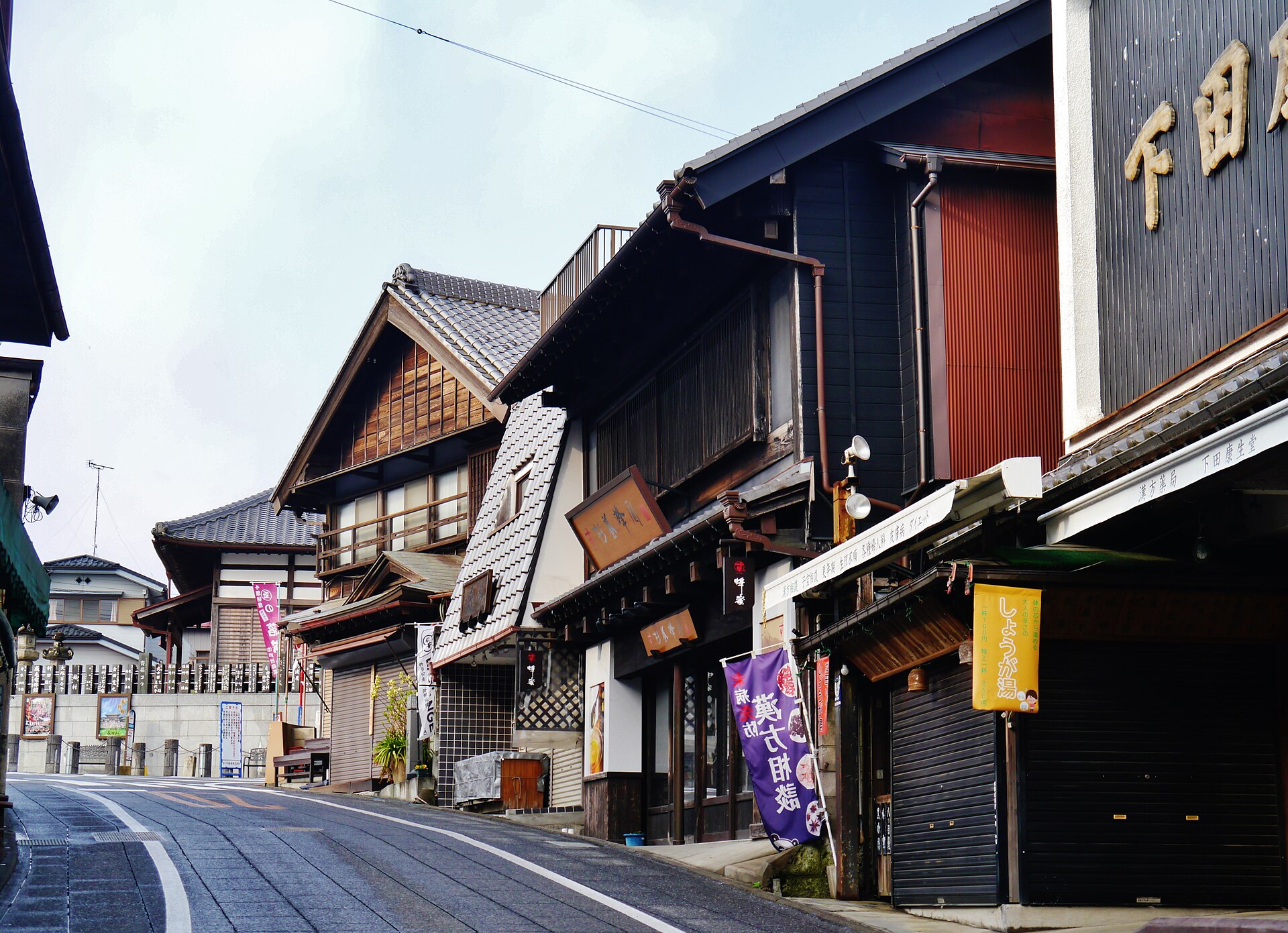
Allow at least three hours for the round trip from the terminal. With four hours, add lunch and the garden. It is quieter, cheaper and more relaxing than heading into Tokyo, and the eel lunch is a genuine highlight.
10 hours at Narita: Ueno and Asakusa
With ten hours, you get about four hours in the city. Take the Keisei Skyliner to Ueno, 41 minutes. From Ueno, it is a short subway ride on the Ginza line to Asakusa for Sensoji and Nakamise, or you can stay in Ueno for the park, the Ameyoko market street and the museums. Both are on the side of the city nearest Narita, which saves precious travel time.
Keisei’s cheaper, slower trains also run from Narita towards Asakusa. They are a good option if you are budget-minded and have time to spare, but on a tight layover the Skyliner’s speed is worth the extra cost.
If you only have 8 hours at Narita
Eight hours is the awkward middle. It is enough to reach Ueno and Asakusa, but you will spend most of your city time checking the clock. Unless you are set on seeing Tokyo itself, Naritasan is the more enjoyable choice. If you do go into the city, Ueno and Asakusa are the only sensible targets.

24 hours in Tokyo
A full day and night is enough for a genuine first taste of Tokyo. Book accommodation near your arrival airport’s rail line, so the evening and the morning both flow in the right direction: around Ueno for Narita, or around Shinagawa or Hamamatsucho for Haneda. A capsule hotel is an inexpensive, very Tokyo way to spend the night — see our capsule hotel guide.
A sample 24-hour plan
- Morning: breakfast at the Tsukiji Outer Market — tamagoyaki, sushi, grilled seafood — then a short walk into Ginza. See our Tsukiji guide.
- Late morning: the subway to Asakusa for Sensoji and Nakamise.
- Afternoon: across the city to Harajuku and Meiji Shrine, then walk down to Shibuya.
- Sunset: Shibuya Sky or another rooftop view, or simply the view of the crossing.
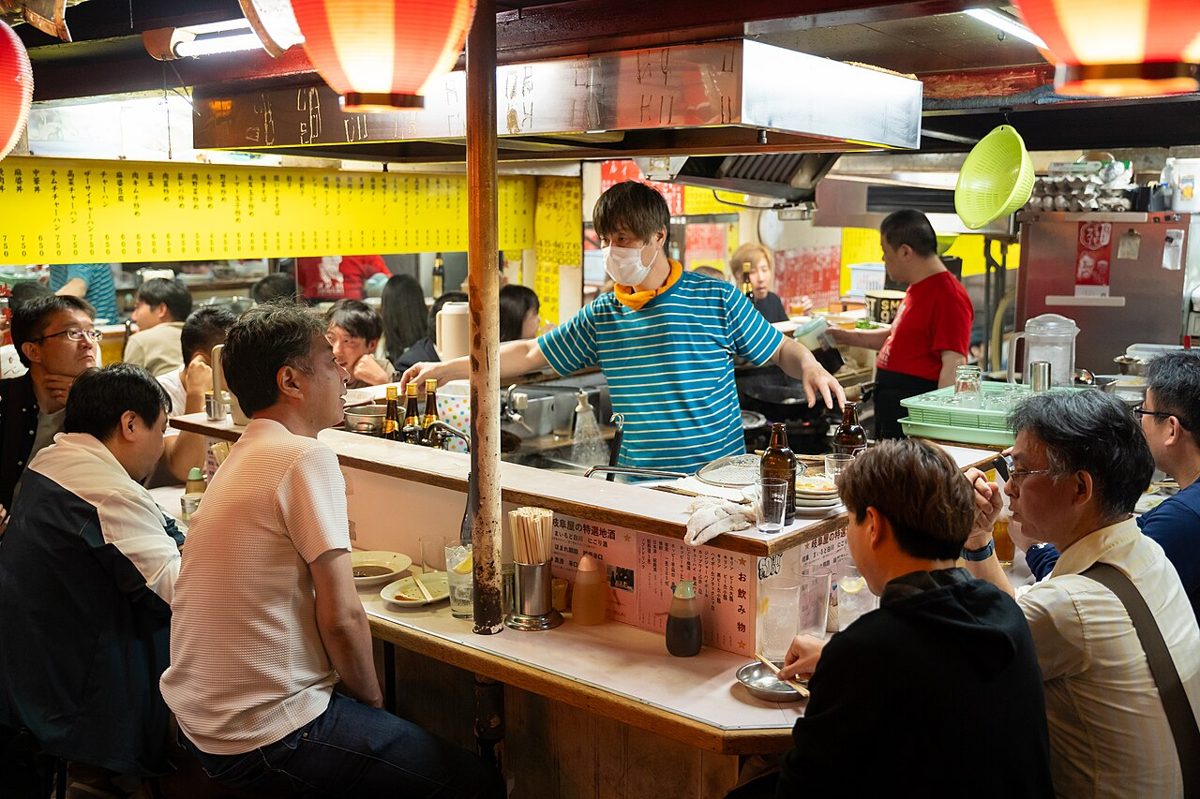
- Evening: Shinjuku for dinner in Omoide Yokocho’s tiny yakitori bars and a drink in Golden Gai. Our Shinjuku guide covers both.
- Next morning: an early walk, a bakery breakfast near your hotel, and back to the airport with generous margin.
This is a lot. Cut anything that stops being fun. For a deeper plan for a slightly longer stop, our Tokyo weekend itinerary spreads a similar route over two days.
Overnight layovers
An overnight layover — landing in the evening and leaving the next morning — is really a hotel stay. The choice is between the airport and the city.
- At Haneda, a hotel attached to or near the terminals means a short walk from arrivals and back. The international terminal building is open around the clock, which also makes it a reasonable place to wait out a very late or very early connection.
- At Narita, there are hotels near the airport with shuttle buses, and a capsule-style hotel at the airport itself for short, cheap stays. Narita town is also a pleasant, quiet place to spend the night, with an early walk to the temple before your flight.
- In the city, only worth it if you land early enough in the evening to enjoy it. Arriving at 22:00 and leaving at 08:00 is not a Tokyo visit; it is a long commute.
Trains stop around midnight and start again around 05:00. Late-night taxis and airport buses exist, but they are expensive and limited, so plan to be back at your hotel before the last trains.
Matching the plan to the time of day
The same ten hours can be very different depending on when they fall, because Tokyo opens and closes on its own timetable.
Morning arrivals
A layover that starts early is the best kind. Temples open early: the grounds of Sensoji are open around the clock and the main hall opens at 06:00 (06:30 in the winter months), so Asakusa before 09:00 is calm and beautiful, and entirely free. Tsukiji Outer Market is a morning place too, busiest from early morning and winding down by early afternoon, and many of its shops close on Sundays and some Wednesdays. What will not be open yet: department stores and most shops, which start at 10:00 or 11:00, and observation decks, which generally open around 09:00 to 10:00.
Afternoon and evening arrivals
From mid-afternoon, lean towards the parts of Tokyo that come alive later. Shibuya, Shinjuku and the view from any high building are at their best from dusk, and restaurants and izakaya fill up from around 18:00. Temple buildings close in the late afternoon, though you can still walk the grounds of big ones like Sensoji, which are lit at night and very atmospheric. Keep an eye on the last trains back to the airport, which run until around midnight.
With children
Layovers with children need more margin, not less. Immigration with a tired family is slower, toilets and snacks take time, and a child who falls asleep on the train back is not a child who wants to walk through a terminal. Pick the shortest, simplest plan in this guide for your airport, halve the ambitions, and consider the observation decks and the airport’s own restaurants as a perfectly good outcome. Our Tokyo with kids guide has more ideas if the stop is long enough for a proper outing.
Is a Tokyo layover worth it?
It depends on the numbers, and the honest answer is sometimes no.
| Layover | Haneda | Narita |
|---|---|---|
| Under 5 hours | Stay in the airport | Stay in the airport |
| 5–7 hours | Yes: Zojoji and Tokyo Tower | Yes: Naritasan Shinshoji |
| 8–9 hours | Yes: Asakusa or Shibuya | Naritasan is better; Ueno and Asakusa if you must |
| 10–12 hours | Yes: a proper half-day | Yes: Ueno and Asakusa |
| 18–24 hours | Yes: a full day and night | Yes: a full day and night |
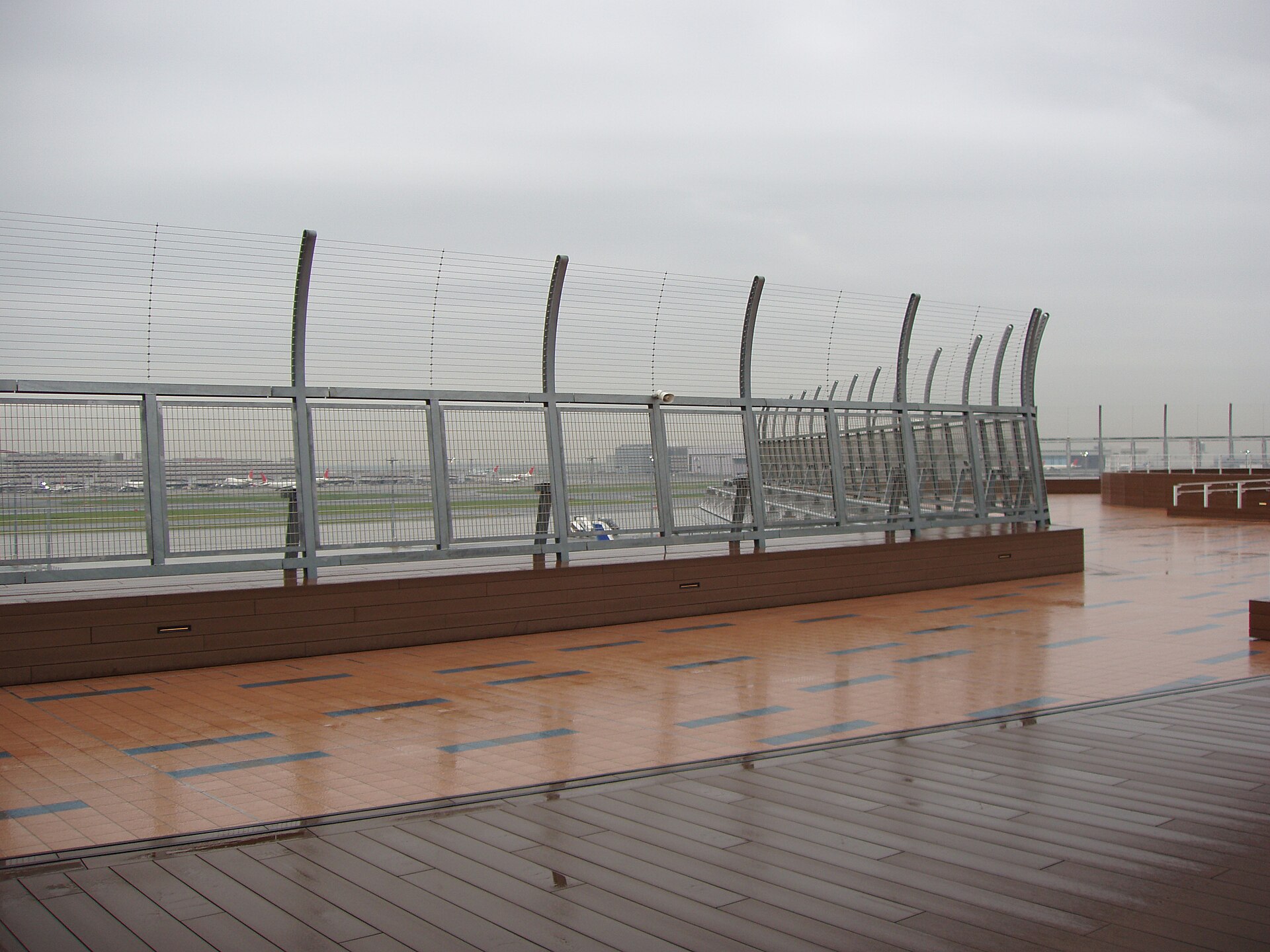
If your layover is too short, both airports are good places to wait. Haneda’s international terminal has an Edo-themed shopping and dining area and a free observation deck over the runways. Narita has observation decks, plenty of restaurants and, in several terminals, rest areas and showers. Neither is a hardship.
A layover checklist
- Confirm you can enter Japan without a visa, or have the right permissions.
- Check that your bags are checked through to your final destination.
- Complete Visit Japan Web before you land.
- Install an eSIM or plan to buy data at the airport.
- Know the exact time you need to be back at the airport, and your last train.
- Leave bags at the airport.
- Carry your passport — you need it for your onward flight, and for tax-free shopping.
- Keep ¥10,000 in cash and a charged IC card.
- Choose one area and stick to it.
For everything else about planning a Tokyo trip, start with our Tokyo travel planning guide.
Bags are the thing that ruins most layovers. Leave checked luggage checked through if you can, and if you cannot, use the airport’s lockers or baggage counters rather than dragging a suitcase onto the train. Our guide to luggage storage in Tokyo compares lockers, storage apps and courier delivery.
Frequently Asked Questions
Is 6 hours enough for a layover in Tokyo?
At Haneda, yes, just. After immigration, travel and returning two hours before departure, you have roughly two hours in the city — enough for Zojoji temple and Tokyo Tower, about fifteen minutes away by monorail plus a short walk. At Narita, six hours is not enough to reach Tokyo comfortably, but it is enough to visit Naritasan Shinshoji temple, about ten minutes from the airport by train.
Can I leave the airport during a layover in Tokyo?
Yes, if you are allowed to enter Japan. You must pass through immigration and customs, so citizens of visa-exempt countries can leave the airport freely for short visits. Travellers who need a visa should check the rules in advance; special transit landing permission is possible in some cases but not guaranteed. Make sure your bags are checked through to your final destination.
How long does it take to get from Haneda Airport to central Tokyo?
The Keikyu Line reaches Shinagawa in about 11 to 14 minutes for ¥327 with an IC card, and the Tokyo Monorail reaches Hamamatsucho in as little as 13 minutes for ¥520. Asakusa is around 40 minutes by Keikyu through trains, and Shibuya and Shinjuku roughly 40 to 50 minutes with a change.
What can I do near Narita Airport on a layover?
Visit Naritasan Shinshoji, a large and historic Buddhist temple in Narita town. Take a Keisei or JR train from the airport to Narita station, about seven to ten minutes, then walk around fifteen minutes down the Omotesando approach street, which is lined with traditional shops and eel restaurants. Allow at least three hours for the round trip.
Where can I leave my luggage during a Tokyo layover?
At the airport. Both Haneda and Narita have coin lockers for smaller bags and staffed baggage storage counters for larger luggage in the arrivals areas. Station coin lockers in central Tokyo cost ¥400 to ¥1,000 a day but fill up by mid-morning at busy stations, and dragging a suitcase through the city wastes precious layover time.
Photo Credits
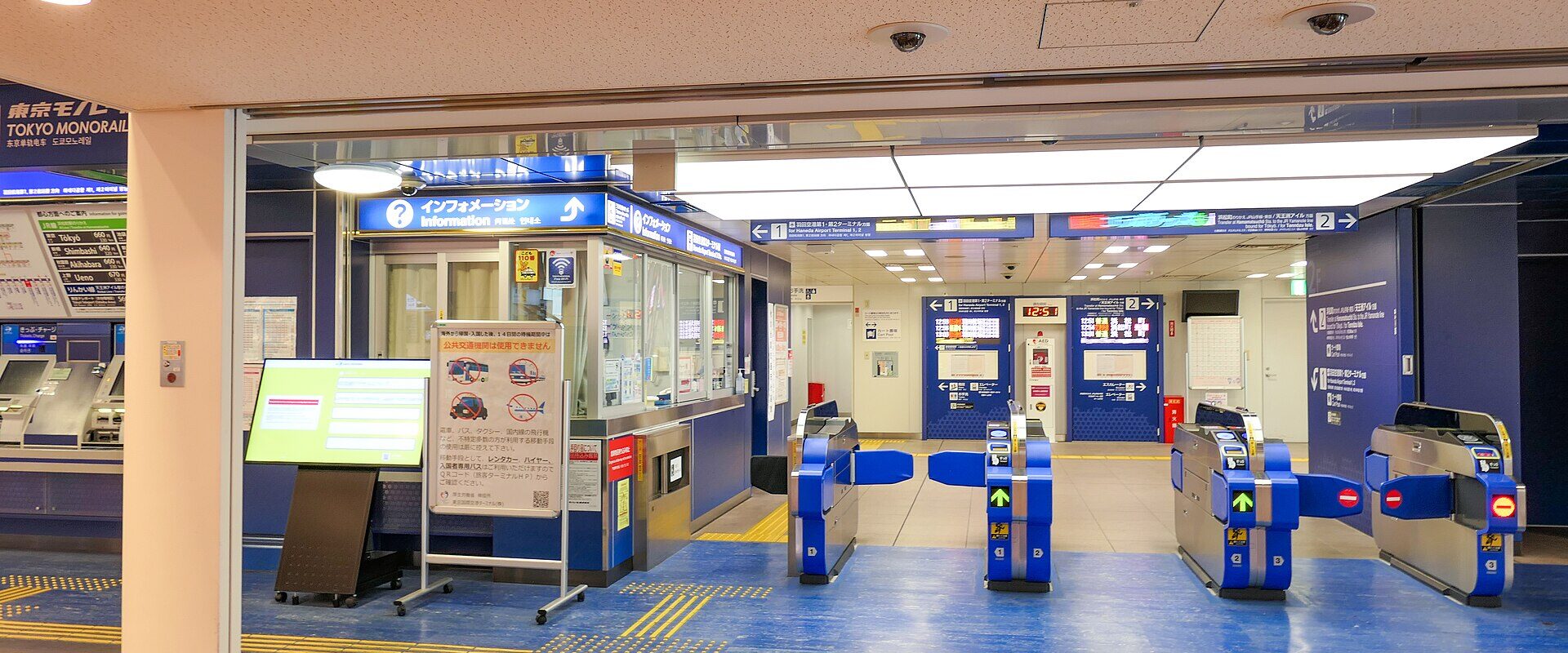
- Keikyu Line ticket gates at Haneda Airport Terminal 3 station – Haneda-Airport-T3-STA Keikyu-Gate by MaedaAkihiko, CC BY-SA 4.0, via Wikimedia Commons.
- The observation deck at Haneda’s international terminal – Haneda Airport International Terminal(3) – panoramio by ikm, CC BY-SA 3.0, via Wikimedia Commons.
- The Great Main Hall of Naritasan Shinshoji – Naritasan-Shinshoji-Temple.Great-Main-Hall by Hoku-sou-san at Japanese Wikipedia, CC BY-SA 3.0, via Wikimedia Commons.
- Omotesando approach street in Narita – Narita Altstadt 1 by Zairon, CC BY-SA 4.0, via Wikimedia Commons.