Tokyo Travel Planning · Guide №160
Accessible Tokyo: Wheelchair Travel, Step-Free Routes and Barrier-Free Sights
How accessible Tokyo really is for wheelchair users and travellers with limited mobility, low vision or hearing loss: the free subway ramp service, Shinkansen and taxis, hotels, sights and the gaps.
目次 — Contents
- The honest overview
- Getting around by subway and train
- Shinkansen and longer journeys
- Taxis and private transfers
- Where to stay
- Barrier-free sights: what is easy and what is not
- Eating out
- Toilets
- For blind and low-vision travellers
- For Deaf and hard-of-hearing travellers
- Non-visible disabilities and the Help Mark
- A sample step-free day
- Planning tips that make the biggest difference
- Frequently Asked Questions
- Photo Credits
This article contains advertising. Our booking links are routed through a partner that adds commission tracking automatically, so if you book through one we earn a commission from the provider, at no extra cost to you. It never affects what we recommend. Affiliate disclosure
Accessible Tokyo is closer to reality than most visitors expect. Every Toei subway station has at least one step-free route from street to platform, station staff will bring a ramp and radio ahead to your destination for free, and most big sights have lifts and accessible toilets. The hard parts are small restaurants, older hotels, hills, gravel and crowds.
This guide is written mainly for wheelchair users and travellers with limited mobility, with notes for blind, low-vision, Deaf and hard-of-hearing visitors and people with non-visible conditions. It covers how the trains really work, Shinkansen and taxis, where to stay, which sights are easy and which are not, and the problems that guidebooks tend to leave out. It is not a substitute for checking your own specific needs with each venue, and we say clearly where our information stops. For general trip planning, start with our Tokyo travel planning guide.
The honest overview
Japan passed its barrier-free laws decades ago, and Tokyo’s preparations for the 2020 Olympics and Paralympics pushed investment further. The result is a city where the big infrastructure is often better than in London, Paris or New York, and where the fine detail can still stop you at a single step.
| Area | How good is it? | What to know |
|---|---|---|
| Subway and trains | Very good | Step-free routes at almost every station; staff ramp service is routine. Crowds at rush hour are the real barrier. |
| Shinkansen | Good | Wheelchair spaces can be booked, including online on the Tokaido line; staff assist boarding. |
| Taxis | Mixed | Ramp-equipped taxis are common, but availability on demand is not guaranteed and drivers vary in confidence. |
| Major sights | Good | Lifts, ramps, accessible toilets, often wheelchair loans. |
| Pavements | Good in new areas, mixed in old ones | Curb cuts are common; many small streets have no pavement but are smooth. |
| Hotels | Mixed | Accessible “universal” rooms exist but are few and small; book early. |
| Restaurants and bars | Weak | Many are up or down narrow stairs, with tiny interiors and no accessible toilet. |
Getting around by subway and train
Step-free routes
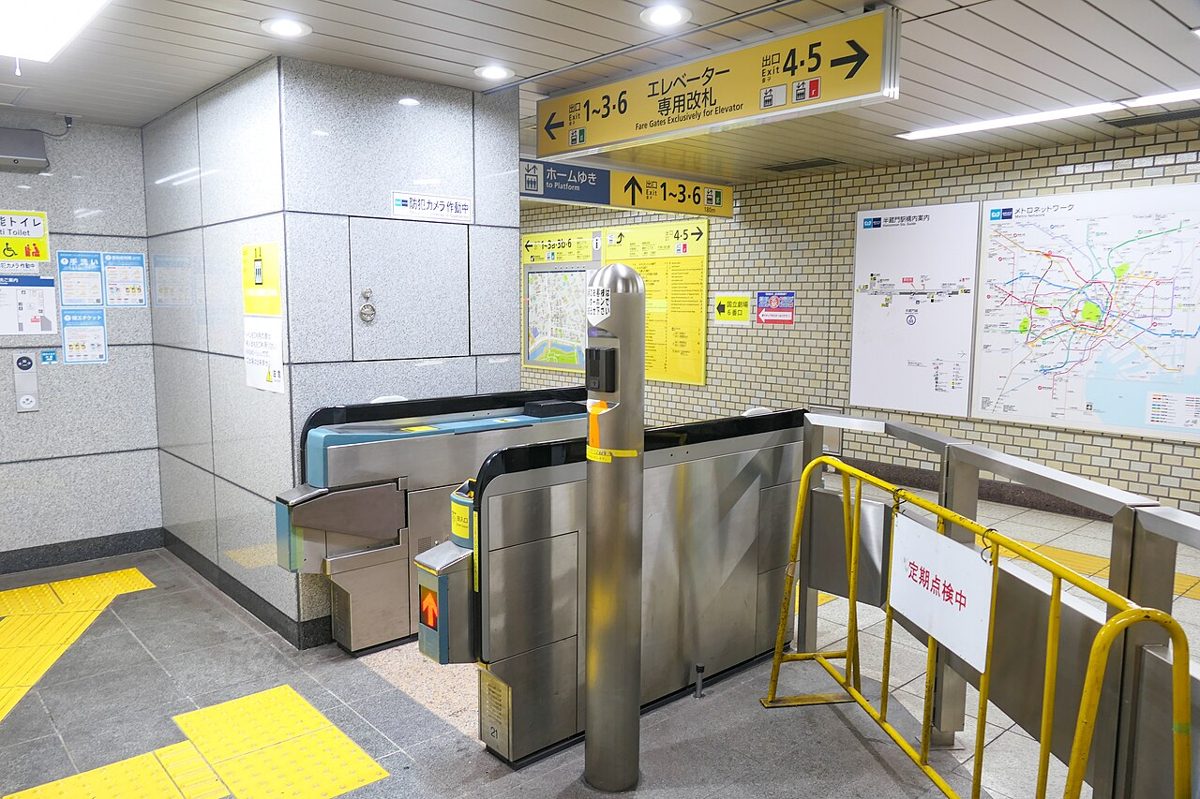
Toei, which runs the Asakusa, Mita, Shinjuku and Oedo subway lines, has installed lifts at every one of its stations so that there is at least one step-free route between street level, the ticket gates and the platforms. Every row of gates has at least one wide gate, and every train has a designated wheelchair area. Tokyo Metro, which runs the other nine lines, has near-complete coverage too and publishes an English barrier-free search on its website, where you can look up each station’s lifts, wheelchair-compatible escalators and accessible toilets.
The catch is the phrase “at least one route”. In large stations the step-free route may involve a lift at one end of the platform and a long walk to a specific exit, and it may not be the exit you want. Look up the station before you travel, note the exit number that has the lift, and allow extra time. Our Tokyo Metro guide explains how the lines and exits are numbered.
How the ramp service works
This is the part that surprises first-time visitors most, and it works remarkably well.
- Go to the staffed window at the ticket gates and tell them your destination station. A card or phone note with the station name helps.
- A staff member brings a portable ramp, walks you to the platform, and helps you board, usually into a carriage near the lift at your destination.
- They phone ahead. When the train arrives, a colleague is waiting at your door with another ramp.
- If you are changing lines, staff at the transfer station meet you and hand you on.
The service is free, and staff do it many times a day. It adds a few minutes at each end, because you will usually wait for the next train while the call is made. JR East and the private railways offer similar help. Portable ramps are available at every Toei station, and some stations also have stair lifts for older sections.
Many visitors find the gap between platform and train small enough to manage without a ramp on newer lines, especially where platform screen doors have been installed. If you are confident, you can simply ride. If you want certainty, ask.
Rush hour is the real obstacle
Between roughly 07:30 and 09:30 and again from about 17:30 to 19:30 on weekdays, central lines such as the Yamanote, Chuo and Tozai are packed so tightly that staff may advise waiting for a later train. Plan to travel between 10:00 and 16:00 where possible. Weekends are busier around shopping districts but much calmer on commuter routes.
Paying fares
An IC card such as Suica or Pasmo means you never need to use a ticket machine, many of which are mounted at standing height. Japanese railways offer discounted fares for holders of Japanese disability certificates. Whether a foreign disability card is accepted varies by operator and by the member of staff, so do not rely on it.
Shinkansen and longer journeys
Shinkansen trains have wheelchair spaces, usually in one or two specific cars, with an accessible toilet nearby. On the Tokaido and Sanyo lines towards Kyoto and Osaka, you can reserve a wheelchair-accessible seat online through the Smart EX service, by choosing it from the seat type menu, as well as by phone or at a ticket office. For JR East lines heading north from Tokyo, check the current online options or book at a JR ticket office in person.
On the day, arrive early and go to the staffed gate. Staff will escort you to the platform, bring a folding ramp and hand you to the train crew, who show you to your space, and they will phone ahead so that someone meets you at the other end. Allow at least 20 to 30 minutes before departure at a big station like Tokyo. Our Shinkansen guide covers tickets and which trains to take.
From the airports
Both Haneda and Narita are modern, step-free airports with accessible toilets and staff assistance. From Haneda, the Keikyu line and the Tokyo Monorail both have lifts and staff ramp service, and the journey is short. From Narita, the trip into the city is longer, so a pre-booked accessible taxi or airport transfer can be worth the cost after a long flight. See our guides to Haneda and Narita airport transfers.
Taxis and private transfers
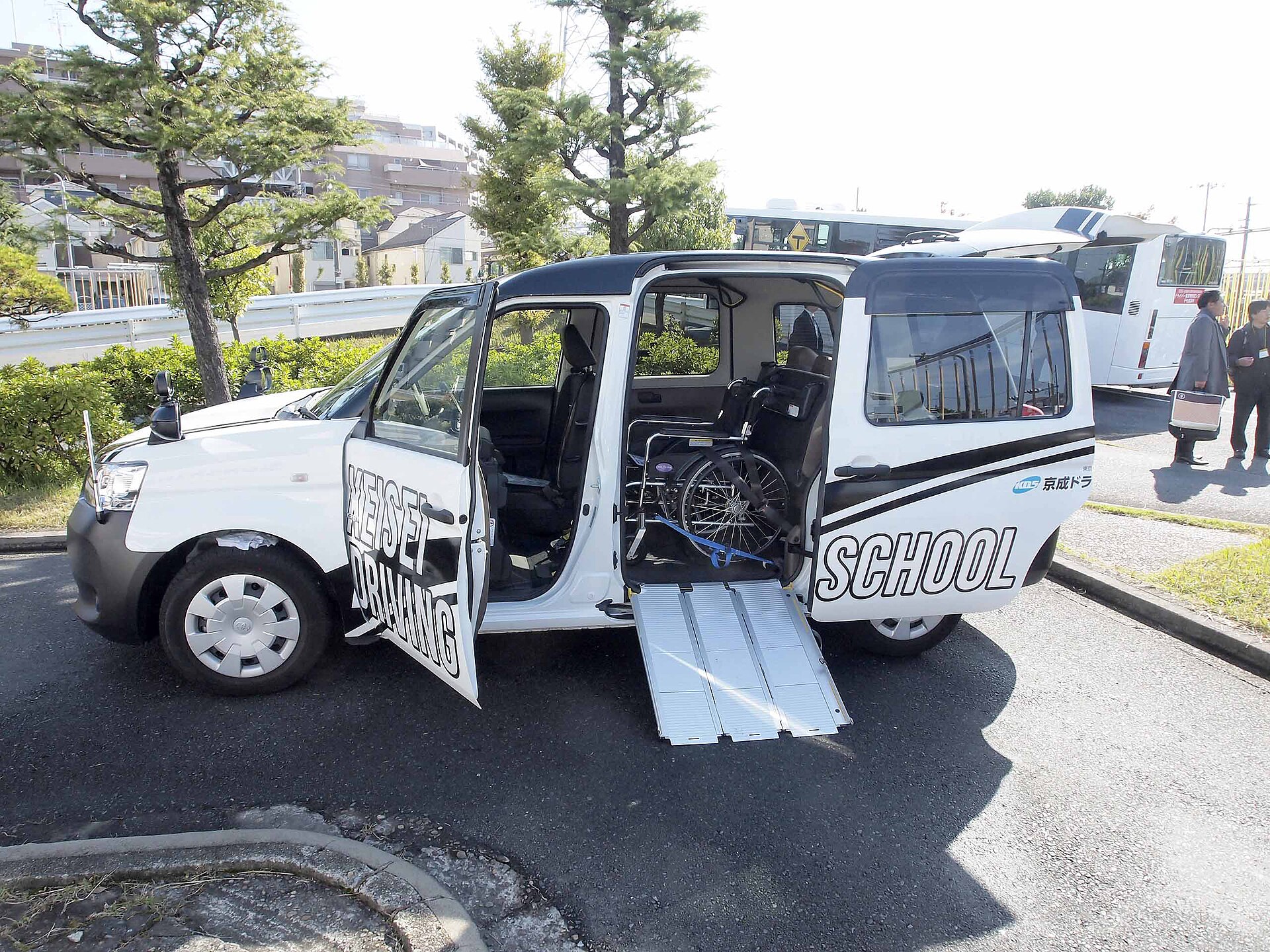
Most new taxis in Tokyo are the tall, dark-blue “JPN Taxi” model, a Universal Design taxi with a built-in fold-out ramp at the side door. It fits one manual wheelchair, and some smaller power chairs, plus a companion.
In practice, it is less smooth than that sounds.
- Setting up the ramp takes time, often ten minutes or more, and some drivers are unpractised. Be patient, and be prepared to explain what you need.
- Hailing on the street can mean waiting for a driver willing to stop. Asking your hotel to call a taxi company and request a Universal Design vehicle is more reliable.
- Large power chairs and scooters usually will not fit. For those, book a lift-equipped vehicle in advance from a specialist company. Accessible Japan lists several, including operators that handle airport runs and full-day charters.
Taxi fares themselves are the same whether or not you use a wheelchair. Our Tokyo taxi guide explains fares and apps.
Where to stay
This is where accessible travel in Tokyo gets harder. Rooms in Tokyo are small, and many bathrooms are prefabricated “unit baths” with a raised step into the bathroom and a deep tub rather than a roll-in shower.
- Search for “universal rooms”. Larger hotels and some business hotel chains have a small number of accessible rooms, often labelled universal, barrier-free or accessible. There may only be one or two per hotel, so book months ahead.
- Ask for photographs and measurements. Door width, bed height and whether the shower is roll-in vary enormously. A good hotel will send details by email.
- International chains tend to be most reliable in Tokyo for roll-in showers and space, particularly newer properties.
- Pick a flat, well-connected area. Around Tokyo Station, Shiodome, Odaiba and the newer parts of Shinjuku, streets are wide and modern. Hilly Roppongi and Akasaka are harder going.
- Avoid capsule hotels, most ryokan and traditional guesthouses. Ladders, tatami, shared bathrooms and steps make them unsuitable for most wheelchair users.
Our where to stay in Tokyo guide explains the neighbourhoods. Accessible Japan, a site run by a wheelchair user living in Tokyo, keeps a detailed list of accessible hotels with room photographs.
Barrier-free sights: what is easy and what is not
| Sight | Access | Notes |
|---|---|---|
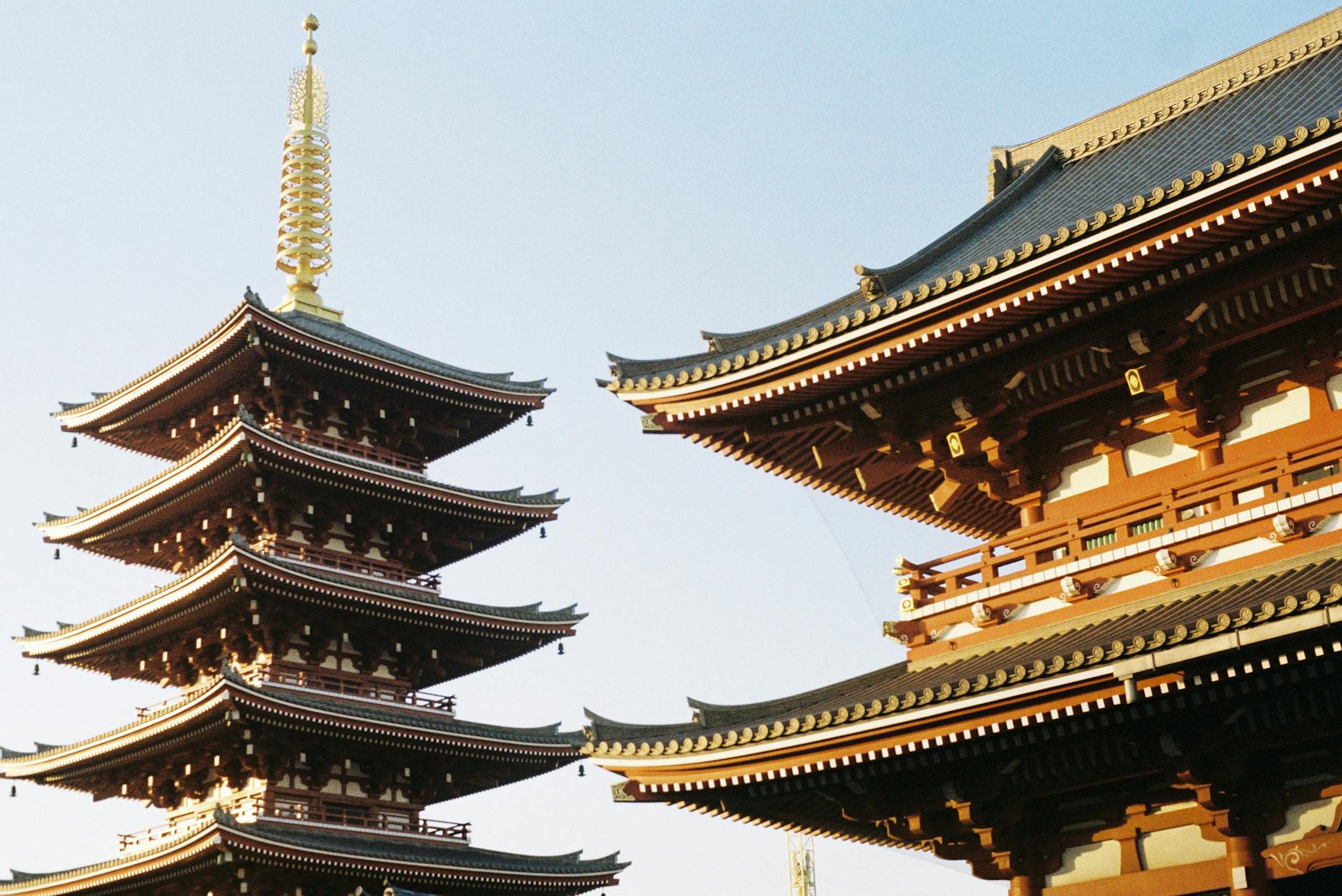
| Sensoji, Asakusa | Good | Paved grounds; lift to the main hall on its left side. Nakamise-dori is crowded after 11:00. |
| Meiji Jingu | Fair | Long gravel approach, but smoother paths have been added; ramps to the main buildings; visitor centre with accessible toilet midway. |
| Tokyo Skytree | Excellent | Fully accessible, wheelchair rental, multipurpose toilets on every floor. |
| Tokyo Metropolitan Government Building | Good | Free observation decks reached by lift. |
| Odaiba | Very good | Flat, modern, wide walkways, large malls with accessible toilets. |
| Department stores and depachika | Very good | Lifts, accessible toilets, restaurant floors reached without steps. |
| Warner Bros. Studio Tour Tokyo | Good | Indoor route with lifts; one free carer ticket per disabled visitor. Confirm details with the venue. |
| Traditional gardens | Fair to poor | Gravel paths, stepping stones and humped bridges; main paths usually manageable, side paths not. |
| Yanaka, Kamakura, Nikko | Poor to fair | Hills, steps and old temple approaches. |
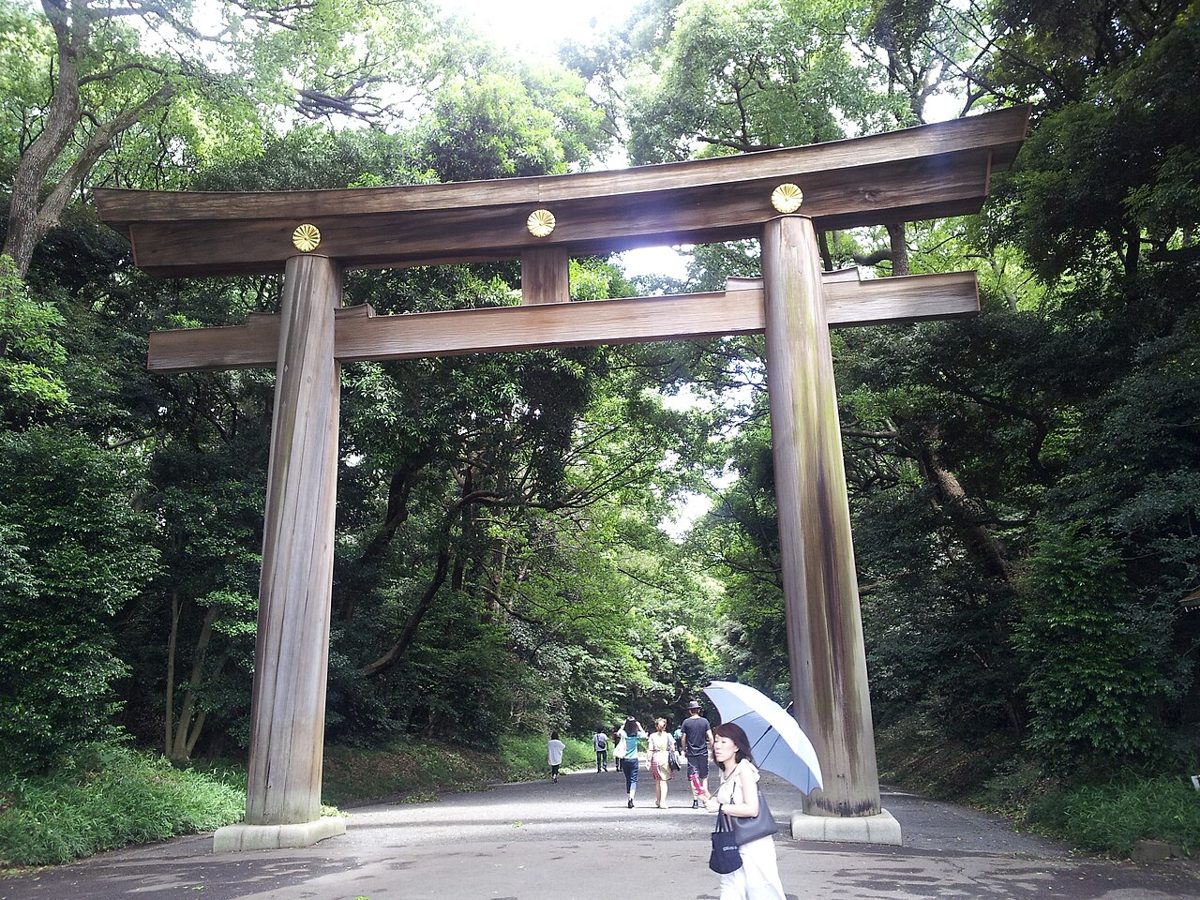
Our individual guides to Sensoji, Meiji Shrine and Odaiba have more detail on each area. For views, every major observation deck in our Tokyo observation decks guide is reached by lift.
Entry discounts
Many museums, gardens and attractions in Tokyo offer free or reduced entry to visitors with a disability and one carer. Rules vary: some ask for a Japanese disability certificate, while others accept foreign documentation or simply take your word for it. Carry any official card or letter you have, and ask at the ticket desk.
Eating out
Restaurants are the weakest link. A huge share of Tokyo’s best small restaurants are in basements, on second floors reached by narrow stairs, or in buildings with tiny lifts, and many have no accessible toilet at all. Izakaya with tatami seating mean taking off shoes and sitting on the floor.
What works:
- Department store restaurant floors. Usually on the top floors, with lifts, wide aisles and accessible toilets. The food is good and the choice is wide.
- Depachika food halls. Buy a picnic of excellent food at step-free counters. Our depachika guide explains how.
- Hotel restaurants and large modern complexes such as Tokyo Midtown, Roppongi Hills and the towers around Tokyo Station.
- Ask or phone ahead. Use a translation app to ask whether there are steps (dansa) and whether there is a multipurpose toilet (tamokuteki toire).
Toilets
Multipurpose toilets, called tamokuteki toire or “toilets for everyone”, are one of Tokyo’s quiet strengths. You will find them in almost every station, department store, large museum, and shopping centre, usually with space for a wheelchair, grab rails, an ostomate fitting and a baby-changing table. Station maps and Google Maps often mark them. They are designed for people who need them most, so avoid using them if you do not.
For blind and low-vision travellers
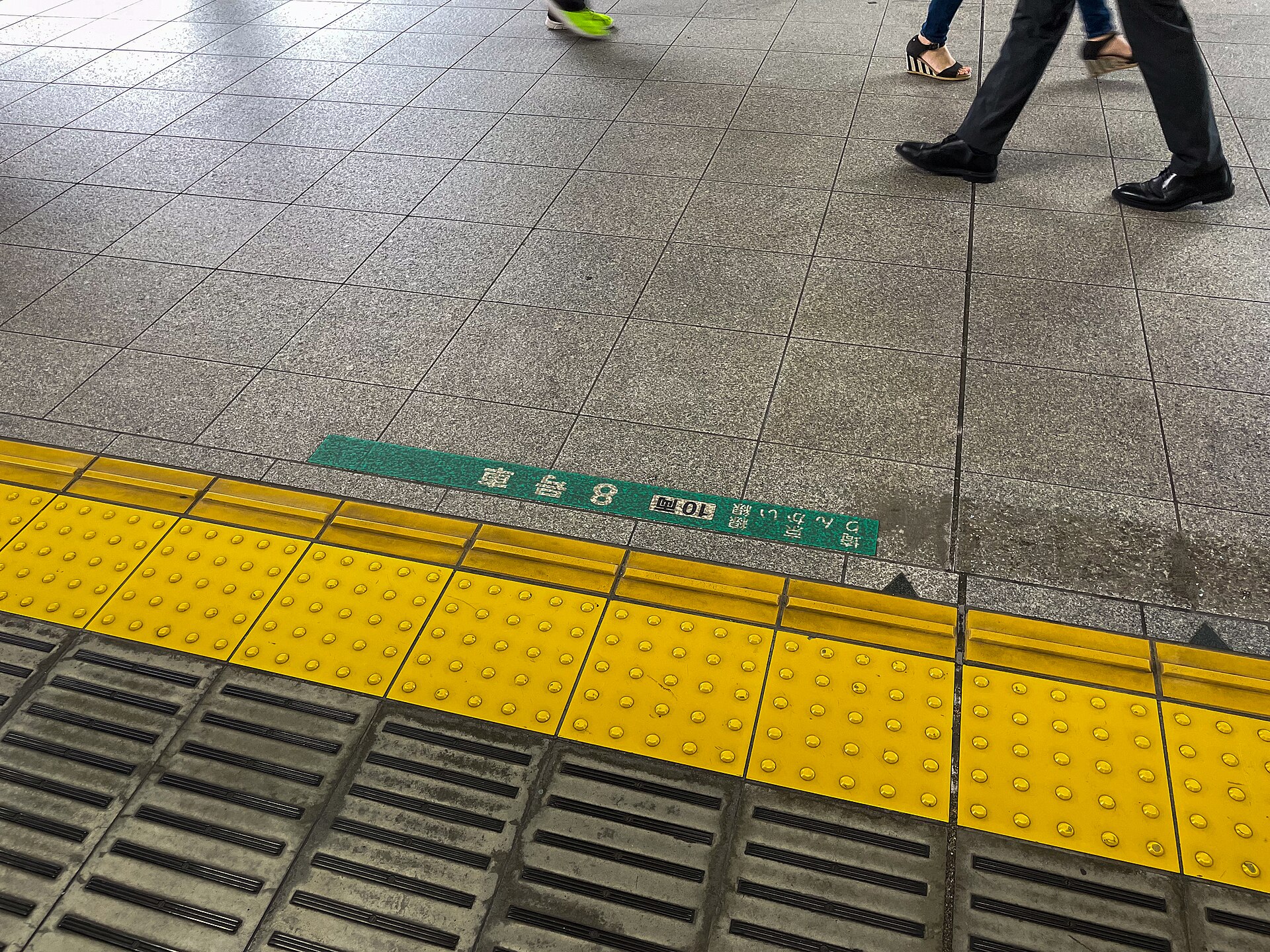
- Tactile paving is everywhere. Japan invented it, and Tokyo’s stations and main pavements are lined with yellow guidance and warning blocks. On platforms, a raised line on the inner edge marks the safe side.
- Audio cues. Many pedestrian crossings play bird-song style sounds when the light is green, stations often play chimes near stairs and ticket gates, and trains announce stops in Japanese and English.
- Platform screen doors are now common on subway lines and the Yamanote Line, reducing the danger of platform edges.
- Station staff will guide you through the station and onto a train, and arrange for someone to meet you, in the same way as for wheelchair users.
- Braille appears on many ticket machines, handrails and lift buttons, in Japanese.
For Deaf and hard-of-hearing travellers
Trains are generally easy: most carriages have screens showing the next station in English, and platforms have visual departure boards. Emergencies are harder, as earthquake alerts and announcements are mostly audio. Enable emergency alerts on your phone and consider a disaster-alert app with English support. Japanese Sign Language differs from ASL and BSL, so writing and translation apps are the practical bridge.
Non-visible disabilities and the Help Mark
Look out for the Help Mark, a red tag with a white cross and heart, which the Tokyo Metropolitan Government introduced for people whose need for help or a seat is not obvious. It is widely recognised on public transport, and some visitors are able to pick one up at station offices. Every train also has priority seats near the doors. In practice people do not always give them up, so it is fine to ask politely.
A sample step-free day
To show how this fits together in practice, here is a relaxed, largely flat day built around lifts and short transfers.
- 10:00, Asakusa. Arrive by the Toei Asakusa Line after rush hour has cleared, using the station’s lift exit. Visit Sensoji’s paved grounds and take the lift to the main hall before the crowds build on Nakamise-dori.
- 12:00, Skytree. One stop on the Toei Asakusa Line to Oshiage, or a short taxi ride. Lunch in the Tokyo Solamachi complex at the tower’s base, where restaurants, lifts and toilets are all step-free, then go up the tower.
- 15:00, rest. Back to the hotel. A long day on transit and ramps is tiring, and Tokyo evenings are worth saving energy for.
- 18:00, Ginza or Nihonbashi dinner. A department store restaurant floor, reached by lift, with an accessible toilet on the same floor.
- 20:00, a night view. A taxi booked through the restaurant or hotel to a lit-up skyline, or back to your base.
The principle is the same wherever you go: one area at a time, big modern buildings for meals and breaks, trains outside rush hour, and taxis for the awkward last stretch.
Planning tips that make the biggest difference
- Choose your base for flat, step-free access to a major station with lifts, rather than for nightlife.
- Plan one area per day. Travelling across the city with ramp handovers is fine, but it takes longer than a map app suggests.
- Avoid rush hours and peak holidays such as Golden Week, Obon in mid-August and cherry blossom season, when crowds become the main obstacle.
- Use Accessible Japan for venue-by-venue detail, and Tokyo Metro’s barrier-free station search for each station.
- Rent equipment locally if needed. Mobility scooter and wheelchair rental services operate in Tokyo, including Scootaround, and can deliver to hotels.
- Get travel insurance that covers your equipment as well as your health. Airline damage to wheelchairs happens.
- Prepare a short note in Japanese explaining your needs, to show station staff, hotels and restaurants.
Families with pushchairs face many of the same questions about lifts and steps, and our Tokyo with toddlers guide has further station tips.
Frequently Asked Questions
Is Tokyo wheelchair accessible?
Tokyo is one of the more wheelchair-accessible big cities in the world. Every Toei subway station has a step-free route, station staff provide free ramp assistance and phone ahead to your destination, and major sights have lifts and accessible toilets. The main difficulties are small restaurants with steps, older hotels with small bathrooms, hills and gravel paths in some areas, and rush-hour crowds.
How do wheelchair users ride the Tokyo subway?
Tell the staff at the ticket gate where you are going. They will bring a portable ramp, help you onto the train, and phone ahead so that a colleague meets you with another ramp at your destination or transfer station. The service is free and routine. Use the lift route and wide ticket gate at each station.
Can you book a wheelchair space on the Shinkansen?
Yes. Shinkansen trains have wheelchair spaces, and on the Tokaido and Sanyo lines you can reserve a wheelchair-accessible seat online through Smart EX as well as by phone or at a ticket office. Arrive early on the day, and staff will escort you to the train with a ramp and arrange for someone to meet you on arrival.
Are there wheelchair accessible taxis in Tokyo?
Yes. Many Tokyo taxis are the JPN Taxi model with a built-in fold-out ramp, which fits a manual wheelchair and a companion. Booking through your hotel is more reliable than hailing on the street, and setting up the ramp can take several minutes. For large power chairs, book a lift-equipped specialist vehicle in advance.
Which Tokyo attractions are most accessible?
Tokyo Skytree is fully accessible with wheelchair rental and accessible toilets on every floor. Sensoji has paved grounds and a lift to its main hall, Odaiba is flat and modern, and department stores are consistently step-free. Traditional gardens, Yanaka, and day trips such as Kamakura and Nikko are harder because of gravel, hills and steps.
Photo Credits
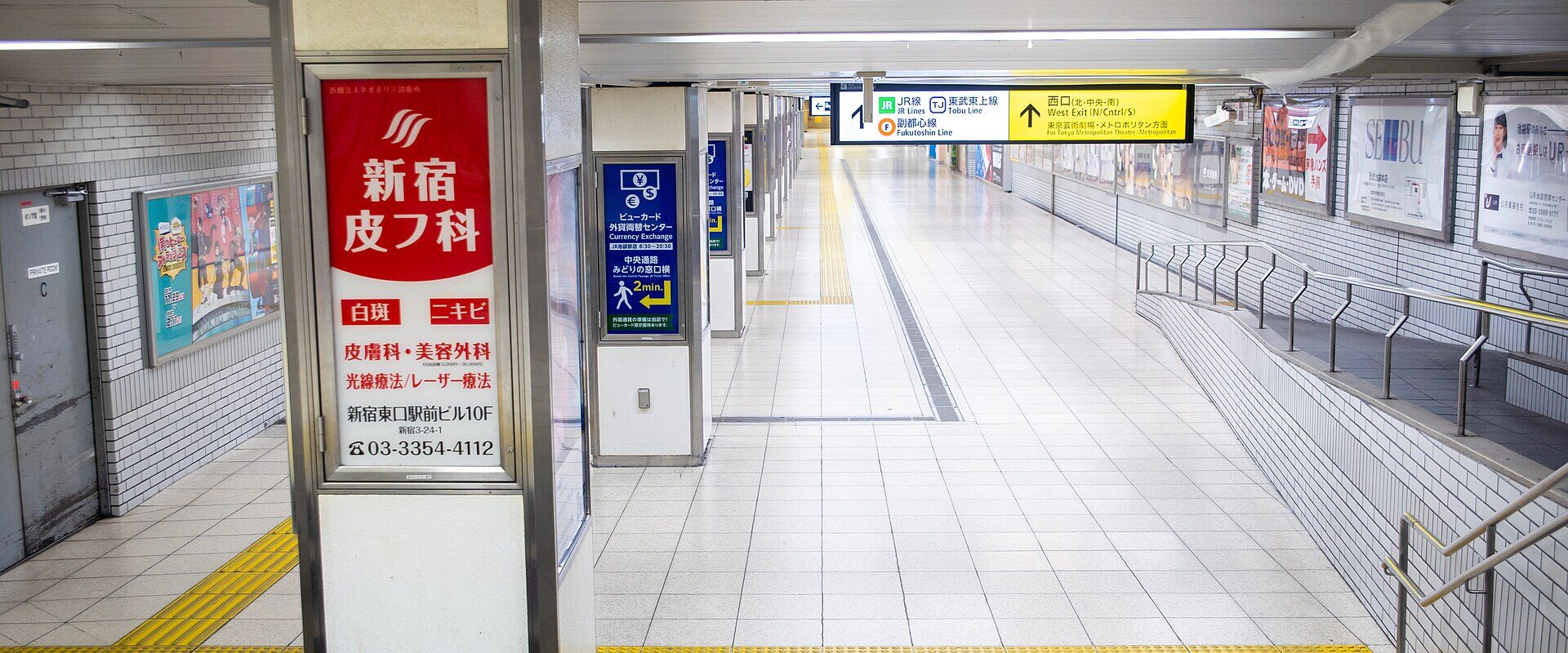
- Step-free passage with tactile paving at Ikebukuro Station – Ikebukuro Station (49820808286) by Dick Thomas Johnson from Tokyo, Japan, CC BY 2.0, via Wikimedia Commons.
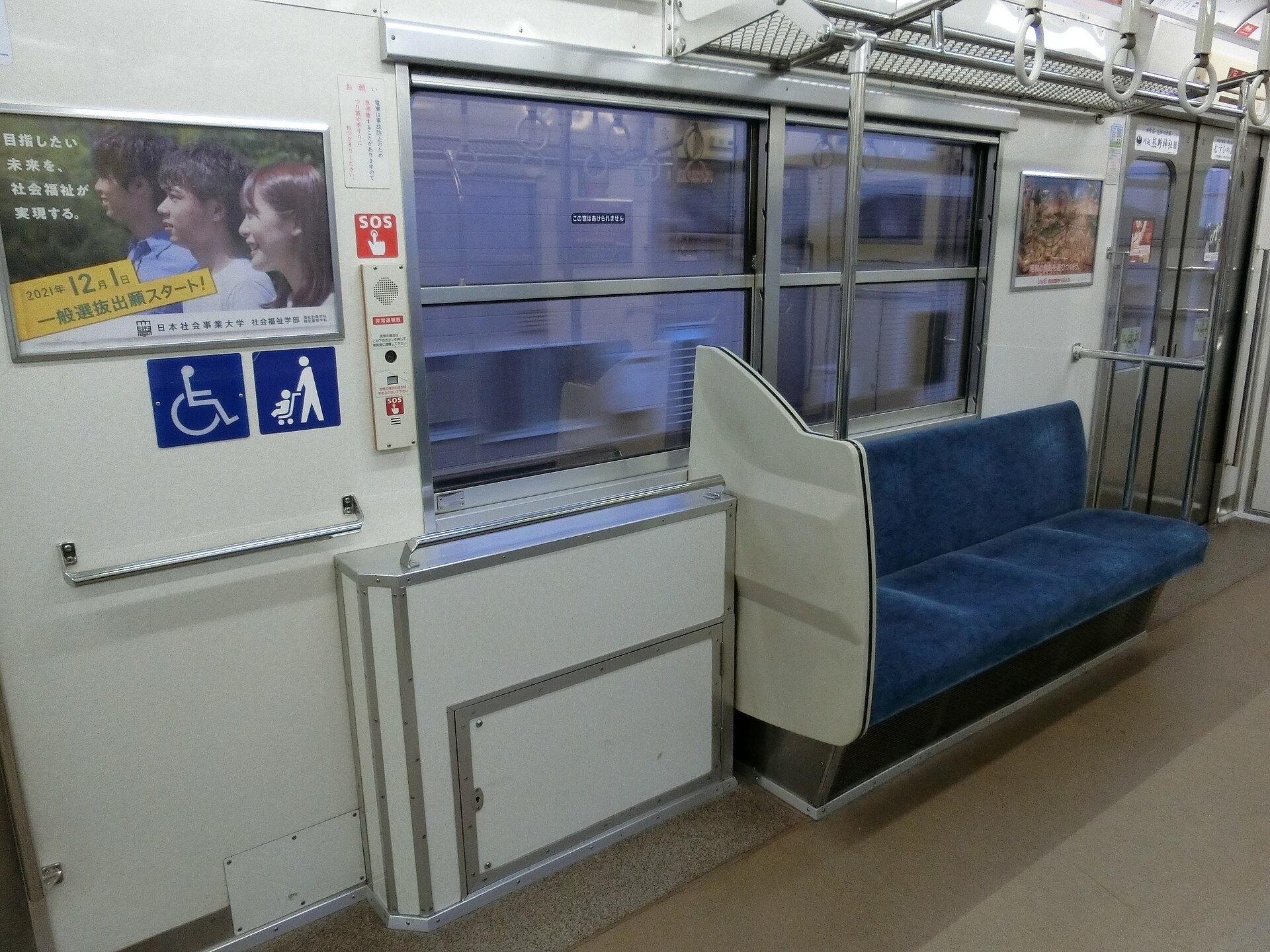
- Wheelchair space on a Japanese commuter train – Additional wheelchair space(2031) by Express185, CC BY-SA 4.0, via Wikimedia Commons.
- JPN Taxi wheelchair ramp demonstration – Keisei Driving School JPN TAXI wheelchair ramp demonstration by Comyu, CC BY-SA 4.0, via Wikimedia Commons.
- Tactile paving on a Tokyo station platform – At Tokyo 2024 114 by Mike Peel (www.mikepeel.net), CC BY-SA 4.0, via Wikimedia Commons.