Tokyo Anime & Pop Culture · Guide №172
Otome Road, Ikebukuro: Tokyo’s Anime District for Female Fans
Boys' Love, doujinshi by the ten thousand, otome games and a basement butler cafe. What Otome Road actually is, which shops matter, and how it compares with Akihabara.
目次 — Contents
This article contains advertising. Our booking links are routed through a partner that adds commission tracking automatically, so if you book through one we earn a commission from the provider, at no extra cost to you. It never affects what we recommend. Affiliate disclosure
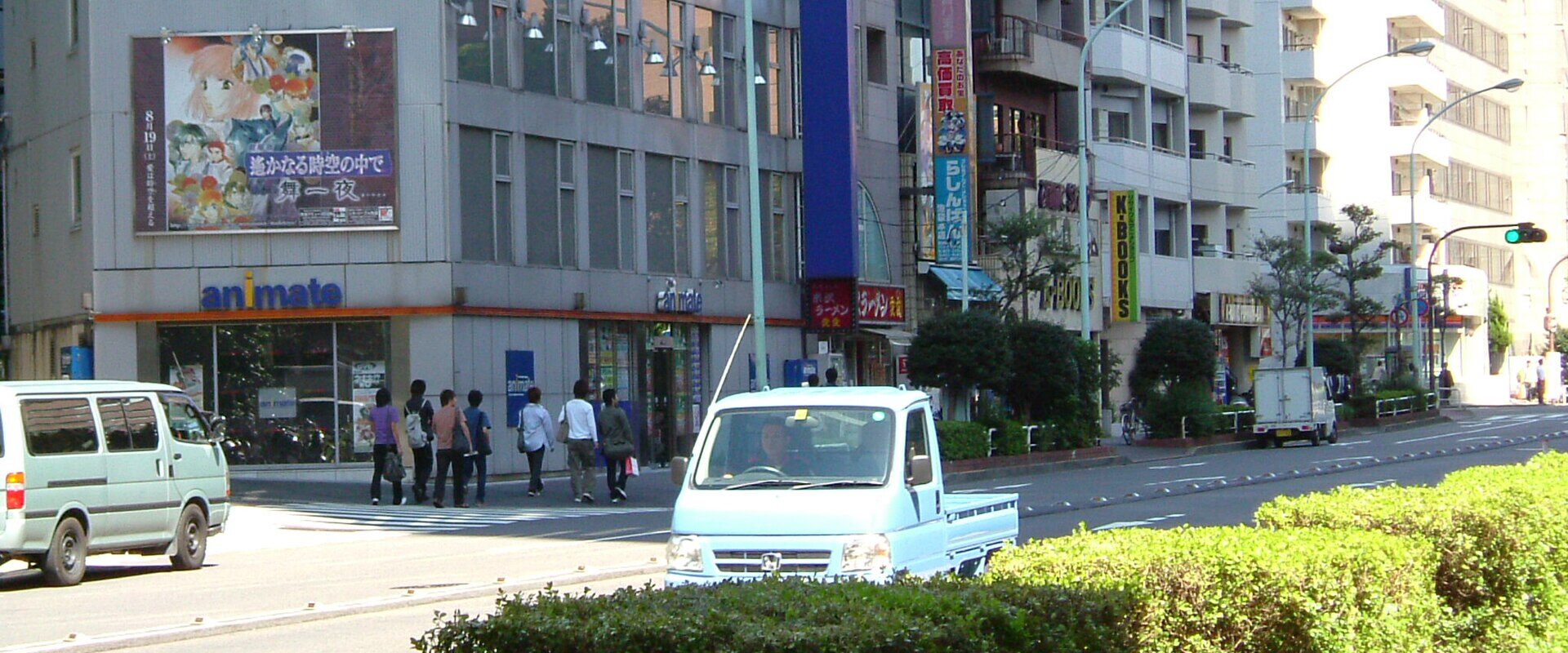
Otome Road Ikebukuro is a three-hundred-metre stretch of ordinary Tokyo avenue that happens to be the centre of female anime fandom in Japan. Boys’ Love, otome games, male-character goods, doujinshi by the ten thousand, and a butler cafe in a basement. Akihabara’s mirror image, and considerably calmer.
Two things surprise first-time visitors. It is not a destination in the way Akihabara is — there is no neon, no arcades, no theatrics, just a wide road with a hedge down the middle and specialist shops along one side. And the name was invented by a magazine, not a ward office.

Where it is and how to find it
The road runs along the western edge of Sunshine City, in Higashi-Ikebukuro, and the practical approach is to leave Ikebukuro Station by the east exit and walk towards Sunshine City along Sunshine 60 Street. Before you reach the complex, the shops start appearing. Alternatively, come out at Higashi-Ikebukuro on the Yurakucho Line and you are at the far end of it in three minutes.
There is no arch, no gate and no “you are here” moment. You will know you have arrived when you see the K-Books signage and a run of buildings whose upper floors are visibly full of something other than offices. The whole strip is walkable end to end in five minutes; the time goes inside the buildings.
What “otome” means here
Otome means maiden, and the name was coined in 2004 by the joseimuke manga magazine Pafu to describe the stretch of shops catering to female fans that had accumulated outside Sunshine City. The categories it serves:
- Boys’ Love (BL) — romance between male characters, written and read overwhelmingly by women. An enormous commercial genre in Japan with an entire publishing infrastructure behind it.
- Doujinshi — self-published fan works, and a mainstay of the shops on this street.
- Otome games — romance simulation games aimed at women, and the merchandise, drama CDs and voice-actor material that surround them.
- Male-character goods — badges, acrylic stands, photobooks and cards for male characters from mainstream anime and games, bought for display and for trading.
The umbrella term you will see is joseimuke — “aimed at women”. If a shop floor is labelled that, it is for this market. A floor labelled danseimuke is the equivalent for men and is a different shop entirely, often in the same building, occasionally with an age restriction on the door.
The shops that matter
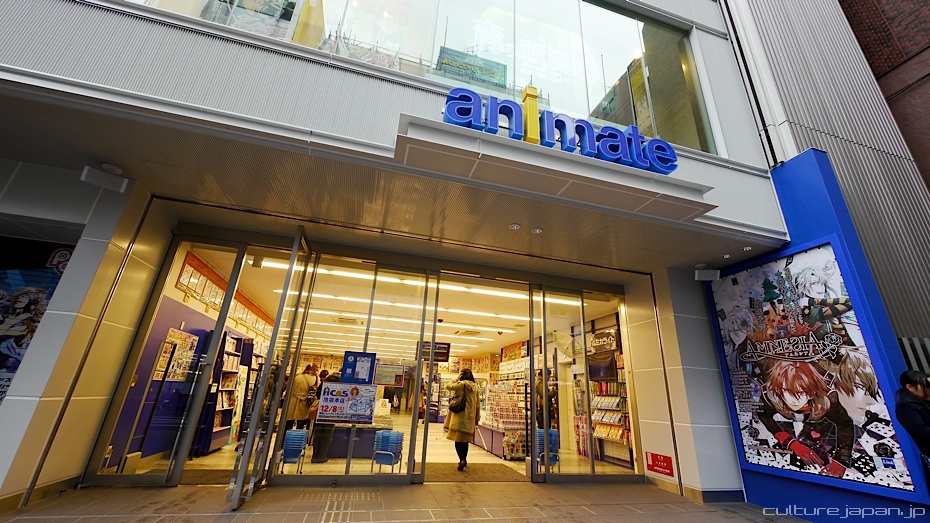
Animate Ikebukuro
The chain’s flagship, stocking new merchandise, manga, light novels, music, voice-actor goods, doujinshi and an event space. This is the anchor of the whole district and the one shop everybody visits.
Unlike the second-hand specialists, Animate sells new stock at list price, which makes it the right place to buy current-release goods and the wrong place to hunt for anything discontinued. The event space runs a constant rotation of pop-ups and signing events, several of which draw queues around the block; if you see one forming, it is for something specific and time-limited rather than for the shop itself.
K-Books
Not one shop but a cluster of specialist branches along the strip, each dealing in a different category — manga and light novels in one, doujinshi in another, character goods in a third, cosplay in a fourth. The signage is yellow and unmissable once you know it.
The doujinshi branches are the reason people come. Stock is second-hand, filed by series and then by circle name, and the volume is genuinely hard to comprehend until you are standing in it. Prices run from a couple of hundred yen for a common item to five figures for something from a defunct circle. Staff will find a series for you if you can write or show the name.
Mandarake LaLaLa
Mandarake’s Ikebukuro branch, specialising in doujinshi, fan novels, art books and zines with a joseimuke bias — a deliberate counterpart to the company’s Nakano operation, which leans the other way. If you have been to Nakano Broadway and found the balance of stock unhelpful, this is the branch you wanted.
Acos and the cosplay shops
Animate’s costume brand, Acos, has a dedicated shop on the strip, and it is joined by independents selling wigs, coloured contact lenses, shoes and the specialist underpinnings that make a costume sit properly. Even if you have no intention of wearing any of it, the wig shops are worth five minutes purely as an exercise in how seriously this is taken — dozens of shades, cut styles matched to specific characters, and staff who can tell at a glance which series you are asking about.
If you do want to try cosplay while in Tokyo, note that the shops sell rather than rent; studio rental and photography are separate businesses, mostly booked in advance and mostly in Japanese.
Everything else
Between and above the big names: cosplay shops selling wigs, contacts and costumes; trading-card and badge shops with exchange boards; small dealers in voice-actor and stage merchandise; and a scatter of character cafes that change every few months. The upper floors are where the specialists hide, and the lift directory is the only way to find them.
How to shop a doujinshi floor
This is the skill that turns a bewildering hour into a good one, and nobody explains it, so here it is.
Everything is filed by series first. The shelf ends carry the series name, usually in Japanese only, sometimes with the English title underneath. Within a series, items are filed by circle — the name the self-publishing group works under — and then by title. If you know the circle you want, you are looking for that name; if you only know the series, you are browsing the whole section.
Everything is bagged. Doujinshi are sealed in plastic with a price sticker and a condition note. You cannot flip through them. Most shops put one sample copy out per popular title, unwrapped, on a reading stand, and that is your only look inside. Do not open a bagged copy.
Condition drives price more than you expect. A same-day reprint in perfect condition costs multiples of a creased original from the same print run, because collectors here care about the object. Conversely, a slightly battered copy of something rare is often the affordable way to own it.
Adult material is behind a barrier. Floors or corners carrying it are marked with an age notice, curtained, or both, and ID is genuinely checked. This applies to both the joseimuke and danseimuke halves of the market. If you are not looking for it, you will not accidentally walk into it.
The shop buys as well as sells. The counters marked 買取 are for selling your own items in. Irrelevant to most visitors, but it explains why half the floor space in these shops faces the wrong way.
Finally, a note on photography and discretion that regulars observe without thinking about it: people here are shopping for things that are personal, and the social contract on the strip is that you do not look at what anyone else is holding. Nobody will mind you being there, foreign or otherwise, as long as you are shopping rather than sightseeing at the customers.
Swallowtail, the butler cafe
Swallowtail is a basement cafe at 3-12-12 Higashi-Ikebukuro where guests are received as the master or mistress of a household and served by butlers. It is the female-market counterpart to the maid cafe, and it is played completely straight.
The mechanics: book through the official website, although walk-ins may be accepted on the day when tables are free. Guests normally order a set menu with a fixed seating time, 100 minutes for Tea Time or 110 minutes for Evening High Tea, so check the reservation form for the current time slots and the menu page for prices. Guests are addressed as ojousama or obocchama, so despite the reputation it is not women-only.
Honest verdict: the performance is far more restrained and far better executed than the maid-cafe equivalent, and people who found that format embarrassing often like this one. But it is expensive, it books out, and the experience depends entirely on your willingness to be addressed with elaborate deference for ninety minutes without laughing. If that sounds exhausting rather than charming, the maid cafe version in Akihabara is cheaper and shorter, and our themed cafe guide covers what else is out there.
Why Ikebukuro and not somewhere else
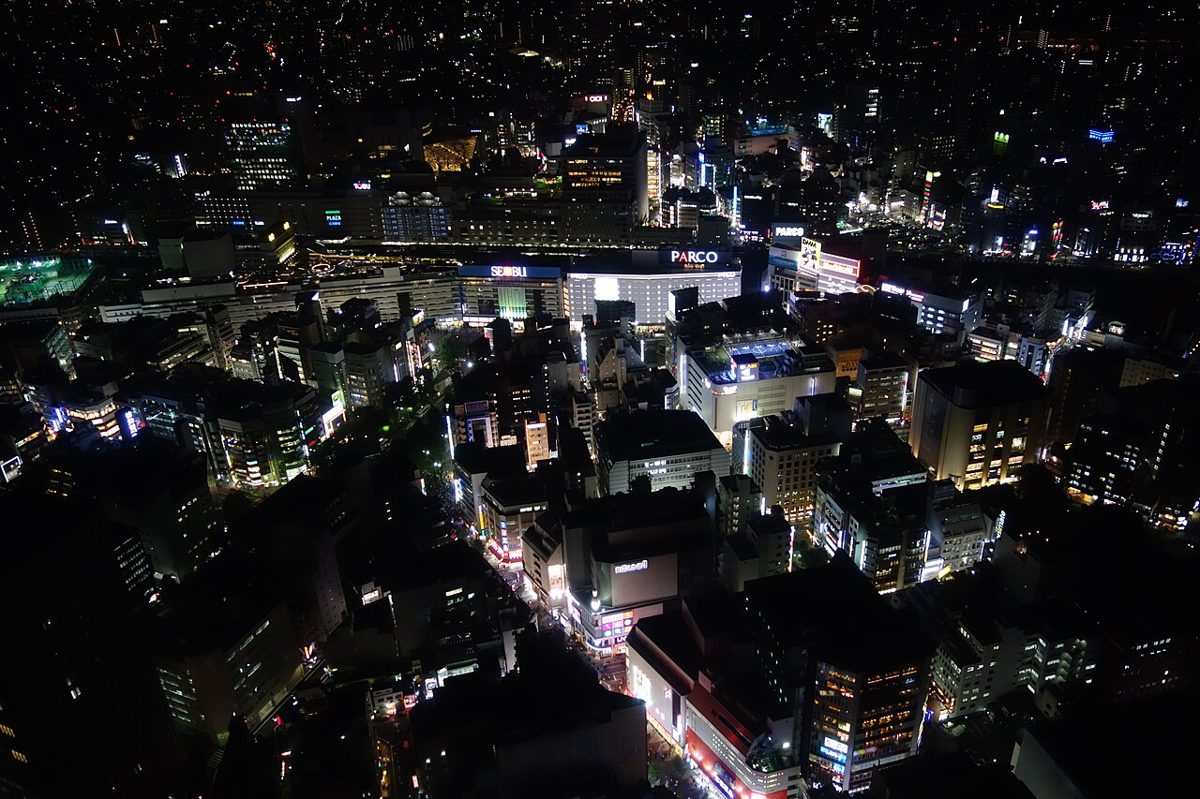
Districts like this do not appear by decree. Ikebukuro’s east side had cheap upper-floor retail space, a station carrying well over two million passengers a day, and — crucially — Animate’s flagship, which opened here decades before the surrounding ecosystem existed. Second-hand dealers set up near the shop that generated the stock, cosplay suppliers set up near the dealers, and cafes filled in the gaps. By the time a magazine put a name to it in 2004, the clustering had already happened.
The same logic explains the shape of it: shops upstairs rather than at street level, because upstairs was affordable and the customers were looking for the shop rather than passing by. It is why the strip looks like nothing from a car and like a great deal from a lift directory, and why nobody has ever put an arch over it.
How it compares with Akihabara
| Otome Road | Akihabara | |
|---|---|---|
| Core market | Female fans, joseimuke, BL | Male fans, danseimuke, general |
| Feel | Quiet, ordinary street, shops upstairs | Loud, neon, everything at street level |
| Doujinshi | Enormous, second-hand, well filed | Enormous, different half of the market |
| Cafes | Butler cafes, character cafes | Maid cafes, concept cafes |
| Arcades | Few | Many, and better |
| Time needed | 2–3 hours, plus Sunshine City | Half a day |
| Crowds | Moderate, overwhelmingly Japanese | Heavy, heavily touristed |
The real difference is not the merchandise, it is the atmosphere. Akihabara performs itself at you. This does not perform at all — it is a working district for people who live nearby and know exactly which floor they are going to. That makes it less immediately exciting and considerably more pleasant to spend an afternoon in.
A sensible half-day
The strip alone is not enough to fill a day, and it does not need to be, because it sits at the foot of one of Tokyo’s better indoor complexes. A shape that works:
- 11:00 — arrive at Ikebukuro east exit, walk down Sunshine 60 Street.
- 11:15 — Animate, top floor down. An hour if you are browsing, two if you are buying.
- 13:00 — lunch. Sunshine 60 Street and the streets around it have plenty of places to eat.
- 14:00 — K-Books branches and Mandarake LaLaLa. This is where the time goes.
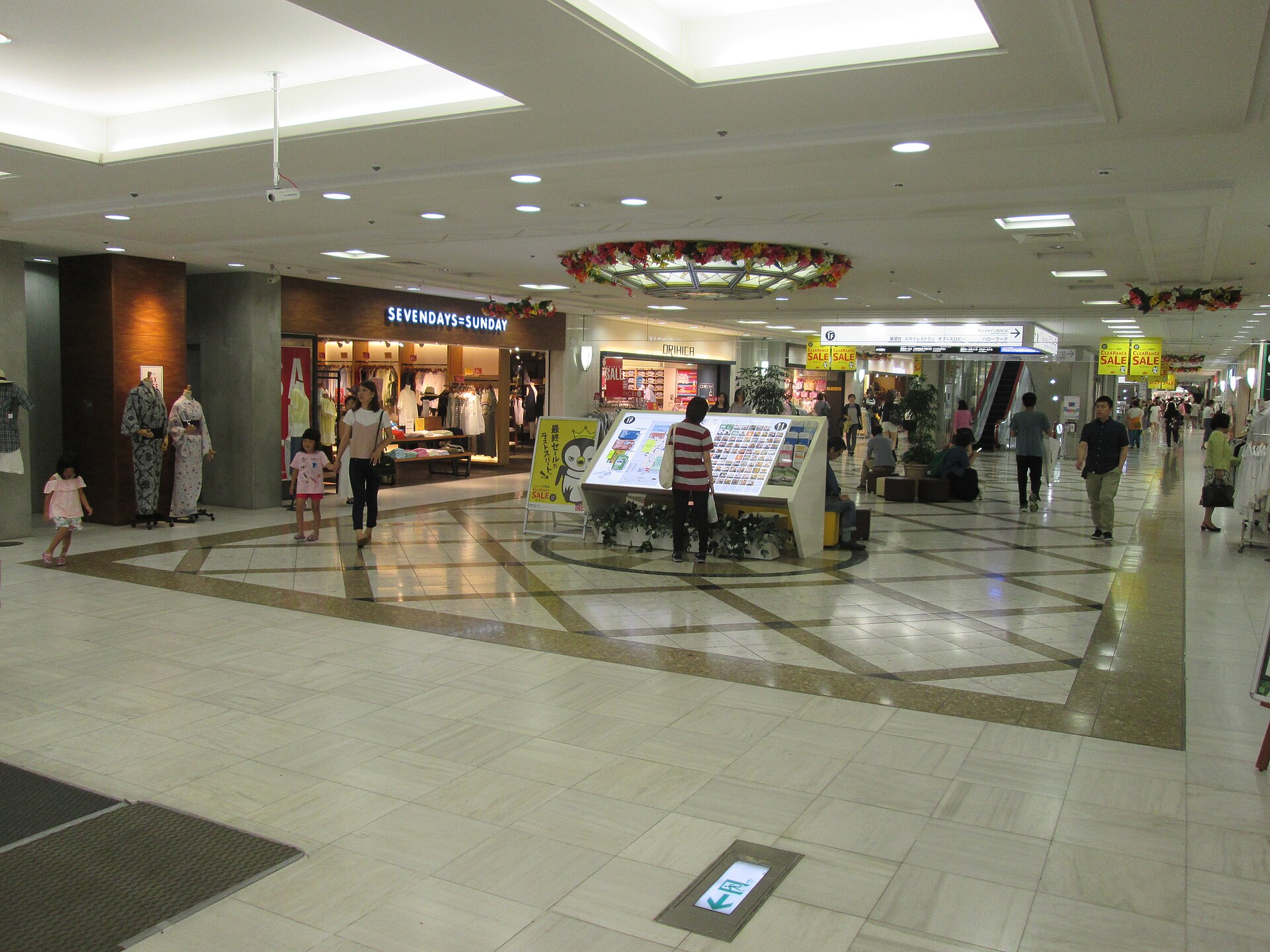
- 16:00 — into Sunshine City: the Pokemon Center, the gachapon hall with about 3,220 machines by Bandai Namco’s own store listing, the aquarium and the observation deck are all within the Sunshine City complex.
- 18:00 — Ikebukuro’s east-side izakaya, which are cheaper than Shinjuku’s and rarely full.
The whole thing is indoors bar the ten minutes of walking, which makes it one of the better wet-weather plans in the city. Our Ikebukuro guide covers the rest of the neighbourhood, and the city-wide fan geography is in our Tokyo anime guide.
Etiquette and practicalities
Photography
Do not photograph shop interiors. This is enforced more strictly here than in most of Tokyo, partly because stock and pricing are commercially sensitive and partly because a proportion of the material is not something customers want to appear in the background of a stranger’s holiday photo. The street is fine.
Men on Otome Road
Entirely welcome. Nothing on the strip is women-only, including Swallowtail. You will be a minority in most shops and nobody will care. A handful of specific floors carry age restrictions on adult material, marked at the entrance, and those are checked.
Payment and tax-free
K-Books and Mandarake take cards; smaller dealers may not. Animate operates tax-free with a passport; the second-hand shops variously do and do not. Carry cash for the small shops, and see our tax-free guide for the paperwork.
Language
Thin. Animate handles foreign customers routinely; the specialist second-hand shops much less so. The practical method is to have the series name written in Japanese on your phone — shop staff will find the section for you, and the filing systems are logical once someone points you at the right shelf.
When to go
Most shops open around 11:00 or 12:00 and close between 20:00 and 21:00. Weekday afternoons are quiet and comfortable. Weekends are busier, and any day with a release or an event at Animate’s event space will be very busy indeed around that building specifically.
Frequently Asked Questions
What is Otome Road in Ikebukuro?
Otome Road is an unofficial name for a stretch of street near Sunshine City in Higashi-Ikebukuro lined with shops catering to female anime and manga fans — Boys’ Love manga, doujinshi, otome games, and male-character goods. The name was coined by the magazine Pafu in 2004.
How do I get to Otome Road?
Leave Ikebukuro Station by the east exit and walk towards Sunshine City along Sunshine 60 Street; the shops begin appearing before you reach the complex. Alternatively, Higashi-Ikebukuro Station on the Tokyo Metro Yurakucho Line puts you at the far end in roughly three minutes.
Can men go to Otome Road?
Yes. Nothing on the strip is restricted to women, including the Swallowtail butler cafe, whose guests are addressed as either mistress or master. Men will be in a minority in most shops and this is unremarkable. Some floors carrying adult material have age restrictions, which are checked.
What is a butler cafe and do I need to book?
A butler cafe is the counterpart to a maid cafe, with butlers treating guests as the head of a household. Swallowtail, in a basement at 3-12-12 Higashi-Ikebukuro, is one example. Book through its official website, although walk-ins may be accepted when tables are free. Guests normally order a set menu with a fixed seating time, so check the reservation form for current time slots.
Is Otome Road better than Akihabara?
Different, and it depends what you collect. Otome Road is far stronger for Boys’ Love, otome games, joseimuke doujinshi and male-character goods, and it is a calmer, less touristed place to shop. Akihabara is larger, louder, better for arcades, electronics and general new-release merchandise, and much easier for visitors with no Japanese.
Photo Credits
- Otome Road looking towards Sunshine City – Otome road in Ikebukuro, Tokyo, Japan by Boyfriendback, Public domain, via Wikimedia Commons.
- Animate store entrance – Animate store in Tokyo by Danny Choo, CC BY-SA 2.0, via Wikimedia Commons.
- Inside Sunshine City Alpa: Sunshine City Tokyo (4) by Maplestrip, CC BY 3.0, via Wikimedia Commons.