Tokyo Anime & Pop Culture · Guide №171
Gachapon in Tokyo: Best Capsule Toy Halls and How to Play
More than 3,000 machines on one floor in Ikebukuro, prices that vary by product and payment that depends on the machine. Where Tokyo's capsule toy halls are, how the machines work, and what is actually worth collecting.
目次 — Contents
This article contains advertising. Our booking links are routed through a partner that adds commission tracking automatically, so if you book through one we earn a commission from the provider, at no extra cost to you. It never affects what we recommend. Affiliate disclosure
Gachapon in Tokyo means capsule toys at prices that vary by product, from ¥200 for some to ¥300–500 for many, in halls that hold thousands of machines. It is a small, easy souvenir purchase and just as easy to overspend on. Here is where the big halls are and how to play without wasting money.
The name is onomatopoeia: gacha is the crank turning, pon is the capsule dropping. Bandai brands its own machines Gashapon and the two spellings are used interchangeably. Either way you are buying a sealed plastic ball containing one item from a set of five or six, chosen for you at random, and that randomness is the entire product.
How a machine actually works
Simpler than it looks, and worth reading once so you are not standing in a hall working it out with a queue behind you.
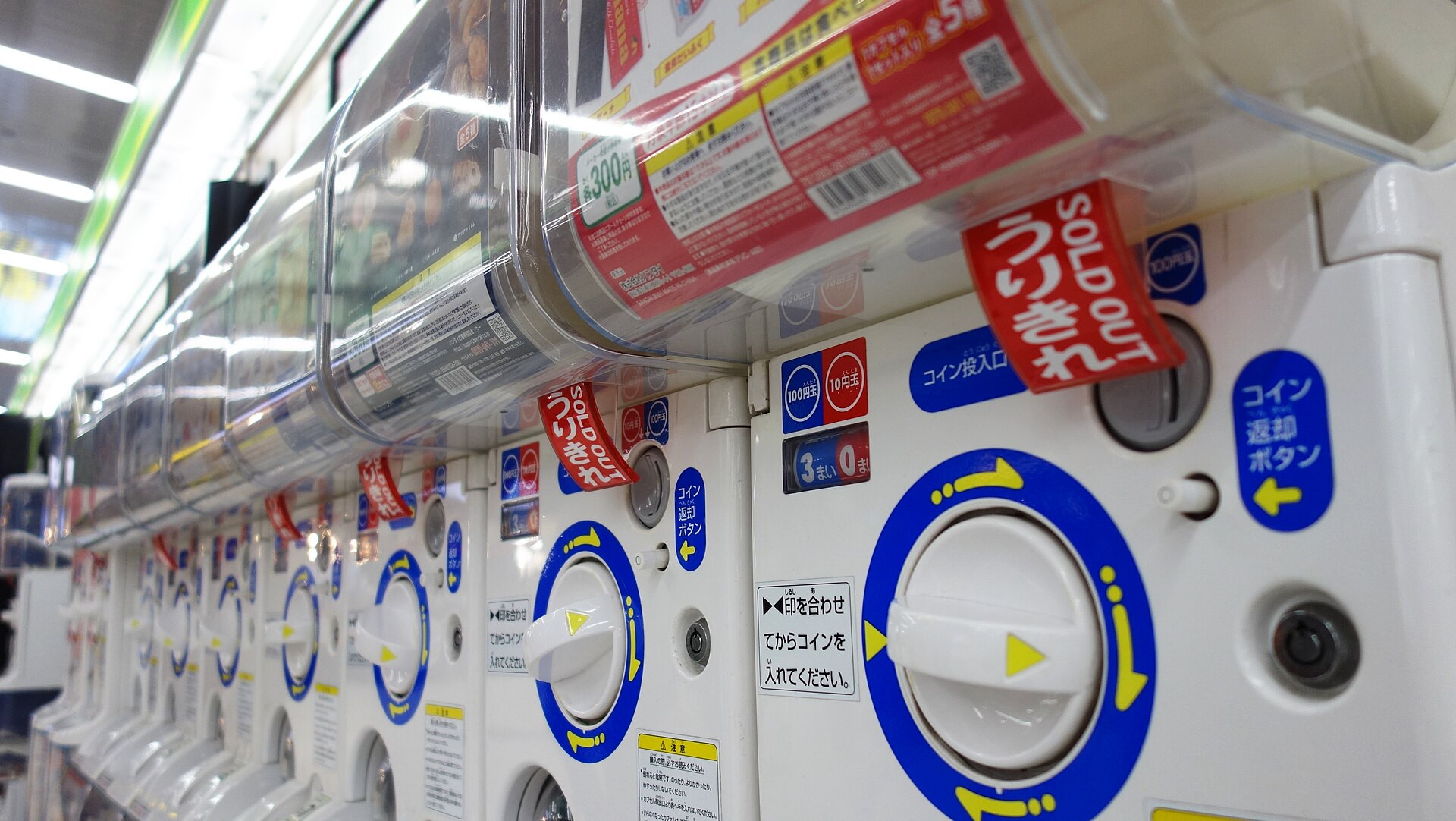
- Read the header card. The panel above the dome shows the set — usually five or six variants — and the price in the corner. Everything in that machine is from that set. You cannot choose which one you get.
- Check for a sold-out tag. A red flag reading urikire hanging over the coin slot means empty. Machines are not refilled promptly.
- Check which coins it takes. The sticker beside the slot shows how the machine takes payment: coins on conventional machines, ¥100 and ¥500 coins on premium machines, transport IC cards on Smart Gashapon machines. A ¥300 machine wants three ¥100 coins, inserted one at a time. The little window counts them down.
- Line up the arrow, then turn. Some machines require the dial to be at the marked position before coins go in. Turn firmly and fully, all the way round, until you hear the drop.
- Open the flap at the bottom and take your capsule.
- Bin the capsule, keep the toy. Every hall has a capsule recycling bin, usually right beside the machines. Using it is expected.
If nothing happens and you have paid, there is a coin return button — the blue one marked with a leftward arrow. If that fails, staff at a chain hall will sort it out; at an unstaffed wall of machines outside a shop, you have donated ¥300 to the universe.
Bring coins
This is the practical failure that spoils many a gachapon afternoon. Check how each machine takes payment. Conventional machines take coins, premium machines accept ¥100 and ¥500 coins, and Smart Gashapon machines take transport IC cards. The big chain halls have change machines, but coins are the safe thing to carry.
Before you set out, break a ¥1,000 note into ¥100 coins. Arriving at a hall of thousands of machines with a wallet full of notes and no coins is an annoying way to start.
The big halls
Gashapon Department Store, Ikebukuro
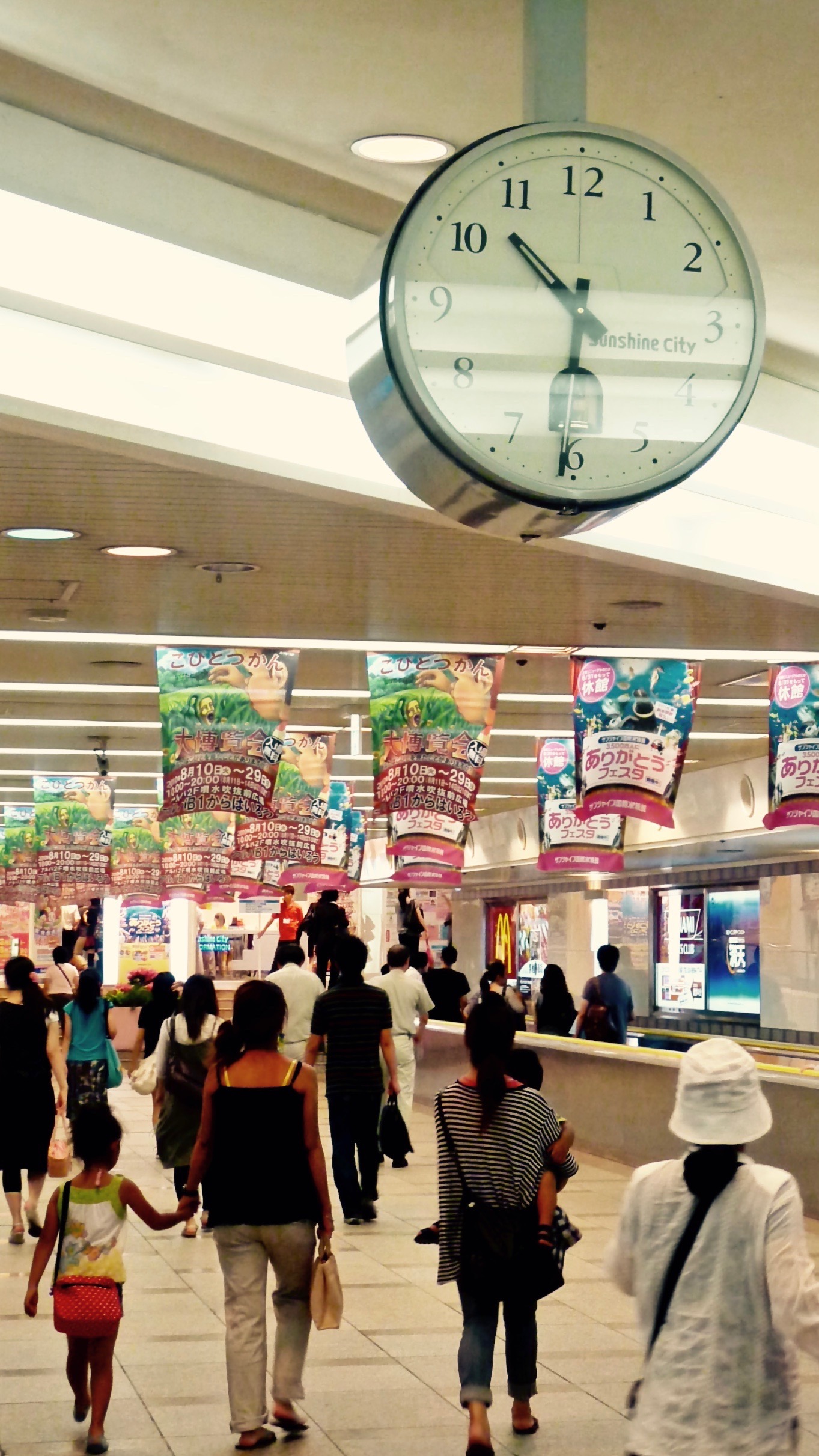
The flagship, and the one to go to if you are only doing one. 3,220 machine positions on Bandai Namco’s store page, and more than 4,000 across the displays on its feature page — the third floor of the World Import Mart Building inside Sunshine City, at 3-1-3 Higashi-Ikebukuro. Open 10:00 to 21:00 daily, all year.
Getting there: about eight minutes on foot from Ikebukuro Station, three minutes from Higashi-Ikebukuro on the Yurakucho Line, four minutes from Higashi-Ikebukuro 4-chome on the Toden Arakawa tram. The Yurakucho approach is much the easiest if you are coming from central Tokyo.
The scale is the experience. Rows run the length of the floor, organised loosely by category — anime, food miniatures, animals, gag items, licensed characters — with new sets rotated constantly. There is a designated photo spot, and an empty-capsule collection machine that runs a stamp scheme. Allow an hour minimum; most people stay longer than they planned and spend more than they intended.
It sits inside Sunshine City, so it pairs with the aquarium, the observation deck and the Pokemon Center in one building, which makes it the single most efficient family stop in this whole category.
Gashapon Department Store, Akihabara
Fourth floor of the namco Akihabara game centre, with a Bandai official shop attached. Smaller than Ikebukuro but far more convenient if you are already working through Akihabara, and the surrounding building gives you arcade floors as a bonus. This is the sensible choice for most visitors simply because you were going to Akihabara anyway.
Shibuya, Shinjuku and Harajuku
The practical difference from the Ikebukuro hall is selection: the hall carries obscure sets that a Shibuya corner does not, but a Shibuya corner is a two-minute detour and the hall is a special trip. For most visitors, the corner is the right answer and the hall is for people who have decided this is the thing they came to do.
Gachapon Kaikan and the Akihabara walls
Akihabara’s older gachapon specialist is cramped and unglamorous, and much more fun to browse than a tidy department-store aisle.
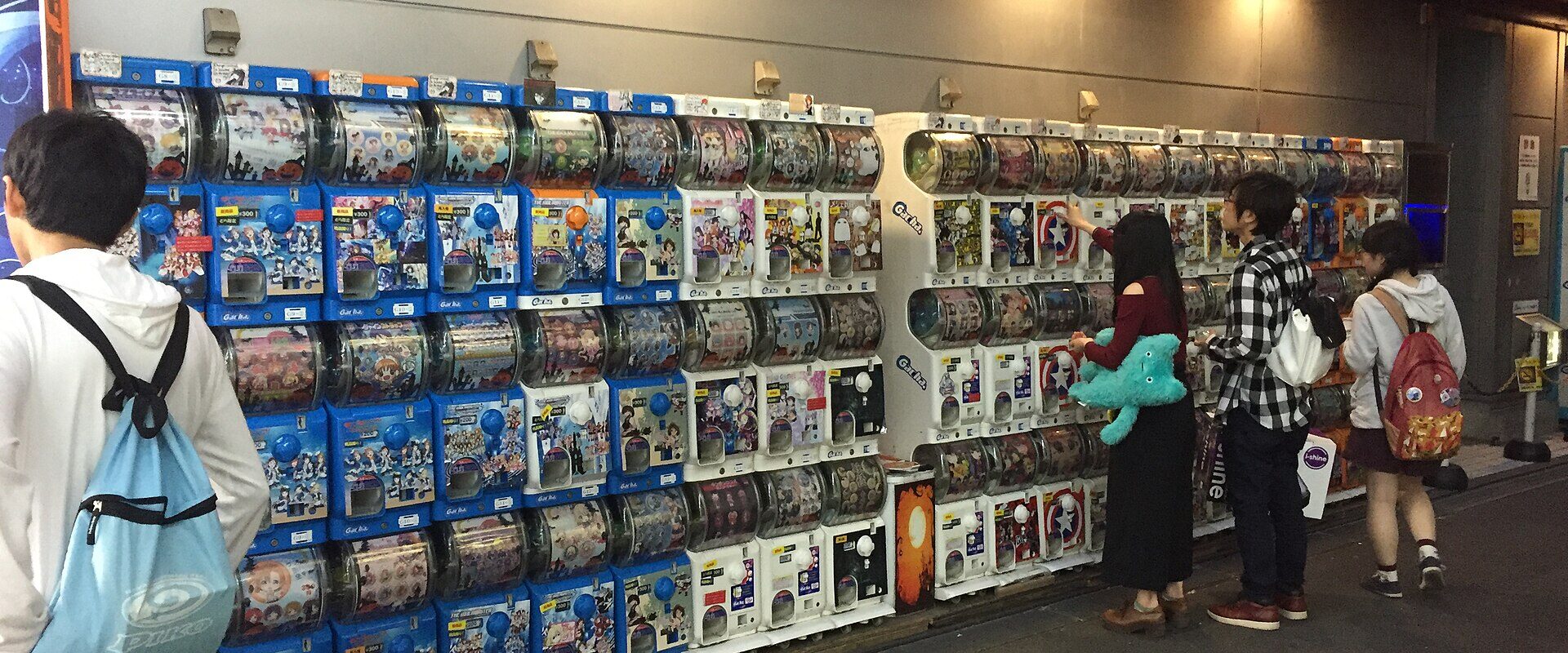
Beyond that, Akihabara has machines banked against the outside of nearly every hobby shop. The wall outside Toranoana is a landmark in its own right. These street-side banks are free to browse, open whenever the shop is, and the natural way to play a few turns without committing to a hall.
Everywhere else
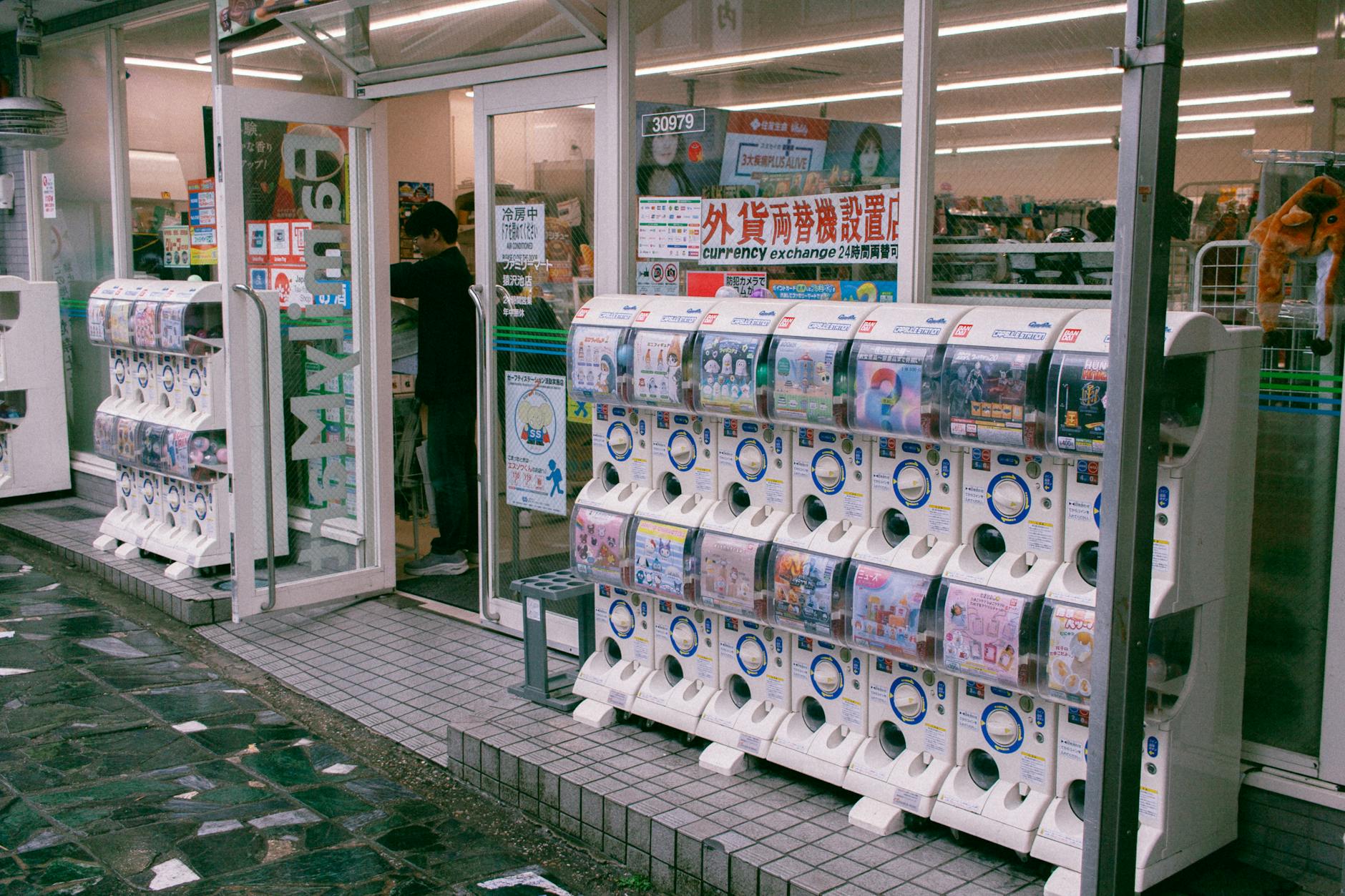
You do not need a destination. Machines cluster at station concourses, on supermarket ground floors, outside Don Quijote branches, in every arcade, and in the corridors of shopping centres. Tokyo Station’s Character Street has banks of them. Our arcade guide covers the game centres, which almost always have a gachapon floor or corner near the entrance.
What the money actually buys
| Price band | Typical contents | Worth it? |
|---|---|---|
| ¥100–200 | Tiny, simple, mostly for children | Increasingly rare; take the turn if you see one |
| ¥300 | The standard: figures, miniatures, keychains | Yes — this is the sweet spot |
| ¥400–500 | Better moulding, licensed anime, larger items | Yes if you want the specific set |
| ¥600–1,000 | Premium lines, detailed figures, electronics | Only for a set you actually care about |
| ¥1,000–2,000 | Large-format, high-end collector machines | Rarely. At this price, buy the item you want outright |
Prices vary by product: some capsules cost ¥200, many are ¥300 to ¥500, and premium lines cost more. Budget ¥1,000–2,000 for a satisfying session; anything past ¥3,000 and you are gambling rather than shopping, which is precisely what the business model intends.
Reading the header card without Japanese
You do not need to read Japanese to shop competently here, but four things on the card are worth recognising. The price is in large digits, usually bottom right, followed by 円. A number with 種 after it — 全5種, 全6種 — is the number of variants in the set. 全 means “all”, so 全6種 tells you there are six possible outcomes. A star or the word シークレット marks a secret variant that appears less often than the rest. And a photograph of the item held in a hand gives you the true scale, which is the detail people misjudge most: a great many of these things are considerably smaller than they look on the card.
The other useful habit is looking at the capsules themselves through the dome. If you can see that the machine is nearly empty, the odds on what is left are worse than advertised — the common variants go first, but so does everything else, and a machine with four capsules in it has been picked over by people who knew what they were doing.
What is actually worth collecting
Honest verdict: most capsule toys are landfill in six months. A few categories genuinely earn their space in your bag.
- Miniature food and furniture. The best-made things in the whole category. Tiny bowls of ramen, miniature konbini shelves, dollhouse-scale kitchen appliances, done with a precision that is impressive; the price is on each machine.
- Animal figures. The cat and dog series — particularly the ones by Kitan Club and similar studios — are small sculptural jokes, and they travel well.
- Anything absurd. The category’s real specialism is the joke object: sushi that transforms, animals in unlikely hats, replicas of Japanese bureaucratic stationery. These are the ones people remember, and they are the best souvenirs on the list because nobody at home has seen anything like them.
- Licensed anime figures. Fine if you want that character, but the moulding is usually worse than a ¥1,500 shop figure of the same thing. You are paying for the randomness.
Not worth it: anything you are trying to complete a set of. The number of designs depends on the series and the draw is random, so completing a set can take many turns, and the machines are designed knowing that. If you want one specific variant, look in a second-hand shop instead; Nakano Broadway and the Akihabara resale shops sell loose capsule toys by the item for a few hundred yen.

Why it works on you
Worth understanding, because knowing the mechanism is the only real defence against it. A capsule machine is a slot machine with a physical prize and no losing outcome. You always get something; the variable is whether it is the one you wanted. That structure — a guaranteed reward of unpredictable value — is the most engaging reward schedule there is, and the sets are built around it. Six variants, one of which is usually a “secret” or rarer figure, means the arithmetic of completing a set is far worse than it feels while you are standing there with a handful of coins.
The halls reinforce it: the machines are at eye level in unbroken rows, the sets rotate constantly so there is always something new, and ¥300 is small enough that no individual turn feels like a decision. This is not a criticism — it is a well-designed piece of entertainment and the toys are often genuinely good. But the difference between a delightful ¥1,500 and a resentful ¥5,000 is entirely in whether you decided your limit before or after you walked in.
A note on the older machines
Alongside the Bandai halls there is a scruffier tradition worth keeping an eye out for: older machines outside neighbourhood sweet shops and in the corners of shopping arcades, a few still charging ¥100 or ¥200.
These are disappearing, slowly, as the buildings around them are redeveloped. If you pass one, play it. It costs a hundred yen and it is a small piece of a Tokyo that the department-store version of this hobby has largely replaced.
Practical notes
Getting them home
Take the toy out of the capsule and bin the capsule — every hall has a bin for exactly this, and it saves an absurd amount of luggage space. The instruction sheet inside is worth keeping for about thirty seconds. Most items survive a suitcase without protection; anything with thin protruding parts should go inside a shoe.
With children
This is one of the genuinely great things to do with kids in Tokyo, and it is worth being deliberate about it: set a number of turns before you walk in, in cash, handed over at the start. Three turns each is a very happy twenty minutes. An open-ended budget in a hall of thousands of machines is a different afternoon entirely. Our Tokyo with kids guide has more in this vein.
As souvenirs
Prices vary by machine, so read the label before you turn the dial. A capsule toy is a small, specifically Japanese souvenir that fits in a coat pocket. Our souvenir guide covers the rest of the field.
Rainy days
The Ikebukuro hall is entirely indoors and connected to the rest of Sunshine City, which makes it a solid wet-weather plan for a family. See our rainy day guide for what to attach it to.
The one-hour plan
If you want this done well rather than done thoroughly: break a note into ¥100 coins at a vending machine, go to the Ikebukuro hall around opening at 10:00 when it is quiet, walk the whole floor once without spending anything, then go back and play four or five machines you actually liked. Bin the capsules, and go and look at the aquarium.
That is about ¥1,500 and a genuinely good hour. The failure mode is arriving with no plan, playing the first machine you see, and repeating that fifteen times — which costs ¥4,500 and produces a bag of things you do not want. For where this sits in the wider fan geography of the city, see our Tokyo anime guide.
Frequently Asked Questions
How much does gachapon cost in Tokyo?
Prices vary by machine and are shown on the label. Bandai’s catalogue includes capsules at ¥200, many at ¥300–500, and premium machines at ¥600, ¥800, ¥1,000 and ¥1,500. Budget ¥1,000–2,000 for a session; past ¥3,000 you are chasing a specific item, which is exactly what the format is designed to encourage.
Where is the biggest gachapon store in Tokyo?
One of the largest is Gashapon Department Store Ikebukuro, on the third floor of the World Import Mart Building inside Sunshine City. Bandai Namco’s store page lists 3,220 machine positions, and its feature page advertises more than 4,000 across the displays. It opens 10:00 to 21:00 daily, all year round, and is about eight minutes’ walk from Ikebukuro Station or three minutes from Higashi-Ikebukuro on the Yurakucho Line.
Do gachapon machines take cards or notes?
It depends on the machine, so read the payment instructions on each one. Conventional machines take coins, inserted one at a time, premium machines accept ¥100 and ¥500 coins, and Smart Gashapon machines take transport IC cards. Large chain halls have change machines, but carry coins. Break a note into ¥100 coins before you go.
Can you choose which toy you get from a gachapon machine?
No. Each machine holds one set of typically five or six variants, shown on the card above the dome, and the capsule you receive is random. There is no way to select or to see what is inside before you turn the dial. If you want one specific variant, buying it loose from a second-hand shop is much cheaper than playing until it appears.
What should I do with the empty capsule?
Bin it in the capsule recycling container beside the machines — every hall and most street-side banks provide one, and using it is standard etiquette rather than optional. Take the toy and the instruction sheet, drop the plastic shell. It also saves a surprising amount of space in your luggage.
Photo Credits
- Bank of capsule toy machines outside an Akihabara shop – Gashapon Machines by Ominae, CC BY-SA 4.0, via Wikimedia Commons.
- Capsule machine dials and coin slots – Capsule toy machine 20211229 142535 by Ka23 13, CC BY 4.0, via Wikimedia Commons.
- Sunshine City shopping passage: On the way to Sunshine City サンシャインシティ in Ikebukuro, Tokyo, Japan (26295481219) by Arjan Richter, CC BY 2.0, via Wikimedia Commons.