Tokyo Onsen & Wellness · Guide №175
Tattoo-Friendly Onsen in Tokyo: Where You Will Actually Be Let In
Tokyo's regulated neighbourhood bathhouses are the place to start. Which venues welcome tattooed bathers, where cover stickers work, how to ask, and the options that never fail.
目次 — Contents
- Why the rule exists, and where it applies
- Reading a venue’s policy before you leave the hotel
- The bathhouses that welcome tattoos openly
- Cover stickers: what they are and when they work
- The certain options
- How to ask, and what to do if the answer is no
- Finding others yourself
- Frequently Asked Questions
- Photo Credits
This article contains advertising. Our booking links are routed through a partner that adds commission tracking automatically, so if you book through one we earn a commission from the provider, at no extra cost to you. It never affects what we recommend. Affiliate disclosure
Finding a tattoo friendly onsen Tokyo will actually let you into is easier than the internet suggests, but not in the way most guides imply. The answer is rarely a special venue with a welcome sign. Start with the ordinary neighbourhood bathhouse down the street instead, and check its tattoo policy before you go.
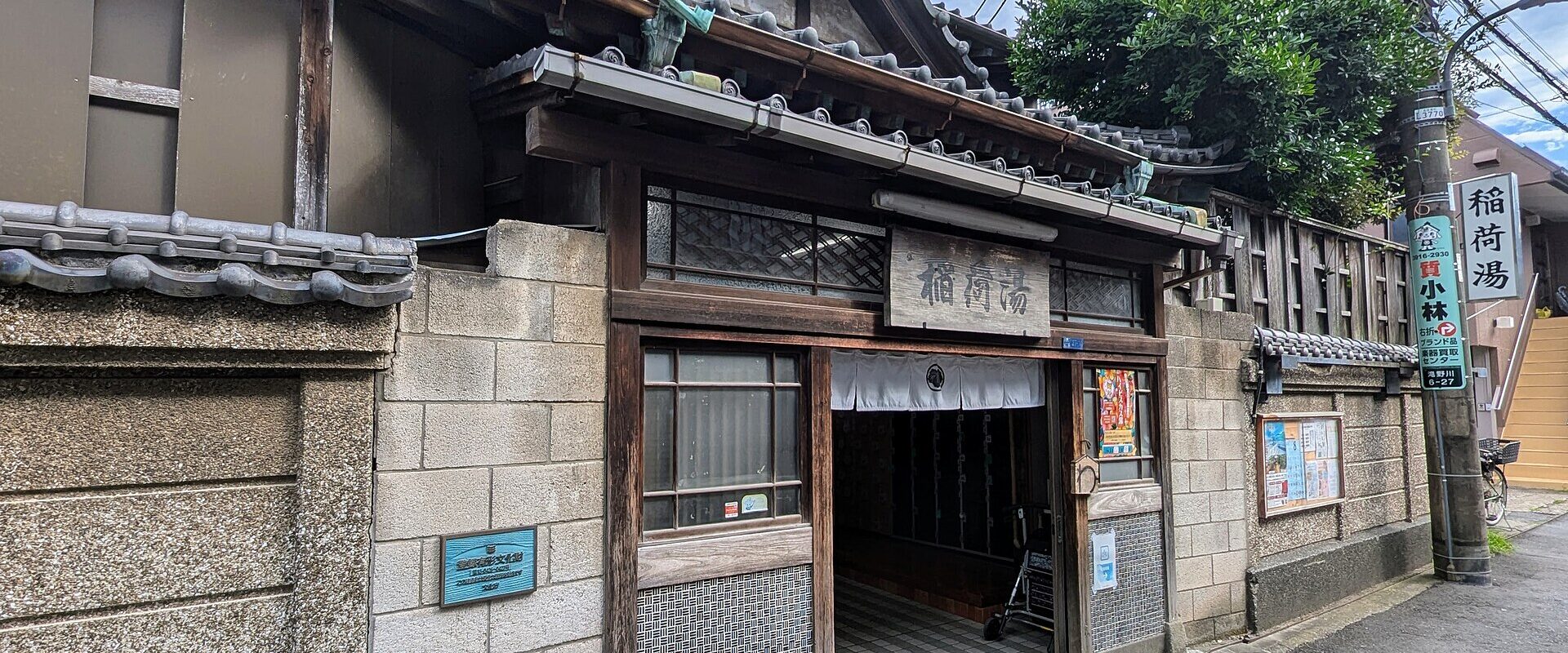
That is the single most useful thing on this page, so it goes first. Tokyo’s price-regulated public bathhouses — sento — are licensed public hygiene facilities serving the people who live around them, and the large majority simply do not ask about tattoos. The blanket bans people worry about belong overwhelmingly to a different category of business: the large commercial day-use complexes, hotel spas and resort onsen. Knowing which building you are standing outside solves most of the problem.
Why the rule exists, and where it applies
The association is with organised crime. Full-body irezumi was for decades a marker of yakuza membership, and bathhouses that wanted to keep that clientele out adopted a visible tattoo ban as the simplest available filter. The rule spread through the commercial bathing industry and hardened into a default that now catches people it was never aimed at: a traveller with a small ankle piece, a rugby player, someone with a memorial tattoo.
Attitudes are moving, slowly and unevenly, pushed by tourism and by a generation of Japanese people who have tattoos themselves. The government has encouraged operators to adopt covering policies rather than outright bans. But nothing has been mandated, which means the position is set venue by venue, and it changes.
Roughly where you stand in 2026:
| Type of venue | Typical position | Your odds |
|---|---|---|
| Neighbourhood sento (¥600) | No published rule; usually no question | Good |
| Onsen sento (regulated price, real spring) | Usually the same as above | Good |
| Large day-use onsen | Explicit ban, or cover stickers required | Poor without covering |
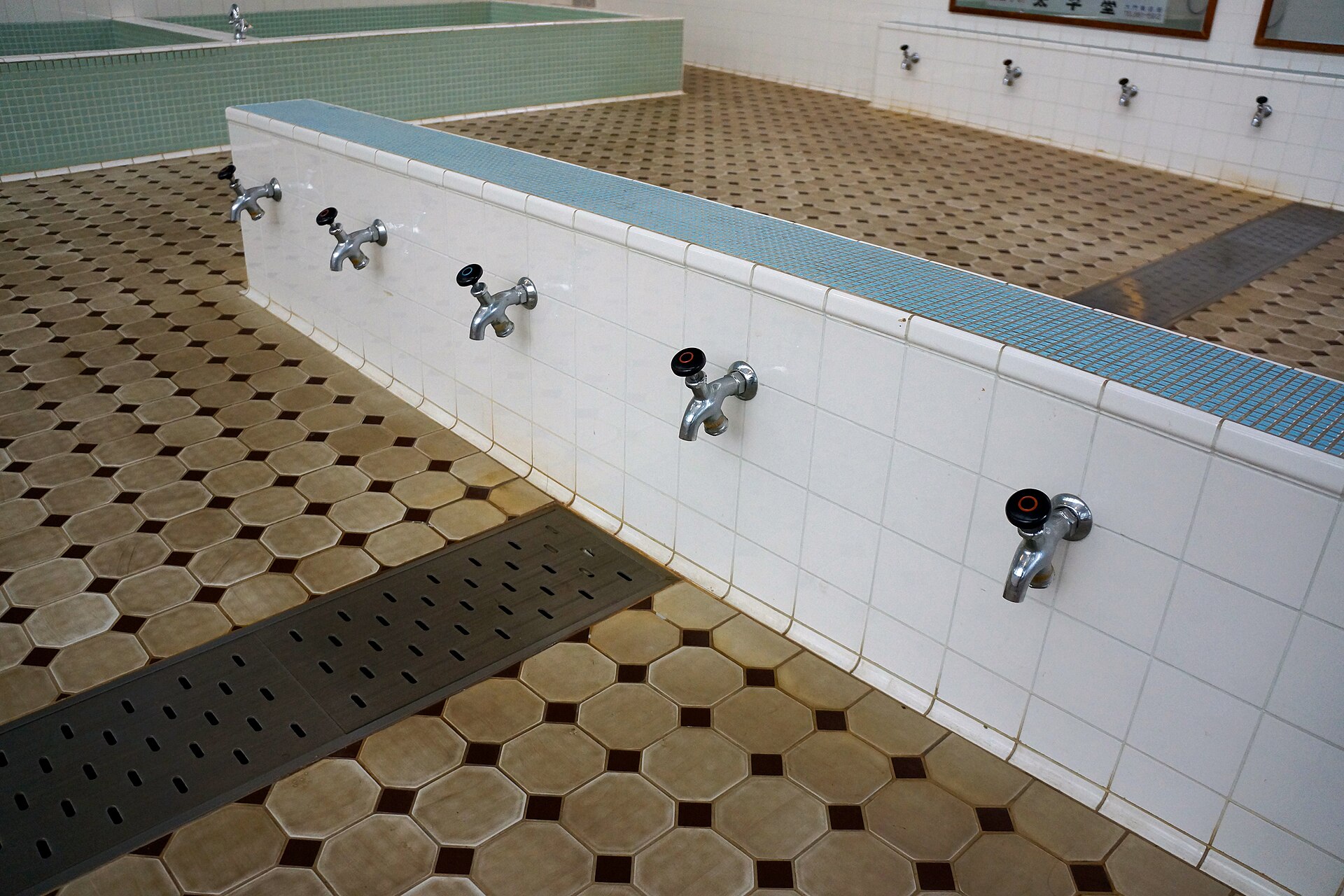
| Super sento and spa complexes | Explicit ban, enforced at reception | Poor |
| Hotel and resort onsen | Usually banned in communal baths | Poor |
| Private kashikiri bath | Nobody asks anything | Certain |
| Ryokan room with private bath | Not applicable | Certain |
| Gyms, pools, water parks, some beaches | Banned, often strictly | Poor |
Note what that table says: the cheapest bathing in Tokyo is also the most welcoming, and the expensive leisure complexes are the ones that will turn you away. That is the opposite of what most people assume.
Reading a venue’s policy before you leave the hotel
Ninety per cent of the uncertainty disappears if you check the venue’s own Japanese page rather than a list. You do not need to read Japanese — you need to recognise four strings, and a translation app will do the rest.
- 入れ墨・タトゥーの方はご遠慮ください — “guests with tattoos are asked to refrain”. This is a refusal, politely worded. Do not go.
- タトゥーシールで隠してください — “please cover with a tattoo sticker”. Admission with covering.
- タトゥーOK or 入れ墨可 — tattoos permitted. This is an explicit welcome and the venue means it.
- Nothing at all on the subject — the normal state of a neighbourhood bathhouse, and in practice a good sign rather than an ambiguous one.
Two further checks are worth thirty seconds each. Look at the riyou annai or go-riyou no annai page, which is where usage rules live, rather than the home page. And look at the photographs: a venue that photographs its own customers in the baths is a commercial operation with a rulebook, while one whose gallery is all empty tubs and tiled walls is a bathhouse.
The bathhouses that welcome tattoos openly
These three are well-known tattoo-friendly bathhouses in Tokyo, and all three are proper bathhouses rather than tourist attractions. Policies change. Check each venue’s own website on the day you plan to go — a stale list is exactly how somebody ends up being turned away at a counter, and no guide, this one included, can promise what a reception desk will do next month.
Daikoku-yu, Oshiage
A Sumida institution operating since 1949, with a sauna and a large outdoor bath on one side of the building. It is the best-known name on any tattoo-friendly list for Tokyo, and it is also simply one of the better bathhouses in the city.
- Address: 3-12-14 Yokogawa, Sumida-ku.
- Getting there: six minutes on foot from Oshiage, fifteen from Kinshicho.
- Admission: adult ¥600, junior high ¥500, elementary ¥200, infant ¥100.
- Sauna: charged separately — ¥370 weekday and ¥400 weekend on the large outdoor side, ¥300 and ¥330 on the carbonated bath side.
- Hours: weekdays 15:00 through to 10:00 the following morning; Saturdays from 14:00; Sundays and holidays from 13:00.
- Closed: Tuesdays, moving to Wednesday when the Tuesday is a public holiday.
One honest note: Daikoku-yu’s own English pages do not publish a tattoo policy either way. That is normal for a Tokyo sento and is itself the point — the absence of a rule is the rule. It is not the same as a written guarantee, and if certainty matters to you, ask before you undress rather than after.
Oshiage is at the foot of the Skytree, which makes this the easy one to slot into an existing plan — see our Skytree comparison if the tower is on your list.
Kosugiyu, Koenji
A Suginami bathhouse dating from 1933, renovated into something genuinely design-led without losing its function as a local bath. Tattooed bathers are welcomed in the communal baths without any covering requirement, and the local tourism material says so openly.
Koenji itself is one of the better neighbourhoods in Tokyo to spend an evening — second-hand clothing, small live music venues and an enormous density of tiny bars — and it is four minutes from Shinjuku on the Chuo line. Bath then izakaya is the correct order; our izakaya guide covers the rest.
Mikokuyu, Ryogoku
More than seventy years old, in the sumo district, with indoor baths, an outdoor rotenburo and massage services. Check its tattoo policy at the desk before you pay.
Ryogoku is worth building a day around: the Kokugikan, the Edo-Tokyo Museum area and a neighbourhood full of chanko-nabe restaurants serving the stew that sumo wrestlers eat. Our sumo guide explains when the tournaments run and how to get in.
Cover stickers: what they are and when they work
The mainstream compromise, and a genuinely useful one if your tattoo is small.
Cover stickers are flesh-toned waterproof patches, sold in drugstores, on Amazon Japan and at the reception desks of many bathing venues. They stay on in hot water for an hour or two if applied to clean, dry skin. Sizes vary, from small round patches up to large sheets.
How venues treat them varies, and the wording matters. Maenohara Onsen Saya-no-Yudokoro in Itabashi, for example, refuses large tattoos outright but admits small ones provided they are completely covered by two of its designated 11 × 20 cm cover stickers, which it sells on site. That is a typical formulation: a size limit expressed as how much sticker it takes to hide.
What this means practically:
- A wrist, ankle or small shoulder piece is usually solvable with stickers, and many venues will tell you so if you ask at the desk.
- A sleeve, a back piece or anything across the torso is not. No amount of sticker will satisfy a venue with a size rule, and attempting it will be an uncomfortable conversation.
- Buy them before you travel to the venue. Not every place stocks them, and turning up hoping is a poor plan.
- Applying one is not deception. Where a venue’s rule says covered, covered is compliant and staff will treat it as such.
Applying them properly
A sticker that peels off in the water is worse than not using one, because it becomes everybody’s problem rather than just yours. Apply to skin that is completely clean and dry, before you go anywhere near the changing room — sunscreen, moisturiser and sweat all defeat the adhesive. Press the whole surface down firmly, edges first. Avoid the sauna if you can, since prolonged dry heat lifts the edges faster than hot water does. And carry a spare, because one will fail at the worst moment.
When you finish, peel it off in the changing room and bin it. Do not leave it floating in a bath, which is the single fastest way to make a venue reconsider its covering policy for everyone who comes after you.
The certain options
If you would rather not gamble at a reception desk at all — and with a large tattoo, you should not — three routes work every time.
A private kashikiri bath
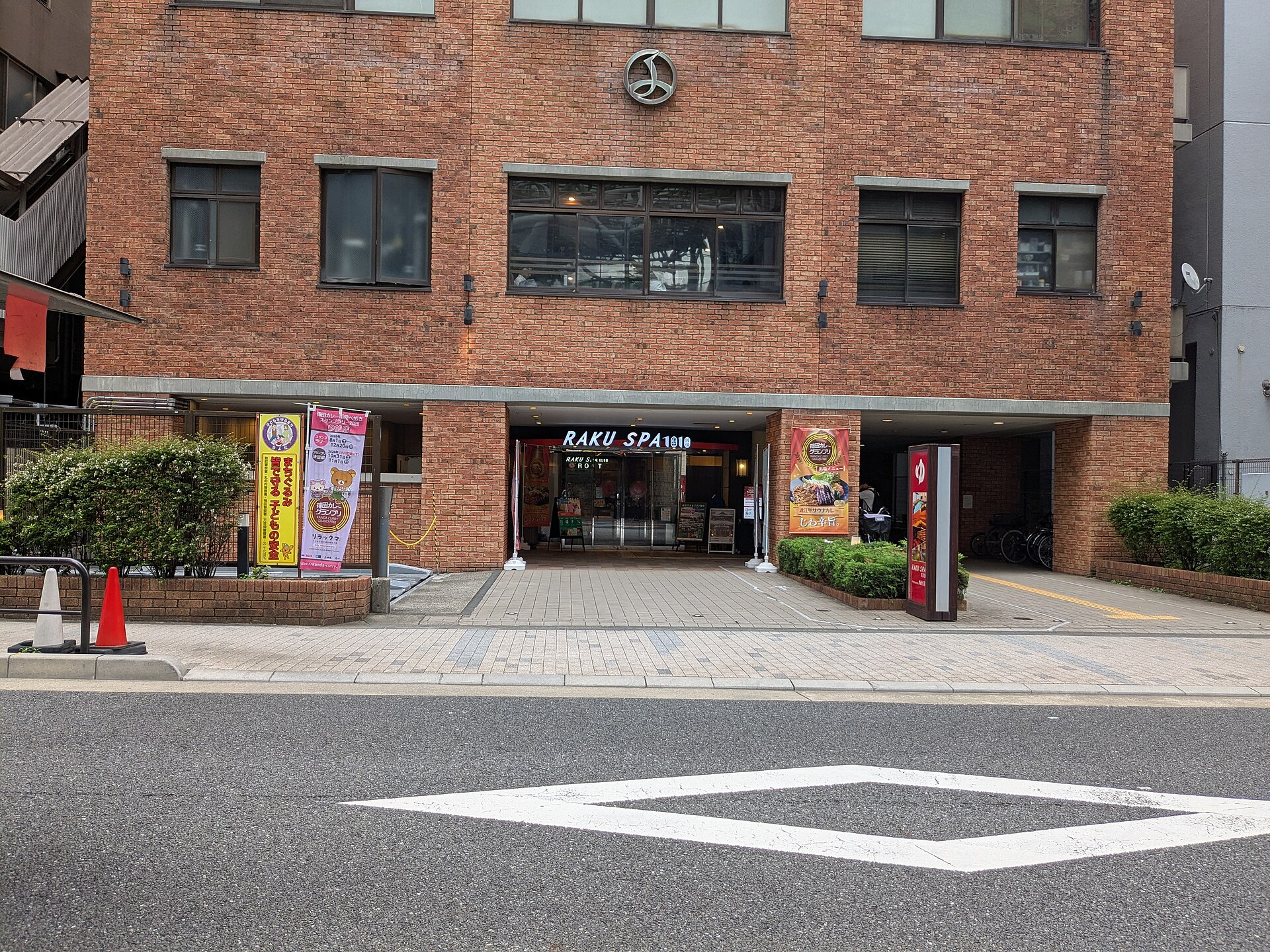
Kashikiri means reserved, and it refers to a private bath rented by the hour, usually in blocks of forty-five or sixty minutes. Many day-use onsen and most ryokan offer them. You lock the door, nobody sees anything, and the tattoo question does not arise. Expect to pay somewhere between ¥2,000 and ¥6,000 for the room rather than per person, which makes it good value for two.
A room with its own bath
A number of ryokan and onsen hotels within reach of Tokyo have rooms with a private open-air bath attached. It is the most expensive answer and the most comfortable one, and it is the standard recommendation for a couple where one person is heavily tattooed. Our ryokan guide covers what to look for, and the Hakone guide is the nearest place to do it properly.
A day trip to a town that does not mind
Some onsen towns outside Tokyo are markedly more relaxed than the city’s commercial venues, particularly the older, smaller ones where the baths are run by the municipality or by a co-operative rather than by a leisure operator. Public bathhouses in onsen towns — the soto-yu that residents use, often costing a few hundred yen and staffed by nobody at all — are frequently the easiest baths in Japan to get into with a tattoo, precisely because they are civic infrastructure rather than a business. Our day trips guide covers which towns are reachable in a day.
A foot bath
Underrated. Ashiyu footbaths are free or nearly free, are found in onsen towns and at some stations, and are used fully clothed. No rules apply. It is not a bath, but on a cold day at the end of a long walk it is a genuinely good twenty minutes.
Saunas, which are a separate question
Worth flagging because Japan’s sauna boom has produced a wave of new venues aimed squarely at a younger crowd, and their attitudes are noticeably more relaxed than the older leisure complexes. Several sauna-led bathhouses in Tokyo either permit tattoos outright or run designated hours when they do.
The catch is that where a sauna sits inside a bathing facility, the venue’s overall policy governs, because you cannot reach the sauna without crossing the bathing floor. Check the facility, not the sauna. Note also that sauna access is usually charged on top of admission, as at Daikoku-yu, where it adds ¥300–400 depending on the day and which side of the building you use.
How to ask, and what to do if the answer is no
The phrase is irezumi ga arimasu ga, daijoubu desu ka? — “I have a tattoo, is that all right?” Say it at the desk, before you pay, with the tattoo visible if it is small. Staff deal with this and will give you a straight answer, usually a yes, sometimes a yes with stickers, occasionally a no.
If the answer is no, take it and leave. Arguing at a bathhouse counter will not change a policy set by an owner, it makes life difficult for a member of staff who did not write the rule, and it feeds a stereotype about foreign visitors that the people who come after you will have to live with. There is another bathhouse within a kilometre in almost any part of Tokyo.
Two practical notes. Be honest rather than hopeful: getting into the changing room and then being asked to leave is a far worse experience than a thirty-second conversation at the desk. And do not assume that being refused is about you personally: tattoo rules vary from venue to venue, and Thermae-yu in Shinjuku, for example, sets different conditions for Japanese residents, overseas tourists and women.
Finding others yourself
The three named above are not the only ones. Tokyo has something on the order of a dozen and a half bathhouses that are documented as welcoming tattooed bathers, clustered in Sumida, Taito, Shinagawa, Suginami and Shinjuku wards, plus an unknown and much larger number that simply have no rule.
How to find them:
- Start with the venue’s own site. A Japanese page saying 入れ墨・タトゥーの方はご遠慮ください is a refusal. Silence usually means no rule. A page that explicitly says タトゥーOK is a welcome.
- Look for the price. ¥600 is the regulated adult ceiling for a sento, which tells you what kind of place you are walking into, but the price alone does not settle the tattoo question, so check the venue’s own policy.
- Use a specialist directory, then verify. Several sites maintain tattoo-friendly listings for Japan with dates attached. They are a good starting point and a bad final answer — check the venue itself.
- Ask your accommodation. Hotel and hostel staff often know which local bathhouse is relaxed, and will phone to ask if you request it.
And the wider context is worth having: our guide to onsen in Tokyo explains which of the city’s baths draw genuine hot spring water, and the etiquette guide covers what to do once you are in — because being welcome is only half of it, and washing properly before you get in the tub matters considerably more to the people around you than what is on your arm.
Frequently Asked Questions
Can you go to an onsen in Tokyo with tattoos?
Often, yes. Tokyo’s price-regulated neighbourhood bathhouses mostly have no tattoo rule at all, and several — including Daikoku-yu in Sumida, Kosugiyu in Suginami and Mikokuyu in Ryogoku — are documented as welcoming tattooed bathers in the communal baths. Large commercial day-use onsen, super sento, hotel spas and resort onsen are much more likely to refuse or to require adhesive cover stickers.
Do cover-up stickers work at Japanese onsen?
For small tattoos, usually. Waterproof flesh-toned patches are sold in drugstores and at many venue receptions, and where a venue’s rule is worded as “must be covered”, using one is compliant rather than a dodge. Maenohara Onsen in Itabashi, for instance, admits small tattoos covered by two of its 11 × 20 cm stickers. They do not solve a sleeve, a back piece or anything a venue classes as large.
Which Tokyo bathhouses are tattoo-friendly?
Daikoku-yu in Oshiage, Kosugiyu in Koenji and Mikokuyu in Ryogoku are three well-known tattoo-friendly neighbourhood bathhouses. Tokyo has roughly a dozen and a half documented tattoo-friendly venues, clustered in Sumida, Taito, Shinagawa, Suginami and Shinjuku wards. Policies change, so confirm on the venue’s own website before travelling.
How do I ask whether tattoos are allowed?
At the reception desk, before paying, say irezumi ga arimasu ga, daijoubu desu ka? — “I have a tattoo, is that all right?” Show it if it is small. You will get a straight answer. Asking first is far better than being asked to leave the changing room, and if the answer is no, accept it and find another bathhouse rather than arguing.
What if my tattoo is too big to cover?
Book a private kashikiri bath, rented by the hour at many day-use onsen and most ryokan, or stay somewhere with a private bath attached to the room. Both remove the question entirely. Public foot baths, used fully clothed, are another option and are usually free. A large visible tattoo makes communal bathing at commercial venues genuinely difficult, and planning around that is less disappointing than testing it.
Photo Credits
- A historic Tokyo bathhouse frontage – 滝野川稲荷湯 2025 by Panam, CC0, via Wikimedia Commons.
- A day-use bathhouse and spa complex in central Tokyo – Rakuspa 1010, a public bathhouse in Chiyoda Ward by いてれぇた, CC BY-SA 3.0, via Wikimedia Commons.
- A private bath at Kanaguya ryokan: 渋温泉金具屋旅館の斎月の湯 by Komoro no kaze, CC BY-SA 4.0, via Wikimedia Commons.
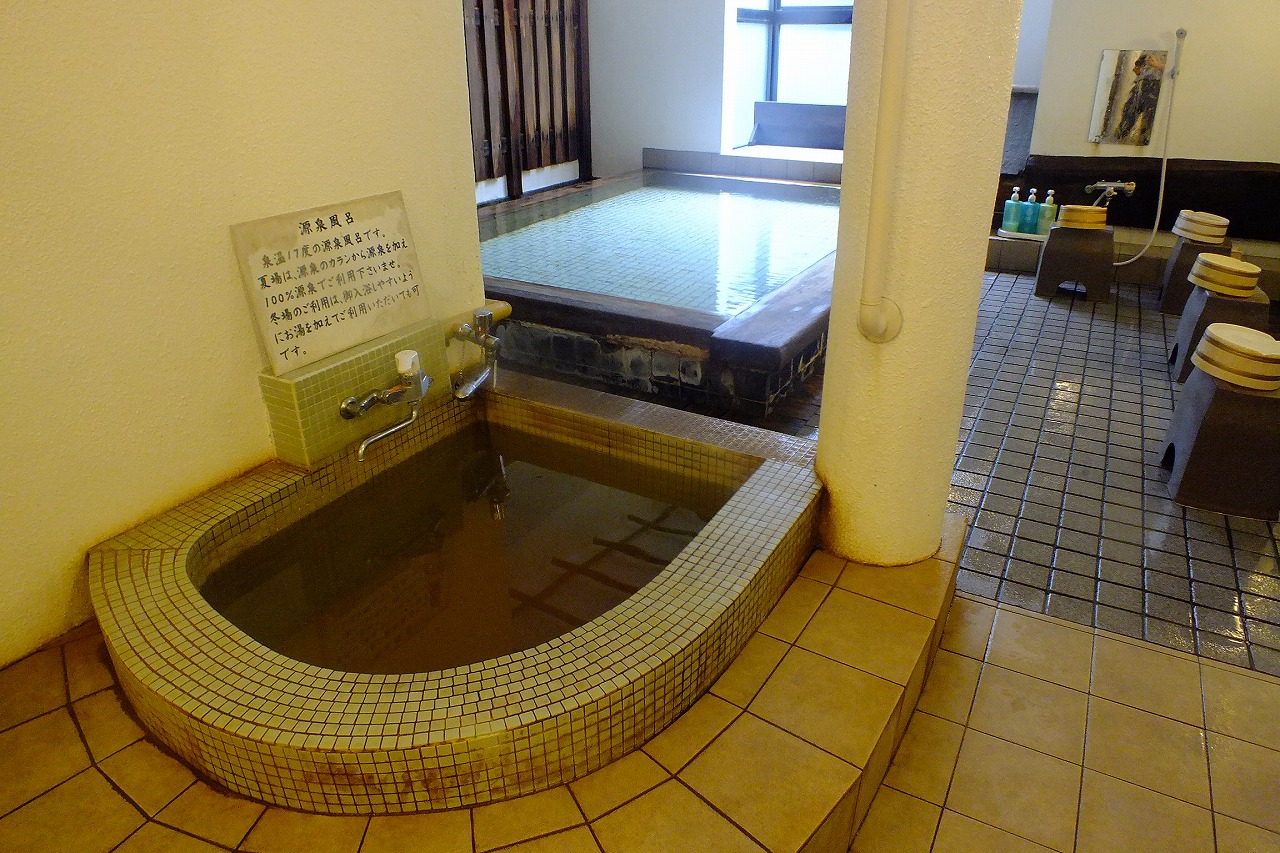
- The bathing-room layout at Ueyama Ryokan: 2015-10-01 Sioda-Onsen Ueyama Ryokan(湯元上山旅館) 1082 by Bounta Nanthavong, CC BY-SA 4.0, via Wikimedia Commons.
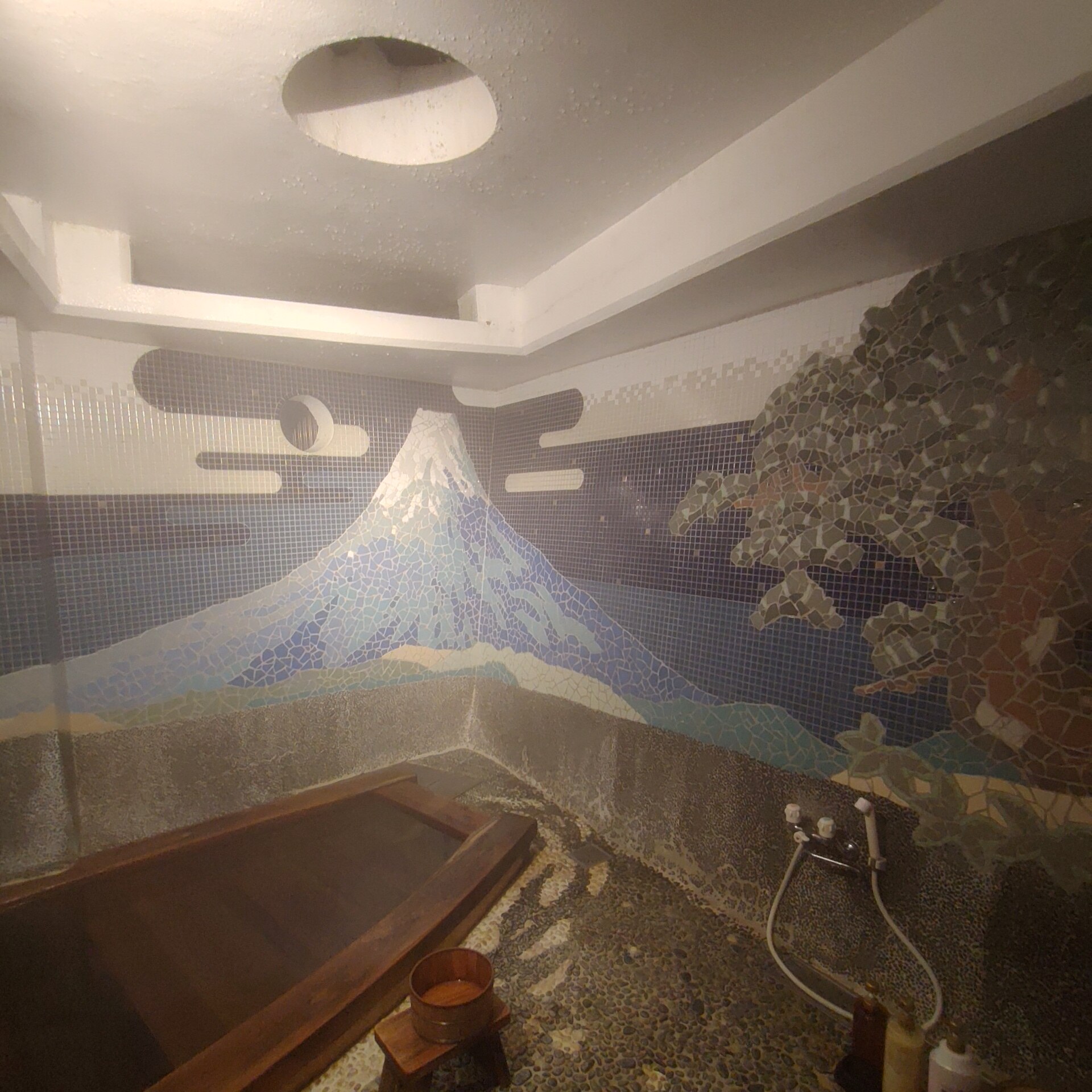
- The low taps at Kodakarayu: Tap of Men’s Bath of Kodakara-Yu by Kentaro Ohno, CC BY 2.0, via Wikimedia Commons.