Tokyo Onsen & Wellness · Guide №174
Onsen in Tokyo: Real Hot Springs Inside the City
Genuine hot spring water drawn from beneath Tokyo, including black kuroyu springs, from 600 yen. Which baths are real, what they cost, the etiquette, the tattoo rules, and why Oedo Onsen is no longer an option.
目次 — Contents
- First, the thing you may have been planning
- Onsen, sento, super sento: what the words mean
- Kuroyu: Tokyo’s black water
- The real onsen inside the city
- How to read a bathhouse before you go in
- Super sento, and whether to bother
- What it costs
- The etiquette, in ninety seconds
- Tattoos
- When a day trip is the better answer
- Practical details
- Which one should you choose?
- Frequently Asked Questions
- Photo Credits
This article contains advertising. Our booking links are routed through a partner that adds commission tracking automatically, so if you book through one we earn a commission from the provider, at no extra cost to you. It never affects what we recommend. Affiliate disclosure
There are real onsen in Tokyo — not spa-branded swimming pools, but genuine hot spring water drawn from beneath the city and poured into baths you can simply walk into. The famous one, Oedo Onsen Monogatari, has closed. Here is what actually exists.
Tokyo sits on the Kanto plain, which is not volcanic in the way Hakone or Kusatsu are. What it has instead is deep groundwater — hot in places, mineral-rich almost everywhere, and in one distinctive local case stained black by dissolved plant matter from the age of the dinosaurs. Drill deep enough anywhere in the twenty-three wards and you will hit water that legally qualifies as a hot spring. Dozens of establishments have done exactly that.
First, the thing you may have been planning
Oedo Onsen Monogatari in Odaiba is permanently closed. It shut on 5 September 2021. It is still the top result in a depressing number of search listings and still appears in printed guidebooks, and people arrive in Odaiba looking for it every week. It is gone. There is no replacement on that site.
That matters because Oedo Onsen was a big themed complex with yukata, food stalls and a foot bath, designed for exactly the visitor reading this page, and it operated from March 2003 until September 2021. Its closure left a gap that the city’s genuine onsen have quietly filled, and they are better, cheaper and less theatrical than the thing they replaced.
Onsen, sento, super sento: what the words mean
These get used interchangeably in English and they mean three different things in Japan. The distinction determines what you pay and what you get.
| Onsen | Sento | Super sento | |
|---|---|---|---|
| Definition | Legally defined hot spring water | Public bathhouse, ordinary heated water | Large leisure bathing complex |
| Price | ¥600–1,500 | ¥600, capped by the city | From ¥3,500 at Spa LaQua |
| Facilities | Varies wildly | Tubs, showers, nothing else | Saunas, restaurants, relaxation floors |
| Bring your own towel | Usually rentable | Yes, or buy at the desk | Included or rentable |
| Time to allow | 1–2 hours | 45 minutes | 3 hours to all day |
| Feels like | A proper bath | A neighbourhood institution | A day out |
The legal definition matters more than you would expect. Japan’s Hot Spring Law sets out what counts: water from underground at a specified temperature, or containing specified minerals above specified concentrations. A venue advertising onsen has met that test and will usually display the analysis certificate on the wall — a framed sheet listing the source, the temperature at the wellhead and the mineral content in milligrams per kilogram. If you see that certificate, the water is real.
Crucially, an onsen can be a sento. Several of the best baths in Tokyo are ordinary neighbourhood bathhouses that happen to have drilled a well and hit hot spring water, and they charge the regulated sento price of ¥600 for it. That is the sweet spot of this entire subject.
Kuroyu: Tokyo’s black water
The local speciality, and the reason a Tokyo onsen is worth doing even if you are also going to Hakone.
Kuroyu means black water, and that is not a metaphor. The water comes out the colour of strong tea or, at the better sources, genuinely close to black — dark enough that you cannot see your own hand once you are submerged past the wrist. The colour is humic acid: dissolved organic matter from ancient plant material in the Kanto groundwater, laid down over geological time and drawn up from hundreds of metres below the streets.
It is usually a cold spring, reheated, which does not diminish it. The water is soft, faintly slippery, and has a long-standing local reputation for being good for the skin. Whatever the dermatological truth of that, sitting in an outdoor bath of black water on a January evening with an office block visible over the fence is a very specific Tokyo pleasure, available for the price of two coffees, and there is nothing quite like it in Hakone or anywhere else.
The other local colour is ogon-yu, golden water — an amber-to-brown iron and salt spring that several of the same establishments also draw. A handful of places have both and will run them in separate tubs so you can compare.
The real onsen inside the city
Maenohara Onsen Saya-no-Yudokoro, Itabashi
The best all-round onsen inside Tokyo, and the one to go to if you are only doing one.
The water is genuinely free-flowing — drawn on site, not circulated and not chemically treated, which is rarer in the city than the marketing at most venues suggests. It comes up a translucent white-to-olive green, and Tokyo regulations cap the daily extraction at fifty tonnes, which is a real constraint the operator works within rather than a slogan. There are indoor and outdoor baths, a proper wooden bathhouse building, a garden, and a tatami rest floor.
- Admission: adult ¥970 weekdays, ¥1,300 weekends and holidays; primary-school children and under ¥600 and ¥900.
- Hours: 09:00–24:00, last admission 23:00.
- Address: 3-41-1 Maenocho, Itabashi-ku.
- Getting there: Toei Mita Line to Shimura-Sakaue, eight minutes on foot from exit A2.
- Tattoos: large tattoos are refused. Small ones must be completely covered by two cover stickers of 11 × 20 cm, sold on site.
It is about thirty-five minutes from Otemachi on one train, which is the other reason it works: no changes, no faff, and you are in a different and much quieter part of Tokyo when you come out.
Musashikoyama Onsen Shimizu-yu, Shinagawa
The value pick, and the one that best demonstrates why Tokyo bathing is under-appreciated. Founded in 1923, rebuilt since, and operating as a sento — which means the city-capped price, ¥600 for an adult since August 2026 — while drawing two separate hot springs on site: kuroyu black water and ogon-yu golden water, in different tubs, with an outdoor bath.
Six hundred yen. For two different natural hot springs and a rotenburo you can look at the sky from. There is nothing else in Tokyo that offers that ratio, and you will be bathing alongside people from the surrounding streets who have been coming for forty years.
- Admission: ¥600 adult, the regulated Tokyo sento fee.
- Hours: 12:00–24:00 weekdays, Saturdays and holidays; 08:00–24:00 on Sundays; closed Mondays, except when the Monday is a public holiday.
- Address: 3-9-1 Koyama, Shinagawa-ku, a few minutes from Musashi-Koyama station on the Tokyu Meguro Line.
The Monday closure catches people out. Check before you travel; a great many Tokyo bathhouses take a weekday off and it is very often Monday.
Tokyo Somei Onsen SAKURA, Sugamo
The most refined of the three, and the easiest to reach from central Tokyo. A purpose-built Japanese-style building with a garden, drawing amber water from 1,800 metres below Sugamo. Open 10:00–23:00, near Sugamo station.
Sugamo is worth the trip on its own account — it is the district nicknamed Harajuku for grandmothers, with a shopping street aimed squarely at Tokyo’s older residents, a famous temple, and an atmosphere entirely unlike anywhere else on the Yamanote line. Bath, then the shopping street, then a very good and very cheap lunch, is an excellent half-day.
The ones on the edges
Beyond the big three there are dozens of smaller onsen sento scattered through Ota, Setagaya, Adachi and Katsushika wards — Ota in particular has an unusual concentration of black-water springs, a legacy of the geology under the south-east of the city. These are neighbourhood businesses, and the adult price is capped at ¥600.
There is also a day-use onsen with a Japanese garden and a swimsuit bathing zone in Nerima, beside the site of the former Toshimaen amusement park — the park itself closed in 2020 and is now the Warner Bros. Studio Tour. Confirm it is trading before you make the trip; venues in that category have had a difficult decade, and this page would rather send you somewhere that is definitely open.
How to read a bathhouse before you go in
Three things on the outside of a building tell you most of what you need to know, and none of them require Japanese beyond recognising a couple of characters.
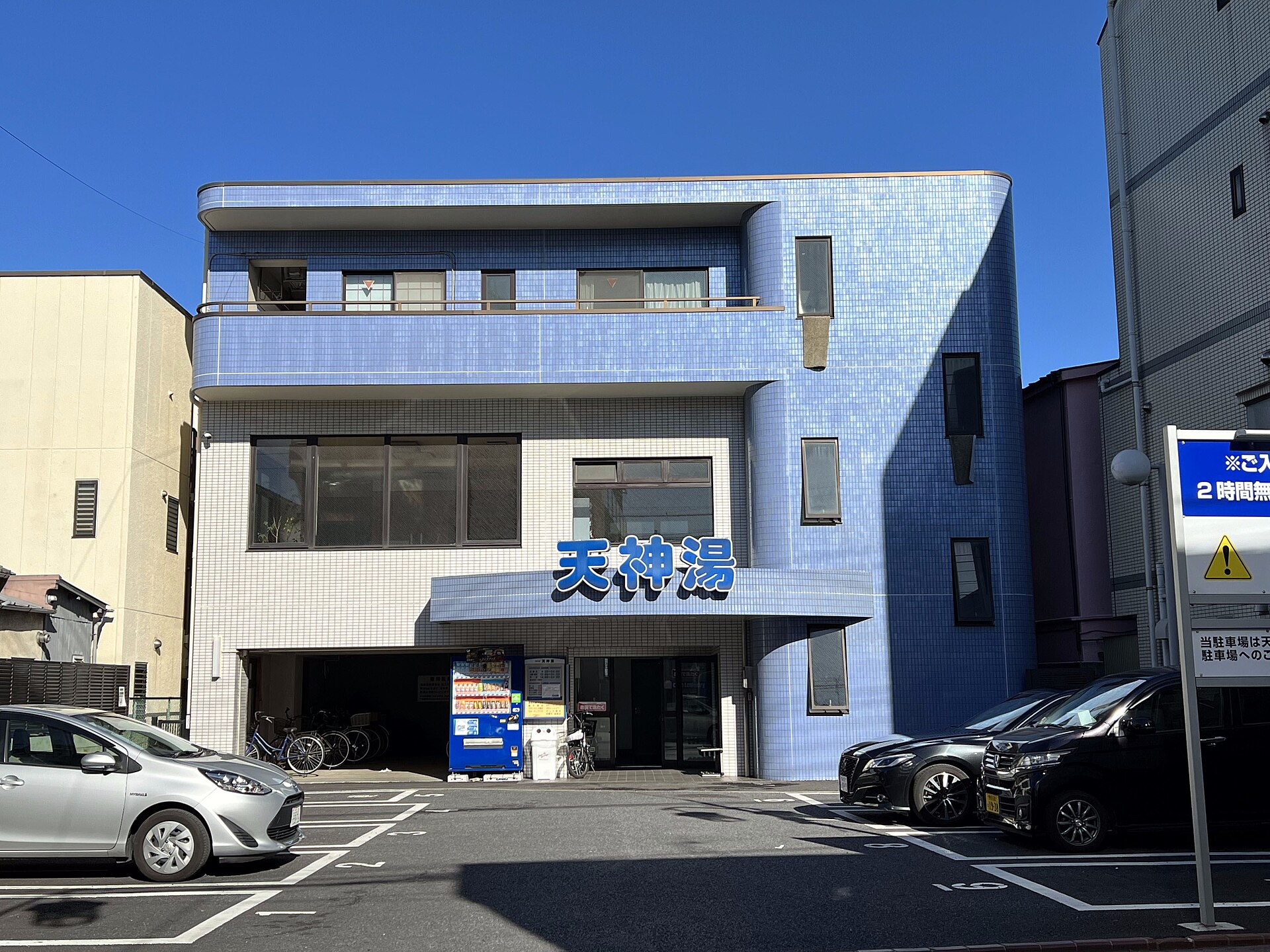
The character 湯, pronounced yu, means hot water and is the universal sign for a bath. On a curtain over a doorway, on a chimney, on a pole outside — if you see it, that is a bathhouse. The stylised symbol that looks like three wavy lines rising from a dish is the map marker for the same thing, and it appears on every Japanese map application.
The word 温泉 (onsen) on the sign means the venue is claiming hot spring water. 銭湯 (sento) means a regulated public bathhouse at the fixed price. A venue can and often does display both, which is the combination you want: spring water at the regulated rate.
The framed certificate in the lobby is the water analysis. You do not need to read it, but its presence is the proof that the claim on the sign has been tested. It lists the source name, the temperature at the wellhead, the pH and a long column of mineral concentrations. Venues are proud of these and hang them where you will see them.
Two more signals worth knowing. A tall brick or steel chimney on an otherwise residential street almost always means a bathhouse still heating its water the old way. And a rack of small plastic baskets by the door, rather than lockers, means an old-fashioned operation where the price will be ¥600 and the experience will be entirely unreconstructed.
Super sento, and whether to bother
The third category deserves its own verdict, because it is what a lot of visitors end up in by accident.
A super sento is a large leisure complex built around bathing: multiple tubs at different temperatures, carbonated baths, jet baths, several saunas, a cold plunge, an outdoor deck, a restaurant, a rest floor where people sleep in reclining chairs, and often a manga library. Prices vary by facility: Spa LaQua, for example, charges adults from ¥3,500, which includes a towel set and in-house wear. You change into a supplied yukata or loungewear and can stay most of the day.
These are genuinely good, and they are very popular with Japanese families and with the sauna crowd, who take the hot-cold cycle seriously enough to have coined a word for the resulting state of bliss. Several have real hot spring water; many do not, and the ones that do not are honest about it if you read the signage.
The honest verdict: a super sento is a good rainy day and a poor introduction to Japanese bathing. It is loud, lit like a shopping centre, and the bathing is one attraction among a dozen. If you want to understand what a Japanese bath is, go to a ¥600 sento first, and come to the super sento later for the sauna and the afternoon nap.
What it costs
| Item | Typical price | Notes |
|---|---|---|
| Sento entry (regulated) | ¥600 | Ceiling set by the city; includes onsen sento |
| Day-use onsen, weekday | ¥900–1,200 | Cheaper before a set hour at many venues |
| Day-use onsen, weekend | ¥1,200–1,600 | Weekend surcharge is normal |
| Super sento | From ¥3,500 at Spa LaQua; varies by facility | Often includes yukata and a rest floor |
| Towel rental or purchase | ¥100–400 | Bath towel and face towel usually priced apart |
| Sauna supplement | ¥200–500 | Sometimes bundled, sometimes not |
| Shampoo and soap | Free to ¥200 | Provided at onsen, often not at old sento |
| Locker | Free to ¥100 | ¥100 usually returned |
Two money-saving habits: go on a weekday, and go before the evening rush — several venues price a morning or early-afternoon session below the standard rate. At the sento end, bring your own small towel from your hotel and you have removed the only variable cost there is.
The etiquette, in ninety seconds
Bathing rules are the thing that puts visitors off, and they are much simpler than the internet suggests. The whole system reduces to one principle: the bath is for soaking in, not for washing in, and it is shared.
- Shoes off at the entrance, into a shoe locker. Pay at the desk or a ticket machine.
- Undress completely in the changing room. Everything goes in the locker. Swimwear is not worn.
- Take the small towel in with you. The large one stays in the changing room for drying off afterwards.
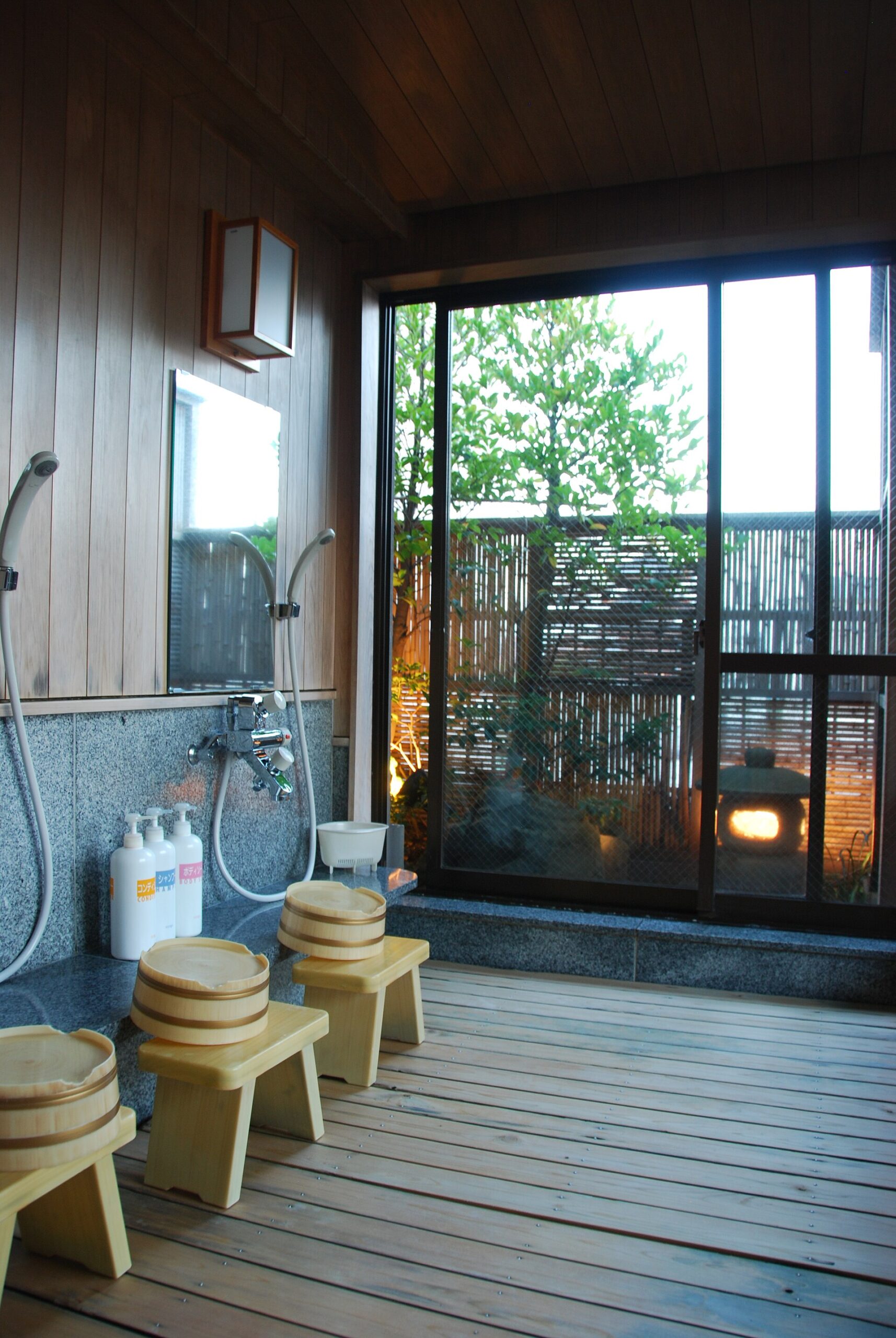
- Wash at the seated stations before entering any bath. Sit on the stool, use the shower or the bowl, wash and rinse thoroughly. This is the part that matters.
- Rinse the stool and space when you finish, for the next person.
- Get in slowly. The water can be hotter than you expect, and temperatures vary from bath to bath.
- Keep the small towel out of the water. On your head, on the side, anywhere but in the tub.
- Tie long hair up. Hair should not touch the water.
- No swimming, no splashing, no phones. Cameras in a changing room are an extremely serious matter, not a faux pas.
- Dry off roughly with the small towel before walking back into the changing room.
Nobody is watching you closely and nobody expects you to be perfect. Wash properly before you get in and keep the towel out of the water, and you have covered ninety-five per cent of it. Our onsen etiquette guide goes through the remaining five per cent, including the regional variations and the bits that genuinely differ between a sento and a resort onsen, and our general etiquette guide covers the wider context.
Tattoos
The single most common reason a visitor cannot use a Tokyo bath, and the situation is genuinely mixed rather than uniformly hostile.
The historical association is with organised crime, and the blanket bans that followed are a blunt instrument that catches a great many people the rule was never aimed at. Attitudes are shifting, unevenly. What is true in 2026:
- Large day-use onsen usually refuse. Maenohara, for instance, refuses large tattoos outright and requires small ones to be fully covered by two 11 × 20 cm cover stickers, which it sells.
- Cover stickers are a real solution for something small. They are sold at many venues and at drugstores, and using one is accepted rather than a dodge.
- Neighbourhood sento are far more relaxed. Many simply do not ask. This is not a guarantee and it is not something to argue about at the desk.
- A growing list of Tokyo bathhouses admit tattoos openly, including several well-known ones in Sumida, Suginami and Taito. Policies change, so check the venue’s own site on the day rather than relying on a list.
- A private bath solves it entirely. Ryokan and some day-use venues rent kashikiri family baths by the hour, and nobody asks anything.
Being turned away at the door is unpleasant and avoidable. If you have visible tattoos, either confirm with the venue first or choose a private bath. Our ryokan guide covers the private-bath route.
When a day trip is the better answer
Honest verdict: a Tokyo onsen is a genuinely good ninety minutes, and it is not the same experience as a mountain onsen town. If what you want is steam rising off a river valley, a ryokan dinner and a bath looking at trees, you need to leave the city, and that is a different day.
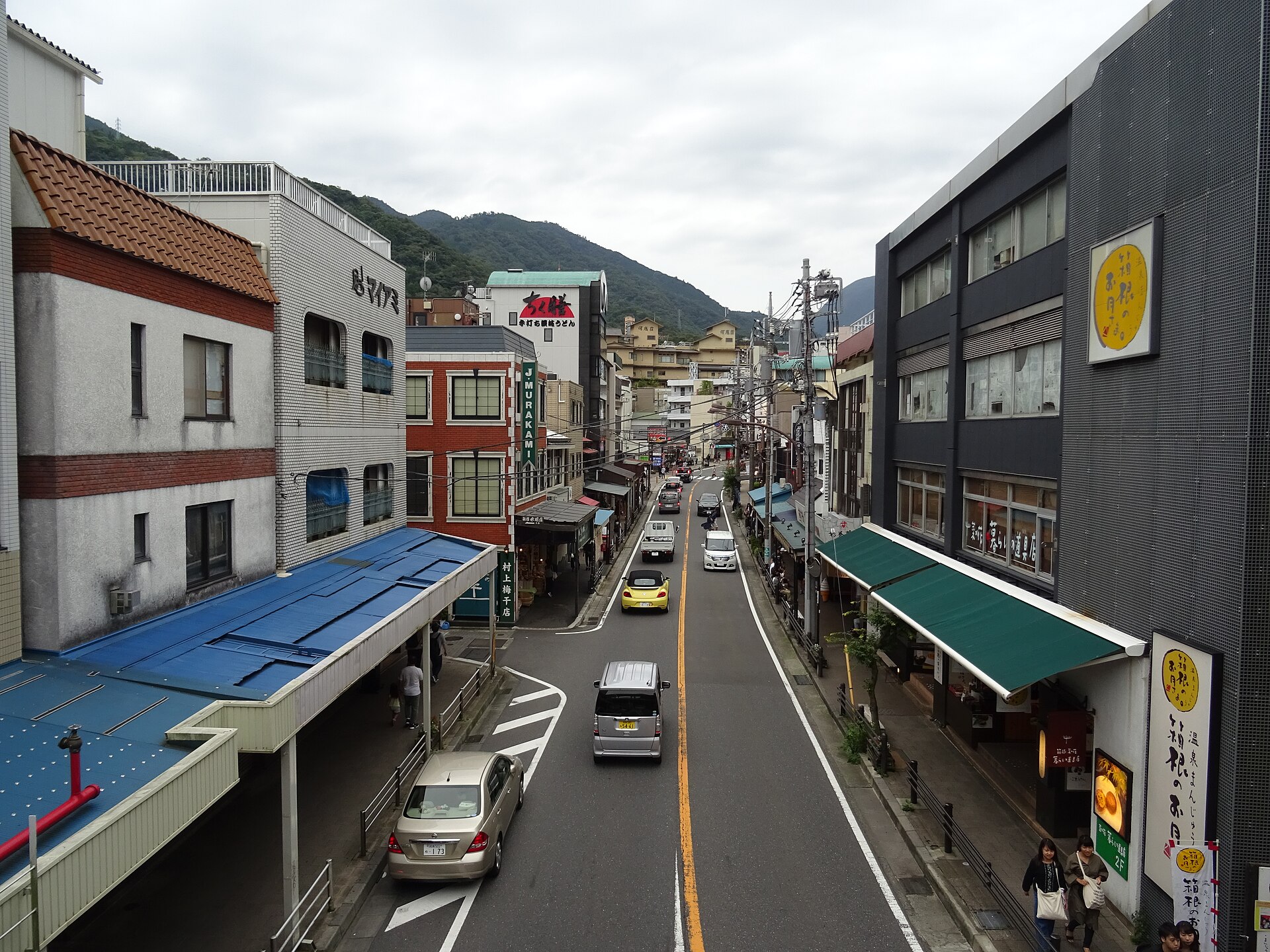
Hakone is the standard answer and deservedly so — volcanic, dramatic, ninety minutes from Shinjuku, and set up for day visitors. It is also busy, and on a peak weekend the transport queues can take a real bite out of the day. The wider field of options is in our day trips guide.
The case for staying in the city is simpler than it looks. A Tokyo onsen costs a tenth of the day trip, takes ninety minutes instead of ten hours, can be done at nine in the evening after everything else has closed, and puts you in a room full of Tokyo residents rather than a room full of visitors. For a short trip, that trade is often the right one.
Practical details
What to bring
A small towel and a bath towel if you want to avoid rental fees; otherwise nothing. Everything else — soap, shampoo, a hairdryer — is either provided or available for a few hundred yen. Take as little as possible into the changing room, since lockers are small and coin-operated.
Luggage
Do not turn up with a suitcase. Bathhouse lockers are sized for a coat and a bag, not for cabin baggage, and many venues will not store anything larger. If you are heading to a bath between a hotel checkout and a night train, put the bag in a coin locker at the station first — our luggage storage guide covers the costs and the limits.
Timing
Weekday mornings and early afternoons are quietest. Many venues close one day a week, often Monday, so check the venue’s own page for its closing day and holiday hours.
With children
Entirely normal and generally welcomed. Small children of either sex go into whichever bath their parent uses, up to an age limit that varies by ward and is usually posted. Water at 42°C is hot for a small body, so keep sessions short. Our Tokyo with kids guide covers the practicalities of the rest of the day.
Accessibility
Mixed, and worth checking in advance. Older sento are frequently up a step with no lift and a tiled floor that is slippery when wet. Newer day-use onsen are generally much better provided, with step-free changing rooms and handrails, and several have accessible private baths. Our accessible Tokyo guide has more on how to ask about this.
Health
Hot water at 42°C is a real physiological load. Do not bathe drunk, do not bathe immediately after a large meal, come out if you feel light-headed, and drink water before and after — every bathhouse in Japan sells cold drinks in the lobby for exactly this reason, and the ritual bottle of milk afterwards is not a joke, it is rehydration with a marketing department. People with heart conditions or high blood pressure should be cautious with very hot baths and with the sauna-and-cold-plunge cycle.
Rainy days and winter
This is the ideal wet-weather activity in Tokyo and an even better cold-weather one. An outdoor bath in February, steam rising, snow occasionally falling, is the single best thing about a Tokyo winter — see our winter guide and, for the rest of a washed-out afternoon, the rainy day guide.
Which one should you choose?
- One bath, best overall: Maenohara Onsen Saya-no-Yudokoro in Itabashi. Real free-flowing spring water, outdoor baths, a garden, and one train from central Tokyo.
- Best value in Japan, arguably: Musashikoyama Onsen Shimizu-yu. Two natural springs and an outdoor bath for ¥600.
- Most central and most polished: Tokyo Somei Onsen SAKURA in Sugamo, with a genuinely interesting neighbourhood attached.
- Cheapest possible introduction: any neighbourhood sento with 湯 on the sign. ¥600 for adults, and if you want to keep it short, forty-five minutes is enough for a soak and a look at ordinary Tokyo life.
- Tattooed: a private kashikiri bath, or one of the openly tattoo-friendly bathhouses — confirmed on the venue’s own site, on the day.
- Want mountains: go to Hakone, and accept that it is a whole day.
The mistake to avoid is treating this as a box to tick. A bath is not a sight; it works best as the end of a day rather than the point of one. Walk somewhere, eat somewhere, and then get in the water at eight in the evening with everyone else. Our neighbourhood guide is a good place to find the walking part, and the budget guide will tell you how little the whole evening needs to cost.
If you have visible tattoos, the picture is more encouraging than most guides admit: the city’s regulated neighbourhood bathhouses largely have no rule at all, and several name themselves as welcoming. Our guide to tattoo-friendly onsen in Tokyo names the venues, explains where cover stickers work, and gives you the sentence to say at the desk.
If the hot spring water matters less to you than the room it is in, go straight to a neighbourhood bathhouse instead. About 400 Tokyo bathhouses take part in the Tokyo Sento Association’s 2026 stamp rally, they charge ¥600, and they are the least commercialised hour a visitor can buy here — our Tokyo sento guide walks through the whole sequence from the shoe lockers to the bottle of milk.
If you do decide to leave the city for the water, the choice usually comes down to three towns. Hakone is the safe default at 85 minutes from Shinjuku, Atami is 45 minutes by Shinkansen and far less crowded, and Kusatsu has the best water but sits three hours away. Our onsen day trips from Tokyo guide compares them on fares, bath prices and how much of the day each one costs you.
If a super sento does suit the day, choose carefully, because the gap between the good ones and the tired ones is wide. Spa LaQua at Tokyo Dome and the Tokyo Toyosu Manyo Club are the two worth crossing the city for, and both stay open through the night. Our Tokyo super sento guide compares the big complexes on price, water, overnight rules and tattoo policy.
Frequently Asked Questions
Are there real hot springs in Tokyo?
Yes. Tokyo is not volcanic, but deep groundwater beneath the city qualifies as hot spring water under Japan’s Hot Spring Law, and dozens of bathhouses and day-use onsen draw it. Maenohara Onsen Saya-no-Yudokoro in Itabashi, Musashikoyama Onsen Shimizu-yu in Shinagawa and Tokyo Somei Onsen SAKURA in Sugamo are all genuine onsen inside the twenty-three wards. Many display the official water analysis certificate on the wall.
Is Oedo Onsen Monogatari still open?
No. The Odaiba complex closed permanently in September 2021. It still appears in printed guidebooks and in search results, and visitors arrive looking for it regularly. There is no replacement at that location; use one of the city’s genuine onsen instead.
How much does an onsen in Tokyo cost?
A neighbourhood bathhouse, including several that draw real hot spring water, charges the regulated Tokyo sento fee, which rose to ¥600 for adults on 1 August 2026. A dedicated day-use onsen typically costs ¥900–1,200 on a weekday and ¥1,200–1,600 at weekends. Prices at large super sento with saunas and a rest floor vary by facility: Spa LaQua charges adults from ¥3,500, towels and in-house wear included. Saya-no-Yudokoro rents a bath and face towel set for ¥380 if you do not bring your own.
What is kuroyu black water?
Kuroyu is a Tokyo and Kanto speciality: hot spring water coloured dark brown to black by humic acid, dissolved from ancient plant matter in the deep groundwater. It is usually a cold spring that is reheated. The water is soft and faintly slippery, has a long-standing local reputation for being good for the skin, and is dark enough that you cannot see your own hand under the surface.
Can I use a Tokyo onsen with tattoos?
Sometimes. Large day-use onsen commonly refuse large tattoos and require small ones to be covered with adhesive cover stickers, which they sell. Neighbourhood sento are considerably more relaxed and many do not ask. A growing number of Tokyo bathhouses admit tattoos openly. Policies change, so check the venue’s own website on the day, or book a private kashikiri bath, where the question does not arise.
Do I have to be completely naked?
Yes, in any normal Japanese bath. Swimwear is not worn in onsen or sento, and the baths are separated by sex. The exceptions are a small number of mixed-gender leisure zones that specifically require swimwear, and private family baths booked by the hour. In practice nobody looks at anybody, the small towel gives you something to hold, and the self-consciousness lasts about ninety seconds.
Photo Credits
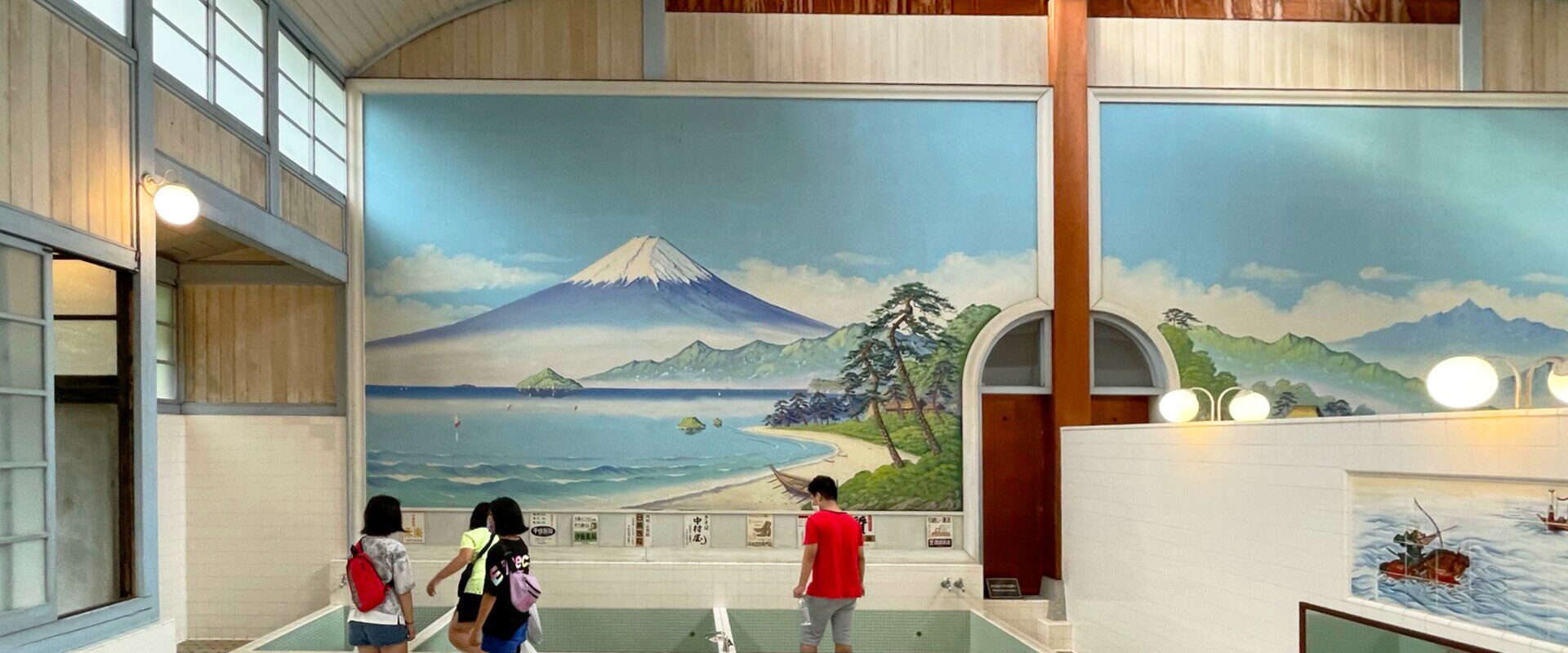
- Preserved Japanese bathhouse interior with Mount Fuji mural – Japanese communal bathhouse SENTO Sentō 銭湯の浴室 by ウィキ太郎(WikiTaro), Public domain, via Wikimedia Commons.
- A Tokyo neighbourhood bathhouse – Tenjin-yu 2023-12-17 by Asanagi, CC0, via Wikimedia Commons.
- Washing stations at Ryokan Shigetsu: Showers in the communal bath of Ryokan Shigetsu (6156194038) by Maarten Heerlien, CC BY 2.0, via Wikimedia Commons.
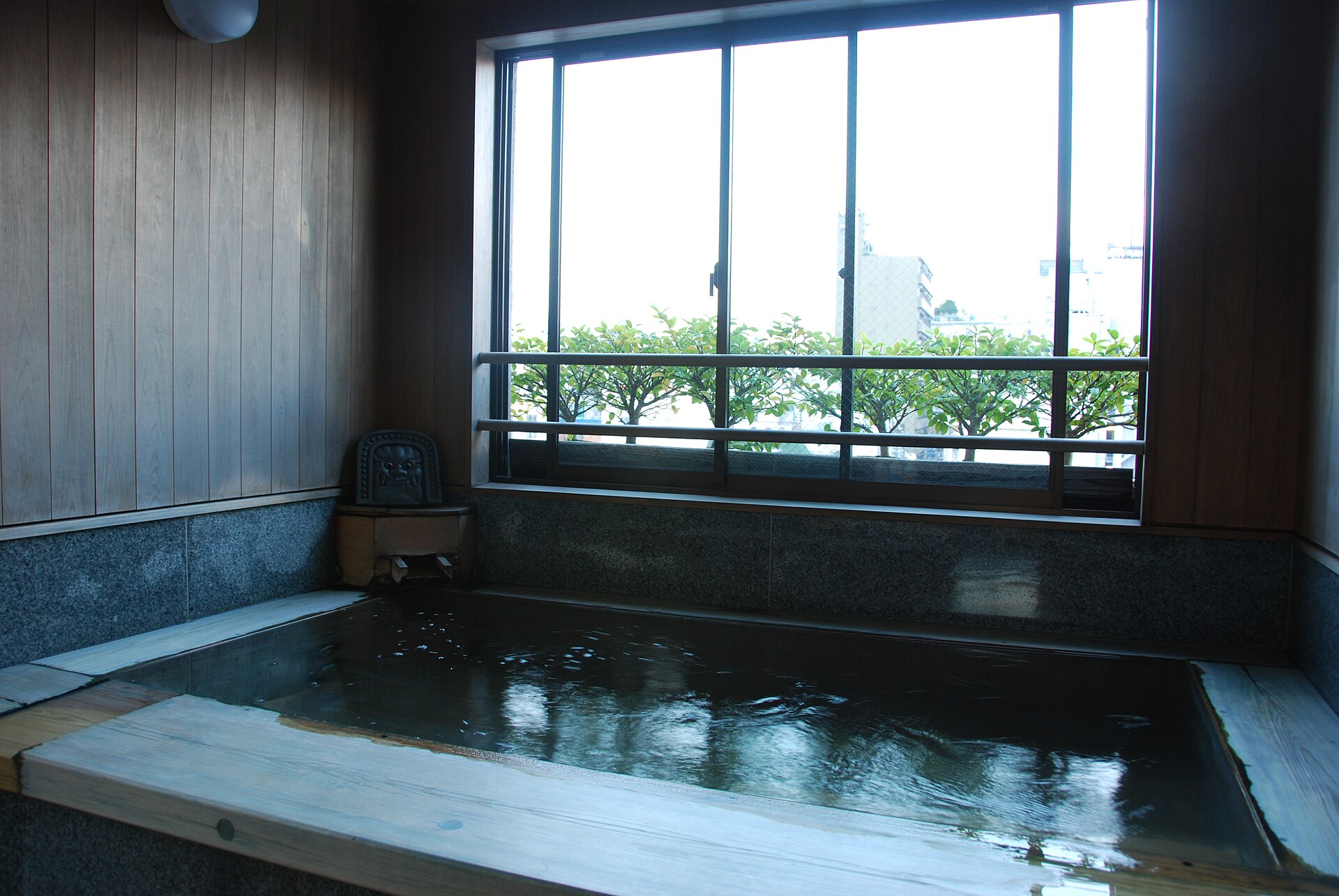
- The communal bath at Ryokan Shigetsu: Communal bath of Ryokan Shigetsu, Asakusa (6156193368) by Maarten Heerlien, CC BY 2.0, via Wikimedia Commons.
- Hakone-Yumoto’s main street: Hakone-Yumoto main street by Christophe95, CC BY-SA 4.0, via Wikimedia Commons.