Tokyo with Kids · Guide №143
Family-Friendly Day Trips from Tokyo with Kids
Eight family-tested day trips from Tokyo with kids, with real train routes, 2026 prices and travel times: Yokohama, Hakone, Kamakura, Fuji-Q, the Railway Museum and more.
目次 — Contents
- How to pick the right day trip for your kids’ ages
- Day trips from Tokyo with kids: the planning table
- Yokohama: the easiest win (Cup Noodles Museum, Anpanman, Cosmo World)
- Kamakura & Enoshima: Great Buddha, a beach and an aquarium
- Hakone: a pirate ship, a ropeway and a sculpture park (the variety day)
- Fuji-Q Highland & Thomas Land: thrills for big kids, trains for little ones
- The Railway Museum, Omiya: real trains for train-obsessed kids
- Tobu Zoo, Saitama: a zoo and an old-school amusement park together
- Nikko: walk through a living Edo town (Edo Wonderland)
- Open space and farm animals: Mother Farm, German Village & Sagamiko
- Practical tips for day trips from Tokyo with kids
- Frequently Asked Questions
- Photo Credits
This article contains advertising. Our booking links are routed through a partner that adds commission tracking automatically, so if you book through one we earn a commission from the provider, at no extra cost to you. It never affects what we recommend. Affiliate disclosure
The best day trips from Tokyo with kids trade the city’s sensory overload for one clear, happy “wow” a child will actually remember. From Shinjuku or Tokyo Station you can be designing a custom Cup Noodle in Yokohama in 30 minutes, riding a pirate ship across a volcanic lake in Hakone in 90, or standing under the Great Buddha of Kamakura in an hour. Below are eight family-tested escapes with real train routes, current 2026 prices, travel times, and the ages each one suits best.
I plan these the way any parent does: short transit, one anchor attraction, snacks in the bag, and a clean exit before the meltdown. Japan’s trains make it almost embarrassingly easy. You eat breakfast in the city, step into a totally different world by late morning, and you’re back for dinner and a bath. That rhythm of mixing a loud Tokyo day with a calmer day trip is the single thing that keeps kids regulated on a long trip. This guide is the logistics manual I wish someone had handed me.
For the wider city, start with our complete guide to Tokyo with kids, and if you want every regional escape (not just the family-first ones), see our broader roundup of day trips from Tokyo. For working out train lines, IC cards and rush hours, keep our guide to riding Tokyo’s trains open in another tab.
How to pick the right day trip for your kids’ ages
The mistake almost every family makes is treating a day trip as a chance to travel as far as humanly possible. With kids, the opposite is true: the closer and simpler, the better the day usually goes. Two rules I live by. First, if the train ride is longer than the time you’ll actually spend exploring, it isn’t a day trip, it’s a commute with a view. Second, fewer transfers always beat a faster route. A direct 70-minute train beats a 55-minute one that involves two platform changes with a stroller.
Match the distance to the age. Toddlers (2-4) do best under an hour with open space to roam. School-age kids (5-10) can handle 60-90 minutes if there’s one big anchor, like a giant statue, a ropeway, or a pirate ship. Older kids and teens (11+) will sit through up to 2-2.5 hours if the payoff is genuinely thrilling, like a record-breaking roller coaster.
And time your departure around the commute. Tokyo trains are brutal between roughly 7:30 and 9:30 a.m. and again 5:30 to 7:30 p.m. on weekdays. Most kid attractions don’t open until 9:30 or 10:00 anyway, so there’s no reason to fight the crush. Leave the hotel at 10:00, arrive relaxed instead of frazzled, and come home before 4:00 or after 7:30. On weekends the rush-hour squeeze mostly disappears.
Day trips from Tokyo with kids: the planning table
Here’s the whole list at a glance, with one-way travel time from central Tokyo, the ages each suits, a rough cost for a family of four, and the one reason to go. Prices are 2026 gate rates; transport is on top. Detailed how-tos follow below.
| Destination | Time from Tokyo (one way) | Best for ages | Est. family cost* | Why go |
|---|---|---|---|---|
| Yokohama (Cup Noodles Museum) | ~30 min | 2-10 | ¥2,000-4,000 | Design your own cup noodle; flat, easy waterfront |
| Kamakura & Enoshima | ~60 min | 5-12 | ¥4,000-6,000 | Great Buddha, a beach and an aquarium in one loop |
| Hakone (Open-Air Museum, pirate ship) | ~90 min | 6+ | ¥18,000-22,000 | Ropeway, boat and a sculpture park you can run through |
| Fuji-Q Highland / Thomas Land | ~2 hr | 3+ (Thomas), 10+ (coasters) | ¥20,000-30,000 | Thomas the Tank Engine rides under Mount Fuji |
| Railway Museum, Omiya | ~35 min | 2-12 | ¥3,800 | Real retired trains, simulators, a kids’ play train |
| Tobu Zoo, Saitama | ~50 min | 2-10 | ¥5,200 (entry) / ¥13,800 (rides) | Zoo plus a gentle old-school amusement park |
| Nikko (Edo Wonderland) | ~2-2.5 hr | 6+ | ¥19,000-23,000 | Walk through a living Edo-period samurai town |
| Mother Farm / German Village (Chiba) | ~1.5-2 hr | 2-10 | ¥5,000-7,000 | Hands-on farm animals and huge open fields |
*Rough total for two adults and two children (one under 6, one elementary-age) covering admission only; train fares, ride passes and meals are extra. Always confirm current prices on the official site before you go, as they change.
Yokohama: the easiest win (Cup Noodles Museum, Anpanman, Cosmo World)
If it’s your first time leaving central Tokyo with kids, go to Yokohama. It’s about 30 minutes from Shibuya on the Tokyu Toyoko Line, which runs straight through onto the Minatomirai Line, so there’s no transfer if you board the right train. From Tokyo Station, the JR Keihin-Tohoku or Tokaido line gets you to Yokohama Station in roughly 25-30 minutes. The waterfront Minato Mirai district is flat, wide and stroller-friendly, which after the density of Shibuya feels like exhaling.
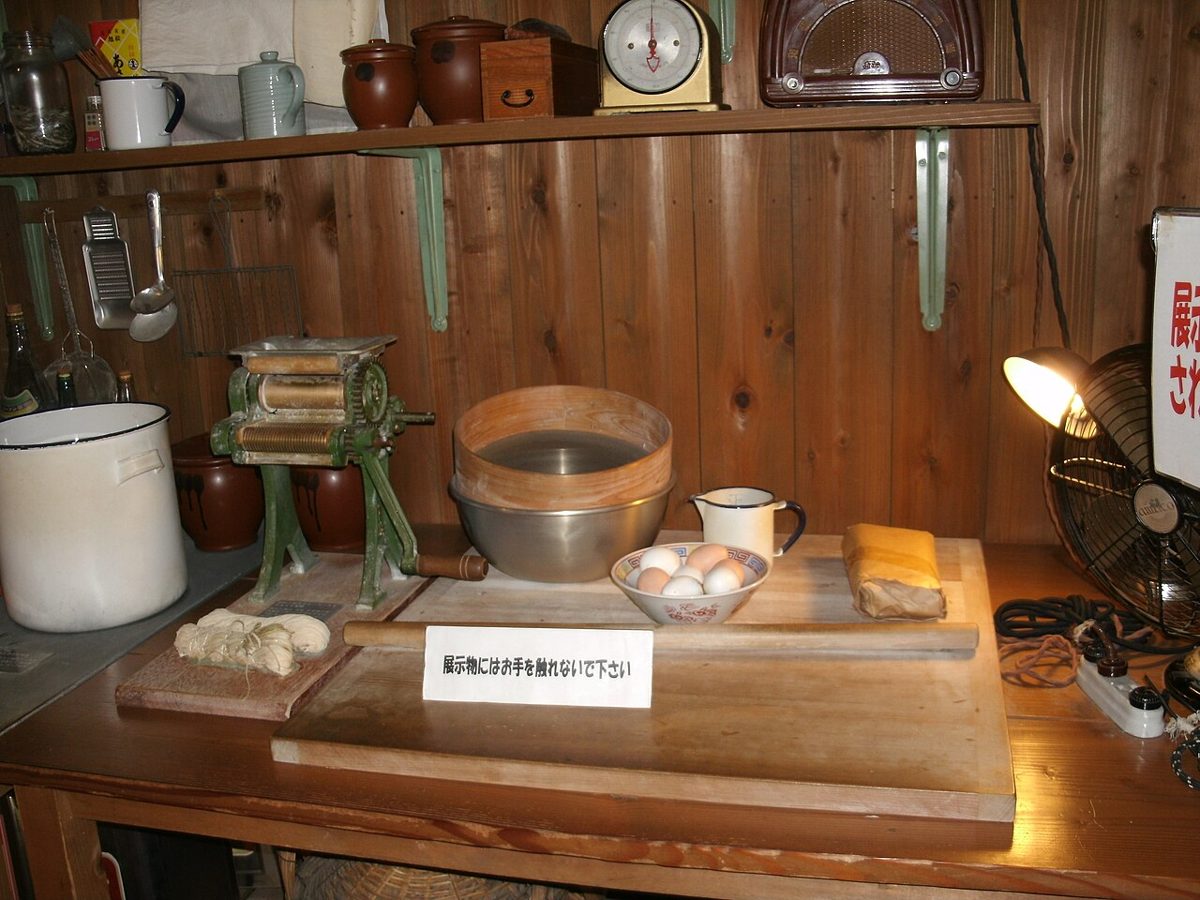
The headline act is the Cup Noodles Museum (a 9-minute walk from Minatomirai Station). General admission is ¥500 for adults, and high-school age and younger get in free. The bit kids remember is the My Cup Noodles Factory: for ¥500 per cup they decorate a paper cup with markers, choose a soup base and four toppings, and watch it get sealed. There’s also a Chicken Ramen Factory workshop (reserve ahead) and Cup Noodles Park, a noodle-themed indoor play structure for ages 3-12 (¥500, time-limited). The museum is closed on Tuesdays, so don’t make the trip then.
Nearby you can stack a second stop without much walking. The Yokohama Anpanman Children’s Museum is a short walk away and is pure toddler heaven if your child knows the character; the ground-floor shops and food court are free, while the upper play museum is ticketed (book a timed slot online). Cosmo World is a small free-entry amusement park, pay-per-ride, with the giant Cosmo Clock 21 Ferris wheel that even nervous little ones can manage. Older kids who like aquariums should head to Hakkeijima Sea Paradise instead (about 20 minutes further out on the Seaside Line), which combines an aquarium with rides on an island, though that’s really a full day of its own.
Kamakura & Enoshima: Great Buddha, a beach and an aquarium
Kamakura gives you a huge cultural payoff in one stop, plus a beach and an aquarium for when the kids have had enough temples. The smart ticket is the Enoshima-Kamakura Freepass from Odakyu, sold at Shinjuku Station or as a digital pass in the Odakyu app. It covers your round trip from Shinjuku to Fujisawa plus unlimited rides on the little Enoden tram line that trundles between Fujisawa, Enoshima and Kamakura. From Shinjuku the express takes about an hour to Fujisawa; the Enoden hops are short and the train itself, rattling between houses and along the coast, is half the fun for kids.
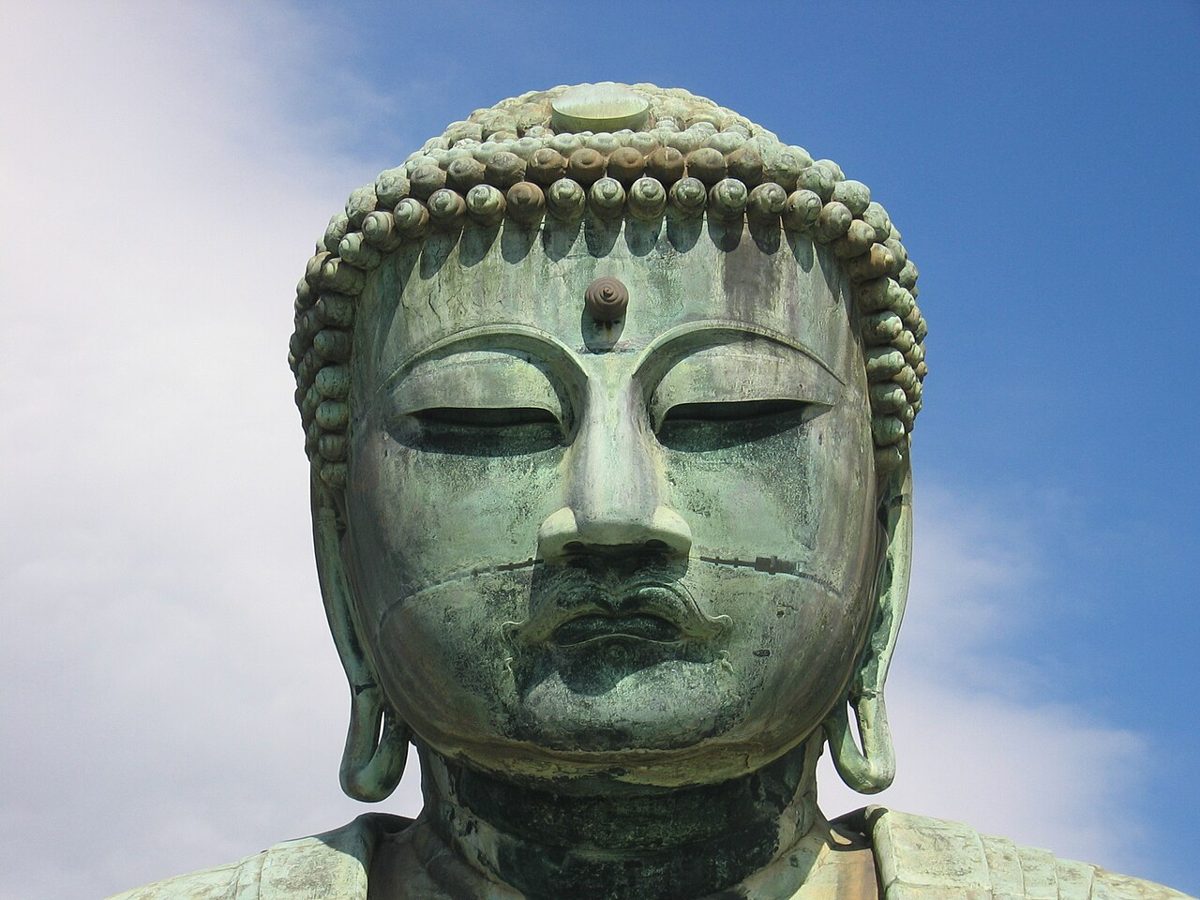
The anchor is the Great Buddha (Daibutsu) at Kotoku-in, an 11-metre bronze statue you can walk straight up to (entry ¥300 for adults, ¥150 for kids; for a few hundred yen more you can even step inside it). It’s a 7-minute walk from Hase Station on the Enoden. The scale lands with kids in a way no photo does. Right nearby, Hasedera temple has a gentle hillside garden and a cave, but I’d follow the local rule: pick one big site, then pivot to fun. From Hase it’s a short walk down to Yuigahama beach where kids can dig and paddle in summer.
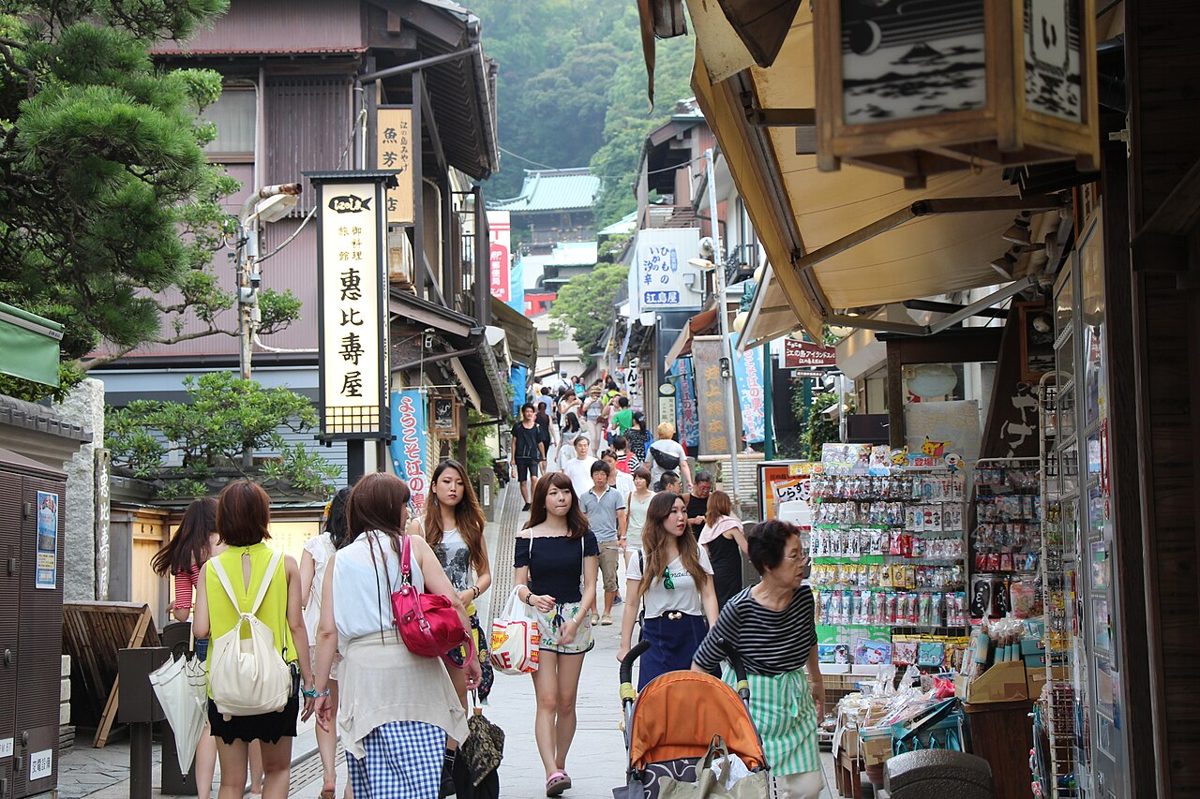
Take the Enoden a few stops the other way to Enoshima, a small island joined to the mainland by a long bridge. The Enoshima Aquarium (Enosui) is on the beach road before the bridge (adults around ¥2,800, children cheaper; it’s known for jellyfish and a big shark-and-ray tank). The island itself has escalators (paid) up to a lighthouse observation deck with Fuji views on clear days. One honest warning: Enoshima involves a lot of steps and slopes, so a baby carrier beats a stroller here. Komachi-dori in Kamakura, the snack street near Kamakura Station, is the reliable bribe on the way home: soft-serve, sweet potato treats and rice crackers.
Hakone: a pirate ship, a ropeway and a sculpture park (the variety day)
Hakone is the “maximum variety” escape: in one loop you ride a mountain railway, a cable car, an aerial ropeway over a steaming volcanic valley, and a pirate ship across a lake. It’s a commitment day, about 90 minutes from Shinjuku, and the only sensible way to do it is the Hakone Freepass. The 2-day pass from Shinjuku is ¥7,100 for adults (children roughly half), and it covers the round-trip Odakyu train plus unlimited rides on every leg of the Hakone loop: the Tozan mountain railway, the Sounzan cable car, the Owakudani ropeway and the Lake Ashi sightseeing boats. You can pay an extra ¥1,200 each way to ride the comfortable reserved-seat Romancecar from Shinjuku, which with tired kids is money well spent.
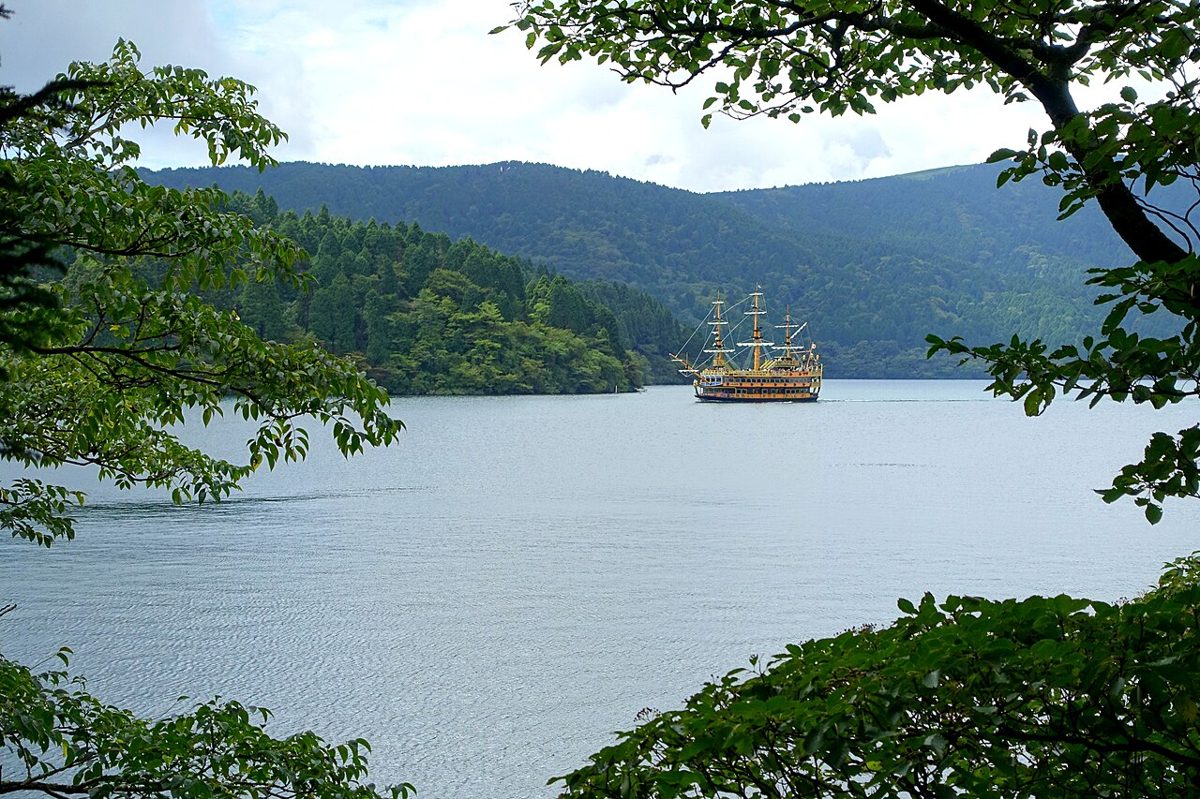
The kid highlights, in order of reliability: the “pirate ship” sightseeing boat across Lake Ashi, which is genuinely a galleon and a guaranteed hit; the Owakudani ropeway, gliding over sulphur vents where you can buy the famous black eggs (boiled in the hot springs and said to add seven years to your life); and the Hakone Open-Air Museum, where the whole point is that kids run loose. It’s a sculpture park on a hillside with a “Woods of Net” climbing structure built for children and a paddling stream in summer. Admission is around ¥2,000 for adults, with a ¥200 discount if you show the Freepass; elementary kids are a few hundred yen.
My honest advice: don’t try to do the whole loop AND every museum. Pick the boat, the ropeway and one museum, start early, and accept that the geothermal smell at Owakudani makes some kids gag (it passes). Hakone has plenty of restaurants but they fill up, so a konbini onigiri stash in the bag prevents a hungry meltdown halfway up a mountain.
Fuji-Q Highland & Thomas Land: thrills for big kids, trains for little ones
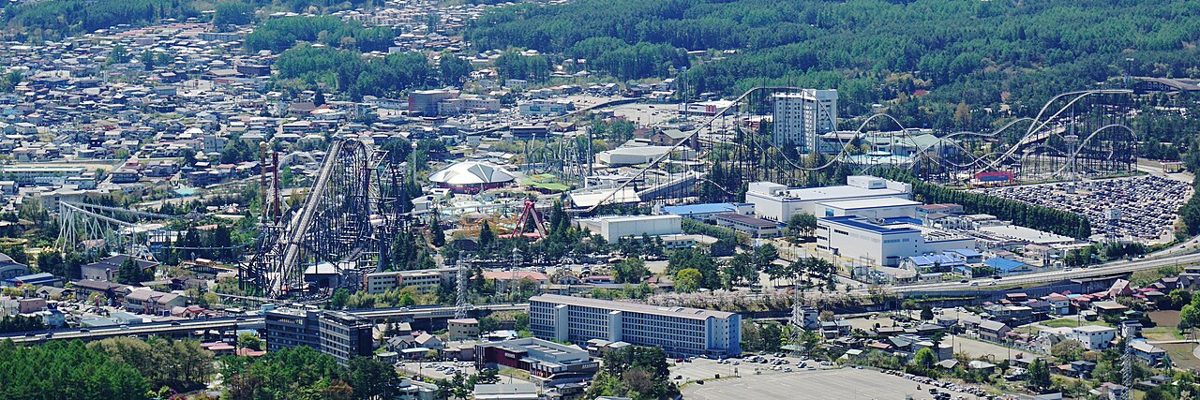
Fuji-Q Highland has a split personality, and that’s exactly why it works for mixed-age families. For teens it’s a temple of record-breaking roller coasters; for little ones it has Thomas Land, an entire area of gentle Thomas the Tank Engine rides, a play area and a Thomas-themed restaurant. Entry to the park is free; you either buy individual ride tickets (roughly ¥1,500-2,000 each) or a 1-Day Pass that covers everything, which runs about ¥6,500-8,500 for adults depending on the season. If your crew is purely Thomas fans, paying per ride often works out cheaper than a full pass, so do the maths at the gate.
Getting there is the catch: it’s about 2 hours out. The simplest option with kids is the direct highway bus from Shinjuku Expressway Bus Terminal (above Shinjuku Station), which drops you at the park entrance in roughly 1 hour 45 minutes for about ¥1,800-2,200 each way; book a seat in advance in peak season. By train it’s JR to Otsuki, then the scenic Fujikyu Railway to Fujikyu-Highland Station, also around 2 hours. Because it sits right under Mount Fuji near Lake Kawaguchi, you can pair it with the lakeside, and if Fuji is your real goal, our guide to seeing Fuji in a day lays out the no-hiking, kid-friendly options. Rides here are weather-sensitive, so check the official site the morning you go to avoid closure surprises.
A weatherproof alternative for the under-7 crowd is Sanrio Puroland in Tama (about an hour from Shinjuku), which is entirely indoors, much gentler, and stuffed with Hello Kitty and friends. It’s my go-to “the forecast is awful” day trip; see our Sanrio Puroland guide for tickets and timing.
The Railway Museum, Omiya: real trains for train-obsessed kids
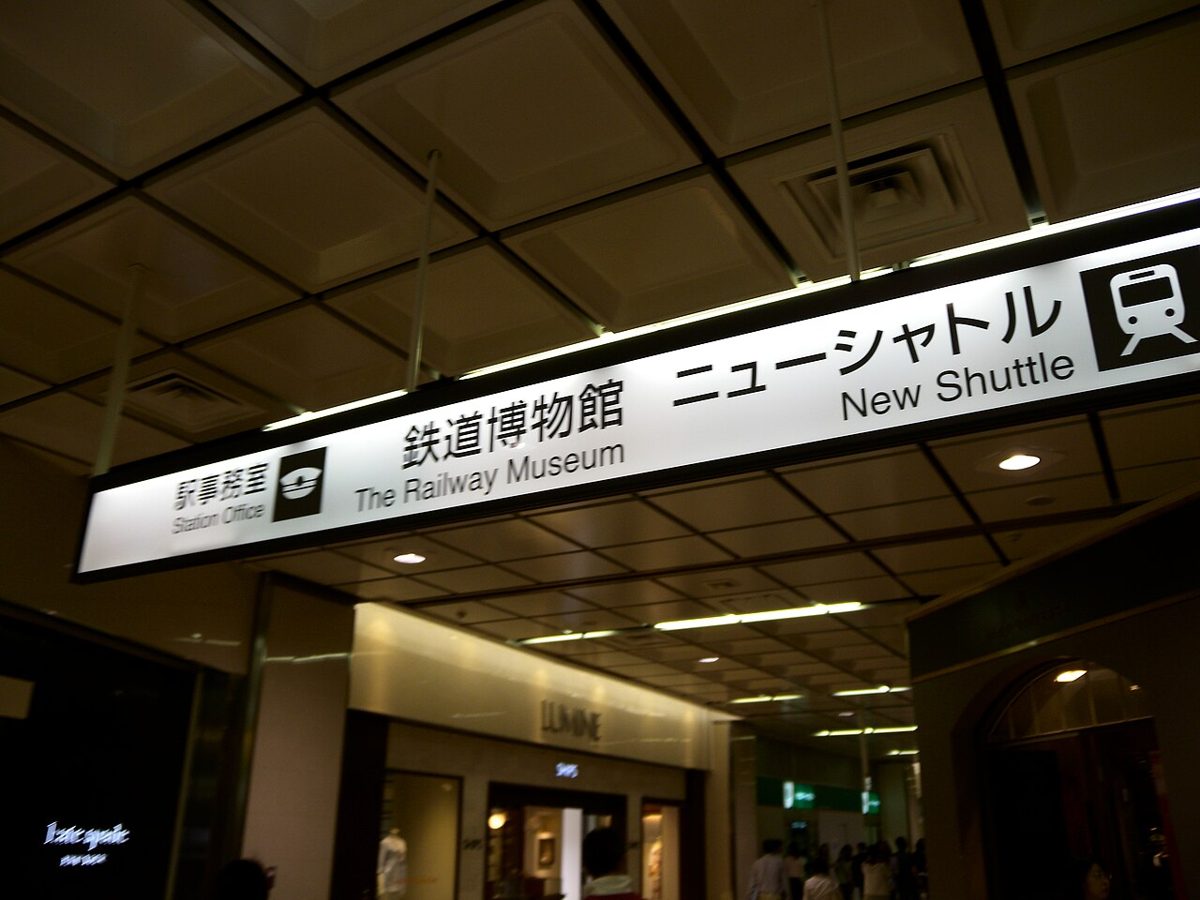
If you have a train-mad child, this is the single best-value day out near Tokyo, and it’s barely a day trip: about 35 minutes total. Take the JR Keihin-Tohoku or Saikyo line to Omiya in Saitama (roughly 30 minutes from Tokyo Station, less from Ueno or Ikebukuro), then change to the cute automated New Shuttle for exactly one stop (3 minutes, ¥190) to Tetsudo-Hakubutsukan Station, which opens right onto the entrance.
The Railway Museum is a hangar full of real retired trains, from a Meiji-era steam locomotive to old shinkansen, almost all of which you can climb into. The hands-on stuff is what makes it: driving simulators (some require a same-day ticket drawn by lottery), a working turntable demonstration where a steam engine is rotated with a whistle and a puff of steam, and a dedicated kids’ area with a mini driving plaza where small children “drive” little trains on a track. Admission is ¥1,600 for adults, ¥600 for junior/senior-high students and ¥300 for children aged 3 and up. Buy tickets in advance at a Seven-Eleven, Lawson or Ministop machine, or online, to skip the queue. It’s closed on Tuesdays. Bring a packed lunch or use the museum’s station-bento restaurant, which serves meals you eat at a seat made to look like a train carriage by a window onto the real Tohoku Shinkansen tracks.
Tobu Zoo, Saitama: a zoo and an old-school amusement park together
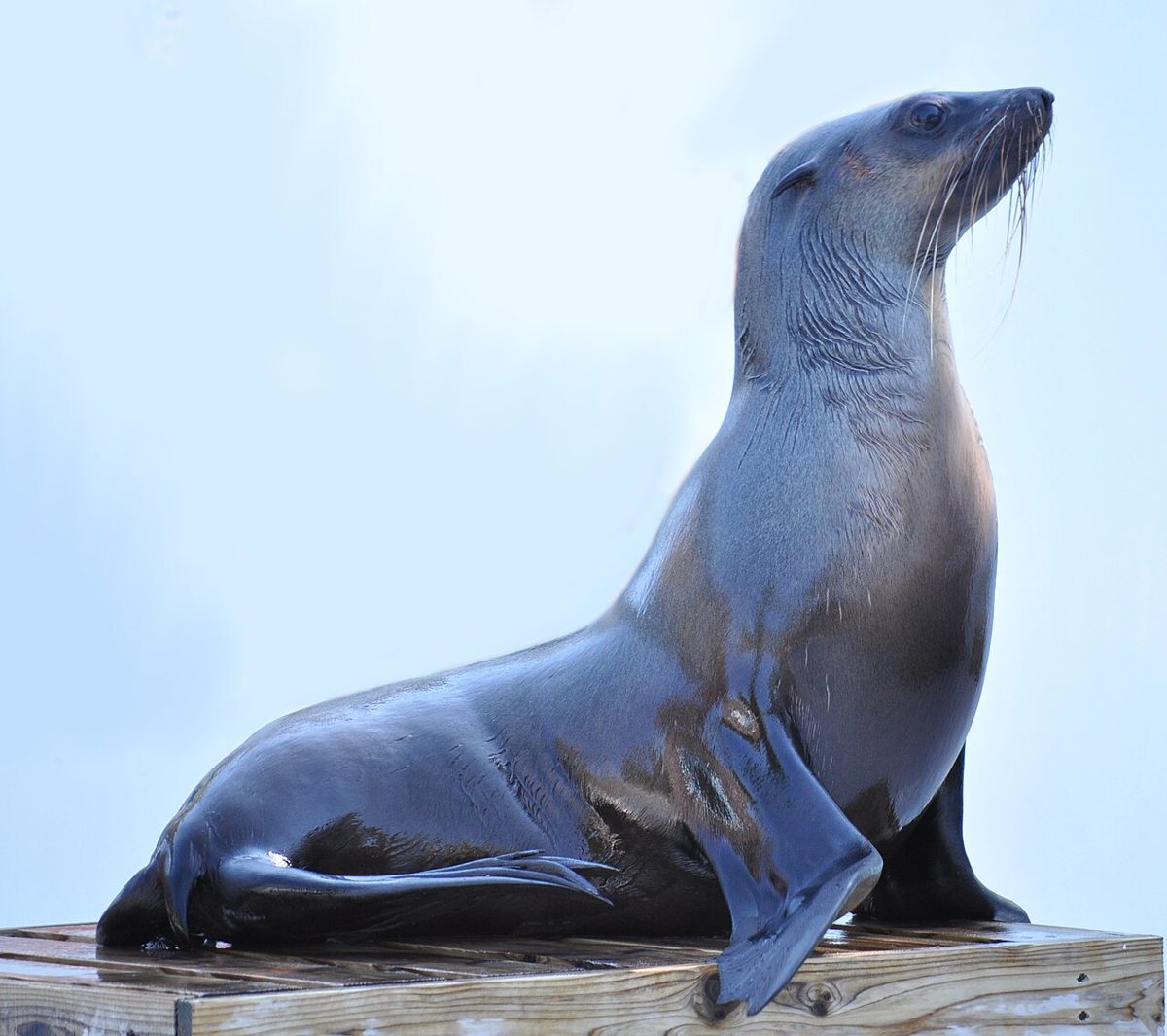
Tobu Zoo is a brilliant all-day combination: a proper zoo with around 120 species sitting next to a gentle, slightly retro amusement park, so you can alternate animals and rides as the mood swings. It’s about 40 minutes from Asakusa on a direct Tobu Skytree Line express to Tobu-Dobutsu-Koen Station, then a 10-minute walk or a quick shuttle bus (¥170 adult). That direct, single-train access is a big part of why it works with little kids.
Admission is ¥1,800 for adults and ¥800 for children aged 3-11, which gets you the zoo and entry to the park (you then pay per ride). If your kids are ride-focused, the One Day Pass (zoo plus unlimited rides) is ¥5,100 for adults and ¥3,800 for children. The amusement-park side is aimed squarely at families, with a kiddie coaster, a merry-go-round and a giant Ferris wheel rather than scream machines, so even toddlers find plenty to do. In summer there’s a large outdoor pool complex (separate fee). The white-tiger enclosure is the animal everyone remembers.
Nikko: walk through a living Edo town (Edo Wonderland)
Nikko is a longer haul, about 2 hours by Tobu Railway’s limited express from Asakusa, but the reward for kids is unusual: Edo Wonderland Nikko Edomura, a theme park built as a full-size Edo-period town. Staff are in costume as samurai, ninja, merchants and townsfolk; there are live ninja and samurai shows, a ninja maze, throwing-star practice and a “haunted temple,” and you can rent period costumes so the kids walk around dressed as a little ninja or princess all day. It’s the rare history outing children beg to stay at. Adult admission runs roughly ¥5,800 (children less), and it’s a 15-20 minute bus from Nikko Station, so build in transfer time.
Nikko’s famous Toshogu Shrine, with its carved “see no evil” monkeys and sleeping cat, is genuinely kid-friendly too if you treat it as a treasure hunt for the animal carvings rather than a history lecture. But with the long ride, I’d pick one or the other, Edo Wonderland for younger kids, Toshogu for slightly older ones, rather than cramming both. The Tobu Railway sells discounted Nikko area passes that bundle the train and local buses, which is worth it for a family.
Open space and farm animals: Mother Farm, German Village & Sagamiko
Sometimes the best day for small kids is simply room to run plus animals to feed. Three options do this well. Mother Farm in Futtsu, Chiba is a big hillside farm where kids can feed sheep and cows, watch a sheep-shearing or pig race, pick fruit in season, and ride little tractors; admission is ¥1,800 for adults and ¥900 for children. It’s about 1.5-2 hours from Tokyo, easiest by highway bus or by train to Kimitsu then a connecting bus (buses are infrequent, so check the timetable carefully before you go).
Tokyo German Village in Sodegaura, Chiba (¥1,000 adults, ¥500 children) is a sprawl of flower fields, a petting zoo, paddle boats, mini-golf and gentle rides, and from November it hosts one of the Kanto region’s biggest winter illuminations. The simplest access is the direct Capina-go bus from JR Chiba Station, about 40 minutes to the gate. Closer to the city, Sagamiko Resort Pleasure Forest (about 70-80 minutes from Shinjuku toward Lake Sagami) is an outdoor adventure park with a long mountain slide, zip lines, a ropeway, a ferris wheel and the huge “Sagamiko Illumillion” light festival in winter, good for kids who’d rather climb and slide than queue for animals.
Practical tips for day trips from Tokyo with kids
A few habits make every one of these trips smoother:
- Use an IC card, not paper tickets. Tap a Suica or Pasmo (physical, or in your phone’s wallet) for everyone, so spontaneous returns are painless. Kids aged 6-11 get half-price fares with a child Suica (bring their passport to a JR ticket counter); children under 6 ride free.
- Stroller or carrier? Strollers are fine for the flat waterfronts (Yokohama) and theme parks, but a soft carrier wins anywhere with steps, gravel or hills, which means Enoshima, hillside temples and parts of Hakone.
- Do the konbini run first. Grab onigiri, drinks and snacks at a convenience store before you board. Food options at rural stops can be limited or queued, and a snack buffer for the ride home prevents the 4 p.m. crash.
- Check the closing day. The Cup Noodles Museum and the Railway Museum both close on Tuesdays; many farms and parks have weekday closures or shorter winter hours. Confirm on the official site the week before.
- Plan one anchor, not five. Choose the single attraction the day is built around and let everything else be a bonus. A relaxed half-day beats a frantic checklist every time.
- Build the day around the trains. Avoid the 7:30-9:30 a.m. and 5:30-7:30 p.m. crush; leave around 10 and head home before 4 or after 7:30. For the line-by-line detail, our Tokyo train travel guide has you covered.
Frequently Asked Questions
What is the best first day trip from Tokyo with kids?
Yokohama. It’s about 30 minutes from central Tokyo, the waterfront is flat and stroller-friendly, and the Cup Noodles Museum gives kids a fun, hands-on activity (designing their own cup) without any pressure. A relaxed first day trip builds the confidence to attempt the bigger ones.
How far should you travel for a day trip with toddlers?
Keep it under about an hour each way for children aged 2-4. Yokohama, the Railway Museum in Omiya and Tobu Zoo all fit, and all have open space where wandering is fine. The key is choosing somewhere that leaving early still feels like a win, not a loss.
Do you need a car for day trips from Tokyo with kids?
No. Japan’s trains are fast, frequent and genuinely stroller-friendly, and passes like the Hakone Freepass or Enoshima-Kamakura Freepass bundle everything into one ticket. For first-time visitors, trains are far less stressful than driving on the left and finding parking.
Which day trip is best for a train-obsessed child?
The Railway Museum in Omiya, Saitama. It’s only about 35 minutes from Tokyo, packed with real retired trains kids can climb into, plus driving simulators and a mini-train plaza for little ones. Admission is ¥1,600 for adults and ¥300 for children aged 3 and up.
Are theme parks like Fuji-Q worth the travel time with young kids?
Only if your kids will use the area suited to them. Fuji-Q’s Thomas Land is a hit with under-7s, but the park is about 2 hours away, so for purely little ones a closer, gentler option like Sanrio Puroland (about an hour, fully indoors) often makes more sense for the time.
Photo Credits
- The Cup Noodles Museum in Yokohama’s Minato Mirai district — Photo: Mr.ちゅらさん / CC BY-SA 4.0 via Wikimedia Commons
- Fuji-Q Highland sits right under Mount Fuji near Lake Kawaguchi — Photo: 663highland / CC BY-SA 4.0 via Wikimedia Commons
- Hakone’s pirate-ship sightseeing boat crossing Lake Ashi — Photo: Daderot / CC0 via Wikimedia Commons
- The Great Buddha of Kamakura, a bronze statue you can walk right up to — Photo: skyseeker / CC BY 2.0 via Wikimedia Commons
- Enoshima, a small island linked to the mainland by a long bridge — Photo: Dandy1022 / CC BY-SA 4.0 via Wikimedia Commons
- Rows of real retired trains at the Railway Museum in Omiya — Photo: Osamu Iwasaki from Tokyo, Japan / CC BY-SA 2.0 via Wikimedia Commons
- Tobu Zoo combines a real zoo with an old-school amusement park — Photo: Ocdp / CC0 via Wikimedia Commons