Day Trips from Tokyo · Guide №022
Mount Fuji Day Trip from Tokyo: Routes, Views & Planning Tips
目次 — Contents
- Best Day Trip Routes to Mount Fuji
- When to Visit: Best Chances of a Clear View
- Bonus Stops Near Mount Fuji
- Mount Fuji Day Trip: Practical Tips
- The Best Mount Fuji Viewpoints, Ranked by Effort
- When Mount Fuji Is Actually Visible (and When It Hides)
- Sample One-Day Timelines
- What to Pack for a Fuji Day Trip
- A Note on Climbing Season
- Guided Tour or Do It Yourself?
- Where to Eat Around Mount Fuji
- Passes and Tickets Worth Knowing About
- Common Mistakes to Avoid
- Frequently Asked Questions
This article contains advertising. Our booking links are routed through a partner that adds commission tracking automatically, so if you book through one we earn a commission from the provider, at no extra cost to you. It never affects what we recommend. Affiliate disclosure

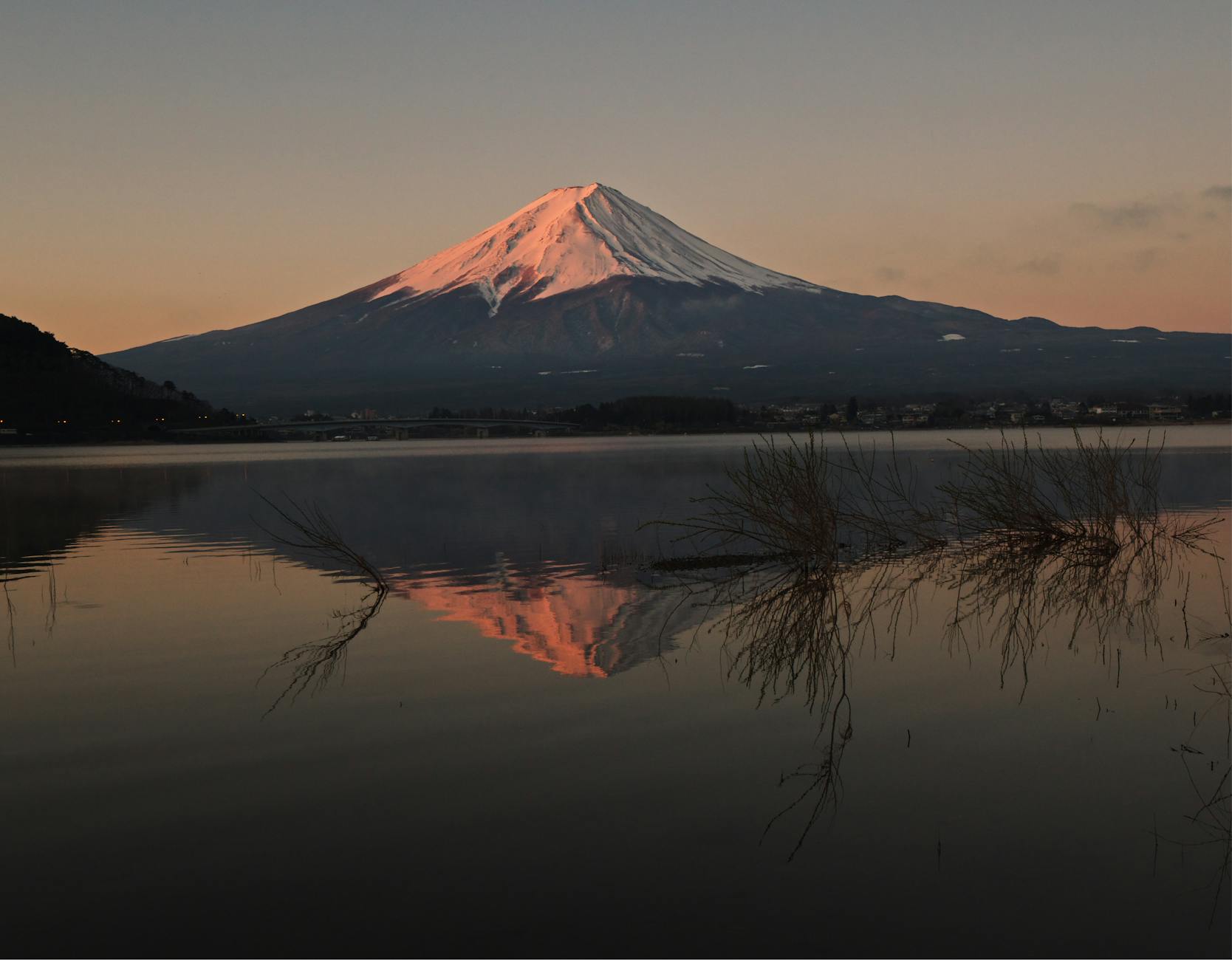
A Mount Fuji day trip from Tokyo is, for a lot of visitors, the highlight of the whole trip. At 3,776 meters, Japan’s tallest and most sacred mountain is a UNESCO World Heritage Site and the one image that says “Japan” to people who have never set foot here. The good part: you don’t have to climb it to feel its pull. You can leave your Tokyo hotel after breakfast, stand at the base of the cone by late morning, and be back in the city for dinner. The base area sits roughly two to three hours out, which makes it one of the most popular day trips from Tokyo — and one of the easiest to get wrong if you pick the wrong route or the wrong season.
Below we compare the realistic routes side by side — Kawaguchiko, Hakone, the Chureito Pagoda photo pilgrimage, the Fifth Station, Gotemba, and the guided bus tours — with honest travel times, costs in yen, and what you actually get for the effort. Then we get into the part nobody likes to talk about: when the mountain is genuinely visible, and how to stack the odds in your favor. If you are still deciding which months give you the cleanest skies, our guide to the best season for clear views goes deeper on Tokyo-area weather month by month.
Best Day Trip Routes to Mount Fuji
There is no single “best” way to do a Mount Fuji day trip — it depends on whether you care most about the postcard view, a packed day of variety, or one specific photo. Here is how the main options stack up from a standing start in central Tokyo. Times are one-way from Shinjuku or Tokyo Station, prices are per adult and rounded, and the “Fuji view” rating assumes a clear day, because no route can rescue you when the cloud sits low on the cone.
| Route / destination | Travel time (one way) | Approx. cost one way | Fuji view | Best for |
|---|---|---|---|---|
| Kawaguchiko (Fuji Five Lakes) | 1h45 bus / ~2h train | ¥2,200 bus | Excellent, close-up | The classic reflected-cone view, lake activities |
| Chureito Pagoda (Shimoyoshida) | ~2h15 via Fuji Kyuko | ¥3,400 train total | Excellent, framed | The five-story-pagoda photo; pair with Kawaguchiko |
| Hakone loop | 1h25 Romancecar | ¥2,330 (Free Pass ¥6,100) | Good, distant | Onsen, volcanic valley, lake cruise, museums |
| Fuji Subaru Line 5th Station | 2h+ bus, seasonal | ¥3,800 from Shinjuku | On the slopes, above cloud | Standing on Fuji without climbing; Apr–Nov |
| Gotemba (outlets / Peace Park) | 1h40 bus | ¥1,800 bus | Good, wide | Outlet shopping with a Fuji backdrop |
| Guided bus tour from Tokyo | ~45 min to first stop | ¥8,000–¥15,000 full day | Varies by itinerary | Zero planning; multiple stops; English guide |
The short version: pick Kawaguchiko (usually paired with Chureito) if the view is the whole point; pick Hakone if you want a fuller day and don’t mind Fuji being a bonus rather than the headline; pick a guided tour if you would rather not touch a timetable. The sections below walk through each route, then cover the weather, sample timelines, and what to pack.
Route 1: Kawaguchiko (Most Popular)
The Fuji Five Lakes (Fujigoko) region, centered on Lake Kawaguchiko, is the most popular and accessible Mount Fuji day trip from Tokyo. The lake’s north shore offers the classic postcard view: Fuji’s symmetrical cone reflected in calm water, framed by cherry blossoms in spring or autumn foliage in November.
Getting there: Direct highway bus from Shinjuku Expressway Bus Terminal (Busta Shinjuku) takes approximately 1 hour 45 minutes and costs ¥2,200 one-way. Alternatively, take the JR Chuo Line limited express to Otsuki (60 minutes, ¥2,500), then transfer to the Fuji Kyuko Railway to Kawaguchiko Station (50 minutes, ¥1,200). The bus is simpler and usually cheaper; the train route is partly covered by the JR Pass as far as Otsuki, though the final Fuji Kyuko leg is not. If you are weighing a rail pass against paying per trip for the whole holiday, our guide to Tokyo trains & passes breaks down when each one pays off.
What to do at Kawaguchiko:
- Kawaguchiko Retro Bus (Red Line): A loop bus connecting all major lakeside attractions (¥1,500 day pass). Stops include the ropeway, natural living center, herb garden, and viewing points
- Kachi Kachi Ropeway: Cable car to Mount Tenjo (1,075m) for panoramic Fuji views. The observation deck at the top is one of the best viewpoints accessible without hiking (¥900 round trip)
- Lakeside cycling: Rent a bicycle at the station and ride the lakefront cycling path — flat, scenic, and the most relaxing way to explore (¥1,000-1,500/day)
- Oishi Park: Fields of lavender (June-July) and other flowers with Fuji as the backdrop — the most photographed spot on the lake’s north shore
- Itchiku Kubota Art Museum: Stunning textile art in a beautiful lakeside building, worth visiting for the architecture and gardens alone

Route 2: Chureito Pagoda (Best Photography)
The Chureito Pagoda at Arakurayama Sengen Shrine is perhaps the single most photographed spot in all of Japan — a five-story pagoda in the foreground with Fuji’s perfect cone rising behind it. During cherry blossom season the combination of pink blossoms, vermilion pagoda, and a snow-capped cone is the photo half the internet has saved to a mood board. If you are timing a trip around the sakura, see our guide to seeing Fuji with cherry blossoms for the roughly two-week window when it all lines up — it moves earlier or later by a week or more each year.
Getting there: Take the Fuji Kyuko Railway to Shimoyoshida Station (one stop before Kawaguchiko), then walk 10 minutes to the shrine base. Climb 398 steps to reach the pagoda viewpoint. Arrive early — the viewing platform is small and crowds build quickly after 9am, especially in spring. Combine this with Kawaguchiko for a full day trip.
Route 3: Hakone (Fuji + Hot Springs)
If you want to combine Fuji views with hot springs, museums, and volcanic landscapes, Hakone is your best bet. While the views of Fuji from Hakone are more distant than from Kawaguchiko, the overall day trip experience is richer and more varied.
Getting there: Odakyu Romancecar from Shinjuku to Hakone-Yumoto (85 minutes, ¥2,330). The Hakone Free Pass (¥6,100 from Shinjuku) covers all transportation within Hakone including the Romancecar, ropeway, pirate ship, cable car, and buses — excellent value for a full day of exploration.
The Hakone Loop: The classic route takes you by mountain railway to Gora, cable car to Owakudani (volcanic valley with sulfur vents and black eggs), ropeway over the mountains to Lake Ashi, and pirate ship cruise across the lake with Fuji views. The full loop takes 5-6 hours and is one of the most scenic day trips from Tokyo.

Route 4: Mount Fuji Fifth Station
The Fuji Subaru Line Fifth Station at 2,305 meters altitude puts you above the clouds on Fuji’s slopes without climbing the mountain. The station has shops, restaurants, a shrine, and walking trails with views in every direction. This is also the starting point for climbers ascending the Yoshida Trail during climbing season (July-September).
Getting there: Highway bus from Shinjuku or Kawaguchiko Station to the Fifth Station (seasonal service, typically April-November). The ride from Kawaguchiko takes 50 minutes. Important: The Fifth Station is frequently closed by weather, especially in winter and during typhoon season. Check conditions before going.

When to Visit: Best Chances of a Clear View
The biggest uncertainty of any Fuji day trip is visibility. The mountain creates its own weather and can be completely hidden by clouds even on otherwise clear days. Here’s how to maximize your chances:
- Best months: November through February offer the clearest skies and the iconic snow-capped peak. October and March are also good
- Worst months: June through August (rainy season and summer haze) have the lowest visibility rates
- Best time of day: Early morning (before 10 AM) is almost always clearer than afternoon. Clouds typically build throughout the day
- Check webcams: Live webcams at Kawaguchiko and other locations show real-time visibility — check before you leave Tokyo. Search “Fuji webcam” for links
- Weather apps: The Tenki.jp app has Fuji-specific visibility forecasts

Bonus Stops Near Mount Fuji
Oshino Hakkai
Oshino Hakkai is a small village between Kawaguchiko and Yamanakako with eight crystal-clear spring-fed ponds created by centuries of snowmelt filtering through Mount Fuji’s volcanic rock. The village has preserved its traditional thatched-roof architecture and offers a peaceful, photogenic stop. Small admission fee of ¥300.

Gotemba Premium Outlets
Japan’s largest outlet mall sits at the base of Mount Fuji with the mountain as an incredible backdrop. Gotemba Premium Outlets has over 290 stores with 30-70% discounts on brands like Gucci, Prada, Nike, and North Face. Accessible by bus from Kawaguchiko or Hakone. A surprisingly enjoyable stop if you’re combining shopping with sightseeing.

Mount Fuji Day Trip: Practical Tips
- Leave early: Depart Tokyo by 7:00-8:00 AM to maximize your day and catch clear morning views
- Dress in layers: Kawaguchiko is 5-10°C cooler than Tokyo; the Fifth Station can be 15-20°C cooler. Bring a warm jacket even in summer
- Book bus tickets in advance: Highway buses to Kawaguchiko fill up on weekends and holidays. Book at highway-buses.jp or at the Busta Shinjuku counter
- Bring cash: Many small shops and restaurants around the Fuji area are cash-only
- Consider staying overnight: While this guide focuses on day trips, one night at a Kawaguchiko ryokan with private Fuji views is an unforgettable splurge

Route 5: Gotemba and the Southern Approach
Most guides treat Gotemba as a shopping footnote, but it deserves a proper mention. The town sits on Fuji’s southeastern flank, and the view of the mountain from the outlet mall’s upper terraces is genuinely wide and unobstructed — on a clear winter morning it fills the sky. The fastest way in is the direct highway bus from Shinjuku (about 1 hour 40 minutes, roughly ¥1,800), or you can ride the JR Tokaido Line to Kozu and change to the Gotemba Line. Beyond the 290-plus outlet stores, the nearby Gotemba Peace Park has a white pagoda with a viewing platform that frames Fuji beautifully and sees a fraction of Kawaguchiko’s crowds. If your travelling group is split between “I want the view” and “I want to shop,” Gotemba is the compromise that keeps everyone happy.
Route 6: Guided Bus Tours from Tokyo
If the idea of decoding the Fuji Kyuko timetable makes your eyes glaze over, a guided day tour does the thinking for you. A typical full-day coach tour leaves a central Tokyo meeting point (often near Shinjuku, Tokyo, or Hamamatsucho stations) around 8:00–9:00am, hits three or four highlights — usually the 5th Station, Oshino Hakkai, a lake cruise or the Kachi Kachi Ropeway, and sometimes Gotemba on the way back — and returns by early evening. Expect to pay ¥8,000–¥15,000 depending on whether lunch and a cruise are included. You trade flexibility for convenience: you can’t linger when the light is perfect, and you’re on the bus’s schedule. But for a first visit, with limited Japanese and a fixed travel day, a tour removes every logistical worry and guarantees you reach spots that are awkward to chain together by public transport. Book through a reputable operator a few days ahead, especially in autumn and cherry-blossom season.
The Best Mount Fuji Viewpoints, Ranked by Effort
“Where exactly do I stand?” is the question that decides whether you go home with the shot. These are the viewpoints worth planning around, from no-effort to earn-it:
- Lake Kawaguchiko north shore (Oishi Park): The reflection shot. Calm mornings give you the cone mirrored in the water with flowers in the foreground. Flat, free, five minutes from the Retro Bus stop. Effort: none.
- Chureito Pagoda: The framed shot everyone wants. 398 steps up from Shimoyoshida — about ten minutes of climbing. The payoff is unmatched, but the small platform fills fast. Effort: moderate, mostly stairs.
- Kachi Kachi Ropeway / Mount Tenjo deck: A panoramic view over the lake to Fuji without a hike — the cable car does the climbing (¥900 round trip). Effort: low.
- Lake Ashi, Hakone: Fuji rising behind the torii gate at Hakone Shrine, or framed by the pirate-ship cruise. More distant, but atmospheric. Effort: low, built into the Hakone loop.
- Fuji Subaru Line 5th Station: Not a view of Fuji so much as a view from it — you’re at 2,305m on the mountain itself, often above the cloud sea. Effort: low once the seasonal bus drops you off.

Of all these vantage points, the Chureito Pagoda is the one that turns a clear morning into the photo you came for — a five-story pagoda in the foreground, the snow-capped cone behind, and (in season) a haze of cherry blossom or a wash of autumn red tying the frame together. Get there early, because the light and the crowds both move fast.
When Mount Fuji Is Actually Visible (and When It Hides)
Here is the uncomfortable truth nobody puts on a postcard: even on a sunny day in Tokyo, Fuji can be a no-show. The mountain is tall enough to brew its own weather, snagging cloud on its summit while the lakes below sit in sunshine. Winter is your friend. From late November through February, dry, cold air pushes in from the northwest and visibility is at its annual best — clear mornings several days a week are normal, and the cone wears its full snow cap. October, March, and early April are solid too. The hard months are June through early September: the rainy season (tsuyu) and summer haze drop your odds sharply, and the mountain can vanish for a week at a time.
Two habits dramatically improve your luck. First, go early. Fuji is almost always clearer at 7–9am than at 2pm, because cloud builds as the ground warms through the day. If you can be at your viewpoint by mid-morning, you’ve already won half the battle. Second, check a live webcam the night before and again at breakfast. Several point at the mountain from Kawaguchiko and Gotemba; a quick search for “Fuji live webcam” before you commit to the bus can save a wasted trip. The Tenki.jp weather app also publishes a Fuji-specific visibility forecast. If the cameras show a grey wall, consider switching to Hakone, where onsen, museums, and the volcanic valley make the day worthwhile with or without the mountain.
Sample One-Day Timelines
The Classic Kawaguchiko + Chureito Day
- 7:00am — First highway bus from Busta Shinjuku, or JR Chuo Line limited express toward Otsuki. Buy a coffee and a konbini onigiri for the ride.
- 9:00am — Arrive Shimoyoshida. Climb to Chureito Pagoda first, while the platform is still quiet and the morning light is clean.
- 10:30am — Hop one stop to Kawaguchiko Station. Pick up the Retro Bus day pass.
- 11:00am — Ride the Kachi Kachi Ropeway up Mount Tenjo for the panorama, then lunch by the lake (hoto noodles).
- 1:30pm — Oishi Park on the north shore for the reflection shot and flower fields.
- 3:00pm — Optional detour to Oshino Hakkai springs, or lakeside cycling if you still have legs.
- 4:30–5:30pm — Catch the bus back to Shinjuku; you’re home for dinner in the city.
The Hakone Loop Day
- 8:00am — Odakyu Romancecar from Shinjuku to Hakone-Yumoto. Buy the Hakone Free Pass at the station first.
- 9:30am — Hakone Tozan mountain railway up to Gora, then the cable car to Sounzan.
- 10:30am — Ropeway over the ridge to Owakudani; eat a black egg, take in the sulfur vents and (clear days) Fuji behind you.
- 12:00pm — Down to Lake Ashi; board the pirate-ship cruise toward Moto-Hakone with Fuji over the water.
- 1:30pm — Lunch at Moto-Hakone, then the lakeside torii gate at Hakone Shrine.
- 3:00pm — Hakone Open-Air Museum or a quick onsen soak before the Romancecar home.
What to Pack for a Fuji Day Trip
- A warm layer, always. Kawaguchiko runs 5–10°C cooler than Tokyo; the 5th Station can be 15–20°C colder and windy even in August. A packable jacket earns its place in your bag.
- Cash. Plenty of small shops, the Retro Bus, and rural restaurants are cash-only. Bring more yen than you think you’ll need.
- Comfortable shoes. Those 398 steps at Chureito, plus lake paths and station transfers, add up. Save the fashion sneakers for the city.
- A small power bank. Cold weather drains phone batteries fast, and you’ll be using maps, the camera, and webcam checks all day.
- Sunglasses and water in summer; the open lakeside and the bright snow glare in winter both catch people out.
A Note on Climbing Season
To be clear, this is a guide to seeing Fuji, not climbing it — but it’s worth knowing where the two overlap. The official climbing window is short: roughly early July to early September, when the trails and mountain huts are open and staffed. Outside that window the upper mountain is genuinely dangerous and effectively closed. In recent seasons the Yamanashi side (the popular Yoshida Trail from the 5th Station) has introduced a per-climber entry fee and a daily cap on numbers to manage overcrowding, and overnight hut reservations are strongly advised. If a summit attempt is on your list, treat it as its own overnight expedition rather than a bolt-on to a sightseeing day. For everyone else, the 5th Station gives you the thrill of standing on the mountain with none of the altitude suffering.
Guided Tour or Do It Yourself?
Go DIY if you’re comfortable with Japanese trains and buses, you want to chase the light and linger where it suits you, and you’d rather spend ¥5,000 on the day than ¥12,000. Independent travel to Kawaguchiko is genuinely easy — one bus, no changes — and gives you total control over timing, which matters a lot when visibility is a morning-only gamble.
Take a tour if it’s your first time in Japan, your travel day is fixed, you want several scattered stops chained together without a single transfer headache, or you simply value a guide who can read the sky and adjust. Tours also smooth over the awkward spots — the seasonal 5th Station bus, the timing of a lake cruise — that are fiddly to coordinate solo. Neither choice is wrong; it comes down to how much you enjoy logistics versus how much you’d pay to skip them.
Where to Eat Around Mount Fuji
The signature dish of the Fuji Five Lakes is hoto — flat, hand-cut wheat noodles simmered with pumpkin and seasonal vegetables in a miso broth, served in an iron pot. It is exactly the warming, stick-to-your-ribs lunch you want after a cold morning on a viewing platform, and you’ll find it all over Kawaguchiko. Around the lake, look for restaurants with terrace seating facing the water so the mountain is your lunch companion. In Hakone, the area around Lake Ashi and Gora has soba specialists and onsen-town cafes, and Owakudani’s famous kuro-tamago (black eggs, boiled in the sulfur springs) are a quirky snack rather than a meal. Wherever you land, carry a couple of konbini onigiri or pastries as backup — rural opening hours are unpredictable, and queues at the few good lakeside spots can run long at peak lunch on a clear weekend.
Passes and Tickets Worth Knowing About
A few targeted passes can shave real money off a Fuji day, but only if they match your route — buying the wrong one is just an expensive souvenir.
- Hakone Free Pass (¥6,100 from Shinjuku): Covers the Romancecar surcharge plus every leg of the Hakone loop — railway, cable car, ropeway, pirate ship, and buses. If you’re doing the full loop it pays for itself easily and saves you fumbling for change at each transfer.
- Mount Fuji Pass / Kawaguchiko area passes: Regional tickets bundle the Fuji Kyuko trains and local sightseeing buses around the Five Lakes. Worth it only if you’re hopping between several lakeside stops in a day.
- Kawaguchiko Retro Bus day pass (¥1,500): The single most useful local ticket — unlimited rides on the loop bus that links the ropeway, Oishi Park, and the museums. Buy it at Kawaguchiko Station on arrival.
- JR Pass: Covers the Chuo Line as far as Otsuki, but not the final Fuji Kyuko leg to Kawaguchiko. Don’t assume it gets you all the way to the lake.
Common Mistakes to Avoid
- Leaving it until the afternoon. By 1–2pm the cloud has usually built around the summit. A late start is the number-one reason people go home without seeing the mountain.
- Not booking the bus in advance. Highway buses to Kawaguchiko sell out on weekends and through autumn. Reserve a seat at highway-buses.jp rather than gambling on same-day availability.
- Trying to cram Kawaguchiko and Hakone into one day. They’re in different directions; pick one. Chaining them turns a relaxed day into a stressful transit marathon.
- Underdressing. People arrive in summer clothes and freeze at the 5th Station. Pack the warm layer even when Tokyo is sweltering.
- Ignoring the webcams. Five minutes checking a live camera at breakfast can redirect you to Hakone for a salvageable day instead of staring at grey cloud over the lake.
Related day-trip guides: For the full breakdown of the Fuji-view options mentioned above, see our Kawaguchiko day trip guide for the best lakeside reflections, and the Hakone day trip guide if you want hot springs with your mountain views. Browse them all on our day trips from Tokyo hub.
Frequently Asked Questions
Can I climb Mount Fuji as a day trip from Tokyo?
Technically yes, but it’s extremely grueling. The official climbing season is July to early September. Most climbers start at the Fifth Station in the afternoon, climb overnight, and summit for sunrise (goraiko). A round trip takes 7-12 hours. Attempting a same-day return to Tokyo is possible but exhausting. Most people do an overnight climb with a mountain hut stay.
What if Mount Fuji is hidden by clouds?
It happens — even locals sometimes go months without a clear view. If clouds obscure Fuji, the Kawaguchiko and Hakone areas still offer plenty to enjoy: lakeside walks, museums, hot springs, local food, and scenic landscapes. The trip is worthwhile even without the mountain being visible, though admittedly less magical.
Kawaguchiko or Hakone — which is better?
Kawaguchiko is better for: close-up Fuji views, Chureito Pagoda photography, lakeside activities, and a focused Fuji experience. Hakone is better for: a more varied day trip (volcanic valleys, hot springs, museums, lake cruises), onsen bathing, and combining with ryokan stays. If Fuji views are your priority, choose Kawaguchiko. If you want a well-rounded day trip with Fuji as a bonus, choose Hakone.
Is the Fuji day trip worth it in summer?
Summer has the lowest visibility rates, but it’s also when the mountain is green and lush rather than snow-capped. If you visit in summer, go early morning for the best chances of a clear view. The Kawaguchiko area has lavender fields in July and fireworks festivals in August that add value even on cloudy days.
How much does a Mount Fuji day trip cost?
Done independently, a Kawaguchiko day runs roughly ¥5,000–¥8,000 per person: about ¥4,400 round-trip on the highway bus, ¥1,500 for the Retro Bus pass, and ¥900 for the ropeway, plus lunch. A Hakone loop is a little more once you add the ¥6,100 Free Pass. A guided coach tour bundles transport, a guide, and often lunch into one ¥8,000–¥15,000 price. Add admissions only for the extras you choose.
Can you see Mount Fuji from Tokyo itself?
On a clear, dry day — yes. From high vantage points such as the Tokyo Metropolitan Government Building observatories, Shibuya Sky, or the Bunkyo Civic Center, Fuji’s silhouette appears on the southwestern horizon, best in the crisp air of winter mornings and at sunset. It’s distant and weather-dependent, so treat it as a bonus rather than a substitute for a day trip. You may also glimpse it from the shinkansen heading west from Tokyo — sit on the right-hand side.