Best Things to Do in Tokyo · Guide №033
teamLab Tokyo Guide: Borderless vs Planets (2026)
teamLab Borderless at Azabudai Hills or teamLab Planets in Toyosu? A 2026 teamLab Tokyo guide with a full comparison, ticket prices, booking tips, what to wear and photo advice.
目次 — Contents
- Borderless vs Planets: the short answer
- teamLab Borderless vs teamLab Planets comparison
- 2026 tickets and prices
- How and when to book (they sell out)
- Getting there
- What to wear (Planets has water and mirror floors)
- Best time to go and crowds
- Photography tips
- Accessibility
- Visiting with kids
- How teamLab fits your Tokyo itinerary
- What you’ll actually see, room by room
- How long to budget, and a sample timing
- Lockers, bags and what to bring
- Food, drinks and the wider visit
- Saving money and avoiding mistakes
- Is teamLab worth it?
- Getting there: exact routes
- Best months and seasonal notes
- Accessibility, prams and older visitors
- How teamLab compares to other Tokyo experiences
- Quick tips for the best visit
- Frequently Asked Questions
This article contains advertising. Our booking links are routed through a partner that adds commission tracking automatically, so if you book through one we earn a commission from the provider, at no extra cost to you. It never affects what we recommend. Affiliate disclosure
Two teamLab museums now sit on opposite sides of Tokyo, and a good teamLab Tokyo guide really comes down to one decision: Borderless or Planets. teamLab Borderless reopened inside Azabudai Hills and is a roaming maze where the artworks wander between rooms. teamLab Planets in Toyosu is the barefoot, walk-through-water one. Pick by mood — both are worth it, and you can do both in a day if you book smart.
Borderless vs Planets: the short answer
If you only have time for one and you want the most cinematic, get-properly-lost, “how is this even working” experience, go to teamLab Borderless at Azabudai Hills. There are no maps and no fixed route — light, water and projected creatures spill from one space into the next, and the famous Lamp Forest and the Bubble Universe rooms are here. Plan on two to three hours and comfortable shoes.
If you want the more physical, sensory, social-media-perfect version — the one where you wade through warm knee-deep water under projected koi and stand inside a mirrored room of hanging orchids — choose teamLab Planets in Toyosu. You go barefoot, you roll up your trouser legs, and the whole thing takes about 75 to 90 minutes. It is the easier visit with kids and the easier visit to photograph yourself in.
teamLab Borderless vs teamLab Planets comparison
| teamLab Borderless | teamLab Planets | |
|---|---|---|
| Concept | A “borderless” maze — artworks move between rooms and there is no set route. Wandering and discovery. | Four large worlds you walk through in sequence, several of them flooded. Immersive and physical. |
| Location | Azabudai Hills, Minato (central, near Roppongi) | Toyosu, on the bay (eastern waterfront) |
| Nearest station | Kamiyacho (Hibiya Line), 4 min walk; Roppongi-itchome also close | Shin-Toyosu (Yurikamome Line), 1 min walk |
| Time needed | 2–3 hours | 75–90 minutes |
| Barefoot / wet? | No — normal shoes, you stay dry | Yes — barefoot, and you wade through water up to the knee in places |
| Most photogenic for | Atmospheric, abstract, “lost in light” shots; the Lamp Forest | Portraits of you in the scene — water mirror, flower room, the sphere room |
| 2026 adult ticket | ~¥3,800–¥4,800 (dynamic by date) | ¥3,800 weekday / ¥4,200 weekend & holiday |
| Best for | Art lovers, couples, anyone who likes to explore at their own pace | Families, first-timers, anyone chasing the iconic Instagram shots |
2026 tickets and prices
Both venues use timed-entry tickets and both regularly sell out, so this is not a turn-up-and-walk-in attraction. Buy ahead.
teamLab Borderless prices
- Adults (18+): roughly ¥3,800–¥4,800. Pricing is dynamic — quiet weekday slots are cheaper, weekends and holidays are the top of the range.
- Ages 13–17: about ¥2,800.
- Children 4–12: about ¥1,500. Under 4 free.
- Booking on the official site usually includes free same-day re-entry, so you can step out for lunch at Azabudai Hills and come back.
teamLab Planets prices
- Adults (13+): ¥3,800 on weekdays, ¥4,200 on weekends and public holidays.
- Children 4–12: around ¥800. Under 4 free.
- Tickets are sold by date and 30-minute entry window through the official DMM ticket store.
Prices drift a little each season, so treat these as your planning baseline and confirm the exact figure for your date when you book. Either way, budget about ¥4,000 a head.
How and when to book (they sell out)
This is the part people get wrong. Both museums release timed slots in advance, and the good slots — late afternoon, early evening, anything on a weekend — vanish fast. For Borderless, most weekend windows are gone within about 72 hours of release. Here is the playbook:
- Book online, never at the door. Same-day tickets are frequently unavailable, especially Friday to Sunday.
- Borderless: buy from the official teamLab site or Klook. The official site often gives a small online discount and same-day re-entry.
- Planets: buy from the official teamLab Planets ticket store (run on DMM). Choose your date and 30-minute entry window.
- Aim 1–2 weeks out for a weekday, and as early as you can for weekends or cherry-blossom/holiday season.
- Pick your slot for the light: a weekday morning is the calmest; the last entries of the evening are atmospheric but busy.
Getting there
teamLab Borderless (Azabudai Hills)
Borderless sits in the Azabudai Hills Garden Plaza B in Minato. The simplest approach is Kamiyacho Station on the Hibiya Line, which connects directly to the complex and is about a 4-minute walk to the entrance. Roppongi-itchome (Namboku Line) and Roppongi (Hibiya/Oedo) are also within walking distance, so it pairs naturally with a Roppongi evening. If you are exploring the wider area first, our map of Tokyo’s districts sets out how Roppongi and Azabudai fit together.
teamLab Planets (Toyosu)
Planets is almost on top of Shin-Toyosu Station on the driverless Yurikamome line — a one-minute walk. From central Tokyo, take the Yurikamome from Shimbashi (a scenic elevated ride over the bay) or the Yurakucho subway line to Toyosu and change. It is a little out of the way, which is exactly why pairing it with the Toyosu fish market or the bay area makes sense.
What to wear (Planets has water and mirror floors)
For Borderless, wear whatever you like and bring comfortable shoes — you will be on your feet for a couple of hours and the floors are dry. For Planets, read this twice:
- Bottoms you can roll above the knee. Shorts that stop above the knee, athletic leggings, or light trousers you can push up to mid-thigh. Skinny jeans that won’t roll or wide-leg jeans that drag in the water are a problem.
- No skirts or dresses. Several rooms have mirrored floors. Use your imagination. The staff will offer you rental shorts if you turn up in the wrong thing, but save yourself the queue.
- Slip-on shoes. You remove them at the entrance and store everything in a free locker, so save the laces.
- A light-coloured top photographs best against the dark walls and glowing floors.
- Free rental shorts are available from staff if needed, and there are towels and lockers, so you are not stuck — just don’t get caught out.
Best time to go and crowds
The calmest entry for either museum is the first slot on a weekday morning, right at opening. You get rooms closer to empty, which matters enormously for photos — these installations are most magical when you are not dodging strangers. Avoid Saturdays, Sundays and Japanese public holidays if you possibly can, and avoid the cherry-blossom weeks and Golden Week for the heaviest crowds.
Planets runs late — typically to 22:00 with last entry around 21:00 — and the last couple of windows of the night thin out after the day-trippers leave. Borderless generally runs roughly 10:00 to 21:00 with timed entries every 30 minutes; always confirm the exact hours for your date, because both venues adjust the schedule.
Photography tips
- Turn the flash off everywhere. Flash kills the projections and ruins everyone else’s shot. Crank ISO and brace your phone against a wall instead.
- At Planets, the water room and the flower-sphere room are the money shots. A light top and a calm face beat any pose; let the projections do the work.
- Borderless rewards patience. Sit in the Lamp Forest or Bubble Universe for a few minutes and let the lights cycle — the colours shift, and a slightly slower shutter (steady hands) gives that dreamy smear.
- Beware mirror floors and wet phones. A wrist strap at Planets is genuinely sensible.
- Go wide and go low. The most striking compositions usually come from crouching down to catch the reflections.
If you are building a wider shot list for the city, both museums earn a place on any serious run of Tokyo photo spots.
Accessibility
Borderless is the more wheelchair-friendly of the two: it is step-light and staff can advise a route, though the deliberately dim, mirrored layout is disorienting and a few small installations have raised thresholds. Planets is harder — it involves walking barefoot over uneven, sometimes sloped surfaces and through water, so it is not suitable for wheelchairs or anyone unsteady on their feet, and some rooms have low light and water you cannot see the bottom of. Both have lockers and staff who speak some English; contact the venue ahead if you have specific access needs and they will talk you through it.
Visiting with kids
Kids love both, but Planets is the easy win with children — the water, the bouncing inflatable room and the giant flower sphere are pure play, and the visit is short enough to hold their attention. Mind that toddlers must be watched constantly around the water rooms, and very small children may find the dark, loud spaces overwhelming. Borderless suits slightly older kids who enjoy exploring and chasing the moving creatures from room to room. Strollers are awkward inside both; a carrier is better. For a full day of family-friendly ideas around these, see our guide to family days out in Tokyo.
How teamLab fits your Tokyo itinerary
A teamLab museum is a half-day at most, so build the rest of the day around it. Borderless slots neatly into a Roppongi/Azabudai afternoon and evening; Planets pairs with the Toyosu market and the bay. If you are choosing between Tokyo’s marquee attractions, teamLab sits comfortably alongside the city’s other showpieces in our roundup of everything else worth seeing. And if your travellers love this style of imaginative, story-driven world, the hand-built whimsy of the Ghibli Museum is the natural companion outing — just remember it needs its own advance tickets too.
What you’ll actually see, room by room
Both museums are made of named installations, and knowing them helps you plan where to slow down. They do rotate and evolve, so treat this as the shape of the experience rather than a fixed map.
Inside teamLab Borderless
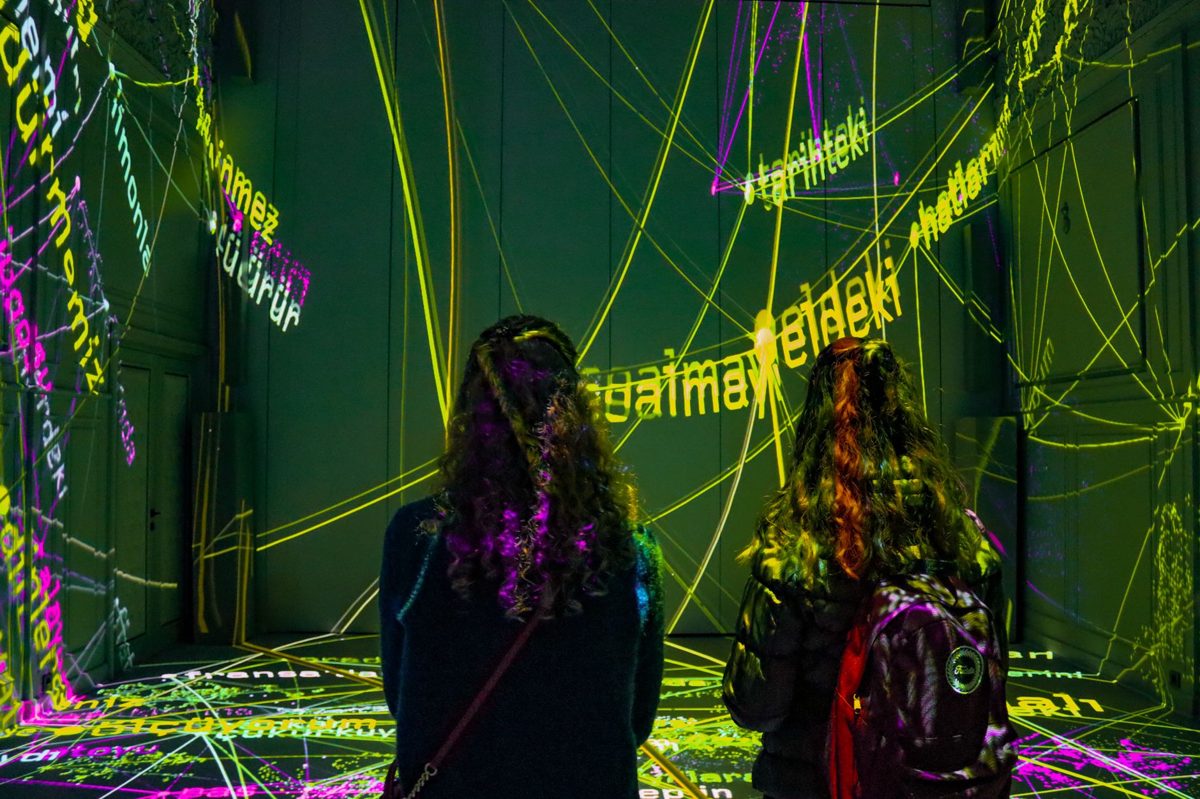
- Borderless World: the heart of it — flowers bloom and scatter across walls and floors, waterfalls of light pour down, and digital creatures wander from room to room and even onto you. There is no route; you follow the light.
- Bubble Universe: a mirrored sphere room filled with floating lights that ripple as you move — the most photographed space in the building and worth queuing for.
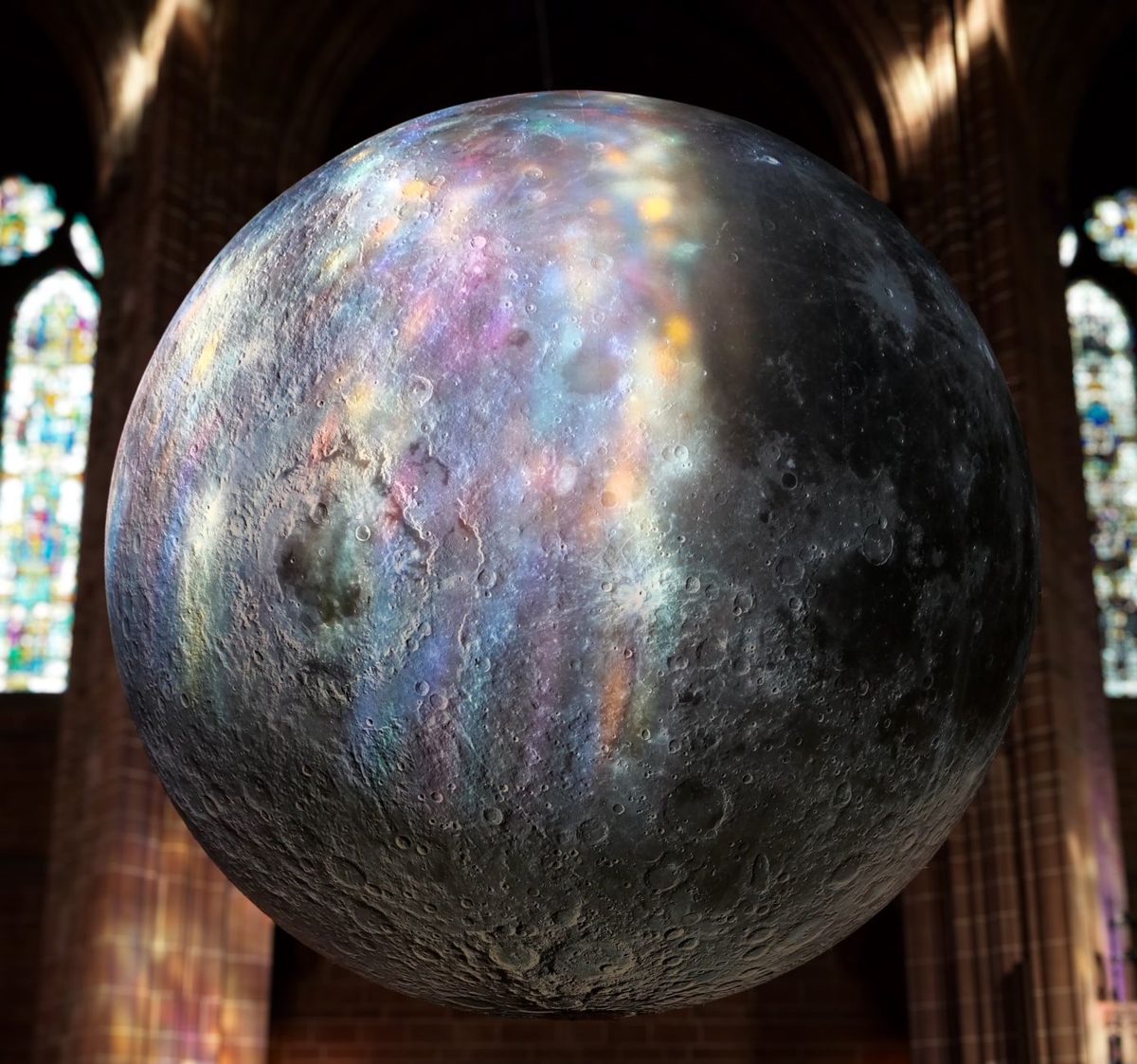
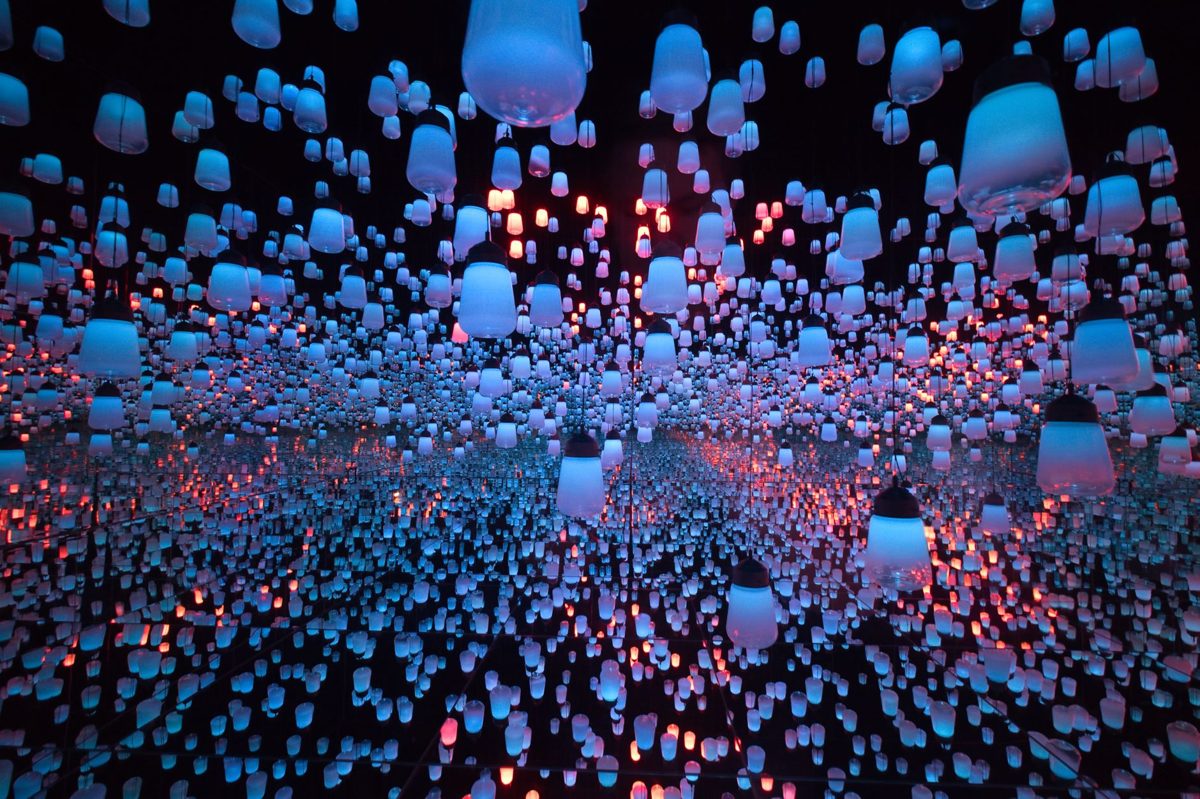
- Forest of Lamps (Lamp Forest): hundreds of Murano-style glass lamps hang at head height; when one near you lights, the colour spreads through the whole mirrored room. Time your entry; it admits small groups.
- Universe of Water Particles / Light Sculpture spaces: volumetric beams you can walk through, plus the giant cascading waterfall projected over a sculpted rock.
- EN Tea House: order a tea and a flower blooms inside the bowl in real time. It is a paid extra but a lovely pause.
Inside teamLab Planets
- The water room (Drawing on the Water Surface): the famous one — you wade knee-deep through warm water while koi made of light swim around your legs and burst into flowers when you touch them.
- Infinite Crystal Universe: a mirrored room hung with strings of LED lights stretching apparently forever; you control elements from your phone.
- Floating Flower Garden: thousands of living orchids hang from the ceiling and rise as you walk in, surrounding you in a mirrored bloom — the signature portrait shot.
- Soft Black Hole / the inflatable hill: a squishy floor you sink into and clamber across, surprisingly hard work and a hit with kids.
- The Garden area: moss gardens and an egg-filled space added in recent expansions, photogenic in soft daylight.
How long to budget, and a sample timing
People consistently underestimate Borderless and overestimate how rushed Planets feels. For Borderless, give yourself a genuine three hours if you like to linger and photograph; two if you move briskly. Because there is no set path, you can double back, and many visitors miss whole rooms by not exploring side doorways — so wander deliberately. For Planets, the one-way route takes most people 75 to 90 minutes including drying your feet and the flower garden, though you can slow down in the water room as long as you like.
A relaxed combined day looks like this: a 10:00 first-entry slot at Borderless (rooms at their emptiest), out by around 12:30, lunch at Azabudai Hills, then cross town to Toyosu for a mid-afternoon Planets slot, finishing with the bay at golden hour. If you only want one, a single weekday-morning visit to either is plenty for a memorable couple of hours.
Lockers, bags and what to bring
- Free lockers at both venues take your shoes, coat and large bags. At Planets you must stash anything that can’t get wet.
- Phone on a strap or in a zipped pocket at Planets — you are in the dark, around water and mirrors, and dropped phones do happen.
- A small towel is handy at Planets to dry your feet before the flower garden; the venue also has facilities.
- Skip the tripod and selfie stick — both are awkward in the dark crowds and often discouraged. Brace against a wall instead.
- Bring socks for Planets if you would rather not be fully barefoot on the dry sections; the water sections are bare regardless.
Food, drinks and the wider visit
Neither museum is a full meal stop, but both reward pairing with their neighbourhood. Borderless sits inside Azabudai Hills, a gleaming new complex with a food hall, bakeries and restaurants, so lunch or dinner is a lift ride away; the EN Tea House inside also does its blooming-tea moment. Planets in Toyosu is a short walk or ride from the Toyosu fish market and its famous sushi breakfasts, and from the bay-side parks — so a Planets ticket slots neatly into a market-and-waterfront day. Group it with the surrounding sights using our area-by-area guide to Tokyo so you are not backtracking across the city.
Saving money and avoiding mistakes
- Book direct for the small online discount and free same-day re-entry at Borderless; resellers rarely beat it and add fees.
- Pick a weekday slot — Borderless’s dynamic pricing makes quiet days noticeably cheaper as well as calmer.
- Don’t buy two Planets tickets to “see it twice” in one go; it is one-way and short, so one visit is the experience.
- Arrive 10—15 minutes before your slot, not earlier — you’ll just wait, and not later, because late arrivals can be turned away.
- Wrong outfit is the classic blunder at Planets: turning up in a dress or jeans you can’t roll means borrowing rental shorts and joining a queue.
Is teamLab worth it?
For most people, yes — there is genuinely nothing else like walking through living light, and it photographs like a dream. The honest caveats: it is busy, it is not cheap at around ¥4,000 a head, and a few rooms involve queuing for a turn. If you hate crowds and dim, disorienting spaces, or you are travelling with someone who can’t manage water and uneven floors, weigh that up — Borderless is the gentler choice, Planets the more physical. Go on a weekday morning and the value shoots up. If you love this kind of imaginative, immersive world-building, line it up with the Ghibli Museum for a second dose of Tokyo magic, and slot both into the bigger picture of everything worth doing in Tokyo.
Getting there: exact routes
Both venues are easy once you know the line to aim for, but they sit on opposite sides of the city, so plan the hop between them if you’re doing both.
- To Borderless from Tokyo Station: Marunouchi line to Ginza, change to the Hibiya line to Kamiyacho (about 15 minutes total), then a 4-minute walk into Azabudai Hills. From Shinjuku, take the Toei Oedo line to Roppongi and walk.
- To Borderless from Shibuya: it’s a short taxi or a 20-minute trip via the Ginza/Hibiya lines; Roppongi is the walkable fallback station.
- To Planets from Tokyo Station: Keiyo line or the Yurakucho line to Toyosu, then the Yurikamome one stop to Shin-Toyosu (around 20—25 minutes), with the entrance a one-minute walk.
- To Planets the scenic way: board the driverless Yurikamome at Shimbashi and ride the front seat over the Rainbow Bridge and bay — a sightseeing trip in itself — to Shin-Toyosu.
- Between the two: roughly 30—40 minutes by train (Hibiya line to a transfer onto the Yurakucho/Yurikamome), so a morning-and-afternoon split works comfortably.
A prepaid Suica or Pasmo IC card makes every transfer tap-and-go, which matters when you’re hopping lines. For how these districts string together with the rest of your sightseeing, our guide to how the city’s areas fit together is the companion read.
Best months and seasonal notes
Because both museums are indoor, they’re genuine all-weather, all-season options — which makes them perfect rainy-day or peak-summer-heat plans when outdoor sightseeing is miserable. That also means they get slammed on wet days and during school holidays, so the crowd advice still holds: weekday mornings win. teamLab does occasionally refresh installations and run seasonal variations (cherry-blossom and autumn themes appear in some rooms), so it can be worth a repeat visit on a later trip. Avoid the absolute peak windows — the cherry-blossom fortnight, Golden Week in late April and early May, and the mid-August Obon holiday — if you want any breathing room.
Accessibility, prams and older visitors
It’s worth being honest about who each venue suits. Borderless is broadly step-light and staff will help plan a route, so wheelchair users and those with limited mobility can experience much of it, though the deliberately dark, mirrored, crowd-filled layout is disorienting and a handful of small rooms have raised entries. Strollers are awkward in the dim crush — a baby carrier is far easier.
Planets is the harder visit: you walk barefoot over uneven, sloped and sometimes wet surfaces, wade through water you can’t see the bottom of, and clamber across a soft inflatable floor. It is not suitable for wheelchairs or anyone unsteady, and strollers can’t go through; there is a buggy park. Both venues have English-speaking staff, free lockers and clear signage, and both are happy to advise if you contact them ahead about specific needs — do that rather than gamble on the day. Families should also read our guide to visiting with children for pacing a day around little ones.
How teamLab compares to other Tokyo experiences
teamLab isn’t the only immersive or visual draw in town, so it helps to know where it sits. If you want interactive, walk-through digital art, nothing else in Tokyo matches it — that’s its niche. If your group leans toward storytelling and craft, the hand-built models and original short films of the Ghibli Museum are a gentler, more nostalgic counterpart; it’s smaller and also needs advance tickets, and we cover it in our Ghibli Museum guide. If you mainly want a spectacular view and that one killer photo, an observation deck like Shibuya Sky or the choice between the Skytree and Tokyo Tower may give you more bang for less time and money. And if you’re after Tokyo’s best photo locations more broadly, teamLab is one stop on a longer list in our Tokyo photo spots guide. Many travellers happily do teamLab and one or two of these; they scratch different itches.
Quick tips for the best visit
- Go first thing on a weekday — the single biggest lever on both crowds and photo quality.
- Charge your phone and clear some storage; you will shoot far more than you expect in the dark, reflective rooms.
- Wear the right clothes — a light top everywhere, and roll-up bottoms with no skirt or dress for Planets.
- Don’t rush Borderless; explore side doorways or you’ll miss whole installations, since there’s no fixed route.
- Slow down in the signature rooms — the water and flower rooms at Planets, the Lamp Forest and Bubble Universe at Borderless — and let others clear before you frame a shot.
- Stash everything in the free lockers so your hands are free and nothing gets wet.
- Build the rest of your day around the neighbourhood — Azabudai for Borderless, Toyosu and the bay for Planets — so the half-day visit anchors a full one.
Do those few things and teamLab goes from “impressive but crowded” to one of the most memorable couple of hours of a Tokyo trip — and a highlight among the best attractions in the city.
Frequently Asked Questions
Which is better, teamLab Borderless or teamLab Planets?
Neither is “better” — they are different. Borderless is a larger, explore-at-your-own-pace maze of moving artworks and is more atmospheric; Planets is shorter, more physical (barefoot, through water) and gives you the iconic portrait shots. If you want one cinematic art experience, pick Borderless. If you want the hands-on, photograph-yourself version that also works for kids, pick Planets.
Can you visit both teamLab museums in one day?
Yes. Planets needs about 75–90 minutes and Borderless two to three hours, and they are roughly 30–40 minutes apart by train. Book a morning slot at one and an afternoon or evening slot at the other, with lunch in between. Just buy both sets of timed tickets well in advance.
Do I really get wet at teamLab Planets?
Yes, in parts. You walk barefoot and wade through water up to your knees in a couple of rooms, so wear shorts or trousers you can roll above the knee — and no skirts or dresses, because several rooms have mirrored floors. The water is warm, lockers are free, and staff lend rental shorts if you arrive in the wrong outfit.
How much are teamLab tickets in 2026?
Budget about ¥4,000 per adult. teamLab Planets is ¥3,800 on weekdays and ¥4,200 on weekends and holidays. teamLab Borderless uses dynamic pricing, roughly ¥3,800–¥4,800 for adults depending on the date, with cheaper children’s and teen tickets at both.
Do teamLab tickets sell out?
Often, yes — especially weekend and evening slots, which can disappear within a few days of release. Both museums use timed entry, so book online ahead of time (1–2 weeks out for weekdays, earlier for weekends and holidays). Walk-up same-day tickets are unreliable.