Best Things to Do in Tokyo · Guide №157
Tokyo Observation Decks Compared: Shibuya Sky vs Skytree vs Free Views
Every Tokyo observation deck worth considering, paid and free, ranked on price, height and what you actually see, with the one we would pay for and the ones we would skip.
目次 — Contents
- The short answer
- Tokyo observation decks compared
- Shibuya Sky: the one worth paying for
- Tokyo Skytree: highest, but not always best
- Tokyo Tower: better to look at than to look from
- Tokyo City View, Roppongi Hills
- Sunshine 60 Tenbou Park, Ikebukuro
- The free observation decks
- Day or night: which deck when
- Is a Tokyo observation deck worth it?
- Practical tips for any Tokyo observation deck
- Frequently Asked Questions
- Photo Credits
This article contains advertising. Our booking links are routed through a partner that adds commission tracking automatically, so if you book through one we earn a commission from the provider, at no extra cost to you. It never affects what we recommend. Affiliate disclosure
The best Tokyo observation deck for most people is Shibuya Sky, because it is the only major one where you stand outside with nothing between you and the city. Skytree is the highest, Tokyo Tower is the most photogenic from a distance, and the Tokyo Metropolitan Government Building in Shinjuku is free and gets you surprisingly close to the same view.
This guide ranks the whole field, paid and free: what each deck costs in 2026, how high it really is, what you actually see from it, when to go, and which ones are not worth the money. If you have already narrowed it to the two famous towers, our Skytree vs Tokyo Tower comparison goes deeper on that head-to-head. For the rest of the city’s big sights, start with the best things to do in Tokyo.
The short answer
If you only have time and budget for one, here is how we would choose:
- You want the best experience, full stop: Shibuya Sky, timed for the hour before sunset.
- You want the highest view and a clear day for Mount Fuji: Tokyo Skytree, morning, in winter.
- You want to spend nothing: the Tokyo Metropolitan Government Building in Shinjuku.
- You want Tokyo Tower in your photos: Tokyo City View at Roppongi Hills, which puts the tower right in front of you.
- You are travelling with children who get bored of looking out of windows: Sunshine 60 in Ikebukuro, which is cheaper, quieter and built around a park theme.
What we would skip: paying for both Skytree and Tokyo Tower on the same trip. They show you roughly the same city from two different angles, and after the first one the second feels like buying the same ticket twice.
Tokyo observation decks compared
Prices are adult, per person, as of September 2026. Several decks now use date-based or dynamic pricing, so treat the figures as a range and check the operator’s site for your date.
| Deck | Area | Height | Adult price | Outdoors? | Best for |
|---|---|---|---|---|---|
| Shibuya Sky | Shibuya | 229 m | ¥2,700 before 15:00, ¥3,400 after | Yes, open-air roof | Sunset, photos, the “wow” |
| Tokyo Skytree Tembo Deck | Oshiage | 350 m | Roughly ¥1,800–2,400 | No | Height, Fuji on clear days |
| Skytree Tembo Deck + Galleria | Oshiage | 350 m + 450 m | Roughly ¥2,700–3,800 | No | Bragging rights |
| Tokyo Tower Main Deck | Shiba-koen | 150 m | ¥1,500 | No | Nostalgia, central views |
| Tokyo Tower Top Deck Tour | Shiba-koen | 250 m | ¥3,300 online, ¥3,500 on site | No | A guided, designed experience |
| Tokyo City View | Roppongi | ~250 m (52F) | Around ¥2,000+, check site | No (rooftop closed) | Tokyo Tower in the frame |
| Sunshine 60 Tenbou Park | Ikebukuro | 251 m | ¥700 weekday, ¥900 weekend, up to ¥1,200 peak | No | Families, low budgets |
| Tokyo Metropolitan Government Building | Shinjuku | 202 m (45F) | Free | No | Anyone, especially at night |
Two things jump out of that table. First, height is not the same as a good view: Skytree is the tallest by a long way, but it sits in the low-rise east of the city, so much of what you see from it is flat residential sprawl. Second, the price gap between the free deck and the paid ones is far larger than the gap in the view.
Shibuya Sky: the one worth paying for
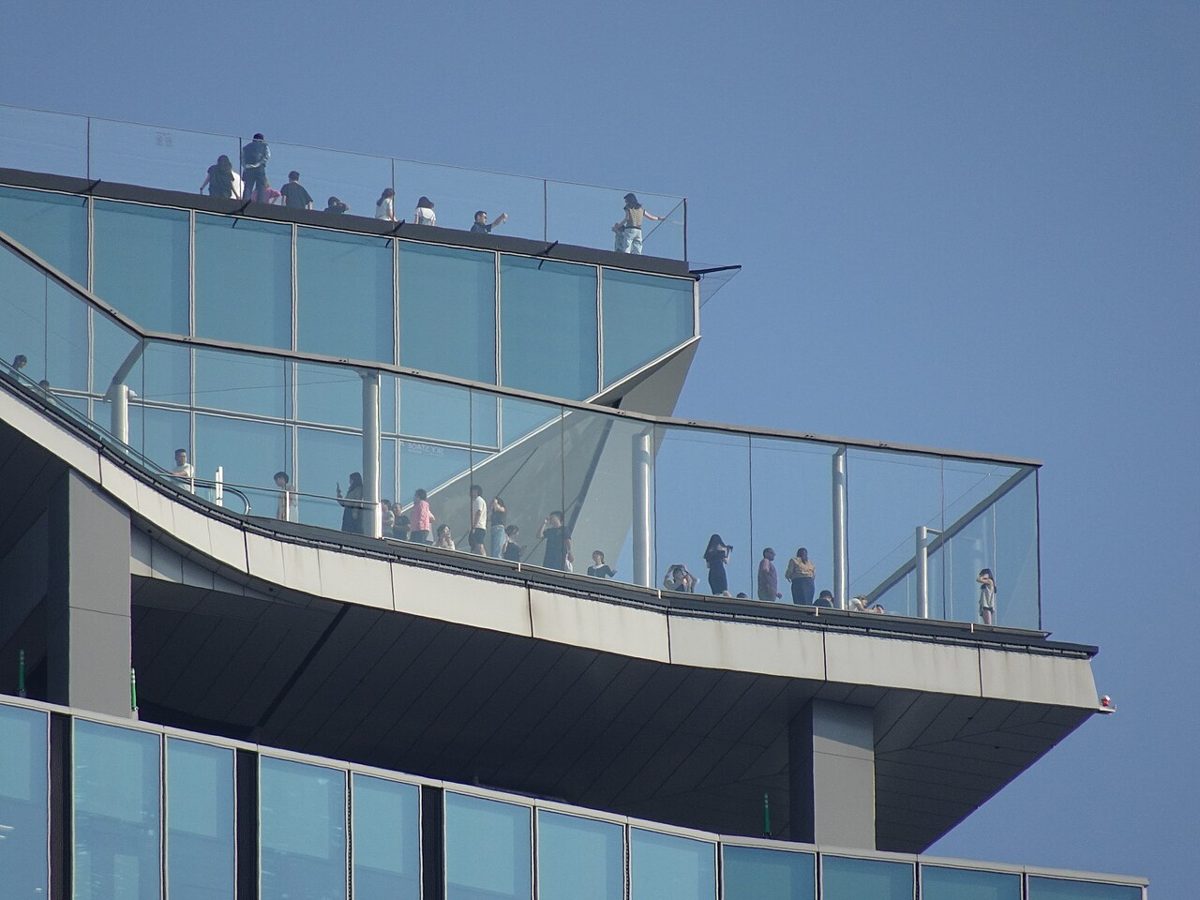
Shibuya Sky sits on top of Shibuya Scramble Square, directly above Shibuya station, and the reason it has overtaken the towers in the last few years is simple: the main attraction is outside. You take a lift up through a darkened, projection-lit shaft to the 45th floor, walk up to the rooftop, and find yourself on an open deck with a glass parapet, hammock-style loungers to stretch out on, and nothing overhead. It feels higher than 229 metres because you can feel the wind.
From the roof you look straight down on the Scramble Crossing, across to the Shinjuku skyscrapers, over to Tokyo Tower and Roppongi, and on clear winter days out to Mount Fuji in the west. The corner facing the crossing is the photo spot, and it has a queue.
Prices and timing
Adult tickets are ¥2,700 for daytime slots before 15:00 and ¥3,400 for afternoon and evening slots. Entry is timed, and the sunset slots sell out days ahead, often a week or more in spring and autumn. Book online, not on the day.
The best slot is about an hour before sunset. You see the city in daylight, watch the light change, and stay for the skyline switching on. Yes, it costs more than the morning. It is also the only time we would call the higher price clearly worth it.
What catches people out
- Weather closures. The open-air rooftop closes in strong wind, heavy rain and lightning. You still get the indoor 46th-floor gallery, but that is a much lesser experience. Check the forecast the day before and change your booking if it looks bad.
- Bag rules. You cannot take bags, tripods, selfie sticks or loose items onto the roof. Lockers are provided before you go up, and phones must stay firmly in your hand or on a strap.
- Crowds at the crossing corner. At peak sunset there can be a wait of fifteen minutes or more for the classic photo. Get there early in your slot and do it first.
If you are spending time in the area afterwards, our Shibuya guide covers where to eat and drink, and the Shibuya Crossing guide lists the other, free viewpoints over the crossing.
Tokyo Skytree: highest, but not always best
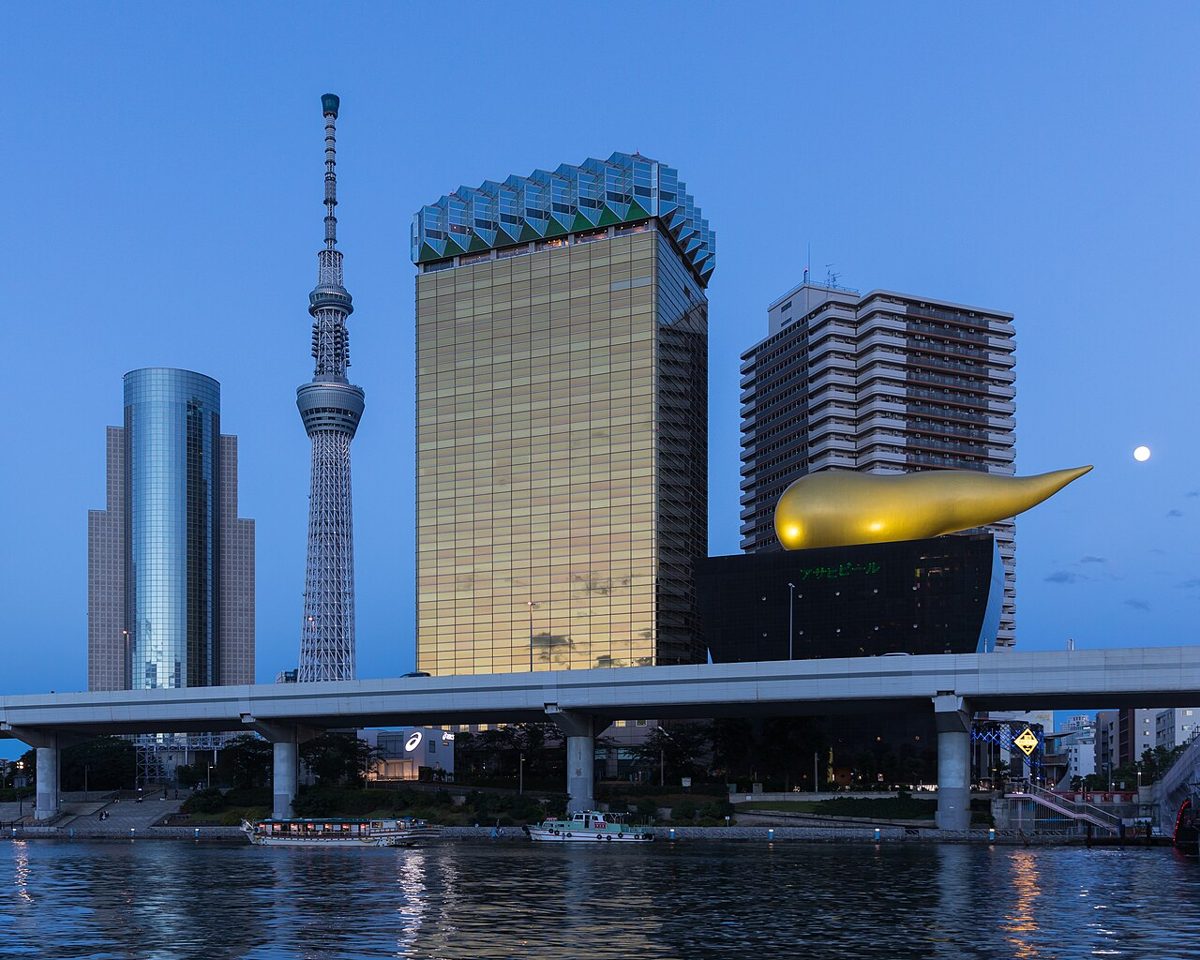
Tokyo Skytree is the city’s tallest structure by a large margin, and on a very clear day that height is its whole argument. From the Tembo Deck at 350 metres you can see Mount Fuji to the southwest, the mountains of Chichibu and Nikko to the north, and Tokyo Bay stretching out towards Chiba. No building deck in Tokyo gets you that range.
On an ordinary hazy day, though, the height works against it. You are so high and so far east that central Tokyo’s skyscrapers look small and distant, and the foreground is mostly the flat, grey rooftops of Sumida and Koto. It is impressive in the way a view from an aircraft is impressive. It is not always beautiful.
Tickets: dynamic pricing and the ¥500 fee
Skytree moved to date-based pricing, so there is no single price any more. As a guide, an adult Tembo Deck ticket costs roughly ¥1,800 to ¥2,400, and the combination ticket that adds the Tembo Galleria at 450 metres runs roughly ¥2,700 to ¥3,800. Weekdays are cheaper than weekends and holidays, and advance online tickets are cheaper than same-day ones.
The detail that surprises people: if you buy a Tembo Deck or combination ticket in person at the fourth-floor counter or the ticket machines, a ¥500 service fee is added per ticket. For a family of four that is ¥2,000 for standing in a queue. Buy online, even if it is only the night before.
Is the Tembo Galleria worth it?
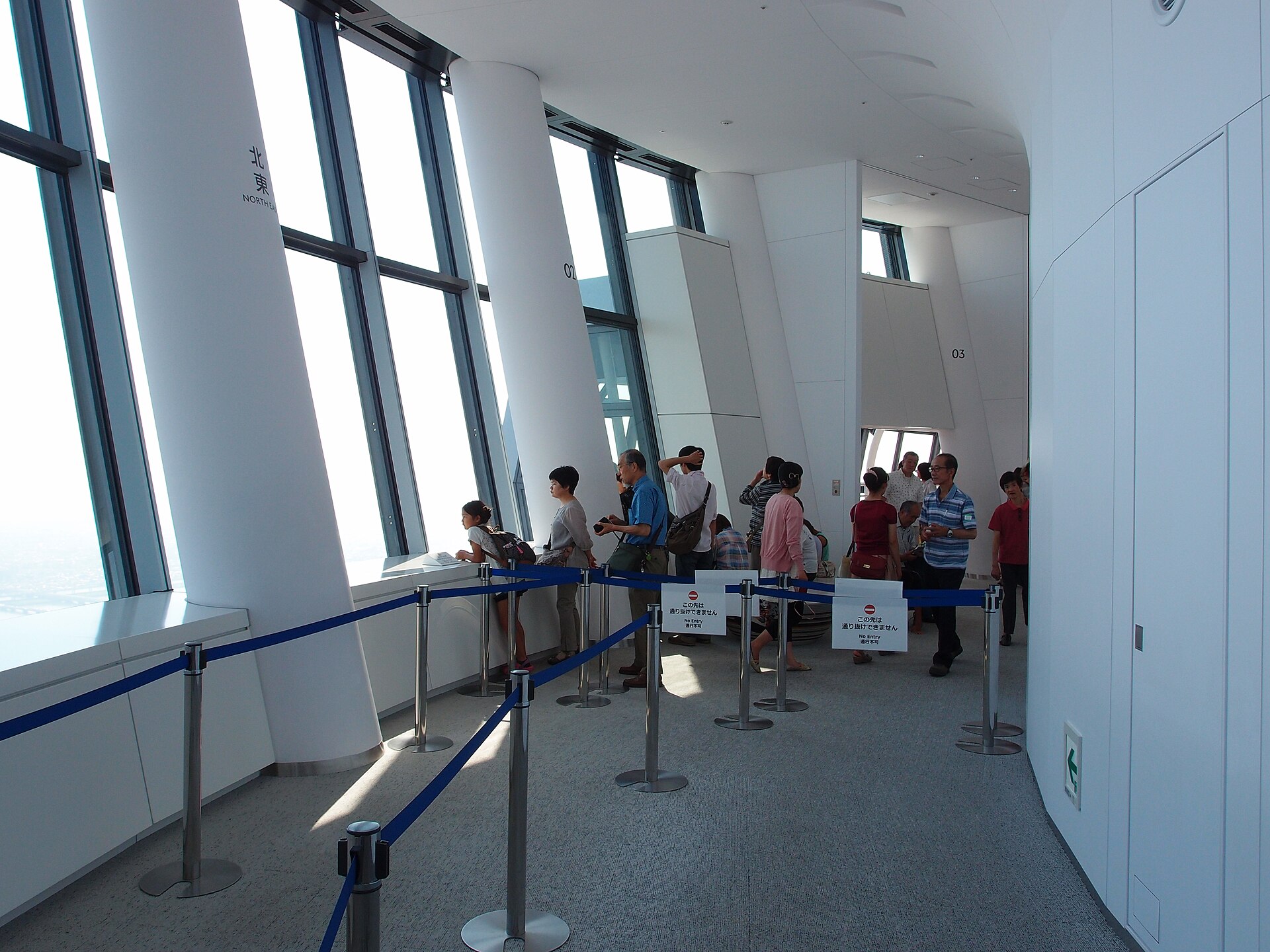
Mostly no. The Galleria is a glass-walled ramp that spirals up from 445 to 450 metres, and walking it is a pleasant ten minutes. But the extra hundred metres does not change the view much, the windows are narrower than on the main deck, and the upgrade costs roughly as much again as a Tokyo Tower ticket. Pay for it if you are the sort of person who needs to reach the highest point available. Otherwise, the Tembo Deck is the part that matters.
When to go
Go in the morning, on a clear day, ideally between November and February, when the air is driest and Fuji is most often visible. Summer haze can hide the mountains for weeks at a time. Skytree at night is fine, but the eastern side of the city is dark compared with Shinjuku or Roppongi, so night is where the other decks win.
Pair the visit with Asakusa, one stop away, and the Tokyo Solamachi shopping centre at the tower’s base. Our Asakusa guide covers the walk between the two.
Tokyo Tower: better to look at than to look from
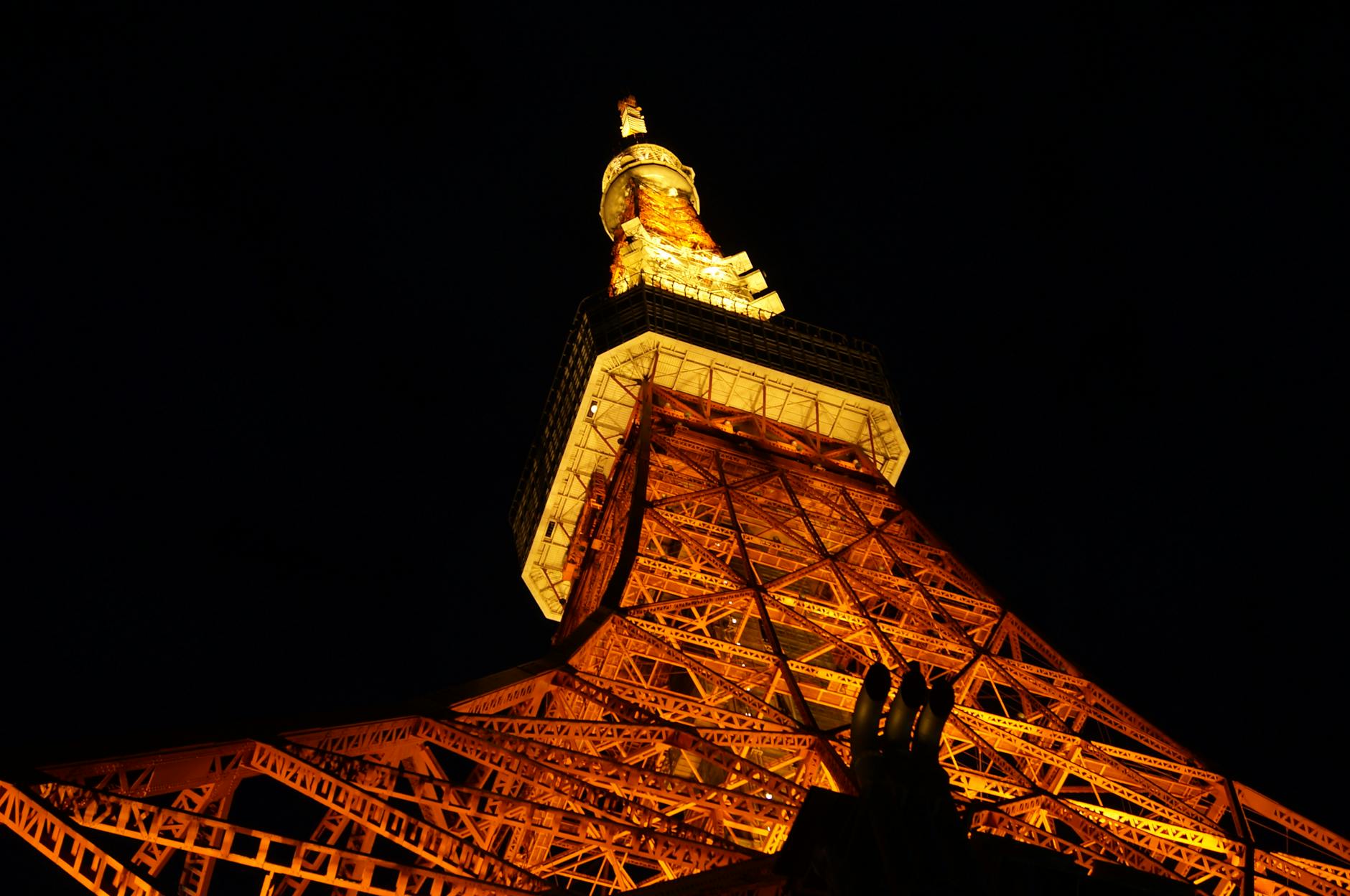
Tokyo Tower opened in 1958 and is still the city’s favourite landmark, orange and white and slightly old-fashioned in a way that Skytree never will be. The Main Deck at 150 metres is the lowest of the major paid decks, but the tower stands close to the centre, so the view is dense and immediate: Roppongi Hills, the Zojoji temple grounds directly below, the bay and the Rainbow Bridge.
The problem is the one every tower has. The most beautiful thing in this part of Tokyo is Tokyo Tower, and you are standing inside it.
Main Deck or Top Deck Tour?
The Main Deck costs ¥1,500 for adults and is a good-value hour, especially with children, who like the small glass floor panels. The Top Deck Tour costs ¥3,300 online or ¥3,500 at the tower and takes you up to 250 metres in a small group, with a timed entry and a mirrored, carefully lit deck designed as much for photographs as for looking out. The ticket includes the Main Deck on the way down.
Our view: if you want to visit Tokyo Tower for its own sake, the Top Deck Tour is the more memorable experience and worth the upgrade. If what you want is a view of Tokyo, ¥3,300 buys you a better one at Shibuya Sky, and nothing at all buys you a comparable one in Shinjuku.
Tokyo City View, Roppongi Hills
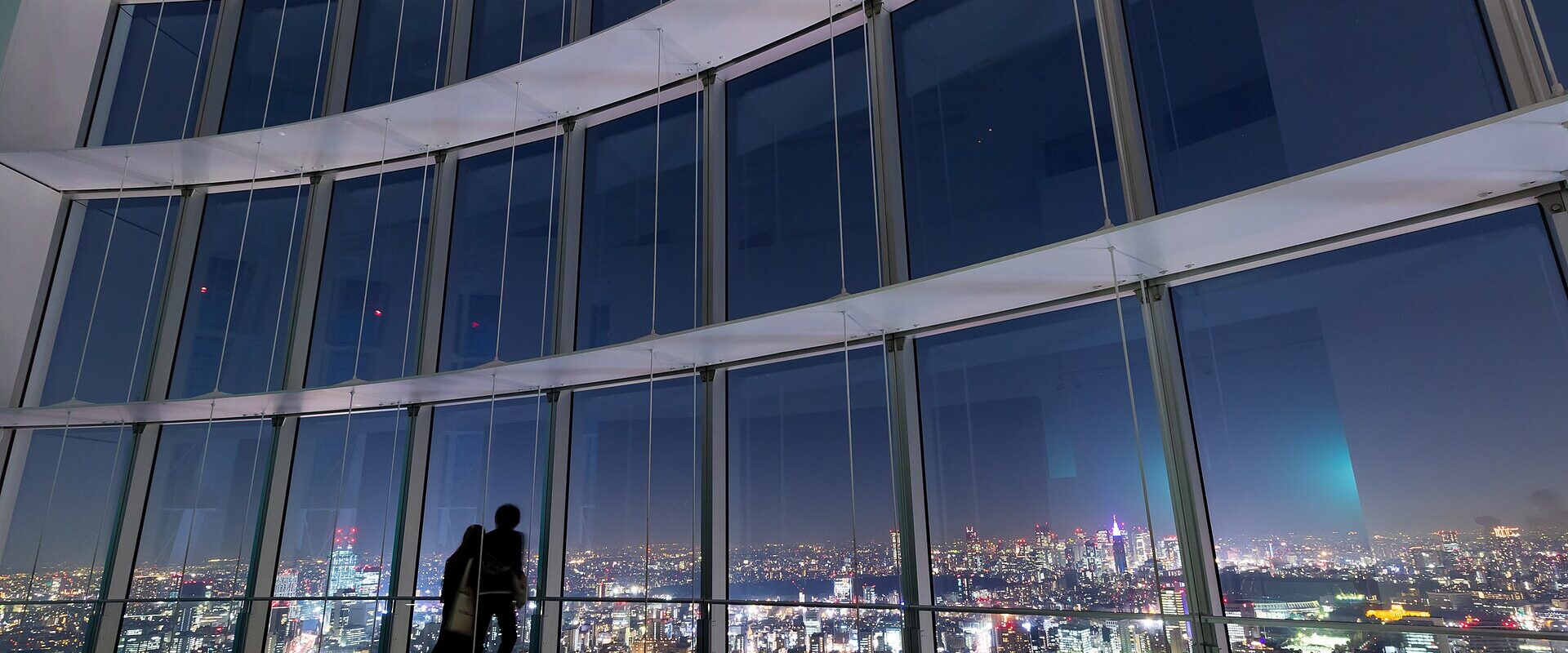
Tokyo City View occupies the 52nd floor of Roppongi Hills Mori Tower, about 250 metres up. Its great advantage is geography. Tokyo Tower stands close by to the east, lit up and filling the window, with the bay behind it and Skytree in the distance. If you want one photograph that says “Tokyo at night”, this is where it comes from.
Be clear about what it is now, however. The rooftop Sky Deck, which used to be the reason to come here, has been closed to the general public since April 2024, and no reopening has been announced. What remains is a very good indoor deck with floor-to-ceiling glass, which also means reflections at night. Stand close to the glass, and wear something dark if you are photographing.
The ticket usually includes the Mori Arts Center Gallery on the same floor, and sometimes the Mori Art Museum one floor up, depending on what is showing. That makes it good value on a rainy evening, when you can spend two hours between art and views. Prices vary with the exhibition and day, so check the official site. It opens late, often until 23:00, which makes it an easy add-on to an evening in Roppongi.
Sunshine 60 Tenbou Park, Ikebukuro
Sunshine 60 was Tokyo’s tallest building when it opened in 1978, and its observation floor at 251 metres was renovated a few years ago into “Tenbou Park”, a sky-level indoor park with artificial grass, bean-bag seating and a cafe. It is not glamorous, and the view, mostly of northern Tokyo, is less dramatic than from Shinjuku or Roppongi. But it is calm, children can sit on the floor, and nobody is jostling for the window.
It is also cheap: ¥700 for adults on weekdays, ¥900 at weekends and busy periods, and up to ¥1,200 at peak times, with children ¥500 to ¥800. Sunshine City below has an aquarium, the Pokémon Center Mega Tokyo and plenty of places to eat, so it slots into a family day without effort. See our Ikebukuro guide for the rest of the area.
The free observation decks
Tokyo is unusually generous with free views. You will not stand on a roof or reach 350 metres, but for many visitors one of these is all the view they need.
Tokyo Metropolitan Government Building (Shinjuku)
The twin-towered city hall in West Shinjuku has an observation room on the 45th floor of each tower, 202 metres up, and both are free. The South deck opens 09:30 to 22:00, with last entry at 21:30. The North deck opens 09:30 to 17:30, with last entry at 17:00. They close on different days for maintenance, so if one is shut the other is usually open.
From the south side you look across the Shinjuku skyscrapers towards Shibuya and, on clear winter mornings, Mount Fuji. At night the view over the lit-up towers is excellent, and it costs nothing. Expect a security check and a short queue for the lift, and ignore the souvenir shop and cafe in the middle of the floor. The building also runs a projection-mapping show on its facade in the evenings, which you watch from the plaza below.
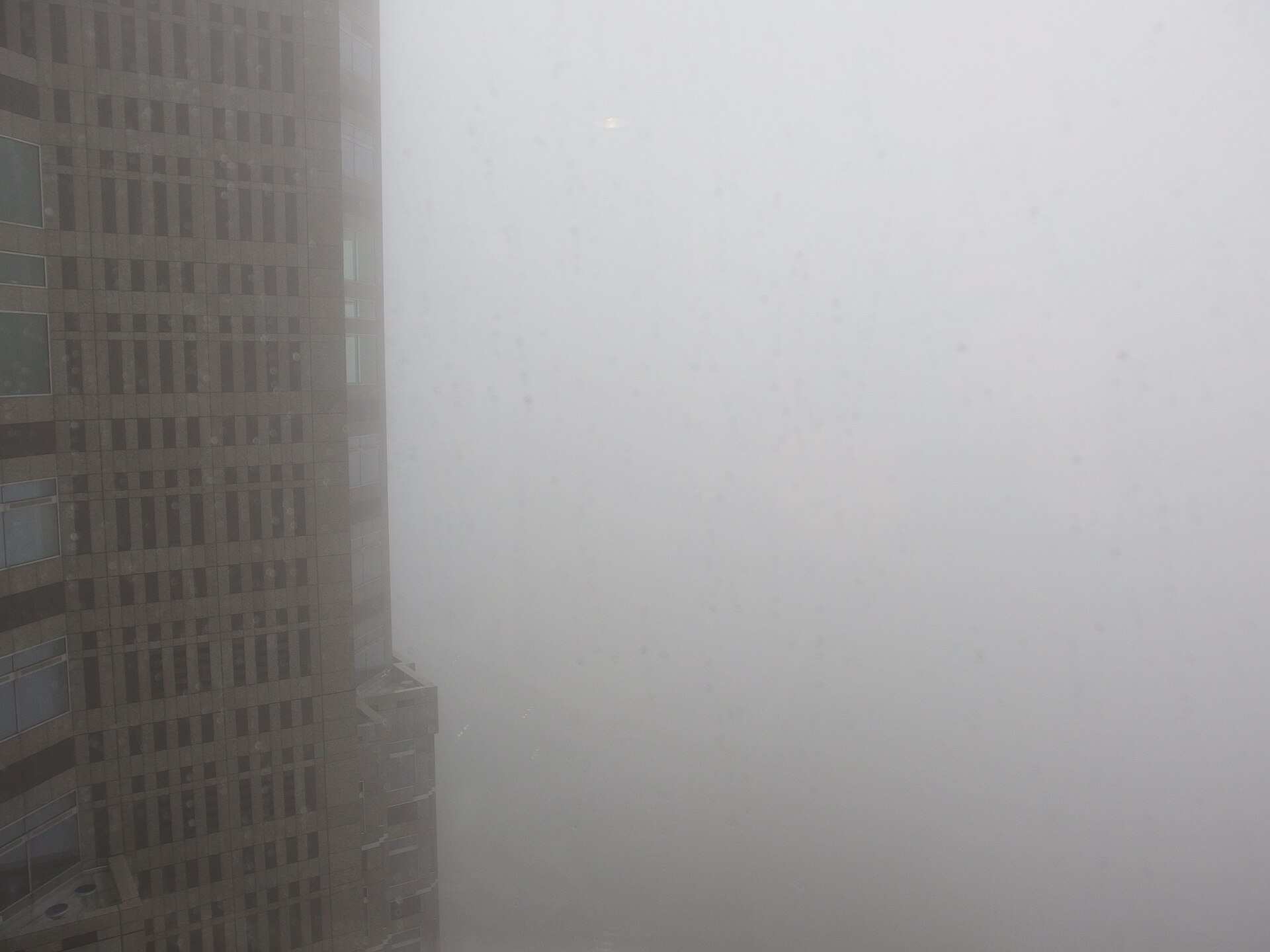
That photograph is the best argument for putting a free deck first in your plans. Low cloud and rain can erase every view in the city, and it is far less painful to walk out of a free deck into the rain than out of a ¥3,400 one. On a doubtful day, go here, and book a paid deck for a clearer day later in the trip. Our Shinjuku guide covers what else is nearby.
Other free viewpoints
- Caretta Shiodome, 46th floor. The restaurant floors at the top of the Dentsu building have public windows looking over Hamarikyu Gardens and the bay. There is no ticket, just a lift.
- Shibuya Hikarie, 11th floor. Not high, but the Sky Lobby looks straight down on Shibuya station and the tracks, and makes a free warm-up before Shibuya Sky.
- Asakusa Culture Tourist Information Center, 8th floor. The terrace across the road from Kaminarimon looks down the length of Nakamise-dori to Sensoji, with Skytree beside it. It is the best free photograph in Asakusa.
- KITTE Garden, Marunouchi. The sixth-floor roof garden of the KITTE building overlooks the red-brick Tokyo Station and its tracks. Best at dusk.
- Tokyu Plaza Ginza rooftop. A small, open roof terrace above Sukiyabashi crossing, quiet and free during shop hours.
One free deck we cannot recommend right now is the Bunkyo Civic Center’s 25th-floor observation lounge, long a favourite of budget travellers for its view towards Shinjuku and Fuji. It closed for renovation in March 2025 and is not due to reopen until December 2026, so check before you go. For more no-cost sights across the city, see our guide to free attractions in Tokyo.
Day or night: which deck when
| Time | Best deck | Why |
|---|---|---|
| Clear winter morning | Tokyo Skytree | Maximum range, best chance of seeing Mount Fuji |
| Late afternoon into sunset | Shibuya Sky | Open air, western sky, city lights switching on |
| After dark | Tokyo City View or Metropolitan Government Building | Dense lit skyline, Tokyo Tower in view from Roppongi |
| Rainy or cloudy day | Sunshine 60 or a free deck | Cheap or free if the view disappoints |
| Late night, 22:00 onwards | Tokyo Tower or Tokyo City View | Among the latest-opening decks; check last entry |
Sunset times in Tokyo range from about 16:30 in late November and December to about 19:00 in late June, which moves the “golden” booking slot by more than two hours across the year. Check the sunset time for your date before you book, not after.
Is a Tokyo observation deck worth it?
One is. Two can be, if they are genuinely different. Three is almost always too many.
A good pairing is one paid deck and one free one: Shibuya Sky for sunset, say, and the Metropolitan Government Building at night on another evening. They show you different parts of the city in different light, and together they cost ¥2,700 to ¥3,400. By contrast, Skytree plus Tokyo Tower plus Shibuya Sky can easily pass ¥7,000 per person and leaves you with three versions of the same photograph.
A few more honest points:
- Discount passes rarely help. Some visitor passes include a deck, but they only pay back if you would also use everything else they bundle. Do the maths in our Tokyo discount passes guide before buying one for the view.
- A rooftop bar can replace a deck. The price of an evening Shibuya Sky ticket buys a cocktail with a view in several hotel bars, with a seat thrown in. Our Tokyo rooftop bars guide has the ones where the view justifies the bill.
- The weather decides everything. Keep a paid deck flexible, or book it for later in your trip so you can move it.
- Reflections spoil night photos from indoor decks. Press the lens against the glass and cover the gap with your hand or a dark sleeve.
If photographs are the point of the visit, our Tokyo photo spots guide covers the street-level viewpoints too, and many of them are better for pictures of the towers than the towers are.
Practical tips for any Tokyo observation deck
- Book online, and early for sunset. This applies to Shibuya Sky above all, but it also saves money at Skytree and Tokyo Tower.
- Allow an hour. Most people spend 45 minutes to an hour and a half at a deck. Longer is possible at Tokyo City View if you include the gallery.
- Check last-entry times, not closing times. Last entry is typically 30 to 60 minutes before closing.
- Expect security checks. Bags are screened at several decks, and Shibuya Sky makes you leave them in a locker.
- Visibility forecasts exist. Some operators post live camera feeds or visibility notes on their websites. Look before you travel across the city.
- Accessibility. All the major decks are reached by lift. Shibuya Sky’s roof involves an escalator and a short set of steps, but staff can assist with alternative access; ask at the ticket desk.
Frequently Asked Questions
Which Tokyo observation deck is best?
For most visitors, Shibuya Sky is the best, because its rooftop is open-air and it looks directly over Shibuya Crossing, Shinjuku and Tokyo Tower. Tokyo Skytree is higher and better for seeing Mount Fuji on a clear day, while the free Tokyo Metropolitan Government Building deck in Shinjuku is the best value.
Is there a free observation deck in Tokyo?
Yes. The Tokyo Metropolitan Government Building in Shinjuku has two free observation rooms on the 45th floor, 202 metres up. The South deck is open 09:30 to 22:00 and the North deck 09:30 to 17:30. Caretta Shiodome, Shibuya Hikarie and the Asakusa Culture Tourist Information Center also have free viewpoints.
Is Shibuya Sky or Skytree better?
Shibuya Sky is better for atmosphere, sunset and photographs, because you stand outdoors in the middle of the city. Skytree is better if you want the greatest height and range, such as seeing Mount Fuji on a clear winter morning. If you only visit one, most people enjoy Shibuya Sky more.
Can you see Mount Fuji from Tokyo observation decks?
On clear days, yes, from Skytree, Shibuya Sky and the Tokyo Metropolitan Government Building among others. Your best chance is a dry morning between November and February. In summer, haze often hides the mountain for weeks, so do not book a deck in July or August just for Fuji.
How much does it cost to go up Tokyo Skytree?
Skytree uses date-based pricing. An adult Tembo Deck ticket costs roughly ¥1,800 to ¥2,400, and the combined ticket including the Tembo Galleria costs roughly ¥2,700 to ¥3,800. Advance online tickets are cheaper, and buying in person at the tower adds a ¥500 fee per ticket.
Photo Credits
- Night view from Tokyo City View, Roppongi Hills – 2019 Roppongi Hills Mori Tower – TOKYO CITY VIEW 01 by Kakidai, CC BY-SA 4.0, via Wikimedia Commons.
- Tembo Galleria inside Tokyo Skytree – Tembo Galleria @ Tokyo Skytree (9461641811) by Guilhem Vellut from Annecy, France, CC BY 2.0, via Wikimedia Commons.
- Fog outside the Tokyo Metropolitan Government Building observatory – North Observatory @ Tokyo Metropolitan Government Building (11450147704) by Guilhem Vellut from Annecy, France, CC BY 2.0, via Wikimedia Commons.