Tokyo Events & Festivals · Guide №113
Autumn Foliage in Tokyo: Best Spots for Fall Colors
Where and when to see the best autumn foliage in Tokyo: peak dates, admission and stations for Rikugien, the Jingu Gaien ginkgo avenue, Mount Takao and more.

目次 — Contents
- When Do Autumn Leaves Peak in Tokyo?
- The Best Spots for Tokyo Autumn Foliage
- Tokyo Autumn Foliage at a Glance
- Night Illuminations: Autumn Leaves After Dark
- Autumn Day Trips From Tokyo
- Ginkgo vs Maple: Knowing What You’re Looking At
- Practical Tips for Leaf-Peeping in Tokyo
- More Central Gardens Worth a Detour
- A Two-Day Autumn Colour Itinerary
- Frequently Asked Questions
- Photo Credits
This article contains advertising. Our booking links are routed through a partner that adds commission tracking automatically, so if you book through one we earn a commission from the provider, at no extra cost to you. It never affects what we recommend. Affiliate disclosure
Tokyo’s autumn foliage peaks later than most of Japan — the best colour lands between mid-November and early December. Ginkgo avenues turn gold around the last week of November; Japanese maples (momiji) glow red into the first week of December. Below are the Tokyo autumn foliage best spots, each with peak timing, admission and the nearest station, so you can plan around the crowds instead of into them.
When Do Autumn Leaves Peak in Tokyo?
Here is the single most useful fact in this guide: Tokyo colours late. While travel calendars lump “Japan autumn” into October, the city centre doesn’t catch fire until the back half of November. If you book the first week of November expecting deep reds in Rikugien, you’ll find a garden that is still mostly green.
The timing splits by tree. Ginkgo (icho) — the fan-shaped leaves that turn a uniform butter-yellow — peaks first, roughly 22 November to 5 December in a normal year. Japanese maples (momiji or kaede) run a touch later and hold longer, with the richest reds from about 28 November into the second week of December. A warm autumn pushes everything back a few days; a sharp cold snap in mid-November can pull it forward.
For a same-week reality check, the GO Tokyo city guide and japan-guide.com both publish live “autumn colour reports” with dated photos through November. Glance at last year’s reports for the spot you want before you commit to a date. As a rule, if you can only pick one window, aim for the last week of November through the first week of December — that’s when the maples and the late ginkgo overlap. Want a broader month-by-month view of the city’s weather and crowds? Our guide to the best time to visit Tokyo lays out the full year.
The Best Spots for Tokyo Autumn Foliage
These are the places worth building a day around, grouped by what they do best — formal maple gardens, golden ginkgo avenues, and the mountains on the city’s western edge.
Rikugien Garden — the maple classic (¥300, Komagome)
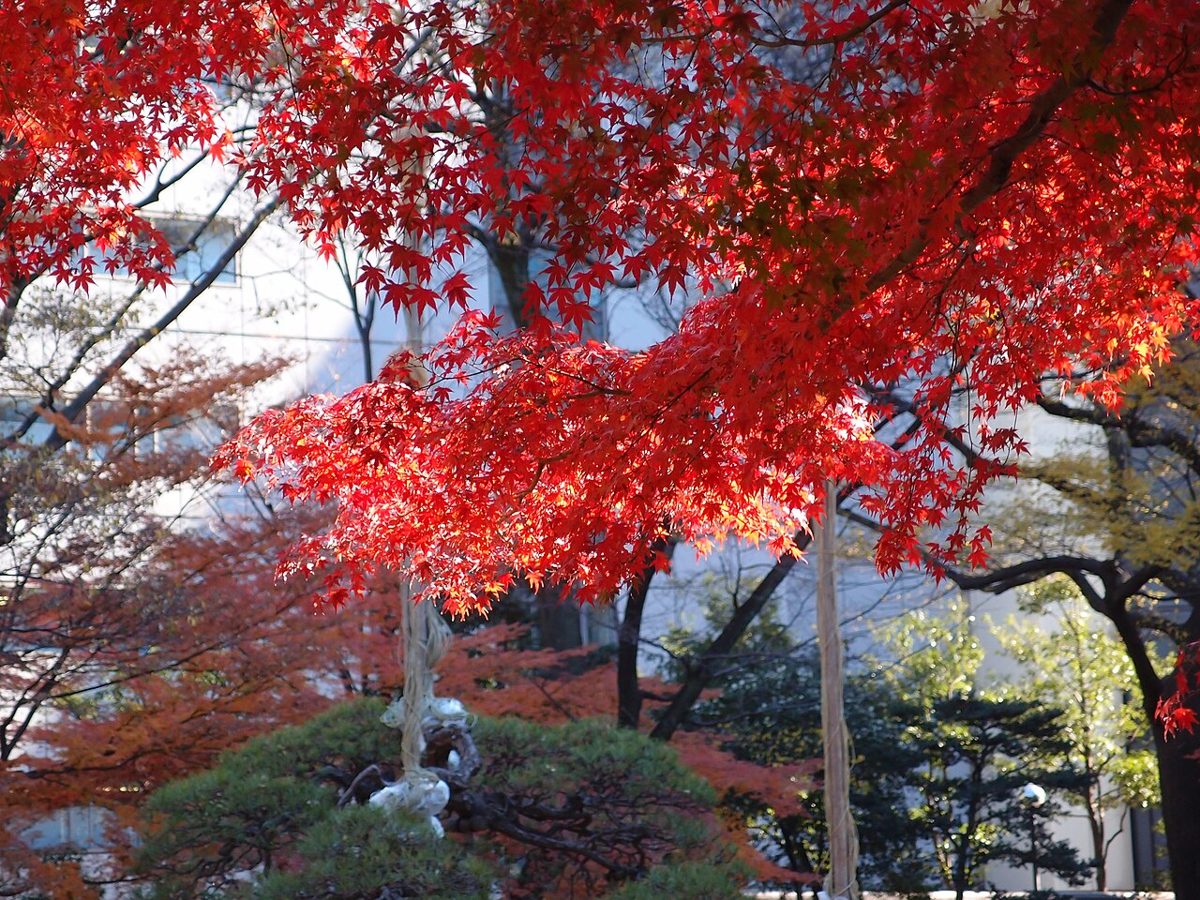
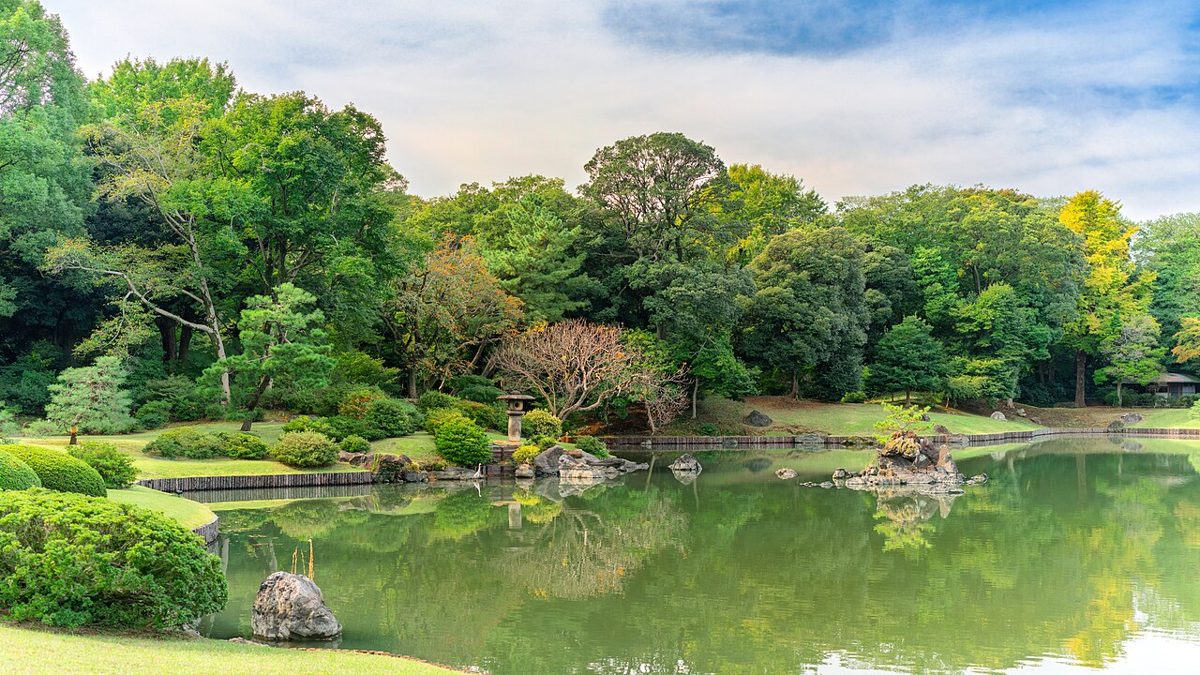
If you see one garden, make it Rikugien. This Edo-period strolling garden in Bunkyo wraps a central pond, and the maples on the far bank turn a layered red-orange that mirrors in the water. Admission is ¥300 (free for over-65s with ID). It’s a three-minute walk from the south exit of Komagome Station on the JR Yamanote and Namboku subway lines, which makes it an easy add to a Yamanote-loop day.
Peak is late November to early December. The garden also runs Tokyo’s best-known autumn illumination — the maples are lit after dark and reflected in the pond, with timed-entry tickets around ¥1,000-1,200. More on that below. Go on a weekday morning if you can; weekend afternoons in peak week mean a queue at the gate.
Meiji Jingu Gaien Ginkgo Avenue (Icho Namiki) — free golden tunnel (Gaiemmae)
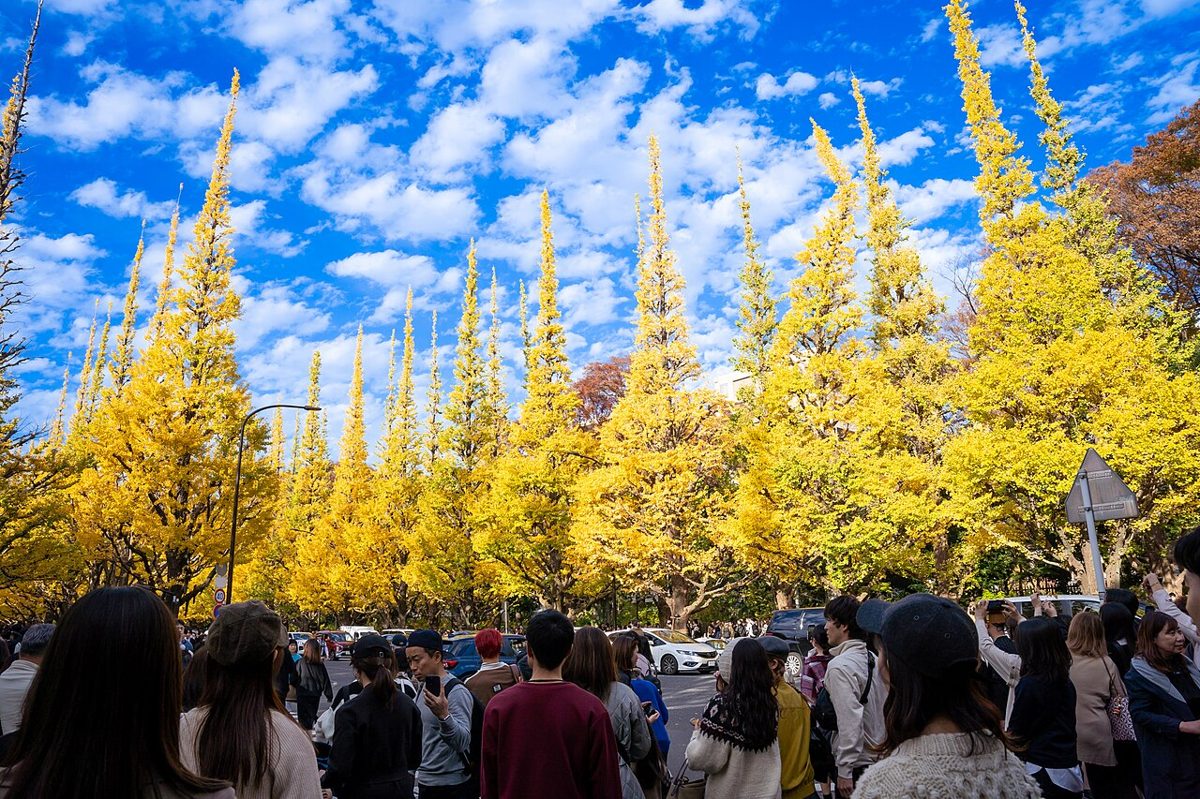
The 300-metre avenue of 146 ginkgo trees running toward the Seitoku Memorial Picture Gallery is the image you’ve seen on every Tokyo autumn poster. Trimmed into neat cones, the trees form a golden tunnel that’s busiest on the last weekend of November. It’s completely free to walk. The closest stations are Gaiemmae (Ginza line) and Aoyama-itchome (Ginza, Hanzomon and Oedo lines), both about five minutes away.
The annual Jingu Gaien Ginkgo Festival (Icho Matsuri) sets up food stalls along the avenue from mid-November, and in recent years the trees were lit in the evenings until around 30 November. Come early — by late morning the central photo line is shoulder to shoulder. The carpet of fallen leaves a few days past peak is, if anything, more photogenic than the trees themselves.
Koishikawa Korakuen — small, perfect, central (¥300, Iidabashi)
A 17th-century garden hemmed in by the Tokyo Dome complex, Koishikawa Korakuen packs a lot into a small footprint: a vermilion bridge over a maple gully (the Tsutenkyo bridge), a pond, and miniature recreations of famous Japanese landscapes. Admission is ¥300. It’s five to eight minutes from Iidabashi (multiple lines) or Korakuen Station. Peak is late November to early December. Because it’s compact, an hour is enough, which makes it a tidy pairing with nearby Akihabara or Jimbocho.
Showa Memorial Park (Showa Kinen Koen) — the biggest ginkgo show (¥450, Tachikawa)
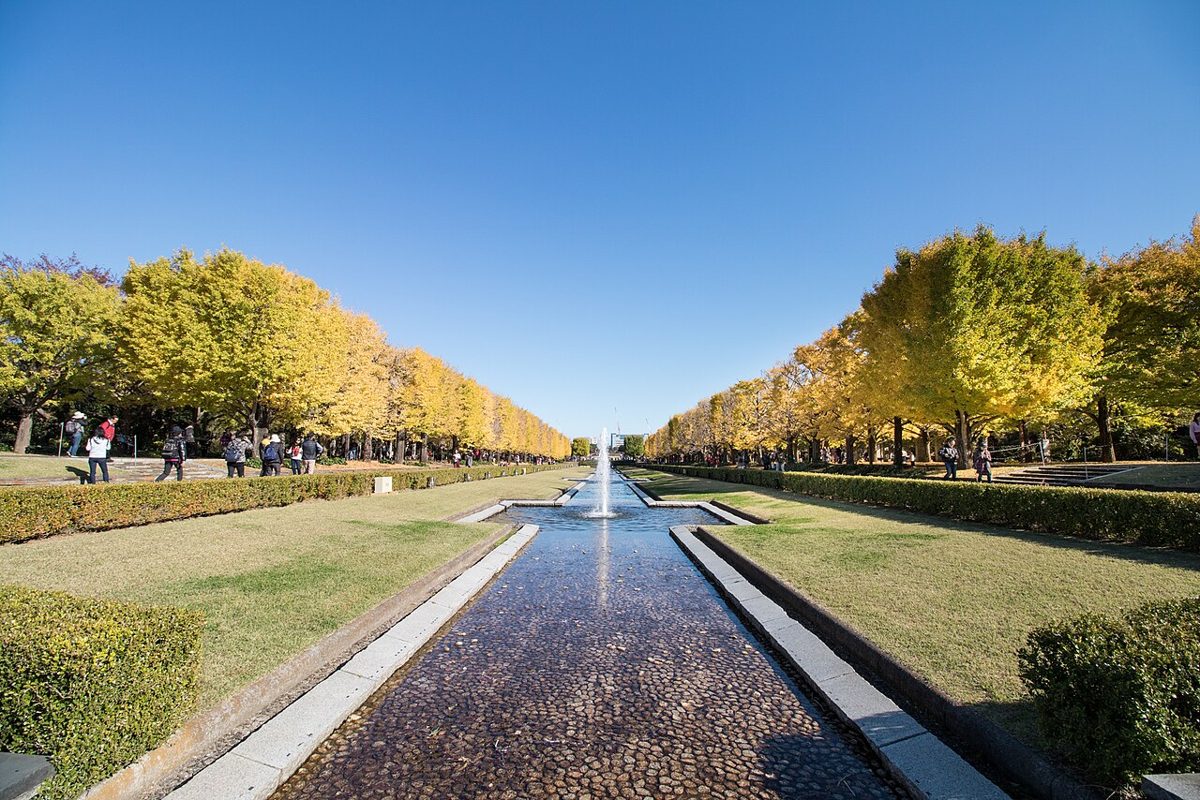
Out in Tachikawa, 30 minutes west of Shinjuku on the JR Chuo line, this enormous national park has two ginkgo avenues — one near the Tachikawa gate, a longer one (around 200 metres, 100-plus trees) by the canal — plus maples around the Japanese garden. Admission is ¥450. Colour here runs a little earlier, from late October into late November, and the park’s evening autumn illumination has recently run roughly 30 October to 30 November, 16:30-21:00. It’s the spot to choose if you want space to spread out rather than a single crowded avenue.
Shinjuku Gyoen — variety and lawns to sit on (¥500, Shinjuku)
Shinjuku Gyoen blends English, French and Japanese garden styles across 58 hectares, so the autumn palette is more varied here — maples, ginkgo, plane trees and tulip trees all turning at slightly different times from mid-November into early December. Admission is ¥500. It’s a few minutes from Shinjuku-gyoenmae (Marunouchi line) or about ten from Shinjuku Station’s south exit. Note it closes Mondays (open Mondays in the peak autumn period in some years — check before you go) and bans alcohol, which keeps it calm. The wide lawns make it the best pick if you’re travelling with kids; see our guide to Tokyo’s parks and gardens for more green space across the city.

Mount Takao — the mountain half-day (Takaosanguchi)
For a change from manicured gardens, Mount Takao (599m) turns the whole hillside orange and red in mid-to-late November. It’s the most accessible mountain trip from the city: take the Keio line from Shinjuku to Takaosanguchi (about 50 minutes, roughly ¥390), then either hike or ride the cable car/chair lift partway up (around ¥490 one-way, ¥950 round trip). Trail 1 is paved and busy; the temple complex of Yakuo-in sits near the top. Go on a weekday — Takao is genuinely mobbed on peak-season weekends, with queues for the cable car. Pack layers; it’s several degrees cooler than central Tokyo.
Free extras: Yoyogi Park, university campuses and the riverside
You don’t have to pay at all. Yoyogi Park (free, by Harajuku/Yoyogi-koen stations) has a short, photogenic ginkgo row that peaks late November. The University of Tokyo’s Hongo campus and Tokyo University of Agriculture have lovely ginkgo avenues open to the public. And the gentle slope of ginkgo along the Kanda River and around the Imperial Palace’s outer moat give you colour with zero admission. These are the spots locals actually use on a weekday lunch break.
Tokyo Autumn Foliage at a Glance
| Spot | Usual peak | Admission | Nearest station | Best for |
|---|---|---|---|---|
| Rikugien | Late Nov–early Dec | ¥300 | Komagome | Maples + night illumination |
| Koishikawa Korakuen | Late Nov–early Dec | ¥300 | Iidabashi / Korakuen | Compact, central, classic |
| Meiji Jingu Gaien (Icho Namiki) | Late Nov | Free | Gaiemmae / Aoyama-itchome | Golden ginkgo tunnel |
| Showa Memorial Park | Late Oct–late Nov | ¥450 | Tachikawa | Big ginkgo avenues, space |
| Shinjuku Gyoen | Mid Nov–early Dec | ¥500 | Shinjuku-gyoenmae | Variety, lawns, families |
| Mount Takao | Mid–late Nov | Free (cable car ~¥490) | Takaosanguchi | Mountain hike + views |
| Yoyogi Park | Late Nov | Free | Harajuku / Yoyogi-koen | Free ginkgo, picnics |
Night Illuminations: Autumn Leaves After Dark
Several gardens light their maples in the evening during peak week, and it’s worth doing once — the reds go almost luminous against the black water. Rikugien runs the most famous event, late November to early December, with the maples around the pond floodlit and reflected; entry is timed and ticketed (around ¥1,000-1,200, often cheaper if bought online in advance, cash accepted at the gate). Koishikawa Korakuen and Showa Memorial Park hold their own evening light-ups on set dates. Rikugien gets very busy after 18:00 on weekends; the first entry slot after dark is calmer. Bring a tripod or brace your phone on a railing — handheld night shots of moving crowds rarely come out.
Autumn Day Trips From Tokyo
If you have a spare day and want bigger scenery, the colour gets dramatic just outside the city. These all work as day trips and tend to peak a week or two before central Tokyo because they sit higher and colder.
Kawaguchiko & the Fuji Five Lakes — maples with Mount Fuji
The Momiji Corridor (Momiji Kairo) along the north shore of Lake Kawaguchiko frames red maples directly against Mount Fuji, usually early-to-mid November, with an evening light-up during the maple festival. It’s the classic “Fuji and fall colour in one frame” shot. Two hours from Shinjuku by highway bus or train — see our Fuji day-trip planner for the cheapest routes and timing.
Okutama & Mount Mitake — quiet valleys
At the far western edge of Tokyo Prefecture, the Okutama valleys and Mount Mitake (reached by cable car) give you gorges, a sacred shrine and far thinner crowds than Takao. Peak is roughly early-to-mid November. Good if you’ve done the city gardens and want a proper hike.
Nikko & Hakone — world-class colour, longer day
Both deserve their reputations. Nikko’s Irohazaka winding road and Lake Chuzenji turn spectacular in mid-October (much earlier — it’s mountainous), while Hakone’s ropeway and Gora area peak early-to-mid November with hot springs to soak in afterward. Each is a long but very doable day from Tokyo. For more options in every direction, see our roundup of Tokyo’s seasonal events and festivals.
Ginkgo vs Maple: Knowing What You’re Looking At
Two trees do almost all the work in a Tokyo autumn, and they behave differently. Ginkgo (icho) turn a single clean gold, drop their fan-shaped leaves fast, and line avenues and campuses — they’re the gold tunnels. The female trees also drop their fruit, which smells famously awful underfoot, so watch your step on a ginkgo avenue. Maples (momiji) run yellow-orange-crimson on the same tree, hold their colour longer, and are the stars of the strolling gardens. If you want gold, chase ginkgo in late November; if you want fiery red, chase maples in the first week of December.
Practical Tips for Leaf-Peeping in Tokyo
Beat the crowds
Go on weekday mornings. The gardens open around 09:00; the first 90 minutes at Rikugien or the Jingu Gaien avenue are a different experience from the 14:00 crush. Peak-week weekends are the one time these places feel genuinely packed.
Dress for it
November in Tokyo runs about 12-20°C in the day and can dip near single digits at night, especially at Takao or on the lakes. A light jacket plus a layer covers most days. Comfortable shoes matter — you’ll walk more than you expect across a garden or up a mountain trail.
Etiquette in the gardens
Stay on paths, don’t pull branches down for photos, and keep tripods out of doorways and bridges where people queue. Many gardens prohibit picnics, balls and alcohol (Shinjuku Gyoen bans booze outright). A quiet, slow stroll is the whole point of a Japanese garden — match the pace. New to Japanese customs? Our guide to polite behaviour in Japan covers the basics that keep you from standing out.
Photography
Backlight is your friend — shoot maples with the sun behind the leaves and they glow. Mornings give softer light and emptier frames. For the Jingu Gaien avenue, the symmetry shot down the centre is the cliché for a reason, but step to the edge for the cafe-and-leaves angle that fewer people get. More framing ideas in our Tokyo photo spots guide.
Pair it with the season either side
Autumn bleeds into winter fast in Tokyo — by mid-December the leaves are down and the Christmas illuminations are up. If your trip straddles both, see our Tokyo winter guide. And if you’re weighing autumn against spring, our Tokyo cherry blossom guide covers the other great colour season.
More Central Gardens Worth a Detour
If Rikugien and Korakuen are busy, or you just want more colour without leaving the inner city, a handful of smaller gardens reward the side trip — and most cost ¥300 or less.
Kiyosumi Teien (¥150, Kiyosumi-shirakawa)
A pond garden built around striking placed stones, Kiyosumi Teien is one of the cheapest at ¥150 and rarely crowded. The maples ring the water and reflect cleanly on a still morning. It pairs naturally with the cafes and the Museum of Contemporary Art in the Kiyosumi-shirakawa neighbourhood.
Hama-rikyu Gardens (¥300, Shiodome)
A former shogunal duck-hunting ground on Tokyo Bay, Hama-rikyu sets autumn maples and a tidal pond against a backdrop of Shiodome skyscrapers — an only-in-Tokyo contrast of old and new. There’s a teahouse on an island in the pond where you can take matcha and a sweet for around ¥500. Reach it on foot from Shiodome or by water bus down the Sumida River from Asakusa.
Imperial Palace East Gardens (free, Otemachi)
The East Gardens of the Imperial Palace are free, central and underrated in autumn, with maples around the ruined keep of the old Edo Castle and a long stand of trees by the Ninomaru pond. Closed Mondays and Fridays. It’s an easy, no-ticket stop between Tokyo Station and the museums of Kitanomaru.
Mejiro Garden (free, Mejiro)
Tiny and free, Mejiro Garden is a pocket of red maples and a pond a few minutes from Mejiro Station on the Yamanote line. You can do it in 20 minutes, which makes it a neat warm-up before walking to Rikugien one stop away at Komagome.
A Two-Day Autumn Colour Itinerary
If you’ve got two days set aside for leaves, here’s a route that mixes gardens, ginkgo and a mountain without doubling back across the city.
Day one (gardens and ginkgo): Start early at Rikugien when it opens around 09:00, before the tour groups. Walk or ride one stop to Mejiro Garden, then take the Yamanote and Namboku lines over to Koishikawa Korakuen for late morning. After lunch near Tokyo Dome, cross town to Meiji Jingu Gaien for the ginkgo avenue in the softer afternoon light, and stay for the evening illumination if it’s running. That’s three of the city’s signature spots in a day, all on the subway.
Day two (mountain air): Catch an early Keio-line train from Shinjuku to Takaosanguchi and beat the queues to Mount Takao’s cable car. Hike or ride up, visit Yakuo-in temple near the summit, and on a clear day you’ll see Mount Fuji from the viewpoints. Back in the city by mid-afternoon, wind down at Shinjuku Gyoen for a final, gentler dose of colour before it closes. For a fuller city plan to slot these into, see our Tokyo 3-day itinerary.
Save on admission
Most of these gardens are cheap individually, but if you plan to visit several over a few days, look at a combined garden pass for the metropolitan gardens (Rikugien, Koishikawa Korakuen, Hama-rikyu, Kiyosumi and others are run by the same body and sometimes share multi-garden tickets). Over-65s get in free or half-price at the city-run gardens with photo ID, and children under primary-school age are usually free. Carry small cash — several garden gates still do not take cards.
One warning worth repeating: October is not foliage season in Tokyo, however many autumn photographs are tagged with that month. The city’s maples and ginkgo run three to six weeks later than most visitors assume. If your dates are already fixed for October, read our guide to Tokyo in October instead — cosmos fields, the Oeshiki lantern procession and the year’s most comfortable walking weather are a fair trade for green leaves.
All of the above sits inside one month, and the rest of that month matters too — the Tori no Ichi rake markets, Shichi-Go-San at Meiji Shrine, the first illuminations switching on, and hotel rates that climb steeply after the 20th. Our guide to Tokyo in November puts the foliage in context and identifies the quieter window most visitors miss.
Frequently Asked Questions
When is the best time to see autumn leaves in Tokyo?
Tokyo’s foliage peaks late, between mid-November and early December. Ginkgo trees turn fully gold around the last week of November, while Japanese maples (momiji) hit their deepest red from late November into the first week or two of December. That is two to three weeks behind Kyoto and a full month behind northern Japan, so don’t arrive in early November expecting peak colour in the city centre.
Where are the best places to see fall colours in Tokyo?
For maples, the classic strolling gardens win: Rikugien and Koishikawa Korakuen, both ¥300. For golden ginkgo, walk the avenue at Meiji Jingu Gaien (free) or the longer rows at Showa Memorial Park. For a half-day in the mountains, Mount Takao turns the whole hillside orange and red and is under an hour from Shinjuku.
Is autumn a good time to visit Tokyo?
It is arguably the best season. Days are mild (roughly 12-20°C in November), rain is less frequent than in June or September, and the colour season is long. Crowds are real at the famous gardens on late-November weekends, but nothing like cherry-blossom season. Hotel rates sit below the spring and summer peaks too.
How much does it cost to see autumn leaves in Tokyo?
Most of the best spots are cheap or free. Rikugien and Koishikawa Korakuen are ¥300 each, Shinjuku Gyoen is ¥500, and Showa Memorial Park is ¥450. Meiji Jingu Gaien’s ginkgo avenue, Yoyogi Park and the university campuses cost nothing. Evening illuminations are the exception — Rikugien’s after-dark event runs around ¥1,000-1,200.
Can you see Mount Fuji and autumn leaves together near Tokyo?
Yes, on a day trip. The Fuji Five Lakes area around Kawaguchiko frames red maples against Mount Fuji, and the Kawaguchiko Momiji Corridor is the signature spot in early-to-mid November. It colours earlier than central Tokyo because it sits higher and colder. See our Mount Fuji day trip guide for transport options.
Photo Credits
- Maples reflected in the central pond at Rikugien, one of Tokyo’s best autumn gardens — Photo: Guilhem Vellut from Annecy, France / CC BY 2.0 via Wikimedia Commons
- The 300-metre ginkgo avenue (Icho Namiki) at Meiji Jingu Gaien in late November — Photo: Dick Thomas Johnson from Tokyo, Japan / CC BY 2.0 via Wikimedia Commons
- Koishikawa Korakuen, a 17th-century garden five minutes from Tokyo Dome — Photo: Guilhem Vellut from Annecy, France / CC BY 2.0 via Wikimedia Commons
- Mount Takao, the easiest mountain day trip for fall colour from central Tokyo — Photo: Nyao148 / CC BY-SA 3.0 via Wikimedia Commons
- The ginkgo avenues at Showa Memorial Park (Showa Kinen Koen) in Tachikawa — Photo: Kakidai / CC BY-SA 4.0 via Wikimedia Commons
- Rikugien’s nighttime autumn illumination, held late November to early December — Photo: Dale Cruse from San Francisco, CA, USA / CC BY 2.0 via Wikimedia Commons