Best Time to Visit Tokyo · Guide №136
Tokyo in February: Weather, Events, Crowds and What to Pack
February is Tokyo's cheapest and quietest month: Setsubun, plum blossom, empty museums and the best onsen weather. Plus the pollen warning nobody gives you.
目次 — Contents
- February weather in Tokyo
- Setsubun, 3 February
- Plum blossom: the flower nobody comes for
- The Emperor’s Birthday, 23 February
- Valentine’s Day, and the chocolate
- The warning: cedar pollen season
- What to eat in February
- Prices, crowds and why February is the value pick
- What to do with a cold, empty city
- What to pack
- Is February a good month to visit Tokyo?
- Frequently Asked Questions
- Photo Credits
This article contains advertising. Our booking links are routed through a partner that adds commission tracking automatically, so if you book through one we earn a commission from the provider, at no extra cost to you. It never affects what we recommend. Affiliate disclosure
Tokyo in February is the cheapest month of the year and the quietest, and the one where the city starts turning back towards spring. Highs run 10 to 13°C, lows sit at 1 to 3°C, and by the last week the plum blossom is out and the light has visibly changed. It is also the month with the highest chance of snow, which is worth knowing rather than worrying about.
If you want Tokyo without queues, without premium hotel rates and without sharing every shrine with a tour group, February is the answer. This guide covers the weather, the two things genuinely worth timing a trip around, and the one warning nobody gives visitors about this month.
February weather in Tokyo
| Period | Typical high | Typical low | Notes |
|---|---|---|---|
| 1–10 Feb | 10–11°C | 1–2°C | Coldest stretch; snow most likely |
| 11–20 Feb | 11–12°C | 2–3°C | Plum blossom opening; cedar pollen starts |
| 21–28 Feb | 12–14°C | 3–5°C | Noticeably milder; plum at peak |
Rainfall stays low at around 55 to 65 mm and the sun is out most days. What separates February from January is the trajectory: the first week is still deep winter, the last week is unmistakably the beginning of spring. Sunset moves from about 17:10 at the start of the month to 17:35 at the end, which changes the shape of an afternoon more than the numbers suggest.
Snow is likeliest now — Tokyo’s heaviest falls have historically landed in early or mid-February. It is still uncommon, usually wet, and gone within a day or two, but if you get one, Sensoji or the Imperial Palace moat under snow is one of the great Tokyo sights and roughly a one-in-ten chance on any given trip.
Setsubun, 3 February
The best single day in the Tokyo winter calendar. Setsubun marks the old lunar changeover from winter to spring, and it is observed by throwing roasted soybeans at demons — mamemaki — while shouting the standard formula about driving out devils and bringing in fortune.
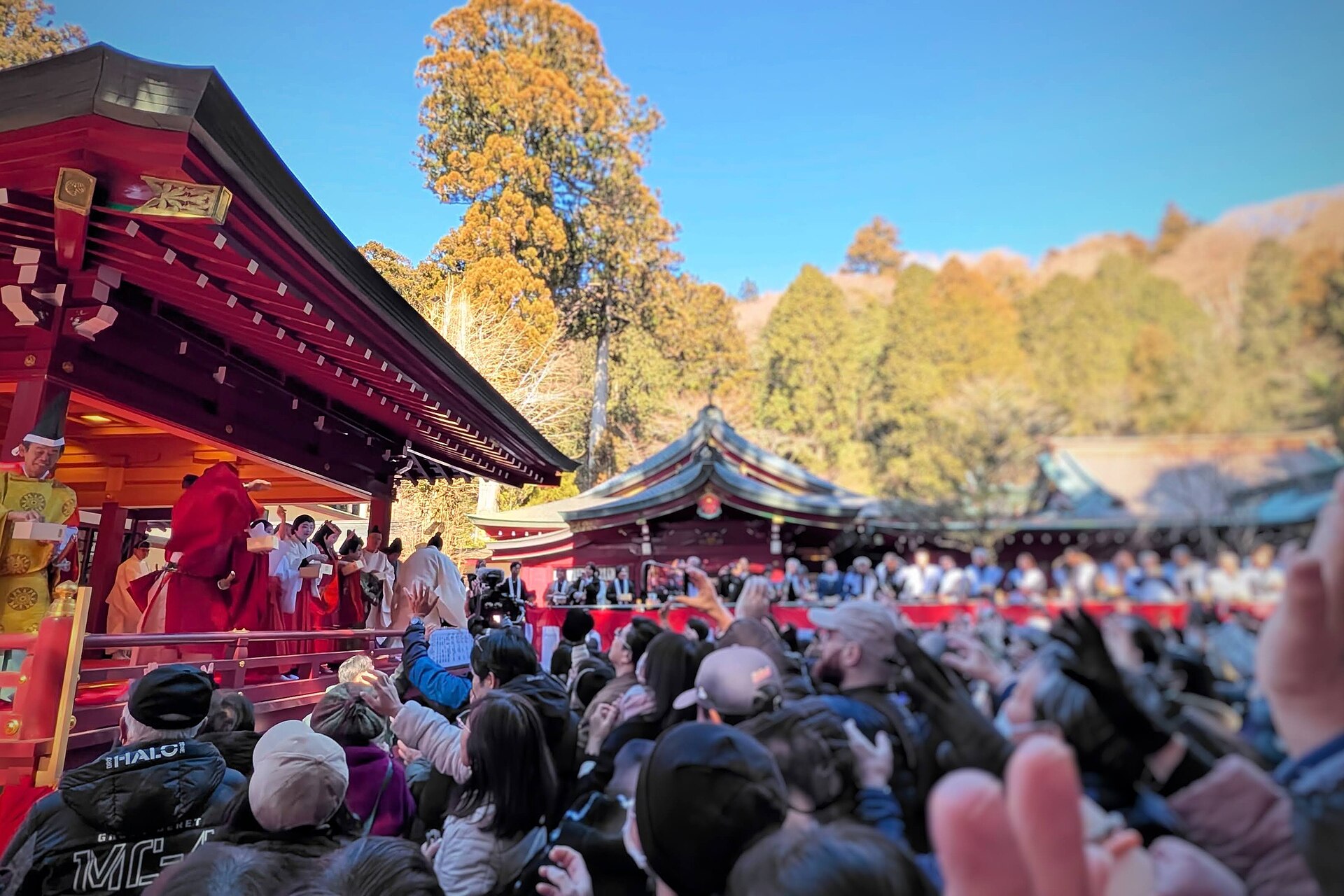
At the major temples this becomes a full public event: a raised platform, invited celebrities, sumo wrestlers and local dignitaries flinging small packets of beans into a crowd of several thousand people who are genuinely trying to catch them. Where to go:
- Sensoji, Asakusa — the biggest and most photographed. Arrive at least an hour early for the main throw, and see our Sensoji guide for the layout.
- Zojoji, Shiba Koen — smaller crowd, Tokyo Tower directly behind the temple, and easier with children.
- Ikegami Honmonji, Ota — the same temple that runs the Oeshiki lantern procession in October, and reliably less crowded than Asakusa.
- Naritasan Shinshoji — an hour out towards the airport, and the largest ceremony in the Kanto region, with sumo wrestlers and NHK drama cast members.
The food matters too. Eho-maki — a thick uncut sushi roll — is eaten whole and in silence while facing the year’s lucky compass direction, which changes annually and is printed on every convenience store display. You are also supposed to eat one bean for each year of your age, a custom that ages badly. Both are sold everywhere from late January.
Plum blossom: the flower nobody comes for
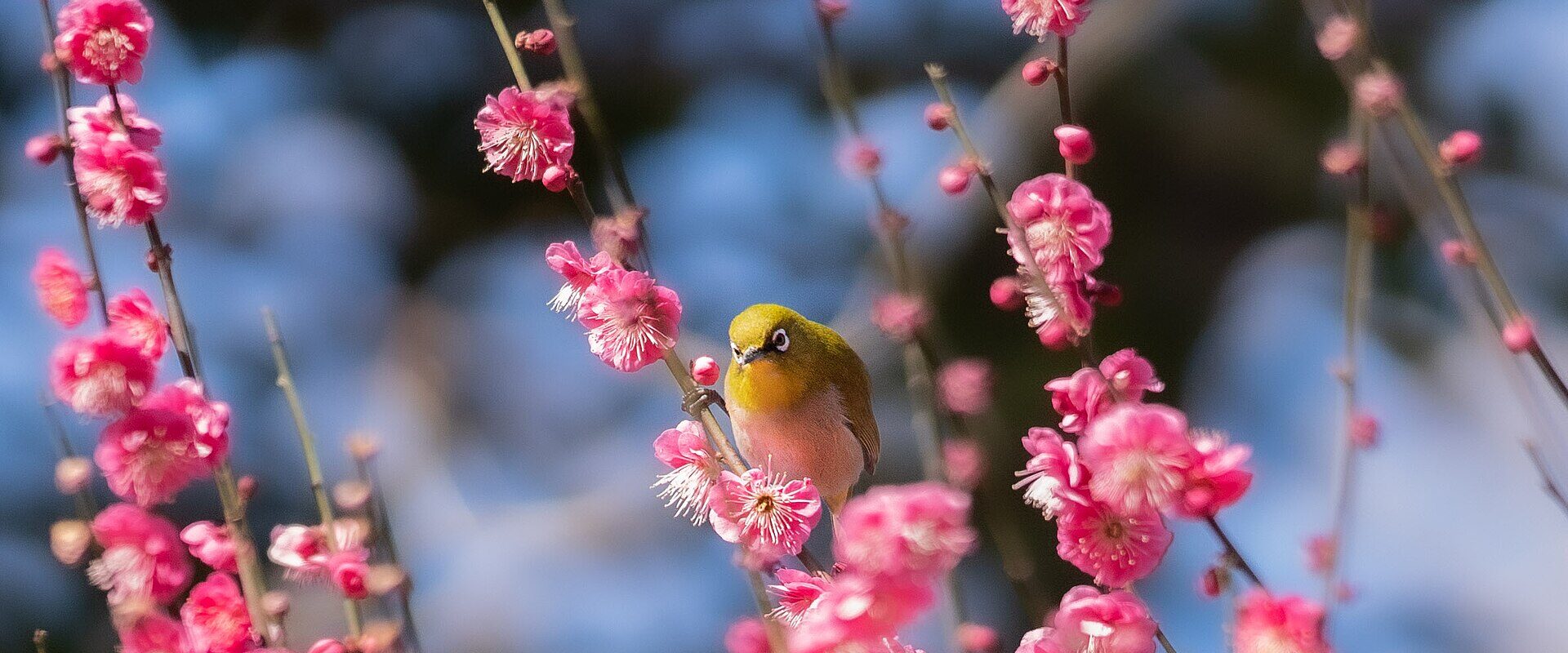
Everyone plans a Japan trip around cherry blossom. Almost nobody plans one around ume, which flowers four to six weeks earlier, smells considerably better, lasts far longer on the branch, and can be photographed without another person in the frame.
Tokyo’s plum gardens peak from about the middle of February into the first week of March. The best of them:
| Where | Nearest station | Cost | Notes |
|---|---|---|---|
| Yushima Tenjin | Yushima, Chiyoda Line | Free | Ume Matsuri with stalls and open-air tea |
| Hanegi Park, Setagaya | Umegaoka, Odakyu Line | Free | Around 650 trees; the biggest in the city |
| Kameido Tenjin | Kameido, JR Sobu | Free | Skytree visible behind the blossom |
| Koishikawa Korakuen | Iidabashi | ¥300 | The best-composed garden setting |
| Imperial Palace East Gardens | Otemachi | Free | Open to the public, closed Mon and Fri |
Yushima Tenjin is also the shrine students visit before university entrance exams, which run through February — so the plum stalls sit alongside thousands of wooden ema plaques asking for a pass. It is a good, strange, specific piece of Tokyo. More green space in our parks and gardens guide.
Cherry blossom, for the record, does not arrive until the very end of March in Tokyo. If you are hoping February might catch an early one, it will not — our cherry blossom guide has the real forecast pattern.
The Emperor’s Birthday, 23 February
A public holiday, and one of only two days a year — the other being 2 January — when the inner grounds of the Imperial Palace open to the public and the Imperial family appears on the balcony. The rest of the year you can only visit the East Gardens or take a booked tour of the outer grounds.
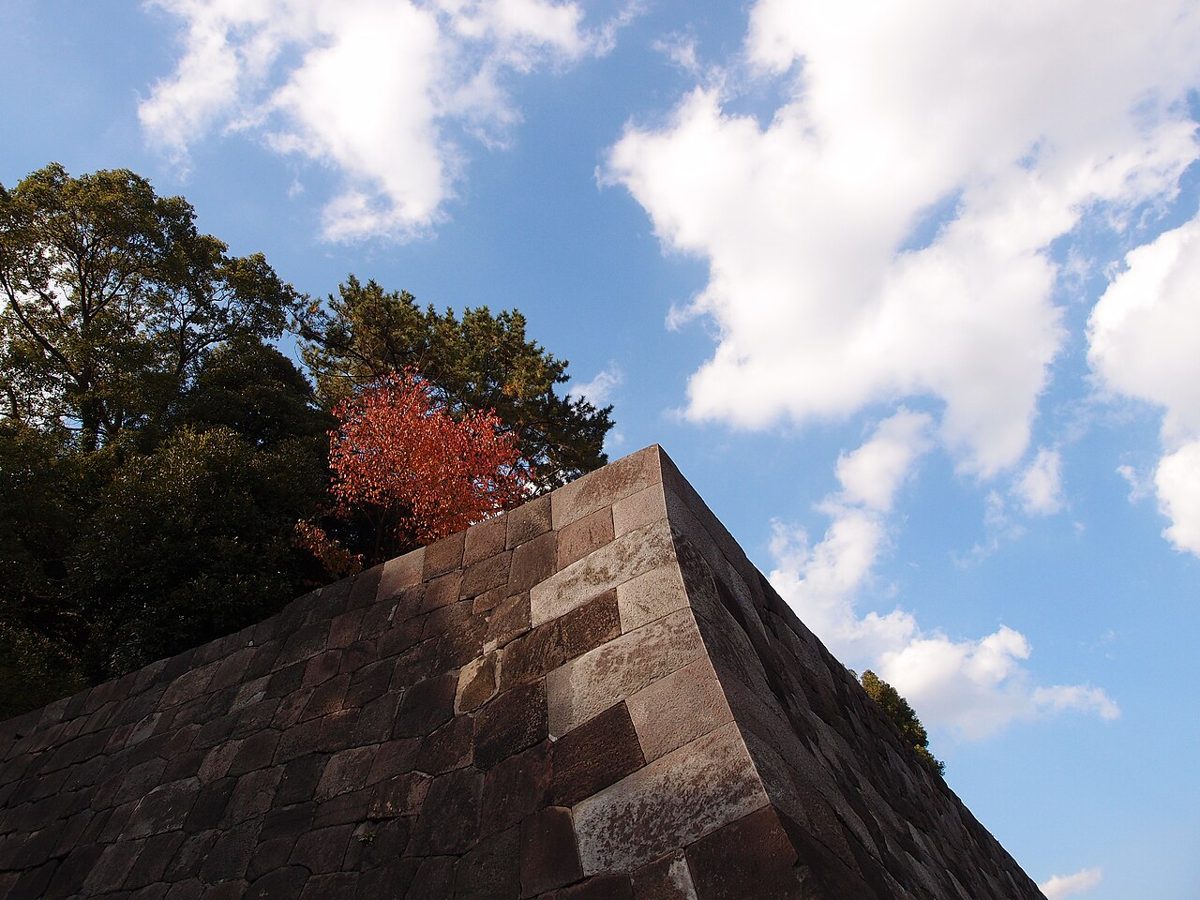
It is free, it involves a long security queue, and arrangements change year to year — sometimes with advance registration, sometimes not. Check the Imperial Household Agency’s own announcements in January if you want to do it. As a three-day weekend it also lifts domestic travel and hotel rates for a few days in an otherwise cheap month.
Valentine’s Day, and the chocolate
Japanese Valentine’s Day runs in one direction: on 14 February women give chocolate to men. Giri-choco is the obligation chocolate for colleagues; honmei-choco is the real thing. Men reciprocate on White Day, 14 March, conventionally at a higher value.
The visitor-relevant part is what happens in the department stores. From late January, the basement and event floors of Isetan Shinjuku, Mitsukoshi and Takashimaya turn over to enormous chocolate fairs — dozens of international and Japanese chocolatiers, tasting counters, and queues that genuinely rival anything at a theme park. Even if you buy nothing, an hour in a Tokyo depachika during the chocolate season is one of the better free spectacles of the year, and it is a strong source of things to take home — see our Tokyo souvenirs guide.
The warning: cedar pollen season
This is the thing nobody tells visitors, and it ruins February and March trips for a meaningful number of people. Japan has vast post-war plantations of sugi cedar, and the pollen season starts in the Kanto region in mid-February and peaks through March. Something like a third of the Japanese population has hay fever from it, and the reaction can be severe even in people who have no allergies at home.
If you are prone to hay fever, plan for it: bring your usual antihistamine, buy a box of masks on arrival — every convenience store sells them and everyone wears them in spring — and check the daily pollen forecast, which is published alongside the weather. Symptoms are worst on warm, dry, windy days, which are otherwise the nicest days of the month.
If you have never had hay fever, you may still get it here. It is the single most common unpleasant surprise of a late-winter Japan trip.
What to eat in February
Late winter is not a dead season for food in Japan. It is the tail of the nabe and shellfish months and the start of the spring produce, and February happens to be the peak of the one ingredient Japan does better than anywhere.
- Strawberries. Japanese ichigo — Amaou, Tochiotome, Skyberry — peak now, and February is when Tokyo loses its mind about them. Department store fruit counters sell single perfect berries at prices that look like typographical errors; cafés run strawberry parfaits at ¥1,200 to ¥2,500; convenience stores sell strawberry sandwiches on white bread with whipped cream, which sounds wrong and is not.
- Oysters and shellfish. Still in season, still excellent, and the standing oyster bars in Ebisu and around Tokyo Station are quiet enough in February to walk into.
- Nabe. The last full month of hotpot menus in every izakaya. Shared, cheap and exactly right for the weather.
- Eho-maki on 3 February, for Setsubun, sold by every convenience store and supermarket in the country for about a week.
- Chocolate, obviously, for most of the month.
- Sake. Winter is brewing season and the shiboritate and nama fresh-pressed releases appear from January. Specialist shops in Kagurazaka and Nihonbashi will let you taste before buying.
Strawberry picking is a genuine day trip rather than a gimmick. Farms across Chiba, Saitama and Tochigi run thirty-minute all-you-can-eat sessions from January to May, generally ¥1,500 to ¥2,500 depending on the date and variety, and February is the sweet spot for both fruit quality and availability. Most take reservations online and many are within ninety minutes of central Tokyo. Our Tokyo food guide covers the rest of what is worth eating here.
Prices, crowds and why February is the value pick
| Window | Crowds | Hotel rates | Verdict |
|---|---|---|---|
| 1–12 Feb | Very low | Lowest of the year | Setsubun, cold, empty, cheap |
| 13–21 Feb | Low | Low | Plum blossom opening; the sweet spot |
| 22–24 Feb | Moderate domestic | Higher | Emperor’s Birthday long weekend |
| 25–28 Feb | Low to moderate | Low | Plum at peak; spring arriving |
February and the second half of January are the two cheapest windows in the Tokyo year. The difference between a February hotel rate and a late-March cherry blossom rate in the same room is frequently a factor of two, and every attraction in the city is quieter. Restaurants that will not answer the phone in April will seat you on the night. Our Tokyo trip cost breakdown puts numbers on it, and best time to visit Tokyo compares February with the rest of the calendar.
What to do with a cold, empty city
- Museums, properly. The Tokyo National Museum, the Edo-Tokyo collections, teamLab — all of them at a fraction of their spring queues. Our best museums guide ranks them.
- Onsen and sento. Cold weather is the right weather for this. An outdoor bath in February air is the whole point of the exercise; see the onsen etiquette guide before your first visit.
- Strawberries. February is peak ichigo season and it shows up everywhere — parfaits, sandwiches, an entire department store floor. Strawberry-picking farms in Chiba and Saitama run all-you-can-eat sessions of about thirty minutes, generally ¥1,500 to ¥2,500 depending on the variety and date.
- Day trips with a view. The air is still clear enough for reliable Fuji. Hakone, Kawaguchiko and the western mountains all work, and the day trips guide has the rest.
- Skiing, still. February is the best snow month in Japan; Gala Yuzawa remains 75 minutes from Tokyo Station by shinkansen.

What to pack
Effectively the same as January, with two additions.
- A proper winter coat, gloves, scarf — the first fortnight is as cold as the year gets.
- Layers you can shed indoors, because heating runs hot everywhere.
- Kairo heat pads, about ¥100 each in any convenience store.
- Antihistamines and masks if you are at all prone to hay fever. This is the addition that matters.
- Something lighter for the last week, which can reach 15°C and feels like spring after a fortnight of 10°C.
The full list is in our Tokyo packing list, and the wider cold-season logistics in the Tokyo winter guide.
Is February a good month to visit Tokyo?
Yes, if value and quiet matter more to you than flowers and warmth. It is the cheapest month, the least crowded, and it still has Setsubun, plum blossom, the best onsen weather of the year and a genuine chance of snow. Everything that is impossible to book in spring is available.
No, if you are coming for cherry blossom — that is six weeks away and no amount of hoping brings it forward. No, if you have serious hay fever, because the cedar season starts mid-month. And no if bare trees and grey-brown parks will bother you, because outside the plum gardens that is what February looks like.
For the months either side, see Tokyo in January and, when you are ready to build the trip, Tokyo travel planning.
February is the best month of the year for a hot spring, and the towns within reach of Tokyo are at their most atmospheric: snow around the outdoor baths at Kusatsu, mild sea air at Atami. Our onsen day trips from Tokyo guide compares the options and says honestly which ones work as a single day.
Frequently Asked Questions
Is February a good time to visit Tokyo?
It is the best value month of the year. Hotel rates are at their annual floor, attractions have no queues, and the weather is cold but dry and sunny at 10–14°C. You get Setsubun on 3 February, plum blossom from mid-month, and the best onsen conditions of the year. The trade-offs are bare trees, no cherry blossom, and the start of cedar pollen season.
Does it snow in Tokyo in February?
February is the likeliest month, though snow remains uncommon — Tokyo gets a handful of snow days a year and the heaviest falls have tended to come in early to mid-February. It is usually wet snow that turns to slush and disappears within a day or two, and trains slow or suspend while it lasts.
When is plum blossom season in Tokyo?
Early February to early March, peaking around mid-to-late February. The best spots are Yushima Tenjin, Hanegi Park in Setagaya, Kameido Tenjin and Koishikawa Korakuen. Unlike cherry blossom, plum flowers last several weeks on the branch, are strongly scented, and draw almost no crowds.
What is Setsubun and where should I go?
Setsubun on 3 February marks the old turn from winter to spring and is celebrated by throwing roasted soybeans to drive out demons. Major temple ceremonies with celebrity and sumo participants happen at Sensoji in Asakusa, Zojoji beneath Tokyo Tower, Ikegami Honmonji and Naritasan Shinshoji. Arrive at least an hour early for the main throw.
Do I need to worry about hay fever in Tokyo in February?
If you are prone to it, yes. Japanese cedar pollen season starts in the Kanto region around mid-February and peaks in March, and it affects roughly a third of the population — including plenty of visitors who have no allergies at home. Bring antihistamines, buy masks locally, and check the daily pollen forecast published with the weather.
Photo Credits
- A mejiro among plum blossom at the Imperial Palace East Gardens – Mejiro and plum blossoms at the Imperial Palace East Gardens; February 2020 (01) by Big Ben in Japan, CC BY-SA 2.0, via Wikimedia Commons.
- Setsubun bean-throwing at Hakone Shrine – Hakone Shrine Setsubun mamemaki 01 by KQuhen, CC BY-SA 4.0, via Wikimedia Commons.