Tokyo with Kids · Guide №141
Best Kid-Friendly Restaurants in Tokyo: Where Families Actually Eat
The kid-friendly restaurants in Tokyo that families actually use: famiresu, conveyor-belt sushi, curry, ramen with tables, depachika and character cafes, with prices, high-chair tips and the phrases that help.
目次 — Contents
- Five rules that make eating out with kids in Tokyo easy
- Family restaurants (famiresu): the reliable safety net
- Conveyor-belt sushi: dinner that doubles as a ride
- Udon, curry, and gyudon: the picky-eater workhorses
- Ramen with kids: yes, it’s possible
- Depachika and food courts: eat without sitting still
- Character cafes: the event meal
- Chain comparison: which kid-friendly restaurant in Tokyo to pick
- High chairs, kids’ menus, allergies, and the smoking question
- Reservations, paying, and what it all costs
- Frequently Asked Questions
- Photo Credits
This article contains advertising. Our booking links are routed through a partner that adds commission tracking automatically, so if you book through one we earn a commission from the provider, at no extra cost to you. It never affects what we recommend. Affiliate disclosure
The best kid friendly restaurants in Tokyo aren’t fancy. They’re the ones where a touch-screen does the ordering, the food shows up in four minutes, nobody flinches when a toddler shrieks, and the bill lands around a thousand yen a head. Eating out with children here is genuinely easier than at home: no tipping, fast service, and a quality floor so high that even chain food is good. The trick is picking the right type of place for the mood you’re in right now.
I’ve done a lot of laps of this city with small kids in tow, from the conveyor-belt sushi meltdown-rescue to the 5 p.m. famiresu dinner before the jet-lag crash hits. This guide is the system that actually works, with the categories, the specific chains, real prices, and the Japanese phrases that smooth everything over. For the bigger picture on traveling here with children, pair it with our full Tokyo family guide; if your crew is hungry for snacks between meals, our Tokyo street food roundup covers the festival-stall stuff.
Five rules that make eating out with kids in Tokyo easy
Before any specific restaurant, internalize these. They’ll save you more grief than any single recommendation.
- Eat early. Lunch at 11:00, dinner at 17:00. You’ll beat the salaryman rush, walk straight in, and often grab the tatami corner where kids can wriggle.
- Use the plastic food. Those hyper-realistic fake dishes in the window aren’t just decoration. Photograph the one you want and point. Done.
- Tablet ordering is your friend. Most chains now have a touch-screen at every table with a photo of every dish and an English button. Your eight-year-old can order for the table.
- No tipping, ever. You pay at the register on the way out, not at the table. Take the slip from the table, walk to the front, pay, leave. Trying to tip just causes confusion.
- The oshibori is free. Every sit-down place hands you a hot or cold hand towel before you order. Ask for another for sticky fingers and they’ll bring it without a second thought.
Family restaurants (famiresu): the reliable safety net
If you remember one Japanese word from this whole article, make it famiresu (ファミレス, short for “family restaurant”). These are Japan’s answer to Denny’s, except the food is actually good, the drink bar is bottomless, and nobody minds a loud toddler. Every neighborhood has several, they’re open late, and they all have picture menus on a tablet. When a three-year-old is melting down at 5 p.m., “reliable” beats a Michelin star.
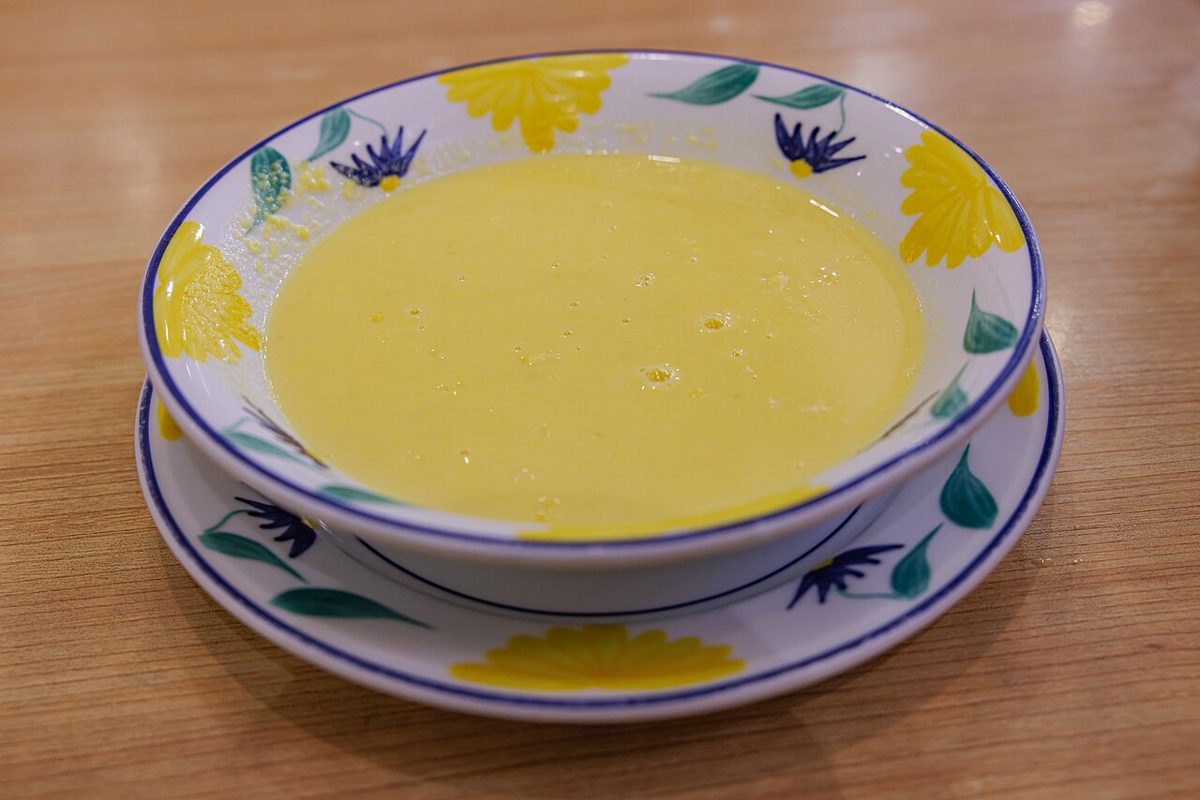
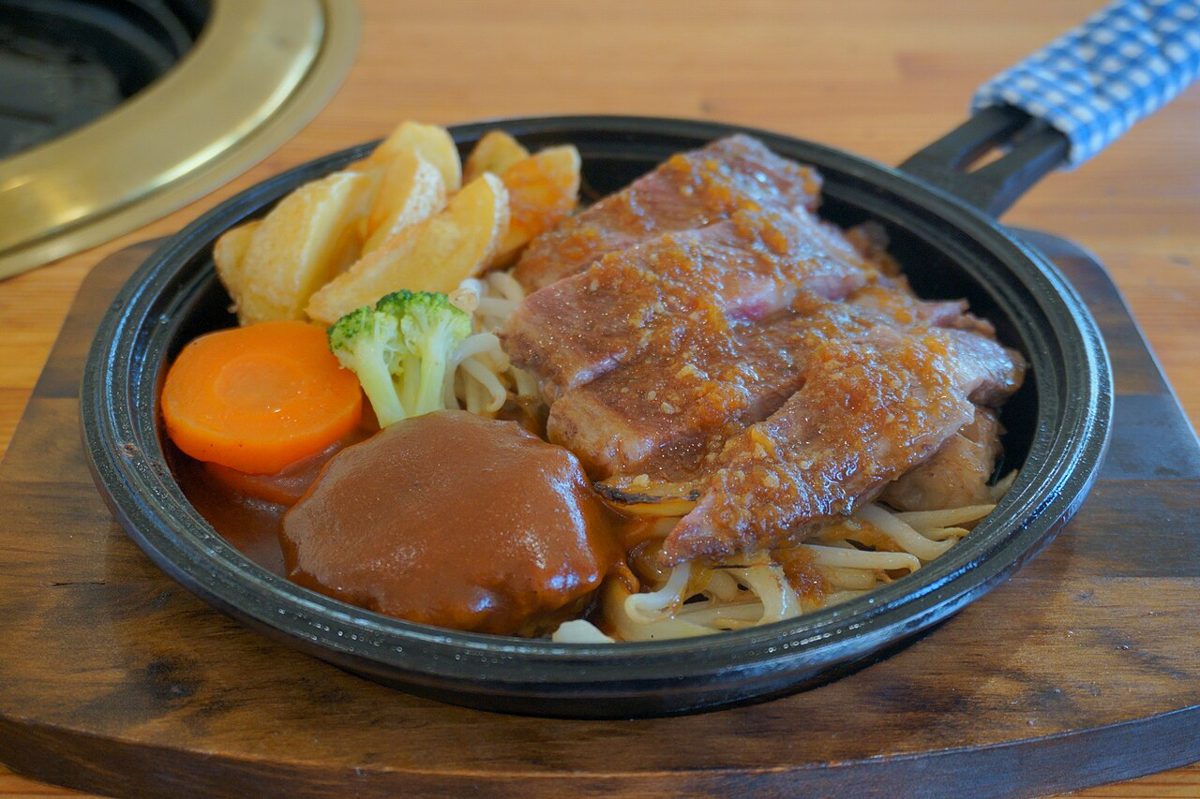
Saizeriya is the cheapest and the most beloved by parents on a budget. Pasta, pizza, doria, and a corn-and-focaccia plate that doubles as a standalone toddler meal, with most mains well under ¥500 and a small kids’ drink bar that’s free for the under-threes. Gusto and its sister chain Bamiyan (Chinese) lean Japanese-Western and Chinese respectively; both bring a robot cat to deliver your food, which buys you a solid ten minutes of entertainment. Royal Host is a notch more upscale, known for a genuinely good hamburg steak, and it hands every child a small free toy on arrival before you’ve even ordered. Jonathan’s does the classic flag-on-the-rice kids’ plate and keeps picture books in the waiting area. Coco’s rounds out the big names.
Look for the お子様メニュー (okosama menyu), the kids’ menu. The classic okosama-ranchi is a small plate with a tiny flag stuck in the rice, a hamburg steak, corn, a curl of spaghetti, a scoop of pudding, and sometimes a toy, usually ¥500–700. It is engineered to delight a five-year-old and it works every time.
Conveyor-belt sushi: dinner that doubles as a ride
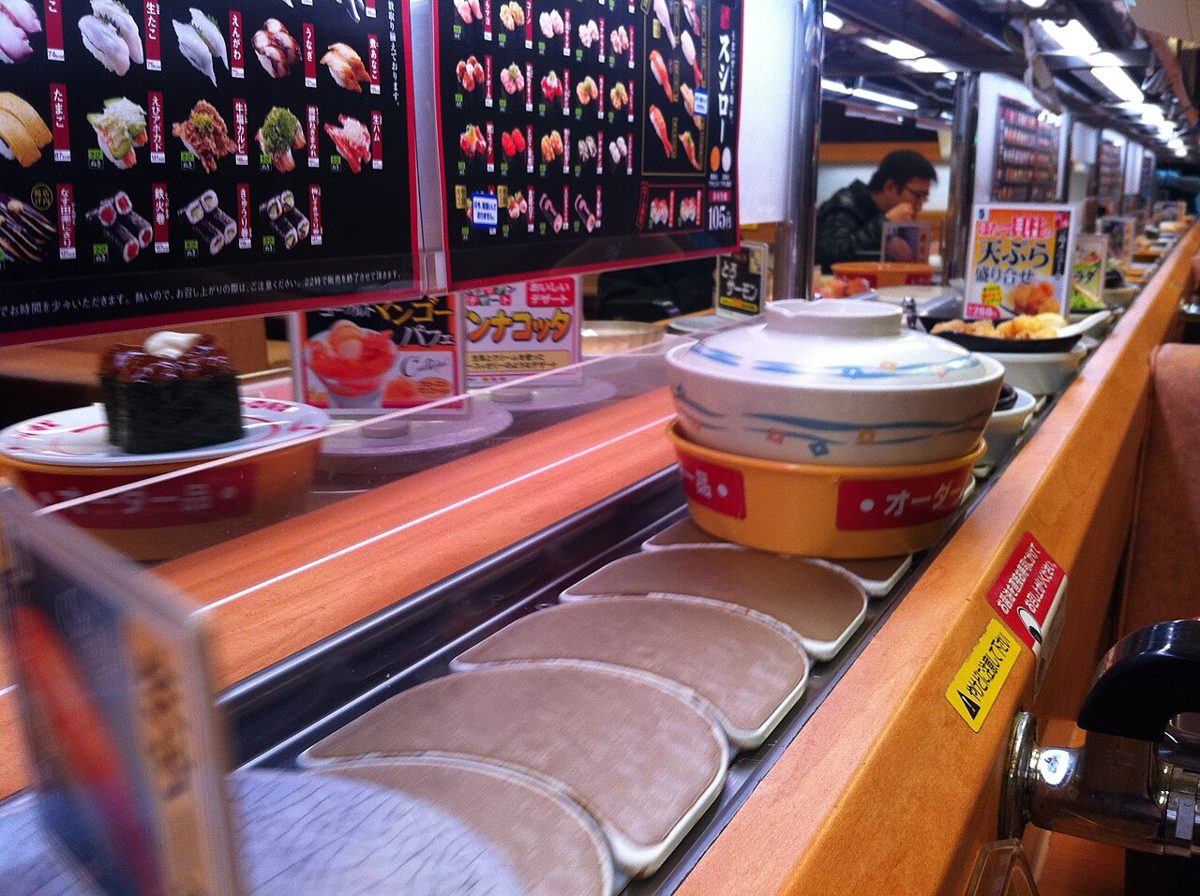
Kaiten-zushi (回転寿司) solves two problems at once. The kids are mesmerized by plates gliding past on the belt, and you’re eating genuinely decent sushi for around ¥110–150 a plate. It is a restaurant and a theme-park ride in the same building, which is exactly why it’s the single most useful category for families.
The big three are Sushiro, Kura Sushi, and Hama Sushi (plus Genki Sushi, which sends your order racing to your seat on a little bullet-train track). Sushiro usually has the best fish for the price. Kura Sushi is the kids’ favorite for one reason: a slot at your table eats your empty plates, and every fifth plate triggers a capsule-toy game on the screen above you, so children will happily power through a meal just to feed the slot. All of them use a full touch-screen tablet with an English button, and most sushi now arrives made-to-order on the express lane rather than circling on the belt, so it’s fresher than it looks.
Won’t your kid touch raw fish? Doesn’t matter. Every kaiten chain serves fries, karaage (fried chicken), edamame, corn, udon, tamago (sweet egg sushi), inari (a sweet tofu pocket of rice), kappa-maki (cucumber roll), and cake. A non-sushi kid eats perfectly well. The seats fold out a belt-attached baby chair, kids’ cutlery sits by the drink station, and a meal of eight to twelve plates plus drinks runs about ¥1,500–2,500 a person. One warning: on weekends, popular branches hit 60-minute waits, so reserve a slot through the chain’s app (Google Translate’s camera mode handles the Japanese) or just show up at 11:00 on a weekday and walk in.
Udon, curry, and gyudon: the picky-eater workhorses
If your child eats noodles, you’ve already won. Marugame Seimen (丸亀製麺) makes udon fresh in front of you and runs a cafeteria-style line where you grab tempura toppings as you slide your tray along, so a bowl lands for under ¥400 and there’s nothing to wait for. Udon is thick, soft, and hard to choke on; ask for it ぬるめ (nurume) if you want it cooler, and staff will usually snip the noodles shorter if you mime scissors. Hanamaru Udon does the same thing with slightly smaller portions.
Japanese curry is the picky eater’s secret weapon. It’s mild, sweet, thick gravy over rice, nothing like Indian or Thai curry, and most kids love it on the first bite. CoCo Ichibanya (ココ壱番屋) is everywhere and its entire system is customization: pick your spice level (start at 1, “sweet”), your rice amount, and your toppings. There’s a proper kids’ menu, an amakuchi (甘口, mild) setting for zero spice, and a counter bottle of sweetening sauce if even level 1 is too much. One real caution if you’re traveling with a baby: the standard kids’ curry sauce contains honey, so don’t order it for an infant under twelve months. CoCo Ichibanya stocks a separate honey-free “gentle vegetable curry for ages 1+” at most branches.
And for the nights when everyone is hungry now, the gyudon (beef-bowl) chains, Yoshinoya, Sukiya, and Matsuya, plate a beef bowl in about three minutes for ¥400–500, with a small kids’ size and miso soup. For more of these wallet-friendly staples, our guide to Tokyo’s cheapest meals goes deeper.
Ramen with kids: yes, it’s possible
A counter-only ramen shop with a toddler is a nightmare. Ramen with kids at the right shop is a delight. The whole trick is table seating. Chains like Ippudo, Korakuen, and Hidakaya have tables, and Ippudo goes furthest of anyone with its company-wide “Karugamo Project” child-welcome policy. Their signature move is the dakko change (抱っこチェンジ): staff deliberately stagger the bowls so one parent can hold the baby while the other eats hot noodles, then swap and make a fresh bowl. The kids’ ramen set (around ¥590) comes out first, deliberately not piping hot so small hands won’t get burned.
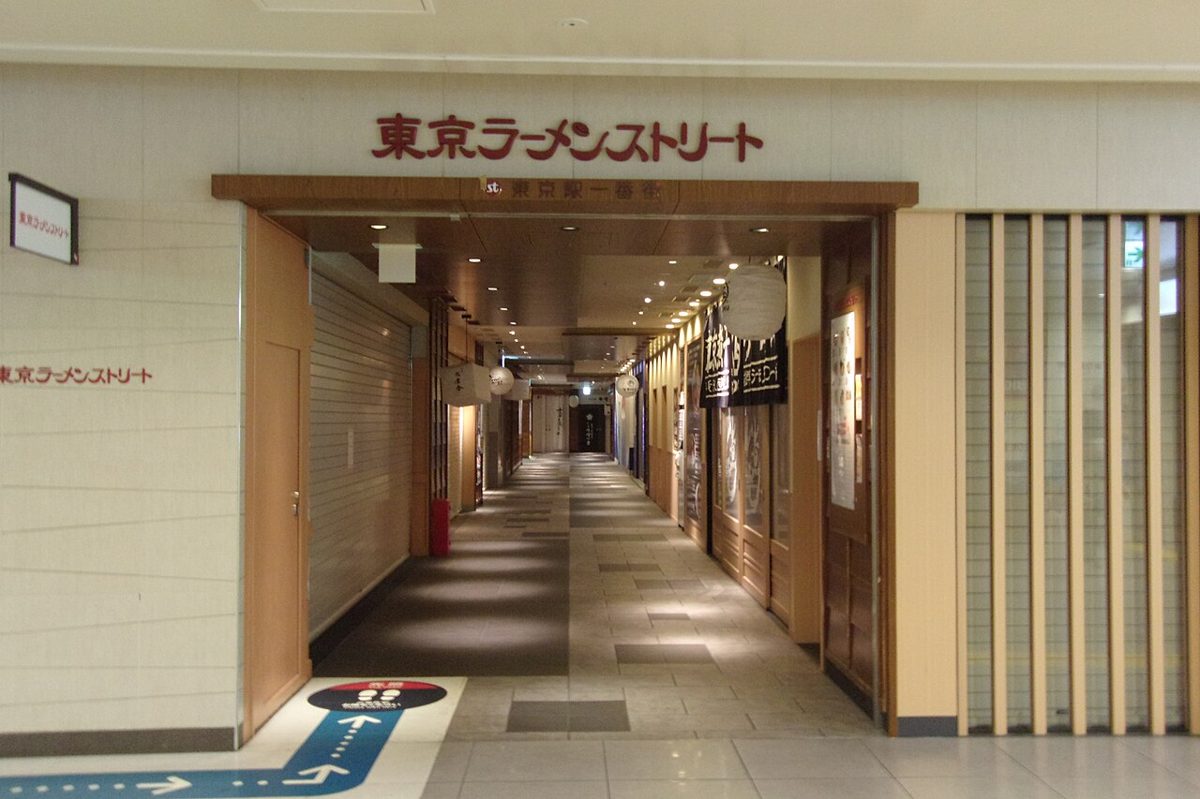
Many ramen shops order through a vending machine at the door: feed in cash, press the (usually photographed) buttons, hand the ticket to staff. It’s intimidating once and then it’s easier than ordering aloud. A genuinely useful family hack is tsukemen (つけ麺, dipping noodles), where the cold noodles arrive separate from the hot broth, so you can cool a portion instantly for a toddler. The under-Tokyo-Station Tokyo Ramen Street gathers eight famous shops in one basement corridor with table seating, which makes it an easy, low-stakes first ramen with kids.
Depachika and food courts: eat without sitting still
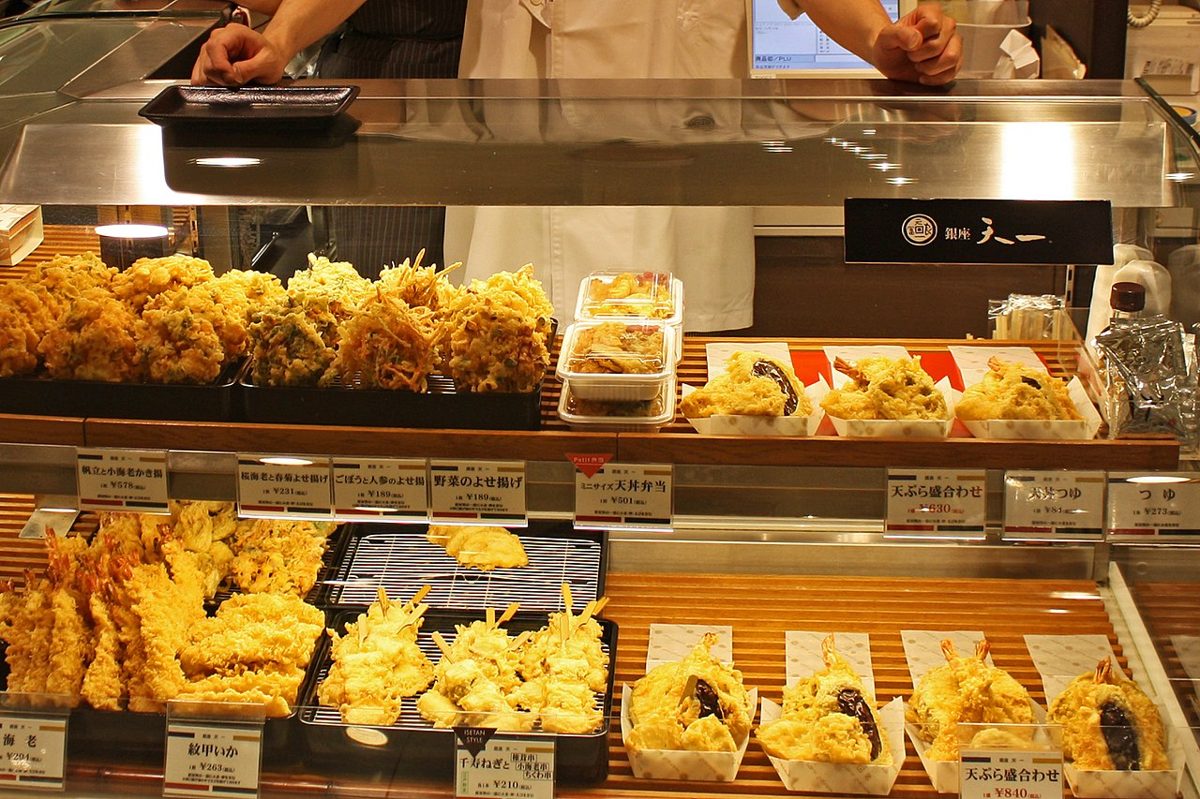
The basement food halls of department stores, the depachika, are food wonderlands: hundreds of counters selling bento, grilled meat, tempura, salads, pastries, and absurdly pretty sweets. Buy whatever looks good, grab drinks, and eat in the store’s rooftop garden or a nearby park. The reason this works so well with kids is everything a sit-down meal doesn’t give you: clean bathrooms on the same floor, elevators, air conditioning, and zero pressure to keep a toddler in a chair. The big ones worth a detour are Isetan Shinjuku, Takashimaya Nihonbashi, and the Tokyu Food Show under Shibuya Station. Budget tip: many stalls knock 20–50% off bento after about 7 p.m., so a late dinner can cost convenience-store money.
Shopping-mall food courts are the lazy-day version of the same idea. Every big complex, from KITTE by Tokyo Station to the Lumine and Atre buildings stacked over major stations, has a floor of counters with a shared seating area: multiple cuisines, no commitment, trays you bus yourself, and a play corner often nearby. When the family can’t agree on dinner, this ends the argument.
Character cafes: the event meal
The Pokemon Cafe, the Kirby Cafe, the various Sanrio-themed spots, these aren’t really about the food (which is fine, not memorable). They’re about the experience: your kid eats a Pikachu-shaped curry or drinks from a Kirby mug they take home, and a character may visit the table. Treat them like a theme-park outing, not a spontaneous lunch.
Book ahead, aggressively. The Pokemon Cafe in Nihonbashi (inside Takashimaya’s East building, 5F) releases reservations exactly 31 days in advance at 18:00 Japan time, and weekend slots can vanish within the first minute. Note that it was closed for renovation in spring 2026 and reopened on June 17, 2026, so it’s running again, but the booking scramble is real. Each reservation holds up to six guests, and you must enter the number of children. The Kirby Cafe at Tokyo Solamachi (the Skytree mall) is a slightly easier reservation. If you strike out, a Sanrio meal is far simpler to reach, and our companion Sanrio Puroland guide walks through the Hello Kitty park where the character-shaped food needs no reservation at all.
Chain comparison: which kid-friendly restaurant in Tokyo to pick
A cheat sheet for the moment you’re standing on a street corner with hungry children. Prices are per person for a typical family meal and shift a little by location and season; treat them as ballpark, not gospel.
| Chain / type | Vibe | Price per person | Kids’ menu | High chairs | English menu |
|---|---|---|---|---|---|
| Saizeriya (famiresu, Italian-ish) | Cheap, casual, bottomless drink bar | ¥700–1,200 | Yes, okosama plate | Usually | Tablet w/ photos |
| Gusto / Bamiyan (famiresu) | Robot-cat delivery, very kid-tolerant | ¥1,000–1,500 | Yes | Usually | Tablet, English option |
| Royal Host (famiresu, upscale) | Calmer, free toy on arrival | ¥1,500–2,200 | Yes, low-allergen too | Yes | Menu, some English |
| Sushiro / Hama Sushi (kaiten) | Conveyor belt, fast, fun | ¥1,500–2,500 | Side menu of fries/karaage | Belt-attached chairs | Touch-screen, English |
| Kura Sushi (kaiten) | Plate-game gacha, kid magnet | ¥1,500–2,500 | Lots of non-fish options | Belt-attached chairs | Touch-screen, English |
| Marugame Seimen (udon) | Watch noodles made, cafeteria line | ¥500–900 | Small udon, mild | Some branches | Picture line, point & go |
| CoCo Ichibanya (curry) | Customizable, picky-eater proof | ¥800–1,400 | Yes + baby curry | Usually | Order sheet, English |
| Ippudo (ramen) | Table seats, dakko-change service | ¥1,200–2,000 | Kids’ ramen set ~¥590 | Yes | Menu, English |
High chairs, kids’ menus, allergies, and the smoking question
High chairs and kids’ chairs
Ask for a 子供用の椅子 (kodomo-yo no isu), a children’s chair. Family restaurants, kaiten-sushi chains, and department-store restaurants almost always have them. Independent ramen counters and tiny izakaya usually don’t. One real-world catch: Japanese high chairs often lack a safety strap, so if your kid is a climber, pack a portable fabric harness. Honestly, tatami (floor) seating is often easier with babies and toddlers anyway, since they sit on the cushion right next to you and can’t tip out of anything.
Allergies
Japan legally requires labeling of eight major allergens (wheat, egg, milk, peanut, shrimp, crab, buckwheat/soba, and walnut). The safest approach is to carry a printed allergy card in Japanese and show it to staff; free generators exist online, and Google Lens will translate an ingredient label in real time. Chains like Royal Host, CoCo Ichibanya, and the big sushi groups publish detailed allergen charts. If a reaction would be serious, stick to chains with documented allergen menus rather than tiny independent shops where the cook can’t always tell you what’s in the stock.
Smoking and strollers
Indoor smoking has been banned in most Tokyo restaurants since 2020, and every chain on this page is non-smoking. A few old-school izakaya and bars still have smoking rooms; if you see 喫煙可 (kitsuen-ka) on the door, that means smoking is allowed, so keep walking with kids. As for strollers, department-store restaurants and family chains usually have room; small ramen shops and street-level spots don’t. Fold it at the entrance and staff will help you tuck it somewhere. A compact one-hand-fold stroller earns its keep on food-heavy days.
Reservations, paying, and what it all costs
Most kid-friendly chains don’t take reservations at all, and you simply put your name on the ticket machine at the door and wait for your number; the screen will be in Japanese, but it’s just “take a ticket, watch for your number.” The exceptions are the busy kaiten-sushi branches (reserve a time in the app), character cafes (book 31 days out, see above), and the more grown-up sit-down restaurants, where your hotel front desk will happily phone ahead for you. There is genuinely no tipping; the price on the menu is the price you pay, plus 10% consumption tax that’s usually already included. Some izakaya and nicer spots add a small otoshi seat charge (a few hundred yen per adult, often with a little appetizer), which is normal and not a scam.
Rough daily food budget for a family of four eating the way this guide suggests: a famiresu or udon lunch runs ¥2,500–4,000 for everyone, a kaiten-sushi or curry dinner ¥5,000–8,000, and a konbini-and-depachika day can come in under ¥3,000 total. You can eat very well here without spending much. If you want to understand the wider food landscape, from where to splurge to what’s worth queuing for, our guide to dining out in Tokyo covers the whole city, and for the youngest travelers our Tokyo with toddlers guide drills into nap-timed meals and baby logistics.
Frequently Asked Questions
Are high chairs common in Tokyo restaurants?
In family restaurants, kaiten-sushi chains, and department-store dining, yes, almost always. In small ramen shops, izakaya, and street-level independents, usually not. Many Japanese high chairs lack a safety strap, so bring a portable harness if your child climbs, or choose tatami floor seating where little ones simply sit beside you.
Do kid-friendly restaurants in Tokyo have English menus?
The big chains do, and most have a touch-screen tablet with photos and an English-language button, so you can order without a word of Japanese. Even places without English menus usually display hyper-realistic plastic food in the window; photograph what you want and point. Google Translate’s camera mode handles the rest.
Can I bring a stroller and baby food into restaurants?
Department-store restaurants and family chains have space for strollers and will warm your baby food in the microwave if you ask (温めてもらえますか?, atatamete moraemasu ka?). Small ramen shops and izakaya don’t have room; fold the stroller at the door. Bringing your own baby food is completely normal everywhere and nobody will mind.
What time should we eat to avoid crowds with kids?
Lunch at 11:00 and dinner at 17:00. You’ll walk straight in, get fast service, and be back at the hotel before an overtired toddler hits the wall. Famiresu chains like Gusto and Jonathan’s often run until 11 p.m. or later, but the early slot is the secret to a calm meal.
Is tipping expected, and how do we pay?
There’s no tipping in Japan, ever; trying to leave one causes confusion. You pay at the register on the way out, not at the table: take the slip left on your table, carry it to the front, pay by card or cash, and go. Tax is normally already baked into the listed price.
Photo Credits
- Conveyor-belt sushi turns dinner into a ride the kids actually want to sit through — Photo: Travis Sanders / CC BY 2.0 via Wikimedia Commons via Wikimedia Commons
- Saizeriya: Japan’s bottomless-drink-bar safety net for families — Photo: Dinkun Chen / CC BY-SA 4.0 via Wikimedia Commons via Wikimedia Commons
- A Japanese hamburg steak plate — Photo: 掬茶 / CC BY-SA 4.0 via Wikimedia Commons via Wikimedia Commons
- A depachika food hall: hundreds of stalls, clean toilets, and no pressure to sit still — Photo: istolethetv from NYC, USA / CC BY 2.0 via Wikimedia Commons via Wikimedia Commons
- Tokyo Ramen Street under Tokyo Station gathers famous shops in one corridor — Photo: 電車(新幹線)でゴー! / CC BY-SA 4.0 via Wikimedia Commons via Wikimedia Commons
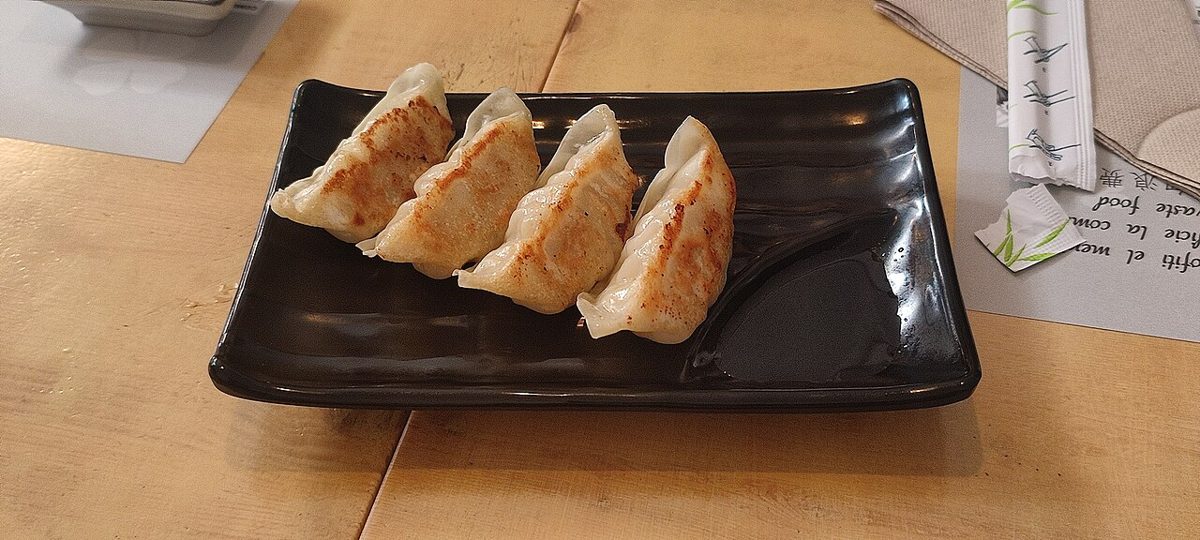
- Gyoza: shareable, mild, and toddler-approved — Photo: Bruno Fernández / CC BY-SA 4.0 via Wikimedia Commons via Wikimedia Commons