Tokyo Cafes & Coffee · Guide №140
Tokyo Kissaten Guide: Retro Showa-Era Coffee Houses Worth Finding
A kissaten is not a cafe with older furniture. What the format is, what to order, the Tokyo rooms worth crossing the city for, and how to spot one.
目次 — Contents
- What a kissaten actually is
- The sub-genres
- What to order
- How the coffee is actually made
- The ones worth crossing the city for
- Jazz kissa: the loudest silence in Tokyo
- Kissaten etiquette
- Why they are disappearing
- How to spot one from the street
- Best kissaten for each situation
- Frequently Asked Questions
- Photo Credits
This article contains advertising. Our booking links are routed through a partner that adds commission tracking automatically, so if you book through one we earn a commission from the provider, at no extra cost to you. It never affects what we recommend. Affiliate disclosure
A Tokyo kissaten is not a cafe with older furniture. It is a specific and legally distinct kind of business — a coffee house licensed to serve drinks and light food but not alcohol, brewing one cup at a time by siphon or cloth filter, where the implicit deal is that you buy a seat for as long as you want it. There were once around 150,000 of them across Japan. There are far fewer now, and they are closing.
This guide covers what makes a kissaten different, what to order, the ones in Tokyo genuinely worth crossing the city for, the etiquette inside a room where nobody is talking, and how to recognise one from the street.
What a kissaten actually is
The word means “tea-drinking shop”, and the distinction from a modern café is regulatory before it is aesthetic. A kissaten licence permits coffee, tea, soft drinks and simple prepared food; it does not permit alcohol, and historically it did not permit cooking from raw ingredients on the premises. That is why the classic kissaten menu is toast, sandwiches, pasta reheated in a pan and curry — dishes you can produce with a griddle and a burner.
The purist version is a junkissa, a “pure kissa”: coffee, a small food menu, no alcohol, no music beyond whatever the owner is playing, no wifi. Signs saying 純喫茶 in faded lettering are the reliable marker.
Culturally, the format arrived with Café Paulista, which opened in Ginza in 1911 selling Brazilian coffee at a price ordinary people could afford, and expanded through the post-war decades until the count peaked in the early 1980s. Then convenience-store coffee, Doutor and Starbucks arrived, the owners aged, and their children did not want the business. The decline has been steady ever since. For the wider picture of Tokyo coffee, including the third-wave roasters that came later, see our Tokyo cafe guide.

The sub-genres
| Type | What defines it | Rules |
|---|---|---|
| Junkissa | Coffee, toast, no alcohol, unchanged since the 1960s | One drink minimum; stay as long as you like |
| Meikyoku kissa | Classical music on a large valve system | Conversation discouraged or banned outright |
| Jazz kissa | Vinyl jazz through enormous speakers | Silence expected; request slips at some |
| Manga kissa | Comics, booths, showers, often 24 hours | Charged by the hour; a different business entirely |
| Meidokissa | Maid cafes; the name is a modern borrowing | Timed sessions and a photo package |
The manga kissa is the odd one out — it is an internet-and-comics booth business charging by the hour, used by people who have missed the last train, and it has almost nothing in common with the rest of this list beyond the word.
What to order
The menu is a fixed canon. Deviating from it is possible but misses the point.
- Blend — the house coffee, dark, hand-dripped or siphon-brewed, ¥500 to ¥900. This is what you order. The owner has spent thirty years on this blend.
- American — the same coffee brewed weaker, not diluted. It exists because the blend is strong.
- Vienna coffee — black coffee with a cap of whipped cream, which you are not meant to stir in.
- Cream soda — melon syrup, soda water, a scoop of vanilla ice cream in a footed glass. Unapologetically artificial and a genuine icon of the era.
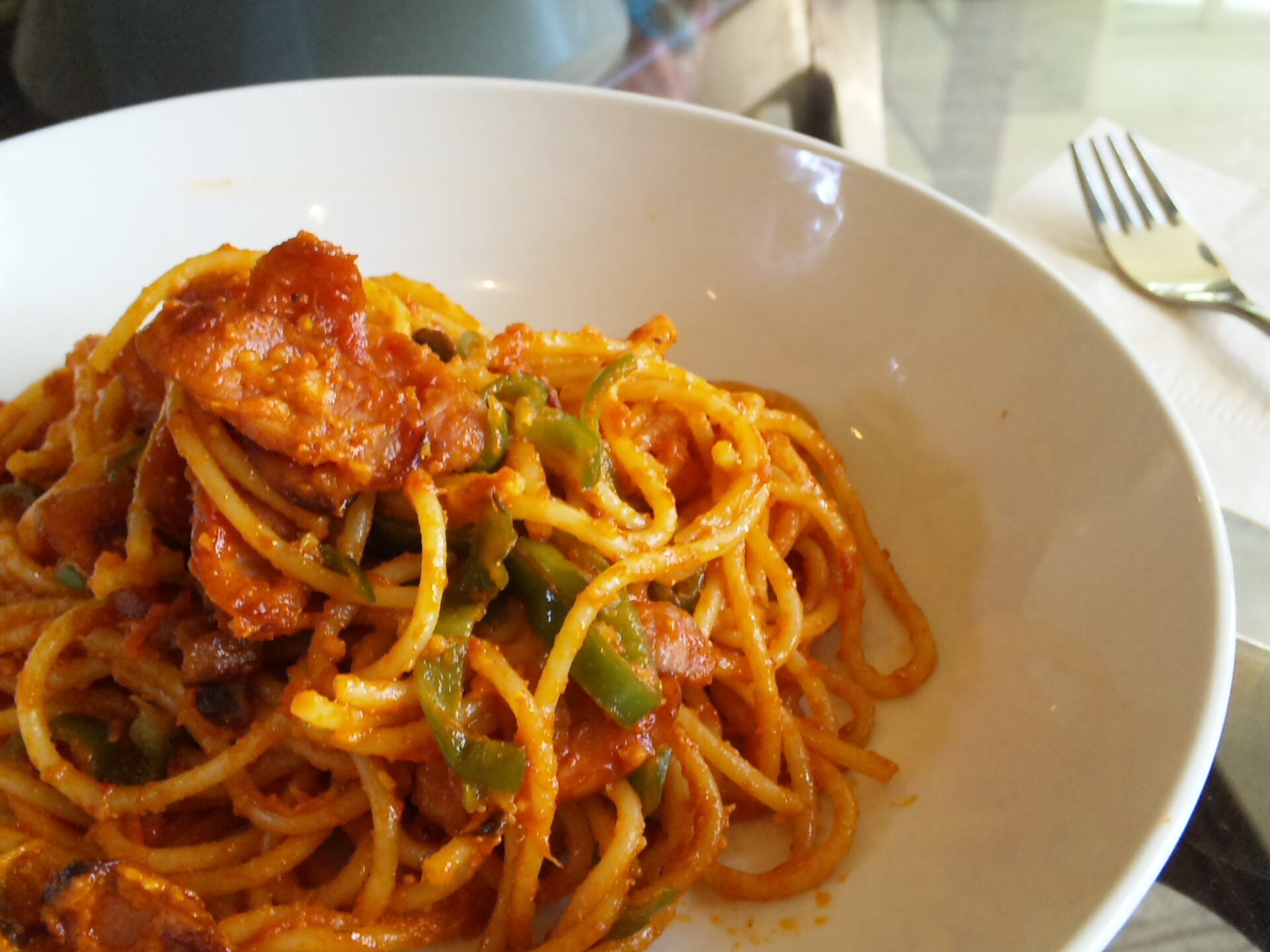
- Naporitan — spaghetti in ketchup with sausage and green pepper, fried in a pan, often served on a hot iron plate. Invented in Yokohama in the late 1940s. ¥800 to ¥1,200.
- Tamago sando — the egg sandwich, either chopped egg in mayonnaise or a thick folded omelette between crustless white bread.
- Purin — dense caramel custard pudding, firm rather than wobbly, with a cherry.
- Pizza toast — thick white bread with tomato, cheese and green pepper under a grill. A pizza in the way a kissaten understands pizza.
Morning service
The single best value in Tokyo breakfast. Order a coffee before roughly 11:00 and many kissaten include toast, a boiled egg and occasionally a small salad at no extra cost — the whole thing for ¥500 to ¥900. It is a hangover from the era when kissaten competed for the commuter trade, it is almost never advertised in English, and it is significantly better than a convenience-store breakfast. Our Tokyo breakfast guide covers the alternatives.
How the coffee is actually made
Worth knowing, because it explains why a kissaten coffee tastes nothing like the flat white you had that morning, and why it takes eight minutes to arrive.
- Nel drip — a cloth filter, usually flannel, held in a wire frame. The cloth traps less oil than paper, so the cup comes out heavier, sweeter and almost syrupy. It is fiddly to maintain, since the filter has to be kept wet and refrigerated between uses, which is exactly why chains never adopted it and why kissaten owners are proud of it.
- Siphon — the two-chamber glass apparatus with a spirit burner underneath. Water is pushed up into the upper chamber by vapour pressure, brews with the grounds, then draws back down through a filter as it cools. It is theatre as much as method, and the result is clean and bright.
- Dark roasts — the Japanese kissaten tradition roasts considerably darker than the modern specialty norm. If you have been trained on light Nordic roasts you may find the first cup surprising. It is not a mistake; it is a different school, developed to be drunk black over an hour rather than sipped in ten minutes.
- One cup at a time — nothing is batch-brewed or held on a hotplate. That is the reason for the wait, and it is not a queue.
Do not ask for oat milk, a takeaway cup or a double shot. It is not that the request would offend anyone; it is that none of those things exist in the room. Order the blend, drink it black, and let the eight minutes happen.
The ones worth crossing the city for
A standing caveat before the list: kissaten close, often abruptly, when the owner retires or the building is sold. Everything named here was trading recently, but check on the day rather than crossing Tokyo on the strength of a guide.
Meikyoku Kissa Lion, Shibuya
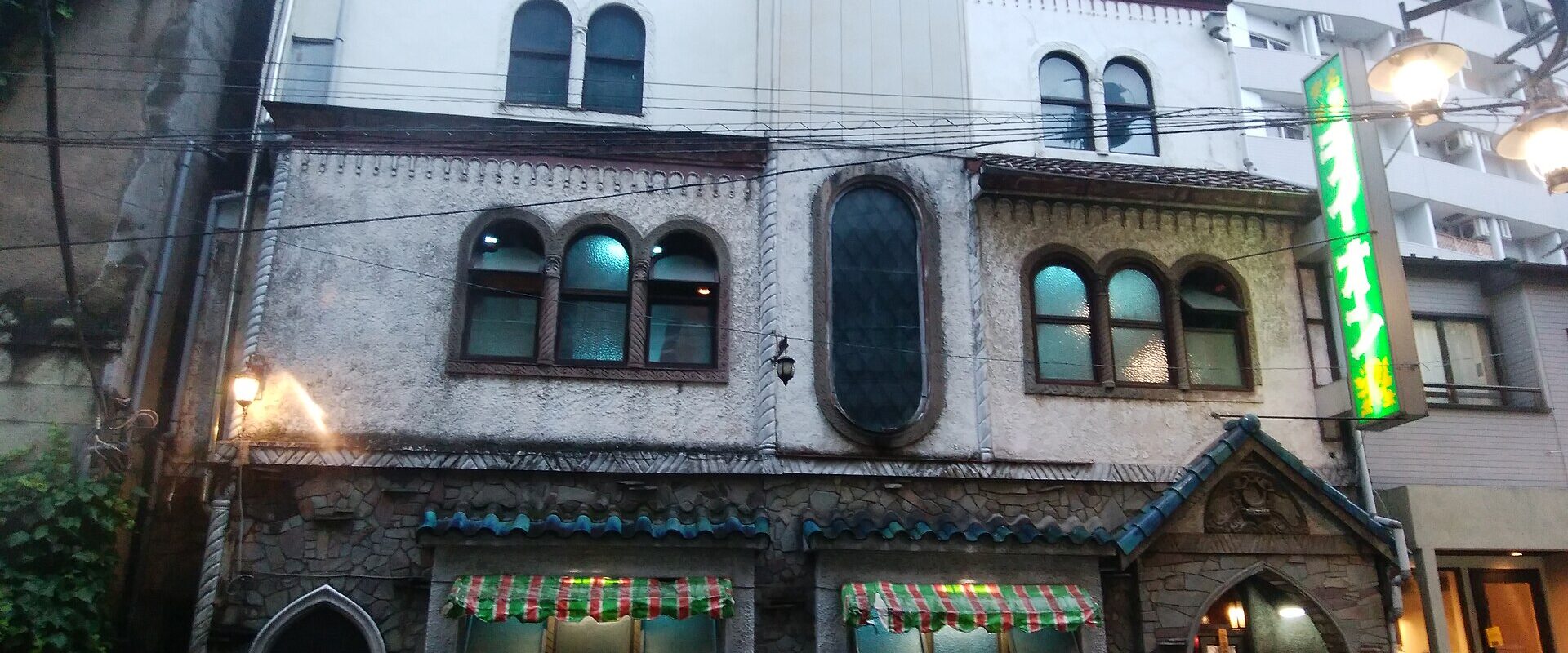
The most extraordinary room in this article. Opened in 1926 on Dogenzaka, rebuilt after the war, and organised like a concert hall: two floors of seats all facing forward towards a pair of enormous hand-built speakers, low light, no conversation, and a printed programme of the classical records being played that afternoon. Coffee is around ¥600. You sit, you face the speakers, you do not talk, and after forty minutes something in your brain resets.
It is four minutes from the Shibuya scramble and it feels like a different century. Our Shibuya guide covers the surrounding district; nothing in it is remotely like this.
Café de L’Ambre, Ginza
Founded in 1948 and specialising in aged beans — green coffee deliberately stored for years, sometimes decades, before roasting, which produces a flavour you cannot get anywhere else and which divides opinion sharply. The room is narrow, the counter is the seat to want, and the roasting happens on site. Expect ¥800 to ¥1,500. Worth it as an experience whether or not you like the result.
Meikyoku Kissa Lambre, Shinjuku
Two hundred seats in a basement off Shinjuku’s east side, classical music throughout, chandeliers and red velvet, and a decor that has survived unaltered because nobody was allowed to touch it. Larger and less austere than Lion — talking is tolerated at low volume — and a genuinely useful place to disappear for an hour in the busiest district in the world. See our Shinjuku guide for the surrounding area.
Sabouru and Ladrio, Jimbocho
Jimbocho is the second-hand book district, which means it is also the reading district, which means the kissaten there have survived better than anywhere else in Tokyo. Sabouru, with a log-cabin frontage and a jungle of interior clutter, has been going since the 1950s and does a famously large fruit juice. Ladrio, in an alley nearby, claims to have introduced Vienna coffee to Japan. Both are small, both are cash, both are full of people reading.
Kayaba Coffee, Yanaka
A 1938 wooden building at the top of the old town, restored rather than modernised, serving the classic egg sandwich and a good coffee to a queue that forms most weekends. It is the most photogenic of the group and the least austere. Combine it with the cemetery, the temples and the shopping street — the Yanaka guide has the walk.
Café Paulista, Ginza
The original, or its descendant: the business that introduced affordable Brazilian coffee to Japan in 1911 still trades in Ginza. It is not the best coffee on this list and it does not need to be — it is the room where the whole Japanese coffee habit started. The Ginza guide covers what else is on that side of the district.
Jazz kissa: the loudest silence in Tokyo
A distinct and stricter tradition. A jazz kissa is a small room with a vinyl collection, a valve amplifier and a pair of speakers considerably more expensive than the building, run by an owner with strong opinions. You order a coffee, you sit, and you listen. Conversation ranges from discouraged to explicitly forbidden — some post signs — and taking a phone call is not on.
The genre dates from the post-war decades when imported records were prohibitively expensive and a jazz kissa was the only way most people could hear them. That original economic reason has gone; the rooms remain because a certain kind of listener still wants a good system and no distractions. Yotsuya and Shinjuku hold several of the best-known survivors, and most are small enough that four people constitutes a full house.
If you go: arrive alone or with someone who understands the terms, order promptly, do not photograph the room without asking, and do not request anything unless there is a slip on the table inviting you to.
Kissaten etiquette
- One drink per person. Non-negotiable. Two people sharing one coffee at a table is the fastest way to be unwelcome.
- Cash. A significant share of independent kissaten still do not take cards. Carry notes — our Tokyo money guide covers where to get them.
- No laptops, generally. There is usually no wifi and often no power socket, and that is deliberate rather than an oversight.
- Quiet. In a music kissa, that means silence. In an ordinary one, it means the volume of a library rather than a bar.
- Photograph the room, not the people. Many owners are happy for you to photograph the interior when it is quiet, and will say no if not. Ask first, every time.
- Smoking still happens. The 2020 indoor smoking law exempted very small owner-operated premises, which describes most kissaten precisely. If smoke bothers you, check at the door.
- You are not being rushed. Nobody will clear your cup to move you on. That is the entire product.
The wider ground rules are in our Japanese etiquette guide, and none of this is policed harshly — the tolerance for a visitor getting details wrong is high.
Why they are disappearing
Three forces at once. The owners are old — many of these businesses have been run by the same person since the 1960s and there is no successor. The buildings are old too, frequently wooden and pre-earthquake-code, and worth more as redevelopment sites than as coffee shops. And the economics never recovered from ¥150 convenience-store coffee.
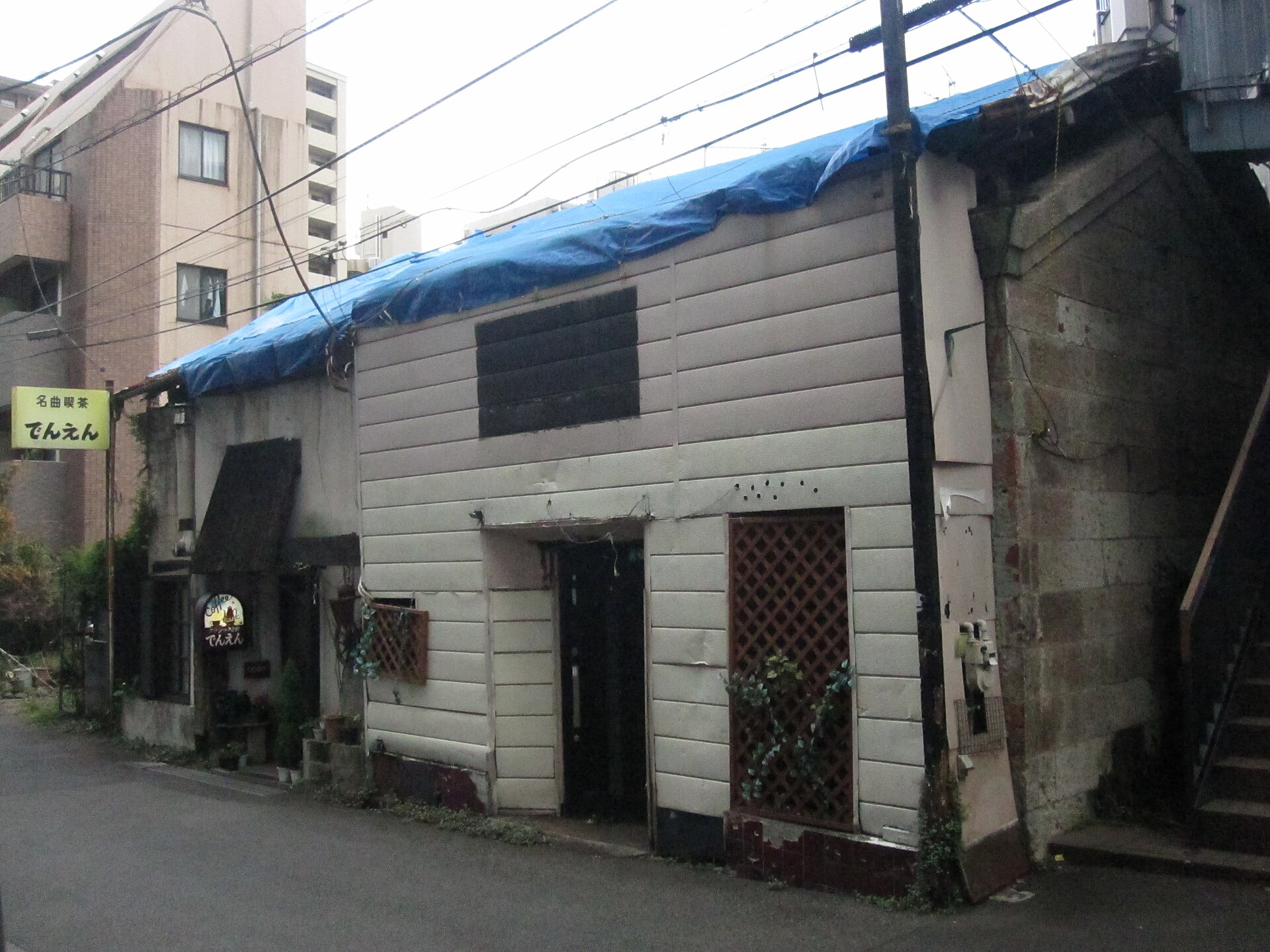
The consequence for a visitor is simple: go now, and go to the ones you actually want to see rather than saving them for a future trip. Several of the most famous names in this category have closed in the last decade — a Tokyo institution disappearing with two weeks’ notice is a normal event here, not an unusual one.
How to spot one from the street
You will find better kissaten by walking than by searching, and the visual language is consistent enough to learn in an afternoon.
- The kanji. Look for 珈琲 — the older, ornate way of writing “coffee” — rather than the katakana コーヒー. 純喫茶 means a pure kissa.
- Plastic food models in a lit case by the door, faded to odd colours.
- A basement or first-floor location reached by a narrow stair, with a hand-lettered sign at street level.
- Brown, cream and dark red — the Showa palette. Velvet, wood veneer, frosted glass with a floral pattern.
- Location. Anywhere near an old station that redevelopment has not reached: Jimbocho, Kanda, Yanaka, Koenji, Kichijoji, Asakusa, the streets behind Shinbashi.
Rainy afternoons are the right time for all of this — see our Tokyo rainy day guide — and the district walks in our neighbourhoods guide will take you past dozens without listing any of them.
Best kissaten for each situation
- The single most extraordinary room: Meikyoku Kissa Lion, Shibuya.
- The best coffee: Café de L’Ambre, Ginza, if you are curious about aged beans.
- Somewhere to sit for two hours: Lambre in Shinjuku, or anywhere in Jimbocho.
- Best with a camera: Kayaba Coffee in Yanaka — see our photo spots guide.
- Cheapest good meal: a morning set before 11:00, anywhere.
- Best for someone who hates coffee: a cream soda and a slice of pudding, taken entirely seriously.
None of it is expensive. A kissaten afternoon — coffee, naporitan, a second coffee — comes to about ¥2,000 and buys three hours in a room nobody is trying to move you out of. Against Tokyo’s other indoor options, and set beside the rest of our cheap eats guide, that is close to the best value in the city.
Frequently Asked Questions
What is the difference between a kissaten and a cafe?
A kissaten is a licensed category, not just a style: it may serve coffee, tea, soft drinks and light food but not alcohol, which is why the classic menu is toast, sandwiches and pan-fried pasta. In practice it also means hand-brewed dark-roast coffee, an interior unchanged since the 1960s, no wifi, frequent cash-only payment, and no expectation that you will leave.
What should I order in a Tokyo kissaten?
The blend — the house coffee the owner has spent decades refining — at ¥500 to ¥900. Beyond that the canon is naporitan spaghetti, an egg sandwich, pizza toast, caramel pudding and a melon cream soda. Before about 11:00, ask about the morning service, which adds toast and a boiled egg to your coffee for little or nothing.
Which is the most famous kissaten in Tokyo?
Meikyoku Kissa Lion in Shibuya, open since 1926, where two floors of seats face a pair of enormous hand-built speakers and conversation is not permitted. Café de L’Ambre in Ginza, founded in 1948 and specialising in aged beans, is the best known for the coffee itself, and Sabouru in Jimbocho is the best known for its interior.
Can you use a laptop or wifi in a kissaten?
Usually not. Most have no wifi and no power sockets, and that is a deliberate choice rather than an omission — the business model is a quiet room, not a workspace. If you need to work, use a chain: Ginza Renoir and Starbucks both offer power and wifi across the city.
Is smoking allowed in Tokyo kissaten?
Sometimes. Japan’s 2020 indoor smoking law exempted very small owner-operated premises, which covers a lot of old kissaten. Larger and newer places are non-smoking. If it matters to you, look through the door before committing — you will smell it immediately.
Photo Credits
- The facade of Meikyoku Kissa Lion in Shibuya – Lion front by 遡雨祈胡, CC BY-SA 4.0, via Wikimedia Commons.
- A plate of naporitan – Naporitan by Ishikawa Ken1 by Ishikawa Ken, CC BY-SA 2.0, via Wikimedia Commons.
- Meikyoku Kissa Den’en, Kokubunji – Meikyoku kissa Den’en, Kokubunji, Tokyo by Ihimutefu, CC BY-SA 4.0, via Wikimedia Commons.