Tokyo Neighborhoods · Guide №068
Akihabara Guide: Electronics, Anime & Gaming in Tokyo’s Electric Town
A complete Akihabara guide to Tokyo's Electric Town: electronics, anime and figure shops, retro arcades, maid cafes, the Sunday pedestrian paradise, and etiquette.

目次 — Contents
- Electric Town: a quick history and the lay of the land
- Electronics: Yodobashi, Sofmap, Edion and the parts shops
- Anime, manga and figures: the buildings that matter
- Retro and arcade gaming
- Maid cafes and themed cafes: what to expect
- Gachapon halls, Radio Center and tax-free shopping
- Sunday Pedestrian Paradise (Hokoten)
- Getting to Akihabara: station, lines and the Electric Town Exit
- A sample half-day in Akihabara
- Etiquette and mistakes to avoid
- Akihabara vs Nakano Broadway and Ikebukuro
- Where to eat in Akihabara
- Best time to visit Akihabara
- Budgeting and money tips
- Frequently Asked Questions
- Photo Credits
This article contains advertising. Our booking links are routed through a partner that adds commission tracking automatically, so if you book through one we earn a commission from the provider, at no extra cost to you. It never affects what we recommend. Affiliate disclosure
This Akihabara Tokyo guide maps out Electric Town top to bottom: where to buy electronics, where the anime, manga and figure shops hide their best floors, the retro arcades and gachapon halls, what a maid cafe actually costs, and the etiquette that keeps you out of trouble. Akihabara rewards anyone who knows which building to walk into — here is that knowledge.
Step out of the Electric Town Exit at Akihabara Station and the neighbourhood announces itself: walls of neon, towers plastered with anime characters three storeys tall, and the electronic chirp of a hundred crane-game machines spilling onto the pavement. “Akiba”, as locals call it, started life as a postwar electronics market and is now the global capital of otaku culture — anime, manga, games and the shops that serve them. This Akihabara Tokyo guide covers the history in brief, then gets practical: the electronics megastores, the figure and manga buildings, retro gaming, maid and themed cafes, duty-free tips, the Sunday pedestrian paradise, exactly how to arrive, a sample route, and the etiquette you need. It pairs naturally with our wider Tokyo neighborhoods guide.
Electric Town: a quick history and the lay of the land
Akihabara’s nickname, Denki-gai (Electric Town), dates to the years after World War II, when stalls selling radio parts and vacuum tubes clustered around the station — the origin still visible in the Radio Center under the tracks. Through the 1980s it was Tokyo’s go-to district for home electronics and computers. From the 1990s the otaku wave rolled in: anime, manga, video games and figures took over building after building, and the maid cafes arrived in the early 2000s. Today the two identities coexist — you can buy a rice cooker and a rare garage-kit figure on the same block.
Geographically it is compact and walkable. The spine is Chuo-dori, the wide avenue running north–south through the district; most of the big stores sit on it or a block either side, between the station and the Sotokanda crossing. The area packs an enormous amount into a few hundred metres, so you cover it on foot. Plan on four to six hours for a proper look; serious collectors and gamers can lose a full day here without trying.
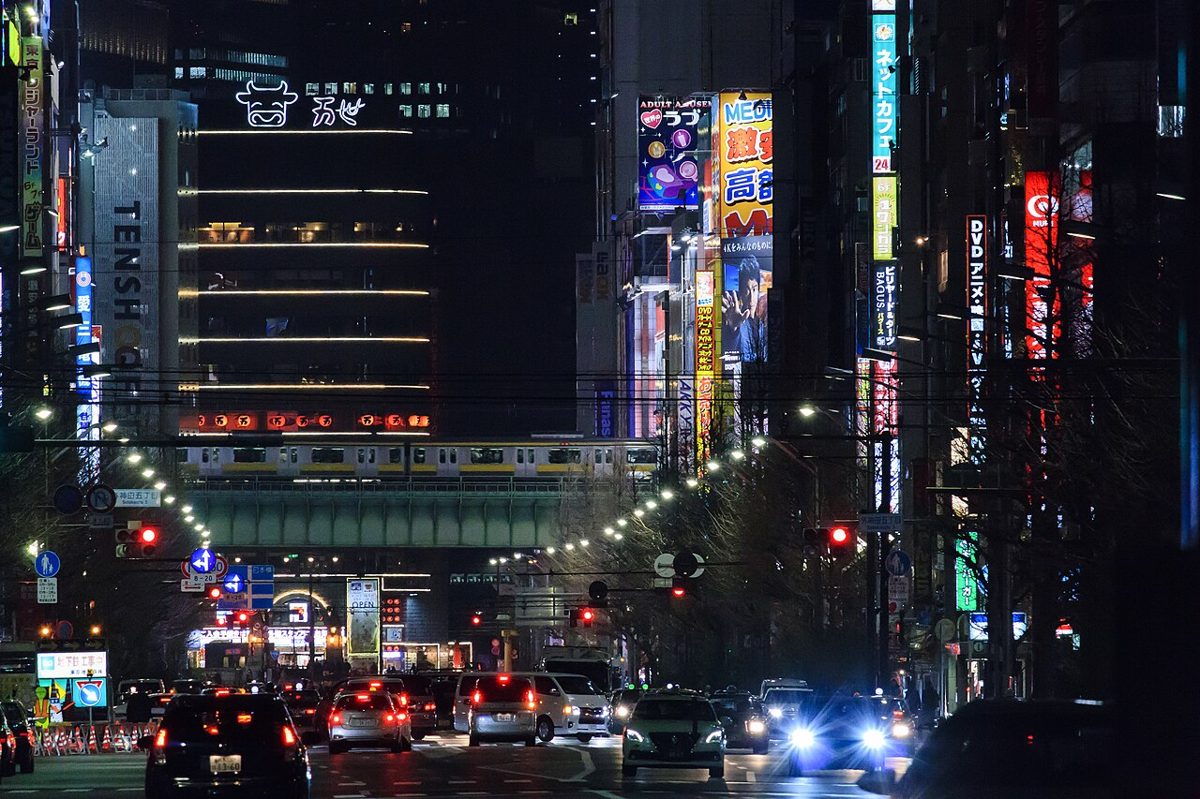
Electronics: Yodobashi, Sofmap, Edion and the parts shops
Even as anime took over, Akihabara remains a serious place to buy electronics, with prices and selection that reward comparison. The giant is Yodobashi Camera Akiba, a nine-floor megastore looming right over the Showa-dori (east) side of the station — cameras, computers, phones, kitchen gadgets, toys, watches and a restaurant floor up top, open roughly 09:30 to 22:00. It is the one-stop option, English-friendly, with tax-free counters.
On the otaku-electronics side, Sofmap runs several branches around Chuo-dori covering PCs, secondhand gadgets, and games. Edion and the smaller independents fill in the gaps, and the warren of tiny parts shops under and around the train tracks — the descendants of the original radio market — still sell components, cables, connectors and curiosities you will not find anywhere else. For most visitors Yodobashi covers everything; the small shops are for hobbyists and the simply curious. For a deeper, shop-by-shop electronics and anime crawl, see our companion Akihabara shopping guide.
Anime, manga and figures: the buildings that matter
This is the heart of modern Akihabara, and the trick is knowing which building does what. A handful of multi-floor stores cover the vast majority of what people come for.
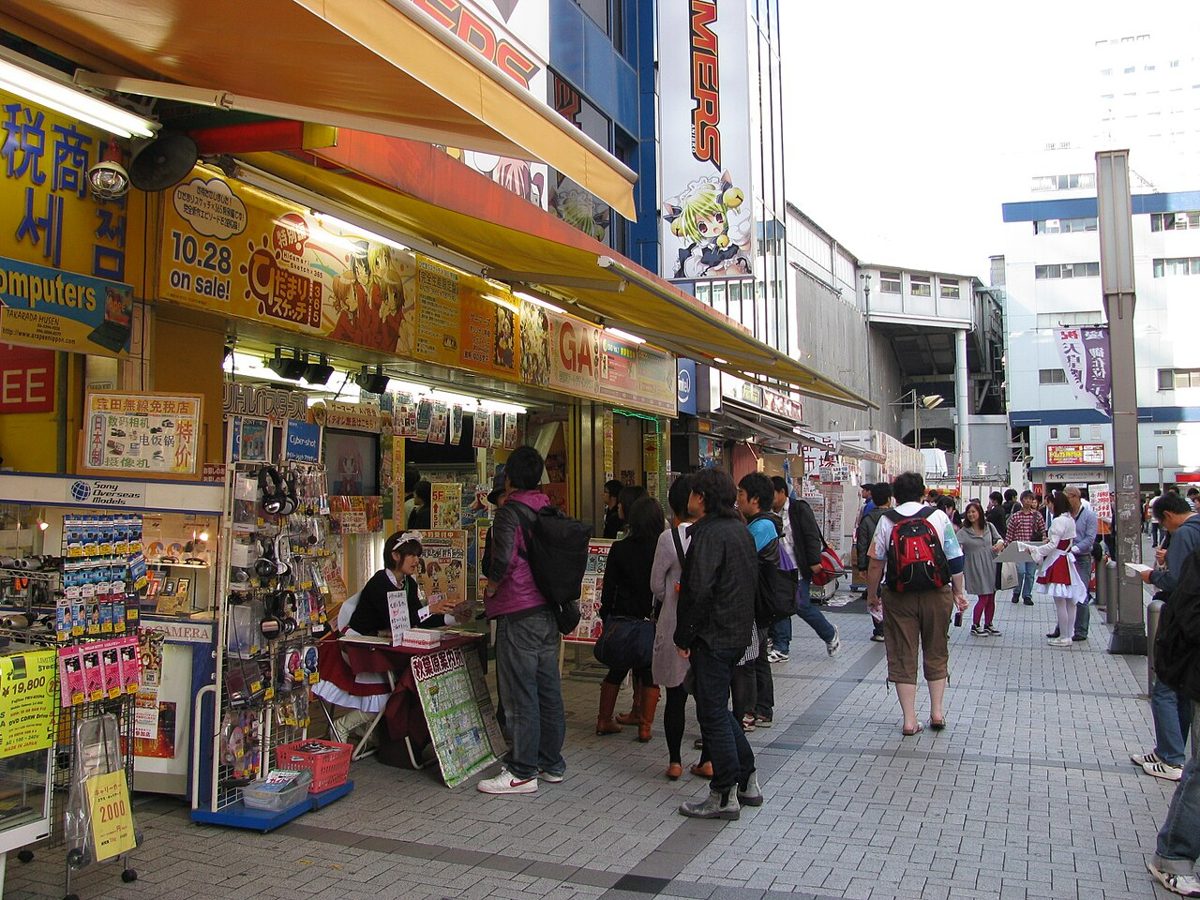
Mandarake Complex
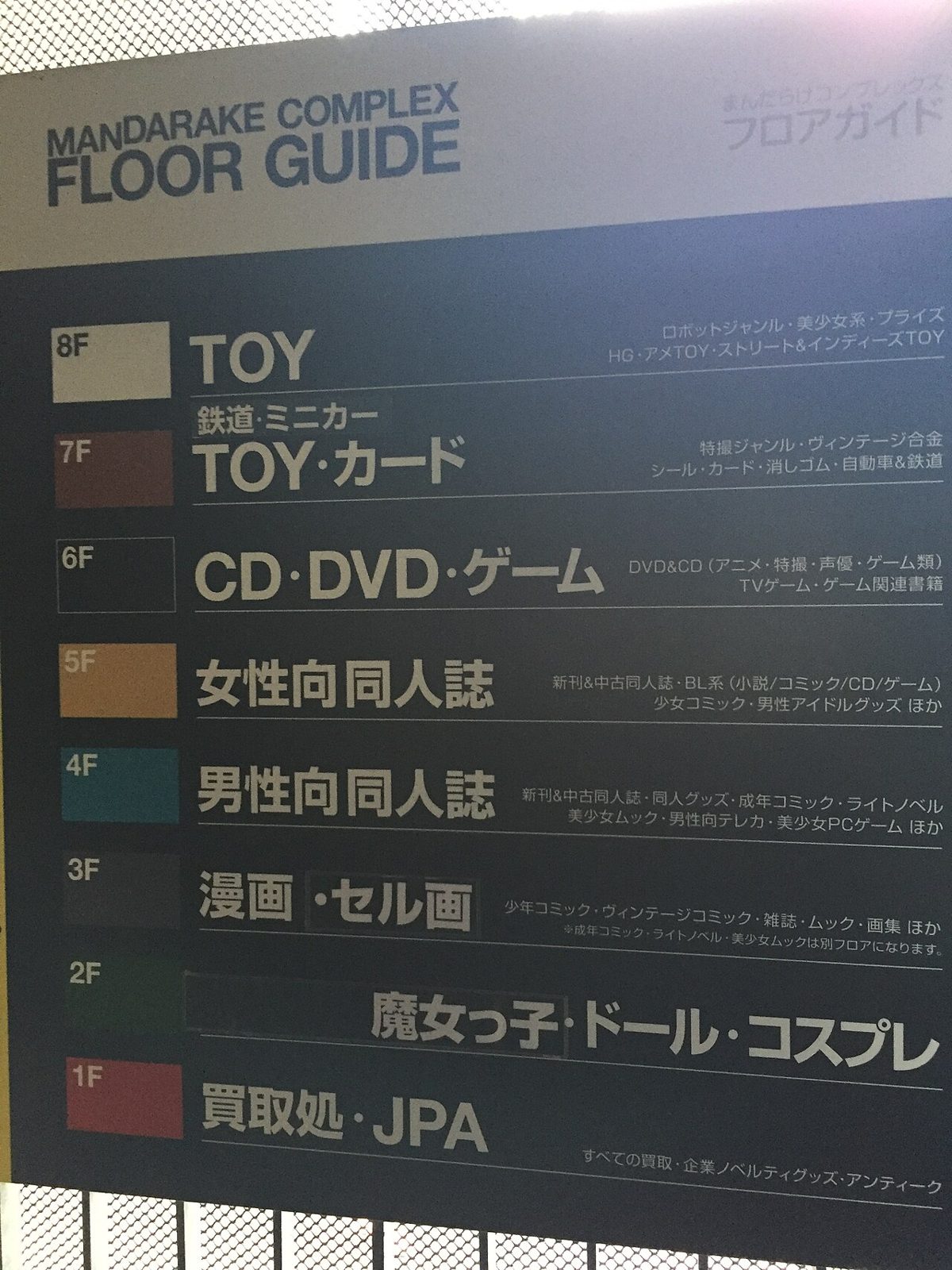
The eight-floor Mandarake Complex on Chuo-dori is the cathedral of secondhand otaku goods — vintage manga, rare figures, doujinshi, cels, toys and cosplay, each floor a different category. Prices for genuinely rare items climb high, but browsing is free and the stock turns over constantly. Typical hours are around 12:00 to 20:00. If you only enter one anime building, make it this one.
Animate Akihabara
Animate is the big mainstream anime and manga chain, strong on the newest releases, character merchandise, manga volumes and limited goods tied to current shows. The Akihabara branch runs long hours (roughly 10:00 to 21:00 on weekdays, a little shorter at weekends) and is a reliable place to find current-season merchandise rather than vintage.
Radio Kaikan, Kotobukiya and Surugaya
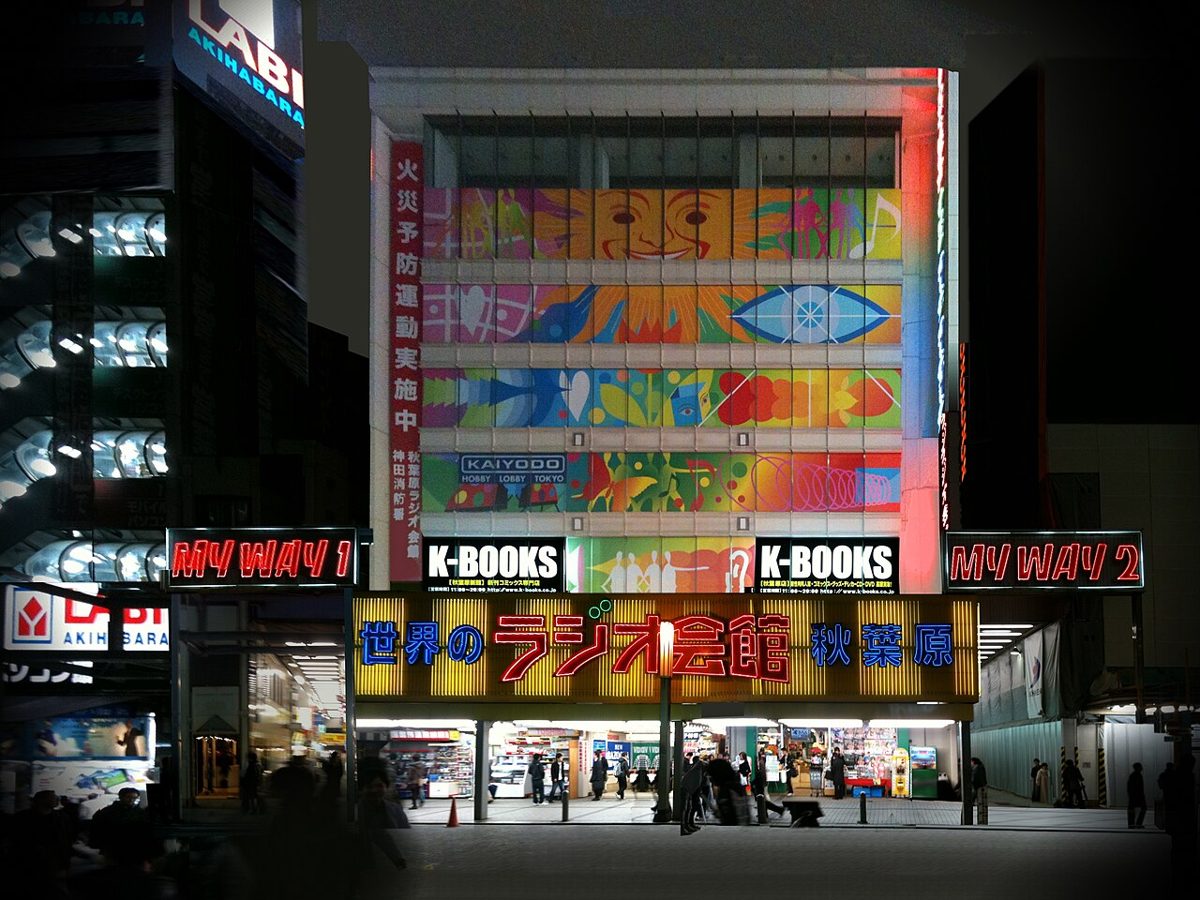
The Akihabara Radio Kaikan, right by the Electric Town Exit, is ten floors of specialist tenants — figures, trading cards, models, idol goods and collectibles from dozens of shops under one roof, including a big Kotobukiya presence (Kotobukiya also has its own nearby flagship for model kits and statues). Surugaya runs multiple themed branches across the district covering games, figures, cards and media, often at keen secondhand prices. Between Mandarake, Animate, Radio Kaikan and Surugaya you can find almost any anime or game item made.
Retro and arcade gaming
Akihabara is a pilgrimage for gamers, both retro and current. For old hardware and software, Super Potato is the legend — a cramped, wonderful retro game store stacked with cartridges and consoles from the Famicom era onward, plus a small retro arcade on its top floor. Expect to dig, and expect to pay collector prices for boxed rarities; the atmosphere alone is worth the climb up the narrow stairs.
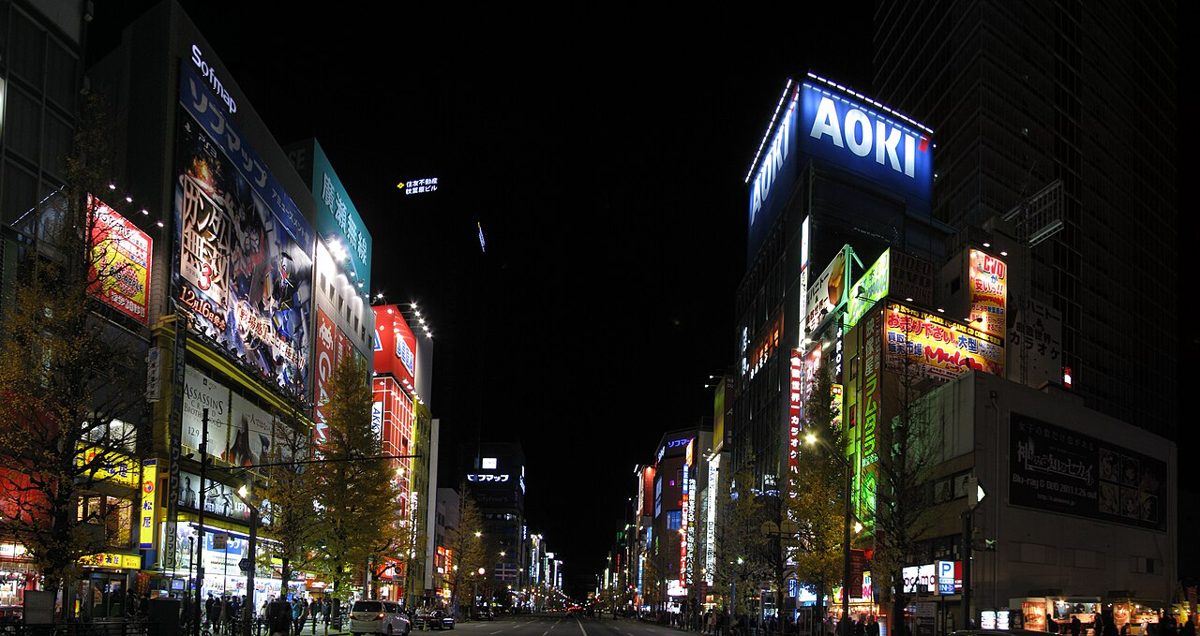
For arcades, the big multi-floor game centres line Chuo-dori. GiGO (the former Sega arcades) runs several buildings packed with crane games (UFO catchers), rhythm games, fighting games and photo booths; the long-running Taito Station and the iconic Hey (Hirose Entertainment Yard) are favourites, Hey especially for its shoot-em-up and retro cabinets. Game centres stay open late, often until around 23:30. Crane games typically cost ¥100–¥200 a play, rhythm and video games ¥100–¥200 per credit — cheap entertainment, though the crane machines are designed to keep you feeding coins, so set a limit.
Maid cafes and themed cafes: what to expect
The maid cafe is Akihabara’s signature experience, and it is worth doing once even if it sounds odd. You are seated by a waitress in a maid costume who plays a cheerful, in-character host — greeting you with “okaerinasaimase, goshujin-sama” (welcome home, master), drawing on your omurice with ketchup, and leading little chants or games. It is wholesome, theatrical and very Akihabara. The most established, English-friendly and beginner-safe option is @home cafe (At-Home Cafe), a good first visit.
On cost: most maid cafes charge a table/seating charge of roughly ¥500–¥800 per person for a set time window (often 60–90 minutes), on top of what you order. Food and drinks run higher than a normal cafe — budget around ¥800–¥1,500 for a main and ¥500–¥900 for a drink — so a typical visit lands near ¥3,000–¥5,000 per person for an hour or two. At-Home Cafe’s admission, for reference, is around ¥770. Always check the posted charges before you sit down, as they vary by cafe and time of day.
The most important rule: no photography of the maids or the interior without buying the cafe’s paid photo service (typically a cheki instant photo with a maid for a set fee). Phones away unless told otherwise. Beyond maid cafes, Akihabara has a rotating cast of themed and “concept” cafes — anime collaborations, animal cafes, gaming bars — that come and go with the seasons; ask at a tourist counter or check current listings for what is open during your visit.
Gachapon halls, Radio Center and tax-free shopping
Gachapon (capsule toys)
Few things are as addictive as gachapon — the capsule-toy machines that dispense a random tiny figure for a coin. Akihabara has whole halls of them: the Gachapon Kaikan lines up hundreds of machines wall to wall, from anime characters to absurdly specific miniatures (tiny bowls of ramen, sleeping cats, miniature furniture). Most plays cost ¥200–¥500, and they make perfect cheap souvenirs. Bring ¥100 coins.
Akihabara Radio Center
Tucked beneath the JR tracks by the station, the Akihabara Radio Center is the living relic of the original postwar electronics market — a dim warren of tiny stalls selling electronic components, parts, tools and oddities. It is a fascinating five-minute detour even if you buy nothing, a direct line back to where Electric Town began.
Duty-free and tax-free tips
Japan’s 10% consumption tax can be waived for short-term visitors at tax-free registered shops — which includes Yodobashi, the big chains and many anime stores — on purchases over ¥5,000 in a day. Carry your passport (not a copy), look for the “Tax-Free” logo, and pay at the dedicated counter. Some stores deduct the tax at the register; others refund it at a separate desk. Note duty-free electronics may use different voltage or plug standards than your home country, so check compatibility before buying appliances, and ask about international warranty if it matters.
| What you want | Where to go | Rough cost / hours |
|---|---|---|
| Electronics, cameras, gadgets | Yodobashi Camera Akiba | 09:30–22:00; tax-free over ¥5,000 |
| Secondhand manga & figures | Mandarake Complex | ~12:00–20:00; browsing free |
| New anime & manga merch | Animate Akihabara | ~10:00–21:00 |
| Figures, models, cards | Radio Kaikan / Kotobukiya / Surugaya | varies by tenant |
| Retro games | Super Potato | collector prices; small arcade on top |
| Arcades | GiGO, Taito Station, Hey | ¥100–¥200/play; open ~till 23:30 |
| Maid cafe | @home cafe (At-Home Cafe) | ~¥3,000–¥5,000 per visit |
| Capsule toys | Gachapon Kaikan | ¥200–¥500 per play |
Sunday Pedestrian Paradise (Hokoten)
If you can, time your visit for a Sunday afternoon. On Sundays (and some public holidays), Chuo-dori closes to traffic and becomes Hokoten — hokousha tengoku, “pedestrian paradise” — and the whole avenue fills with people walking down the middle of the road. It runs roughly 13:00 to 18:00 from April to September, and 13:00 to 17:00 from October to March, along Chuo-dori from the Sotokanda crossing down toward Manseibashi (about 570 metres). The atmosphere is festive and unmistakably Akihabara.
A couple of caveats: the Hokoten can be cancelled at short notice for rain, extreme heat alerts, or major events (the Kanda Festival, big marathons), and it is suspended around the year-end and New Year holidays. Note too that the free-for-all street-performance era of the 2000s is long gone — today it is a calmer, regulated stroll rather than a spectacle. Still, a car-free Chuo-dori is the nicest way to take in the district’s scale.
Getting to Akihabara: station, lines and the Electric Town Exit
Akihabara is easy to reach — it sits on the Yamanote loop on the north-east side of central Tokyo, one stop from Ueno and a short ride from Tokyo Station. The lines serving Akihabara Station:
- JR Yamanote Line — the green loop; the simplest approach from Tokyo Station, Ueno (one stop), Shinjuku and Shibuya.
- JR Keihin-Tohoku Line — shares platforms with the Yamanote on the same level; useful toward Ueno, Omiya and Yokohama.
- JR Sobu Line — the yellow line crossing east–west, on an upper platform, handy for Akihabara–Shinjuku and points east.
- Tokyo Metro Hibiya Line — the subway option, connecting toward Ginza, Roppongi and Ueno; use Exit 3 from the ticket gate.
- Tsukuba Express — a separate line for trips out to Tsukuba, with its own station nearby.
From the JR side, you want the Electric Town Exit (Denki-gai-guchi) on the west side of the station — it drops you straight onto Chuo-dori and the heart of the shops, with Radio Kaikan a few steps away. The JR Yamanote and Keihin-Tohoku platforms are on the 2nd floor and the Sobu Line on the 3rd, so head up and out to reach the Electric Town gate; note this gate is open roughly 07:00 to 23:00. Tap through with a Suica or PASMO and you never deal with paper tickets; the minimum JR fare is around ¥150. Akihabara is one stop from Ueno on the Yamanote — an easy pairing — so consider chaining the two; our Ueno guide covers the park, museums and Ameyoko market just up the line.
A sample half-day in Akihabara
Akihabara is dense, so a logical loop saves a lot of backtracking. Here is a route from the station that covers the highlights in roughly four hours.
- Out the Electric Town Exit. Get your bearings on Chuo-dori; duck into Radio Kaikan for ten floors of figures to start.
- Yodobashi Akiba across the east side if electronics are on your list — cameras, gadgets, tax-free counter.
- Mandarake Complex for secondhand anime and figures, floor by floor, then Animate for new-release merchandise.
- Super Potato for retro games, and a GiGO or Taito arcade for a few rounds of crane games and rhythm machines.
- Gachapon Kaikan for a handful of capsule-toy souvenirs — bring ¥100 coins.
- A maid cafe (@home cafe) to finish, if you are curious — budget ¥3,000–¥5,000 and remember the no-photos rule.
On a Sunday, slot the walk down a car-free Chuo-dori (Hokoten, from 13:00) into the middle of that loop. Hungry along the way? Akihabara has plenty of cheap ramen, curry and gyudon counters, plus themed cafes; for the wider citywide picture of where to shop and eat, lean on our Tokyo shopping guide.
Etiquette and mistakes to avoid
Akihabara is welcoming and very safe, but a few unwritten rules keep things smooth — especially around photography.
- Never photograph maids or street promoters without permission. The maids handing out flyers on the street and the staff inside cafes are off-limits for candid photos; inside, only the paid photo service is allowed. This is the cardinal rule.
- Do not photograph shop interiors or other customers without checking. Many stores, especially secondhand and adult floors, prohibit photos; look for the signs.
- Mind the adult floors. Several buildings have upper floors with adult (R-18) content, clearly signed and age-restricted. They are easy to avoid if that is not your thing — just watch the floor guide in the lift.
- Set a budget for crane games and gachapon. Both are engineered to keep you spending; decide your limit before you start feeding ¥100 coins.
- Carry your passport for tax-free. You cannot claim the tax exemption without the physical passport at the counter, and a photo will not do.
- Do not expect the wild street scene of the 2000s. The Sunday Hokoten is calmer and regulated now; come for the shops and arcades, not a performance.
- Watch shop closing times. Many stores shut between 20:00 and 22:00 even though the arcades run later, so do your shopping first and save the game centres and a cafe for the evening.
Akihabara vs Nakano Broadway and Ikebukuro
Akihabara is the most famous otaku district but not the only one, and a quick comparison helps you decide where to spend your time.
| District | Best for | Feel |
|---|---|---|
| Akihabara | Electronics, the full breadth of anime/games, maid cafes, arcades | Big, neon, touristy, all-in-one |
| Nakano Broadway | Deep secondhand collectibles and vintage figures (Mandarake’s home turf) | Compact, old-school, collector-focused |
| Ikebukuro (Otome Road) | Anime goods aimed more at female fans; doujinshi | Less touristy, fan-driven |
For a first trip, Akihabara is the obvious choice — it has the most under one roof and is the easiest to reach. Dedicated collectors often add Nakano Broadway for the secondhand depth. Map the otaku districts and everything else with our Tokyo neighborhoods guide.
Where to eat in Akihabara
Akihabara is not famous for food the way Shibuya or Ueno are, but you will not go hungry, and a few categories suit the district perfectly. For a fast, cheap refuel between shops, the area is thick with ramen, curry and gyudon (beef bowl) counters where you order from a ticket machine and eat in fifteen minutes — ideal when you want to get back to browsing. Akihabara has a particular soft spot for Japanese-style curry, with several well-regarded curry houses scattered around Chuo-dori and the backstreets.
Then there is the themed-dining side, which is pure Akihabara. Beyond the maid cafes, the district hosts anime-collaboration cafes (limited-run cafes tied to a current show, with themed menus and merch), gaming bars, and the occasional retro-game or idol-themed spot. These rotate constantly, so check current listings for what is running during your visit. Yodobashi Akiba also has a restaurant floor near the top with a row of sit-down options — convenient and reliable if you want a proper meal without leaving the building. And for self-catering or a cheap snack haul, the convenience stores and a Don Quijote nearby cover drinks, onigiri and sweets at all hours.
One practical note: many of Akihabara’s sit-down restaurants are small and get busy at peak lunch and dinner times, and not all have English menus, though ticket-machine spots usually have pictures or an English option. If you have a specific themed cafe in mind, check whether it needs a reservation, as the popular collaboration cafes often do.
Best time to visit Akihabara
Akihabara works in any weather — almost everything is indoors — but the timing changes the experience.
- Weekday afternoons are the most relaxed for actual shopping: the big stores are open, crowds are manageable, and you can browse Mandarake or Radio Kaikan floor by floor without a crush.
- Sunday afternoon is the signature time, when Chuo-dori closes to traffic for the Hokoten (from 13:00) and the avenue fills with people. Best for atmosphere, busiest for crowds.
- Evening is when the neon is at its best and the arcades and maid cafes come alive. Shops start closing between 20:00 and 22:00, so shop first, then save the game centres (open to ~23:30) and a cafe for after dark.
- Early morning is quiet but limited — most otaku shops do not open until 10:00–12:00, though Yodobashi opens at 09:30. Use an early start for electronics, not anime browsing.
Across the year, there is no bad season since you are mostly indoors, but spring and autumn are kindest for the walking between buildings. If you specifically want the car-free Chuo-dori, you must come on a Sunday (or a holiday when it runs) — and check it has not been cancelled for weather or an event before you build your day around it.
Budgeting and money tips
Akihabara can be a cheap day or an expensive one, depending entirely on how much you buy. Walking the streets, browsing the multi-floor stores and watching the Sunday Hokoten all cost nothing. The spending starts with the collectibles, the crane games and a maid cafe — and those add up faster than you expect. A realistic budget for a half-day with a maid cafe, some gachapon and a meal sits around ¥5,000–¥8,000 per person, before any big-ticket electronics or rare figures.
- Carry cash and ¥100 coins. Crane games, gachapon and some small shops and stalls are coin- or cash-only, even though the big stores take cards and IC.
- Claim tax-free over ¥5,000. Bring your physical passport and pay at the tax-free counter at Yodobashi and the big chains to skip the 10% consumption tax.
- Compare prices for secondhand. The same figure or game can sit at very different prices across Mandarake, Surugaya and the smaller shops — it pays to check a couple before buying a pricey item.
- Set hard limits on the machines. Crane games and gachapon are designed to keep you feeding coins; decide your cap before you start and stop when you hit it.
- A Suica or PASMO covers the trains. Tap in and out and you never queue for a ticket; the same card works at convenience stores for snacks and drinks.
You will also pass owl cafes in Akihabara, with staff handing out flyers on the pavement. Before you go in, it is worth knowing that most owls are nocturnal and cafe owls are tethered to their perches through the hours they would normally sleep. Our animal cafes Tokyo guide explains why we recommend skipping them and what to do instead.
Akihabara is the best-known anime district, but it is not the only one. Ikebukuro’s Otome Road and Animate flagship cater to female fandom and voice actor goods, Nakano Broadway is where collectors hunt rare second-hand pieces, and Shibuya Parco has Nintendo and Pokémon under one roof. Our Tokyo anime guide compares all five districts, plus museums and events.
One honest caveat about Akihabara: it is not the best place in Tokyo to buy old things. Discontinued figures, out-of-print manga and Showa-era toys are cheaper and far better stocked twenty minutes west, which is what our Nakano Broadway guide is for. Come here for new releases, arcades and the district itself; go there when you are hunting something specific.
The maid cafes are the district’s most asked-about attraction and its most misunderstood. An hour, roughly ¥3,000, strict no-photography rules and rather more audience participation than most people bargain for — our maid cafe guide walks through what actually happens inside, what the chains charge in 2026, and why you should never follow a street tout to one.
Twice a year the district empties out towards Odaiba, because Comic Market is on at Tokyo Big Sight. If your trip overlaps with it, our fan events guide covers how international visitors buy tickets, what to bring, and whether Comiket is actually worth a day of your holiday.
Frequently Asked Questions
Is Akihabara worth visiting?
Yes, especially if you have any interest in electronics, anime, manga, games or Japanese pop culture — Akihabara is the global capital of all of it. Even casual visitors enjoy the neon, the multi-floor stores, the arcades and the novelty of a maid cafe. Allow four to six hours, and time it for a Sunday if you can for the car-free Chuo-dori.
How much does a maid cafe in Akihabara cost?
Most maid cafes charge a seating fee of about ¥500–¥800 per person for a set 60–90 minute window, plus food and drinks that run higher than a normal cafe. A typical visit ends up around ¥3,000–¥5,000 per person for an hour or two. At-Home Cafe’s admission is about ¥770. Photos of the maids are only allowed via the paid photo service.
Can you take photos in Akihabara?
On the streets, general scenery is fine, but never photograph maids, street promoters or other people without permission. Inside maid cafes, photography of staff and the interior is prohibited unless you buy the cafe’s paid photo service. Many shops, especially secondhand and adult floors, also ban interior photos — watch for the signs.
When is Akihabara’s pedestrian paradise (Hokoten)?
Chuo-dori closes to traffic on Sundays (and some holidays), roughly 13:00 to 18:00 from April to September and 13:00 to 17:00 from October to March. It can be cancelled for rain, extreme heat or major events, and is suspended around New Year. The car-free avenue is the most pleasant way to walk the district.
What is the best exit at Akihabara Station?
Use the Electric Town Exit (Denki-gai-guchi) on the west side of the JR station — it opens straight onto Chuo-dori and the main shops, with Radio Kaikan steps away. From the Tokyo Metro Hibiya Line, use Exit 3. The Electric Town gate is open about 07:00 to 23:00.
Photo Credits
- Akihabara Electric Town, Tokyo’s capital of electronics and anime — Photo: Jakub Hałun / CC BY 4.0 via Wikimedia Commons
- Akihabara after dark, when the signs come alive — Photo: yagi-s / CC BY 2.0 via Wikimedia Commons
- Anime and game advertising covering Akihabara storefronts — Photo: Aimaimyi / CC BY-SA 3.0 via Wikimedia Commons
- Akihabara Radio Kaikan, ten floors of figures and collectibles — Photo: street viewer / CC BY 2.0 via Wikimedia Commons
- Inside an Akihabara arcade, a multi-floor wall of games — Photo: Aimaimyi / CC BY-SA 3.0 via Wikimedia Commons
- The eight-floor Mandarake Complex, a temple of secondhand manga and figures — Photo: PhilaSiti / CC BY-SA 4.0 via Wikimedia Commons