Tokyo Shopping · Guide №104
Ginza Shopping Guide: Luxury Brands, Department Stores & Galleries
A complete Ginza shopping guide for Tokyo: the department stores (Mitsukoshi, Matsuya, Wako, Ginza Six), flagship stores (Uniqlo, Muji, Itoya, Apple), depachika food halls, art galleries, the tax-free process, best times and nearest stations.

目次 — Contents
- The layout: Chuo-dori, Harumi-dori and the 4-chome crossing
- Ginza department stores and flagships at a glance
- The big department stores
- Ginza Six and Tokyu Plaza Ginza
- The flagship stores: Uniqlo, Muji, Itoya and Apple
- Depachika food halls and edible gifts
- Art galleries in Ginza
- How tax-free shopping works in Ginza
- High-end versus accessible: how to spend in Ginza
- A half-day Ginza shopping route
- Best times to shop and mistakes to avoid
- Beyond the flagships: more Ginza shopping stops
- Ginza on any budget, plus the best times to go
- Frequently Asked Questions
- Photo Credits
This article contains advertising. Our booking links are routed through a partner that adds commission tracking automatically, so if you book through one we earn a commission from the provider, at no extra cost to you. It never affects what we recommend. Affiliate disclosure
This Ginza shopping guide covers Tokyo’s most prestigious retail district from end to end: the big department stores (Mitsukoshi, Matsuya, Wako, Ginza Six), the global flagships (Uniqlo, Muji, Itoya, Apple), the depachika food halls for gifts, the art galleries, and the tax-free process. Ginza mixes century-old luxury with surprisingly accessible high-street brands, all within a few walkable blocks.
Ginza has been Tokyo’s address for luxury since the Meiji era, when it was rebuilt in Western brick after a fire and lined with the country’s first department stores. Today it is where Chanel, Cartier and Dior sit beside a twelve-floor Uniqlo and the world’s largest Muji. The district is compact and grid-flat, so you can cover the headline stores on foot in an afternoon. This guide walks the main strip, breaks down every major store by what it is known for and which floor to head to, and explains how to claim your tax refund. For the wider picture of where to shop across the city, pair it with the full Tokyo shopping map.
The layout: Chuo-dori, Harumi-dori and the 4-chome crossing
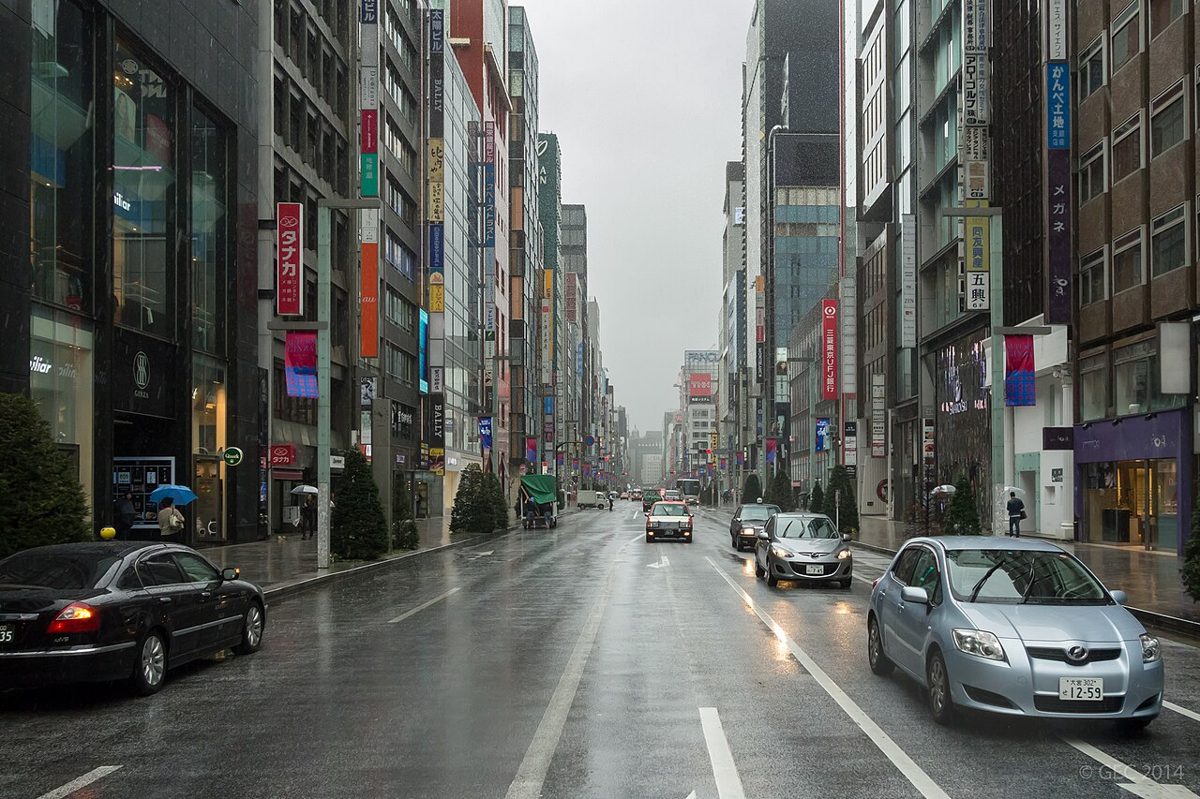
Ginza is built on a simple grid, and almost everything you came for sits on or just off Chuo-dori, the main north-south boulevard. It crosses Harumi-dori at the Ginza 4-chome crossing — the symbolic centre, marked by the Wako clock tower and the cylindrical San-ai building. Stand here and you are within two minutes’ walk of Mitsukoshi, Wako, the Apple Store and the Nissan and Sony showrooms. The district’s blocks are numbered (1-chome up to 8-chome), which makes addresses easy to follow once you know that 4-chome is the heart and the higher numbers run toward Shimbashi.
The best time to visit is a weekend afternoon, when Chuo-dori becomes Hokosha Tengoku (“pedestrian paradise”). The road closes to cars on Saturdays and Sundays from 12:00 to 18:00 (April–September) or 12:00 to 17:00 (October–March), and the whole boulevard fills with strollers, parasols and people photographing the architecture from the middle of the street. If you prefer quieter browsing, come on a weekday morning when the department stores open around 10:00–11:00. To reach Ginza, the most central stop is Ginza Station (Tokyo Metro Ginza, Marunouchi and Hibiya lines), which exits directly under the 4-chome crossing. Ginza-itchome (Yurakucho line) serves the north end and Higashi-Ginza (Hibiya and Toei Asakusa lines) the east; JR Yurakucho Station is a five-minute walk from the northwest corner.
For everything beyond shopping — the kabuki theatre, the cafes and the best photo angles — our Ginza neighbourhood guide covers the district in full.
Ginza department stores and flagships at a glance
Use this table to plan your route. Department stores cluster around the 4-chome crossing; the high-street flagships line Chuo-dori to the south. Every department store and most flagships offer tax-free service for foreign passport holders.
| Store / flagship | Known for | Floors / notable | Nearest station |
|---|---|---|---|
| Ginza Mitsukoshi | Luxury brands, depachika gifts | 12 floors; tax-free desk & Japan Duty Free GINZA on 8F | Ginza (direct, 4-chome) |
| Matsuya Ginza | Fashion, design, food hall | 11 floors; tax refund counter on 3F | Ginza (A12/A13 exits) |
| Wako | Watches, jewellery, the clock tower | Landmark building; Wako Annex sweets nearby | Ginza (direct, 4-chome) |
| Ginza Six | Designer flagships, rooftop garden | Largest complex; ~240 shops, B2 food hall, rooftop | Ginza / Higashi-Ginza |
| Tokyu Plaza Ginza | Duty-free, casual brands | Lotte Duty Free on upper floors; Kiriko Lounge rooftop | Ginza (C2/C3 exits) |
| Uniqlo Ginza | Affordable basics, global flagship | 12 floors, widest Uniqlo range; tax-free counter | Ginza (A2 exit) |
| Muji Ginza | Minimalist lifestyle goods | World’s largest Muji; 6 retail floors + Muji Hotel above | Ginza-itchome / Ginza |
| Itoya | Stationery and paper goods | 12 floors (G.Itoya); the giant red paper clip landmark | Ginza (A13 exit) |
| Apple Ginza | Apple products and support | Multi-floor flagship at the 4-chome end | Ginza (A11 exit) |
The big department stores
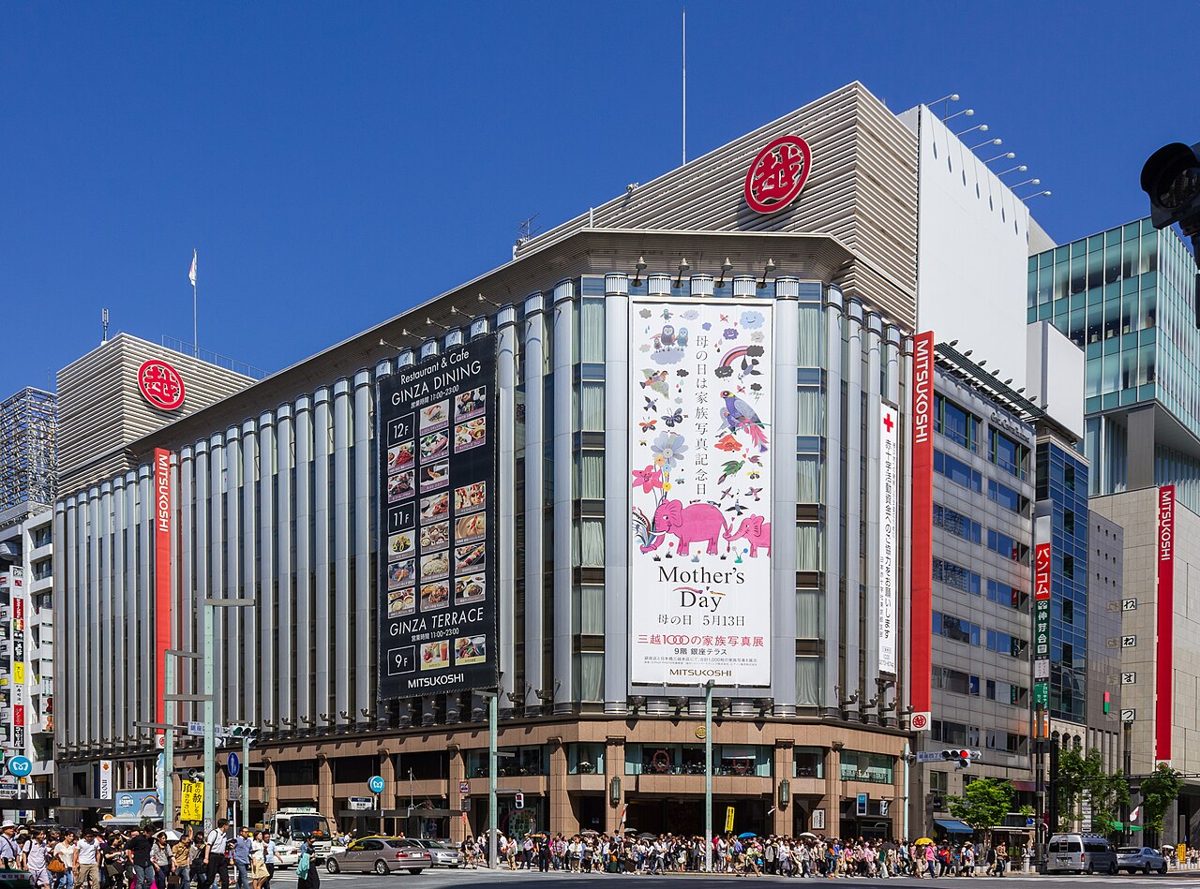
Ginza Mitsukoshi
Sitting right on the 4-chome crossing, Ginza Mitsukoshi opened in 1930 and remains the district’s grande dame. Its twelve floors house the full roster of luxury maisons — Tiffany, Gucci, Prada, Chanel — alongside Japanese fashion, a children’s floor and a rooftop terrace garden. The unmissable level is the basement depachika, a food hall of jewel-box confectionery, bento and seasonal sweets that makes the best edible souvenirs in Ginza. Foreign visitors handle tax refunds at the dedicated counter, and the in-store Japan Duty Free GINZA on the 8th floor (typically 11:00–20:00) sells fragrance and cosmetics tax-free with your passport.
Matsuya Ginza
A block north on Chuo-dori, Matsuya Ginza leans more design-forward than Mitsukoshi, with a strong homeware and craft selection, a well-edited fashion floor and a busy basement food hall. It runs eleven floors including an exhibition hall that hosts rotating art and design shows. The tax refund counter is on the 3rd floor, and the store is used to overseas shoppers, with multilingual support. If you are gift-hunting for design objects or Japanese kitchenware, start here.
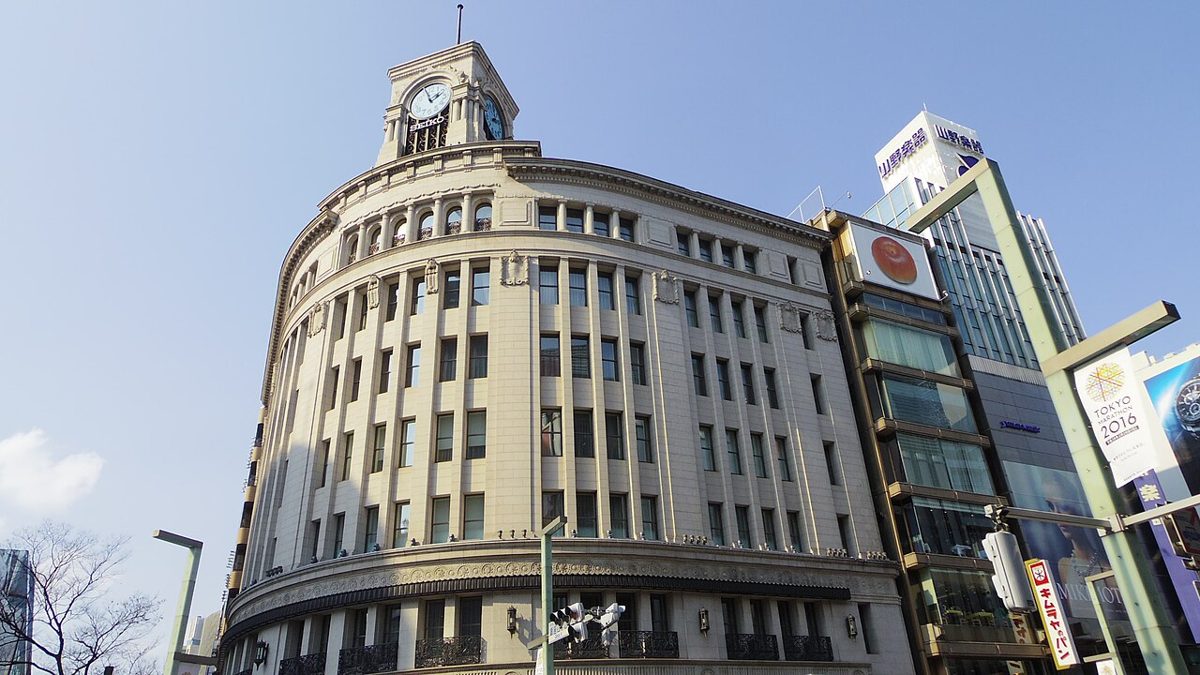
Wako and the clock tower
Wako is less a department store than a Ginza institution. The Neo-Renaissance building on the southwest corner of the 4-chome crossing, crowned by the Hattori Clock Tower (built 1932, chiming on the hour), is the district’s defining landmark and the backdrop for a million photographs. Inside, Wako sells high-end watches, jewellery, handbags and tableware to a discreet clientele — this is window-shopping territory for most visitors. The one accessible treat is around the corner at the Wako Annex, whose ground-floor sweets shop sells beautifully boxed chocolates and the famous Wako fruit cakes, which make an elegant, very Ginza gift.
Ginza Six and Tokyu Plaza Ginza
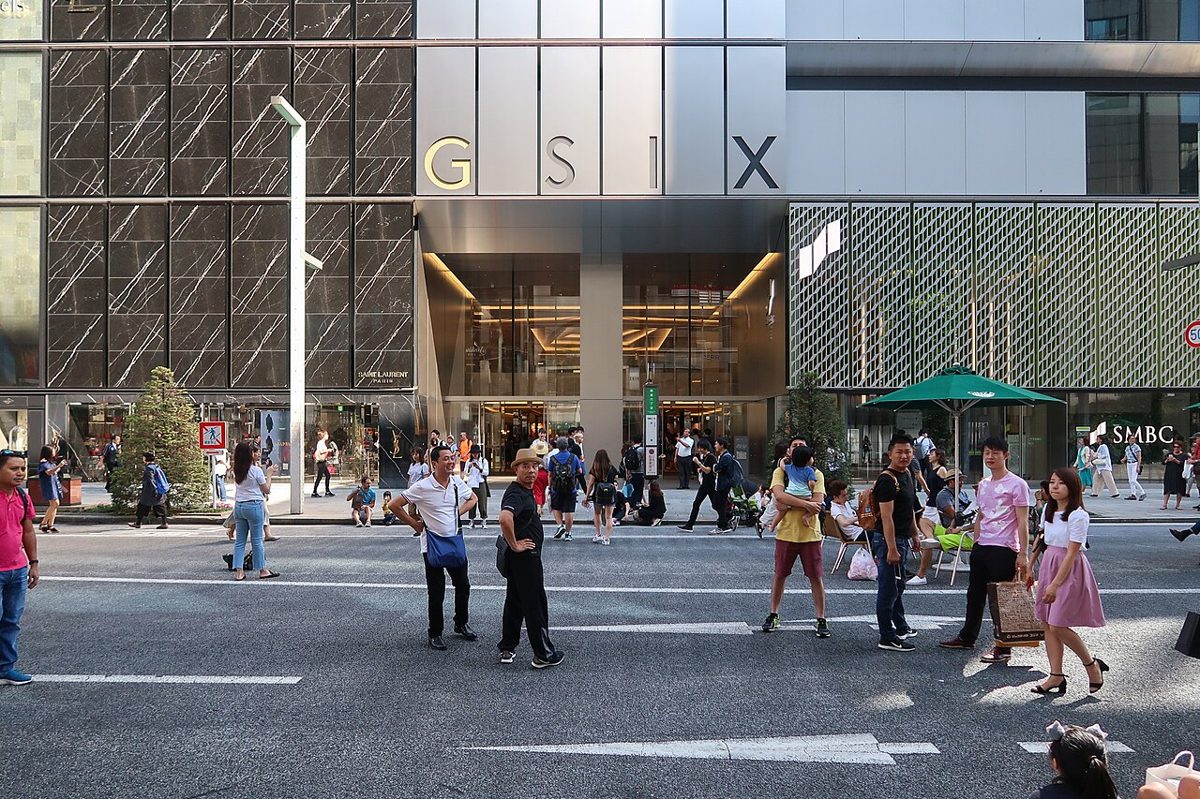
Ginza Six (GINZA SIX), opened in 2017, is the district’s largest retail complex and its most contemporary. Around 240 shops fill the building, including flagship boutiques for Dior, Saint Laurent, Fendi and Celine, but it is worth visiting even if you are not buying luxury. The rooftop garden is one of central Tokyo’s best free viewpoints, the soaring atrium hosts rotating art installations (it has shown teamLab and Yayoi Kusama), and the basement food hall rivals the department-store depachika for gifts. There is a tourist service counter with tax-free support, luggage storage and currency exchange near the main entrance, and an art-bookshop-and-cafe on the 6th floor worth a pause.
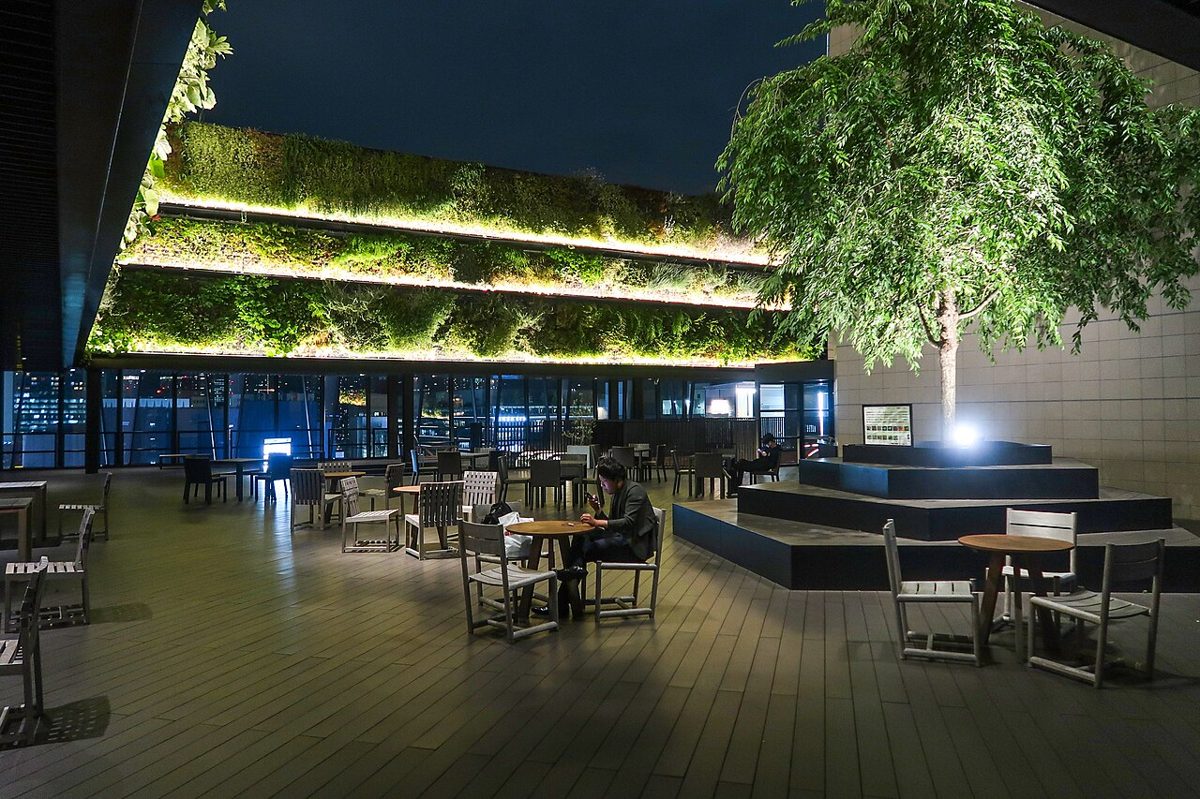
Tokyu Plaza Ginza, on the Sukiyabashi corner at the northwest edge, is wrapped in a striking faceted-glass facade inspired by Edo-kiriko cut glass. Inside it mixes casual and mid-range Japanese and international brands, and its upper floors hold a large Lotte Duty Free store where eligible travellers buy cosmetics and brand goods duty-free (bring your passport and flight details). Ride to the top for the Kiriko Terrace and lounge, an open-air rooftop with a clear view over the Ginza rooftops — a good place to rest mid-shop. The duty-free floors generally run 11:00–21:00.
The flagship stores: Uniqlo, Muji, Itoya and Apple
Ginza’s reputation is luxury, but its most fun shopping is often the global flagships, where everyday Japanese brands go all-out. These sit along Chuo-dori south of the crossing and are where your yen stretches furthest.
Uniqlo Ginza
The Uniqlo Ginza global flagship spans twelve floors and carries the widest selection of Uniqlo anywhere in the world — the full men’s, women’s and kids’ ranges, the premium +J and Uniqlo C lines, limited UT graphic tees, and a flower shop on the ground floor. There is an English-friendly tax-free counter, and on-the-spot alterations for trousers. The sister brand GU (Uniqlo’s cheaper, trend-driven label) has its own large store nearby on Chuo-dori, worth a look for low-priced fashion pieces you will not find back home.
Muji Ginza and Muji Hotel
The Muji Ginza flagship, opened in April 2019, is the largest Muji in the world. Six floors of retail cover everything the brand makes — stationery, homeware, clothing, furniture, even a fresh-produce corner, a bakery and a juice bar. The 6th floor holds ATELIER MUJI (galleries, a library and a salon), and floors above that house the Muji Hotel Ginza, the brand’s understated hotel. It is the single best stop in Ginza for affordable, well-designed Japanese gifts, from refillable pens to travel-sized toiletries.
Itoya stationery
Ginza Itoya is paradise for anyone who loves paper. Founded in 1904, its flagship is split between the twelve-floor G.Itoya tower — marked by a giant red paper-clip sign — and the K.Itoya annex behind it. Floors are themed: fountain pens and inks, letter paper and cards, travel goods, art supplies, even a top-floor hydroponic vegetable cafe. It is the best place in Tokyo for high-quality, lightweight souvenirs like washi tape, brush pens and Japanese greeting cards. Hours are roughly 10:00–20:00 on weekdays and Saturdays, and 10:00–19:00 on Sundays and holidays.
Apple Ginza and the brand showrooms
Apple Ginza, near the 4-chome end of Chuo-dori, was the first Apple Store in Japan and remains a multi-floor flagship for sales and support. Around it, Ginza is full of free brand showrooms worth a wander even if you are not buying: the Nissan Crossing and Sony Park spaces at the 4-chome crossing, the architecturally famous Maison Hermes glass-block tower, and the flagship Chanel, Cartier, Dior and Louis Vuitton boutiques whose buildings are attractions in themselves.
Depachika food halls and edible gifts
If you buy one category of souvenir in Ginza, make it food. The basement depachika food halls under Mitsukoshi, Matsuya and Ginza Six are theatrical displays of confectionery, tea, sake, pickles and prepared dishes, much of it boxed and gift-wrapped to a standard you rarely see elsewhere. Look for individually wrapped wagashi (traditional sweets), Tokyo-banana and Ginza-exclusive chocolates, and seasonal fruit so perfect it is sold like jewellery. Staff will wrap purchases beautifully and, on request, add a cold pack for the journey. For ideas on which sweets and crafts travel best, see our guide to Tokyo souvenirs.
Art galleries in Ginza
Ginza has the highest concentration of commercial art galleries in Japan — reportedly several hundred — tucked into the upper floors and side streets between the big stores. Most are small, free to enter, and rotate exhibitions weekly. Worth seeking out are the Shiseido Gallery (Japan’s oldest, in the Shiseido building), the Ginza Graphic Gallery (ggg) for design, and the gallery floors inside Ginza Six. Gallery-hopping is the most relaxed, lowest-cost way to enjoy Ginza between shops, and a pleasant antidote to the price tags on Chuo-dori.
How tax-free shopping works in Ginza
Foreign visitors on a short-stay status can buy tax-free, skipping Japan’s 10% consumption tax, on purchases of ¥5,000 or more in a single store on the same day. The process in Ginza is straightforward: shop as normal, then take your receipts and passport to the store’s tax-refund counter (Mitsukoshi processes refunds at a dedicated desk and on its 8th floor; Matsuya on the 3rd floor; Uniqlo and Muji at in-store counters). The clerk deducts or refunds the tax and, for “consumable” goods like cosmetics and food, seals them in a tagged bag you should not open until you leave Japan.
A few practical notes: bring your actual passport, not a copy; the purchase must be made by the passport holder; and large department stores sometimes charge a small handling fee on refunds. The duty-free shops inside Tokyu Plaza (Lotte) and Mitsukoshi (Japan Duty Free GINZA) work slightly differently from store-wide tax exemption — they sell certain goods tax-free at the register. For the complete rules, thresholds and the airport customs step, read our dedicated guide to Tokyo tax-free shopping.
Ginza spans the full price spectrum, so it suits more budgets than its reputation suggests. You can spend ¥500,000 on a watch at Wako or ¥1,500 on socks at Uniqlo on the same block. To plan what to carry, how cards and cash work, and how to budget a luxury splurge, our guide to spending in Tokyo breaks down payments and costs across the city.
High-end versus accessible: how to spend in Ginza
The thing first-timers misjudge about Ginza is that it is “only” for the wealthy. In reality the district is layered, and knowing which layer you are shopping changes the whole experience. At the top sit the maison flagships — Chanel, Louis Vuitton, Cartier, Bulgari, Dior — most of them in architect-designed buildings where the storefront is as much a draw as the stock. You do not need to buy to enjoy them; the window displays and illuminated facades along Chuo-dori after dark are a free show in themselves.
The middle layer is the department stores, where the same luxury labels appear in concession counters alongside Japanese designers, beauty halls and the depachika. This is where you get the famous Japanese service — gift-wrapping, English-speaking tax-free desks, and the option to ship larger purchases. The accessible layer is the vertical specialty flagships: Uniqlo, GU, Muji, Itoya, Loft and the Ginza branch of Bic Camera near Yurakucho for electronics. A realistic, satisfying Ginza day might mean one designer window-shop, an hour in the Mitsukoshi depachika for gifts, and a genuine shopping spree at Uniqlo and Muji where the prices are everyday-normal.
A half-day Ginza shopping route
Ginza rewards a loop rather than a back-and-forth. Here is an efficient half-day that hits the headline stores with minimal backtracking. Start at Ginza-itchome Station at the north end and walk straight to the Muji Ginza flagship when it opens (around 10:00 or 11:00) — it is calmest first thing, and you can leave any bulky purchases in a coin locker. Walk south down Chuo-dori to Itoya for stationery, then to Matsuya Ginza for design goods and a first pass at a depachika.
Continue to the 4-chome crossing, the photographic centrepiece, with Wako, Mitsukoshi and the Apple Store on the corners. Spend your core hour in Mitsukoshi — luxury floors, then the basement depachika for edible souvenirs and the 8th-floor duty-free shop. From here, cross to Uniqlo Ginza for the twelve-floor flagship, then carry on south to Ginza Six, finishing on its rooftop garden for a free view and a rest. If you timed it for a weekend afternoon, Chuo-dori will be car-free for the walk back. Total walking is well under two kilometres, and you will have covered every store in this guide.
Best times to shop and mistakes to avoid
Timing makes a real difference in Ginza. Department stores open late by Tokyo standards — generally 10:00 to 11:00 — and close around 20:00, so do not arrive at 9:00 expecting open doors. Weekday mornings are the quietest and best for unhurried browsing and quick tax-free processing. Weekend afternoons bring the pedestrian-paradise atmosphere but also the crowds and longer refund queues. Late afternoon into evening is when the luxury facades light up, ideal for photography even after the shops close.
- Do not leave tax-free refunds to the last minute. Counters get long queues on weekends and near closing; process refunds floor-by-floor or right after a big purchase.
- Bring your passport, not a photo of it. Stores require the physical document, and the buyer named on it must be the one paying.
- Keep sealed tax-free bags closed until you leave Japan, or you may be charged the tax back at the airport.
- Use the free perks. The rooftop gardens at Ginza Six and Tokyu Plaza, the brand showrooms (Sony, Nissan) and the small galleries cost nothing and break up the shopping.
- Carry a card and some cash. The big stores take all major cards and IC payment, but a few small galleries and older shops still prefer cash.
Beyond the flagships: more Ginza shopping stops
A few more stops round out a serious Ginza shopping day. Ginza Loft and the nearby variety stores stock design-led stationery, gadgets and travel goods at mid-range prices — an easy place to fill a souvenir list. Ginza Place, the lattice-fronted building on the 4-chome crossing, houses the Sony and Nissan brand showrooms and a cafe with a crossing view. Jewellery lovers should look at Mikimoto Ginza, the flagship of the company that created cultured pearls, whose main store and adjoining boutique sit a block off Chuo-dori.
At the east edge of the district, the Kabukiza Theatre at Higashi-Ginza has a basement arcade, Kobikicho Hiroba, with a souvenir hall selling kabuki-themed sweets, prints and crafts that you can browse without a theatre ticket. And for last-minute gifts near the trains, the Yurakucho side of Ginza puts a large Bic Camera, Muji and Loft within a few minutes of JR Yurakucho and Tokyo Stations, handy if you are heading onward by Shinkansen. Together with the department stores and flagships, these stops mean Ginza can fill anything from a two-hour stroll to a full, varied shopping day.
Ginza on any budget, plus the best times to go
Ginza has a reputation for unaffordable luxury, but the reality is more mixed. The same blocks that hold Chanel, Dior and Cartier also have the Uniqlo global flagship, a huge GU, the Muji flagship with its hotel, Itoya for stationery, Loft, and even a Daiso for hundred-yen finds. You can window-shop the high end and still leave with a bag of genuinely cheap souvenirs.
- On weekend afternoons the main Chuo-dori strip closes to cars for the ‘Hokosha Tengoku’ pedestrian paradise — the most pleasant time to stroll and people-watch.
- Head to the depachika food halls under Mitsukoshi and Matsuya for beautifully boxed sweets and gourmet gifts at far gentler prices than the boutiques upstairs.
- Department stores and the duty-free floors at Tokyu Plaza Ginza run tax-free counters; bring your passport and the day’s receipts.
- Several department stores have free rooftop gardens — a quiet, no-spend break above the crowds.
- For calm browsing come on a weekday morning soon after the 10:00–11:00 openings; for atmosphere come on the car-free weekend.
Three subway stations put you in the middle of it: Ginza Station on the Ginza, Marunouchi and Hibiya lines, Ginza-itchome on the Yurakucho line, and Higashi-Ginza on the Hibiya and Toei Asakusa lines. JR Yurakucho is a short walk away too.
Frequently Asked Questions
What is Ginza best known for shopping?
Ginza is Tokyo’s luxury and department-store district, famous for flagship boutiques (Chanel, Dior, Cartier), historic department stores (Mitsukoshi, Matsuya, Wako), and the Ginza Six complex. It also has the world’s largest Uniqlo and Muji, the Itoya stationery flagship, depachika food halls and hundreds of small art galleries, so it mixes high-end and accessible shopping in a few walkable blocks.
When is the Ginza pedestrian paradise (Hokosha Tengoku)?
Chuo-dori closes to traffic and becomes a pedestrian zone on Saturdays and Sundays from 12:00 to 18:00 between April and September, and from 12:00 to 17:00 between October and March. It is the best time for photos and a relaxed stroll down the middle of the boulevard, though the stores themselves are busiest then.
Which station is best for Ginza shopping?
Ginza Station (Tokyo Metro Ginza, Marunouchi and Hibiya lines) is the most central, exiting right under the 4-chome crossing beside Mitsukoshi and Wako. Ginza-itchome (Yurakucho line) is handier for Muji and the north end, Higashi-Ginza (Hibiya, Toei Asakusa lines) for the kabuki theatre and Ginza Six, and JR Yurakucho is a five-minute walk from the northwest corner.
Is Ginza expensive, or are there affordable shops?
Both. Ginza has Tokyo’s densest cluster of luxury flagships, but the same blocks hold Uniqlo, GU, Muji, Itoya and the depachika food halls, where prices are normal high-street levels. You can window-shop the designer stores for free, enjoy the rooftop gardens at Ginza Six and Tokyu Plaza at no cost, and gallery-hop without spending a yen, then buy affordable, well-made souvenirs at Muji or Itoya.
Can I get a tax refund in Ginza department stores?
Yes. On a single-store same-day purchase of ¥5,000 or more, foreign passport holders can shop tax-free (10% off). Take your receipts and passport to the store’s tax-refund counter — Mitsukoshi, Matsuya, Uniqlo and Muji all have one. Consumable goods are sealed in a tagged bag you keep closed until departure, and a record is linked to your passport for customs.
Photo Credits
- The Ginza 4-chome crossing, the symbolic heart of the district — Photo: Asanagi / CC0 via Wikimedia Commons
- Wako’s Seiko clock tower is Ginza’s best-known landmark — Photo: ITA-ATU / CC BY-SA 4.0 via Wikimedia Commons
- Chuo-dori, Ginza’s main strip, closes to traffic on weekend afternoons — Photo: Gary / CC BY-SA 2.0 via Wikimedia Commons
- Ginza Six, opened in 2017, is the district’s largest retail complex — Photo: Wpcpey / CC BY-SA 4.0 via Wikimedia Commons
- Ginza Mitsukoshi, a flagship department store since 1930 — Photo: Kakidai / CC BY-SA 3.0 via Wikimedia Commons
- Tokyu Plaza Ginza houses duty-free floors and a rooftop terrace — Photo: Wpcpey / CC BY-SA 4.0 via Wikimedia Commons