Tokyo Anime & Pop Culture · Guide №169
Maid Cafes in Tokyo: What Actually Happens, What It Costs
An hour, about 3,000 yen, and a spell cast on your drink. What a Tokyo maid cafe visit really involves, the rules, the chains worth using, and who should not bother.
目次 — Contents
This article contains advertising. Our booking links are routed through a partner that adds commission tracking automatically, so if you book through one we earn a commission from the provider, at no extra cost to you. It never affects what we recommend. Affiliate disclosure
A maid cafe Tokyo first-timers actually enjoy costs about ¥3,000 for the hour and involves considerably more organised silliness than anyone expects. You will chant at an omelette. You will not be flirted with. Here is what really happens inside, what it costs, and who should skip it.
Maid cafes have been operating in Akihabara since 2001 (Cure Maid Cafe dates its founding to that year), and the format has hardened into something closer to a small theatre performance than a cafe. Staff play a role — cheerful, exaggeratedly polite, addressing you as master or mistress — and the entire hour runs on a script that everyone in the room is in on. It is not a date, not a bar, and not remotely risqué. The rules, which we will come to, are strict and enforced.
What actually happens
The mechanics are consistent across the main chains, so this is broadly what your hour looks like.
You are met at the door and greeted with okaerinasaimase, goshujinsama — “welcome home, master”. The greeting is the joke and the premise: the conceit is that you live here and have just come back. If you are visibly a first-time foreign visitor, you will usually get the rules explained slowly and clearly before you sit down, often from a printed English card.
You order from a set. Most places push a package — admission, a drink, a food item, and a cheki photo — because it is simpler for everyone than pricing each element. À la carte exists but rarely saves money.
The drink gets a spell cast on it. This is the bit people remember. Before you drink or eat, your maid leads a short call-and-response incantation with hand gestures, most famously moe moe kyun, to make the food taste better. You are expected to join in. Refusing is allowed and makes the whole thing considerably more awkward than participating.
Omurice gets drawn on. The signature dish is an omelette over rice with a cartoon face or your name piped on in ketchup, done at the table. It is the single most photographed item in the genre.
There may be a stage number. The larger venues run short song-and-dance sets on a rotation through the evening, with glow sticks available. Whether this lands as charming or excruciating depends entirely on your tolerance, and there is no middle ground.
You take a cheki. An instant photo with a maid, decorated on the border by hand with a marker while you wait. This is the souvenir and, in practice, the thing people are happiest to have paid for.
You are timed out. An hour, gently but firmly. Quiet afternoons sometimes stretch; busy evenings do not.
Where the format came from
It helps to know why any of this exists, because the premise makes a lot more sense with the history attached. The costume came first, borrowed from a genre of 1990s Japanese computer games in which maid characters were a stock fixture. Maid cafes were opening in Akihabara by 2001, at a moment when the district was shifting from an electronics market into a fan-culture district, and the idea caught because it sold something the surrounding shops could not: somewhere to sit down and be treated warmly, by the hour, with the transaction stated openly.
That last part is the honest core of it. The product is hospitality performed at a slightly absurd pitch, sold by the hour at a published price, with the boundaries written on the wall. Understanding it that way removes most of the awkwardness people arrive with — nobody is pretending anything, including the staff, and the warmth is not less real for being scheduled. Twenty-five years on, the format has spread to Osaka, Nagoya and overseas, including the United States.
What it costs
Prices change, so treat everything below as a range to sanity-check rather than a quote, and check the cafe’s own menu before you go. The one constant is the structure: an admission or table charge per person per hour, on top of everything you order.
| Item | Typical 2026 price | Notes |
|---|---|---|
| Admission / table charge | From ¥880 per person, per hour at Maidreamin; other cafes set their own | Non-negotiable, charged before you order anything |
| Soft drink | ¥700–1,100 | Usually includes the spell |
| Omurice with drawing | ¥1,200–1,900 | The one dish worth ordering |
| Dessert or parfait | ¥1,000–1,800 | Decorated, sweet, unremarkable |
| Cheki photo with maid | ¥1,000–1,700 | Includes hand-drawn border |
| Tourist set / priority package | ¥2,500–4,000 | Admission, drink, food, cheki — usually the best value |
Realistic damage for one person for one hour: ¥2,500 to ¥4,000. Two people doing the full package with photos will clear ¥7,000 without trying. That is a lot for an hour of cheesecake, and worth knowing before you sit down rather than when the bill lands.
The packages are genuinely the sensible choice. Ordering separately, most people end up spending more and feeling nickel-and-dimed by the cheki upsell at the end.
The rules, which are real
Every venue posts them and every venue enforces them. They exist because the format only works if the boundary is unambiguous.
- No photographing the staff. Not on your phone, not discreetly. At some venues you can photograph your own food and table as long as no maid or other guest is in the frame, and a photo with a maid is the paid cheki, one optional souvenir (Maidreamin also offers digital photos). This is the rule people break by accident and it is taken seriously.
- No photographing other customers. Some venues restrict photography of the interior entirely; others allow shots of your own table and food.
- No physical contact. None. Not a handshake unless offered, not an arm around the shoulder in the cheki.
- No asking for personal information. No names beyond the working name, no contact details, no waiting outside afterwards.
- Recording rules vary by cafe. @home cafe prohibits audio and video recording; Maidreamin allows photos and video that show no staff or other guests.
- Groups of five or more may be split up when the room is full.
House rules apply to every visitor, and the details differ from cafe to cafe, so read the ones for the cafe you pick. Follow them and staff will be delighted with you. Ignore them and you will be asked to leave, politely and immediately.
The main chains
Ignore the dozens of tiny independent venues for a first visit. The two large operators are the safe, priced-up-front, English-capable choices, and they are what almost every visitor should use.
| @home cafe | Maidreamin | |
|---|---|---|
| Akihabara branches | Three: Akiba Cultures Zone 5F, Honten in the Mitsuwa Building (3F–7F), Don Quijote 5F | Several in Akihabara, plus Shibuya, Shinjuku and Ikebukuro |
| Hours | Set by each branch; check the branch’s page | Set by each branch; check the branch’s page |
| Charge | Package-led, includes cheki | Standard adult admission ¥880 per hour, plus food or drink; entry after 22:00 is ¥2,600 including one drink |
| Feel | The classic. Larger, busier, more performance | Louder, brighter, more tourist-oriented |
| Best for | Doing it properly once | Convenience if you are not in Akihabara |
@home cafe is the one to pick if you are choosing on reputation. It has a branch inside Don Quijote, and the priority-admission package bundles admission, food or dessert, a soft drink and a cheki photo, so there is little to negotiate once you are in. Book online in advance for weekends.
Maidreamin is the volume chain — more branches, more locations outside Akihabara, a slightly more manic house style. The practical advantage is geographic: if you are staying in Shinjuku or Shibuya and have no reason to cross the city, there is a branch near you.
Never follow a tout
This is the one piece of safety advice that matters, and it is the reason this section exists at all.
Chiyoda Ward — which is to say Akihabara — bans street touting outright. The crackdown came about partly because touting was being used as cover for businesses that had nothing to do with cafes, including so-called JK-sanpo compensated-dating operations. The upshot is that the costumed staff handing out flyers on Chuo-dori, once the defining image of the district, are far rarer than they were.
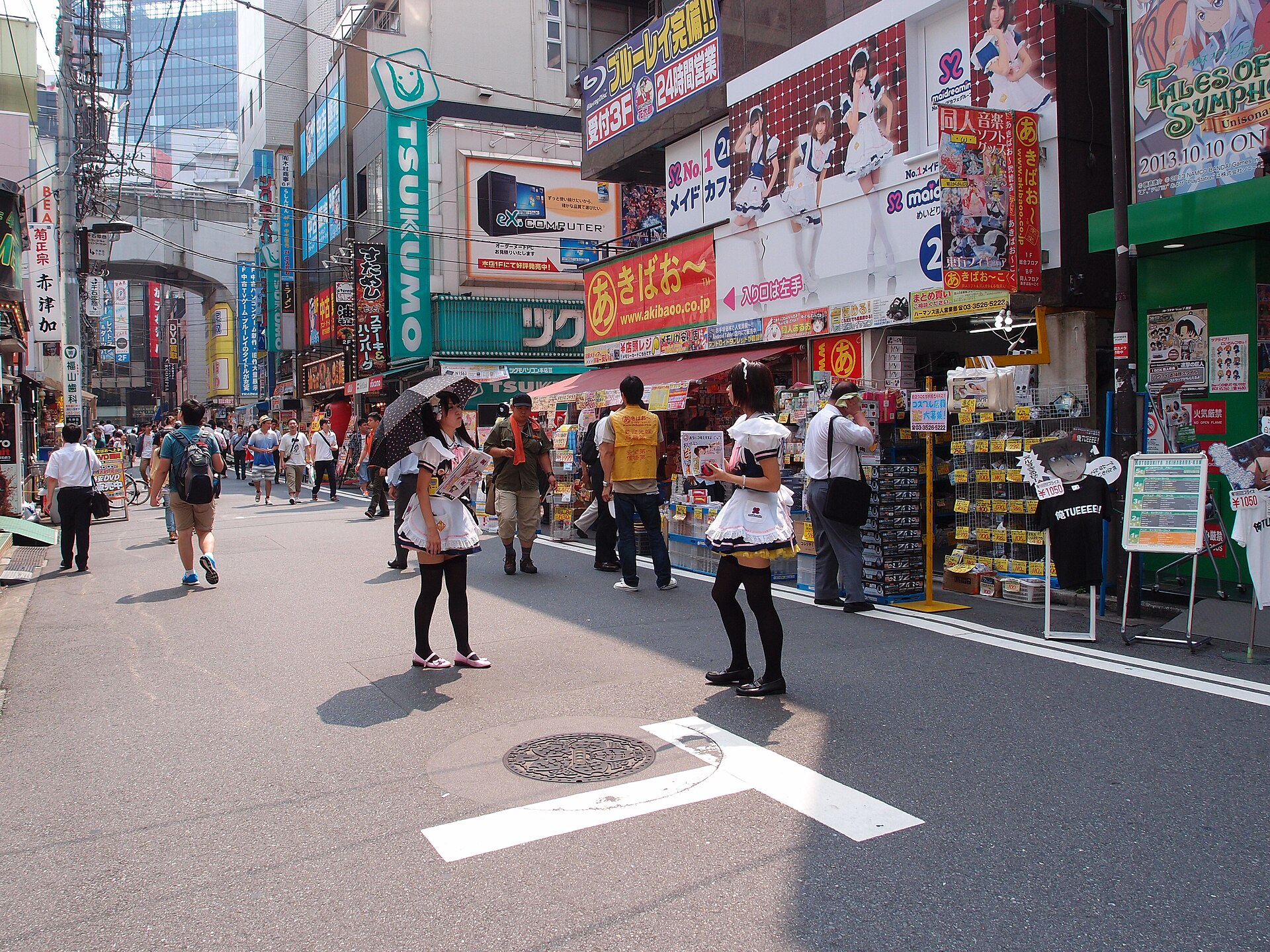
So: if somebody in costume approaches you on the street and offers to walk you to a venue, decline and keep walking. It does not mean the venue is dangerous, but it does mean it is operating outside the rules its neighbours follow, and it is the single most reliable route to an upstairs room with an unpriced menu, an unexpected service charge and a bill in five figures. There is no upside — the legitimate chains are two minutes away and post their prices.
The broader version of this rule applies across Tokyo nightlife and is worth internalising early; our first-time tips covers the same logic for Kabukicho and Roppongi, where the stakes are higher.
The honest verdict
Maid cafes are not a rip-off and they are not a highlight. They are a forty-minute novelty sold in one-hour blocks, and whether that is money well spent depends almost entirely on what you are expecting.
Go if: you enjoy participating in something mildly absurd, you are travelling in a group that will commit to the bit, you have a genuine interest in the subculture, or you want the cheki as a souvenir. The performance is skilled, the staff are extremely good at their jobs, and the whole thing runs with a warmth that surprises people who came in cynical.
Skip if: you hate audience participation, you are tight on budget, you find the premise uncomfortable, or you are looking for coffee. It is genuinely not a cafe in any sense that matters — the drinks are an afterthought and the food is decoration on a plate. If you want to sit down with something good in your cup, our Tokyo cafe guide and the specialty coffee roundup are pointed in completely the opposite direction, and they are better uses of ¥3,000.
The most common regret is not the money, it is the timing: people book an evening around it and discover the whole experience is comfortably done in an hour. Treat it as a stop in an Akihabara afternoon, not an event.
If you want one themed venue and you are choosing between formats, weigh it against the alternatives properly. A cat cafe costs less and delivers a calmer hour. Character cafes tied to a specific anime or game deliver more if you care about that property. Our themed cafes guide compares the whole field on what you actually get for the cover charge.

Practical details
Finding the place
Nearly every venue is on an upper floor of a narrow building, reached by a lift or a tiled staircase with a sign at the bottom. If you are standing at street level looking for a shopfront, you will not find one. The Don Quijote branch is the exception and the reason it is the easiest first visit — you walk into a shop you were going to visit anyway and take the lift to the fifth floor. The wider geography of the district is in our Akihabara guide.
Booking
Weekday afternoons are walk-in territory at almost every venue. Friday and Saturday evenings are not; book online, and expect to pick a time slot rather than a table. Turning up within the stated window matters — arrive late and the slot may be gone.
Language
The big chains handle English comfortably: English menus, printed rule cards, and staff who have done the routine for foreign guests a thousand times. The call-and-response is taught with gestures and works fine without a word of Japanese. Small independent venues are a different matter and may decline non-Japanese-speaking customers outright, which is not hostility, it is a venue that knows its format does not survive translation.
Going alone
Completely normal. A large share of the domestic customer base is solo, the counter seating exists for exactly this, and staff are practised at making a single diner feel looked after — that is the product. If anything, solo is the format’s native mode; it is groups of tourists who are the unusual ones. Our solo travel guide has more on where this does and does not apply in Tokyo.
Children
Generally welcome at the big chains during daytime hours, and small children usually find it delightful in a straightforward way — someone in a costume draws a cat on their rice. Evening sessions with stage shows are louder and later. Check the individual venue, as policies vary.
Dietary requirements
Not the strong point of the format. Check the cafe’s menu before you go, and if your requirements are strict, eat beforehand and treat the food as a prop.
Where else they exist
Akihabara has the density and the history, and it is where you should go. But the format spread: Ikebukuro has branches of the big chains, Shinjuku and Shibuya both have outposts, and the wider concept-cafe category — venues themed around any premise at all, staffed by people in character — now runs to hundreds of small rooms across the city, most of which are not aimed at visitors and many of which do not want walk-ins who cannot read the menu.
For a first visit, that variety is a distraction. Pick a named chain in Akihabara, book a package, give it an hour, and see what you think. The city’s wider fan geography is laid out in our Tokyo anime guide, and most of it costs less.
Frequently Asked Questions
How much does a maid cafe in Tokyo cost?
Budget ¥2,500 to ¥4,000 per person for one hour. The structure is an admission or table charge of roughly ¥770–900 per person per hour, plus a drink at ¥700–1,100, food from about ¥1,200, and a cheki instant photo at ¥1,000–1,700. Most venues sell a set package covering all of those, which usually works out cheaper than ordering separately.
Can you take photos in a maid cafe?
Not of the staff, and usually not of other customers. Photographing maids on your own phone is not allowed. A photo with a maid comes as the paid cheki, an instant photo with a hand-drawn decorated border, and some chains such as Maidreamin also offer digital photos. Some venues allow you to photograph your own food and table; some do not allow any photography at all.
Is a maid cafe a strip club or anything adult?
No. Maid cafes are non-sexual, family-friendly venues with strictly enforced rules: no physical contact, no personal information exchanged, no meeting outside. The atmosphere is closer to a children’s birthday party than a bar. Separate adult businesses do exist elsewhere in Tokyo and are not related to this format in any way.
Which maid cafe in Tokyo is best for a first visit?
@home cafe in Akihabara is a sound first choice — it has three Akihabara branches including one inside Don Quijote, trains its maids in English, and sells a priority-admission package that bundles admission, food or dessert, a soft drink and a cheki photo into one price. Maidreamin is a reasonable alternative and has branches outside Akihabara in Shinjuku, Shibuya and Ikebukuro.
Do I need to book a maid cafe in advance?
Not on a weekday afternoon, when walk-ins are normally fine. For Friday and Saturday evenings, book online — these are timed slots rather than reservations for a table, and you are usually asked to arrive within thirty minutes of your chosen time. Bookings are non-refundable at most venues.
Photo Credits
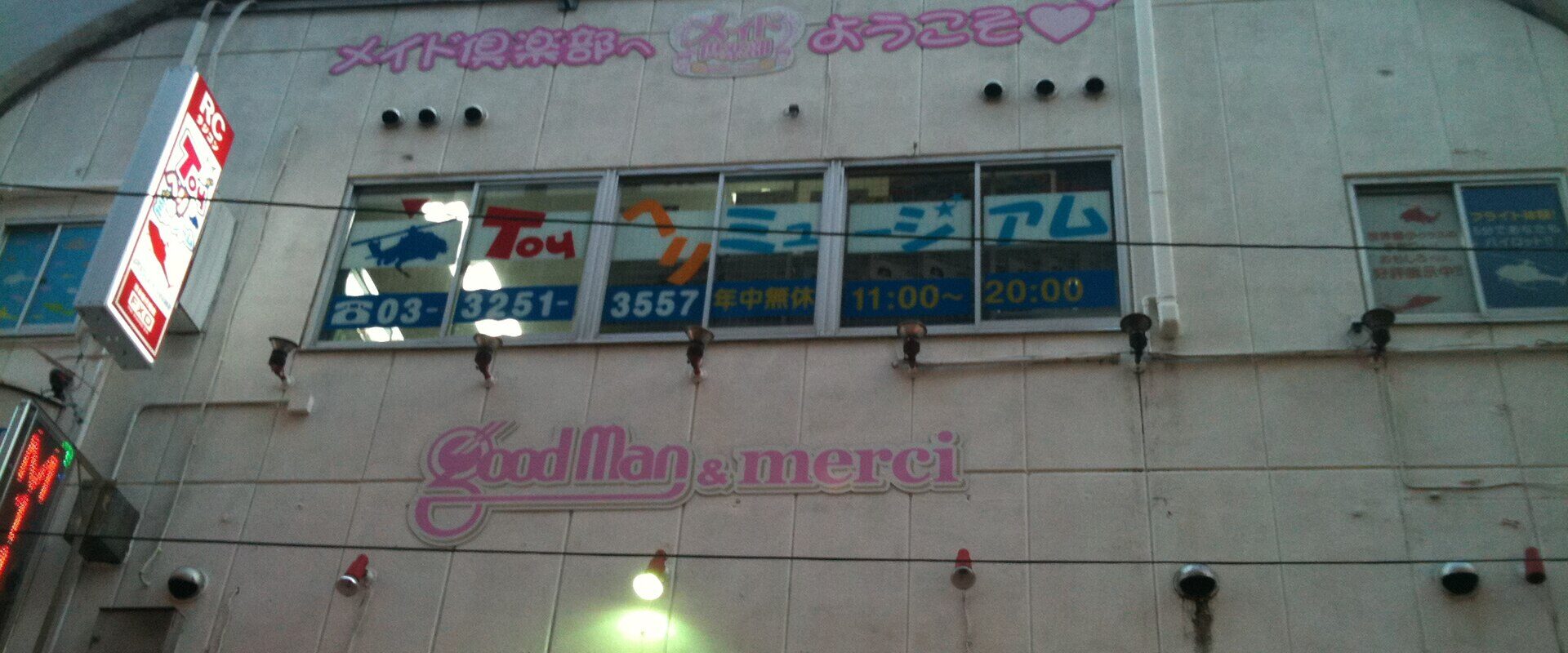
- Maid club signage on an Akihabara building – Curry Kitchen CurryKitch (1F), Goodman & merci Maid Club (2F), Toy Helicopter Museum (3F) – Akihabara (2010-09-25 17.17.47) by street viewer, CC BY 2.0, via Wikimedia Commons.
- Maid cafe flyers on Chuo-dori – Maid Café promotion @ Akihabara by Guilhem Vellut, CC BY 2.0, via Wikimedia Commons.
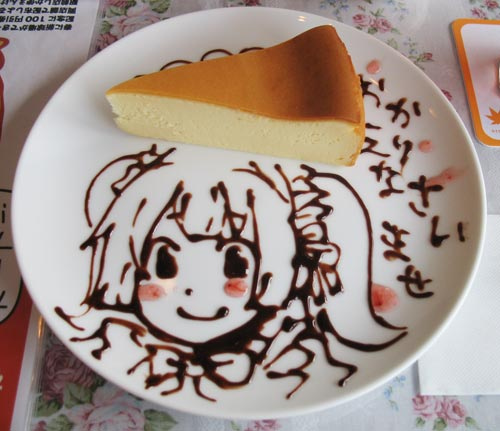
- Decorated cheesecake at a maid cafe – Maid cafe – Welcome at home cheesecake (2009-04-23 22.54.52 by panina.anna) by panina.anna, CC BY 2.0, via Wikimedia Commons.