Tokyo Cafes & Coffee · Guide №148
Cat Cafes in Tokyo: Prices, Rules and Which Ones Treat Cats Well
What a Tokyo cat cafe costs, how a visit works, the rescue cafes where your fee pays for the cats, and the signs that tell you within a minute whether a place treats its animals well.
目次 — Contents
- Why Tokyo has so many cat cafes
- How a visit works
- What a Tokyo cat cafe costs
- The part that matters: how to tell if the cats are treated well
- Rescue and adoption cafes: the best choice
- The commercial chains
- Cat cafes compared
- House rules, and why they exist
- Children, allergies and other practicalities
- Cat experiences that are not cafes
- So, is a cat cafe worth it?
- Frequently Asked Questions
- Photo Credits
This article contains advertising. Our booking links are routed through a partner that adds commission tracking automatically, so if you book through one we earn a commission from the provider, at no extra cost to you. It never affects what we recommend. Affiliate disclosure
A cat cafe Tokyo visit costs roughly ¥1,200 to ¥2,500 for an hour, and the difference between a good one and a bad one is visible within a minute of walking in. The ones worth your money let cats sleep, hide and leave the room. The best of all are rescue cafes, where the cats are up for adoption and your fee pays for their care.
This guide covers how the cafes actually work, what it costs at the big chains and the rescue cafes, the house rules, and — the part most guides skip — how to tell whether the cats are being treated well. For everything else Tokyo does with coffee, start with our Tokyo cafe guide.
Why Tokyo has so many cat cafes
The idea is older than most people think: the first widely known cat cafe opened in Taipei in 1998, and Japan picked it up in the mid-2000s. It took off in Tokyo for a very simple reason. Most rental flats in the city ban pets, working hours are long, and a lot of people who grew up with a cat cannot have one. An hour on a cushion with a cat on your lap is a small, affordable fix for that.
That origin matters, because it explains what a Japanese cat cafe is for. It is not primarily a tourist attraction, even in Harajuku. The regulars are office workers on a lunch break and students with a free afternoon, many of whom have favourite cats and visit every week. The best places are run for those people, and they tend to be quiet, calm, and slightly strict.
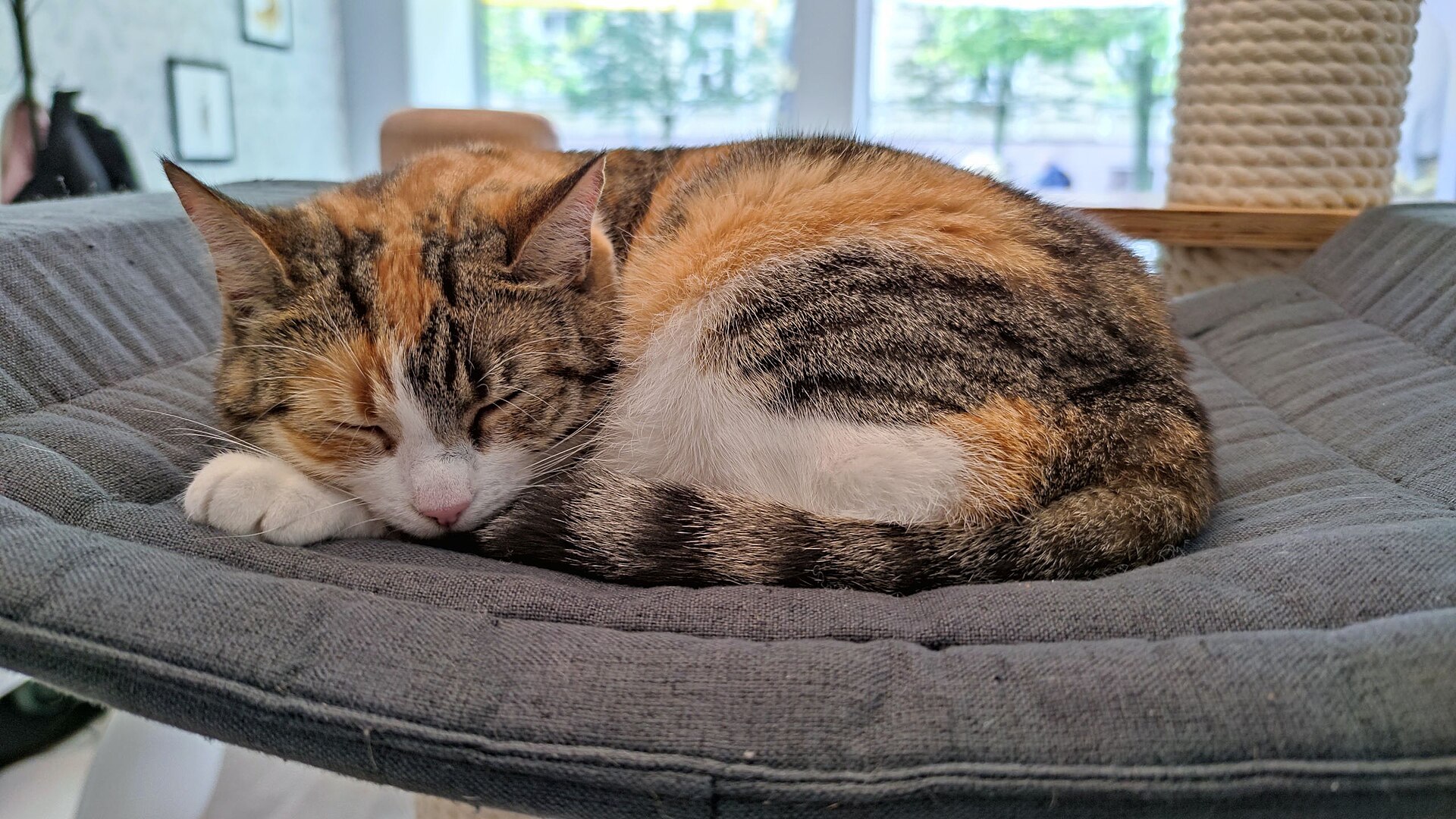
Be prepared for one thing that surprises nearly every first-time visitor: cats sleep for twelve to sixteen hours a day, and they do not stop because you have paid. In a good cafe, most of the cats are asleep when you walk in, and nobody is allowed to wake them. If you want interaction, the late afternoon and early evening feeding and play times are when they are most active.
How a visit works
The routine is almost identical everywhere, and it takes about five minutes before you are in the room.
- Check in at the desk. You will be asked how long you plan to stay, or given a time card that clocks you in. Weekends often need a booking; weekdays usually do not.
- Read the rules. A laminated sheet in English, and at many places a short explanation from staff. Some ask you to confirm you have read them.
- Shoes off, bags away. Slippers or socks inside, and lockers or baskets for bags. Loose straps and dangling things attract cats and get chewed.
- Wash or sanitise your hands. Every single place does this, both for the cats’ health and yours.
- Order your drink. Either included, a drink bar, or a one-drink minimum. It will be a vending-machine or self-serve coffee in most places — nobody comes here for the coffee.
- Sit down and wait. The single best technique is to sit on the floor, be still, and let the cats decide. Chasing them does not work and is not allowed.
You pay on the way out, for the time you actually stayed. Extensions are automatic in per-minute places, so keep an eye on the clock if budget matters.
What a Tokyo cat cafe costs
There are three pricing models, and the one a cafe uses tells you something about the kind of cafe it is.
| Pricing model | Typical price | Example | What it suits |
|---|---|---|---|
| Per 10 minutes, drinks extra | ¥200–250 per 10 min on weekdays (about ¥1,200–1,500 an hour); weekends higher | Cat Cafe MOCHA | Short visits of 30–40 minutes |
| Hourly with a drink included | ¥1,200–2,200 per hour | Most independent cafes | An unhurried hour |
| Donation or low flat fee | About ¥800–1,000, often suggested rather than fixed | Tokyo Cat Guardian, Hogoneko Rafu Space, Asakusa Nekoen | Anyone who wants the money to go to the cats |
Watch the extras. At MOCHA, for example, the unlimited drink bar is ¥350 and a pack of cat treats ¥500, both before tax, on top of the time charge. Weekend and holiday rates at the chains typically run a few hundred yen higher per hour, and a busy Saturday may cap your stay. For a couple spending an hour with drinks on a weekend, ¥3,500 to ¥4,500 all in is realistic. The rescue cafes are the cheapest option on this page, which is a pleasant irony.
The part that matters: how to tell if the cats are treated well
Cat cafes are, for the most part, the defensible end of Japan’s animal cafe business. Cats are territorial, but many adapt well to a stable group in a large, familiar space with good hiding places. That is a very different proposition from putting a nocturnal owl on a perch in a bright room. But “can be fine” is not the same as “is fine,” and quality varies enormously.
Japanese law does set a floor. Animal cafes must be registered as animal-handling businesses under the Act on Welfare and Management of Animals; cats and dogs may not be put on display late at night, with cat cafes allowed to show adult cats until 22:00; and a 2019 revision brought in a minimum age of eight weeks for selling kittens and numeric standards for space and staffing, phased in from 2021. Enforcement is uneven, though, and the law is a minimum rather than a guarantee. Your own eyes are the better test.
Good signs
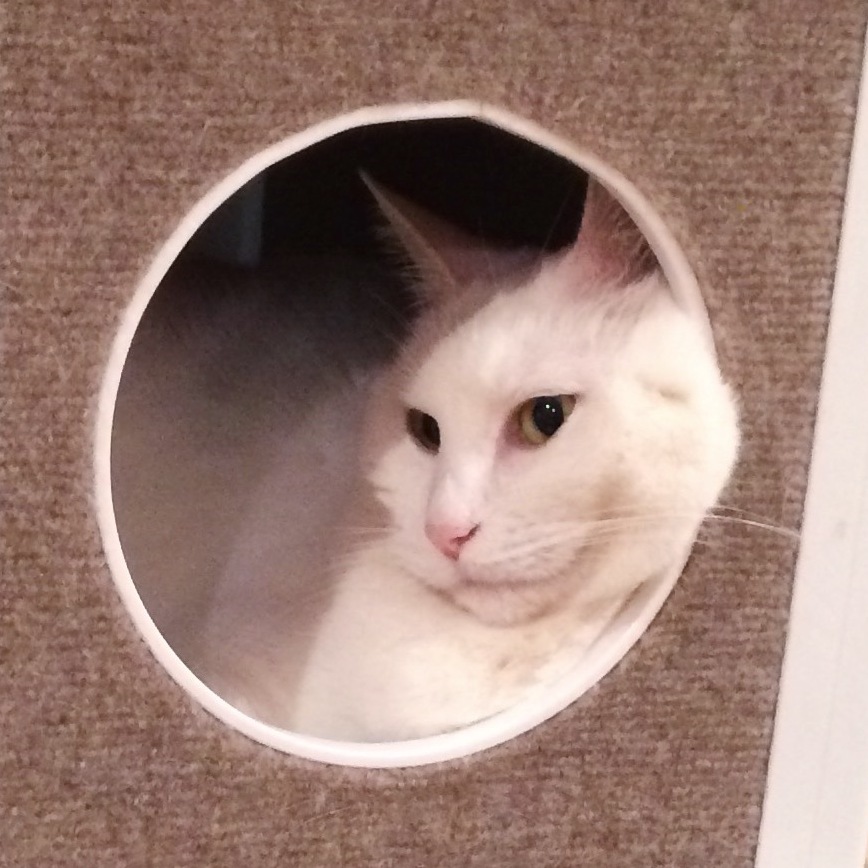
- Places to escape. High shelves, boxes and tunnels that visitors cannot reach. The best cafes have a separate staff-only room with a cat flap, so a cat that has had enough can simply leave.
- Visible break times. Some cafes rotate cats in shifts, or close the main room for an hour in the afternoon. That is a cost to the business and a sign it is taking welfare seriously.
- A visitor cap. A limit on how many people can be in the room at once, and staff who will make you wait rather than let the room overcrowd.
- No picking up. A firm rule against lifting or holding cats, and staff who actually enforce it.
- Cats that look like cats. Clean coats, clear eyes, relaxed postures, some sleeping in the open. A cat asleep on its back in the middle of the room is a relaxed cat.
- Profiles on the wall. Names, ages and personalities for each cat, sometimes including which ones do not like being touched. It suggests staff know each animal individually.
- Older cats and ordinary cats. Mixed ages and everyday moggies, not only young pedigree kittens.
Warning signs
- Treat-selling as the main event. If every visitor buys a ¥500 pack of treats, cats are fed all day on demand, which is bad for their weight and turns the room into a scrum. The better cafes either do not sell treats or restrict them to a specific time.
- Mostly kittens and fashionable breeds. A room full of Scottish Folds and Munchkins is a warning. The fold gene is linked to a painful inherited cartilage and bone condition, and short-legged Munchkins carry a dwarfism mutation with its own welfare concerns. Constant young kittens also raise the question of where last year’s went.
- Nowhere to hide. An open-plan room with no high shelves or boxes forces cats to be handled whether they like it or not.
- Cats hiding, hissing or overgrooming. Bald patches, a cat pressed flat under furniture, flattened ears, or a tail flicking hard are stress signals.
- Staff who photograph cats being held up. If the staff themselves pick up a cat for a visitor’s selfie, the rules on the laminated sheet are decoration.
If a place feels wrong, you can leave. You pay for the minutes you were there, and nobody will be offended. The cafes that treat cats well depend on visitors choosing them over the ones that do not.
Rescue and adoption cafes: the best choice
If you only visit one, make it a rescue cafe. The cats are former strays, surrenders or ex-breeding animals, they are available for adoption to local residents, and your entry fee pays for food, vets and neutering. You get the same hour with cats, usually for less money, and you know where it is going. You will not be able to adopt as a visitor, but many of them have donation boxes and sell small merchandise, and every sale helps.
Tokyo Cat Guardian — Otsuka
Tokyo Cat Guardian is a rescue organisation rather than a cafe as such: a shelter with rooms open to visitors, a short walk from Otsuka station on the JR Yamanote line. Entry works on donations, with around ¥1,000 per person as the standard amount. It has rehomed a large number of cats and even live-streamed its rooms online. Check its website for current visiting hours before you go, as a shelter’s schedule is built around the cats, not tourists.
Asakusa Nekoen — Asakusa
A small rescue cafe run by an English-speaking owner, Takako Saito, who rescues cats from around Tokyo and Saitama, has placed well over two hundred in homes, and keeps senior cats that may never be adopted. Prices are modest by cat cafe standards. It is an easy add-on to a morning at Sensoji, and a much better use of an hour than another souvenir shop on Nakamise.
Neco Republic — Ikebukuro, Nakano and Ochanomizu
A rescue cafe brand with several Tokyo branches, set up to prove a cat cafe can run as a business while promoting protection. All the cats are rescues and up for adoption. The Ikebukuro branch is convenient if you are already visiting the anime shops; our Ikebukuro guide covers the rest of the district.
Hogoneko Rafu Space
Run by the Animal Protection Information Center, a campaigning welfare group, with no admission fee and a suggested donation of ¥1,000. Its cats come largely from the breeding and pet-shop trade — retired breeding parents, and animals abandoned because they became ill. It is the least tourist-oriented place on this list, and the most direct way to see the other side of Japan’s pet industry.
The commercial chains
Cat Cafe MOCHA
MOCHA is the name most visitors find first, because it has several branches in exactly the places tourists go: Harajuku, Shibuya, Shinjuku, Ikebukuro and Akihabara among them. The rooms are large, bright and designed to look good in photographs, with plenty of shelving and climbing structures. Pricing is per 10 minutes — around ¥220 in Harajuku and ¥200 in Ikebukuro on weekdays before tax — with a drink bar and cat treats on top.
The honest verdict: MOCHA is well kept and convenient, and the cats have climbing space and places to retreat. It is also very busy, the treat model encourages feeding, and at weekends the Harajuku branch can feel more like an attraction than a cafe. Go on a weekday morning, skip the treats, and stay for thirty or forty minutes. If the room is crowded when you arrive, try a different branch or come back later.
Temari no Ouchi — Kichijoji
Among the independent commercial cafes, Temari no Ouchi in Kichijoji is the one most often recommended for its setting: a large, whimsical room built like a storybook cat village, with plenty of height and hiding places. It is a good pairing with a walk in Inokashira Park. Check its current prices and hours on the day, as they change with the seasons and weekends.
Cat cafes compared
| Cafe | Area | Type | Rough cost | Best for | Watch out for |
|---|---|---|---|---|---|
| Tokyo Cat Guardian | Otsuka (Yamanote line) | Rescue shelter | ~¥1,000 donation | Supporting rescue directly | Limited hours; check ahead |
| Asakusa Nekoen | Asakusa | Rescue cafe | Modest hourly fee | Combining with Sensoji | Small room; can fill up |
| Neco Republic | Ikebukuro, Nakano, Ochanomizu | Rescue cafe chain | Hourly | Rescue with a regular cafe feel | Booking useful at weekends |
| Hogoneko Rafu Space | Tokyo | Welfare-group rescue | No fee, ~¥1,000 donation | The most welfare-focused visit | Not built for tourists |
| Cat Cafe MOCHA | Harajuku, Shibuya, Shinjuku, Ikebukuro, Akihabara | Commercial chain | ¥200–220 per 10 min + extras | Convenience, short visits | Crowds, treat-feeding |
| Temari no Ouchi | Kichijoji | Independent | Hourly; check current rates | A beautiful room, park walk after | Weekend crowds |
A standing caveat for all of it: small Tokyo cafes change prices, move and close with little notice. Check each one’s own site or social media before you cross the city.
House rules, and why they exist
The rules are close to identical everywhere, and every one of them is there for the cats.
- Do not pick up or hold the cats. Being lifted by a stranger is stressful for most cats, and a dropped cat can be injured.
- Do not wake sleeping cats. Not by stroking, not by calling, not by tapping near them.
- No flash photography. Photos are almost always fine without flash. Video is sometimes restricted.
- Do not chase, corner or follow a cat that walks away. The cat has answered your question.
- Do not feed anything you have not bought from staff, and at many places not even that outside set times.
- Keep your voice down. Cats are sensitive to noise, and so are the regulars.
- Use toys provided, not your fingers. Hand play teaches cats to bite.
Stroke along the back rather than the belly or the tail, let a cat sniff your hand before you touch it, and stop the moment its tail starts to thrash. If a cat climbs onto your lap uninvited, congratulations — you now cannot leave until it decides you can, which is the unwritten rule of every cat cafe on earth.
Children, allergies and other practicalities
Children: most cat cafes set a minimum age, often somewhere between six and twelve, or require children to be accompanied and closely supervised. Toddlers are frequently not admitted at all. Check before you go. For small children, a better cat encounter is often the street cats of Yanaka, or the lucky-cat temple below. Our Tokyo with kids guide has more ideas.
Allergies: a cat cafe is about the most concentrated dose of cat allergen you will meet anywhere. If you are allergic, take an antihistamine beforehand and keep the visit short; if your allergy is severe, simply do not go.
Clothes: wear something you do not mind covered in fur, and avoid loose knitwear, which snags on claws. Lint rollers are usually provided at the exit.
When to go: weekday mornings are quietest; late afternoons are when the cats wake up and start to play. Rainy weekends are the busiest time of the week for any cat cafe in Tokyo, so book or go early — and if the weather is the reason, our rainy day guide has other ideas.
Cat experiences that are not cafes
Some of the best cat encounters in Tokyo are free.
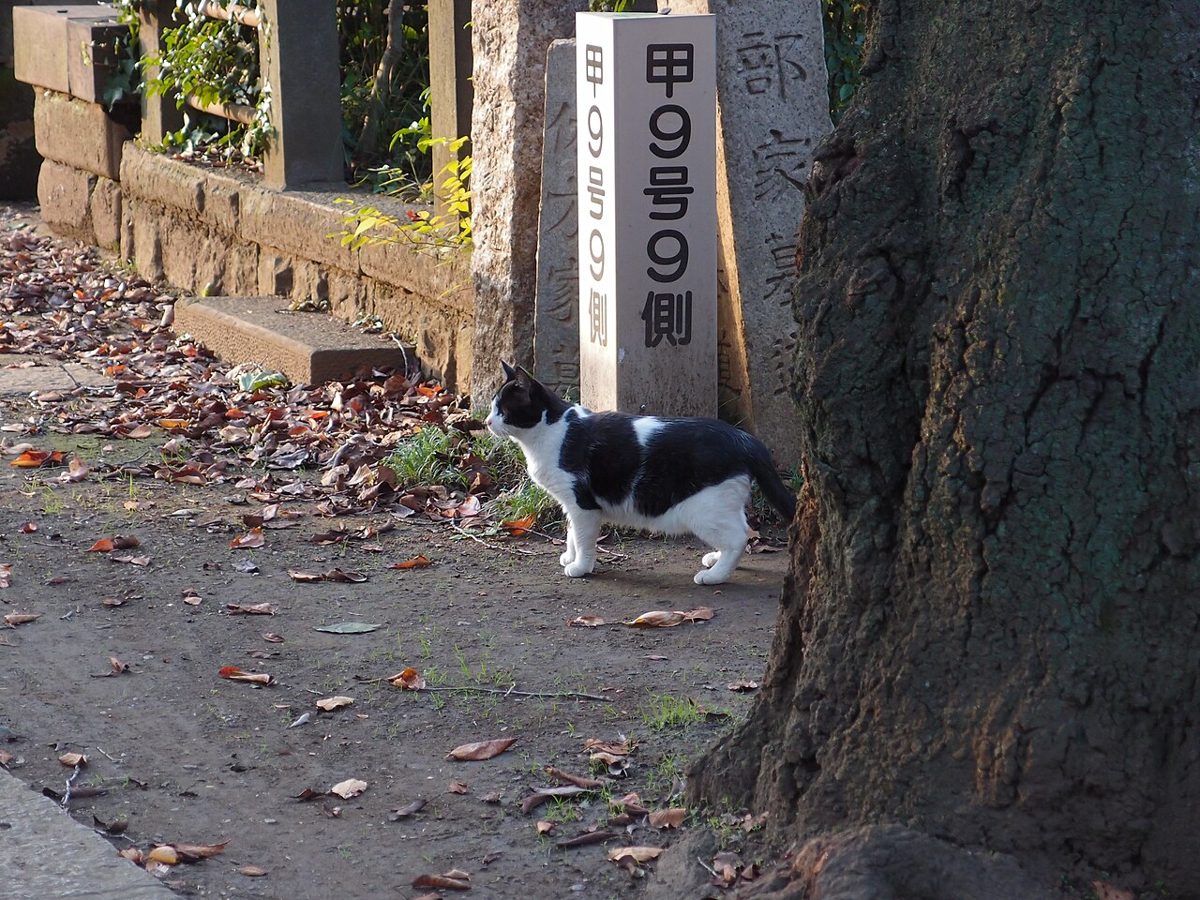
- Yanaka. The old-town neighbourhood north of Ueno is known for its cats, and the Yuyake Dandan steps and Yanaka Ginza shopping street are full of cat-themed shops and snacks. The street-cat population is smaller than it used to be, partly thanks to neutering programmes, but you will still meet a few. Our Yanaka guide has a walking route.
- Gotokuji temple. In Setagaya, the temple credited as a birthplace of the maneki-neko, the beckoning lucky cat. Thousands of white ceramic cats are stacked in rows beside the main hall, left by visitors whose wishes came true. Nearest stations are Gotokuji on the Odakyu line and Miyanosaka on the Tokyu Setagaya line.
- Cat-themed shopping. Neko-themed stationery, homeware and sweets are everywhere, and a pack of cat-shaped Japanese sweets makes a better souvenir than most things sold in Harajuku.

So, is a cat cafe worth it?
Yes, with conditions. A cat cafe in Tokyo is one of the more gentle and genuinely local things you can do in the city, and if you choose well it is an hour that does some good. Choose a rescue cafe if you can. Choose a weekday. Leave the treats alone, keep your hands to yourself until invited, and walk out if the cats look unhappy.
What we would not recommend is treating a cat cafe as a photo stop to squeeze between Harajuku shops on a Saturday afternoon. That is when the rooms are at their most crowded and the cats at their most stressed, and it is also when you will get the least out of it. Other species are a different matter entirely, and the honest answer for most of them is no. For the rest of Tokyo’s cafe scene, from kissaten to specialty coffee roasters, the Tokyo cafe guide is the place to start.
Cats are the easy case. Owls, hedgehogs, otters, capybaras and micro pigs are not, and most of the queues in Harajuku and Akihabara are for exactly those animals. Our guide to animal cafes in Tokyo goes species by species, with prices, what each animal actually needs, and a plain verdict on which cafes to walk past.
Frequently Asked Questions
How much does a cat cafe in Tokyo cost?
Most charge ¥1,200 to ¥2,500 for an hour. Chains such as Cat Cafe MOCHA charge per 10 minutes — roughly ¥200 to ¥220 on weekdays before tax — with drinks and cat treats extra, and higher weekend rates. Rescue cafes and shelters are usually cheaper, working on low fees or a suggested donation of around ¥1,000.
Are cat cafes in Tokyo ethical?
They can be, and they are the most defensible type of animal cafe in Japan. The good ones cap visitor numbers, ban picking up cats, give cats high hiding places and a staff-only room, and enforce rest times. Rescue cafes, where cats are available for adoption, are the best choice. Be wary of cafes full of kittens or fashionable breeds such as Scottish Folds, and of places built around selling treats.
Do you need to book a cat cafe in Tokyo?
Not usually on weekdays; most take walk-ins. On weekends, public holidays and rainy days popular cafes can fill up or limit your stay, so booking online or arriving at opening is sensible. Shelters such as Tokyo Cat Guardian keep limited visiting hours, so check their website first.
Can children go to cat cafes in Tokyo?
Often, but with restrictions. Many cafes set a minimum age, commonly between six and twelve, and require supervision, and many do not admit toddlers at all. Check the cafe’s rules before you go. Yanaka’s street cats and Gotokuji temple’s lucky cat figurines are good alternatives for younger children.
What is the best cat cafe in Tokyo?
For welfare, a rescue cafe: Tokyo Cat Guardian in Otsuka, Asakusa Nekoen near Sensoji, or a Neco Republic branch. For convenience in the main tourist districts, Cat Cafe MOCHA on a weekday morning. For the most attractive room, Temari no Ouchi in Kichijoji.
Photo Credits
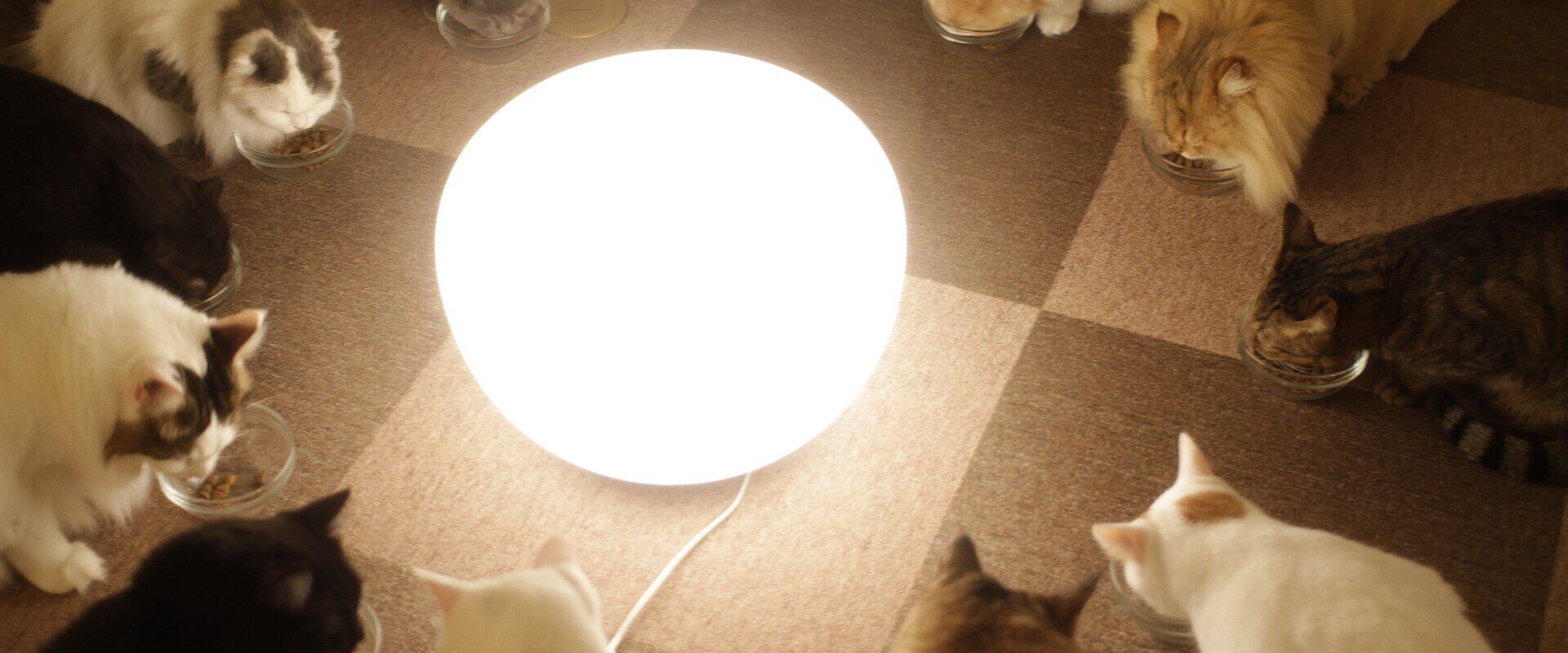
- Cats gathered around a lamp in a Tokyo cat cafe – 12 cats eating together around a centrally placed lamp in cat cafe by Takashi(aes256), CC BY-SA 2.0, via Wikimedia Commons.
- A calico cat asleep on a cushion in a cat cafe – Cat cafe vilnius 04 by Sh.aliaksei, CC BY-SA 4.0, via Wikimedia Commons.
- A white cat in a raised hideaway box – Grumpy Cat in its Lookout Post (26310560423) (Tokyo, 2016; cropped 2023) by Michelle Lai Lai from Tokyo, Japan, CC BY-SA 2.0, via Wikimedia Commons.
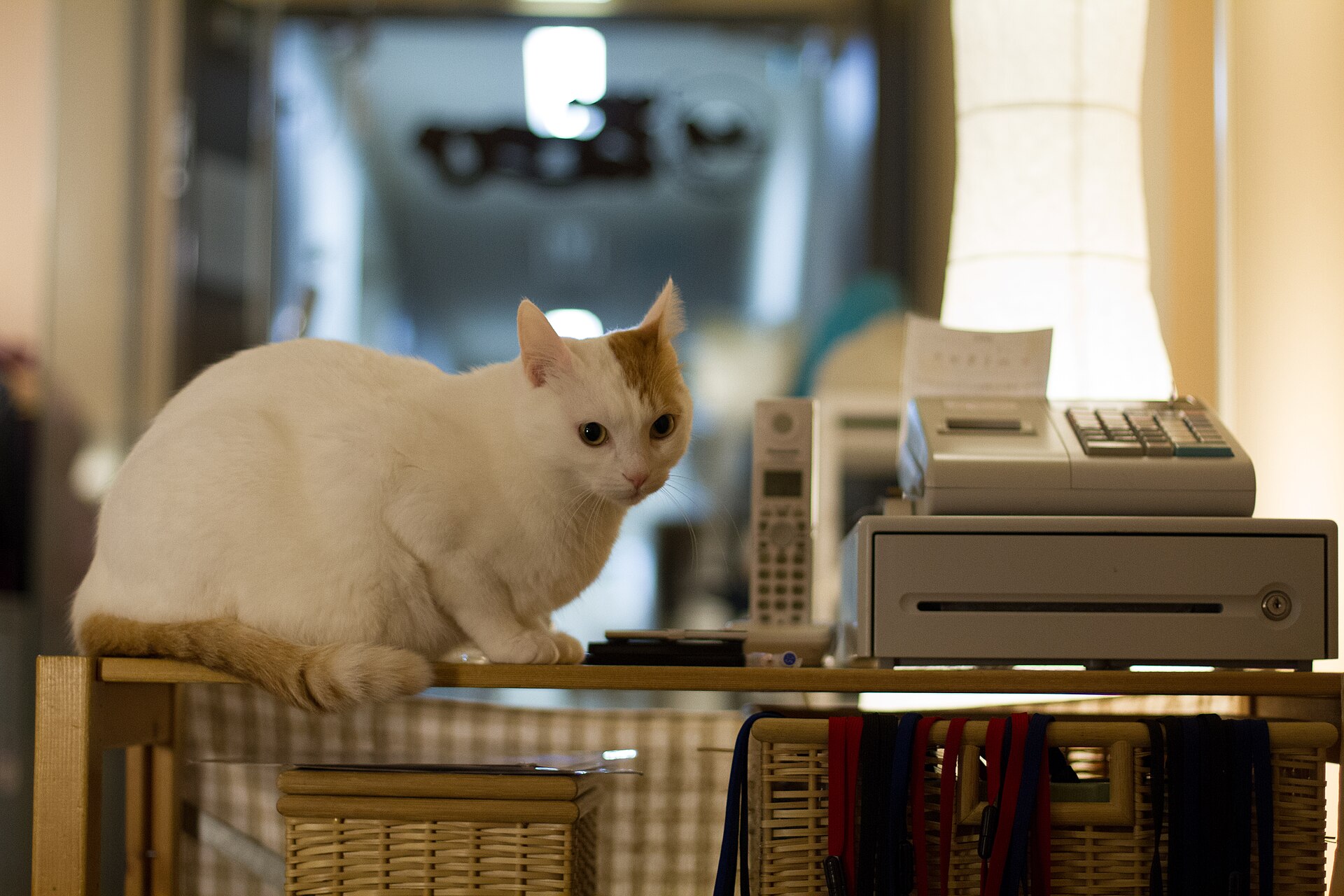
- A cat beside the till at a cat cafe – A shop assistant of a cat cafe (6887378772) by Takashi Hososhima from Tokyo, Japan, CC BY-SA 2.0, via Wikimedia Commons.