Tokyo Onsen & Wellness · Guide №176
Tokyo Sento Guide: Neighbourhood Bathhouses and How to Use One
Adult admission is 600 yen. What a sento is, the full sequence from shoes to milk, what it costs, and how to find one near you.
目次 — Contents
- What a sento actually is
- A disappearing institution
- Welcome! SENTO, and the 63 participating bathhouses
- What it costs
- Your first visit, step by step
- What you will see inside
- The things people actually get wrong
- Tattoos
- Finding one
- Practical notes
- Why bother, when your hotel has a shower
- Frequently Asked Questions
- Photo Credits
This article contains advertising. Our booking links are routed through a partner that adds commission tracking automatically, so if you book through one we earn a commission from the provider, at no extra cost to you. It never affects what we recommend. Affiliate disclosure
A Tokyo sento costs ¥600 for an adult and is one of the easiest ways for a visitor to spend an evening like a local. It is a neighbourhood public bathhouse: hot tubs, tiled walls, a painted Mount Fuji, and a room full of people who live within four streets of it. About 400 Tokyo bathhouses are taking part in the Tokyo Sento Association’s 2026 stamp rally.
That last number is the reason to go now rather than eventually. Tokyo had thousands of these once. The count has fallen for fifty years, and every one that closes takes a piece of ordinary city life with it. Meanwhile the ones that survive have never been easier for a foreign visitor to walk into.
What a sento actually is
A sento is a licensed public bathhouse, price-regulated by the city, that exists because for most of the twentieth century Japanese homes did not have baths. People washed at the neighbourhood bathhouse, daily, and the building was a genuine social institution — the place you caught up on the street’s news while sitting in hot water.
The water is ordinary heated tap water. That is the formal difference from an onsen, which must draw water meeting a legal standard for temperature or mineral content. A sento can be an onsen — several Tokyo bathhouses have drilled wells and hit real hot spring water while continuing to charge the regulated bathhouse price, which is the best deal in the city and is covered in our Tokyo onsen guide.
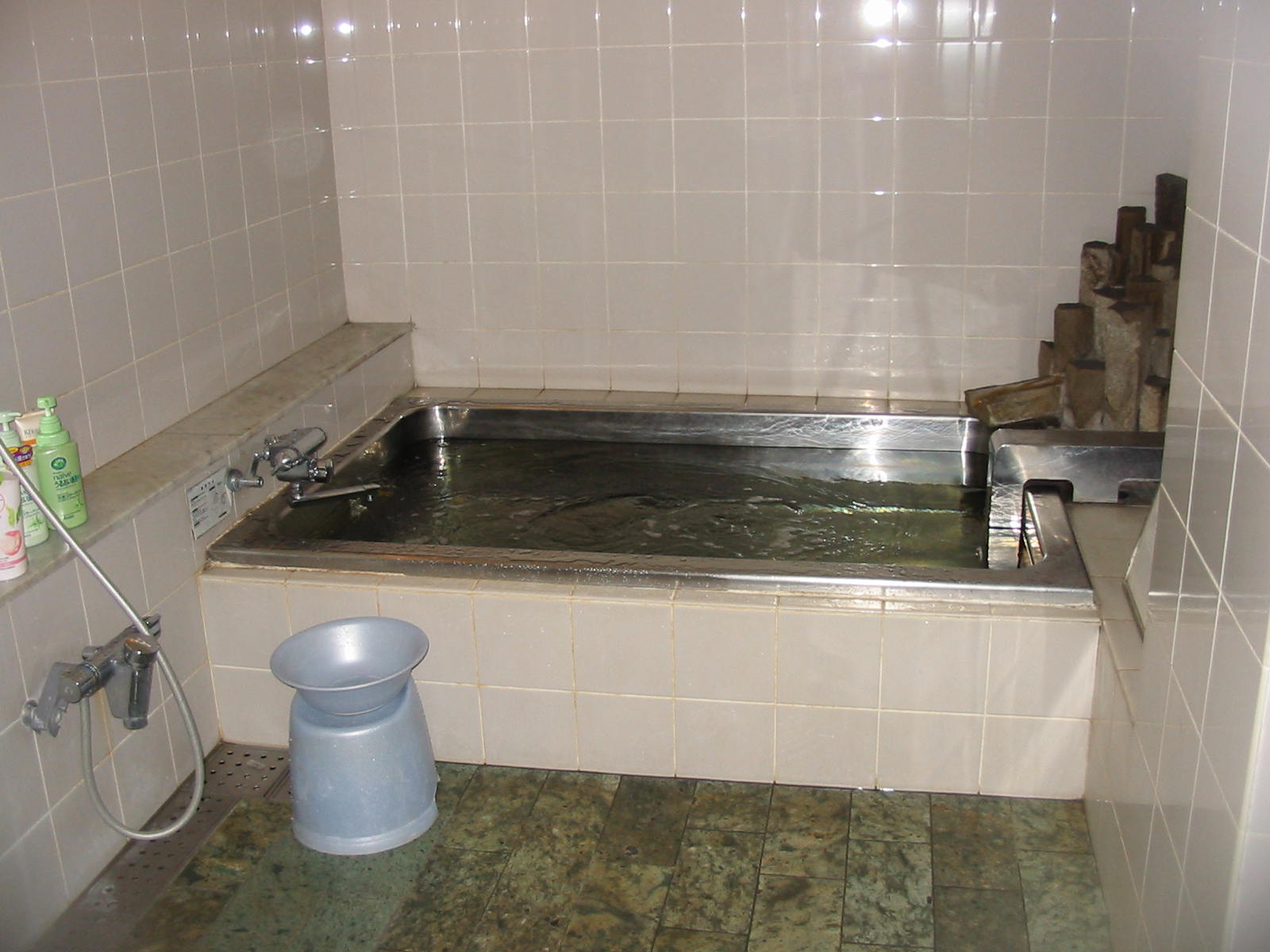
What you get for your ¥600: a changing room, a washing area with rows of seated stations, and one or more tubs, with the layout varying from one bathhouse to the next. Sometimes a cold plunge, sometimes a sauna at extra cost, sometimes an electric bath with a mild current running through it that you should approach with curiosity rather than confidence. No restaurant, no rest floor, no yukata. Wash, soak, leave.
A disappearing institution
The scale of the decline is worth stating plainly, because it explains the mood inside these buildings.
Public bathhouses have been shrinking in number for decades. In Tokyo, the Tokyo Sento Association counted about 430 member bathhouses in November 2024.
The causes are unglamorous: every flat has a bathroom now, fuel costs money, the buildings are old, the owners are old, and very few children want to inherit a business that requires being up at five to light a boiler. When a Tokyo sento closes it is almost never because it failed commercially in a dramatic way. It is because the person who ran it for forty years retired.
Against that, there is a genuine revival at the edges: design-led renovations, a sauna boom that has brought a much younger crowd through the doors, and a run of new operators taking on old buildings. A handful of Tokyo bathhouses now have queues. They are the exception, and they are keeping the format visible.
Welcome! SENTO, and the 63 participating bathhouses
The single most useful thing to know, and almost nobody mentions it.
The Foreign Visitors WELCOME! SENTO campaign listed 63 participating bathhouses across the city, each offering multilingual support for visitors who speak no Japanese. The campaign has ended, but its website still carries the list of participating bathhouses, which makes a useful place to start looking.
If you are nervous about walking into a room where you do not know the rules, start there. The bathing is identical to any other sento — it is the reception that has been made easier. Search for the Welcome Sento campaign and pick whichever certified bathhouse is nearest to wherever you are staying.
What it costs
| Item | Price | Notes |
|---|---|---|
| Adult admission (12+) | ¥600 | Regulated ceiling, raised from ¥550 on 1 Aug 2026 |
| Children 6–11 | ¥200 | Unchanged |
| Under 6 | ¥100 | Unchanged |
| Sauna | ¥300–500 extra | Where offered; usually a separate wristband |
| Small towel | ¥50–200 to rent, ¥200–400 to buy | The bought one is a decent souvenir |
| Bath towel | ¥100–300 to rent | Bring your hotel’s instead |
| Soap and shampoo | Free to ¥200 | Old bathhouses often provide nothing |
| Bottle of milk afterwards | ¥130–200 | Not optional, culturally speaking |
The regulated price is a ceiling set by the prefecture, and charging above it is illegal — which is why every bathhouse in Tokyo charges exactly the same. Tokyo and Osaka both sit at ¥600 for adults.
Total realistic spend for a first visit, bringing your own towels: ¥600, plus ¥150 for the milk. Our budget guide has more ideas in this price bracket.
Your first visit, step by step
The anxiety is always about the sequence, so here is the whole sequence.
Outside
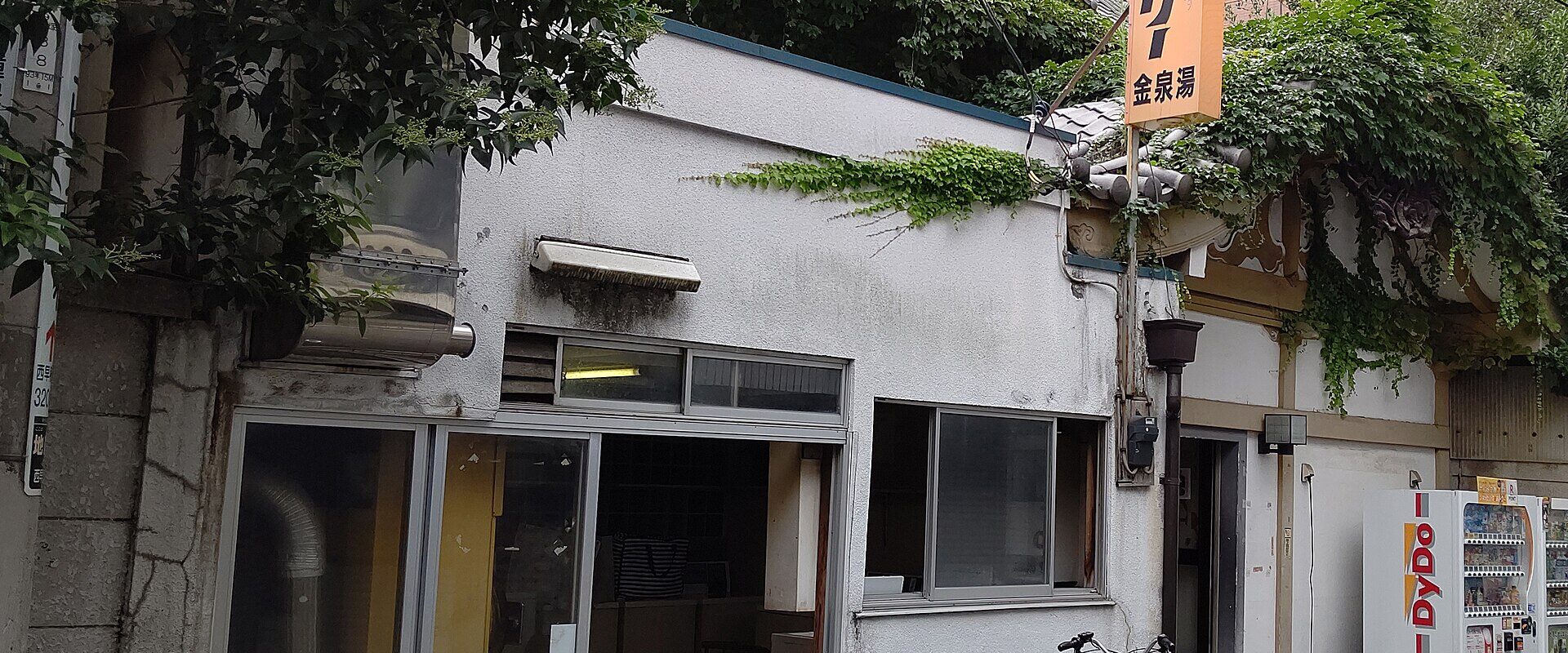
Look for the character 湯 (yu, hot water) on a curtain, a lightbox or a pole, or for the map symbol of three wavy lines rising from a dish. Many older bathhouses have a tall chimney, which is the giveaway on a residential street. The building may look like a temple, with a sweeping tiled roof, or like an anonymous three-storey block. Both are normal.
Shoes
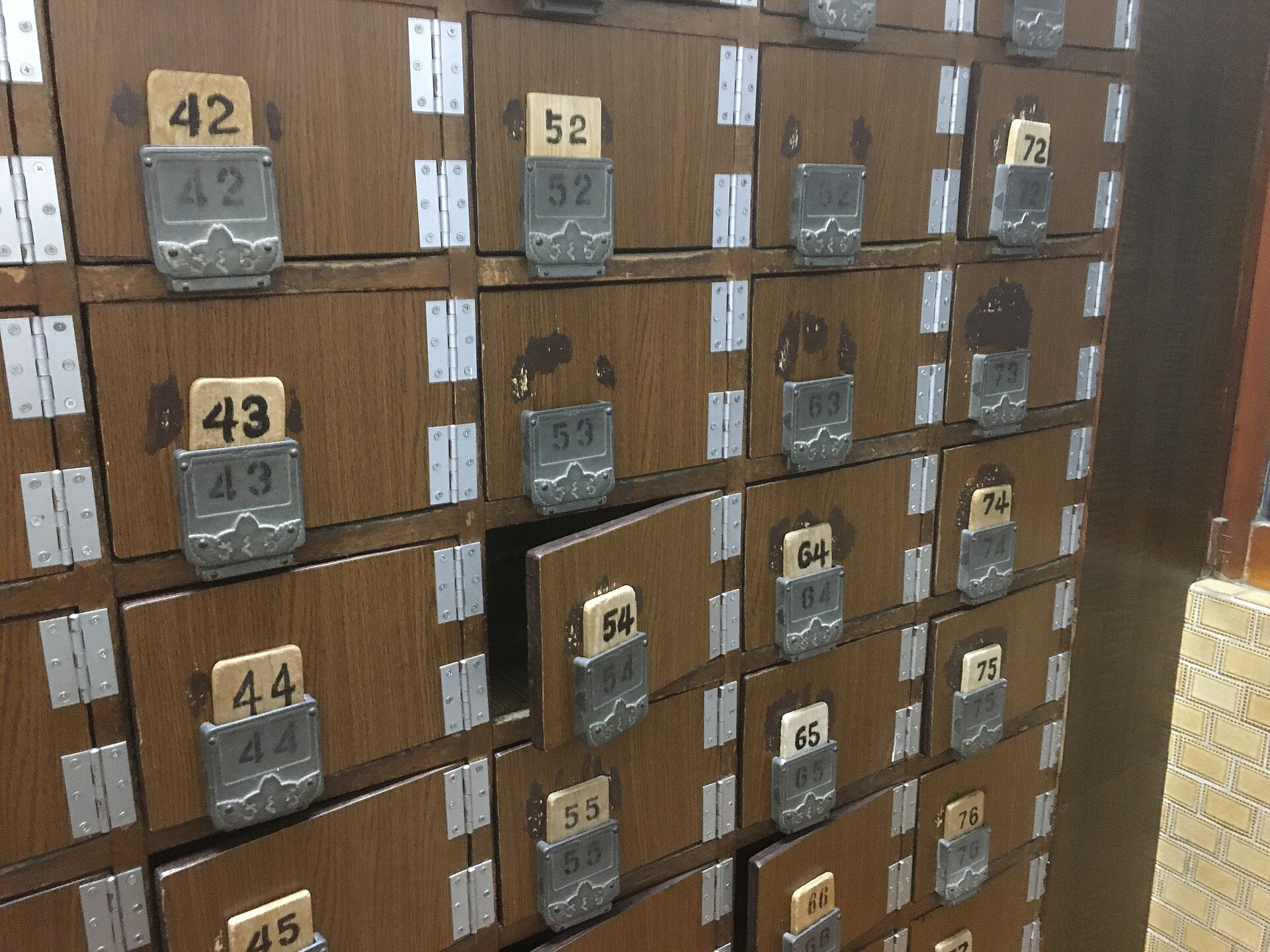
Immediately inside there is a wall of small wooden lockers — the getabako. Your shoes go in one; you take the wooden key, which is usually a flat slat of wood with a number on it. Some bathhouses use a free latch instead of a key. Do not walk past this step in your shoes.
Paying
Either a ticket machine on the wall or a person at a desk. In older bathhouses that desk is a raised platform called a bandai, sitting between the men’s and women’s changing rooms, from which the owner can see both. This is much less strange in practice than it sounds in writing; nobody is looking at you, and the arrangement is on its way out in any case, replaced by a front counter facing the entrance.
Say the number in your party or hold up fingers. Add sauna if you want it. Buy or rent towels here if you need them.
Changing
Men left, women right, marked by 男 and 女 and usually by blue and red curtains. Inside: baskets or lockers, and you undress completely. Everything goes in. Take only the small towel through to the baths.
Washing
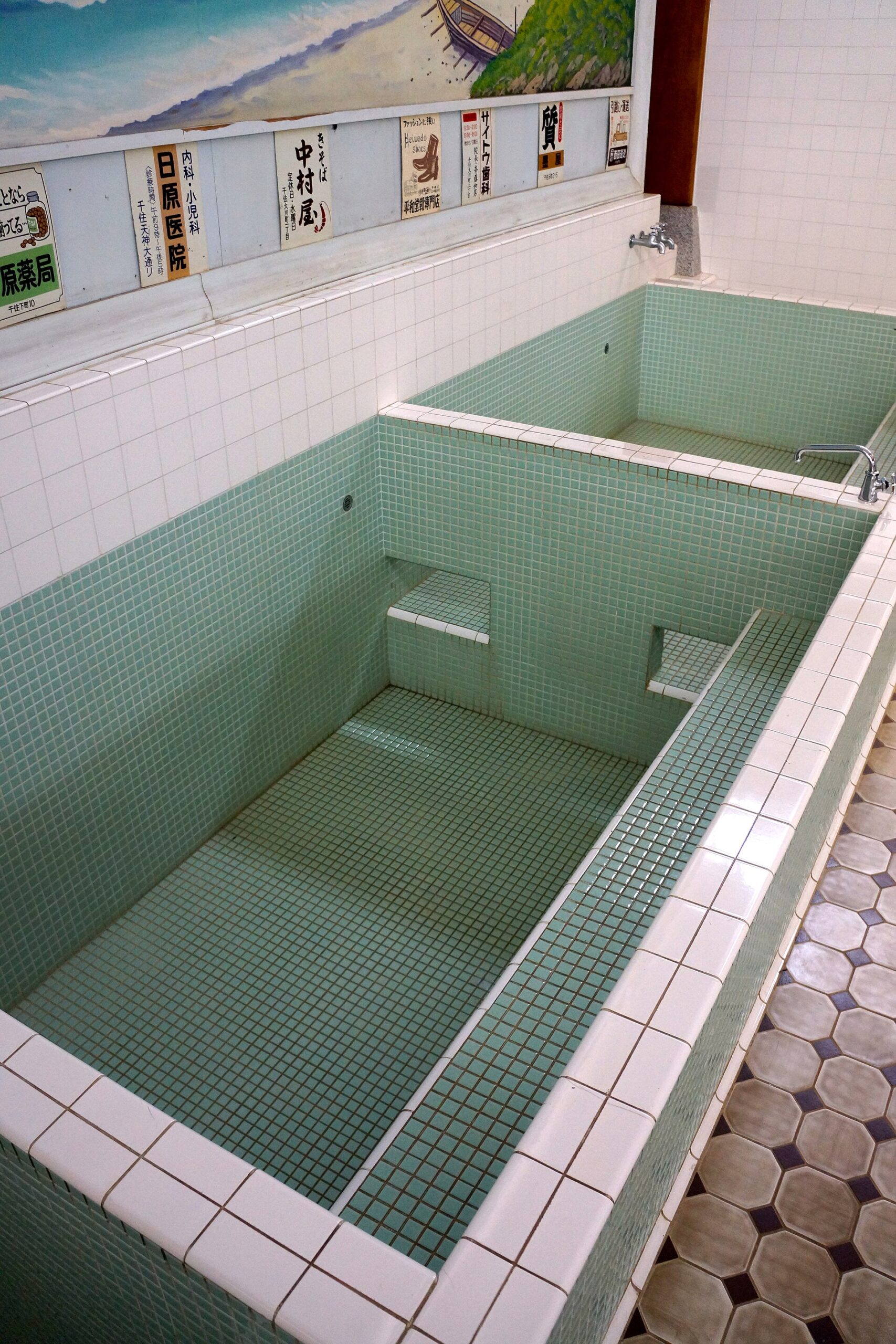
This is the part that matters and the part visitors most often get wrong. The bathing room has rows of low taps with stools and bowls in front of mirrors. Sit down and wash thoroughly before you go anywhere near a tub. Soap, rinse completely, and rinse the stool and the floor space afterwards for whoever sits there next.
Bathing
Get in slowly — bath temperatures vary from one bathhouse to the next, and some tubs run hot. Keep your towel out of the water. Tie long hair up. Sit still. That is genuinely all there is to it; the activity is sitting in hot water, and the correct amount of conversation is very little.
Afterwards
Dry off roughly with the small towel before re-entering the changing room, so you are not dripping across the floor. Then buy a bottle of cold milk from the fridge in the lobby and drink it standing up, which is a genuine ritual and not a tourist affectation — you have just lost a lot of fluid.
What you will see inside
Some things recur across almost every old Tokyo bathhouse, and knowing what they are makes the room legible.
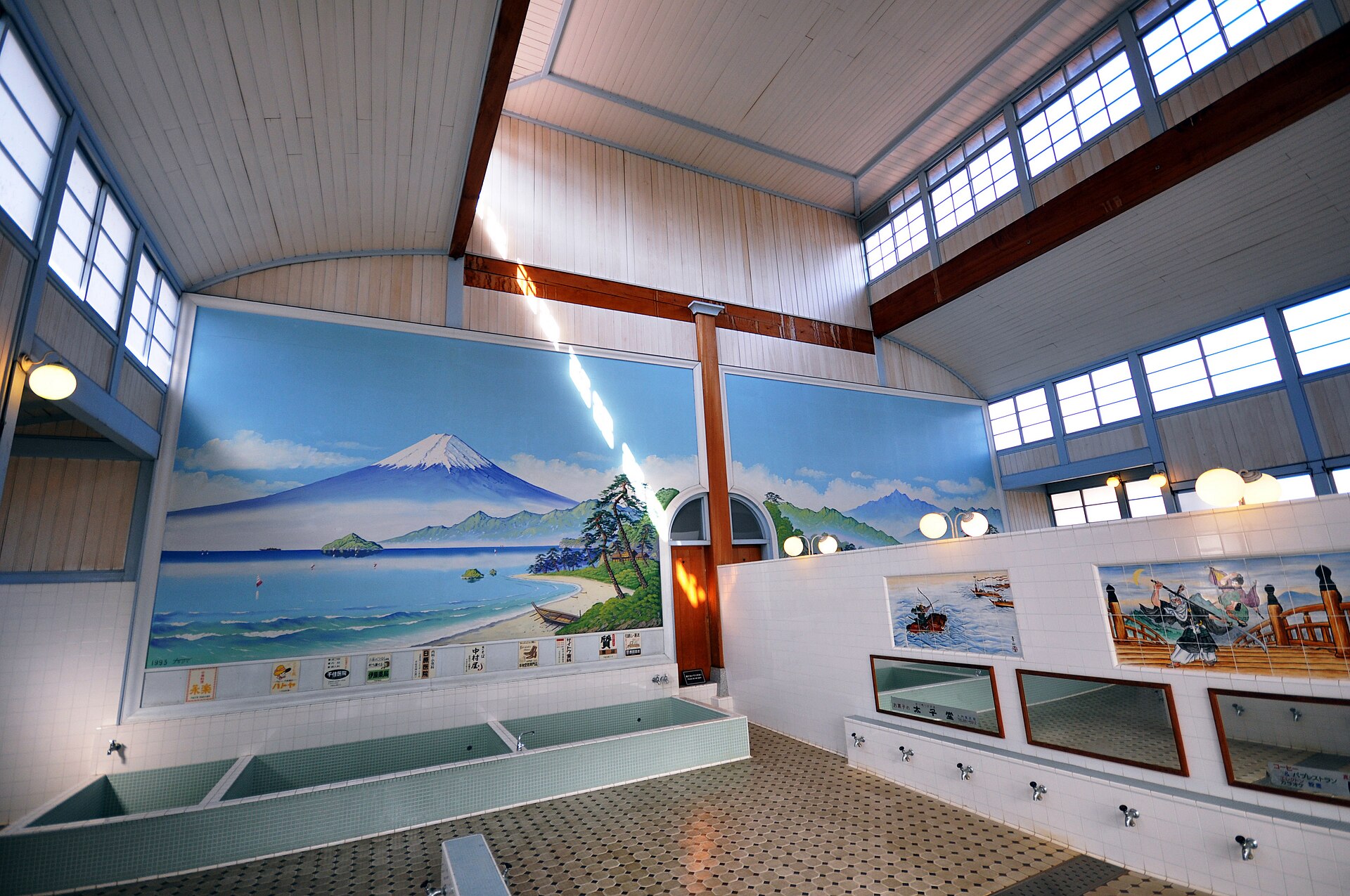
- The Mount Fuji mural. A painted panorama above the tubs, usually Fuji and a coastline, in a specific flat, bright style. There are only a handful of bathhouse mural painters left in Japan — a genuinely endangered profession — and the murals are repainted every few years because the steam destroys them.
- Tiled advertising panels. Below the mural, small enamel or tile advertisements for local businesses, some of which stopped trading decades ago.
- The high ceiling. Old bathhouses are built like halls, with a raised roof to carry steam away. It is the reason they feel like buildings rather than rooms.
- Yellow plastic bowls. Ubiquitous, branded with the name of a cosmetics company, and effectively a national design icon.
- The electric bath. A tub with a mild current passed through it, marked with a warning sign. It feels like a sustained pins-and-needles buzz. Try it briefly; do not sit in it if you have any heart condition or a pacemaker.
- The scale. Bathhouses are smaller than photographs suggest. Two or three tubs, a dozen washing stations, and nothing else.
The things people actually get wrong
Not the famous rules, which everyone knows. These are the ones that cause real friction.
- Getting in without washing properly. A quick rinse is not washing. Everyone in the room notices, and it is the one genuine offence.
- Bringing a phone into the changing room. Do not. This is not etiquette, it is a serious matter, and several bathhouses now ban phones from the changing room entirely.
- Letting the towel or hair touch the water. Both are the same rule: nothing but clean skin goes in.
- Talking loudly, especially in a group. The volume in a bathhouse is low. Two visitors having a normal conversation are the loudest thing in the building.
- Taking up three washing stations. Your bowl, your stool, your space. At a busy hour people are waiting.
- Standing to shower over someone. Sit down. The stools exist so nobody is sprayed.
- Leaving your rubbish. Sachets, bottles, sticking plasters. Take them with you.
Our onsen etiquette guide goes through the full set in order, and the general etiquette guide puts it in the wider context of how Japanese shared spaces work.
Tattoos
Tattoo rules are set by each bathhouse, not across the city, so check the policy of the one you plan to visit before you go. Ask at the counter or look at the bathhouse’s own page or signage, and you will know where you stand before paying the ¥600.
Several Tokyo bathhouses welcome tattooed bathers explicitly. Our tattoo-friendly guide names them, explains how to read a venue’s own policy page before travelling, and gives you the phrase to use at the desk.
Finding one
There is a bathhouse within walking distance of almost anywhere you will stay in Tokyo, and the odds are you have walked past several without registering them.
- Search the map for 銭湯 or for “sento” plus your station name. The bath symbol appears on Japanese map applications.
- Use the Welcome Sento list if you want a certified, visitor-ready venue.
- Ask at your accommodation. Staff will know the nearest, and hostels in particular often have a recommendation and a hand-drawn map.
- Look up. A tall thin chimney over a low residential street is a bathhouse nine times out of ten.
The older east-side neighbourhoods make a good place to start a walk — the low-rise streets around Yanaka, the lanes behind Asakusa, and the residential blocks of Sumida and Kita wards. Our neighbourhood guide is a good way to pick an area to wander first and bathe in afterwards.
Practical notes
Timing
Opening hours vary by bathhouse, so check the one you are heading to. Most open in the afternoon and close at night, and a small number open early for the morning trade. Almost all close one day a week, frequently Monday or Tuesday — check before you walk twenty minutes.
Going alone
Completely standard, and arguably the right way to do it. Nobody is going to talk to you, which is the point. Our solo travel guide covers more of Tokyo that works this way.
With children
Normal and welcomed. Small children go in with whichever parent, up to an age limit posted at the desk and set by the ward. Keep sessions short — 42°C is a lot for a small body — and expect some benign attention from elderly regulars.
Wet weather
The obvious answer to a washed-out evening, and one of the few things in Tokyo that is actively improved by the weather being miserable outside. See our rainy day guide for what to do with the rest of it.
What to bring
A small towel for washing, a larger one for drying, and ¥1,000 in cash. That is the entire list. Many older bathhouses do not take cards, and some do not provide soap, so a hotel sachet in a pocket is a sensible hedge.
Why bother, when your hotel has a shower
Because it is not about being clean. A sento is one of the last genuinely unmediated public spaces in a city that has commercialised nearly everything else a visitor can walk into. There is no gift shop, no English menu, no photo spot, nothing to buy beyond a bottle of milk. It is a room where people from one small area of Tokyo sit in hot water at the end of the day, exactly as they did last week and last decade, and for ¥600 you are simply one of them for forty-five minutes.
Very few of the things on a Tokyo itinerary offer that. Most of them cost twenty times as much.
A neighbourhood sento is a forty-five-minute visit. If what you want is the opposite (a whole afternoon of baths, saunas, a meal and a nap in a recliner), that is a super sento, and it is a different thing at five or six times the price. Our guide to Tokyo’s super sento covers which complexes are worth the money and when the ¥600 bathhouse is still the better choice.
Many bathhouses now have a sauna, in some cases charged on top of the bath fee, and it’s an easy way into the sauna ritual Tokyo has fallen hard for over the last few years. Our Tokyo sauna guide explains the hot-cold-rest cycle and where to try it, from ¥1,000 sento to the design-led sauna facilities in Shibuya.
Frequently Asked Questions
How much does a Tokyo sento cost?
Adult admission is ¥600, a ceiling set by the Tokyo Metropolitan Government and raised from ¥550 on 1 August 2026. Children aged 6–11 pay ¥200 and under-sixes ¥100. A sauna, where offered, may be charged separately: Daikoku-yu, for example, asks ¥300–400 on top of its ¥600 bath, depending on the side and the day. Towel rental and soap vary by bathhouse, so bring your own towel and toiletries or check what the one you choose provides.
What is the difference between a sento and an onsen?
A sento is a price-regulated public bathhouse using ordinary heated water. An onsen must draw water meeting a legal standard for temperature or mineral content. The categories overlap: several Tokyo bathhouses have drilled wells and found genuine hot spring water while continuing to charge the regulated sento price, which is the best value bathing in the city.
Can tourists use a Tokyo sento?
Yes. The Foreign Visitors WELCOME! SENTO campaign listed 63 participating bathhouses offering multilingual support, although the campaign has ended. Any bathhouse will admit you; the participating ones were set up to make the reception easier.
Do I need to bring my own towel to a sento?
You should. Towel rental and sale vary from one bathhouse to the next, so bringing a small towel for washing and a larger one for drying is the simplest plan. Older bathhouses frequently provide no soap or shampoo either, so carrying a hotel sachet is a sensible precaution.
How many sento are left in Tokyo?
The Tokyo Sento Association counted about 430 member bathhouses in November 2024, down from a peak in the thousands. Numbers have been falling for decades, which is a good argument for visiting one on this trip rather than the next.
Photo Credits
- A neighbourhood bathhouse in Shinjuku – Kinsen-yu, Shinjuku, Tokyo 2020-07-24 01 by Stck w, CC BY-SA 4.0, via Wikimedia Commons.
- Shoe lockers inside a local sento – Getabako example – local sento- Dec 12 2021 by Nesnad, CC BY 4.0, via Wikimedia Commons.
- The tiled tubs at Kodakarayu: Bathtub of Men’s Bath of Kodakara-Yu by Kentaro Ohno, CC BY 2.0, via Wikimedia Commons.
- A tiled bath in a Tokyo ryokan: Japans bad in Ryokon Tokyo by Ellywa at Dutch Wikipedia, CC BY-SA 3.0, via Wikimedia Commons.
- Kodakarayu’s preserved bathing hall: Interior of Bathroom of Kodakara-Yu by kanegen, CC BY 2.0, via Wikimedia Commons.