Tokyo Events & Festivals · Guide №117
Golden Week in Tokyo: Survival Guide for Japan’s Busiest Holiday
A survival guide to Golden Week in Tokyo: the dates, what's crowded vs quiet, how to book around the price spikes, Children's Day koinobori and smart day-trip strategy.


目次 — Contents
- What Is Golden Week?
- Golden Week 2026 and 2027 Dates
- Should You Visit Tokyo During Golden Week?
- What Gets Crowded — and What Actually Gets Quieter
- Booking: Trains, Hotels and Prices
- Events in Tokyo During Golden Week
- Children’s Day and Koinobori
- Day Trips: Which to Do, Which to Skip
- Golden Week Survival Tips
- Where to Base Yourself
- A Three-Day Golden Week Plan That Dodges the Crowds
- Weather and What to Pack
- Frequently Asked Questions
- Photo Credits
This article contains advertising. Our booking links are routed through a partner that adds commission tracking automatically, so if you book through one we earn a commission from the provider, at no extra cost to you. It never affects what we recommend. Affiliate disclosure
This Golden Week Tokyo guide will save your trip. Late April to early May is Japan’s busiest holiday, when four national holidays stack into one long break and the whole country travels at once. Trains and hotels fill, prices double — but here’s the twist most visitors miss: central Tokyo can actually empty out. Below is what gets crowded, what stays calm, and exactly how to plan around it.
What Is Golden Week?
Golden Week (Goruden Wiku) is a run of four national holidays packed into about a week, and it’s the single biggest domestic travel period of the Japanese year. The holidays are Showa Day (April 29), Constitution Memorial Day (May 3), Greenery Day (May 4) and Children’s Day (May 5). When these land near a weekend, companies often bridge the gaps, giving workers anything from five to nine consecutive days off — a rare long break in a culture where taking leave can be hard. So almost everyone travels in the same window, which is what makes it both festive and famously crowded.
Each holiday has its own meaning. Showa Day marks the birthday of the Showa Emperor (Hirohito); Constitution Memorial Day commemorates the postwar constitution of 1947; Greenery Day honours nature and the environment; and Children’s Day celebrates kids, with carp streamers and warrior helmets. As a visitor you don’t need to track the symbolism — but knowing the dates is essential for planning.
Golden Week 2026 and 2027 Dates
The exact shape changes each year depending on where the holidays fall. For 2026, Showa Day (April 29) lands on a Wednesday, April 30 and May 1 are normal workdays, and then Constitution Day, Greenery Day and Children’s Day combine with the weekend into a solid five-day break from May 2 to May 6 (May 6 is a substitute holiday because May 3 falls on a Sunday). In 2027 the calendar lines up more generously, producing a longer near-continuous stretch in early May. The busiest travel days are the first day or two of the long run (everyone leaving the cities) and the last day (everyone coming back) — those are the dates to avoid being on a train or at an airport.
For a broader look at how the seasons and crowds stack up across the year, see our guide to the best time to visit Tokyo.
Should You Visit Tokyo During Golden Week?
Let’s be straight about the trade-offs. Golden Week is not the easiest time for a first trip to Japan, and if you can choose your dates, the weeks just before (early-to-mid April, after the cherry blossoms) or after (mid-May onward) are calmer and cheaper. But if your trip lands on Golden Week, it’s far from a disaster — the weather is gorgeous (mild, dry, green), the city is in a holiday mood, and there are special events you won’t catch otherwise.
The golden rule: stay in Tokyo and don’t try to travel long-distance during the peak days. The pain of Golden Week is almost entirely about movement — booked-out bullet trains, jammed highways, tripled hotel prices in tourist regions. If you sit tight in one well-chosen base and explore locally, you sidestep most of it. Tokyo is the ideal place to do exactly that.
What Gets Crowded — and What Actually Gets Quieter
This is the insight that changes everything. Because millions of Tokyo residents originally come from elsewhere, huge numbers leave the city to visit family during Golden Week. The result is a split city: tourist magnets get busier, but the everyday Tokyo that locals use gets noticeably calmer. The commuter rush thins out, and trains run more smoothly than on a normal weekday.
| Gets very crowded | Often quieter than usual |
|---|---|
| Tokyo Disney Resort & theme parks | Business districts (Marunouchi, Shiodome) |
| Asakusa, Shibuya, Shinjuku tourist cores | Residential neighbourhoods & local shotengai |
| Shinkansen, airports, highways | Local commuter trains (no rush hour) |
| Popular day-trip towns (Hakone, Kamakura) | Lesser-known parks and gardens |
| Kyoto, Osaka, Okinawa | Museums on weekday holiday mornings |
So the strategy writes itself: do the big-ticket tourist sights early in the morning or late in the day, and fill the busy midday hours with the quieter side of the city — a backstreet neighbourhood, a smaller museum, a local garden, a long lunch. You get a more relaxed trip and a more authentic one.
Booking: Trains, Hotels and Prices
If there’s one thing to take from this Golden Week Tokyo guide, it’s book early. Accommodation in central Tokyo can double or triple, with decent rooms running ¥30,000 or more a night, and the best-value places sell out months ahead. Lock in your hotel as soon as your dates are firm. If you’re flying in or out during the week, do the same with flights — fares spike hard.
For trains, there’s good and bad news. Local Tokyo subway and JR fares don’t change, so getting around the city is business as usual. But if you plan any Shinkansen travel, reserved seats are released one month in advance and sell out within minutes for peak departures — book the moment they open, or be ready to stand in the non-reserved cars (which get packed). Budgeting the trip? Our Tokyo trip cost guide breaks down what to expect, and our trip planning walkthrough covers the booking timeline.
Events in Tokyo During Golden Week
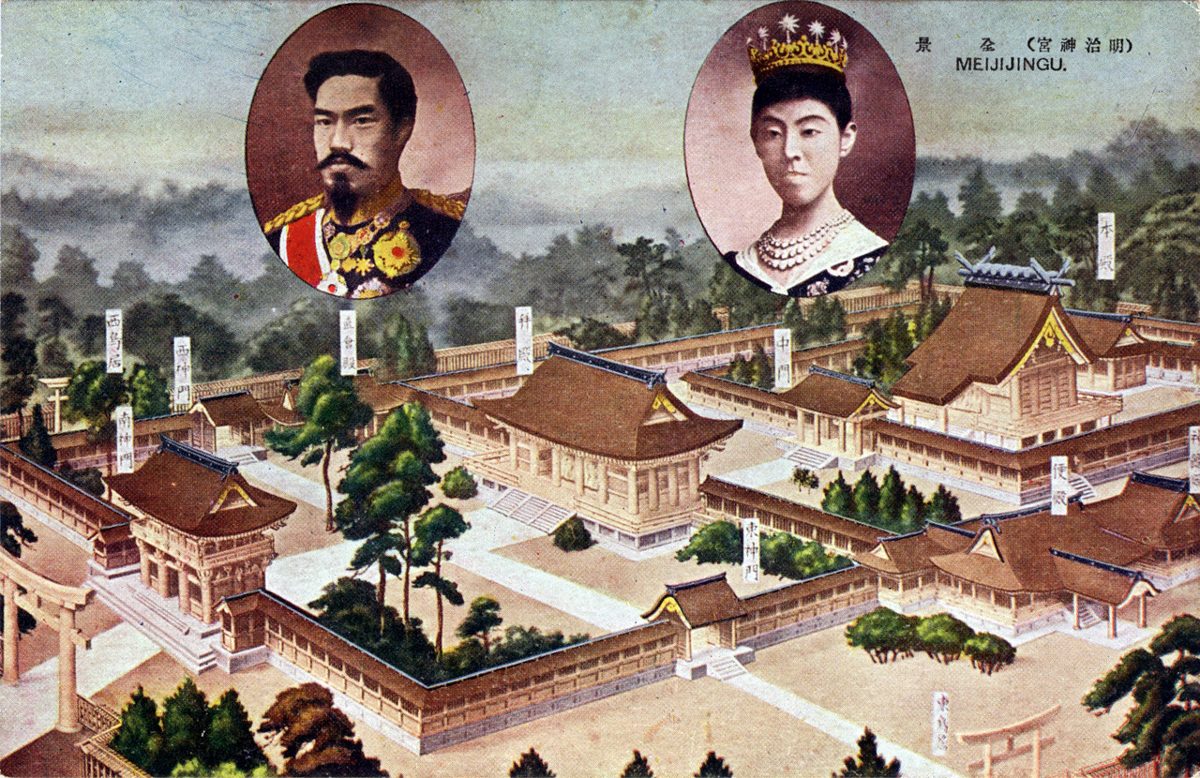
The holiday brings out events you won’t see the rest of the year. Meiji Shrine holds its Spring Grand Festival (Haru no Taisai) around May 2-3, with traditional performing arts — court music, dance, archery and more — staged for free in the shrine’s forested grounds. On Greenery Day (May 4), several of the city’s top gardens and zoos open free of charge, including Rikugien, Koishikawa Korakuen and Ueno Zoo — a lovely, fitting way to spend a holiday devoted to nature. Across the city you’ll also find food festivals, craft markets, pop-up exhibitions and special museum shows timed to the break.
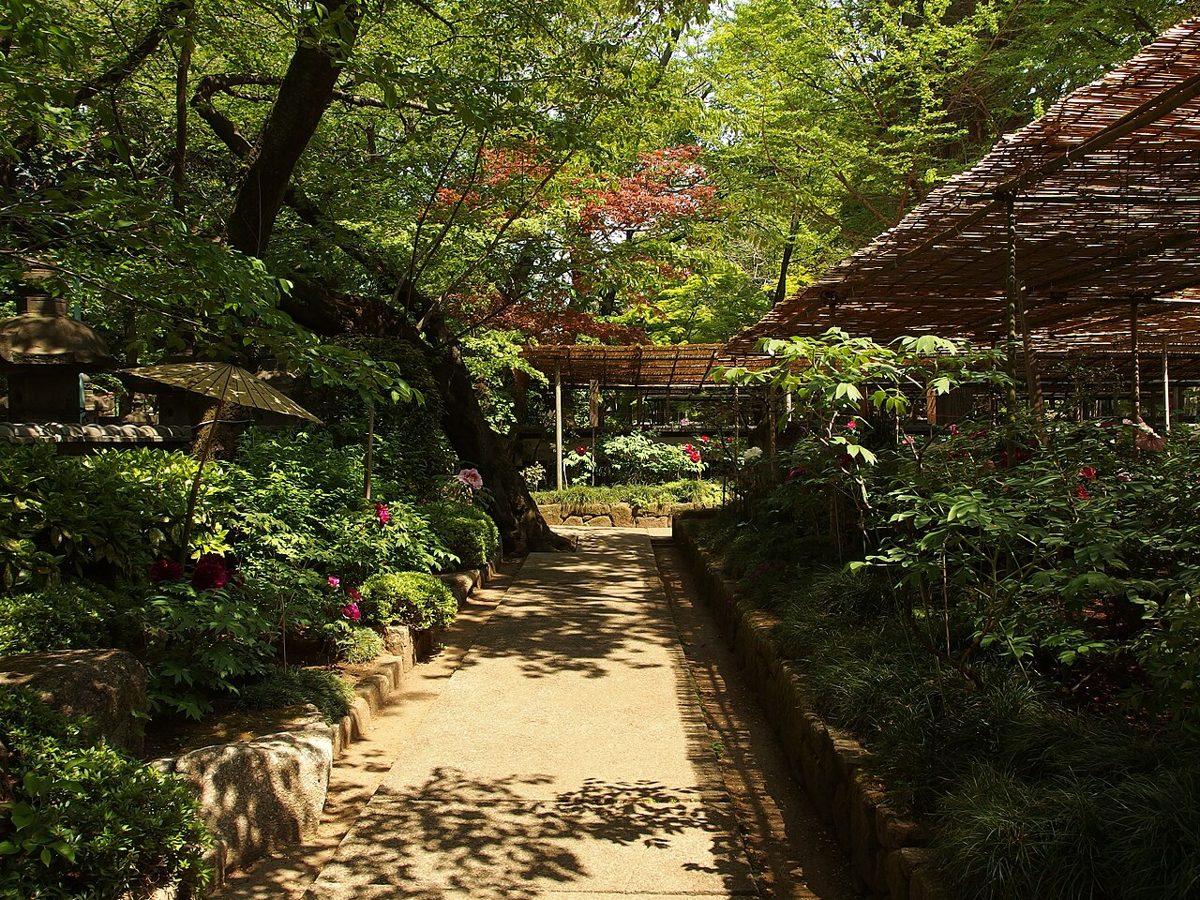
It’s also a beautiful moment in the seasonal calendar: the cherry blossoms are just finished, the new leaves (shinryoku) are a vivid fresh green, and the weather is some of the year’s most comfortable. If you missed the sakura by a week, our cherry blossom guide explains the timing, and our roundup of Tokyo parks and gardens points you to the greenest spots to enjoy Greenery Day.
Children’s Day and Koinobori
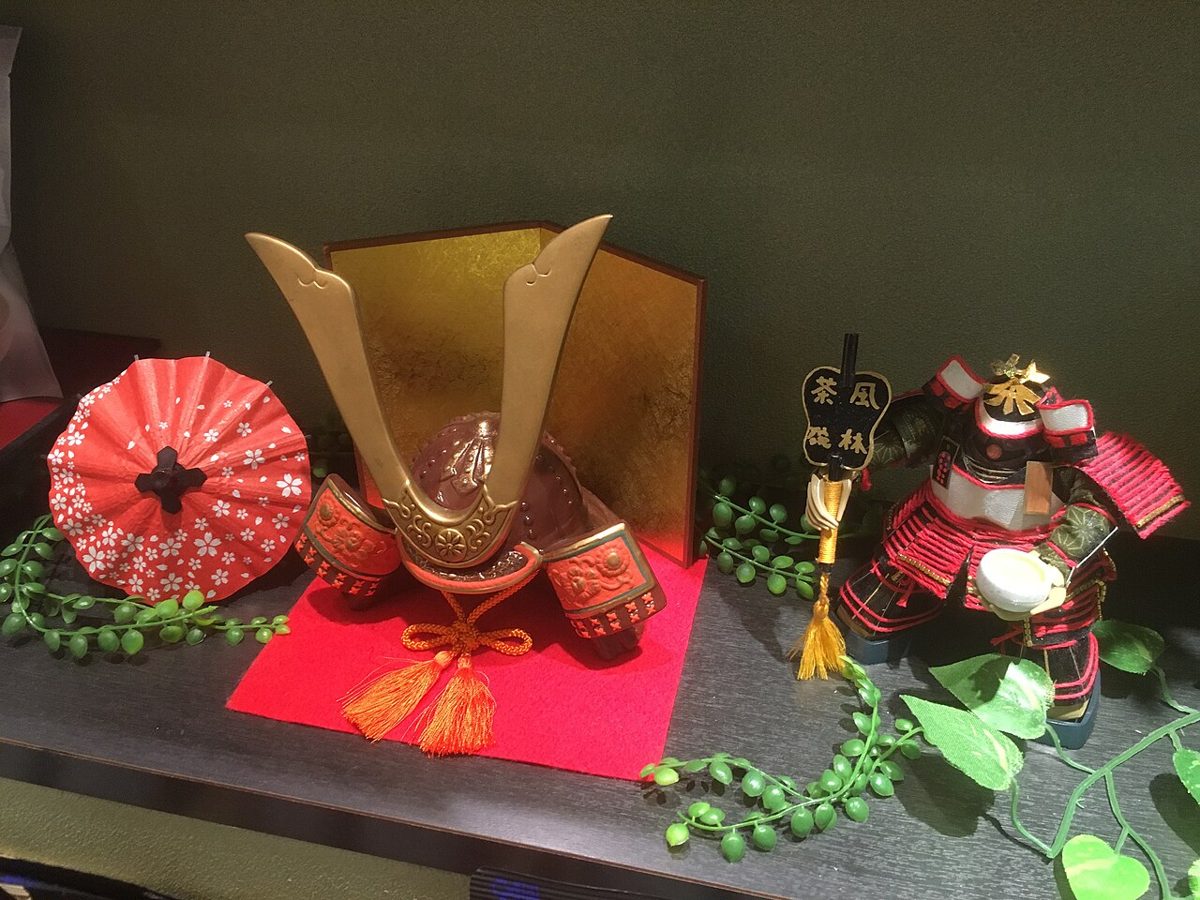
The most visible part of Golden Week is Children’s Day on May 5. In the weeks leading up to it, families fly koinobori — carp-shaped streamers in black, red and blue — from poles and balconies, because the carp’s strength swimming upstream symbolises the resilience parents wish for their children. Indoors, households display a kabuto (samurai helmet) or warrior dolls (gogatsu ningyo), and everyone eats kashiwa-mochi (sweet rice cakes wrapped in oak leaves) and chimaki.
To see koinobori in bulk, look for the displays strung in their hundreds across rivers and at parks and towers around the city — Tokyo Tower has run a koinobori display, and many suburban riverbanks put on huge multi-carp installations. It’s a genuinely cheerful, photogenic sight and a highlight if you’re travelling with kids; our Tokyo with kids guide has more family-friendly ideas for the holiday.
Day Trips: Which to Do, Which to Skip
Day trips are where Golden Week crowds bite hardest, so choose carefully. The classic escapes — Hakone, Kamakura, Nikko — are wonderful but become genuinely overrun on the peak days, with queues for the Hakone ropeway and buses, and trains standing-room only. If you must go, pick a mid-week holiday rather than the bookend travel days, leave at dawn, and buy any timed tickets ahead.
A smarter move is to flip the logic: while everyone else floods the famous spots, explore the parts of greater Tokyo they’re leaving behind. Quieter gardens, the western suburbs, riverside neighbourhoods and lesser-known museums all stay calm. And avoid the temptation to dash to Kyoto or Osaka for a day — those cities are at their absolute busiest, and the Shinkansen there and back will eat the day. For ideas that work even in peak season, see our roundup of easy escapes from the capital.
Golden Week Survival Tips
Time your sightseeing
Hit the headline sights — Senso-ji, Shibuya, teamLab, Disney — right at opening or in the last hours of the day, and use skip-the-line or timed tickets wherever they exist. Spend the crowded midday in calmer places. This single habit transforms the week.
Book the unmissables in advance
Anything with a reservation system — teamLab, Ghibli Museum tickets, popular restaurants, Disney — should be booked the instant tickets are available. Walk-up availability evaporates over Golden Week.
Carry cash and a charged IC card
Crowds mean longer queues at ticket machines and ATMs. Keep your Suica or Pasmo topped up and some cash on hand so you’re never stuck in a line when you could be moving. Slot the highlights into a flexible plan with our 3-day Tokyo itinerary, and check what else is on via our events and festivals hub.
Where to Base Yourself
Your choice of base matters more than usual over Golden Week, because you’ll want to minimise long transfers on the busy days. Pick somewhere central and well-connected — a neighbourhood on or near the JR Yamanote loop so you can reach most of the city without changing lines. Areas like Shinjuku, Tokyo Station/Marunouchi, Ueno and Shinagawa put you on top of major hubs; quieter residential pockets such as Yanaka, Kuramae or the streets around Nakameguro give you a calmer home base while staying a short ride from the action.
Whatever you choose, book it the moment your dates are set — the well-priced rooms vanish first, and over Golden Week you can’t count on last-minute availability. Our guide to where to stay in Tokyo breaks down the best neighbourhoods by budget and travel style, and our Tokyo neighbourhoods guide helps you match an area to the kind of trip you want.
A Three-Day Golden Week Plan That Dodges the Crowds
Here’s a template that uses the city’s holiday rhythm to your advantage. Day one: start at Senso-ji in Asakusa at opening (07:30-08:00), before the tour groups, then walk the quiet backstreets of Kappabashi and Kuramae for coffee and craft shops while the crowds build at the temple. Spend the afternoon in a calmer museum or garden, and end with dinner in a residential neighbourhood that locals have largely vacated.
Day two: book a morning teamLab or Ghibli slot well in advance, then explore a business district like Marunouchi or the waterfront, both unusually peaceful with the offices closed. Catch the Meiji Shrine Spring Grand Festival if your dates align. Day three: take advantage of Greenery Day’s free garden admission, or do a half-day to a quieter corner of greater Tokyo rather than a packed day-trip town. Throughout, eat lunch late, sightsee early and late, and treat the middle of the day as downtime. For a fuller framework you can adapt, see our three-day plan for first-timers.
Weather and What to Pack
One big consolation of Golden Week is the weather, which is among the best Tokyo gets all year. Early May runs roughly 18-24°C in the day, dry and bright, with low humidity and the fresh green of new leaves everywhere — perfect for long days on foot. Pack light layers: a t-shirt and a light jacket or cardigan for cooler mornings and evenings covers it, plus comfortable walking shoes and sun protection for the bright afternoons. You won’t need an umbrella most days, though a packable one is sensible for the odd spring shower. Because you’ll be threading through crowds and on and off trains constantly, travel light during the day — a small backpack beats dragging bags through a packed Shibuya.
Frequently Asked Questions
When is Golden Week in Japan?
Golden Week is a cluster of four national holidays at the turn of April and May: Showa Day (April 29), Constitution Memorial Day (May 3), Greenery Day (May 4) and Children’s Day (May 5). Depending on how the dates fall, they combine with weekends into a break of up to nine days. In 2026 the main run of consecutive days off is May 2-6, with April 29 as a separate holiday.
Is it a good idea to visit Tokyo during Golden Week?
It can be, if you plan well and stay put. Tokyo itself often gets quieter as locals leave to visit family, so the city is a smart base. The catch is that famous tourist spots, theme parks and any long-distance travel get extremely busy and expensive. If your trip happens to fall over Golden Week, base yourself in Tokyo, book everything early, and avoid travelling on the peak days.
Is everything closed in Tokyo during Golden Week?
No — unlike the New Year holiday, most of Tokyo stays open and busy during Golden Week. Department stores, restaurants, museums, attractions and transport all run, often with special events and extended hours. Some small independent shops and clinics close for a few days, and offices shut, but as a visitor you’ll find the city very much open for business.
How much more expensive is Golden Week?
A lot, for travel and lodging. Tokyo hotel rates often double or triple, with central rooms running ¥30,000+ a night, and flights and highway buses spike too. Reserved Shinkansen seats sell out and rise by a few hundred yen. Within Tokyo, though, ordinary costs — local trains, food, attractions — barely change; it’s accommodation and long-distance transport that hurt.
What is Children’s Day in Japan?
Children’s Day (Kodomo no Hi), May 5, celebrates children’s health and happiness. Families fly koinobori — carp-shaped streamers — and display a kabuto samurai helmet or warrior dolls as symbols of strength, and they eat kashiwa-mochi (rice cakes in oak leaves) and chimaki. You’ll see koinobori strung over rivers and balconies all over Tokyo in late April and early May.
Photo Credits
- Koinobori carp streamers fly across Japan for Children’s Day on 5 May — Photo: 663highland / CC BY 2.5 via Wikimedia Commons
- Bullet-train platforms heave during Golden Week as the whole country travels at once — Photo: Syced / CC0 via Wikimedia Commons
- Meiji Shrine holds its Spring Grand Festival during Golden Week — Photo: Unknown authorUnknown author / Public domain via Wikimedia Commons
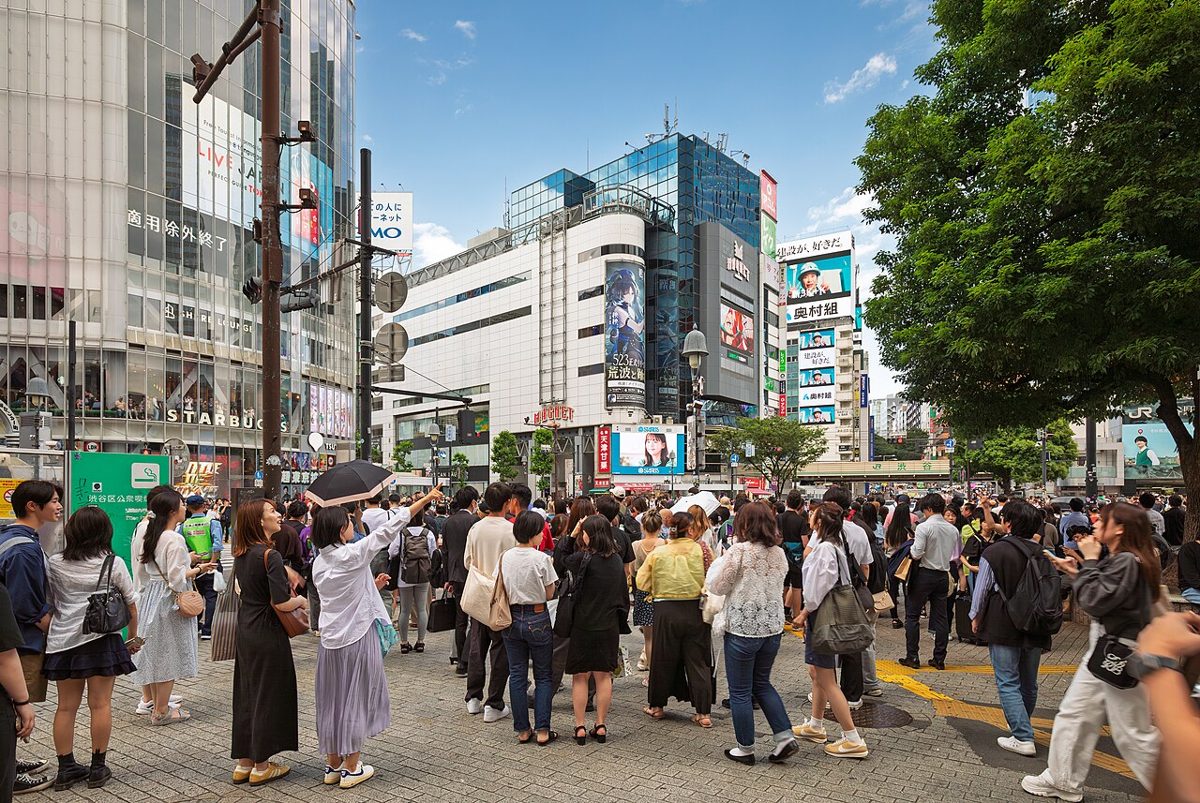
- Tourist hubs like Shibuya get busier over Golden Week, even as offices empty — Photo: Ximonic (Simo Räsänen) / CC BY-SA 4.0 via Wikimedia Commons
- Families display a kabuto helmet for Children’s Day, a symbol of strength — Photo: Nesnad / CC BY 4.0 via Wikimedia Commons
- Late-spring greenery in Ueno Park — Golden Week sits just after the cherry blossoms — Photo: Guilhem Vellut from Annecy, France / CC BY 2.0 via Wikimedia Commons
