Best Time to Visit Tokyo · Guide №183
Tokyo in March: Weather, Events, Crowds and What to Pack
March is Tokyo's turn from winter to spring: the last plum blossom, the marathon, Sensoji's golden dragon and, usually in the final week, the first cherry blossom. Plus what isn't in Tokyo this March.
目次 — Contents
- March at a glance
- March weather in Tokyo
- Cherry blossom: what the dates actually say
- Early March: the end of the plum blossom
- Hinamatsuri, Wednesday 3 March
- Tokyo Marathon, Sunday 7 March 2027
- Sensoji’s golden dragon, Thursday 18 March
- White Day and the equinox weekend
- What isn’t in Tokyo this March
- The pollen problem
- What to eat in March
- Crowds and costs
- What to pack for Tokyo in March
- Is March a good time to visit Tokyo?
- Frequently Asked Questions
- Photo Credits
This article contains advertising. Our booking links are routed through a partner that adds commission tracking automatically, so if you book through one we earn a commission from the provider, at no extra cost to you. It never affects what we recommend. Affiliate disclosure
Tokyo in March is the month the city changes season in front of you. The first week is still winter, with highs around 13°C and the last plum blossom; by the final week the average high is past 15°C and the cherry trees are usually starting to flower. It is a hard month to plan precisely, and one of the best to be in.
That unpredictability is the whole story. A trip in the first half of March gets mild late-winter weather, smaller crowds and a city getting ready for spring. A trip in the last ten days gets the blossom and the crowds that come with it, provided the trees keep to schedule. This guide covers the weather, what happens on which dates in 2027, the blossom odds, and two things people expect to find in Tokyo this March that are actually in Osaka.
March at a glance
The month splits neatly into thirds, and the third you land in decides what kind of trip you get.
| 1–10 March | 11–20 March | 21–31 March | |
|---|---|---|---|
| Average high / low | 12.7°C / 3.8°C | 14.5°C / 5.0°C | 15.4°C / 6.2°C |
| Average rainfall | 45.1 mm | 26.3 mm | 44.7 mm |
| What’s on | Last of the plum blossom; Hinamatsuri on Wednesday 3 March; Tokyo Marathon on Sunday 7 March | White Day on the 14th; Sensoji’s Jigen-e and golden dragon dance on Thursday 18 March | Equinox long weekend, 20–22 March; the first cherry blossom, normally around the 24th |
| Feel | Late winter, quiet | Spring arriving | Blossom season, the busiest stretch |
Temperatures and rainfall are the Japan Meteorological Agency’s 1991–2020 normals for central Tokyo. The middle ten days are the driest of the month, which is worth knowing if you have a choice.
March weather in Tokyo
Across the month, the JMA normals give an average daily high of 14.2°C and a low of 5.0°C. Those numbers hide a real climb: the first week of March can feel like January on a grey day, while a sunny afternoon in the last week is warm enough to sit outside in a light jacket. Mornings and evenings stay cool throughout, and the gap between a sunny noon and a clear night is the thing that catches visitors out.
Rain picks up after the dry winter: March averages 116.0 mm, roughly double February’s 56.5 mm. There is still plenty of sun, 175.3 hours on average, and the air is dry, with mean humidity of 57%.
Snow is possible, but only just. The normals count 1.4 days in March on which any snow falls in central Tokyo, and that means flakes in the air, not snow on the ground. Pack for cold rain, not for snow.
The light changes quickly too. In 2027 the sun sets at 17:36 on 1 March and at 18:01 on 31 March, and sunrise moves from 06:12 to 05:30. By the end of the month you have usable daylight until after six, which makes a difference to how much an evening walk along a river or through a park is worth.
Cherry blossom: what the dates actually say
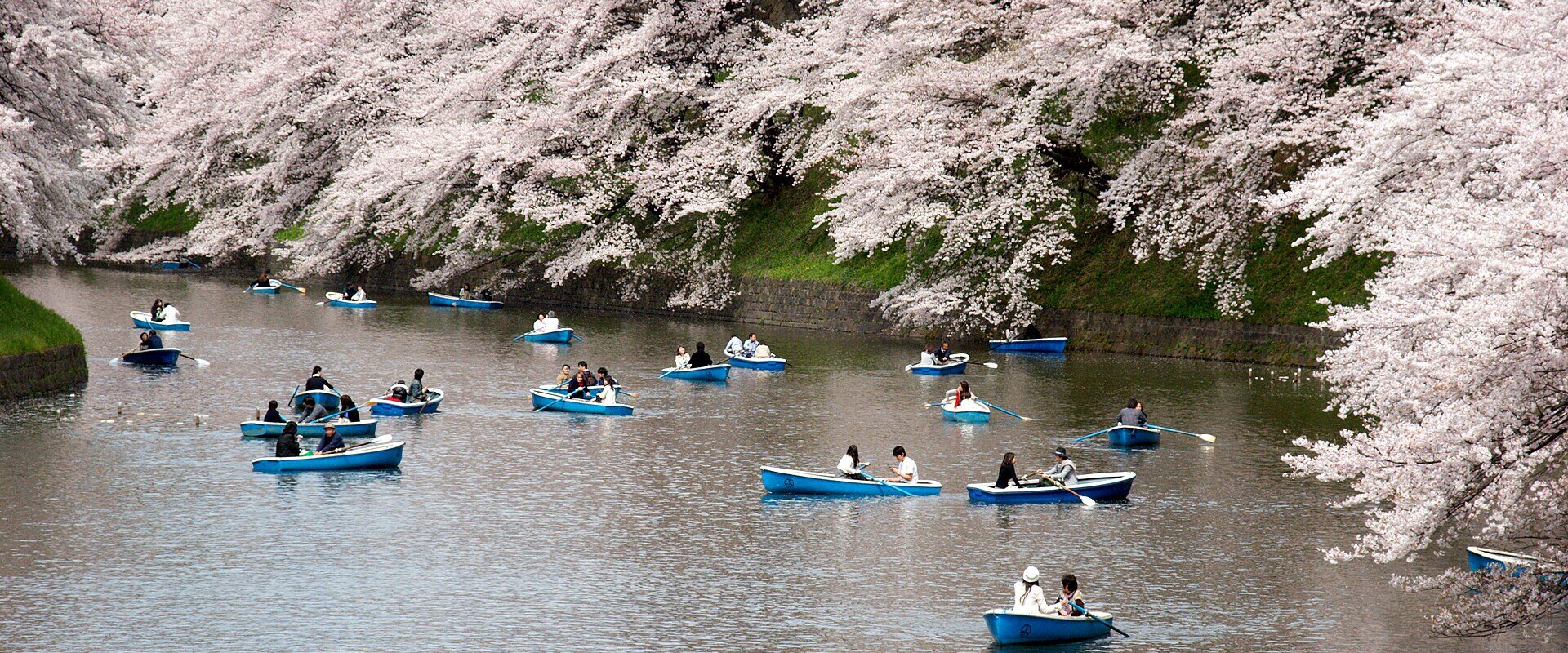
Most March trips are planned around one question, so here are the numbers rather than the folklore. The JMA’s 1991–2020 normals put Tokyo’s first flowers on 24 March and full bloom on 31 March. Tokyo’s official tourism guide says it normally takes about a week to ten days to go from first flowers to full bloom.
| Year | First flowers | Full bloom |
|---|---|---|
| Normal (1991–2020) | 24 March | 31 March |
| 2024 | 29 March | 4 April |
| 2025 | 24 March | 30 March |
| 2026 | 19 March | 28 March |
Look at the spread. Full bloom has landed anywhere from 28 March to 4 April in just the last three years, which is why a trip booked a year ahead for “peak blossom” is a gamble rather than a plan. If your dates are fixed, the safest bet on the averages is the very end of March into the first days of April: you are likely to see trees in flower even if you miss the exact peak. If you can move, wait for the forecasts. Japan’s private weather firms, the Japan Meteorological Corporation among them, publish Tokyo blossom forecasts as spring approaches, and they get more reliable the closer the date.
Where to go once the trees are out is a guide of its own: the Tokyo cherry blossom guide covers the spots, the night-time illuminations and how to do hanami properly. For how March compares with the rest of the year, see the best time to visit Tokyo.
Early March: the end of the plum blossom
Plum comes before cherry, and in early March it is on its way out but still worth a detour, partly because it draws a fraction of the crowds. Two places stand out.
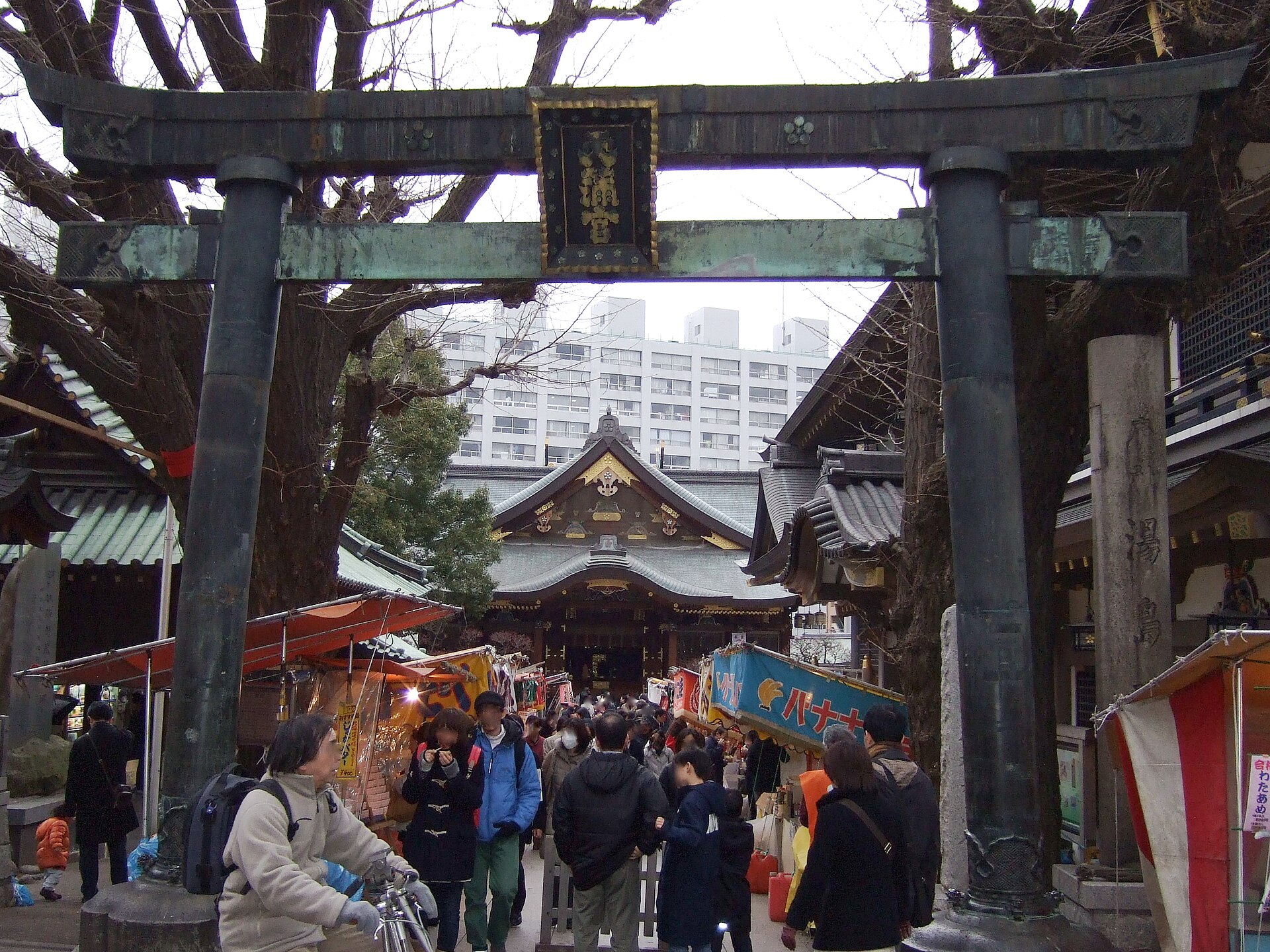
Yushima Tenmangu in Bunkyo hosts the Bunkyo Plum Festival around its roughly 300 trees. The ward says it runs each year from early February to early March; the 2026 edition ran from 8 February to 8 March, so check Bunkyo ward’s page for the 2027 dates.
Hanegi Park in Setagaya has a bigger grove, about 650 trees of some 60 varieties, and the ward puts the blossom from mid-December to early March. Setagaya held its 47th plum festival there in 2026. By March you are seeing the late varieties and the first fallen petals, which has its own appeal. For the rest of the city’s green spaces, see the Tokyo parks and gardens guide.
Hinamatsuri, Wednesday 3 March
Hinamatsuri, the Doll Festival or Girls’ Day, falls on 3 March. Families with daughters set up tiered displays of dolls in court dress, the emperor and empress at the top and attendants, musicians and miniature furniture on the steps below, as a wish for the girls’ health and happiness. It is a household festival rather than a street one, so there is no parade to find.
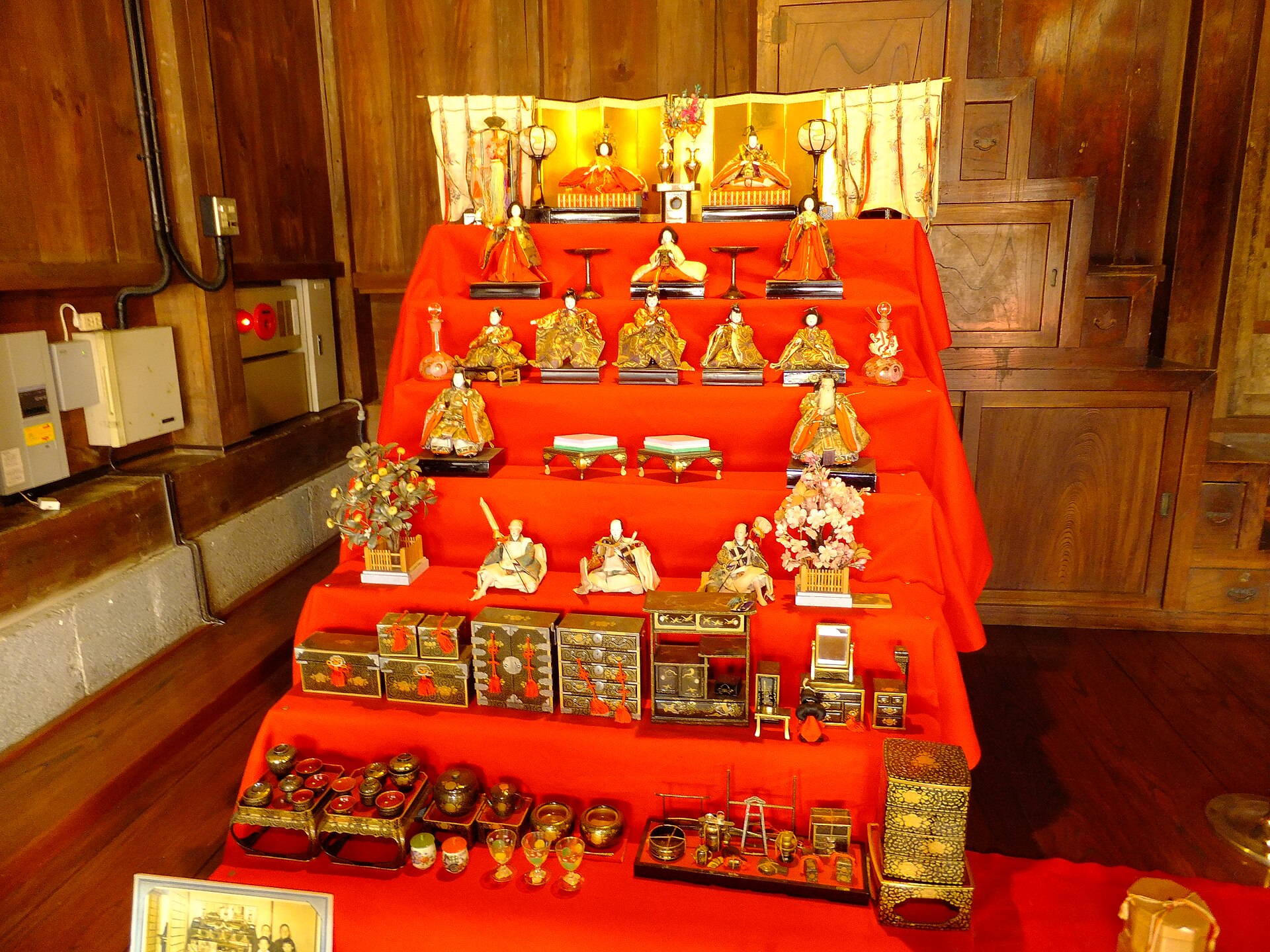
What visitors see is the public side of it: elaborate displays in museums, historic houses and hotels through February and into early March. They change from year to year, so check event listings in February rather than assuming the displays match earlier years. The displays are usually packed away soon after the 3rd, which makes this a reason to come early in the month rather than a reason to stay late.
Tokyo Marathon, Sunday 7 March 2027
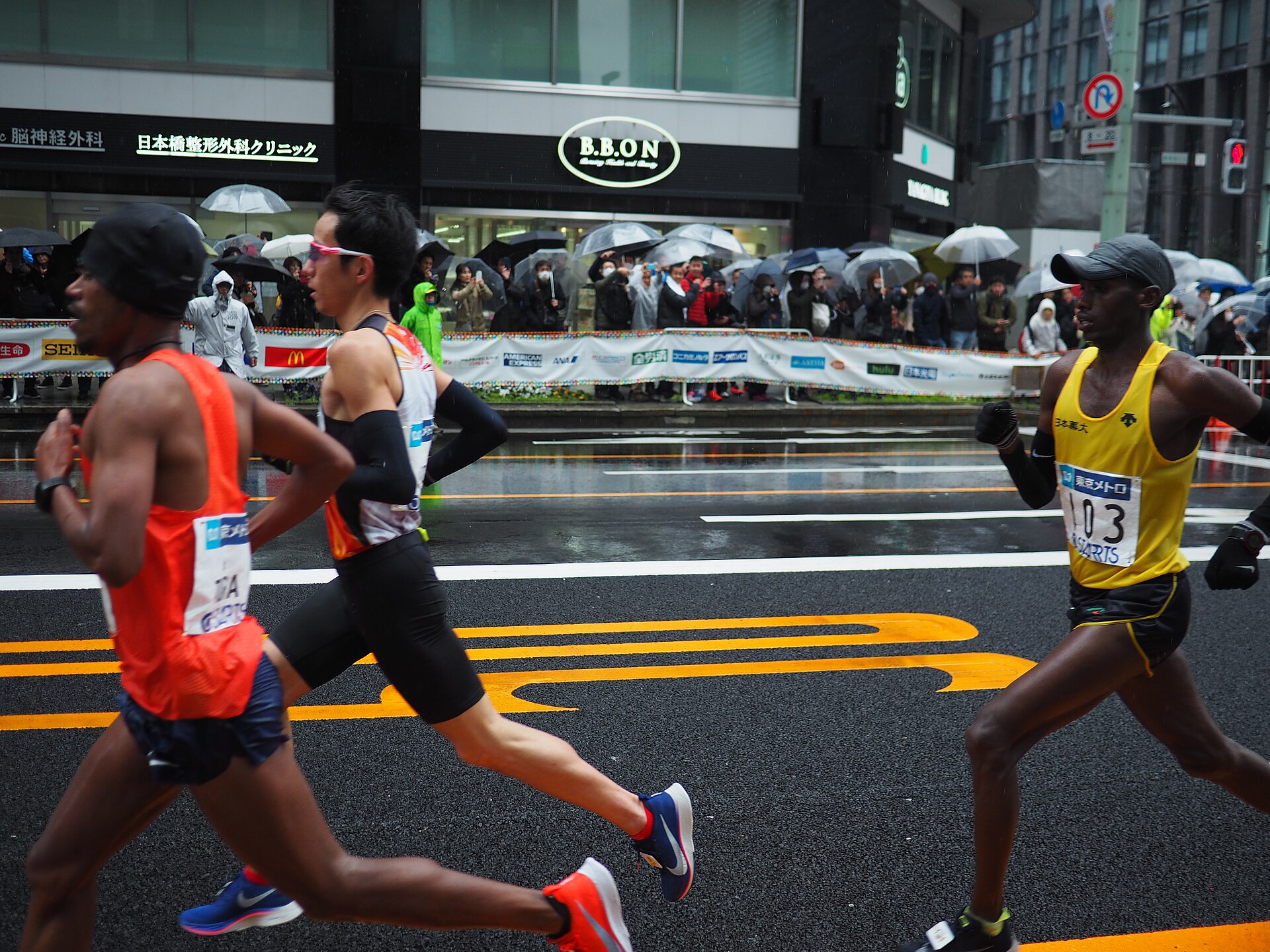
The Tokyo Marathon, which marks its 20th anniversary in 2027, runs on Sunday 7 March 2027. The course starts at the Tokyo Metropolitan Government Building in Shinjuku and finishes by Tokyo Station on Gyoko-dori Avenue, passing Kaminarimon in Asakusa, Ryogoku, Monzen-nakacho, Ginza, Tamachi and Hibiya along the way. The marathon starts at 9:10, and runners have seven hours to finish. Before the race, the runners’ Expo and packet pick-up take place at Tokyo Big Sight from 4 to 6 March.
For anyone not running, it changes the shape of the day. Roads along the course close on race morning, so taxis and buses are a poor bet near the route; the trains are the way to get around. It is also one of the best free spectacles of the year. Kaminarimon, with Asakusa’s giant red lantern behind the runners, is the classic place to watch. Check the organiser’s site, marathon.tokyo, for the road closures before you plan a Sunday across the city.
Sensoji’s golden dragon, Thursday 18 March
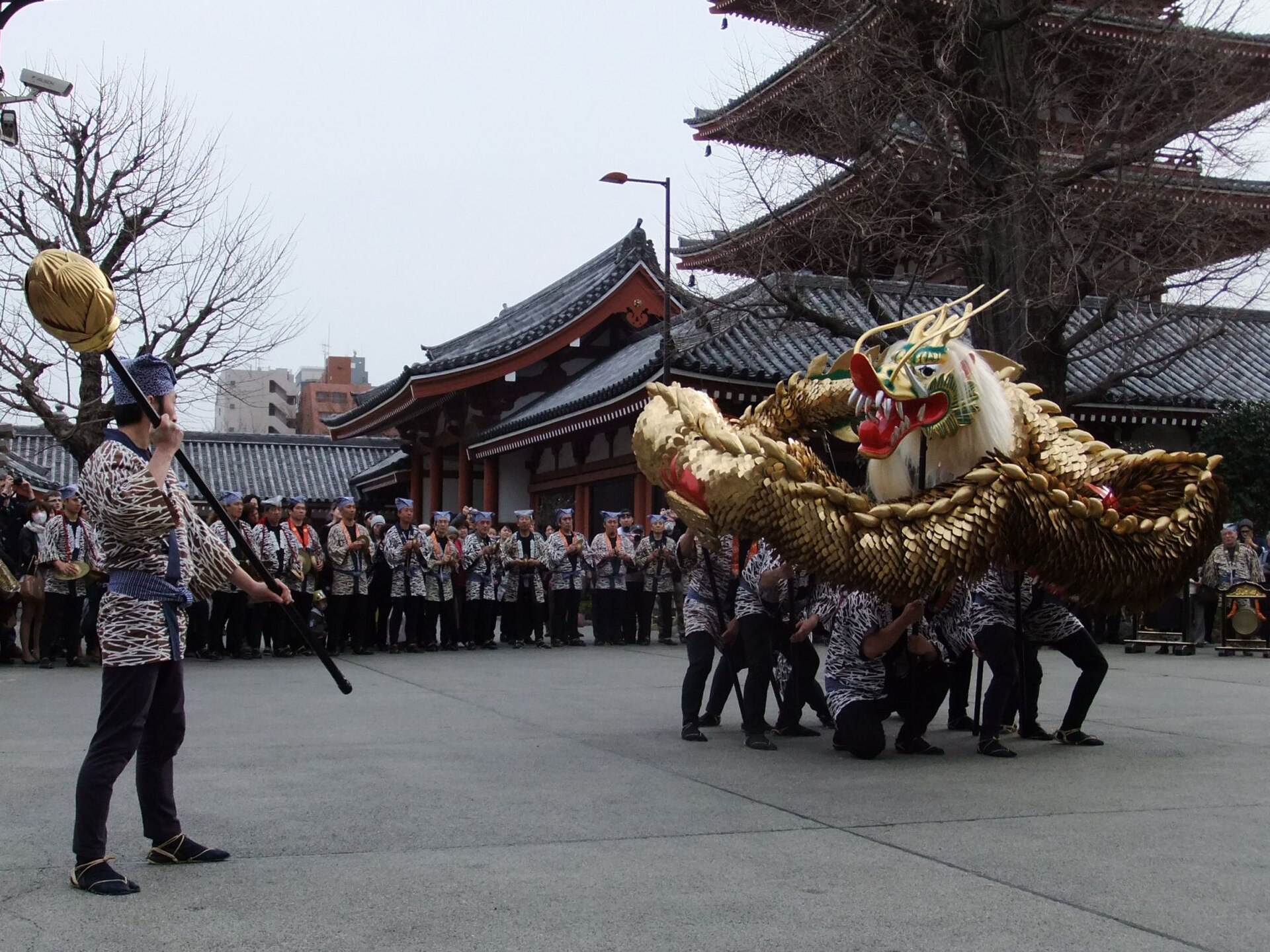
On 18 March every year, Sensoji in Asakusa holds its Jigen-e, marking the day in 628 that the temple’s Kannon image is said to have been found. A procession goes from Denboin to the main hall, with a service from 2pm. The temple also gives out a red prayer slip, the benifuda, on that day only.
The part most visitors come for is the Kinryu no Mai, the golden dragon dance, performed on the west side of the temple grounds on the day. A team of dancers carries a long gold-scaled dragon through the courtyard on poles, weaving it in coils through the crowd. Go early, stay around the grounds and check Sensoji’s own site for the day’s programme; in 2027 the 18th falls on a Thursday, which helps.
Asakusa is busy any day of the year; the Sensoji temple guide has the layout and the quieter times, and the Asakusa guide covers the rest of the neighbourhood.
White Day and the equinox weekend
White Day, 14 March, is Japan’s reply to Valentine’s Day. In February the gifts of chocolate mostly go one way; a month later the return gifts go back the other, and sweet shops and department-store food halls lean into it. It is a Sunday in 2027. If you want to see the confectionery displays at their most excessive, the week before is the time.
Vernal Equinox Day is Sunday 21 March in 2027, and because the holiday falls on a Sunday, Monday 22 March is a national holiday in its place. That makes Saturday 20 to Monday 22 March a three-day weekend for Japan, and with the blossom normally only days away, expect it to be busy. Book trains and hotels for those dates early.
The equinox also falls in the middle of Higan, a seven-day Buddhist observance when many families visit their ancestors’ graves. It is quiet and private rather than a spectacle, but you may notice fresh flowers at temple cemeteries, and the bean-paste-covered rice balls made for Higan in the sweet shops.
What isn’t in Tokyo this March
Two March events that people associate with Tokyo are both in Osaka in 2027, and it is better to find that out here than at the box office.
Grand sumo. The March tournament is held in Osaka, at EDION Arena Osaka, from 14 to 28 March in 2027. Tokyo’s tournaments, at the Ryogoku Kokugikan, are in January, May and September: in 2027 they run from 10 to 24 January, 9 to 23 May and 12 to 26 September. If sumo is the point of your trip, come in May instead. The Tokyo sumo guide has the details for the Tokyo tournaments.
AnimeJapan. The big anime industry show has traditionally filled Tokyo Big Sight in late March, but the 2027 edition is at INTEX Osaka, with public days on Saturday 27 and Sunday 28 March. Fans planning a March trip around it need a ticket to Osaka. The guide to Tokyo’s fan events covers what is still on in the city.
The pollen problem
If you have hay fever, March is the month to take it seriously. The Tokyo Metropolitan Institute of Public Health says cedar and cypress pollen usually peak from March into April and carry on until mid-May. Cedar season starts earlier, as the Tokyo in February guide explains, but March is when the two overlap.
For sufferers it can be the difference between a good trip and a miserable one. Bring the antihistamine that works for you from home, wear a mask on high-pollen days as many Tokyo residents do, wash your face and hair when you get back to your room, and keep indoor plans in reserve for dry, windy days. If you don’t have hay fever, ignore all of this; plenty of visitors never notice.
What to eat in March
March food runs on two calendars: the Doll Festival and the blossom.
For Hinamatsuri, the traditional table is chirashi-zushi, sushi rice scattered with toppings rather than shaped, served with a clear clam soup; clam shells only fit their own pair, which makes them a symbol of a good marriage. You’ll also see hishi-mochi, diamond-shaped rice cakes layered pink, white and green, and hina-arare, small sweet rice crackers in pastel colours. Supermarkets and department-store food halls stock all of them in the days before the 3rd.
Then there is sakura-mochi, pink rice cake around sweet bean paste, wrapped in a salted cherry leaf, which Japanese sweet shops make for spring. The leaf is edible, and its salty, faintly almond-like flavour is half the point. As the blossom gets close, limited-edition cherry-blossom flavours turn up in convenience stores and cafes, in everything from drinks to snacks; some are excellent and nearly all of them are pink. For the widest choice of seasonal sweets in one place, go to a department-store food hall: the depachika guide explains how they work.
Crowds and costs
March is two different months for crowds. The first half is still the quiet tail of winter, and the city feels like it: busy in the normal way, without the blossom crowds. The last ten days are when the blossom usually arrives, with the equinox long weekend landing on top of it.
The practical advice follows from that. If you’re coming for the blossom, book accommodation as early as you can. If you’re not, the first two weeks of March give you most of the spring mildness with far less competition for it. And for the hours when the rain sets in, the rainy day guide has the indoor options.
If you want snow rather than blossom, the season isn’t over in the mountains: Gala Yuzawa’s ski season runs to 5 May 2027, and the Gala Yuzawa day trip guide explains how to do it from Tokyo in a day.
What to pack for Tokyo in March
The rule for March is layers, because a single day can run from 4°C at breakfast to 15°C at lunch.
- A warm jacket that zips open. Something you can wear fully closed on a cold morning and carry over your arm by afternoon.
- Two or three light layers underneath. A thin sweater or fleece over a long-sleeved top covers most days; add a thermal layer for early March.
- A compact umbrella. March is twice as wet as February. Convenience stores sell cheap umbrellas if you forget, but a sturdy one of your own lasts longer.
- Comfortable, water-resistant shoes. Blossom viewing and plum gardens mean a lot of walking on paths that can be muddy after rain.
- Hay fever medicine and a mask, if pollen affects you at home.
- A scarf. Evenings are cold, especially by the water.
The full checklist, from adapters to medicines, is in the Tokyo packing list.
Is March a good time to visit Tokyo?
Yes, and the more flexible you are, the better it gets. Early March is underrated: the weather is mild for winter, the plum is still out, the marathon and Hinamatsuri give it character, and you aren’t competing with the whole country for a hotel room. Late March is the blossom, and if the trees cooperate there is nothing in the Tokyo calendar to match it.
The honest catch is that the blossom can’t be booked. The averages favour the last few days of March into early April, but recent years have ranged from full bloom on 28 March to 4 April, and a trip that ends on the 25th can easily miss it. If blossom is the only reason you’re coming, either keep your dates flexible or aim for the turn of the month and treat everything else as a bonus. If it isn’t, take the first half of March, enjoy the quiet, and let the city’s other March events carry the trip. For a fuller calendar, the Tokyo events and festivals guide covers the year.
If the blossom runs late, or your trip does, April picks up where March leaves off. Shinjuku Gyoen’s double-flowered cherries peak around mid-April, the azaleas at Nezu Shrine and the wisteria at Kameido Tenjin follow, and Golden Week starts on Thursday 29 April in 2027. The Tokyo in April guide has the details.
Frequently Asked Questions
Is March a good time to visit Tokyo?
Yes. Early March is mild for winter, quieter and still has plum blossom, plus Hinamatsuri on the 3rd and the Tokyo Marathon on 7 March 2027. The last ten days usually bring the first cherry blossom and the year’s first big crowds; the JMA’s 1991–2020 normals put first flowers on 24 March and full bloom on 31 March.
How cold is Tokyo in March?
The JMA’s 1991–2020 normals give an average daily high of 14.2°C and a low of 5.0°C, rising from 12.7°C and 3.8°C in the first ten days to 15.4°C and 6.2°C in the last eleven. Rainfall averages 116.0 mm, about double February’s, and snow is rare.
Will the cherry blossoms be out in Tokyo in March?
Usually by the end of the month, but not always. The normal dates are 24 March for first flowers and 31 March for full bloom, and recent years have swung from full bloom on 28 March in 2026 to 4 April in 2024. Watch the forecasts from Japan’s private weather firms as spring approaches and keep some flexibility in your dates.
What should I wear in Tokyo in March?
Layers. A warm jacket you can open up, a light sweater or fleece and a long-sleeved top cover most days, with a thermal layer for early March. Add a compact umbrella, comfortable shoes for long walks and a scarf for cold evenings.
Is there sumo in Tokyo in March?
No. The March tournament is held in Osaka, at EDION Arena Osaka from 14 to 28 March 2027. Tokyo’s tournaments at the Ryogoku Kokugikan are in January, May and September; in 2027 the May tournament runs from 9 to 23 May.
Photo Credits
- Rowing boats under the cherry blossom at Chidorigafuchi – Chidorigafuchi (3451081533) by KimonBerlin, CC BY-SA 2.0, via Wikimedia Commons.
- Runners at the 2019 Tokyo Marathon – Tokyo Marathon 2019 Runner (32321720687) by nakashi from Chofu, Tokyo, JAPAN, CC BY-SA 2.0, via Wikimedia Commons.
- Plum festival at Yushima Tenmangu – Ume matsuri -Yushima 03 by pelican from Tokyo, Japan, CC BY-SA 2.0, via Wikimedia Commons.
- Hina doll display at Kyodo-no-mori Park – Hina Dolls Display in the Kyōdo-no-mori Park 20130310 by 掬茶, CC BY-SA 3.0, via Wikimedia Commons.
- Kinryu no Mai at Sensoji – Senso-ji Kinryu-no-mai by Tak1701d, CC BY-SA 3.0, via Wikimedia Commons.