Best Time to Visit Tokyo · Guide №185
Tokyo in May: Weather, Events, Crowds and What to Pack
May is a festive month in Tokyo: the end of Golden Week, Sanja Matsuri, a main-year Kanda Matsuri, the May sumo tournament and the rose gardens, before the rainy season arrives.
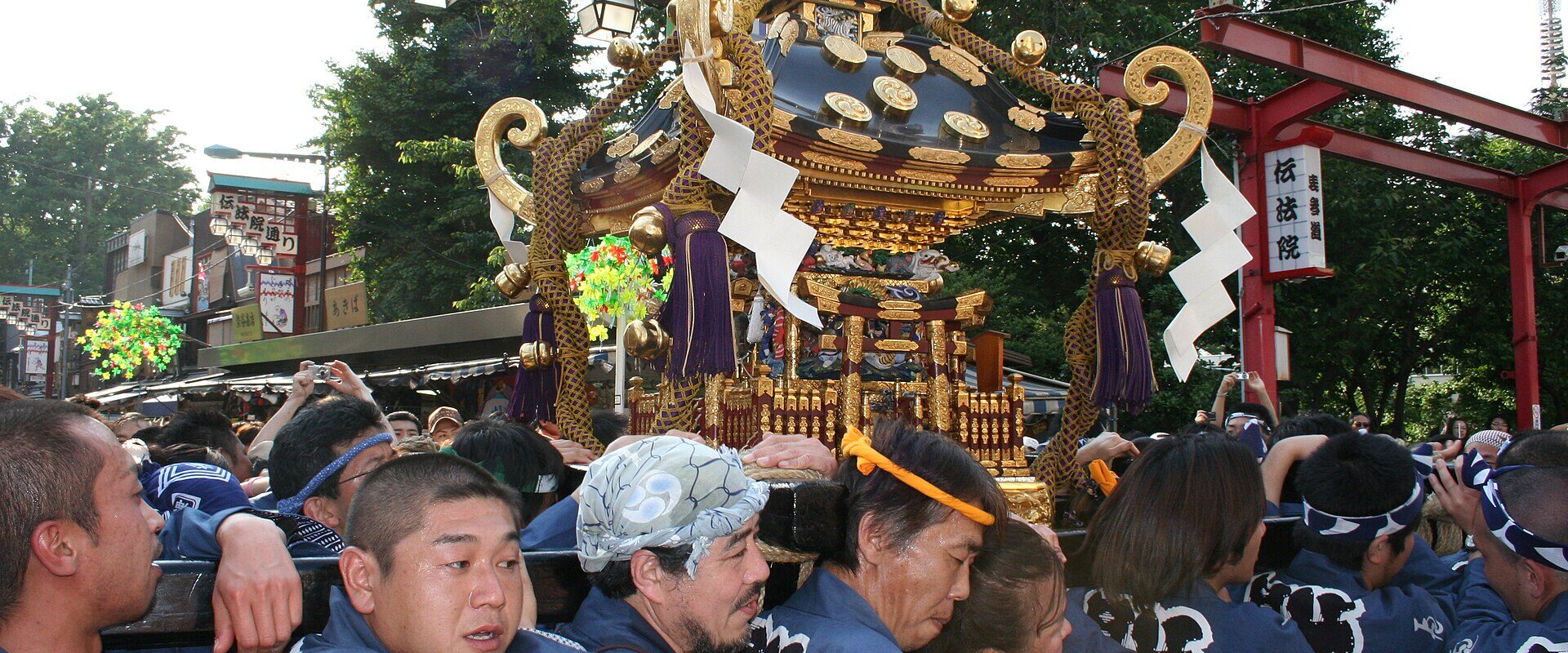
目次 — Contents
- May at a glance
- May weather in Tokyo
- The end of Golden Week, 1–5 May
- Kanda Matsuri: 2027 is a main-festival year
- Sanja Matsuri, Friday 14 to Sunday 16 May 2027
- Grand sumo: the May tournament, 9–23 May 2027
- Roses: Kyu-Furukawa Gardens and Jindai
- Design Festa, 29–30 May 2027
- Day trips worth taking in May
- The end of pollen season
- What to eat in May
- Crowds and costs
- What to pack for Tokyo in May
- Is May a good time to visit Tokyo?
- Frequently Asked Questions
- Photo Credits
This article contains advertising. Our booking links are routed through a partner that adds commission tracking automatically, so if you book through one we earn a commission from the provider, at no extra cost to you. It never affects what we recommend. Affiliate disclosure
Tokyo in May starts in the last days of Golden Week and ends on the edge of the rainy season, and in between it is one of the best months to be in the city. Highs climb from about 23°C to 25°C, the parks are at their greenest, and 2027 brings both Sanja Matsuri and the full Kanda Matsuri.
The catches are at either end. The first five days are still Golden Week, with the crowds that come with it, and late May can bring the first spells of the rainy season: in 2025 it began around 22 May. This guide covers the weather, the festival dates for 2027, the May sumo tournament, the rose gardens and how to dodge the busiest days.
May at a glance
| 1–10 May | 11–20 May | 21–31 May | |
|---|---|---|---|
| Average high / low | 22.6°C / 13.3°C | 23.2°C / 14.3°C | 24.9°C / 15.9°C |
| Average rainfall | 34.7 mm | 46.1 mm | 58.9 mm |
| What’s on | Golden Week holidays, Monday 3 to Wednesday 5 May; the May sumo tournament opens on Sunday 9 May | Sanja Matsuri, Friday 14 to Sunday 16 May; sumo continues to 23 May; rose festivals in the city’s gardens | Design Festa, 29–30 May; the rainy season possible in an early year |
| Feel | Holiday crowds, then a sudden calm | Festival season | Warm, greener, sometimes wet |
Temperatures and rainfall are the Japan Meteorological Agency’s 1991–2020 normals for central Tokyo. Check Kanda Myojin’s own site for the Kanda Matsuri’s 2027 dates; in its last main-festival year, 2025, the big weekend was 10 and 11 May.
May weather in Tokyo
May is warm without being hot. The JMA normals give an average daily high of 23.6°C and a low of 14.6°C across the month, rising from 22.6°C and 13.3°C in the first ten days to 24.9°C and 15.9°C in the last eleven. Most days are T-shirt weather by early afternoon, and evenings are mild enough to eat outside.
It is also a little wetter than April, with 139.7 mm of rain on average against April’s 133.7 mm, and the rain is weighted towards the end of the month: 34.7 mm in the first ten days, 58.9 mm in the last eleven. Sunshine, at 179.6 hours, is the highest of the three spring months by a whisker, and humidity edges up to 68% on its way to June’s 75%.
The days are the longest yet. In 2027 the sun rises at 04:50 on 1 May and 04:27 on 31 May, and sets at 18:27 and 18:50. Early risers get the streets at their quietest.
The evenings are the other reward. With lows of 13°C to 16°C and daylight lasting until around half past six or later, May is the month Tokyo moves outdoors after work: riverside walks, terrace seats and open-air bars all come into their own. The rooftop bars guide has places to watch the light go, and the Tokyo nightlife guide covers what happens after that.
The rainy season can start early
The JMA’s normal start of the rainy season for the Kanto-Koshin region, which includes Tokyo, is around 7 June, but it moves from year to year. It began around 22 May in 2025 and around 2 June in 2026. So the last week of May is a gamble: it might be the warmest, greenest week of spring, or the first week of the rains. If your trip is fixed for late May, pack for both and keep an indoor plan or two in reserve; the rainy day guide has them.
The end of Golden Week, 1–5 May
Golden Week began on Thursday 29 April, and its second half fills the first days of May: the weekend of 1 and 2 May, then three holidays in a row, Constitution Memorial Day on Monday 3 May, Greenery Day on Tuesday 4 May and Children’s Day on Wednesday 5 May. These are the days to avoid theme parks, popular day trips and long-distance trains unless you’ve booked well ahead. The Golden Week guide covers how to plan around them, and Tokyo in April covers the run-up.
Children’s Day is the one with the most colourful decorations. Families fly koinobori, carp streamers, for their children, and some public places string up dozens of them. Tokyo Tower’s display of 333 carp streamers ran from 18 March to 6 May in 2026, according to GO TOKYO, the city’s official tourism site; check Tokyo Tower’s own site for 2027.
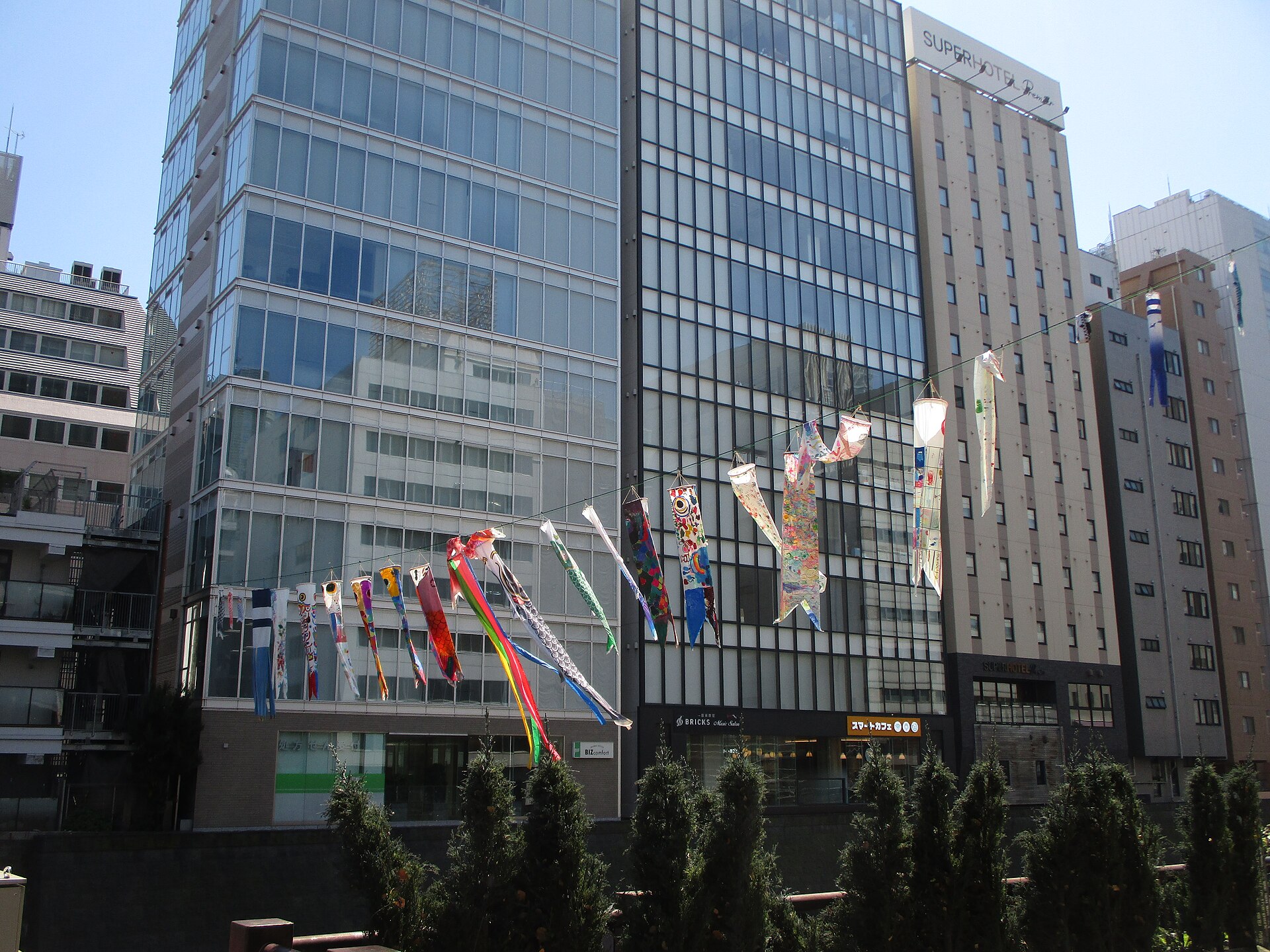
Greenery Day has a quieter bonus. Kyu-Furukawa Gardens, one of the rose gardens later in this guide, waives its admission on 4 May.
Kanda Matsuri: 2027 is a main-festival year
Kanda Myojin, the shrine near Akihabara, holds its festival in full every two years. 2026 was a “shadow” year, without the big procession or the mikoshi entering the shrine, which means 2027 is the year for the full version. The shrine counts the Kanda Matsuri among the three great festivals of Edo and of Japan, and in a main year it takes over a large slice of central Tokyo.
Check the shrine’s own site, kandamyoujin.or.jp, for the 2027 dates. For a sense of the shape, here is how the last main festival ran in 2025:
- Thursday 8 May: the mikoshi transfer ceremony.
- Friday 9 May: spirits ceremonially moved into the neighbourhood mikoshi.
- Saturday 10 May: the Shinkosai procession, through Kanda, Nihonbashi, Otemachi and Marunouchi, and Akihabara.
- Sunday 11 May: the mikoshi miyairi, when the neighbourhood mikoshi are carried into the shrine.
- Thursday 15 May: the shrine’s main annual ceremony.
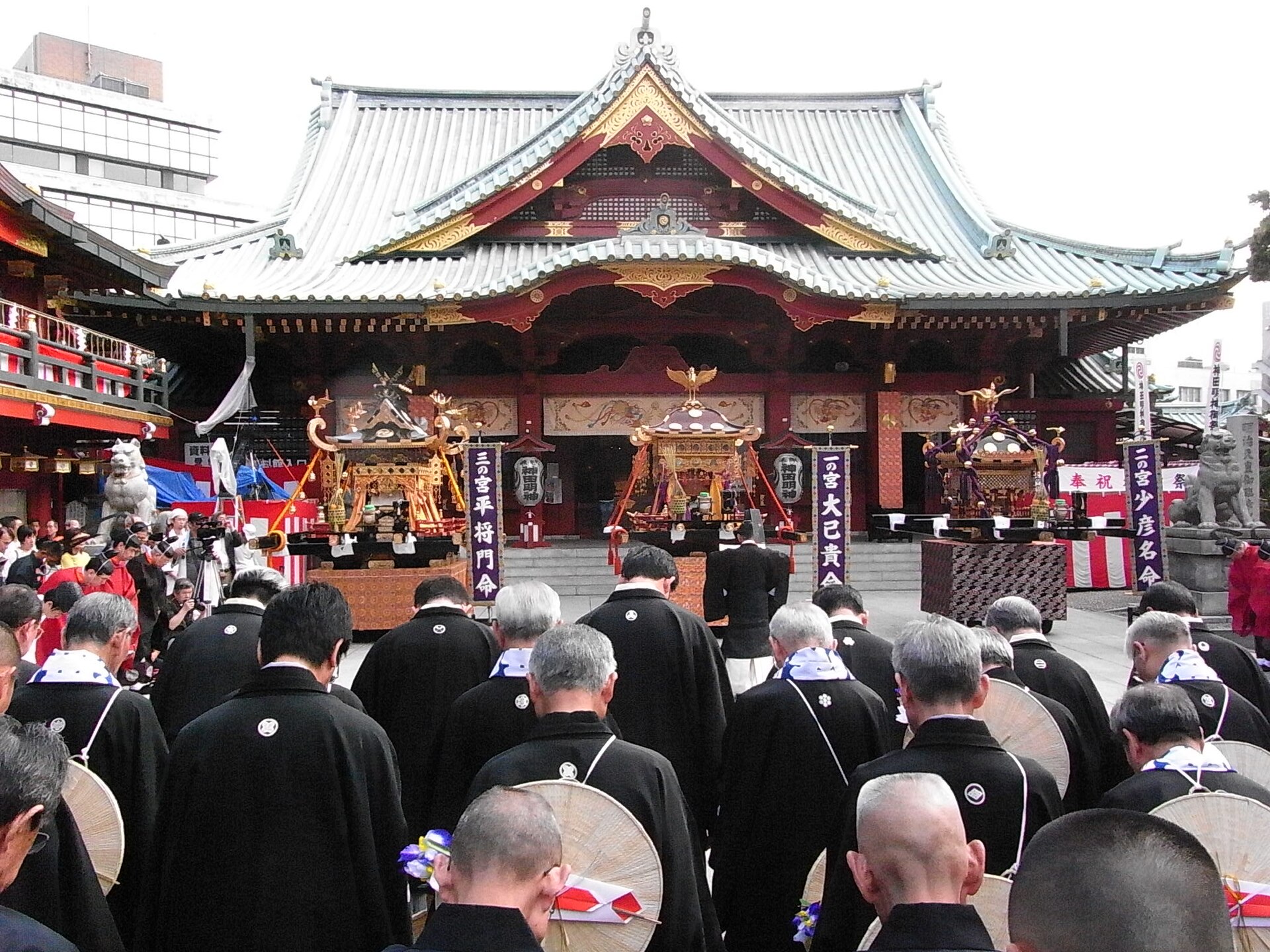
The procession day is the one to plan around if you want to see the festival moving through the business district; the miyairi day is the one for the noise and crush of mikoshi coming into the shrine. Either way, the streets around Akihabara and Ochanomizu fill up, so give yourself time. The Akihabara guide covers the neighbourhood around the shrine.
Sanja Matsuri, Friday 14 to Sunday 16 May 2027
Asakusa’s festival is louder and more boisterous than Kanda’s, and it isn’t on a two-year cycle: Asakusa Shrine held it in 2026 and lists it again for 2027. The shrine, which stands beside Sensoji, lists the 2027 festival for Friday 14 to Sunday 16 May, with this schedule:
- Thursday 13 May, 19:00: the spirits are moved into the shrine’s three main mikoshi.
- Friday 14 May, 13:00: the daigyoretsu, a procession through the area, which is cancelled if it rains.
- Saturday 15 May: a ceremony at 10:00, then from noon the neighbourhood mikoshi procession, with about 100 mikoshi from Asakusa’s 44 parish neighbourhoods.
- Sunday 16 May: the three main mikoshi leave the shrine at 07:00 and spend the day being carried around the neighbourhoods, returning at about 19:00 to 20:00.
The shrine says the schedule may change, so check asakusajinja.jp before you go. Saturday is the day for sheer numbers; Sunday’s early start, when the main mikoshi burst out of the shrine grounds, is the most dramatic moment of the weekend and worth getting up for. All weekend, Asakusa is as crowded as it gets: wear shoes you can stand in for hours, keep your belongings close and expect the streets around Sensoji to be impassable at times.
Watching Sanja Matsuri
A few things make the weekend easier. Pick your moments rather than trying to see everything: Saturday afternoon for the neighbourhood mikoshi, 07:00 on Sunday for the main mikoshi leaving the shrine, and Sunday evening for their return. The side streets off the main approach to Sensoji are where you can get close without being swept along; the space right in front of Asakusa Shrine is usually the most crowded of all. Give the bearers room, because a mikoshi can change direction without warning and the crowd moves with it. Keep children on your shoulders or well back from the front. And plan meals around the festival rather than in the middle of it: Asakusa’s restaurants fill early, and a quiet lunch a couple of stations away is worth the short ride.
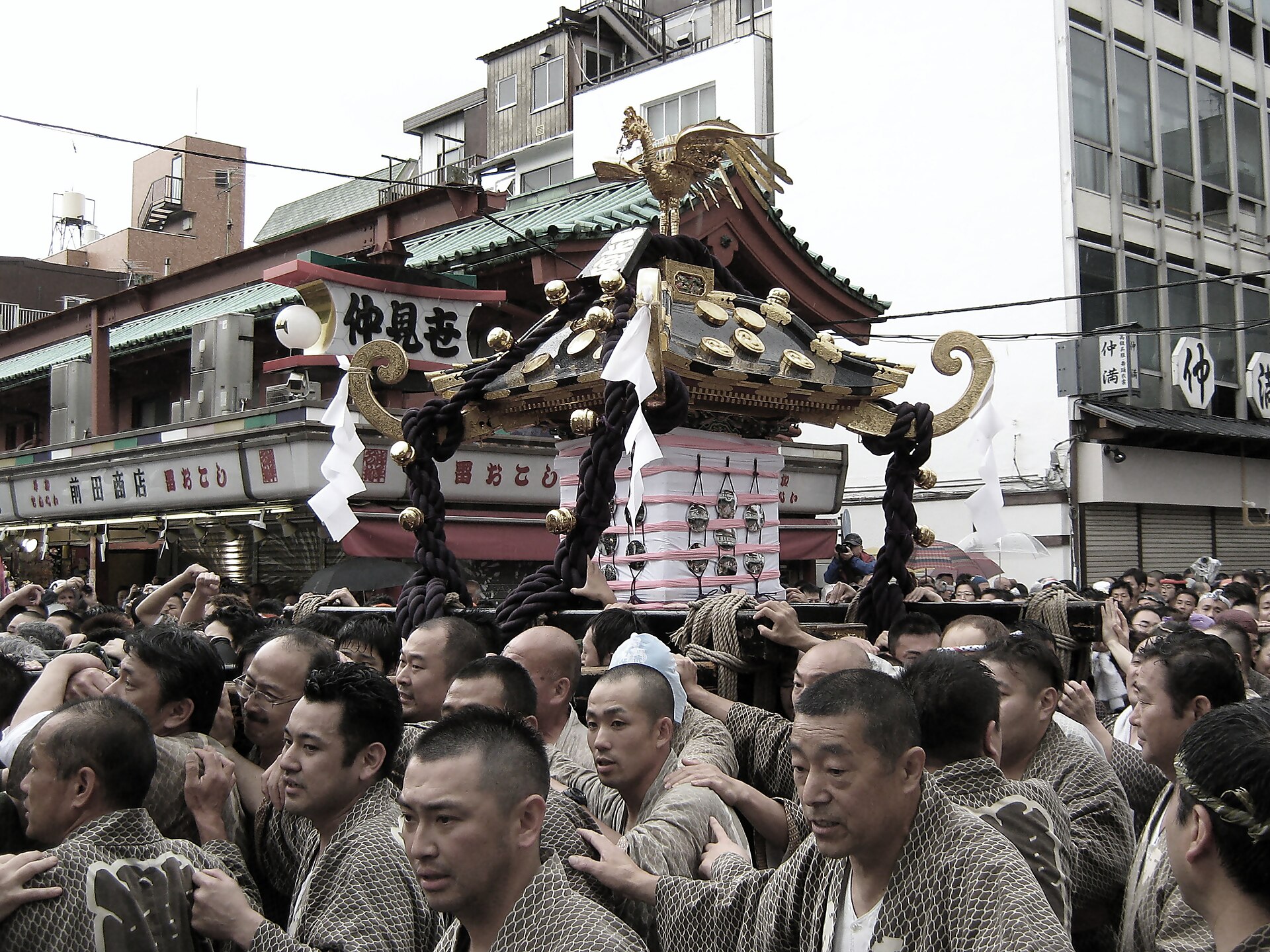
The Asakusa guide covers the neighbourhood, and the Sensoji temple guide the temple next door.
Grand sumo: the May tournament, 9–23 May 2027
May is one of Tokyo’s three sumo months. The May tournament runs at the Ryogoku Kokugikan from Sunday 9 to Sunday 23 May 2027, which overlaps with Sanja Matsuri. If you want a seat, book as soon as you can; the Tokyo sumo guide has the details.
Roses: Kyu-Furukawa Gardens and Jindai
As the azaleas and wisteria of April finish, the roses take over, and two gardens run spring rose festivals.
Kyu-Furukawa Gardens in Kita ward pairs a rose garden with a Western-style house. Its 24th Spring Rose Festival ran from 29 April to 30 June in 2026, with the garden open from 09:00 to 17:00 (last entry 16:30) and early opening at 08:00 on 8 to 10 and 15 to 17 May. Admission is ¥150, or ¥70 for over-65s, and free for children of primary-school age and under; the house has its own separate ticket. There are free garden guides at 11:00 and 14:00 on weekends and holidays, and entry is free on Greenery Day, 4 May.
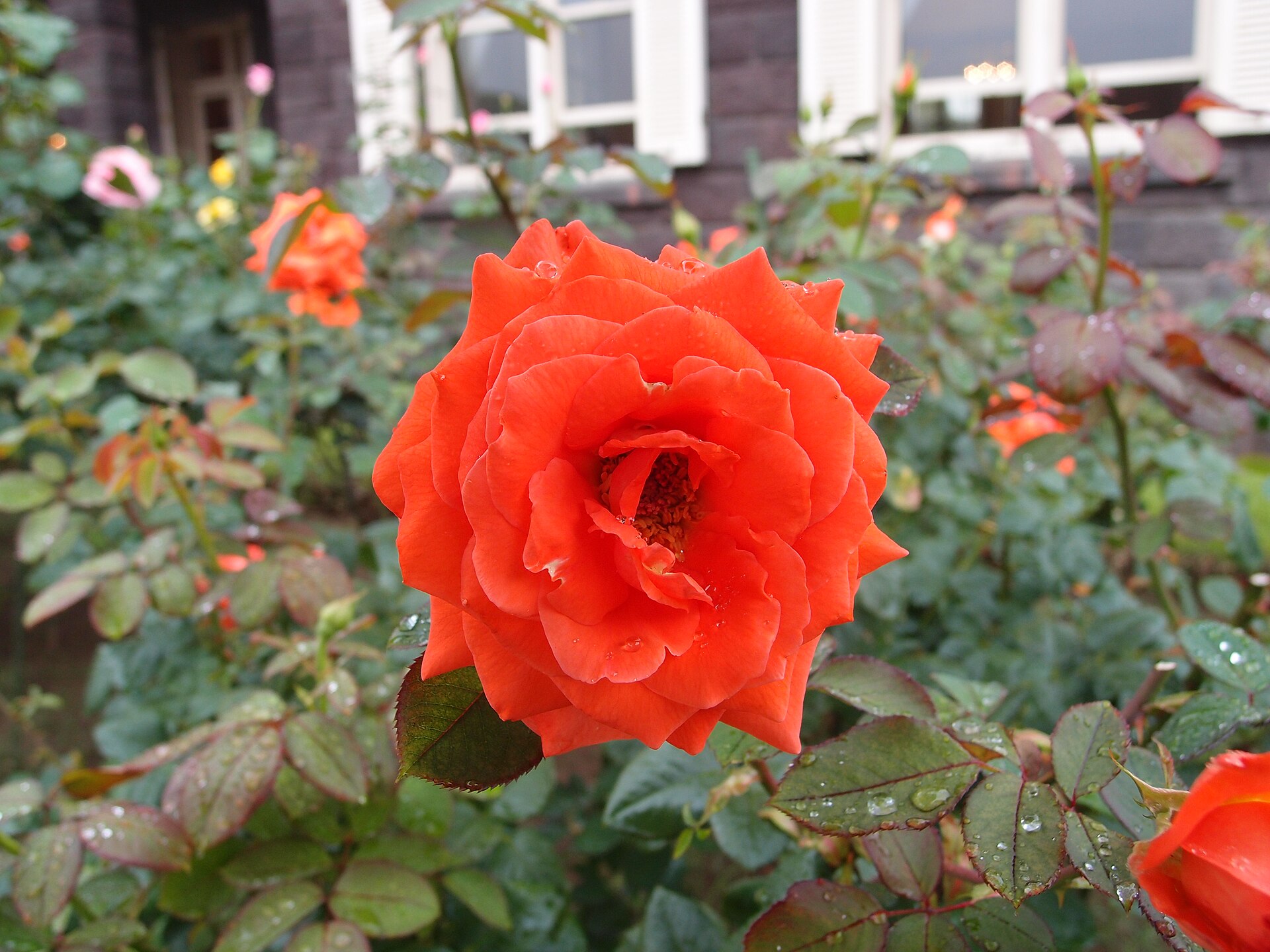
Jindai Botanical Garden, in Chofu in western Tokyo, held its Spring Rose Festa from 2 to 31 May in 2026, showing about 400 varieties and 5,200 plants; the garden closed on 7, 11, 18 and 25 May. It opens from 09:30 to 17:00, with last entry to the main garden at 16:00, closes on Mondays, and charges ¥500, or ¥250 for over-65s.
Both gardens are run by the Tokyo Metropolitan Park Association, whose site, tokyo-park.or.jp, is the place to check for the 2027 festival dates. For the rest of the city’s green spaces, see the Tokyo parks and gardens guide.
Design Festa, 29–30 May 2027
Design Festa, an open art fair where independent artists and makers each take a booth, returns to Tokyo Big Sight for its 65th edition on Saturday 29 and Sunday 30 May 2027, in the West and South Halls from 10:00 to 18:00. Check designfesta.com for tickets. It’s a very different weekend from the shrine festivals, and the guide to Tokyo’s fan events explains how it compares with the city’s other big conventions.
Day trips worth taking in May
May’s fresh green makes it a good month to get out of the city, as long as you avoid the Golden Week days. Mount Takao, on the western edge of Tokyo and reached on the Keio Line, is the easy one: Trail 1, the main route up, is 3.8 km, and if you’d rather ride part of the way, the cable car and chairlift each cost ¥490 one way or ¥980 return for adults.
Further out, Nikko’s shrines and Kamakura’s temples are both at their greenest in May, and Hakone and the Fuji Five Lakes pair mountain views with hot springs and long evenings for the trip back; sunset is around half past six or later all month. Weekdays after Golden Week are the time to go. The day trips from Tokyo guide compares the options, and the Nikko, Kamakura and Hakone guides have the details.
The end of pollen season
For hay fever sufferers, May brings relief. The Tokyo Metropolitan Institute of Public Health says cedar and cypress pollen carries on until mid-May, so the first half of the month can still be scratchy; by the second half the season is winding down.
What to eat in May
Children’s Day has its own sweets. Kashiwa-mochi, rice cake filled with sweet bean paste and wrapped in an oak leaf, is the classic, alongside chimaki, sweet rice dumplings wrapped in bamboo leaves. Sweet shops and supermarkets stock both in the days before 5 May.
May is also the season of hatsugatsuo, the first bonito of the year, which Edo-era Tokyo prized so highly that people paid extravagant prices to eat it early. Today it turns up as katsuo no tataki, seared bonito sliced thick and served with ginger, garlic and spring onion, on izakaya menus across the city. And the first green tea of the new season, shincha, starts reaching the tea shops; its harvest is traditionally tied to the 88th night after the start of spring, which falls around 2 May. For where to try all of it, the Tokyo food guide is the place to start.
Crowds and costs
May’s crowds are front-loaded. The first five days are Golden Week, among the busiest of the year for domestic travel. From Thursday 6 May the city changes gear, and the middle of the month, festivals aside, is one of the most comfortable times to be in Tokyo. The exceptions are the festival weekends: Asakusa on 14 to 16 May, and the Kanda Matsuri’s weekend (check Kanda Myojin’s site for the dates).
So if you’re booking, avoid arriving or leaving between 1 and 5 May, book hotels for the festival weekends early if you want to be near them, and treat the second and third weeks as the sweet spot. For how May compares with the rest of the year, see the best time to visit Tokyo.
What to pack for Tokyo in May
- T-shirts and light layers. Afternoons in the low to mid twenties call for short sleeves; early mornings and evenings for a long-sleeved top.
- A light jacket or cardigan. Lows average 13°C to 16°C, and air-conditioned trains and shops can feel cool.
- A compact umbrella or rain jacket. May averages 139.7 mm of rain, with more of it towards the end of the month.
- Sun cream, sunglasses and a hat. With nearly 180 hours of sunshine on average, festival days are long and bright.
- Comfortable shoes. Festival crowds mean hours on your feet.
The full checklist is in the Tokyo packing list.
Is May a good time to visit Tokyo?
Yes, and in 2027 especially so. The weather is warm and pleasant, the city is green, and the festival calendar is as full as it gets, with Sanja Matsuri, a main-year Kanda Matsuri and the May sumo tournament all landing in the first half of the month. Few months give a visitor so much of traditional Tokyo in such a short window.
Two things to plan around. Avoid the first five days if you can, or at least avoid travelling on them, because Golden Week fills the trains and the day-trip destinations. And keep an eye on the last week, which can be the start of the rainy season in an early year. Between those, from about 6 to 24 May, May is hard to beat. For a fuller calendar of the year’s events, see the Tokyo events and festivals guide.
By the end of May the rainy season is close: the JMA’s normal start for the Tokyo region is around 7 June, though it came around 22 May in 2025. The Tokyo in June guide covers what the season really looks like, the hydrangeas and irises that peak in it, and Tokyo Pride on 5 and 6 June 2027.
Frequently Asked Questions
Is May a good time to visit Tokyo?
Yes. The JMA’s 1991–2020 normals give an average high of 23.6°C and a low of 14.6°C, and May 2027 has Sanja Matsuri on 14 to 16 May, a main-year Kanda Matsuri and the May sumo tournament from 9 to 23 May. Avoid travelling on the Golden Week days of 1 to 5 May, and expect the rainy season to be possible in the last week.
What is the weather like in Tokyo in May?
Warm and mostly pleasant. Average highs rise from 22.6°C in the first ten days to 24.9°C at the end of the month, according to the JMA’s 1991–2020 normals. Rainfall averages 139.7 mm, more of it late in the month, and the rainy season began around 22 May in 2025 against a normal start of about 7 June.
What festivals are in Tokyo in May?
Sanja Matsuri in Asakusa runs from Friday 14 to Sunday 16 May 2027, according to Asakusa Shrine. 2027 is also a main-festival year for the Kanda Matsuri, held in full every two years; check Kanda Myojin’s site for the dates. Design Festa is at Tokyo Big Sight on 29 and 30 May 2027.
Is Golden Week a bad time to visit Tokyo?
Not a bad time to be in Tokyo, but a hard time to travel. In 2027 Golden Week runs from Thursday 29 April to Wednesday 5 May, with Friday 30 April a working day, and trains, day-trip destinations and theme parks are at their busiest. Book transport and hotels early, or plan your arrival for after 5 May.
Is there sumo in Tokyo in May?
Yes. The May tournament is held at the Ryogoku Kokugikan from 9 to 23 May 2027. Tokyo also hosts the January and September tournaments.
Photo Credits
- Mikoshi on Denboin-dori in Asakusa during Sanja Matsuri – Asakusa Sanja Matsuri May06 by Eckhard Pecher, CC BY 2.5, via Wikimedia Commons.
- Carp streamers by Izumibashi Bridge – 20260505 Koinobori at Izumibashi Bridge Akihabara, by Eavesdropper6735, CC BY 4.0, via Wikimedia Commons.
- Mikoshi at Kanda Myojin – Kanda Matsuri1 by 江戸村のとくぞう (Edomura no Tokuzo), CC BY-SA 4.0, via Wikimedia Commons.
- Mikoshi in the streets of Asakusa – Flickr – yeowatzup – Sanja Matsuri, Asakusa, Tokyo, Japan by Kok Leng Yeo from Singapore, Singapore, CC BY 2.0, via Wikimedia Commons.
- Roses at Kyu-Furukawa Gardens – Rose @ Kyu-Furukawa Gardens (9105376014) by Guilhem Vellut from Annecy, France, CC BY 2.0, via Wikimedia Commons.