Tokyo Cafes & Coffee · Guide №153
Tokyo Cafes With Wi-Fi and Power: Where You Can Actually Work
Which Tokyo cafe chains tolerate laptops, how free wifi really works here, the unwritten rules, and the coworking spaces, manga-cafe booths and karaoke rooms that beat a cafe for a real working day.
目次 — Contents
- The short version: Tokyo is harder to work from than it looks
- Your options compared
- The chains, one by one
- Independent cafes: mostly no
- How wifi works in Tokyo
- The unwritten rules of working in a cafe
- Better than a cafe: drop-in coworking
- Manga cafes and internet cafes
- For video calls
- Where to work, by neighbourhood
- Staying longer: a working routine that lasts
- A practical kit for working in Tokyo
- The bottom line
- Frequently Asked Questions
- Photo Credits
This article contains advertising. Our booking links are routed through a partner that adds commission tracking automatically, so if you book through one we earn a commission from the provider, at no extra cost to you. It never affects what we recommend. Affiliate disclosure
The most reliable Tokyo cafes with wifi and power sockets are the chains — Starbucks, Doutor, Tully’s, Komeda and Renoir — not the independents, many of which ban laptops outright. For a full working day, a drop-in coworking space at about ¥3,000 a day or a private manga-cafe booth is usually the better answer. Bring your own data either way.
This guide is for anyone who needs to open a laptop in Tokyo, whether that is a remote worker on a long stay or a visitor with one urgent afternoon of email. It covers which cafes actually tolerate laptops, how free wifi works here, the unwritten rules, and the better alternatives when a cafe will not do. For coffee as an end in itself, see our Tokyo cafe guide.
The short version: Tokyo is harder to work from than it looks
Visitors often arrive expecting Tokyo to be a laptop paradise. The city is famously wired, the cafes are everywhere, and people do sit in them for hours. The reality is more mixed, for three reasons.
- The best independent cafes do not want you. Small specialty coffee shops and traditional kissaten have a handful of seats and depend on turnover. Many post signs banning computers, especially at weekends and lunchtime.
- Free wifi is patchier than you would think. Japan was slow to adopt free public wifi, and the networks that exist often require registration and time out after an hour.
- Sockets are rationed. Even in chains, only some seats have power, and they go first.
The good news is that Tokyo has built an entire parallel industry for people who need to sit and work: coworking lounges, private booths, even karaoke rooms rented by the hour for calls. Once you stop expecting a cafe to be an office, working here becomes easy.
Your options compared
| Option | Typical cost | Wifi | Power | Calls OK? | Best for |
|---|---|---|---|---|---|
| Doutor | ¥300–400 a drink | Yes, variable | Some seats | No | A cheap hour of email |
| Starbucks | ¥500–600 a drink | Yes, one-hour sessions | Some seats | No | Reliability, anywhere |
| Tully’s, Komeda | ¥400–700 a drink | Usually | Some seats; counters at some Tully’s | No | A comfortable couple of hours |
| Renoir | More than double Doutor | Usually | Many seats | Quietly, at some | Long sessions in comfort |
| Drop-in coworking | ¥550–700 an hour; ¥3,000–3,300 a day | Fast | Everywhere | Booths or designated areas | A real working day |
| Manga / internet cafe booth | A few hundred yen an hour; cheaper in packs | Yes | Yes | Quietly, in private rooms | Privacy, late nights, cheap |
| Karaoke room day plan | Varies by chain and time | Usually | Yes | Yes | Video calls |
The chains, one by one
Doutor
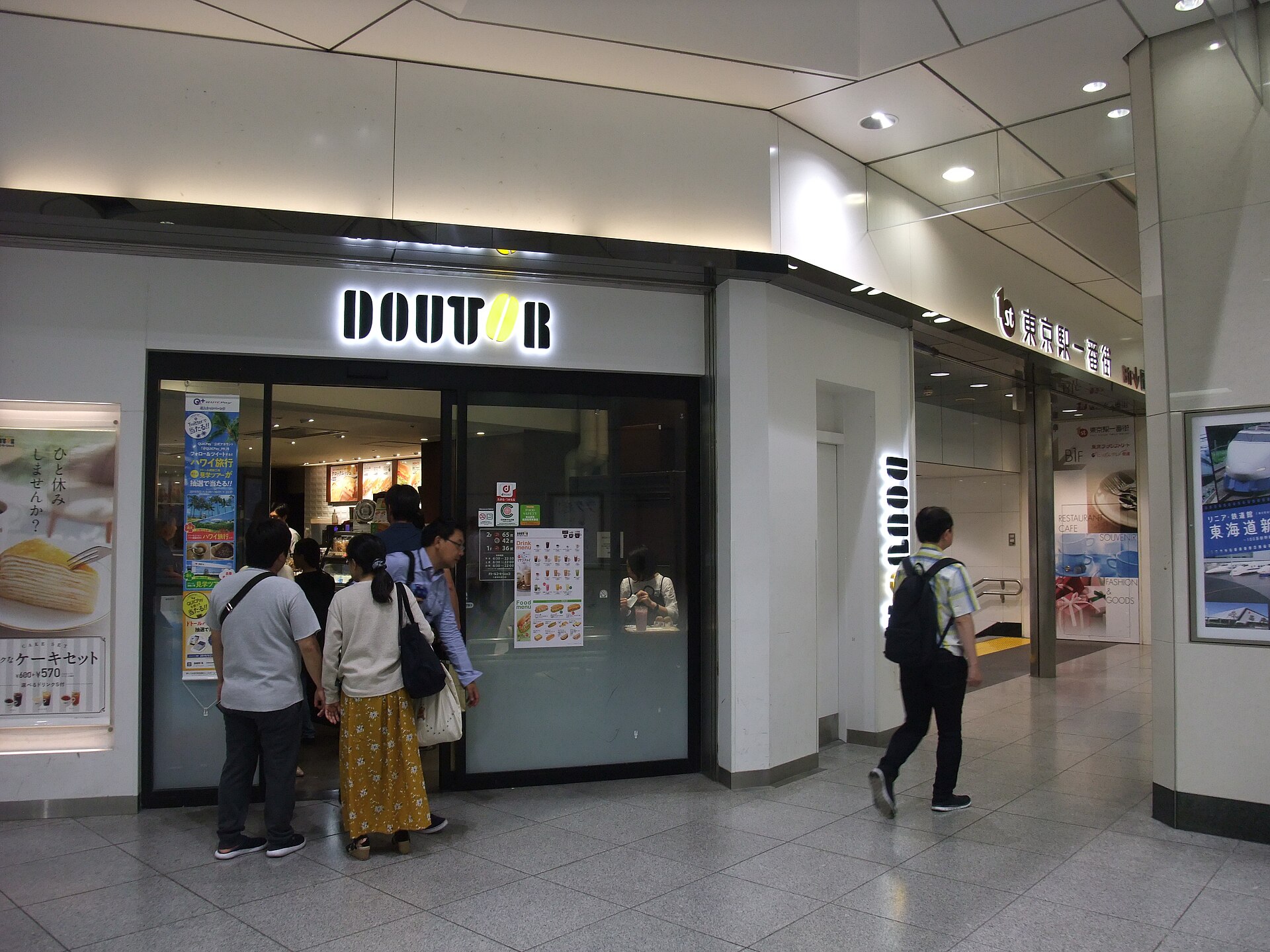
Japan’s biggest home-grown coffee chain is the cheapest place to sit down with a laptop, with drinks at about ¥300 to ¥400. Most branches have wifi and some seats with outlets, though coverage and quality vary between shops. The seats are small and tables tight, so it works for an hour or two, not a full day. Doutor shops are often non-smoking now, but a few older branches still have smoking rooms; if the room smells, move on.
Starbucks
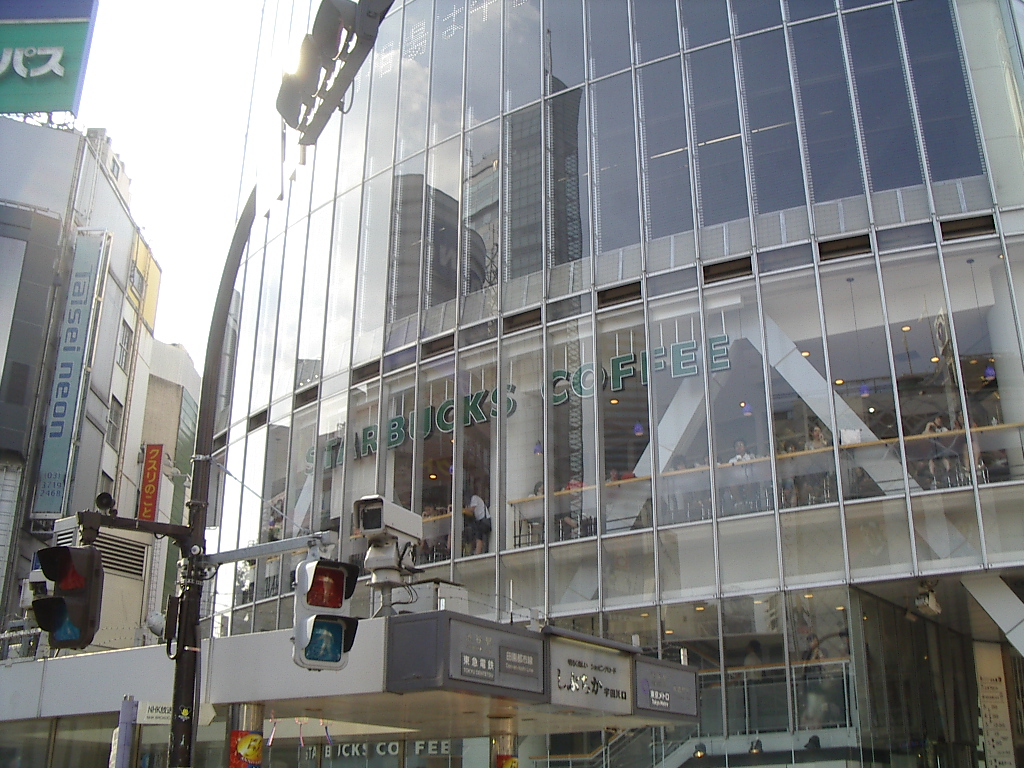
Starbucks Japan is consistent, spacious and in almost every neighbourhood. The free network, at_STARBUCKS_Wi2, works during opening hours at participating stores, but each session is limited to one hour of continuous connection before you log in again. Drinks run about ¥500 to ¥600. Sockets are at some seats, often a long communal table or window counter, and those fill early. The branch above Shibuya crossing, inside the Tsutaya building, is the famous one and absolutely not a place to work; any suburban or office-district branch is far calmer.
Tully’s Coffee
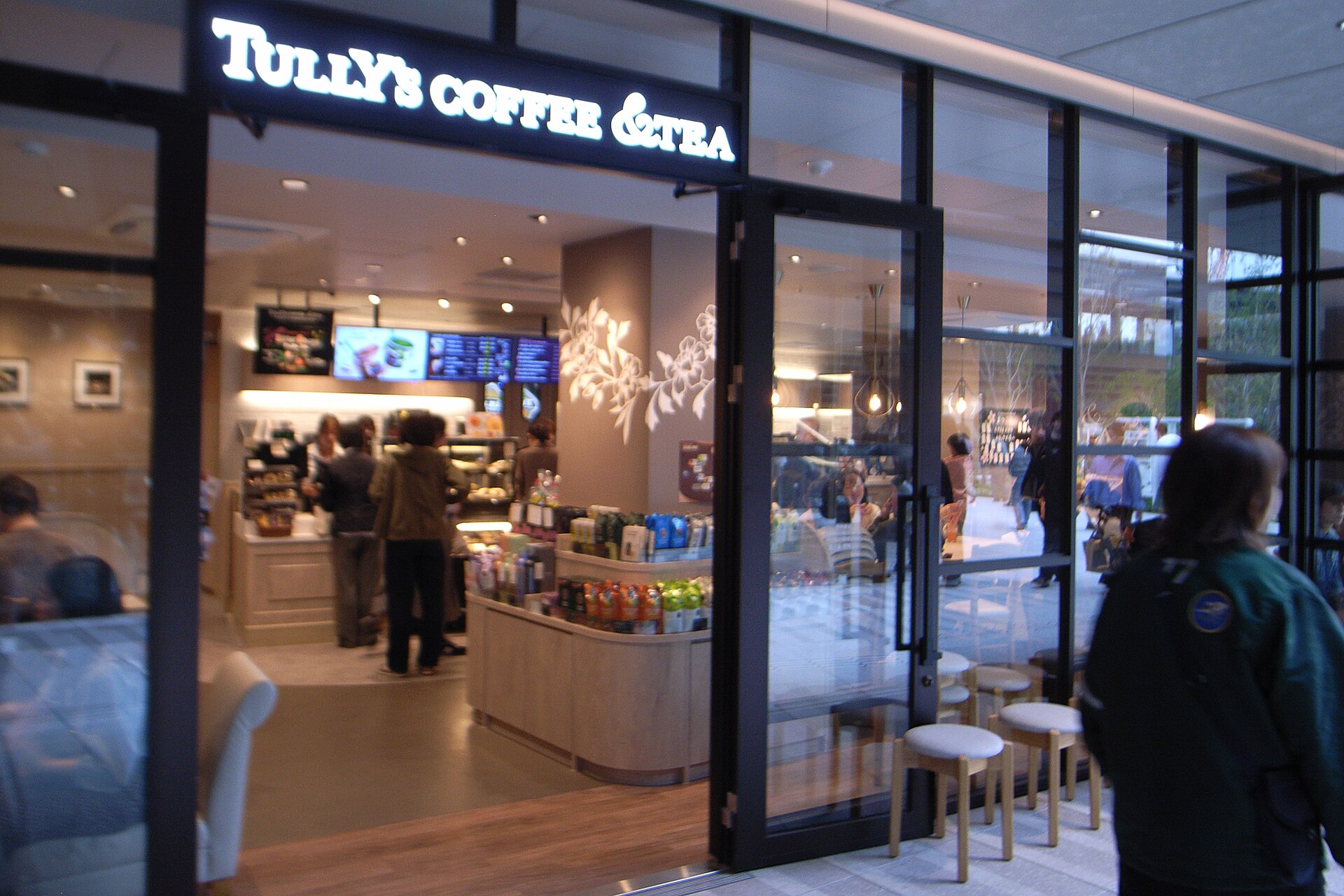
Tully’s is a notch more comfortable than Starbucks and often less crowded. Some branches have window counters fitted with power outlets and built-in charging cables, which makes them among the best-equipped chain cafes in the city. Wifi is available at many branches.
Komeda’s Coffee
A chain from Nagoya with large padded booths, generous portions and a relaxed attitude to long stays. It is especially good in the morning, when a drink comes with free toast. Many branches have wifi and sockets, and the booths are the most comfortable seats of any chain. The catch is that Komeda tends to be in suburban locations rather than central Tokyo.
Renoir
Renoir, the Showa-era chain whose shops are signed 喫茶室ルノアール, is the long-session specialist. The chairs are big and upholstered, the atmosphere is hushed, and customers — business people between meetings, writers, students — routinely stay for hours. Many branches have wifi and sockets at a lot of seats, and staff traditionally bring round cups of green tea for people who have been there a while. Coffee costs considerably more than at Doutor, and that is what buys you the unhurried seat. Some Renoir branches also have private meeting rooms for hire.
If you have one afternoon of serious work to get through in a cafe, Renoir is the best bet in central Tokyo.
Independent cafes: mostly no
It is worth saying clearly, because it is the thing that most often goes wrong: do not plan to work in Tokyo’s good independent cafes. The specialty roasters and traditional kissaten that make Tokyo such a good coffee city are small, and most are explicitly not workspaces. Signs to look for at the door include PC利用禁止 (no computer use), 作業禁止 (no working) and 長時間のご利用はご遠慮ください (please avoid long stays).
Some independents are relaxed on weekday mornings and strict at weekends and lunchtime. A handful welcome laptops, usually larger cafes with communal tables away from the centre. If you are not sure, ask with a gesture towards the laptop before you open it, and take no for an answer. Better still, drink your coffee there, then go and work somewhere built for it. Our Tokyo specialty coffee guide lists the roasters worth drinking at, and the kissaten guide the old coffee houses — neither is a list of places to work.

How wifi works in Tokyo
Public wifi in Japan has improved, but it is still the weakest link in working on the move.
Free networks
- Cafe networks such as Starbucks’ require you to connect and agree to terms through a browser page, sometimes with an email address, and may time out after an hour.
- Convenience stores are no longer a dependable fallback. 7-Eleven shut its free 7SPOT network in March 2022, and FamilyMart ended its free service in July 2022. Lawson has continued to offer free wifi with a one-time email registration, but it is not something to plan a working day around.
- Stations and city networks — many major stations, subway concourses and tourist areas have free networks for visitors, but they are designed for looking up a map, not uploading a presentation.
Bring your own connection
If you will work at all, the best thing you can do is not depend on public wifi. A travel eSIM or local data SIM with a generous allowance, or a rented pocket wifi router, turns every seat with a socket into a workspace, and lets you tether your laptop. It also avoids the security risk of open networks. Our SIM card and pocket wifi guide compares the options and prices.
If you must use a public network, use a VPN, avoid logging into banking, and do not assume that a password-protected cafe network is private.
Power
Japanese sockets are two flat pins (type A, the same shape as North America) at 100 volts. Almost all laptop and phone chargers handle this fine, but visitors from the UK, Europe or Australia need a plug adapter. Many sockets in older buildings are two-pin only, so a three-pin US plug may also need an adapter. A small power bank is worth carrying, as sockets in cafes are always the first seats taken.
The unwritten rules of working in a cafe
Tokyo is tolerant of people working in chain cafes, provided they follow a few expectations that nobody writes down.
- No calls. Talking on the phone in a Japanese cafe is frowned upon, and a video call with the sound on is a genuine breach. Take calls outside, or use one of the options below.
- Buy something every couple of hours. One coffee for a whole day is poor form. A second drink or a snack is the price of the seat.
- Avoid the lunch rush. From about 12:00 to 13:30, office districts fill up. Some chains post time limits at busy periods. Take your lunch break then, or move.
- Do not take a big table alone. Use a counter seat or a two-person table, and do not spread out across four seats.
- Keep it quiet. Headphones on, keyboard clatter to a minimum, notifications off.
- Watch your things. Tokyo is safe, and you will see people leaving laptops on tables while they go to the counter. It is still not a habit to bring home, and it is not polite to hold a seat for a long time with a bag.
Better than a cafe: drop-in coworking
For more than a couple of hours of real work, a drop-in coworking space is the straightforward answer. Fast wifi, sockets everywhere, proper chairs, phone booths and nobody wondering why you are still there. Prices are modest by international standards: roughly ¥550 to ¥700 an hour, or ¥3,000 to ¥3,300 for a day.
- Ginza Hub is an English-friendly coworking space charging visitors ¥700 an hour or ¥3,000 a day, with no contract or deposit. Visitor hours are 11:00 to 18:00 on weekdays.
- Other drop-in spaces across the city, including in Shibuya, Shinjuku and around Tokyo Station, charge similar rates, with weekday hourly plans from about ¥550 and day passes from about ¥3,300.
- Bookshop and hotel lounges — some large bookstores and hotels now run paid work lounges with drinks included, charged by the hour. They sit between a cafe and a coworking space in price and atmosphere.
- Global coworking brands have multiple Tokyo locations and sell day passes, which is convenient if you already have a membership elsewhere.
Check hours before you go: many drop-in spaces restrict visitor access to weekday office hours, and some require booking online first.
Manga cafes and internet cafes
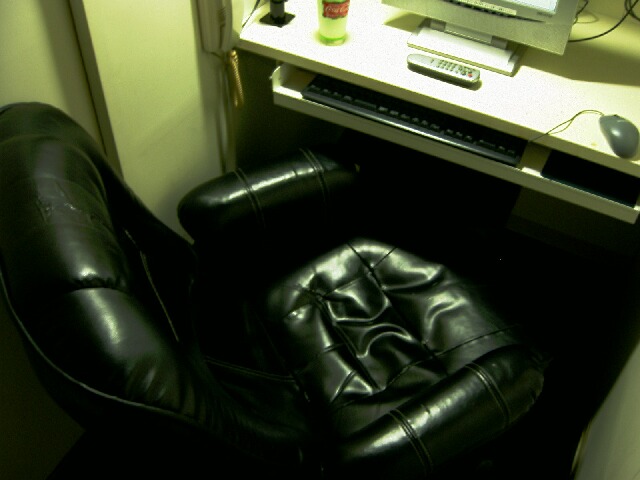
Japan’s manga and internet cafes — Kaikatsu Club, Gran Cyber Cafe Bagus and Manboo are the big names — are an underrated workspace. You rent a small private booth by the hour, with a desk, a chair or a flat mat, a power socket and wifi, plus a free drinks bar and often showers. Many are open 24 hours.
Prices are a few hundred yen for the first hour, with multi-hour packs that bring the hourly cost down significantly. Some branches have lockable private rooms, which are better for working and for keeping your things secure. Bring your passport or ID, which is required to register as a member at most chains.
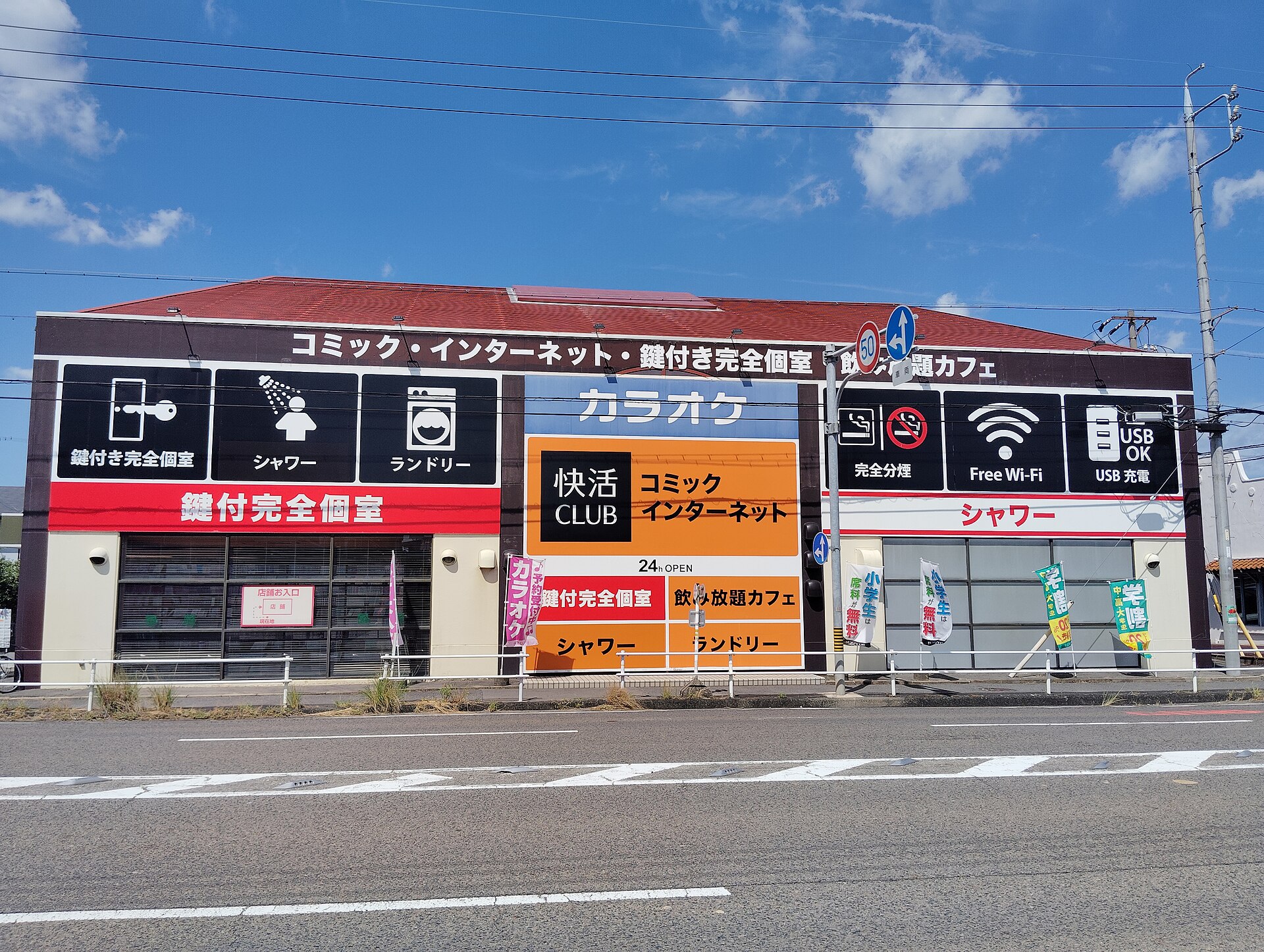
The honest verdict: they are not beautiful, the lighting is dim, and some booths are small. But for a quiet, cheap, private place to work for four hours, especially late in the evening, they are hard to beat. Speak quietly on calls, if at all; the booth walls are thin.
For video calls
Calls are the hardest thing to do on the move in Tokyo, because the city is so quiet in public. Options that work:
- Karaoke rooms. Several karaoke chains rent rooms in the daytime for remote work, sometimes with specific work plans. A private, soundproofed room with a table, sockets and a drink is ideal for calls, and daytime rates are low. Our karaoke guide covers the chains.
- Station work booths. Major stations have single-person soundproofed booths bookable by the quarter hour through an app, designed exactly for a call between trains.
- Coworking phone booths, included in a day pass.
- Your hotel room or lobby. Not glamorous, but free and reliable. Many business hotels have small work desks and good wifi.
Where to work, by neighbourhood
Shibuya and Shinjuku
Every chain is represented many times over, and the drop-in coworking choice is the widest in the city. The downside is crowding: cafes near the stations are packed from late morning. Walk ten minutes away from the station, and seating gets much easier. Our Shibuya guide covers the district.
Tokyo Station, Marunouchi and Nihonbashi
Office districts with a lot of chain cafes, Renoir branches and coworking spaces, and very quiet at weekends, when the office workers are elsewhere. A good choice for Saturday or Sunday work.
Ginza
Renoir branches, hotel lounges and Ginza Hub. Pricier, calmer and very comfortable, and the covered department stores make it a good wet-weather base. See our rainy day guide if the weather is the reason you are inside.
Residential neighbourhoods
Suburban branches of Starbucks, Tully’s and Komeda in places like Nakano, Kichijoji or Sangenjaya are larger and less crowded than their central equivalents. If you are staying for a while, choosing a base near one is a simple way to get a regular workspace.
Staying longer: a working routine that lasts
A few hours of email on a holiday is one thing. Working from Tokyo for two or three weeks is another, and the people who enjoy it tend to settle into the same pattern quickly.
Choose accommodation with a proper desk. It sounds obvious, but many Tokyo hotel rooms are tiny, and the desk is a narrow shelf under the television. Apartment rentals and business hotels usually do better. If you will take calls from your room, check the reviews for wifi quality, not just the listing. Our where to stay guide explains which neighbourhoods suit longer stays.
Split the day. A pattern that works well is focused work in the morning at a coworking space or your accommodation, lunch out, and lighter tasks in a chain cafe in the afternoon, before the evening is free for the city. It keeps you out of cafes during the lunch rush, when you are least welcome, and means the difficult work happens somewhere with a real chair.
Look at weekly and monthly passes. If you are using a coworking space more than three or four days, a short membership usually costs less than daily drop-in rates and often includes longer access hours, lockers and meeting-room credit.
Mind the calendar. Office-district cafes and coworking spaces can be quiet, or closed to visitors, at weekends and on Japanese public holidays. Golden Week at the start of May, the Obon period in mid-August and the New Year holiday are when many businesses shut for several days. Suburban and shopping-district cafes stay open.
Mind the time difference. Tokyo is nine hours ahead of UTC and does not use daylight saving. For anyone working with Europe or the Americas, that pushes calls into the late evening or early morning — which is exactly when manga-cafe booths, karaoke rooms and your own room earn their keep.
A practical kit for working in Tokyo
- An eSIM or pocket wifi with enough data to tether.
- A plug adapter if your charger does not have two flat pins.
- A power bank.
- Noise-cancelling headphones.
- A VPN for public networks.
- An IC card like Suica, which pays for coffee at almost every chain.
- Your passport, for manga-cafe registration.
The bottom line
Tokyo cafes with wifi exist in huge numbers, but they are chains, not charming independents, and they suit an hour or two rather than a day. For anything longer, spend ¥3,000 on a coworking day pass or a few hundred yen an hour on a private booth, and save the beautiful cafes for when the laptop is closed. It is a better arrangement all round: you get a proper desk, and the ten-seat roaster gets its seat back.
Frequently Asked Questions
Do Tokyo cafes have free wifi?
Chain cafes such as Starbucks, Doutor and Tully’s generally do. Starbucks’ at_STARBUCKS_Wi2 network is free during opening hours but limited to one hour per session. Many independent cafes and traditional kissaten have no wifi. 7-Eleven and FamilyMart ended their free wifi in 2022, so the most dependable approach is to carry your own data with an eSIM or pocket wifi.
Can I work on my laptop in cafes in Tokyo?
In chains, yes, for an hour or two, especially outside the lunchtime rush. Renoir and Komeda are the most comfortable for longer stays. Many small specialty cafes and kissaten ban laptops, so check the door for signs and ask if unsure. Avoid phone calls, buy something every couple of hours, and do not take a large table alone.
Which Tokyo cafe is best for working?
Renoir is the best chain cafe for long work sessions, with large chairs, a quiet atmosphere, and wifi and sockets at many seats. Tully’s branches with power counters and Komeda’s booths are also comfortable. For a full working day, a drop-in coworking space is better than any cafe.
How much is a coworking day pass in Tokyo?
Drop-in coworking in Tokyo typically costs about ¥550 to ¥700 an hour, or ¥3,000 to ¥3,300 for a day. Ginza Hub, for example, charges visitors ¥700 an hour or ¥3,000 a day on weekdays with no contract. Many spaces restrict visitor hours to weekdays, so check before you go.
Where can I make a video call in Tokyo?
Not in a cafe, where phone calls are frowned upon. Karaoke rooms rented in the daytime, soundproofed station work booths, coworking phone booths and your hotel room all work well. Private rooms in manga cafes are another option, though the walls are thin.
Photo Credits
- Starbucks in the Shibuya Tsutaya building – Starbucks Coffee – SHIBUYA TSUTAYA STORE by Staka, CC BY 3.0, via Wikimedia Commons.
- Doutor Coffee at Tokyo Station – DOUTOR COFFEE in First Avenue Tokyo Station by 電車(新幹線)でゴー!, CC BY-SA 4.0, via Wikimedia Commons.
- A Tully’s Coffee and Tea branch – OIMACHI TRACKS – Tully’s Coffee &Tea by 番記者, CC0, via Wikimedia Commons.
- A private booth in a Japanese internet cafe – Internet cafe in Japan 3 by Mino mu, public domain, via Wikimedia Commons.
- A Kaikatsu Club branch exterior – Kaikatsu-Club-Kariya by HQA02330, CC BY-SA 4.0, via Wikimedia Commons.