Tokyo Food · Guide №017
Best Ramen in Tokyo: A Neighborhood-by-Neighborhood Guide
目次 — Contents
- Tokyo Ramen Styles Explained
- Best Ramen by Neighborhood
- Michelin-Recognized Ramen in Tokyo
- How to Order Ramen in Tokyo
- Essential Ramen Toppings Guide
- Ramen Etiquette in Tokyo
- Vegetarian, Vegan & Halal Ramen Options
- Common Ramen Mistakes to Avoid
- Ramen Through the Seasons
- Practical Tips for Tokyo Ramen Hunting
- Our 2026 Tokyo Ramen Picks
- A Three-Day Ramen Crawl
- Frequently Asked Questions
This article contains advertising. Our booking links are routed through a partner that adds commission tracking automatically, so if you book through one we earn a commission from the provider, at no extra cost to you. It never affects what we recommend. Affiliate disclosure

Tokyo is, quite simply, the ramen capital of the world. There are an estimated 10,000-plus ramen shops across the city — everything from six-seat counters behind a noren curtain to Michelin-recognized kitchens — and that abundance is exactly what makes the hunt for the best ramen Tokyo can offer feel overwhelming. Every neighborhood has its champion. Every style has its diehards. Shops open and close constantly, and the bowl everyone queued for last year may have moved across town.
This guide goes neighborhood by neighborhood and cuts through the noise. We break down the six core styles you will actually meet in Tokyo, name the shops worth the queue with rough prices in yen, and walk you through the ordering process step by step — ticket machine, toppings, and the proper way to slurp. It sits inside our wider Tokyo eating guide, so once you have ramen sorted you can branch out into everything else the city does well.
Tokyo Ramen Styles Explained
Before chasing specific shops, get the styles straight. A ramen style is mostly about two things: the base broth and the tare, the seasoning concentrate that hits the bottom of the bowl first. Tokyo serves nearly every regional style in Japan, but these are the ones you’ll run into again and again.
Shoyu Ramen (Soy Sauce)
Shoyu ramen is Tokyo’s original and most traditional style — the bowl that started it all in the capital. The broth is usually a clear or semi-clear chicken or pork stock seasoned with soy sauce, which gives it that savory, faintly sweet edge and an amber-brown color. Noodles tend to be thin and curly. Classic toppings: chashu pork, menma (bamboo shoots), negi (green onion), nori, and a soft-boiled egg. If you want to taste the historical roots of Tokyo ramen, start here. Expect to pay around ¥850-1,100.

Tonkotsu Ramen (Pork Bone)
Tonkotsu ramen started in Kyushu in the south but has taken over Tokyo. The broth comes from boiling pork bones for 12 to 20-plus hours until they break down into a rich, creamy, opaque white soup — intense, fatty, deeply savory. Noodles are usually thin and straight, Hakata-style, which is why you’ll often be asked how firm you want them. The big chains, Ichiran and Ippudo, made tonkotsu famous abroad, but smaller Tokyo shops frequently beat them. Reckon on ¥900-1,200 a bowl.

Miso Ramen
Miso ramen came down from Sapporo in Hokkaido. Fermented soybean paste makes the broth thick, robust, and a little sweet, with a deep umami backbone that stands up to cold weather. Common toppings are corn, butter, bean sprouts, ground pork, and cabbage. It’s the bowl to order in January, and several Tokyo shops do nothing else. Usually ¥900-1,150.

Shio Ramen (Salt)
Shio ramen is the most delicate of the lot. Salt does the seasoning, so the soup stays clear and pale and lets the quality of the base stock do the talking — there’s nowhere to hide a mediocre broth. The stock is often chicken, seafood, or a blend of both. Afuri made its yuzu shio version a visitor favorite, and it’s a good gateway if heavy tonkotsu isn’t your thing. Around ¥1,000-1,300.
Tsukemen (Dipping Noodles)
Tsukemen is Tokyo’s own contribution to the ramen world, invented in the 1960s at Taishoken in Higashi-Ikebukuro. The thick, chewy noodles come separately from a concentrated dipping broth. You grab a clump of cold or room-temperature noodles, dunk them in the rich sauce, and eat. The broth is deliberately thicker and more aggressive than normal ramen soup because it has to cling to the noodles. Finished the noodles and still have broth left? Ask for soup-wari and the staff add hot stock to thin what’s left into a drinkable soup. Expect ¥1,000-1,400.

Abura Soba (Brothless Ramen)
Abura soba, literally “oil noodles,” throws first-timers because there’s no soup. A pool of seasoned tare and aromatic oil sits at the bottom of the bowl, under the noodles and toppings. You add a splash of vinegar and a spoon of chili oil, then mix hard for a good 20 seconds until every strand is glossed. The result is concentrated, garlicky, and a little addictive. It grew up around the Musashino area west of central Tokyo, and the student-friendly chain Tokyo Abura-gumi Soumen-honpo spread it across the city. Two things make it a smart order: it’s cheap (often ¥700-850) and quick. A free splash of extra tare to finish is usually yours for the asking.
Specialty and Fusion Styles
Tokyo’s ramen scene never sits still. You’ll also meet tantanmen (Sichuan-leaning sesame and chili), jiro-kei (huge portions with thick noodles, mountains of bean sprouts, raw garlic, and pork fat), niboshi (dried-sardine broth, intensely fishy and genuinely divisive), and tori paitan (creamy chicken broth made with a tonkotsu-style technique). Recent obsessions include truffle ramen, fully vegan bowls built on plant broths, and hybrids that refuse to sit in any category. If a shop has one weird signature bowl and a line out front, order that.
Best Ramen by Neighborhood
Shinjuku & Kabukicho
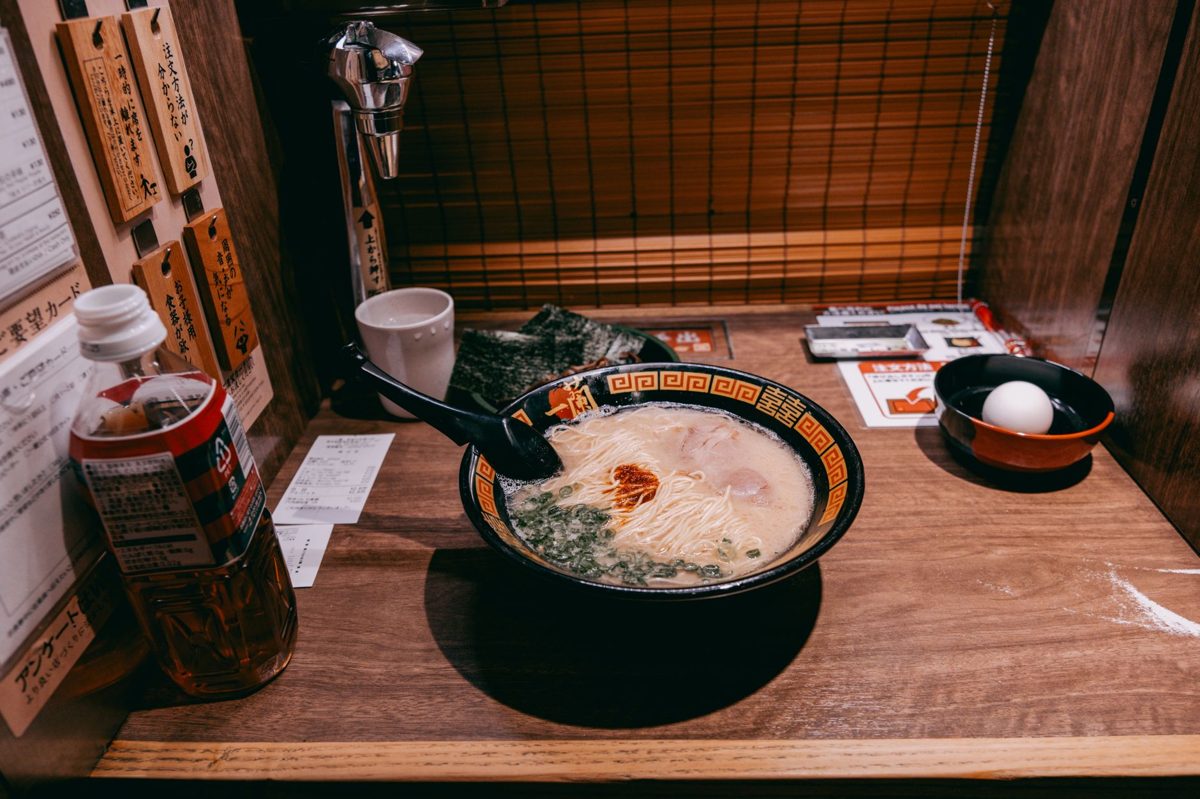
Shinjuku is one of Tokyo’s busiest districts and the ramen count shows it — over 300 shops by some counts. Fuunji, a two-minute walk from the south exit, is a perpetual queue for its rich, seafood-forward tsukemen with thick, chewy noodles (about ¥900). Ichiran Shinjuku gives you a private partitioned booth and a paper form to dial in every part of your tonkotsu bowl, which makes it the obvious pick for solo diners (¥980 and up). For something quieter, Menya Musashi near the west exit pours a bold pork-and-fish broth that locals rate highly. Because so much of Shinjuku stays open into the small hours, it’s also a prime spot for late-night ramen — see our guide to late-night dining for where to land after midnight.
Shibuya & Ebisu
Afuri in Ebisu popularized yuzu shio ramen, a light, citrus-lifted bowl that’s become one of Tokyo’s most recognizable styles (around ¥1,200). The original shop is tiny with constant queues, but it has spread to several branches. Hayashi in buzzy Shibuya is a rising name for clean, poultry-based shoyu. For tsukemen, Gonokami Seisakujo near Shibuya station does an unusual Italian-leaning version with tomato and prawn that’s worth crossing town for.

Ikebukuro
Ikebukuro is a tsukemen heavyweight thanks to Taishoken, the birthplace of the style. The original shop in Higashi-Ikebukuro still serves the classic — thick noodles with a sweet-sour dipping broth — and remains a pilgrimage (about ¥900). Ramen Jiro Ikebukuro is one of the more approachable branches of the legendary Jiro chain, famous for absurdly large portions of thick noodles, garlic, pork fat, and bean sprouts for around ¥800. Be warned: Jiro is an extreme sport, not a light lunch. Learn the call (“yasai mashi, ninniku” for extra veg and garlic) before you sit.
Ginza & Tokyo Station
Kagari hides in a Ginza back alley and serves a stunning chicken paitan that earned a Michelin Bib Gourmand; the u-shaped counter seats barely a dozen, so the queue forms early (about ¥1,100). At Tokyo Station, Tokyo Ramen Street in the underground Yaesu area gathers eight top shops from across Japan in one corridor — an excellent sampler if you can’t commit to a style. Rokurinsha there draws the longest line for its rich seafood-pork tsukemen; go before 11am or after 2pm to dodge the worst of it.
Roppongi & Azabu
Iruka Tokyo in Roppongi feels more like a high-end kappo restaurant than a ramen shop, with a sleek wooden counter and a private room; the refined bowls justify the premium (¥1,300 and up). For the classic post-drinking bowl, Tenkaippin near Roppongi crossing ladles out a thick, almost stew-like chicken broth into the early hours — the cure after a night out.
Ogikubo
Ogikubo, a few stops west of Shinjuku on the Chuo line, is the historic home of Tokyo-style shoyu ramen. Harukiya has been at it since 1949 and serves the textbook version: a clear chicken-and-fish shoyu broth with thin noodles, for around ¥900. It’s a trip back in time and essential eating for anyone curious about where Tokyo ramen began. The surrounding blocks are dotted with shops riding that legacy, which makes the area a natural mini ramen crawl.
Asakusa & East Tokyo
Near Sensoji Temple, Ramen Yoroiya pours a solid, old-school shoyu that pairs naturally with a morning of temple sightseeing (about ¥850). Over in Oshiage, in the shadow of Tokyo Skytree, a handful of lesser-known shops turn out excellent bowls without Shinjuku-level waits. The east side generally rewards you with shorter queues and more neighborhood character, so it’s a smart base if you’d rather eat than line up.
Nakano & Koenji
A couple of stops west of Shinjuku, Nakano and Koenji are where Tokyoites who take ramen seriously actually eat, away from the tourist queues. Around Nakano Broadway you’ll find shops experimenting with niboshi (sardine) and tori paitan that would have lines around the block if they sat in Shibuya. Koenji’s scruffy, music-bar streets hide late-opening counters perfect after a gig. Prices here tend to run a touch lower — ¥800-1,000 buys a serious bowl — and the wait is usually a fraction of what you’d face downtown. If you want to feel like a local rather than a visitor for one meal, come here.
Tsukiji & Tokyo Bay Side
The area around the old Tsukiji outer market leans into seafood, and its ramen follows suit. Shops here pour fish-forward broths — niboshi, clam, and shellfish bases — that make sense after a morning grazing the market stalls. It’s a natural pairing with a Tsukiji food crawl: a few skewers and a tamagoyaki, then a clean clam ramen to finish. Bowls run around ¥950-1,300. Go in the morning, since much of the market activity, and the appetite that goes with it, winds down by early afternoon.
Michelin-Recognized Ramen in Tokyo
Yes, ramen can earn a Michelin nod. In 2016 a Tokyo shop called Tsuta (then in Sugamo) became the first ramen restaurant in the world to win a Michelin star, for a truffle-scented shoyu bowl. Tsuta has since moved and its star status has shifted, but its arrival changed how the world sees the dish. Today the more useful badge for travelers is the Bib Gourmand, which flags excellent food at a gentle price — exactly where ramen lives. Kagari (Ginza, chicken paitan), Nakiryu (Otsuka, tantanmen, which has held a star), and Soba House Konjiki Hototogisu (Shinjuku-area, clam-and-truffle shoyu, also a former star holder) are the names to know. A bowl at any of them runs roughly ¥1,000-1,500 — astonishing value for kitchens the inspectors have singled out. Expect to queue, arrive at opening, and bring cash.
How to Order Ramen in Tokyo
The Ticket Machine (Shokkenki), Step by Step
Most ramen shops in Tokyo take your order through a ticket vending machine (shokkenki) by the door rather than a server at the table. It looks intimidating the first time and takes about ten seconds once you’ve done it. Here’s the full sequence:
- Queue, then check the machine. If there’s a line, you usually buy your ticket first and then wait, so have it ready before a seat opens.
- Insert cash. Most machines take ¥1,000 notes and coins; a growing number accept ¥5,000/¥10,000 notes and IC cards like Suica or PASMO. Feed the money before you press anything.
- Press your bowl. Buttons show the dish in Japanese with the price. The signature ramen is almost always top-left — when in doubt, press that.
- Add toppings or a side. Buttons further down are for ajitama (egg), extra chashu, kaedama (noodle refill), rice, or a drink. Press as many as you want.
- Take your ticket(s) and change. Coins and a paper ticket drop into the tray at the bottom.
- Sit and hand the ticket over. Place it on the counter in front of you or pass it to the chef. Pour your own water from the jug or dispenser.
- Wait 5-10 minutes. The bowl comes when it’s ready. Eat, stack your dishes if there’s a return shelf, and go.
If you can’t read the buttons: many machines now have an English toggle or photos taped above them. Failing that, Google Translate’s camera mode reads the labels in real time. And if you’re truly stuck, point at a photo or another customer’s bowl — staff are used to it and won’t mind.

Reading the Menu and Key Words
A handful of words unlock almost any ramen shop. Ramen is the soup bowl; tsukemen is the dipping version; mazesoba or abura soba is the brothless, mix-it-yourself bowl. Nami means regular size, oomori means large (sometimes free), and chuu sits in between. Zenbu nose is the “everything on it” deluxe. For toppings, remember ajitama (egg), cha-shu (pork), menma (bamboo), and nori (seaweed). If you have an allergy, the safest move is a translation card you can show the chef before buying your ticket — many shops can’t easily swap ingredients once a broth is made, so ask first rather than at the counter.
Customization Options
Many shops, tonkotsu specialists especially, let you fine-tune the bowl when you sit down. The common dials:
- Noodle firmness (men no katasa): soft (yawarakai), regular (futsu), firm (katame), very firm (bari-kata). Firm is the popular default.
- Broth richness (aji no kosa): light (assari), regular (futsu), rich (kotteri).
- Oil amount (abura no ryo): less (sukuname), regular (futsu), extra (oome).
- Garlic (ninniku): none, a little, regular, lots — fresh-pressed at the counter at many shops.
- Green onion (negi): regular or extra.
Extra Noodles (Kaedama)
Still hungry once the noodles are gone but broth remains? Many shops offer kaedama, a fresh serving of noodles (usually ¥100-200) dropped into your leftover soup. It’s most common at tonkotsu shops; just call out “kaedama kudasai.” For tsukemen the equivalent is often “oomori” (large), and it’s frequently free if you ask when you order rather than after.
Essential Ramen Toppings Guide

- Chashu: braised pork belly or shoulder, sliced and laid over the top. The star of most bowls.
- Ajitama: soft-boiled egg marinated in soy and mirin, with a jammy orange yolk. Usually ¥100-150 extra and worth every yen.
- Menma: fermented bamboo shoots, slightly crunchy and tangy.
- Nori: sheets of dried seaweed, often propped against the side of the bowl.
- Negi: chopped green onion, essential in nearly every style.
- Moyashi: bean sprouts, big in miso and Jiro-style bowls.
- Corn & butter: Sapporo-style additions, especially in miso.
- Kikurage: wood-ear mushrooms, thin and crunchy, common in tonkotsu.
Ramen Etiquette in Tokyo
- Slurp, and mean it. Slurping isn’t just allowed, it’s the proper way to eat ramen. It cools the noodles, aerates the broth so you taste more, and signals you’re enjoying it.
- Eat fast. Ramen is built to be eaten quickly, before the noodles soak up the broth and go soft. One quick photo is fine; a ten-minute photoshoot while the bowl dies is not.
- Don’t tip. Tipping doesn’t exist in Japanese dining, ramen shops included. Leaving money behind just causes confusion.
- Return your dishes. Counter shops often have a shelf or spot for empty bowls. Look at where other diners put theirs.
- Keep it quiet. Most shops are tiny, counter-only rooms. Loud conversation carries and reads as inconsiderate.
- Finish the noodles. Leaving noodles is seen as a touch wasteful. Not draining every drop of broth, though, is completely normal.
Vegetarian, Vegan & Halal Ramen Options
For a long time ramen was a hard no if you didn’t eat meat, because even an innocent-looking shoyu broth usually hides pork stock or katsuobushi (bonito) dashi. That’s changed fast. A wave of dedicated shops now build genuinely good bowls without any animal products, and a few cater specifically to halal diners.
Vegetarian & Vegan
T’s TanTan, tucked inside Tokyo Station’s Keiyo Street, is the easiest win — an entirely plant-based shop famous for its creamy soy-milk tantanmen, open early and reliably packed (around ¥900). Soranoiro near Tokyo Station built its reputation on a vegetable-forward bowl and offers a clearly labeled vegan miso. Afuri runs a vegan version of its signature bowl at several branches. Kyushu Jangara in Harajuku and Akihabara serves a separate vegetarian and halal-friendly menu alongside its tonkotsu. One rule that saves disappointment: confirm with staff before ordering, because a broth that looks vegetable-based can still be finished with fish dashi. The phrase “bejitarian desu, niku to sakana wa dame” gets the point across.
Halal
Halal ramen is more limited but real. Honolu (Ebisu) and Ayam-Ya (Okachimachi and Shin-Okubo) are certified halal shops building chicken-based broths instead of pork, and Shin-Okubo — Tokyo’s Korean and multicultural quarter — is the most reliable neighborhood to find muslim-friendly kitchens generally. Several vegan shops above, including T’s TanTan, are also a safe bet because they use no animal products at all. As always, look for the certification sticker or ask directly rather than assuming.
Common Ramen Mistakes to Avoid
- Lingering after you finish. A ramen counter is not a cafe. Once your bowl is empty and there’s a queue outside, the polite move is to get up. Nobody will rush you, but no one settles in to chat either.
- Ordering the most expensive thing to be safe. The signature bowl — usually the cheapest, top-left button — is what the shop is known for. The pricey “special” is just the same bowl with every topping piled on.
- Drowning a delicate bowl in garlic or chili. With a clear shio or a refined shoyu, taste it first. The kitchen balanced it for a reason. Save the heavy condiments for tonkotsu and Jiro.
- Photographing for five minutes while it goes soft. Noodles wait for no one. Snap one shot and eat. A great bowl at minute one becomes a mediocre one by minute eight.
- Assuming card payment. Plenty of the best shops are cash-and-ticket-machine only. Carry small notes and coins.
- Skipping the soup-wari at a tsukemen shop. Asking for hot stock to drink the leftover dipping broth is half the experience, and it’s usually free. Don’t leave it on the table.
Ramen Through the Seasons
Ramen is a year-round food, but the bowl that hits hardest changes with the calendar. In the depths of a Tokyo winter, when the wind comes off the bay and your hands go numb, miso ramen and rich tonkotsu are exactly right — order extra garlic and let the steam thaw you out. Spring and autumn, the city’s best eating weather, are when lighter shio and shoyu shine and the queues are most bearable. In the summer, when Tokyo turns into a sauna, locals switch to hiyashi chuka (cold ramen topped with strips of egg, ham, cucumber, and a tangy dressing) and chilled tsukemen — both appear as seasonal specials from roughly June to September. If you’re visiting in August, look for the word “hiyashi” on the machine.
Practical Tips for Tokyo Ramen Hunting
When to Go
Peak ramen hours are 11:30am-1:30pm and 6:00-8:00pm, and that’s when the queues are worst, especially at weekends. For the shortest waits, aim for the gap between meals (2:00-5:00pm, when many shops stay open) or after 9:00pm. Note that some of the best shops close the moment they sell out of broth for the day, so for a bucket-list bowl, arrive early rather than late.
How Much Does Ramen Cost?
A standard bowl in Tokyo runs ¥800-1,200 (roughly $5.50-8.50). Premium toppings like ajitama and extra chashu add ¥100-300. High-end and specialty shops climb to ¥1,500-2,000, and tsukemen tends to sit at the upper end. Even so, against almost everything else you’ll eat in the city, ramen is exceptional value — a filling, satisfying meal for the price of a coffee and a pastry back home. If you’re watching the budget closely, our guide to cheap eats in Tokyo lists the chains where a bowl drops under ¥600.
Useful Apps and Resources
- Tabelog — Japan’s most trusted review site. A score above 3.5 means a strong shop; above 3.7 is exceptional. (Locals rate harshly, so don’t dismiss a 3.6.)
- Google Maps — ratings plus the “popular times” graph help you sidestep the worst queues.
- Ramen Beast — an English-language review app focused on Tokyo, run by a serious ramen hunter.
- Ramen Adventures — a long-running English blog with maps and reviews across the city.
Our 2026 Tokyo Ramen Picks
If you only have a few bowls in you and want a shortlist that covers the bases, this is where we’d send you in 2026:
- First bowl, classic Tokyo: Harukiya in Ogikubo for the original clear shoyu.
- Best splurge under a Michelin name: Kagari in Ginza for chicken paitan.
- Tsukemen that justifies the line: Rokurinsha at Tokyo Station, or Fuunji in Shinjuku.
- Solo and stress-free: Ichiran’s booth system, any branch.
- Plant-based: T’s TanTan inside Tokyo Station.
- Late-night, post-drinks: Tenkaippin near Roppongi, or anywhere still steaming in Shinjuku after midnight.
One last piece of advice: don’t over-plan. Some of the best bowls in Tokyo come from a shop you ducked into because the smell stopped you on the street and there were six locals at the counter. Trust the queue, trust your nose, and order the signature.
A Three-Day Ramen Crawl
If ramen is a priority and you have a few days, you can taste the full range without doubling back across the city. Here’s a route that pairs each bowl with the part of Tokyo around it, so you’re sightseeing and eating in the same trip rather than making special journeys.
- Day 1 — the classics, west side: Start in Ogikubo with Harukiya’s original shoyu, then ride the Chuo line back through Nakano and Koenji for an afternoon niboshi or paitan bowl. Finish in Shinjuku after dark with late-night tsukemen at Fuunji.
- Day 2 — central and refined: Build the day around Ginza and Tokyo Station. Queue early for Kagari’s chicken paitan, browse the Yaesu underground, then sample tsukemen at Rokurinsha or a plant-based bowl at T’s TanTan on the way out.
- Day 3 — east side and easy: Pair Asakusa’s Sensoji with an old-school shoyu at Ramen Yoroiya, wander toward Skytree for a quieter neighborhood bowl, and keep the evening loose for whatever’s steaming nearby.
Three bowls a day is plenty; ramen is rich, and tasting it properly means leaving room. Two great bowls beat five rushed ones.
Eating Ramen With Kids or in a Group
Counter-only shops aren’t ideal for families or groups of four-plus, since seats rarely sit together and turnover is fast. For those situations, the chains earn their keep: Ichiran’s booths work for kids who want their own space, while larger sit-down shops and the Tokyo Ramen Street complex have proper tables. Most shops will do a mild, plain bowl for a child if you ask, and a single kaedama noodle refill is an easy way to split one bowl between two small eaters. Strollers are tough inside tiny counters, so park them or fold them at the door.
More Tokyo eats: once you have ramen sorted, work through the city’s other great cheap thrills — smoky skewers over charcoal, crispy tonkatsu, and a proper night at a Japanese pub.
For a ramen stop between trains, Tokyo Ramen Street in the basement on the Yaesu side of Tokyo Station puts eight well-known shops in one corridor, including Rokurinsha’s thick tsukemen, which opens for a morning menu at 07:30. Our Tokyo Station guide explains how to find it and when the queues are shortest.
Frequently Asked Questions
What if I’m vegetarian or vegan?
Vegetarian and vegan ramen has taken off in Tokyo. T’s TanTan and Soranoiro near Tokyo Station, and Afuri at select branches, all serve plant-based bowls. Always confirm with staff, since many broths that look vegetable-based are finished with fish dashi. See the dedicated section above for the full list.
Is it okay to eat ramen alone?
Absolutely — ramen is arguably Tokyo’s most solo-friendly meal. Most shops are built around counter seating for individual diners, and eating alone is completely normal. Ichiran takes it furthest with private partitioned booths where you barely see the person beside you.
What’s the best ramen near major tourist areas?
Near Shibuya: Fuunji (tsukemen) or Afuri Ebisu (yuzu shio). Near Asakusa and Sensoji: Ramen Yoroiya. Near Tokyo Station: Rokurinsha or Soranoiro on Tokyo Ramen Street. Near Shinjuku: Fuunji south exit or Ichiran. Near Harajuku and Omotesando: Afuri Harajuku.
How long are ramen queues?
Popular shops can run 20-60 minutes at peak. Most lines move faster than they look, because counter-only shops turn over quickly — each diner is in and out in about 15 minutes. Weekday lunch or an off-peak afternoon cuts the wait dramatically. A line wrapping the block is usually a sign the bowl is worth it.
Do ramen shops take cards, or is it cash only?
Assume cash. A lot of independent shops, and most ticket machines, still run on coins and ¥1,000 notes, though newer machines increasingly accept IC cards (Suica, PASMO) and sometimes credit cards. Carry a few thousand yen in small notes and coins so a great hole-in-the-wall never catches you out.