Tokyo Neighborhoods · Guide №018
Shinjuku Guide: Best Things to Do, Eat & See in Tokyo’s Busiest District
目次 — Contents
- How Shinjuku Breaks Down: East, West and South
- Best Things to Do in Shinjuku
- Where to Eat in Shinjuku
- Shinjuku Nightlife
- Getting Around Shinjuku Station (the World’s Busiest)
- Where to Stay in Shinjuku
- Is Kabukicho Safe? A Straight Answer
- Insider Tips for Visiting Shinjuku
- How to Spend a Day in Shinjuku
- Best Time of Year to Visit Shinjuku
- Day Trips That Start in Shinjuku
- A Rough Budget for a Day in Shinjuku
- Getting to Shinjuku from the Airports
- Free and Cheap Things to Do in Shinjuku
- Nearby Tokyo neighborhoods
- Frequently Asked Questions
This article contains advertising. Our booking links are routed through a partner that adds commission tracking automatically, so if you book through one we earn a commission from the provider, at no extra cost to you. It never affects what we recommend. Affiliate disclosure

If Tokyo has a beating heart, it’s Shinjuku. The world’s busiest train station sits at its center — around 3.5 million people pass through daily — ringed by skyscrapers, the city’s most famous park, and its most legendary nightlife alleys. This Shinjuku Tokyo guide is written for the visitor standing at one of those 200-odd station exits wondering which way to turn. Shinjuku is loud, dense, and a little overwhelming on first contact, and that’s exactly why people fall for it.
Below you’ll find how the district breaks down, what’s actually worth your time, where to eat and drink, how to survive the station, and where to sleep. We’ve leaned on real hours, real prices in yen, and the kind of small logistics that save you twenty minutes underground. Shinjuku is one of the defining stops in any tour of Tokyo’s neighborhoods, and it rewards a second visit as much as a first.
How Shinjuku Breaks Down: East, West and South
Shinjuku is really several districts stitched around one giant station. Get the rough geography straight and the rest of your visit gets easier:
- West Shinjuku (Nishi-Shinjuku): the skyscraper and hotel district, anchored by the twin-towered Tokyo Metropolitan Government Building. Orderly, business-like, and home to the best free views in town.
- East Shinjuku (Higashi-Shinjuku): the entertainment and shopping side — Kabukicho, Golden Gai, the Isetan department store, and most of the restaurants and bars. This is where Shinjuku gets loud.
- South Shinjuku (Minami-Shinjuku): Takashimaya Times Square, the highway bus terminal, and the nearest approach to Shinjuku Gyoen. Calmer, with big-store shopping.
- The station itself: a multi-level labyrinth of JR, Metro and private-rail platforms wrapped in hundreds of shops and restaurants. More on surviving it below.
A useful mental model: west is towers, east is neon, south is shopping. If you remember nothing else about the layout, that line will keep you pointed the right way.
Best Things to Do in Shinjuku
1. Shinjuku Gyoen National Garden
Shinjuku Gyoen is one of Tokyo’s largest and loveliest parks — 58 hectares that feel a world away from the towers next door. It folds together three styles: a formal French garden of symmetrical rose beds, an English landscape garden of sweeping lawns, and a traditional Japanese garden of ponds, bridges and teahouses. Every season has its case: more than 1,000 cherry trees across 65 varieties in spring, deep green in summer, fierce foliage in autumn, and quiet bare-branch beauty in winter.
Hours: 9:00 AM–4:30 PM (last entry 4:00 PM), closed Mondays. Admission: ¥500 adults, ¥250 students. Alcohol is prohibited, and the park runs special schedules during Golden Week and cherry-blossom peak — check ahead. The Shinjuku Gate (closest to JR) and Okido Gate (closest to Shinjuku-Gyoenmae on the Metro) are the handiest entrances. Give it 60–90 minutes; a slow morning here is one of central Tokyo’s great resets.

2. Tokyo Metropolitan Government Building (free observation decks)
The twin towers of the Tokyo Metropolitan Government Building (Tocho) put free observation decks at 202 meters — among the best no-cost views in the whole city. On a clear day you’ll catch Mount Fuji to the west and Tokyo Skytree to the east, with the grid running out to the horizon in between. The North Tower deck stays open late, which makes it one of very few free night-view spots in Tokyo.
Hours: South Tower 9:30 AM–5:30 PM; North Tower 9:30 AM–11:00 PM (last entry 10:30 PM). Admission: free. Closures vary by tower, so check the official site. Access: about a 10-minute walk from the station’s west exit, or step straight up from Tocho-mae Station on the Oedo Line. Go near sunset and you get the day view and the lights in one trip.

3. Golden Gai
Golden Gai is a six-alley warren of roughly 200 tiny bars, each seating somewhere between 4 and 12 people. It’s a survivor — a pocket of postwar drinking culture that outlasted decades of redevelopment all around it. Every bar has a theme and a personality: jazz dens, punk holes, film-buff hangouts, writers’ corners, and places where the mama-san behind the counter is the whole draw. For more on the district’s character and a few specific doors worth pushing open, see our guide to Golden Gai’s tiny bars.
A few practical notes. Many bars charge a seat charge of ¥500–¥1,500 per person — that’s normal, not a scam. Some are regulars-only or Japanese-only; look for an English “Welcome” or “Tourists OK” sign before you climb the stairs. The move is to wander, peek through doorways, and try two or three places across a night — exactly how a Tokyo bar crawl works. Most don’t open until around 8 PM, so this is an after-dark stop.

4. Omoide Yokocho (Memory Lane)
Tucked against the station’s west exit, Omoide Yokocho — “Memory Lane,” also nicknamed “Piss Alley” from its rougher past — is a narrow, smoke-hazed lane of tiny grilled-chicken skewer shops, ramen counters and izakayas dating to the post-war black-market years. The atmosphere is the point: paper lanterns, charcoal smoke, knee-to-knee counter seats, and the clatter of beer glasses in a space that feels parked in 1950s Tokyo.
Most stalls do yakitori — grilled chicken skewers, from familiar thigh and breast to gutsier cuts like heart, cartilage and skin. Prices are gentle: ¥100–¥200 a skewer, with a filling meal and drinks landing around ¥2,000–¥3,000. Come from about 6 PM. It gets crowded, but turnover is fast and seats keep opening up.

5. Kabukicho
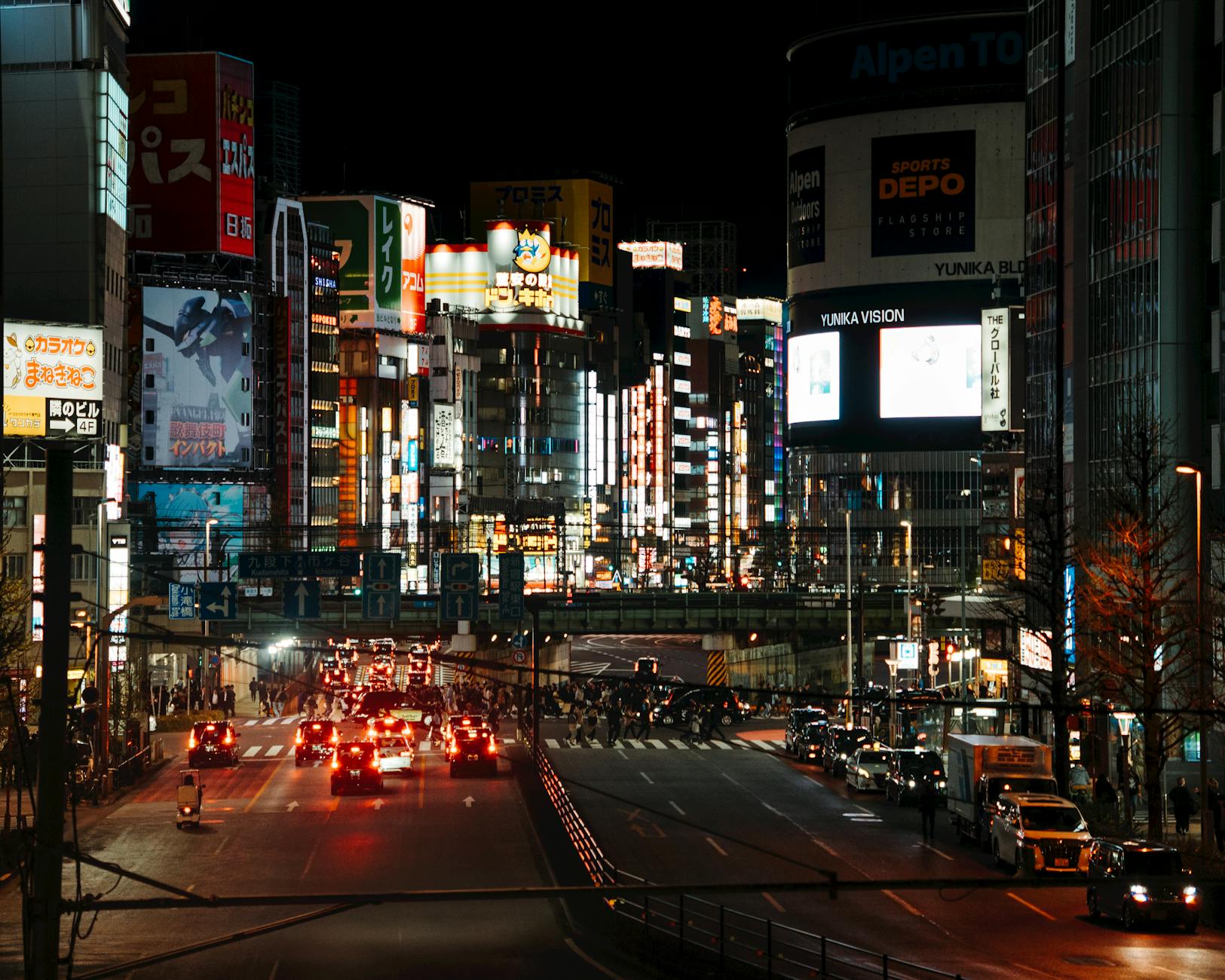
Kabukicho is Tokyo’s biggest entertainment district — a wall-to-wall rush of neon, giant screens, karaoke towers, arcades, cinemas and restaurants. The red-lit Kabukicho gate marks the way in, and the Godzilla head poking over the Shinjuku Toho Building keeps watch above it all. By day it’s fairly tame; after dark it becomes one of the most charged nightlife zones in Asia.
Kabukicho has a red-light reputation, and parts of it earn that, but most of the area is perfectly safe and visitor-friendly. Stick to the main streets and you’ll find strong restaurants, VR centers, escape rooms and multi-floor karaoke. The towering new Kabukicho Tower has reshaped the entrance with restaurants, a cinema and live-entertainment floors, and the old Robot Restaurant’s successor show carries on its loud, laser-soaked spirit. We dig into the after-dark scene across the district in our guide to Tokyo nightlife.

6. Shopping in Shinjuku
Shinjuku is one of Tokyo’s top shopping grounds. Isetan on the east side is arguably the city’s finest department store — superb fashion floors, a jaw-dropping depachika food hall in the basement, and a rooftop garden. Lumine Est and Lumine 1 & 2 plug straight into JR Shinjuku Station and lean trendy and Japanese. Takashimaya Times Square on the south side is a giant complex with Tokyu Hands, the Kinokuniya bookstore and an IMAX.
For electronics and otaku goods, Yodobashi Camera west of the station sprawls across multiple buildings and rivals Akihabara. Bargain hunters should hit the Kabukicho branch of Don Quijote — open 24 hours, gloriously chaotic, and good for everything from cosmetics to snacks to last-minute souvenirs.

7. Samurai Museum and Ninja Trick House
For hands-on culture, the Samurai Museum in Kabukicho runs guided tours through armor, swords and artifacts, with a chance to suit up in full samurai gear for photos. Nearby, the Ninja Trick House packs rooms with optical illusions, hidden doors and ninja challenges — sillier, and a hit with kids and adults alike.
Where to Eat in Shinjuku
Few districts on earth pack in this many restaurants. Whatever your budget, Shinjuku has a table for it — here are reliable starting points:
- Tsunahachi — a tempura institution since 1923, frying light and crisp at the counter. The original shop sits near the east exit.
- Fuunji — one of Tokyo’s best tsukemen counters, with a near-permanent queue near the south exit. The thick fish-pork dipping broth earns the wait.
- Nakajima — a Michelin-starred lunch hiding in a basement, where a sardine set meal (iwashi teishoku) runs just ¥800–¥1,000. Go early; the line forms fast.
- Omoide Yokocho — yakitori and atmosphere by the lantern-light (see above).
- Don Quijote / Kabukicho food halls — late-night cheap eats when nothing else is open.
Shinjuku is also one of the city’s great ramen battlegrounds, from rich tonkotsu counters to the tsukemen heavyweights above. If a steaming bowl is what you’re after, our roundup of Shinjuku’s ramen and the wider city’s best points you to the shops worth queuing for. For budget meals, the department-store basements (depachika) sell beautiful bento and deli items, often discounted near closing, and the konbini around the station — 7-Eleven, Lawson, FamilyMart — are dependable for a quick, cheap bite.
Shinjuku Nightlife
This is the district that defines a Tokyo night out. Where you go depends entirely on the mood you’re chasing:
- Tiny, characterful bars: Golden Gai, for the closet-sized rooms and a conversation with whoever’s behind the counter. Budget ¥500–¥1,500 seat charge per bar plus drinks.
- Smoky and old-school: Omoide Yokocho, for yakitori, cold beer and shoulder-to-shoulder counters.
- Big and loud: Kabukicho, for multi-floor karaoke (Karaoke-kan, Big Echo), game centers, izakaya chains and live-entertainment shows.
- Clubs and live music: Kabukicho and the streets toward Shin-Okubo host clubs and live houses; cover charges typically run ¥2,000–¥4,000, often including a drink.
- Shinjuku Ni-chome: Tokyo’s LGBTQ+ quarter, just east of Gyoen, with hundreds of welcoming bars. Many are open to all visitors regardless of orientation.
Two timing notes that will shape your night. First, the bars hit their stride after about 9 PM and many run very late. Second, the last trains leave around midnight to 12:30 AM — miss them and you’re choosing between a taxi (pricey from Shinjuku) or staying out until the trains restart near 5 AM. Plenty of people simply pick the latter; karaoke and 24-hour spots make it easy.
Getting Around Shinjuku Station (the World’s Busiest)
Shinjuku Station handles over 3.5 million passengers a day across a dozen-plus lines and five operators, with more than 200 exits — a Guinness World Record for the busiest station on the planet. It is genuinely confusing the first time, but it follows a logic once you anchor yourself to the major exits rather than the exit numbers.

The exits that actually matter
- East Exit (Higashi-guchi): for Kabukicho, Golden Gai, Isetan, the 3D cat screen and most nightlife. The Studio Alta building is the classic meet-up landmark here.
- West Exit (Nishi-guchi): for Omoide Yokocho, Yodobashi Camera, the hotel district and the Government Building. The big underground concourse fans out toward the skyscrapers.
- South Exit (Minami-guchi): for Takashimaya Times Square, the NEWoMan complex and the most direct walk to Shinjuku Gyoen.
- New South Exit (Shin-Minami-guchi): for Busta Shinjuku (highway buses) and the JR Expressway terminal, one level up.
Navigation tips that save real time
- Pick your exit before you walk. Decide “East” or “West” on the platform and follow that word the whole way out — chasing exit numbers underground is how people lose twenty minutes.
- Surface and use the skyline. Lost below ground? Go up. The Government Building towers (west) and Kabukicho’s neon (east) orient you instantly from street level.
- Mind the private lines. Odakyu, Keio and the Toei/Metro subways have their own gates and concourses that branch off the JR core; if you’re switching to one, follow signs for that operator early.
- Allow buffer time. For a timed bus at Busta or a Romancecar to Hakone, give yourself 15 extra minutes the first time. The walk from a JR platform to the right gate is longer than it looks.
- Screenshot a map. Save the JR East Shinjuku map offline before you arrive; signage is good but a picture beats squinting at a wall board mid-rush.
Lines serving Shinjuku
- JR: Yamanote (loop), Chuo (rapid to Tokyo Station), Chuo-Sobu (local), Saikyo, Shonan-Shinjuku.
- Tokyo Metro: Marunouchi Line (to Ginza and Tokyo Station).
- Toei Subway: Shinjuku Line (to Jimbocho) and Oedo Line (to Roppongi, Tsukiji, and Tocho-mae for the observatories).
- Private railways: Odakyu (to Hakone and Odawara) and Keio (to Chofu and Mount Takao).
Busta Shinjuku (highway bus terminal)
Directly above the New South Exit, Busta Shinjuku is Tokyo’s main long-distance bus terminal, with departures to Mount Fuji, Hakone, Kyoto, Osaka, Nagoya and far beyond. Highway buses dramatically undercut the shinkansen — a seat to Kyoto runs about ¥4,000–¥8,000 versus ¥13,000-plus on the bullet train — which is why budget and overnight travelers love it. Arrive at the gate a little early; the terminal is large and boarding is by numbered berth.
Where to Stay in Shinjuku
Shinjuku is one of the smartest bases in Tokyo: you’re on the Yamanote loop, steps from highway buses and the Narita Express, and surrounded by food and nightlife. Roughly, the area splits by budget and mood:
- West Shinjuku (luxury and views): the skyscraper hotels — Park Hyatt (of Lost in Translation fame), Keio Plaza, Hilton, Hyatt Regency — deliver high-floor city panoramas and calm after the crowds.
- South and around the station (mid-range and convenient): reliable chains like the towering business hotels near the south and west exits put you minutes from the platforms.
- East Shinjuku and Kabukicho (budget and nightlife): hostels, capsule hotels and value business hotels sit right in the action — lively, occasionally noisy, and ideal if you plan late nights.
- Shin-Okubo (cheaper, a short hop north): Tokyo’s Koreatown has good-value rooms one or two stops away, with excellent late-night food.
Light sleepers should ask for a room away from the Kabukicho side and above the lower floors, and it’s worth comparing specific Shinjuku properties by price tier before booking. For a fuller breakdown of neighborhoods, price bands and booking tips across the city, see our guide on where to stay in Tokyo.
Is Kabukicho Safe? A Straight Answer
Short version: yes, with common sense. Tokyo is one of the world’s safest big cities, and that holds even in Kabukicho late at night — violent crime against tourists is very rare. The real risk here isn’t danger so much as getting fleeced, and it’s easy to sidestep:
- Ignore the touts. Men (and women) who approach you on the street offering “cheap drinks,” a club, or a “girls’ bar” are the classic setup for a sky-high bill. A flat “no thank you” and a steady walk is all it takes.
- Never follow a stranger to an unnamed bar. If you can’t see the prices and the name out front, don’t go in. Overcharging scams almost always start with a friendly escort to an upstairs room.
- Check seat charges before you sit. A posted ¥500–¥1,500 cover is normal; a vague “we’ll sort it later” is not.
- Use ATMs inside konbini. The 7-Eleven and Lawson machines are well-lit, reliable and take foreign cards.
- Keep to the main, busy streets at night. The lit thoroughfares, Golden Gai and Omoide Yokocho are all fine; you simply don’t need the quiet back corners.
Solo travelers and women report feeling comfortable in Shinjuku at night, with the usual urban awareness. Stick to the rules above and the worst thing likely to happen is a slightly bruised wallet from one too many yakitori sticks.
Insider Tips for Visiting Shinjuku
- See the 3D cat. The giant calico on the Cross Shinjuku Vision screen above the east exit performs on the hour and has become a genuine social-media landmark.
- Time the Government Building for sunset. The North Tower’s late hours (until 11 PM) make it the rare free spot for both golden-hour and full-dark city views.
- Book a Golden Gai crawl if you’re shy. Several companies run English-language guided pub crawls that get you past the regulars-only doors.
- Don’t try to do it all in one go. Shinjuku rewards repeat visits — most travelers end up passing through several times on a Tokyo trip anyway.
- Carry a little cash. The tiniest bars and some yakitori stalls are cash-only, even as the rest of the city goes contactless.
How to Spend a Day in Shinjuku
Classic half-day (4–5 hours)
- 10:00 AM: Open at Shinjuku Gyoen for a calm garden stroll (60–90 minutes).
- 11:30 AM: Cross to the east side for lunch — Nakajima’s sardine set or Fuunji’s tsukemen.
- 1:00 PM: Browse Isetan, especially the basement depachika.
- 2:30 PM: Walk Kabukicho for the Godzilla head, then peek into Golden Gai (atmospheric even by day).
- 3:30 PM: Head west to the Government Building observatory for late-afternoon views.
- 5:30 PM: Early-evening yakitori and beer in Omoide Yokocho as the lanterns come on.
- 7:30 PM: Back to Golden Gai, or into Kabukicho for karaoke and game centers.
Full day and into the night
If you have a whole day, slot the same backbone but add shopping at Takashimaya Times Square or Yodobashi in the early afternoon, a coffee break with a tower view, and a proper dinner before drinks. Save the Government Building for sunset, then let the evening run long: Omoide Yokocho for food, Golden Gai for character, and Kabukicho or Ni-chome for wherever the night wants to go. Just keep one eye on that last-train clock around midnight — or commit to staying out until the trains restart at 5 AM.
Best Time of Year to Visit Shinjuku
Shinjuku runs hard year-round, but the season changes what you’ll want to prioritize.
- Spring (late March–April): peak Shinjuku. The 1,000-plus cherry trees in Shinjuku Gyoen draw big, happy crowds — go on a weekday morning and arrive at opening to beat the queue. Expect timed-entry or capacity limits at full bloom.
- Summer (June–August): hot and humid, with rooftop beer gardens atop the department stores and a city that doesn’t slow down after dark. Duck into air-conditioned arcades and depachika in the worst heat.
- Autumn (October–November): arguably the sweet spot. Comfortable walking weather and blazing foliage in Gyoen, with clearer skies that improve the Government Building views — and your odds of spotting Mount Fuji.
- Winter (December–February): cold but crisp, with the year’s clearest Fuji sightings from the observatories and winter illuminations around the south exit and Times Square. Nightlife carries on regardless.
Day Trips That Start in Shinjuku
One underrated reason to base yourself here: two private railways launch some of Tokyo’s best day trips straight from Shinjuku Station, no transfer required.
- Hakone (Odakyu Line): the famous hot-spring and Mount Fuji-view region. The Odakyu “Romancecar” reaches Hakone-Yumoto in about 85 minutes; the Hakone Free Pass from the Odakyu counter bundles the train plus local buses, boats and cable cars.
- Mount Takao (Keio Line): a forested 599-meter mountain with easy hiking trails and a cable car, under an hour from Shinjuku and a favorite quick escape from the city.
- Mount Fuji / Fuji Five Lakes (highway bus from Busta): direct coaches run to Kawaguchiko and the Fuji area in roughly two hours, often cheaper and more direct than the train.
- Kamakura and beyond (Shonan-Shinjuku Line): the JR Shonan-Shinjuku Line links Shinjuku to the seaside temple town of Kamakura without changing stations.
Because so many lines converge here, Shinjuku effectively doubles as a launchpad: you can spend your mornings out at Hakone or Takao and still be back for dinner and Golden Gai by night.
A Rough Budget for a Day in Shinjuku
Shinjuku can be done cheap or lavish. Here’s a realistic mid-range day for one person, in yen, to help you plan:
- Shinjuku Gyoen admission: ¥500
- Government Building observatory: free
- Lunch (tsukemen or a set meal): ¥900–¥1,500
- Coffee and a snack: ¥600–¥1,000
- Yakitori and a beer in Omoide Yokocho: ¥2,000–¥3,000
- Two bars in Golden Gai (seat charge + drinks): ¥3,000–¥5,000
- Local trains for the day: ¥500–¥800
That lands a full day with a night out somewhere around ¥8,000–¥12,000 before shopping. Trim it by leaning on depachika bento and konbini meals and skipping the seat-charge bars; push it higher with a skyscraper-hotel dinner or a Robot Show ticket. Either way, few districts give you this much range in a few square kilometers.
Getting to Shinjuku from the Airports
Shinjuku is one of the easier central districts to reach straight off a plane, which is part of why it makes such a practical first base.
- From Narita: the JR Narita Express (N’EX) runs direct to Shinjuku in about 80–90 minutes (roughly ¥3,250), and several airport limousine buses drop right at the Shinjuku hotels and Busta. The cheaper Keisei route reaches central Tokyo, then a quick transfer brings you in.
- From Haneda: closer and faster — the Keikyu Line or Tokyo Monorail plus one transfer gets you to Shinjuku in around 45 minutes, and direct limousine buses serve the major hotels. A taxi is feasible late at night but costs far more.
Whichever you take, grab an IC card or set up Mobile Suica before you ride — it removes the need to buy a ticket for every leg and makes the Shinjuku Station transfers painless.
Free and Cheap Things to Do in Shinjuku
You don’t need a big budget to enjoy Shinjuku. A surprising amount of its best material is free or nearly so:
- The Government Building observatories — 202-meter views, including Mount Fuji on clear days, for nothing.
- The 3D cat and the neon canyons — simply walking the east-exit streets and Kabukicho after dark is a free spectacle in itself.
- Window-wandering Golden Gai and Omoide Yokocho — atmospheric even before you buy a drink.
- Department-store rooftops and depachika — Isetan’s roof garden and the basement food halls cost nothing to browse, and samples appear.
- Shinjuku Gyoen — at ¥500 it’s the rare paid attraction that’s worth every yen for a couple of restorative hours.
Pair a free morning of skyline views and garden time with a cheap depachika lunch, and you can have a full, memorable Shinjuku day for the price of admission to Gyoen and a couple of snacks.
Nearby Tokyo neighborhoods
Shinjuku makes an easy base for the districts around it. Shibuya sits two minutes south on the Yamanote line — our full Shibuya guide covers the crossing, Shibuya Sky and the nightlife — and Ikebukuro, the next giant hub to the north, has its own Ikebukuro guide with Sunshine City and Otome Road. Both slot neatly onto either end of a Shinjuku day.
The station itself deserves its own planning. With five railway companies, separate ticket gates for each and exits on every side, coming out on the wrong side of the tracks can add fifteen minutes to any walk. Our Shinjuku Station guide explains which exit leads where, where the Odakyu, Keio and subway gates are, and how long transfers really take.
Frequently Asked Questions
Is Shinjuku safe at night?
Yes — overwhelmingly so, even in Kabukicho late at night, since Tokyo is one of the world’s safest big cities. The main thing to watch is aggressive touts trying to steer you into overpriced bars; say “no thanks” and keep walking. Don’t follow strangers to unnamed venues, stick to the main streets, and you’ll be fine. Golden Gai and Omoide Yokocho are both perfectly safe.
How long should I spend in Shinjuku?
A half-day (4–5 hours) covers the headliners: Shinjuku Gyoen, the Government Building, and either Golden Gai or Omoide Yokocho. A full day adds shopping, more meals and a proper night out. Many visitors return more than once on a single trip — it’s that dense.
What’s the best time of day to visit?
Morning suits Shinjuku Gyoen (opens 9 AM). Late afternoon is ideal for the Government Building observatory and its sunset views. Evening is when Shinjuku truly switches on — the neon, bars and restaurants all peak from about 6 PM.
Is the Robot Restaurant worth it?
The original Robot Restaurant has closed, but its successor Robot Show at Kabukicho Tower carries the torch — a high-energy, LED-soaked spectacle of dancers, robots and music. It’s deliberately over-the-top and not for everyone, but as a uniquely Tokyo experience you can’t have anywhere else, it delivers. Book online ahead for the best price.
How do I not get lost in Shinjuku Station?
Anchor to a named exit rather than a number. Decide East (Kabukicho, nightlife) or West (Government Building, hotels) on the platform and follow that single word all the way out. If you do get turned around underground, surface and navigate by the skyline — the towers to the west, the neon to the east. Screenshot the JR East station map before you arrive and budget a few extra minutes the first time.
Is Shinjuku good for families?
Yes, with a little zoning. Shinjuku Gyoen, the free observation decks, the Ninja Trick House and the big department stores are all family-friendly by day. Kabukicho is fine to walk through during daylight, but it’s an adult nightlife district after dark, so most families base their evening elsewhere or keep to the main, lit streets.