Tokyo Events & Festivals · Guide №026
Cherry Blossom Season in Tokyo: Best Spots, Timing & Hanami Tips

目次 — Contents
- When Do Cherry Blossoms Bloom in Tokyo?
- Best Cherry Blossom Tokyo Viewing Spots
- How to Enjoy Hanami Like a Local
- Nighttime Cherry Blossoms (Yozakura)
- Tokyo Cherry Blossom 2026: Forecast & Timing
- How to Avoid the Worst of the Crowds
- Cherry Blossoms Beyond the City: Fuji & Day Trips
- Hanami Etiquette: The Unwritten Rules
- Which Spot Should You Choose?
- A Perfect Cherry Blossom Day in Tokyo
- Seasonal Flavors: Sakura Food & Drink
- Practical Tips for Cherry Blossom Season
- Spring Weather, Pollen & What to Pack
- Frequently Asked Questions
This article contains advertising. Our booking links are routed through a partner that adds commission tracking automatically, so if you book through one we earn a commission from the provider, at no extra cost to you. It never affects what we recommend. Affiliate disclosure

For about two weeks each spring, Tokyo belongs to its cherry trees. Some 80,000 of them open almost at once, turning parks, riverbanks, and temple grounds into tunnels of pale pink and white. The whole city shifts to match: office workers take their lunch under the branches, families stake out picnic spots on blue tarps, couples wander illuminated paths after dark, and everyone, locals and visitors alike, looks up. Catching the cherry blossom in Tokyo at its peak is one of travel’s great experiences, and it is also Japan’s most defining cultural moment, equal parts party, picnic, and quiet meditation on how fast beauty passes.
Below you will find the 2026 bloom timing, the best viewing spots with what each is actually like and what it costs, how to run a proper hanami picnic without breaking the unwritten rules, where to catch the illuminated trees at night, and what to do if your dates land a little early or late. Real spots, real yen, real timing.
When Do Cherry Blossoms Bloom in Tokyo?
Tokyo’s cherry blossom season typically follows this timeline:
- First bloom (kaika): Usually around March 18-25. This is when the first blossoms open on the designated “sample trees” monitored by the Japan Meteorological Agency. There’s not much to see yet — just scattered flowers on otherwise bare branches
- Full bloom (mankai): Approximately 7-10 days after first bloom, typically late March to early April. This is the peak — when 80% or more of blossoms are open. The 2-3 days around peak bloom are the most spectacular
- Petal fall (sakura fubuki): Starting about one week after full bloom. The blossoms begin to fall in clouds of petals — the famous “cherry blossom blizzard” (sakura fubuki). Many Japanese consider this the most poignant and beautiful phase
- Late bloomers: Some cherry tree varieties (yaezakura, double-petaled) bloom 1-2 weeks later than the standard Somei Yoshino, extending the season into mid-April. Shinjuku Gyoen is particularly good for late bloomers
How to track the forecast: The Japan Meteorological Agency and Weathernews release cherry blossom forecasts starting in January, with updates every few weeks. These forecasts are remarkably accurate — usually within 2-3 days of actual bloom. Check forecasts in early February if you’re planning a trip specifically for cherry blossoms. The exact dates shift slightly each year based on winter temperatures, with warmer winters leading to earlier blooms.
Important caveat: Peak bloom is inherently unpredictable. Even with forecasts, there’s always a chance you’ll arrive a few days too early (buds but no blossoms) or too late (petals mostly fallen). Building a 5-7 day window around the forecast peak dramatically increases your chances of catching full bloom.
Best Cherry Blossom Tokyo Viewing Spots
Shinjuku Gyoen
Shinjuku Gyoen is the single best cherry blossom destination in Tokyo for most visitors. This spacious national garden has over 1,000 cherry trees across 70+ varieties, including both early and late bloomers — meaning you can see cherry blossoms here even if you miss peak Somei Yoshino season by a week or two. The garden has vast lawns perfect for picnicking under the trees, a beautiful Japanese landscape garden, and a dramatically lower stress level than more crowded spots.
Practical details: Entry ¥500. Open 9:00 AM – 5:30 PM (extended to 6:30 PM during sakura season). No alcohol allowed — making it a more family-friendly and relaxed alternative to raucous hanami parks. Arrive when the gates open to secure a good picnic spot on weekends. The wide lawns near the Taiwanese Pavilion and the area around the Japanese garden pond are the most photogenic.

Meguro River (Nakameguro)
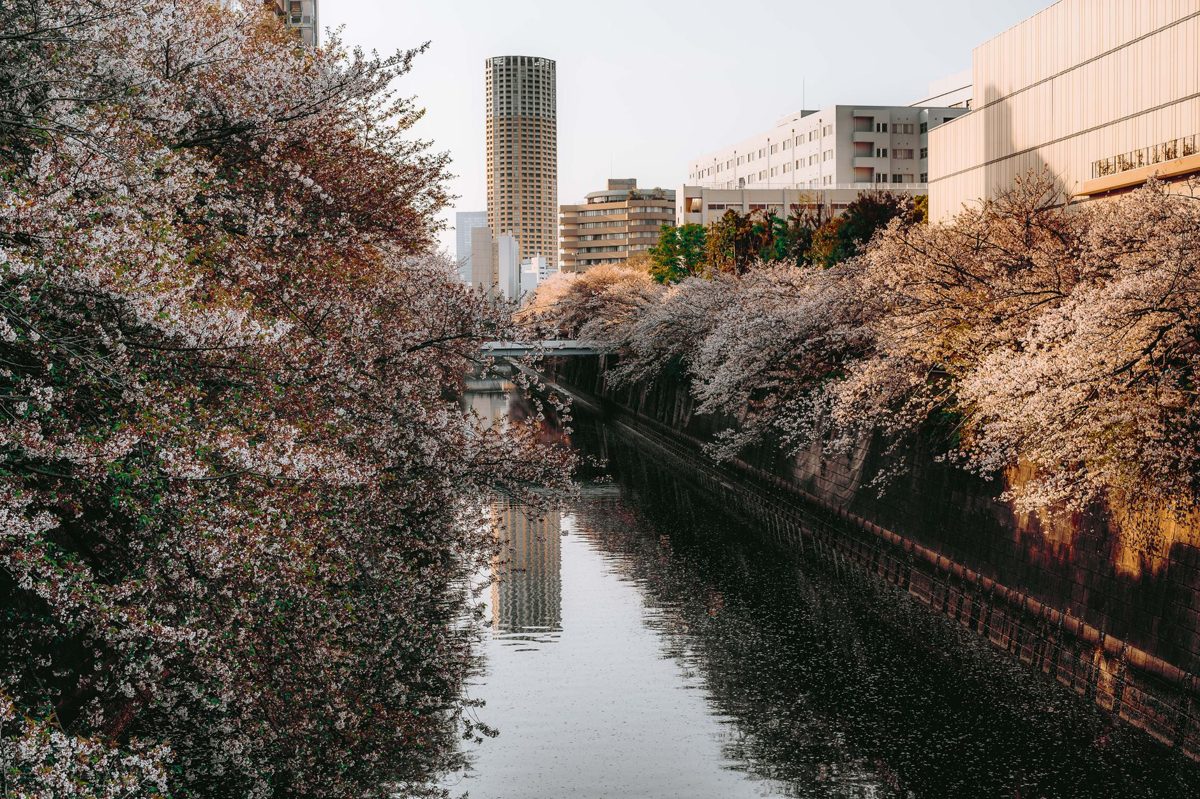
The Meguro River is Tokyo’s most Instagram-worthy cherry blossom spot. Approximately 800 Somei Yoshino cherry trees line both banks of the river for nearly 4 kilometers, creating a breathtaking tunnel of pink that arches over the water. During peak bloom, fallen petals carpet the river’s surface in a pink stream. At night, the trees are illuminated, transforming the scene into something almost surreal.
How to visit: Walk from Nakameguro Station along the river in either direction. The stretch between Nakameguro and Ikejiri-Ohashi stations is the most scenic. During peak season, food and drink stalls line the riverbanks. Be warned: Meguro River is extremely crowded at peak bloom, especially on weekends — the narrow paths become shoulder-to-shoulder. Visit on a weekday morning for a more pleasant experience.

Chidorigafuchi
Chidorigafuchi, the moat along the northwest side of the Imperial Palace, is one of Tokyo’s most elegant cherry blossom settings. A 700-meter walking path runs beneath a canopy of cherry trees that lean out over the water, creating a tunnel effect. During peak bloom, you can rent rowboats (¥800/30 minutes) and paddle through petals floating on the moat surface — one of the most magical cherry blossom experiences in Tokyo.
Tips: The walking path is free and open 24 hours. Night illumination runs during bloom season (typically 6:00-10:00 PM). Boat rentals are available during the day and have long queues on weekends — arrive early. The nearby Yasukuni Shrine also has beautiful cherry blossoms and hosts the designated “sample tree” that determines Tokyo’s official bloom date.

Ueno Park
Ueno Park (Ueno Koen) is Tokyo’s most famous and most boisterous hanami destination. With roughly 1,200 cherry trees, it’s been a sakura viewing hotspot since the Edo period. The main cherry-lined avenue is spectacular, and the park attracts nearly 2 million visitors during the season. This is where you’ll experience hanami at its most festive — groups spread blue tarps, break out elaborate bento boxes and beer, and celebrate well into the evening under illuminated blossoms.
The atmosphere: Ueno hanami is social, loud, and joyful. If you want a picturesque quiet stroll, go elsewhere. If you want to experience hanami as Japanese people actually celebrate it — with food, drink, laughter, and communal joy — Ueno is unbeatable. Come with snacks and drinks from the nearby convenience stores and join the party.

More Great Spots
- Yoyogi Park: 600+ trees, large open lawns, popular with younger crowds. Adjacent to Meiji Shrine, making for an excellent combined visit
- Sumida River: 1,000+ trees along the riverbank between Asakusa and Sumida Park. Combine with a visit to Senso-ji and an evening yakatabune (dinner boat) cruise
- Rikugien Garden: A stunning weeping cherry tree (shidarezakura) is the centerpiece, illuminated at night. More refined and less crowded than the major parks. Entry ¥300
- Inokashira Park (Kichijoji): Cherry trees surrounding a lake with paddle boats — romantic and slightly off the tourist trail
- Koishikawa Korakuen: One of Tokyo’s oldest gardens with elegant cherry blossoms reflected in the pond. Adjacent to Tokyo Dome, oddly enough
How to Enjoy Hanami Like a Local
Hanami (花見, literally “flower viewing”) is the centuries-old tradition of gathering under cherry trees to eat, drink, and appreciate the fleeting beauty of the blossoms. It’s part picnic, part party, part philosophical meditation on the impermanence of beauty. Here’s how to do it properly:
Setting Up
- Blue tarp: The traditional picnic ground sheet. Available at convenience stores (konbini) and 100-yen shops for ¥300-500. Lay it out to claim your spot — in competitive parks, groups send someone early in the morning to secure prime territory
- Timing: For popular parks on weekends, arrive before 10:00 AM to get a spot under the trees. For weekday hanami, lunchtime onward is fine
- Remove your shoes before stepping onto the tarp — this is an extension of the indoor shoes-off custom
Food and Drink
Hanami food can be as simple or elaborate as you want. The most popular approach:
- Convenience store hanami: Onigiri (rice balls), karaage (fried chicken), edamame, pre-made salads, and beer/chu-hai (canned cocktails) from 7-Eleven, Lawson, or FamilyMart. Budget ¥1,500-2,000 per person for a satisfying spread
- Department store hanami: The basement food halls (depachika) of Isetan, Takashimaya, or Mitsukoshi sell stunning hanami bento boxes, sakura-themed sweets, and premium snacks. More expensive (¥2,000-4,000) but the presentation and quality are extraordinary
- Traditional hanami foods: Hanami dango (tri-colored rice dumplings in pink, white, and green), sakura mochi (rice cake wrapped in a pickled cherry leaf), and chirashi-zushi (scattered sushi rice) are classic seasonal choices
- Drinks: Beer and chu-hai are the most popular. Sake (especially one-cup varieties from convenience stores) is traditional. Many brands release limited-edition sakura-themed beverages during the season

Nighttime Cherry Blossoms (Yozakura)
Yozakura (夜桜, “night cherry blossoms”) is a completely different experience from daytime hanami. Cherry trees illuminated from below take on an ethereal, almost ghostly beauty — the white and pink petals glow against the dark sky, and the reflections in ponds and moats double the spectacle. Many Japanese people consider yozakura the more atmospheric and romantic way to see the blossoms.
Best nighttime illumination spots:
- Chidorigafuchi: The illuminated trees reflected in the Imperial Palace moat are perhaps Tokyo’s single most beautiful yozakura scene (6:00-10:00 PM during bloom)
- Meguro River: Lanterns and lights illuminate the cherry tunnel. The river reflections at night are spectacular. Peak crowds, but worth it
- Rikugien Garden: The illuminated weeping cherry tree is the star — dramatically lit against the darkness. Extended evening hours during bloom (until 9:00 PM)
- Ueno Park: Paper lanterns (bonbori) illuminate the main avenue, creating a traditional festival atmosphere
- Sumida Park: Night views of illuminated cherry trees with the Tokyo Skytree lit up in the background — a distinctly modern yozakura experience

Tokyo Cherry Blossom 2026: Forecast & Timing
If you are planning around the 2026 season, here is the realistic picture. Tokyo’s Somei Yoshino — the variety that defines the season — typically opens (kaika) in the third week of March and reaches full bloom (mankai) about a week later, with the prime viewing window landing in the last days of March and the first few of April. Early long-range forecasts for 2026 point to a broadly average-to-slightly-early season, in line with the warm winters of recent years, which means late March is the safest bet to aim for. Treat that as a planning anchor, not a promise.
The forecasts that matter are published by the Japan Meteorological Agency and the private forecaster Weathernews, which start issuing predictions in mid-to-late January and refine them every week or two as spring approaches. By early March they are usually accurate to within a couple of days. The single most useful planning move is to watch those updates from February, then build a flexible 5-to-7-day window around the predicted peak rather than booking a single fixed date. Bloom is driven by accumulated winter and early-spring temperatures: a warm February and March pull the dates earlier, a cold snap pushes them back.
A rough 2026 timeline to plan against (confirm against the live forecast before you book):
- Around March 20-24: first bloom — scattered flowers on mostly bare branches, pretty but not the full effect
- Around March 27 to April 3: full bloom and peak — the canopy fills in and the city goes pink. This is the window to target
- Around April 4-8: petal fall (sakura fubuki) — the famous blossom blizzard, which many people find the most beautiful phase of all
- Into mid-April: late-blooming yaezakura at spots like Shinjuku Gyoen extend the season by a week or two
Cherry blossom season is the headline act of Tokyo’s spring, but it sits inside a packed calendar of seasonal happenings. For the wider context of what else is on through the year, browse our guide to Tokyo events and festivals, and if you are still settling on dates, our breakdown of the best time to visit weighs the seasons against crowds, weather, and price.
How to Avoid the Worst of the Crowds
Peak bloom draws enormous crowds, and the most famous spots at the wrong time can feel less like flower viewing and more like a commute. A few tactics genuinely change the experience.
- Go early. Arriving at a park or riverside by 7-8 AM buys you soft light, room to move, and clean photos before the crowds and the picnic groups settle in. This is the single biggest lever you have
- Pick weekdays over weekends. The difference is dramatic. Saturday and Sunday at Meguro River or Ueno are shoulder-to-shoulder; a Tuesday morning at the same spot is calm
- Trade fame for space. Swap Meguro River for the quieter banks of the Kanda River near Edogawabashi, or Ueno for the wide lawns of Koganei Park or Showa Kinen Park out west. You give up a little iconography and gain a lot of breathing room
- Aim for the shoulders of the season. A day or two before full bloom (80 percent open) or during early petal fall is still spectacular and noticeably less mobbed than the exact peak weekend
- Use enclosed gardens. Paid gardens like Shinjuku Gyoen and Rikugien cap their numbers and ban the rowdy tarp parties, so even at peak they feel more orderly than the free parks
Cherry Blossoms Beyond the City: Fuji & Day Trips
If your dates are flexible and you want the postcard shot, pair the blossoms with a day out of the city. The classic combination is Mount Fuji and cherry blossoms together in a single frame, which you simply cannot get in central Tokyo.
- The Fuji Five Lakes (Kawaguchiko) region puts cherry trees, the lake, and Fuji in one view. Because it sits higher and cooler than Tokyo, its bloom usually peaks a week or two later — mid-April — which can rescue a trip timed slightly late for the city. The Chureito Pagoda, with blossoms and Fuji behind it, is the single most photographed spring scene in Japan. Plan it with our Fuji and blossoms day-trip guide
- Kamakura (under an hour south) lines its Dankazura approach to Tsurugaoka Hachimangu with cherry trees and pairs blossoms with temples and the Great Buddha
- Mount Takao offers a hike among mountain cherries and a calmer crowd than any city park, an easy half-day on the Keio Line
And of course the city has plenty going on beyond the blossoms themselves; for ideas to round out a spring trip, see our roundup of more to do in Tokyo.
Hanami Etiquette: The Unwritten Rules
Hanami is relaxed and welcoming, and visitors are genuinely encouraged to join in — but there are a few quiet conventions that keep everyone happy. Follow these and you will blend right in.
- Do not break branches or shake the trees for falling-petal photos. The blossoms are fragile and the trees are cherished; let the wind do the work
- Claim only the space you need. Spreading a giant tarp for a small group, or roping off territory you will not use, is frowned upon in busy parks
- Take all your trash with you. Bins are scarce and often overflow at peak; bring bags, separate burnable from cans and bottles, and carry it out. Leaving rubbish behind is the surest way to mark yourself as a bad guest
- Keep the volume reasonable. Lively is fine, especially at Ueno or Yoyogi, but loud music and rowdiness near families or in quieter gardens is not. Many gardens ban alcohol entirely for exactly this reason
- Mind the paths. On narrow riverside walks like Meguro, keep moving in the flow, step aside to take photos, and do not block the lane for a long shoot
- Shoes off on the tarp, and reservations of prime spots are often held by one group member who arrives early and waits. If you want a coveted spot under the trees, send a scout
Which Spot Should You Choose?
Each of Tokyo’s headline spots has a distinct personality. Use this quick comparison to match the right one to your mood, then read the detailed write-ups above.
| Spot | Best for | Crowds | Entry |
|---|---|---|---|
| Shinjuku Gyoen | Relaxed picnics, late bloomers, families | Moderate (capped) | ¥500 |
| Meguro River | Photos, the pink tunnel, night lights | Very high | Free |
| Chidorigafuchi | Boat rides, elegance, yozakura | High | Free (boat ¥800) |
| Ueno Park | Lively hanami parties, atmosphere | Very high | Free |
| Yoyogi Park | Open lawns, young crowd, space | High | Free |
| Rikugien | Refined calm, weeping cherry at night | Low-moderate | ¥300 |
A Perfect Cherry Blossom Day in Tokyo
Want it mapped out? Here is one well-paced day that balances iconic scenery, a proper picnic, and night illuminations without backtracking across the city.
- 7:30 AM – Meguro River: arrive early to walk the pink tunnel and shoot the reflections before the crowds. Grab a coffee and pastry from a Nakameguro cafe as the stalls open
- 10:00 AM – Shinjuku Gyoen: ride two stops north, pick up a hanami bento and drinks from a department store depachika or convenience store on the way, and settle onto the lawns for a midday picnic among 1,000-plus trees
- 2:00 PM – Chidorigafuchi: head to the Imperial Palace moat, walk the cherry-lined path, and queue for a rowboat to drift through floating petals
- Sunset onward – yozakura: stay at Chidorigafuchi for the illuminations reflected in the moat, or hop to Ueno’s lantern-lit avenue or back to Meguro River’s lit-up tunnel for a completely different evening mood
Adjust the order to match where you are staying and which way the forecast is leaning, and keep one eye on the weather — a still, clear day is worth reshuffling your whole plan for.
Seasonal Flavors: Sakura Food & Drink
Spring in Tokyo is as much a flavor as a sight. For a few weeks the whole city goes sakura-mad, and chasing the limited-edition treats is half the fun. Keep an eye out for these.
- Sakura mochi — a sweet pink rice cake filled with red bean and wrapped in a salt-pickled cherry leaf you can eat; the sweet-salty contrast is the taste of the season
- Hanami dango — three soft dumplings on a skewer in pink, white, and green, sold everywhere during bloom and practically required at a picnic
- Sakura lattes and sakura frappuccinos — cafes and the big coffee chains roll out cherry-blossom drinks and pastries for a strictly limited run each spring
- Limited-edition everything — convenience stores and supermarkets stock sakura Kit Kats, sakura beer and chu-hai, sakura-flavored sweets, and seasonal bento. Half of it is gone by late April, so grab souvenirs while you can
- Sakura-yu — a delicate tea made by steeping a salted cherry blossom in hot water, traditionally served at celebrations; lovely and photogenic
For a full picnic, the department store food halls (depachika) under stations like Shinjuku and Ikebukuro assemble gorgeous hanami bento and seasonal sweets; for a budget spread, a convenience store run of onigiri, karaage, edamame, and a few cans does the job beautifully under the trees.
Practical Tips for Cherry Blossom Season
- Book accommodation early: Cherry blossom season is peak tourism in Japan. Hotels fill up and prices spike — book 3-6 months in advance if you’re targeting late March/early April
- Dress in layers: Late March/early April weather is unpredictable — warm sunny days (18-22°C) alternate with chilly rain (8-12°C). Bring a light jacket, an umbrella, and the ability to add or remove layers
- Allergy warning: Cherry blossom season coincides with Japanese cedar pollen (sugi kafunshō) season. If you have pollen allergies, bring medication — it can be severe. Masks and allergy medicine are available at any pharmacy (yakkyoku)
- Pack light refreshments: Water, snacks, and hand wipes. Trash cans are scarce — bring a bag to carry out your garbage. Leaving trash at hanami spots is deeply frowned upon
- Rain plan: Cherry blossoms are actually beautiful in light rain — the wet petals take on a deeper pink, and crowds thin dramatically. Heavy rain can strip petals from trees, shortening the season. After a storm, check whether blossoms have survived before heading to a distant park
- Photography: Early morning (before 8 AM) and the “golden hour” before sunset produce the best light. For yozakura, a smartphone with night mode works surprisingly well. The most iconic photos combine blossoms with a landmark — Skytree, Tokyo Tower, a temple roof, or a river reflection

Spring Weather, Pollen & What to Pack
Late March and early April in Tokyo are lovely but genuinely changeable, and a little preparation makes the difference between a magical day and a cold, damp one. Here is what to expect and how to dress for it.
- Temperatures swing. A sunny afternoon can reach 18-22°C, while mornings, evenings, and overcast days drop to 8-12°C, and the wind off the rivers and moats bites. Dress in layers you can add and shed: a light jacket over a long-sleeve top is about right, with something warmer for night illuminations
- Rain is common in spring. Pack a compact umbrella (or buy a clear plastic one at any convenience store for ¥500-700). Light rain actually deepens the pink of the petals and thins the crowds, so a drizzly day can be a gift — but a heavy storm at peak can strip the trees overnight, so check whether the blossoms survived before traveling to a distant park
- Cedar and cypress pollen peak at the same time. Japan’s hay-fever season (kafunsho) overlaps cherry season exactly, and it can be brutal if you are sensitive. Bring your usual allergy medication; masks, eye drops, and antihistamines are easy to buy at any pharmacy (yakkyoku)
- Comfortable shoes are non-negotiable. A good hanami day covers a lot of ground — riverside walks, park lawns, station transfers. You will be on your feet far more than you expect
- Sun and ground cover. Bright spring sun plus reflective petals means sunscreen is wise even when it feels cool. For picnics, the blue tarp doubles as protection from still-cool, sometimes-damp ground; a small cushion is a luxury worth its weight
If your dates cannot stretch to the end of March, the consolation is better than it sounds. Plum blossom peaks in Tokyo through the second half of February — earlier, longer-lasting, far more strongly scented, and photographable without a single other person in the frame. See Tokyo in February for where to find it and what else the month offers.
Frequently Asked Questions
When is the best time to see cherry blossoms in Tokyo in 2026?
Aim for the last week of March into the first few days of April, which is when Tokyo’s Somei Yoshino typically hits full bloom. Early forecasts suggest a broadly average-to-slightly-early 2026 season, but the exact dates shift with winter temperatures, so watch the Japan Meteorological Agency and Weathernews forecasts from February and keep your plans flexible within a 5-to-7-day window. Late bloomers at Shinjuku Gyoen can stretch viewing into mid-April.
Do I need tickets or reservations for hanami spots?
Most spots are free and need no booking — Ueno, Yoyogi, Meguro River, the Chidorigafuchi walkway, and Sumida Park all just require showing up. Enclosed gardens charge a small entry fee at the gate (Shinjuku Gyoen ¥500, Rikugien and Koishikawa Korakuen ¥300) and do not take reservations for general entry. The only thing worth planning ahead is a Chidorigafuchi rowboat, which has long queues, so go early.
What if I miss peak bloom?
If you’re a few days early, you’ll see trees at 50-70% bloom — still beautiful, just not the full canopy effect. If you’re a few days late, you’ll catch the sakura fubuki (petal fall), which many consider even more beautiful than peak bloom. For late arrivals (mid-April), visit Shinjuku Gyoen — its late-blooming varieties (yaezakura) extend the season by 1-2 weeks beyond other spots.
Can I do hanami on a weekday?
Absolutely — and you should. Weekday hanami is dramatically less crowded than weekends. Many Japanese office workers take extended lunch breaks during cherry blossom season to enjoy the blossoms. If you have scheduling flexibility, a weekday visit to any major spot will be infinitely more pleasant.
Is cherry blossom season worth planning a whole trip around?
Yes — with caveats. Cherry blossom season is one of the most beautiful times to visit Tokyo (and Japan in general). The blossoms, the cultural energy, the seasonal food, and the festivals make it extraordinary. However, it’s also the busiest and most expensive time to visit, and there’s always a risk of missing peak bloom. If you can handle the crowds and cost, it’s absolutely worth it. If you prefer a calmer Tokyo experience, autumn foliage season (mid-November to early December) offers comparable beauty with fewer tourists.
Where can I see cherry blossoms for free?
Most Tokyo cherry blossom spots are free. Ueno Park, Yoyogi Park, Meguro River, Chidorigafuchi walkway, and Sumida Park charge no admission. Only enclosed gardens like Shinjuku Gyoen (¥500), Rikugien (¥300), and Koishikawa Korakuen (¥300) have entry fees — and even those are very affordable. Cherry blossom viewing is one of Tokyo’s great free experiences.