Tokyo Neighborhoods · Guide №073
Odaiba Guide: Futuristic Entertainment & Waterfront Fun in Tokyo
A complete Odaiba guide: walk the Rainbow Bridge for free, see the Statue of Liberty and the Fuji TV sphere, ride the driverless Yurikamome, plus 2026 prices, hours and how to get there.

目次 — Contents
- Getting to Odaiba: the driverless Yurikamome ride
- Walking the Rainbow Bridge (for free)
- The Statue of Liberty and Odaiba Seaside Park
- DiverCity
- Aqua City and DECKS Tokyo Beach
- Miraikan and the Fuji TV observation deck
- teamLab near Odaiba: Planets in Toyosu
- Odaiba attractions at a glance
- How a half day or full day in Odaiba flows
- Shopping and dining
- Mistakes to avoid in Odaiba
- Frequently Asked Questions
- Photo Credits
This article contains advertising. Our booking links are routed through a partner that adds commission tracking automatically, so if you book through one we earn a commission from the provider, at no extra cost to you. It never affects what we recommend. Affiliate disclosure
This Odaiba Tokyo guide covers a man-made island in Tokyo Bay built for entertainment: walk the Rainbow Bridge for free, ride the driverless Yurikamome train from Shimbashi, and watch the bay skyline glow at night. It is Tokyo’s most relaxed, family-friendly half-day out.
Odaiba (お台場) sits across the water from central Tokyo, a flat reclaimed island in Tokyo Bay connected to the city by the looping Rainbow Bridge and a driverless monorail. The Edo shogunate first piled up these islets in the 1850s as gun batteries to defend against foreign warships, which is where the name comes from. Today the cannons are long gone and the island is given over to shopping malls, science museums, a beach, and one very large robot. If Shinjuku and Shibuya are dense and vertical, Odaiba is wide, breezy, and built for wandering with a sea view in every direction.
One honest note before you plan a day here, because a lot of older guidebooks and blog posts are out of date. Palette Town is gone. The giant Daikanransha Ferris wheel that defined the Odaiba skyline for two decades, the VenusFort mall styled like an 18th-century European street, and the original teamLab Borderless that lived in that complex were all demolished after 2022. If you read about any of those, you are reading old information. teamLab’s big immersive art museum reopened in 2024 as teamLab Borderless at Azabudai Hills in central Tokyo, not in Odaiba. This guide describes only what is actually operating in 2026, so you do not turn up expecting a Ferris wheel that no longer exists.
Odaiba is one of the most distinctive of Tokyo’s neighborhoods, and it pairs naturally with the city’s other waterfront and bayside sights. For a sense of how it fits a wider trip, see our roundup of the best things to do in Tokyo.
Getting to Odaiba: the driverless Yurikamome ride
Half the fun of Odaiba starts before you arrive. The Yurikamome is a fully automated, driverless elevated train that runs from Shimbashi Station, climbs in a tight spiral loop, and crosses the Rainbow Bridge with nothing but glass in front of you. Grab the very front seat — there is no driver’s cab in the way — and you get a roller-coaster’s-eye view of Tokyo Bay sliding underneath. The line threads between and sometimes through buildings on its way out to the island. It is one of the best-value sightseeing rides in Tokyo, and it is just a normal commuter train.
From Shimbashi the Yurikamome reaches the main Odaiba stations (Odaiba-Kaihinkoen, Daiba, Tokyo Kokusai-Cruise-Terminal, Aomi) in roughly 15 to 20 minutes. A single ride runs a few hundred yen depending on distance; if you plan to hop on and off, the Yurikamome one-day open ticket pays for itself after about three rides. The other way in is the Rinkai Line to Tokyo Teleport Station, which connects directly to the JR Saikyo Line, so from Shinjuku you can ride straight through in around 22 minutes without changing. Tokyo Teleport drops you closest to DiverCity and Aqua City.
The most scenic arrival of all is by water. Tokyo Cruise water buses run from Hinode Pier (near Hamamatsucho) and from Asakusa down the Sumida River out to Odaiba Seaside Park. The futuristic Himiko and Hotaluna boats, designed by manga artist Leiji Matsumoto, look like something from a science-fiction film and turn the journey into part of the day. Check the current timetable before you commit, as sailings are limited and weather-dependent.
Walking the Rainbow Bridge (for free)

The Rainbow Bridge is the postcard image of Odaiba: a roughly 800-meter white suspension bridge arching across the mouth of Tokyo Bay, lit up in changing colors after dark. Most people only ever see it from a train or a boat, but you can walk across it, and it costs nothing. The pedestrian Rainbow Promenade runs along the lower deck on two separate 1.7-kilometer routes. The north route faces inner Tokyo, with views toward Tokyo Tower and, on a clear day, the Skytree; the south route looks out over the open bay toward Odaiba and sometimes as far as Mount Fuji. The two walkways do not connect mid-bridge, so pick your view before you start.
The promenade is open 9:00 to 21:00 from April to October and 10:00 to 18:00 from November to March, with last entry 30 minutes before closing. It closes on the third Monday of each month and in strong winds or bad weather. The full crossing takes about 20 to 30 minutes one way; the nearest access on the Odaiba side is Odaiba-Kaihinkoen Station, and on the city side Shibaura-futo Station. It is not a thrilling walk in the way the view suggests — you are behind a high mesh fence with traffic beside you — but standing in the middle of the bay with the whole skyline laid out is a genuinely memorable, and free, Tokyo experience.
The Statue of Liberty and Odaiba Seaside Park
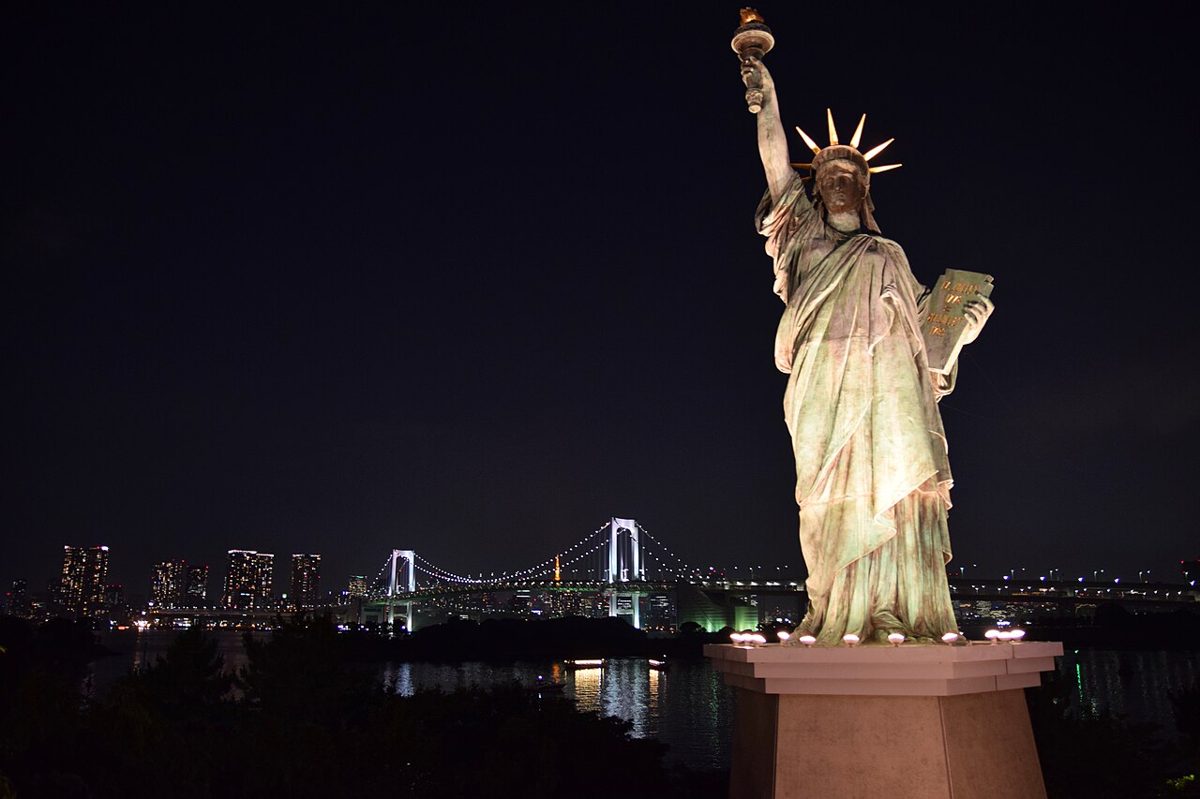
Yes, there is a Statue of Liberty in Tokyo Bay, and it is one of Odaiba’s most photographed spots precisely because of how surreal it looks. The roughly 11-meter replica stands in front of the Rainbow Bridge near Aqua City. It was put up in 1998 as a temporary tribute to the friendship between Japan and France (which gave the original to the United States), proved so popular that a permanent version was installed in 2000. Frame it so Lady Liberty stands against the Rainbow Bridge and the distant Tokyo Tower, and you have the classic Odaiba shot. After sunset, with the bridge lit and the skyline glowing, the whole scene takes on the neon-and-water look that gets Odaiba compared to Blade Runner.
The statue sits at the edge of Odaiba Seaside Park (Odaiba Kaihin Koen), a long crescent of imported sand and a wooden boardwalk facing the bay. You cannot swim here — the water quality is not suitable for it — but people paddle, picnic, jog and sit on the sand watching boats slide under the bridge. It is the green, open heart of the island and the best place to simply sit with an ice cream and take in the view. Nearby, the Tokyo Aqua Symphony fountain show at Tokyo Waterfront combines jets of water, music and light against the skyline several times a day; it is free to watch and worth timing your walk around.
DiverCity
DiverCity itself is a large mall with a strong food court, the conveyor-belt sushi and ramen options Odaiba does well, and plenty of mid-range shopping. It is the natural anchor point for a day on the island, a few minutes’ walk from both Tokyo Teleport (Rinkai Line) and Daiba (Yurikamome) stations. If you are visiting with children, the mall and the nearby attractions make this corner the most efficient base. See our dedicated guide to Tokyo with kids for more family-focused planning.
Aqua City and DECKS Tokyo Beach
Odaiba runs on big waterfront malls, and the two most useful are Aqua City and DECKS Tokyo Beach, both a short walk from the Statue of Liberty. Aqua City is the more conventional shopping-and-dining complex, with a bayside terrace, a large cinema, and a top-floor ramen “park” (Tokyo Ramen Kokugikan) gathering several famous shops in one place — a good rainy-day or hot-afternoon stop, with tables that look straight out at the Rainbow Bridge.
DECKS Tokyo Beach is the more fun, slightly eccentric one. It is built like a ship, with open wooden decks facing the sea, and it is packed with indoor attractions that are lifesavers when it rains. Inside you will find:
- Tokyo Joypolis — a multi-level Sega indoor amusement park with VR rides, a roller coaster and arcade games.
- LEGOLAND Discovery Center Tokyo — a play-and-build attraction aimed at younger children.
- Madame Tussauds Tokyo — the wax museum, with celebrity and pop-culture figures.
- Tokyo Trick Art Museum and the Odaiba Retro Museum for photo-friendly fun.
- Daiba 1-chome Shopping Street (Daiba Itchome Shotengai) — a recreated 1950s–60s “Showa era” retail street, deliberately dim and nostalgic, full of old-fashioned sweets, penny-arcade games, and a slightly spooky Daiba Haunted School attraction.
- Odaiba Takoyaki Museum — a small food hall of Osaka takoyaki (octopus ball) stalls.
Most of these charge separate admission, so pick one or two rather than trying to do them all. The retro Daiba Itchome street is free to wander and is the most atmospheric corner of the whole island — a sharp, deliberate contrast to the glass-and-steel modernity everywhere else in Odaiba.
Miraikan and the Fuji TV observation deck
For a break from shopping, Odaiba has two very different landmarks. Miraikan — the National Museum of Emerging Science and Innovation — is a genuinely excellent hands-on science museum near Tokyo Teleport and Telecom Center stations. Permanent-exhibition admission is ¥630 for adults and ¥210 for under-18s; a combo ticket including the Dome Theater (planetarium) is ¥940 / ¥310. The huge suspended Geo-Cosmos globe, made of organic LED panels showing the living Earth from space, is the centerpiece, and the exhibits on robotics, space and the human body are well translated and great for curious kids and adults alike.
One honest update: the famous ASIMO humanoid robot demonstrations ended in 2022, so do not come expecting to see ASIMO walk — it has retired. Miraikan still has android and robotics exhibits, but the live ASIMO show is part of the past. Note too that the museum is closed for refurbishment from 1 October 2026 to 22 April 2027, so save it for a visit after it reopens.
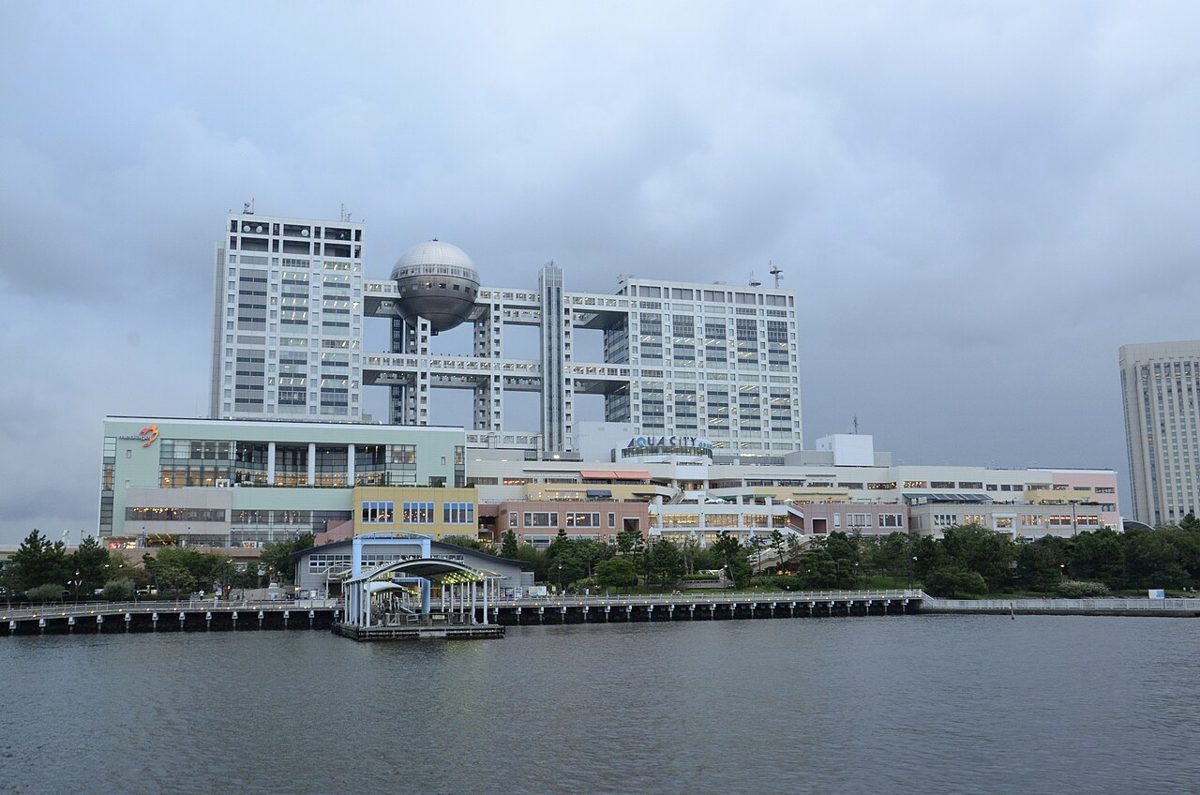
The other landmark is the Fuji TV Building, the silver-sphere headquarters designed by architect Kenzo Tange — instantly recognizable and one of Odaiba’s defining shapes. You can ride up to the spherical Hachitama observation room on the 25th floor for a 270-degree panorama of Tokyo Bay. Admission is modest at ¥800 for adults and ¥500 for primary/junior-high students (free for younger children); hours are 10:00 to 18:00, last admission 17:30, closed Mondays. Much of the rest of the building — souvenir shops based on Fuji TV programs, the rooftop garden — is free to explore. It is a three-minute walk from Daiba Station on the Yurikamome.
teamLab near Odaiba: Planets in Toyosu
People often come to Odaiba looking for teamLab’s digital art, so here is the current picture. The old teamLab Borderless that used to be in Odaiba’s Palette Town is closed and demolished; the rebuilt Borderless is now at Azabudai Hills in central Tokyo. What survives near Odaiba is teamLab Planets TOKYO in Toyosu — a short hop on the Yurikamome from the island, not on it. Planets is the barefoot, wade-through-water version: you walk through knee-deep pools and immersive light rooms in bare feet, so wear or bring clothing you can roll up.
teamLab Planets runs roughly 9:00 to 22:00 with last entry around 21:00, and most visitors spend 90 minutes to a couple of hours inside. Tickets are timed-entry and frequently sell out, so book online in advance for your chosen slot rather than turning up. It has been confirmed to stay open into 2027, so it is a reliable add-on. The nearest station is Shin-Toyosu on the Yurikamome — if you are already riding the line out to Odaiba, it is easy to chain the two together. For a fuller breakdown, see our dedicated teamLab Tokyo guide.
Odaiba attractions at a glance
| Attraction | Adult price (2026) | Hours / notes | Nearest station |
|---|---|---|---|
| Rainbow Bridge promenade (walk) | Free | Apr–Oct 9:00–21:00; Nov–Mar 10:00–18:00; closed 3rd Mon | Odaiba-Kaihinkoen (Yurikamome) |
| Statue of Liberty & Seaside Park | Free | Open access; best at sunset/after dark | Odaiba-Kaihinkoen |
| Miraikan science museum | ¥630 (¥940 with Dome Theater) | 10:00–17:00, closed Tue; closed for refurbishment 1 Oct 2026 to 22 Apr 2027 | Tokyo Teleport / Telecom Center |
| Fuji TV Hachitama deck | ¥800 | 10:00–18:00, last entry 17:30, closed Mon | Daiba (Yurikamome) |
| DECKS attractions (Joypolis, etc.) | Varies per venue | Indoor; great in rain/heat | Odaiba-Kaihinkoen / Daiba |
| teamLab Planets (in Toyosu, nearby) | Timed ticket, book ahead | ~9:00–22:00, last entry ~21:00; barefoot, water | Shin-Toyosu (Yurikamome) |
How a half day or full day in Odaiba flows
Odaiba rewards an unhurried approach. A half day (about four hours) works well like this: ride the Yurikamome from Shimbashi for the front-seat bridge crossing, get off near Daiba or Odaiba-Kaihinkoen, walk to the Statue of Liberty and along the Seaside Park boardwalk for your skyline photos, then cut over to DiverCity for a late lunch in the food court. If it is hot or wet, duck into DECKS or Aqua City. That is a satisfying, low-stress afternoon.
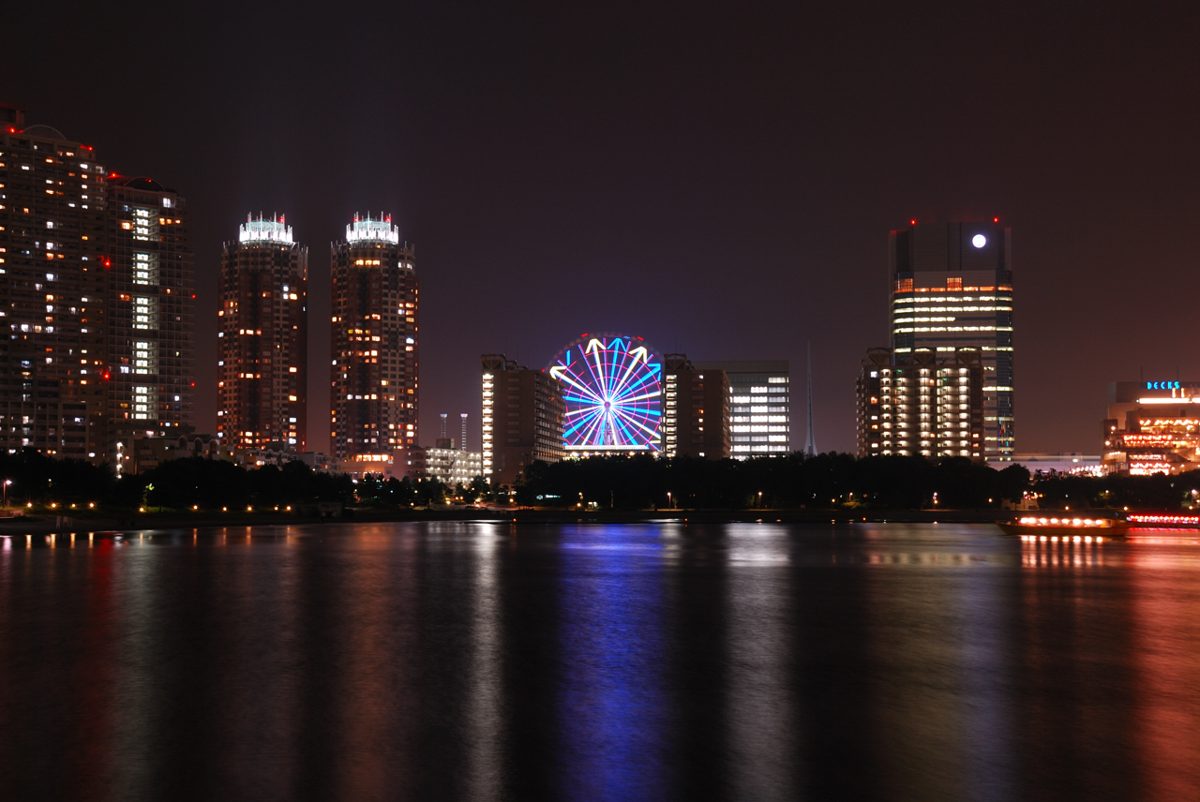
For a full day, add the Fuji TV Hachitama deck for the panorama, and Miraikan in the late morning once it reopens on 22 April 2027, then stay on into the evening. The single best Odaiba memory for most people is the bay after dark: the Rainbow Bridge lit up, the Statue of Liberty in silhouette, and the Tokyo skyline twinkling across the water. If you can, structure your day to finish here. Pairing Odaiba with nearby Toyosu (teamLab Planets, the Toyosu fish market) or Tokyo Tower across the bay makes an easy two-area combination.
Shopping and dining
Dining in Odaiba is mall-based but better than that sounds, and the view does a lot of the work. The bayside restaurants in Aqua City and DECKS face straight out at the Rainbow Bridge, so you can have okonomiyaki, yakiniku, conveyor-belt sushi or a ramen-park bowl with one of the best free views in the city. bills Odaiba is famous for its ricotta hotcakes and a sweeping terrace if you want a slower, scenic breakfast or brunch. For something cheaper and more local, the Daiba Itchome retro street and the Odaiba Takoyaki Museum keep things fun and affordable.
Shopping is mid-range and family-friendly rather than high-fashion: DiverCity, Aqua City and DECKS cover Japanese and international high-street brands, character goods, the Gundam Base, and plenty of souvenirs. If serious luxury or boutique shopping is your aim, you will do better in Ginza or Omotesando; Odaiba’s strength is variety and the sea breeze, not designer labels.
Mistakes to avoid in Odaiba
- Expecting the Ferris wheel or VenusFort. Palette Town and its giant Daikanransha wheel are gone. Do not build your plan around them.
- Looking for teamLab Borderless in Odaiba. It moved to Azabudai Hills in central Tokyo. Only teamLab Planets remains nearby, and that is in Toyosu.
- Planning to bathe at Oedo Onsen Monogatari. The popular hot-spring theme park closed permanently in September 2021 and was demolished. Its successor concept is now in Toyosu, not Odaiba.
- Heading to DiverCity for the Unicorn Gundam. The life-sized statue ended its display on 31 August 2026.
- Underestimating the distances. Odaiba is spread out and exposed; it is hot in summer and windy in winter. Wear comfortable shoes and use the Yurikamome to hop between clusters rather than walking the whole island.
- Coming only in the daytime. Odaiba is good by day and magical by night. If you can only do one, choose late afternoon into evening for the lit bridge and skyline.
Tokyo Big Sight, at the Ariake end of the waterfront, is where Comiket and Design Festa fill the halls several times a year — which is worth knowing about before you plan a quiet day in Odaiba on one of those weekends. Our fan events guide has the dates and the transport advice.
Frequently Asked Questions
Is Odaiba worth visiting in 2026?
Yes, especially for families and first-timers who want a relaxed, scenic half day away from the crush of central Tokyo. The Rainbow Bridge views, the Fuji TV sphere and the bayside malls easily fill four to eight hours, and the Miraikan science museum adds more once it reopens on 22 April 2027. Just go in knowing that the old Ferris wheel and VenusFort are gone, and that the life-sized Unicorn Gundam statue ended its display on 31 August 2026.
How do I get to Odaiba from central Tokyo?
Take the driverless Yurikamome train from Shimbashi Station, which crosses the Rainbow Bridge with front-row views (about 15–20 minutes), or ride the Rinkai Line / JR Saikyo Line to Tokyo Teleport Station (about 22 minutes direct from Shinjuku). You can also arrive by Tokyo Cruise water bus from Hinode Pier or Asakusa. A Yurikamome one-day open ticket is worth it if you plan three or more rides.
Can you walk across the Rainbow Bridge, and is it free?
Yes. The Rainbow Promenade on the bridge’s lower deck is free to walk and takes about 20–30 minutes one way. It is open 9:00–21:00 from April to October and 10:00–18:00 from November to March (last entry 30 minutes before closing), and it closes on the third Monday of each month and in bad weather. Choose the north route for Tokyo Tower views or the south route for the bay and Mount Fuji.
How much time should I spend in Odaiba?
A half day (around four hours) is enough to see the Statue of Liberty, the Seaside Park and one mall. A full day lets you add the Fuji TV observation deck (and Miraikan once it reopens on 22 April 2027), and stay for the night skyline. Many visitors combine Odaiba with nearby Toyosu (teamLab Planets) to make a full, varied day on the bay.
Is Odaiba good for kids?
Very. It is one of the most family-friendly areas in Tokyo: free outdoor space at the Seaside Park, LEGOLAND Discovery Center and Tokyo Joypolis indoors at DECKS and the novelty Yurikamome ride, plus the hands-on Miraikan science museum once it reopens on 22 April 2027. Strollers are easy on the flat, wide walkways, and there is plenty of casual food. See our Tokyo with kids guide for a full family itinerary.
Photo Credits
- Odaiba, the man-made entertainment island in Tokyo Bay, seen across the water — Photo: Adrian Kauz / CC BY 4.0 via Wikimedia Commons
- The Rainbow Bridge, which you can walk across for free on the Rainbow Promenade — Photo: Adrian Kauz / CC BY 4.0 via Wikimedia Commons
- The Fuji TV Building and its Hachitama observation sphere — Photo: Stephen Kelly from San Francisco, CA, USA / CC BY 2.0 via Wikimedia Commons
- Odaiba after dark, with the Rainbow Bridge and Tokyo skyline glowing — Photo: Ichtrinken / CC BY-SA 3.0 via Wikimedia Commons
- Odaiba’s Statue of Liberty replica, framed against the Rainbow Bridge — Photo: Raita Futo from Tokyo, Japan / CC BY 2.0 via Wikimedia Commons