Tokyo Travel Planning · Guide №057
Tokyo Visa Requirements: Complete Guide for Every Nationality
There is no separate Tokyo visa: it is Japan's national entry policy. Who needs a visa, who is exempt and for how long, plus the 2026 arrival process.
目次 — Contents
- “Tokyo Visa” Means Japan Visa: Why the Distinction Matters
- The 90-Day Visa Exemption: Who Gets to Skip the Visa
- What Visa-Exempt Travelers Still Need to Bring
- The Arrival Process at Narita and Haneda in 2026
- Who Actually Needs a Visa, and How to Apply
- eVISA and the Planned JESTA System
- Overstaying, Extensions, and Staying Out of Trouble
- Pre-Departure Checklist and Common Mistakes
- Frequently Asked Questions
- A Final Word Before You Book
- Photo Credits
This article contains advertising. Our booking links are routed through a partner that adds commission tracking automatically, so if you book through one we earn a commission from the provider, at no extra cost to you. It never affects what we recommend. Affiliate disclosure
Here is the part that trips up almost everyone planning their first trip: there is no such thing as a separate “Tokyo visa.” Tokyo visa requirements are simply Japan’s national entry rules, because immigration policy is set in Tokyo for the whole country and applies the same whether you land at Narita, fly into Osaka, or arrive by ferry. The short version for most readers: if you hold a passport from the United States, the United Kingdom, the EU, Canada, Australia, New Zealand and roughly seventy other countries, you do not need a visa for a short tourist stay. You get permission to enter on arrival. But the details matter, and they differ by nationality, so let me walk you through exactly what applies to you.
I have done the immigration line at Narita more times than I can count, watched people get pulled aside for missing a return ticket, and helped friends untangle whether their nationality needed a visa or not. This guide covers who is visa-exempt and for how long, what visa-free travelers still have to bring, how the arrival process actually works in 2026 with the digital QR codes, who genuinely needs to apply for a visa, what happens if you overstay, and the new pre-travel system that is coming but is not here yet. Wherever rules vary, I will say so plainly and point you to the one source that is always right for your situation.
“Tokyo Visa” Means Japan Visa: Why the Distinction Matters
Search engines are full of people typing “Tokyo visa requirements,” “Osaka visa,” or “Kyoto visa,” and I understand why. You are going to a city, so you assume the city has its own rules. It does not. Japan is one country with one immigration system, run by the Ministry of Foreign Affairs and the Immigration Services Agency under the Ministry of Justice. The visa or visa-exemption that lets you walk through immigration at Tokyo’s Narita or Haneda airports is exactly the same one you would use to enter at Kansai, Chubu, Fukuoka, or New Chitose.
Why does this matter in practice? Because it means you research Japan’s rules for your nationality, not Tokyo’s. It means your permitted length of stay is a national figure, not a city allowance. And it means the official sources you should trust are national ones: the Ministry of Foreign Affairs of Japan (mofa.go.jp) and the Japanese embassy or consulate that serves your country. Throughout this guide, when I talk about Tokyo visa requirements I am describing Japan’s entry policy as it applies to anyone whose first stop is Tokyo. Getting yourself to the airport is a separate puzzle; for that, see our guide to flights to Tokyo, and for the wider trip checklist, start with our Tokyo travel planning hub.
The 90-Day Visa Exemption: Who Gets to Skip the Visa
Japan has reciprocal visa-exemption arrangements with 74 countries and regions. If your nationality is on that list and you are coming for tourism, visiting friends or family, or attending an unpaid event, you do not apply for a visa in advance. You arrive, present your passport, and an immigration officer grants you “Temporary Visitor” status on the spot. For most of those 74 nationalities the stamp is good for 90 days. That is the headline that applies to the majority of people reading this.
But the length is not the same for everyone, and this is exactly where people get it wrong. The period of stay granted on landing is:
- 90 days for the large majority of visa-exempt countries and regions, including the United States, Canada, Australia, New Zealand, South Korea, Singapore, Malaysia, and most of Europe.
- Up to 6 months for a handful of countries under special bilateral arrangements: Austria, Germany, Ireland, Liechtenstein, Mexico, Switzerland, and the United Kingdom. Important catch: you are still typically admitted for 90 days at the counter, and if you genuinely want to stay beyond 90 days you must apply for an extension at a Regional Immigration Bureau before your first 90 days expire.
- 30 days for Brunei and Qatar.
- 15 days for Indonesia and Thailand.
On top of the length differences, several nationalities are only visa-exempt if they hold a specific kind of passport. Indonesia and Qatar require travelers to pre-register an ICAO-compliant ePassport with a Japanese mission before they travel. Brazil, Malaysia, Peru, Panama, Serbia, the United Arab Emirates, Montenegro, Paraguay, and Thailand are visa-exempt only for holders of ICAO-standard ePassports; without one, you need a visa. Taiwan’s exemption applies to passport holders with a personal ID number. Hong Kong and Macao exemptions apply only to specific SAR (and, for Hong Kong, BNO) passport holders. None of this is meant to scare you, but it is why a generic “you don’t need a visa” answer is not good enough.
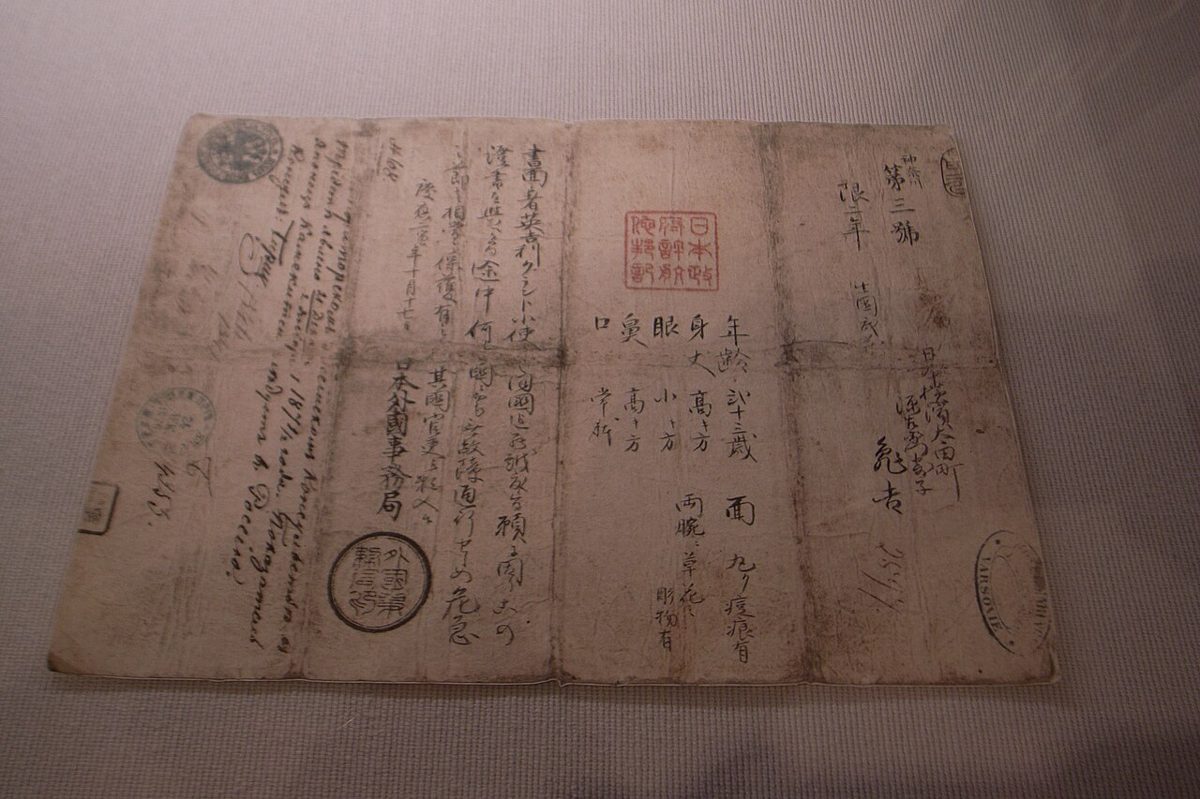
Common Nationalities and Their Visa-Free Stay (Verify Before You Fly)
Here is a quick-reference table for the nationalities readers ask about most. Treat it as a starting point, not gospel: arrangements change, and your individual circumstances (passport type, criminal history, prior overstays) can affect the outcome. The only definitive answer for you comes from the Ministry of Foreign Affairs or your nearest Japanese embassy or consulate.
| Nationality | Visa needed for tourism? | Stay granted on arrival | Notes |
|---|---|---|---|
| United States | No | Up to 90 days | Temporary Visitor status; no work allowed |
| United Kingdom | No | Up to 90 days (6 months by arrangement) | Extension needed for stays beyond 90 days |
| Canada | No | Up to 90 days | — |
| Australia | No | Up to 90 days | — |
| New Zealand | No | Up to 90 days | — |
| Ireland / Germany / Switzerland / Austria | No | Up to 90 days (6 months by arrangement) | Extension at Immigration Bureau for 90+ days |
| France / Italy / Spain / Netherlands (most EU) | No | Up to 90 days | — |
| South Korea | No | Up to 90 days | — |
| Singapore / Malaysia | No | Up to 90 days | Malaysia: ICAO ePassport required |
| Mexico | No | Up to 90 days (6 months by arrangement) | — |
| Brazil / UAE | No (with ePassport) | Up to 90 days | ICAO ePassport required, otherwise visa |
| Thailand | No | Up to 15 days | ICAO ePassport required |
| Indonesia | No (registered ePassport) | Up to 15 days | ePassport must be pre-registered |
| Brunei / Qatar | No | Up to 30 days | Qatar: registered ePassport required |
| China / India / Philippines / Vietnam | Yes | Per visa issued | Apply at embassy/consulate before travel |
Always confirm with the Japanese embassy or consulate for your own country before you travel. Visa-exemption arrangements are adjusted from time to time, and the embassy that serves your nationality is the authoritative voice for your passport. I am repeating this on purpose, because it is the single most useful sentence in this entire guide.
What Visa-Exempt Travelers Still Need to Bring
Skipping the visa does not mean skipping the requirements. “Temporary Visitor” is a status the officer grants based on you satisfying a few conditions at the counter. Show up unable to satisfy them and you can be refused entry even though you needed no visa. Here is what to have ready.
- A valid passport. Officially, Japan requires your passport to be valid for the duration of your stay, not a fixed six months. That said, many airlines and travel agents apply their own six-month rule, and if you are connecting through another country that country may demand six months. The practical advice: have at least six months of validity to avoid any boarding-gate or transit headaches. It costs you nothing to renew early.
- An onward or return ticket. Immigration can ask for proof you intend to leave. A confirmed return or onward flight is the clean way to satisfy this. People on open-ended trips occasionally get questioned; carrying a printed or screenshot itinerary defuses it quickly.
- Proof of funds and accommodation. You may be asked how you will support yourself and where you are staying. Have your hotel bookings (or host’s address), and be ready to show you have access to money for the trip. You rarely have to prove this in detail, but the officer can ask.
- A clear purpose. Tourism, visiting people, business meetings, attending an unpaid conference: all fine on Temporary Visitor status. Paid work is not. Do not tell an officer you are coming to “find work” or “do a paid gig” on a visa-free entry, because that is exactly the wrong status for it.
First-timers often underestimate how smooth this is when you are prepared and how awkward it gets when you are not. For the broader rhythm of a first Tokyo trip, including the small cultural things that make arrival easier, our Tokyo first-time tips guide is a good companion read.
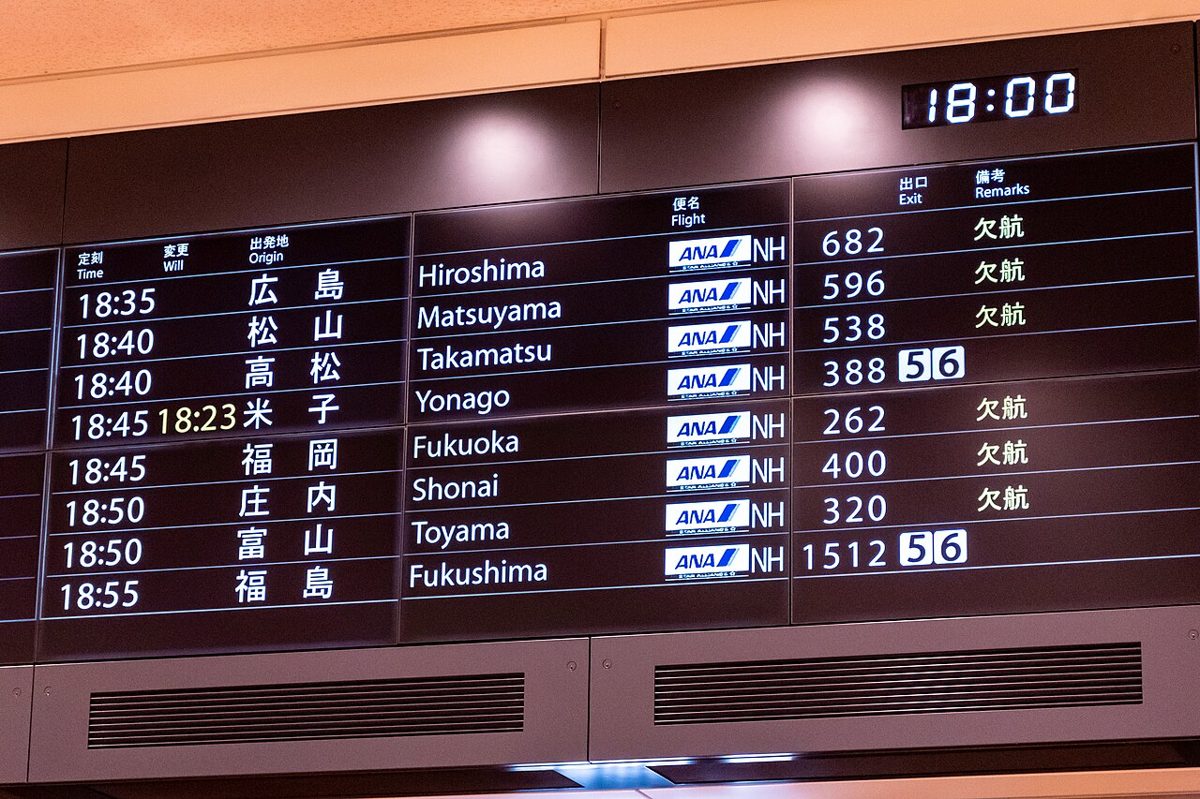
The Arrival Process at Narita and Haneda in 2026
Landing in Tokyo and getting through to the train is genuinely one of the easier major-airport experiences in the world, but it helps to know the sequence. Here is what happens after you step off the plane.
- Walk to immigration. Follow the “Arrivals / Immigration” signs. At Narita and Haneda there are separate lanes for Japanese nationals/residents and for foreign visitors. Get in the foreign-visitor line.
- Biometrics. At the counter, foreign visitors are photographed and have their two index fingerprints scanned. This is standard and takes seconds. The officer checks your passport and your arrival information.
- Landing card / Visit Japan Web. You either hand over a paper disembarkation card and customs form, or you show the QR codes from Visit Japan Web (more on this below). The officer grants landing permission, applies a seal or registers it digitally, and you are in.
- Baggage claim. Collect your checked bags.
- Customs. Present your customs declaration (paper or QR). Most tourists walk straight through. Declare anything over the duty-free allowances honestly.
- Into Tokyo. From here it is the Narita Express, Keisei Skyliner, or a limousine bus from Narita; the Keikyu line or monorail from Haneda. You are on your way.
Visit Japan Web: The Digital QR Codes
Japan’s official pre-arrival portal, Visit Japan Web (run by the Digital Agency), lets you complete your immigration and customs information online before you fly, then breeze through with QR codes instead of paper forms. You create one account, enter your trip and passport details, and the system generates QR codes: one for immigration (your disembarkation information) and one for customs. There is also a tax-free shopping section you can set up here.
A few things I have learned about it:
- It is optional. You are never forced to use Visit Japan Web; paper arrival and customs cards are still accepted, and they are handed out on the plane. But the digital route is faster.
- Register from up to a couple of weeks before your flight, and finish at least several hours before you land so the QR codes are active. Screenshot them, because airport Wi-Fi and roaming can be patchy right when you need them.
- In 2026, Narita, Haneda, and Kansai are rolling out “Joint Kiosk” machines that merge immigration and customs into a single scan: you tap your passport and one QR code at one machine. Smaller airports still use the older two-step flow. Either way, having your information pre-loaded saves time.
If you would rather not bother with any of it, you genuinely can fill out the little paper card with a pen on the plane like travelers have done for decades. Visit Japan Web is a convenience, not a Tokyo visa requirement.
Who Actually Needs a Visa, and How to Apply
If your nationality is not among the 74 visa-exempt countries and regions, you need to apply for a visa before you travel. This includes many travelers from China, India, the Philippines, Vietnam, and numerous other countries. For a tourist trip, you are applying for a short-stay (Temporary Visitor) visa. The process is run through the Japanese embassy or consulate that covers where you live, and increasingly through accredited travel agencies or the online JAPAN eVISA system for eligible nationalities.
Short-Stay Tourist Visa: The Basics
The exact paperwork varies by country and by whether you apply directly, through an agency, or online, but a short-stay tourist application generally asks for:
- A completed visa application form and a recent passport-style photo.
- Your passport (with adequate validity and blank pages).
- A day-by-day itinerary or schedule of your stay in Japan.
- Proof of funds, such as recent bank statements, to show you can cover the trip.
- Flight reservations (round-trip or onward) and accommodation bookings.
- Depending on the country, a guarantor or inviting party in Japan and supporting documents from them.
Where do you apply? At the Japanese embassy or consulate-general with jurisdiction over your place of residence, never just any random consulate. Many of these missions now route tourist applications through designated agencies, so check your local embassy’s website first. For a growing list of nationalities, the official JAPAN eVISA portal allows you to apply for a single-entry short-stay visa entirely online and receive a digital visa, which you then link in Visit Japan Web. Processing times vary, but planning several weeks ahead is sensible; do not book non-refundable flights until your visa is in hand.

eVISA and the Planned JESTA System
Two digital developments confuse a lot of travelers, so let me separate them clearly because they are completely different things.
JAPAN eVISA (here now, for some)
The eVISA is an actual visa, applied for online, for eligible nationalities who would otherwise need to visit a consulate. As of late 2025 the online route was open to residents of countries including Australia, Brazil, Cambodia, Canada, Saudi Arabia, South Africa, Taiwan, the United Kingdom, and the United States who want a single-entry short-stay visa for tourism. If you are visa-exempt (say, a US or UK tourist on a 90-day stay), you do not need the eVISA at all; it exists mainly to make the consulate visa process easier for those who do need a visa or prefer the online option.
JESTA (announced, not yet in force)
JESTA, the Japan Electronic System for Travel Authorization, is a planned pre-travel screening for visa-exempt visitors, modeled on the United States ESTA. The legal basis passed Japan’s parliament in 2026, but the system is being implemented in phases and is not operational yet. Official timelines point to a launch around fiscal 2028, with a statutory deadline no later than the end of March 2029. In plain terms: you do not need JESTA for a trip in 2026 or 2027. The official portal does not exist yet, so ignore any website claiming to “register you for JESTA” today, as those are not legitimate. When JESTA does go live, visa-exempt travelers will fill out an online form and get advance approval before boarding, much like ESTA. I am flagging it now only so you recognize the name when it eventually appears. Verify its status closer to your trip.
Overstaying, Extensions, and Staying Out of Trouble
Japan is welcoming, but it takes immigration rules seriously, and overstaying is one of the few ways a smooth trip can turn into a genuine problem. Here is the honest picture.
Overstaying Consequences
Staying beyond your permitted period, even by a day, is a violation. The consequences escalate with how long you overstay and whether you turn yourself in, but they can include detention, a deportation order, fines, and a re-entry ban that locks you out of Japan for years (commonly 5 years, and 10 years for repeat or serious cases). Nobody plans to overstay, but it happens when people miscount their 90 days or assume they can quietly extend. Do not. Know your exact “permitted until” date, which is printed on your landing permission, and leave before it.
Extending Your Stay
Temporary Visitor status is generally not designed to be extended for ordinary tourism, and you cannot simply “renew” it by hopping out to Korea and back repeatedly; immigration notices visa runs and can refuse entry. There are limited circumstances (illness, unavoidable events, certain humanitarian reasons) where an extension can be requested at a Regional Immigration Bureau, and nationals of the 6-month-arrangement countries apply at the Bureau to use their longer allowance. If you think you need to stay longer, go to the Immigration Bureau before your current period expires and ask, rather than overstaying and hoping. The right move is always to engage with immigration early, not to let the clock run out.
A related point worth knowing: medical bills in Japan can be steep for visitors, and Japan has signaled tighter checks on visitors with unpaid debts. That is one more reason a clean, well-documented trip matters. It is also why I never go without cover; see our guide to Tokyo travel insurance for what to look for.

Pre-Departure Checklist and Common Mistakes
Run through this before you fly and you will sail through immigration in Tokyo.
| Item | Why it matters |
|---|---|
| Check your nationality on MOFA’s list | Confirms whether you need a visa and your stay length |
| Passport valid (6+ months recommended) | Avoids airline and transit-country boarding refusals |
| Onward/return ticket booked | Immigration can ask for proof of departure |
| Accommodation details to hand | May be requested at the counter |
| Proof of funds accessible | Officer can ask how you’ll support yourself |
| Visit Japan Web set up (optional) | Faster immigration and customs via QR codes |
| If a visa is required, applied weeks ahead | Processing takes time; don’t book non-refundable flights first |
| Note your “permitted until” date on arrival | Prevents accidental overstay |
The mistakes I see most often: assuming a city has its own visa (it does not); confusing the eVISA with JESTA; turning up with a passport that has under six months of validity and getting stopped at the departure gate by an airline; planning to “work a little” on a visa-free entry; and miscounting the 90 days. Every one of these is avoidable with ten minutes of preparation.
These rules matter for transit passengers too. On a Tokyo layover you can only leave the airport by passing through immigration, so a traveller who can enter visa-free can see the city between flights, while one who needs a visa usually cannot. Our Tokyo layover guide covers what else to check and what you can realistically see in 6, 10 or 24 hours.
Frequently Asked Questions
Do I need a visa to visit Tokyo?
There is no separate Tokyo visa. Tokyo follows Japan’s national immigration rules. If you hold a passport from one of the 74 visa-exempt countries and regions (including the US, UK, EU, Canada, Australia, and New Zealand) and you are coming for tourism, you do not need a visa for a short stay; you receive permission to enter on arrival, usually for up to 90 days. Always confirm your specific nationality with the Japanese embassy or consulate that serves you, as rules can change.
How long can I stay in Tokyo without a visa?
For most visa-exempt nationalities the period of stay granted on arrival is up to 90 days. Brunei and Qatar are granted up to 30 days; Indonesia and Thailand up to 15 days; and a few countries such as the UK, Germany, Ireland, Switzerland, Austria, Liechtenstein, and Mexico have a 6-month arrangement, though you typically need to apply for an extension at a Regional Immigration Bureau to use beyond 90 days. None of this status allows paid work.
Do I need Visit Japan Web to enter Japan?
No. Visit Japan Web is optional. It lets you complete immigration and customs information online and clear them with QR codes, which is faster, and in 2026 it pairs with the new Joint Kiosk machines at Narita, Haneda, and Kansai. But you can still fill out the paper arrival and customs cards handed out on the plane. Either way works.
Do I need JESTA to travel to Japan in 2026?
No. JESTA, Japan’s planned electronic travel authorization for visa-exempt visitors, has passed into law but is not operational yet. It is expected to launch around fiscal 2028, with a deadline no later than the end of March 2029. You do not need it for travel in 2026 or 2027, and no legitimate JESTA application portal exists yet, so ignore any site that claims to register you now. Check its status again closer to your trip.
What happens if I overstay my visa-free period in Tokyo?
Overstaying, even by a day, is a violation and can lead to detention, a deportation order, fines, and a re-entry ban of typically 5 years (longer for repeat or serious cases). Know your exact “permitted until” date, which is on your landing permission, and leave before it. If you have a genuine reason to stay longer, visit a Regional Immigration Bureau before your period expires rather than overstaying.

A Final Word Before You Book
Tokyo visa requirements come down to one habit: check your own nationality against Japan’s national rules, then prepare the simple documents that prove you are a genuine, short-term visitor. For the large majority of readers that means no visa, a 90-day welcome, and a five-minute walk through immigration. For everyone, it means confirming the details with the authority that cannot be wrong about your passport. Rules and digital systems are evolving, so before you fly, take five minutes on the Ministry of Foreign Affairs website and your nearest Japanese embassy or consulate page. Then go enjoy the city. When you are ready to map out the rest of the trip, the Tokyo travel planning hub ties together flights, budget, getting around, and everything else.
Photo Credits
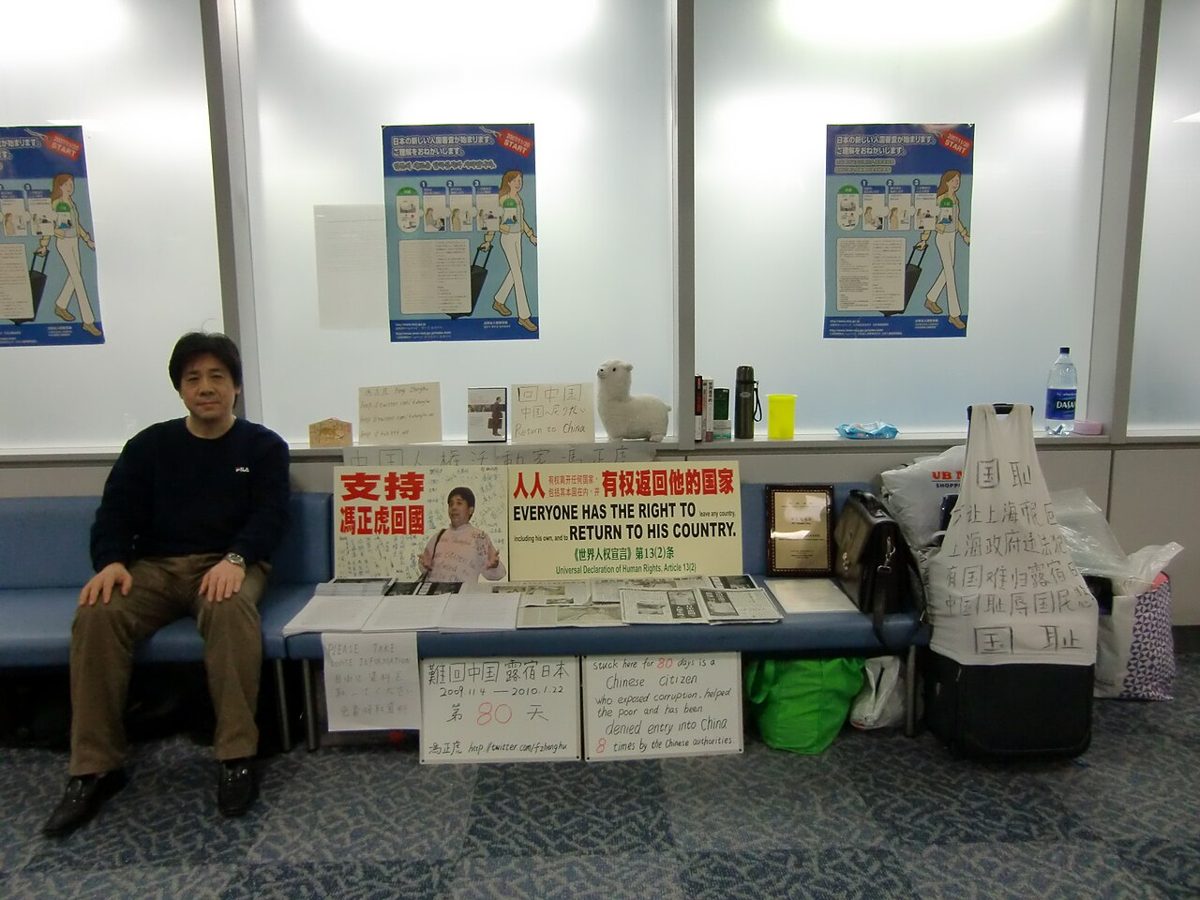
- Immigration arrivals at Narita Airport — Photo: zhenghu feng at Tokyo, Japan / CC BY 2.0 via Wikimedia Commons via Wikimedia Commons
- A passport is the key document for entering Japan — Photo: 番記者 / CC0 via Wikimedia Commons via Wikimedia Commons
- Arrivals at Tokyo Haneda Airport — Photo: SuFlyer / CC0 via Wikimedia Commons via Wikimedia Commons
- Tokyo, the reward at the end of the immigration line — Photo: David Kernan / CC BY 4.0 via Wikimedia Commons via Wikimedia Commons
- Narita Airport, a common first point of entry to Japan — Photo: Nanashinodensyaku / CC BY-SA 4.0 via Wikimedia Commons via Wikimedia Commons
- Haneda Airport handles many international arrivals close to central Tokyo — Photo: Yoh-Plus / CC BY 4.0 via Wikimedia Commons via Wikimedia Commons