Tokyo Neighborhoods · Guide №067
Shibuya Guide: Shopping, Dining & Nightlife in Tokyo’s Trendiest Area
A complete Shibuya guide to Tokyo's trendiest district: the scramble crossing, Shibuya Sky, shopping, where to eat, nightlife, and how to navigate the station.

目次 — Contents
- Where is Shibuya and why go?
- Shibuya Scramble Crossing and the Hachiko statue
- Shibuya Sky: the open-air observation deck
- The new towers: Scramble Square, Stream, Hikarie and Miyashita Park
- Shopping in Shibuya
- Where to eat in Shibuya
- Shibuya nightlife: clubs, izakaya and tiny bars
- Getting to Shibuya: the station, lines and exits
- Best time to visit Shibuya
- A sample half-day in Shibuya
- Mistakes to avoid in Shibuya
- Shibuya vs Shinjuku vs Harajuku: which is for you?
- How much does a day in Shibuya cost?
- Practical tips for a smooth Shibuya visit
- Frequently Asked Questions
- Photo Credits
This article contains advertising. Our booking links are routed through a partner that adds commission tracking automatically, so if you book through one we earn a commission from the provider, at no extra cost to you. It never affects what we recommend. Affiliate disclosure
This Shibuya Tokyo guide covers Tokyo’s trendiest district end to end: the scramble crossing, the open-air Shibuya Sky deck, the towers full of shops, where to eat, and where the nightlife actually happens. Shibuya is the city’s youth-culture engine — loud, dense, and best explored on foot. Here is how to do it right.
I have lost whole evenings in Shibuya and never once been bored. You step out of the station into the most famous pedestrian crossing on earth, the neon hits you, and within a five-minute walk you can ride a glass elevator 229 metres into the sky, browse ten floors of teen fashion, eat a bowl of ramen at a counter the size of a phone box, then drink in an alley that has not changed since the 1950s. This guide walks through the crossing and Hachiko, the Shibuya Sky observation deck with current ticket prices, the big shopping complexes, the food, the nightlife, exactly how to get there through the rebuilt station, and the rookie mistakes worth dodging. Shibuya is one stop from Harajuku and a short hop from Shinjuku, so it slots neatly into any plan you build from our Tokyo neighborhoods guide.
Where is Shibuya and why go?
Shibuya sits on the west side of central Tokyo, a ward of about 230,000 residents that swells with a daytime and night-time crowd many times that size. On the Yamanote loop it is two stops south-west of Shinjuku and one stop south of Harajuku, which makes the three districts an easy chain to walk or ride between. Where Shinjuku is bigger and more chaotic and Harajuku skews younger and quirkier, Shibuya is the polished, commercial centre of gravity for Japanese youth culture — fashion, music, food trends and nightlife all test themselves here first.
The short version: you go to Shibuya to feel the scale of modern Tokyo in one place. The scramble crossing is the obvious draw, but the district rewards anyone who lingers. A wave of redevelopment since 2019 has stacked new glass towers around the station — Shibuya Scramble Square, Shibuya Stream, Shibuya Hikarie and the reborn Miyashita Park — each with shops, restaurants and viewpoints. Around them, the older Shibuya you came for survives in the backstreets: Center Gai’s record shops and game arcades, the tiny bars of Nonbei Yokocho, the boutiques climbing Cat Street toward Harajuku.
Shibuya Scramble Crossing and the Hachiko statue
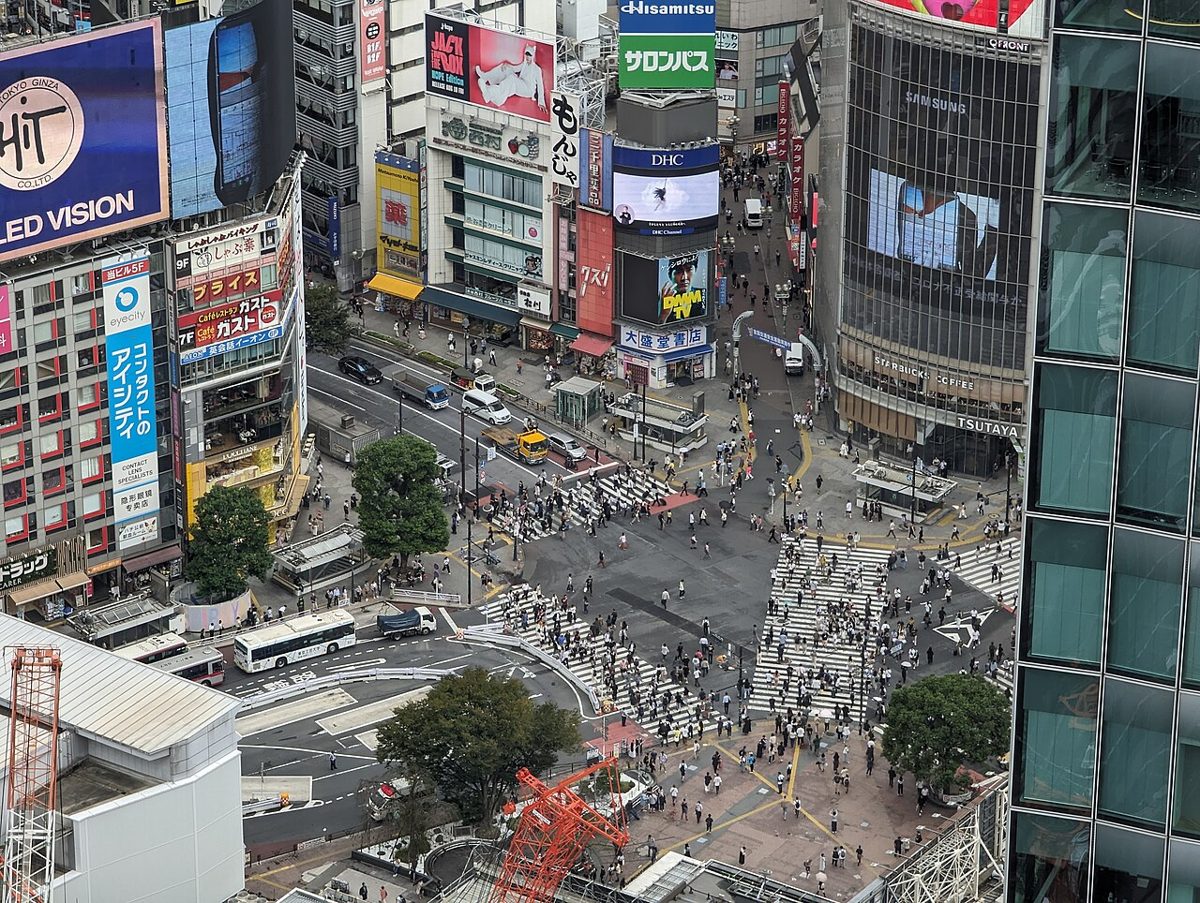
The Shibuya Scramble Crossing is the thing you have seen in a hundred films, and it lives up to it. When the lights go red in every direction at once, as many as 3,000 people step off the kerbs from all sides and somehow thread through each other without collision. At peak times the cycle repeats every couple of minutes; estimates put the daily foot traffic in the hundreds of thousands. Crossing it yourself takes about 30 seconds and costs nothing, and it is genuinely one of the great free spectacles in Tokyo.
For the famous overhead view, you have a few options. The first-floor window of the Shibuya Tsutaya Starbucks looks straight down the crossing — it is packed, you will queue, and you are expected to buy a drink, but it is the classic angle. Quieter and free is the second-floor walkway and the connecting bridges inside Shibuya Scramble Square and Shibuya Hikarie, or the pedestrian deck at the new station building. For the full god’s-eye perspective, go up to Shibuya Sky (below). We break down every viewpoint, the best times, and the etiquette in our dedicated Shibuya Crossing guide.
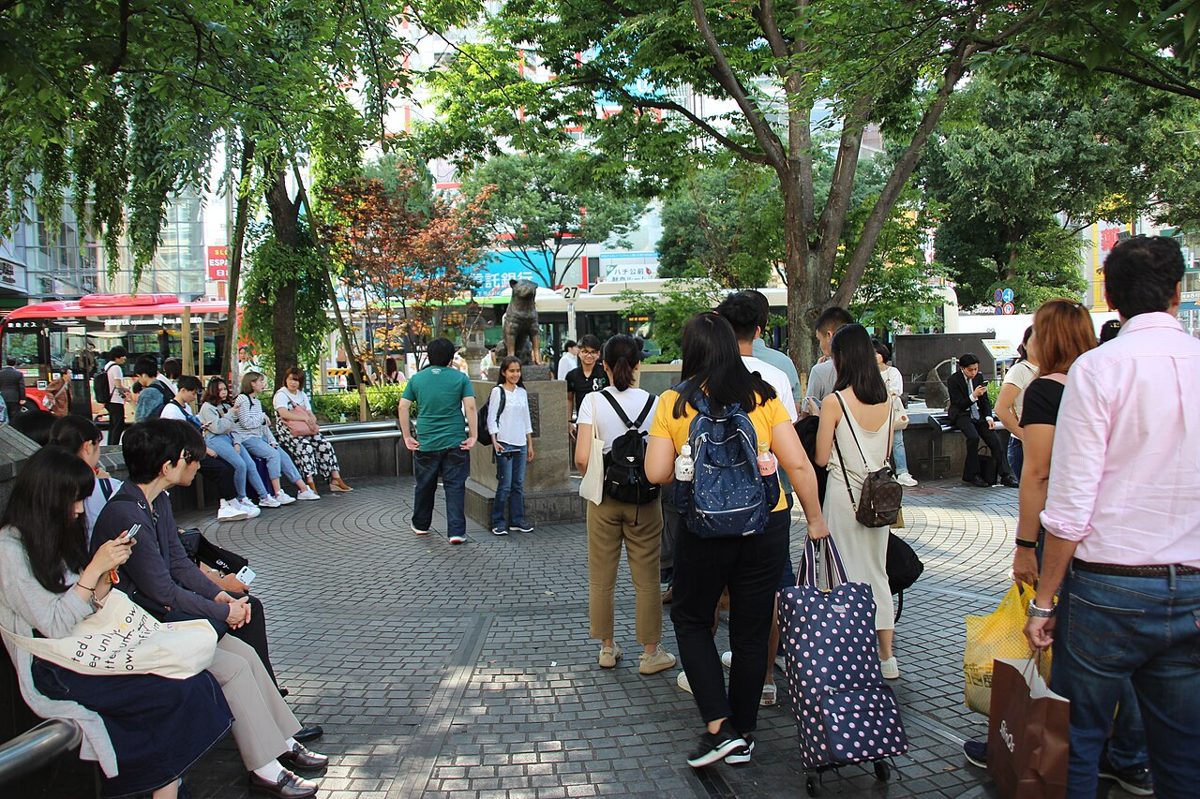
Right beside the crossing, on the north-west side of the station, stands the Hachiko statue — a bronze of the Akita dog who waited at Shibuya Station every day for his owner, and kept returning for nearly ten years after the man died in 1925. Hachiko is Tokyo’s default meeting point: “meet at Hachiko” needs no further explanation to a local. Expect a small scrum of people taking photos and waiting for friends at almost any hour. As part of the station redevelopment, the surrounding Hachiko Square is being enlarged by about half to give the statue more breathing room and better sightlines, with work continuing through 2027.
Shibuya Sky: the open-air observation deck
If you do one paid attraction in Shibuya, make it Shibuya Sky. It sits on top of Shibuya Scramble Square, the 47-storey tower built directly over the station, and its headline feature is a genuinely open-air rooftop — no glass between you and the wind — at 229 metres. From up there you look straight down onto the scramble crossing as a churning grid of dots, out to Tokyo Skytree and Tokyo Tower, and on a clear day west to the silhouette of Mount Fuji. The glass-walled escalator and the corner glass platform called Sky Edge are the photo spots everyone queues for.
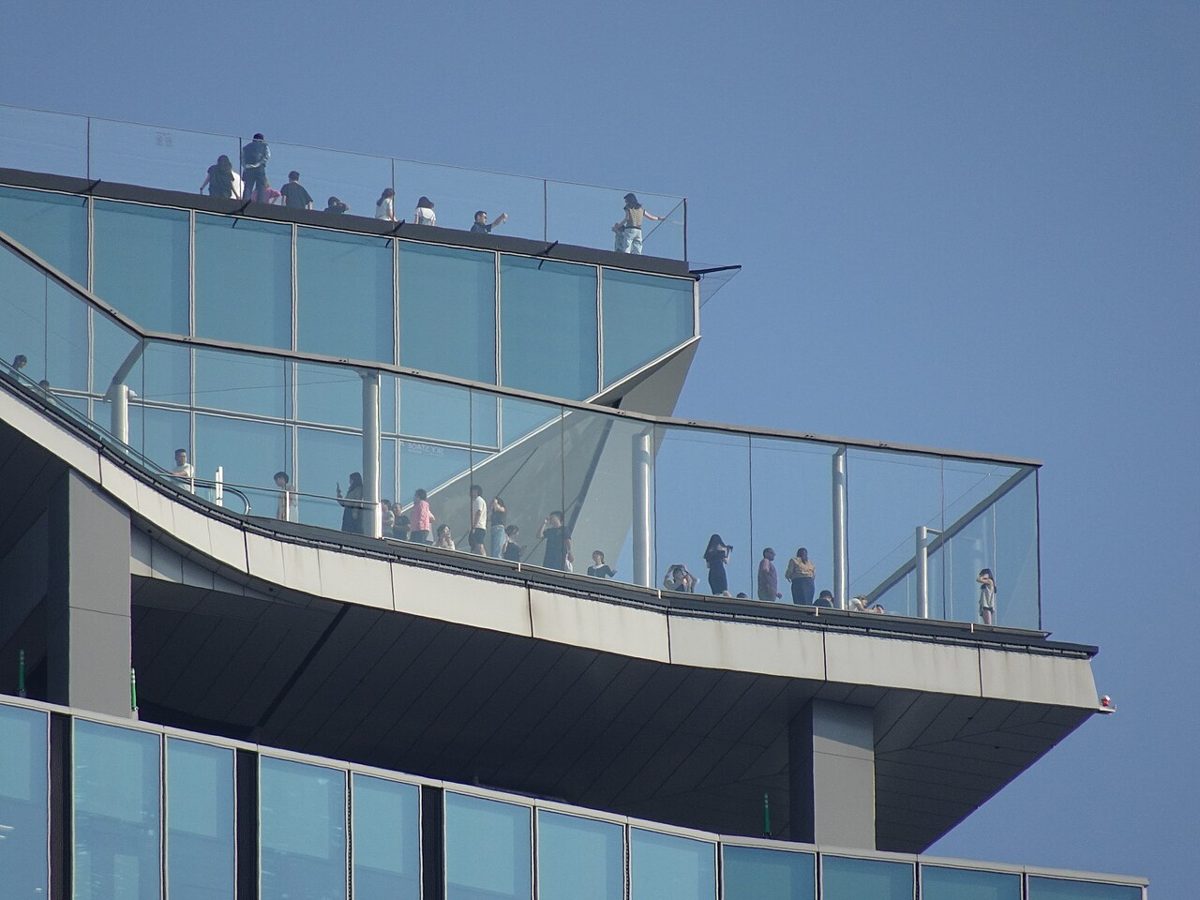
Current 2026 prices, straight from the operator: booked online in advance, an adult ticket is ¥2,700 for entry before 15:00 and ¥3,400 from 15:00 onward; at the counter on the day it is ¥3,000 and ¥3,700 respectively, subject to availability. Children under 5 enter free, and children’s tickets are sold only at the counter. The deck is open 10:00 to 22:30, with last admission at 21:20, and there is no time limit once you are inside — most people stay around 90 minutes.
Two practical things. First, the prime slot is roughly 30 minutes before sunset, when you catch the city in daylight, golden hour and full night without leaving — those tickets sell out fastest, so book online as soon as your dates open (booking opens about a month ahead). Sunset in Tokyo ranges from around 16:30 in December to near 19:00 in midsummer, so check the time for your visit. Second, the rooftop bans large bags, food, drink, tripods and selfie sticks for safety; you stash everything bigger than a pocket in lockers on the 46th floor, and the open deck can close in high wind or rain with no refund after entry. Buy ahead, dress for the wind, and you are set.
| Shibuya Sky (adult) | Before 15:00 | From 15:00 |
|---|---|---|
| Online (advance) | ¥2,700 | ¥3,400 |
| Counter (same day) | ¥3,000 | ¥3,700 |
| Hours | 10:00–22:30 (last entry 21:20) | |
| Children under 5 | Free | |
The new towers: Scramble Square, Stream, Hikarie and Miyashita Park
The redevelopment of the last decade has given Shibuya a cluster of mixed-use complexes that double as shelter, food halls and viewpoints. They are worth knowing by name because they are where you will eat, shop and escape the rain.
- Shibuya Scramble Square — the 47-storey tower right over the station, home to Shibuya Sky on the roof and a deep run of fashion, lifestyle and food floors below. The most useful single building in the district.
- Shibuya Stream — built along the daylighted Shibuya River on the south-east side, with restaurants, a hotel and a riverside walk. A calmer place to eat than the crossing area.
- Shibuya Hikarie — an older (2012) tower on the east side with department-store floors, the ShinQs basement food hall, restaurants up high and good free crossing views from its windows.
- Miyashita Park — a reinvented rooftop park stacked over a shopping street, with a lawn, a climbing wall, a skate area and the Shibuya Yokocho food alley underneath. Free to enter and a great breather.
You can string these together along the east and south sides of the station without crossing a single road at street level, using the elevated decks — handy when the crossing area is shoulder to shoulder.
Shopping in Shibuya
Shibuya is one of the best shopping districts in Tokyo for fashion, novelty and pop-culture goods, and it is dense enough that you can hit a dozen very different shops in an afternoon. Here are the anchors.
Shibuya 109
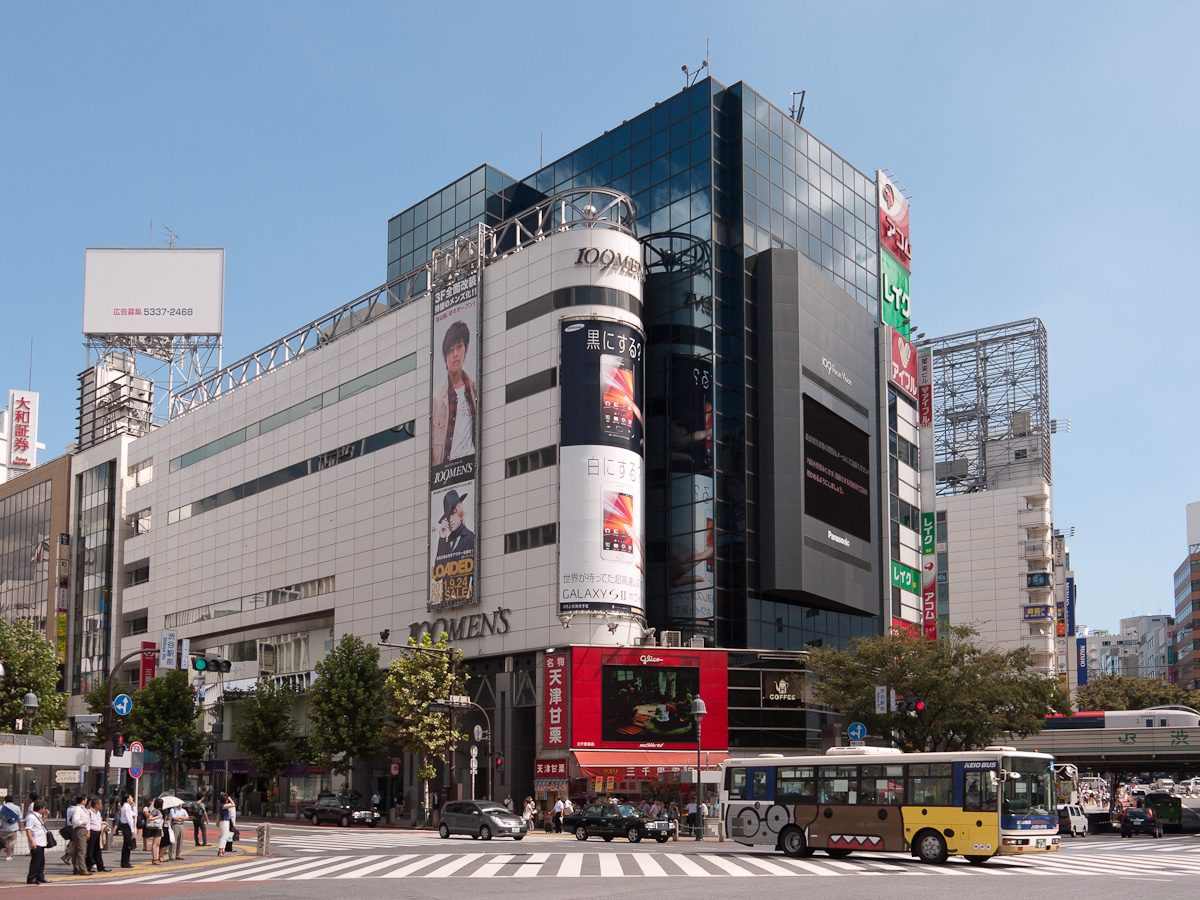
The silver cylindrical tower at the top of the crossing, Shibuya 109, is the icon of Shibuya fashion — ten floors of boutiques aimed squarely at young women, fast-moving trends, and the gyaru style the building helped define. Even if you buy nothing, it is a window into exactly what is in fashion in Tokyo right now. The nearby MAGNET by SHIBUYA109 (the former 109 Men’s) covers the menswear side and has a rooftop crossing view.
Shibuya PARCO (Nintendo, Pokemon and more)
Rebuilt and reopened in 2019, Shibuya PARCO is the pop-culture mothership. The sixth floor — branded “CYBERSPACE SHIBUYA” — holds Nintendo TOKYO, the first official Nintendo store in Japan, alongside the Pokemon Center SHIBUYA, the Jump Shop and a Capcom store. Expect queues and, at peak times, a numbered-ticket or timed-entry system to get into Nintendo TOKYO; go on a weekday morning if you can. The rest of PARCO mixes designer fashion, art, a rooftop terrace and a strong restaurant floor.
Center Gai and the backstreets
Center Gai (officially Basket Street) is the pedestrianised lane running uphill from the crossing — fast food, drugstores, game arcades, sneaker shops and a wall of noise. It is the cliche of teenage Shibuya and worth a walk for the atmosphere alone. Branch off it and the streets get more interesting: record stores and streetwear in Udagawacho, and the long pedestrian run of Cat Street heading north toward Harajuku, lined with independent and skate-leaning boutiques. If fashion is your main mission, pair this with our Tokyo shopping guide for the citywide picture.
Loft, Hands and Don Quijote
For the “buy a hundred things you did not know existed” experience, three names matter. Loft in Shibuya runs seven floors of stationery, homeware, cosmetics and clever gadgets — a superb souvenir hunt. Hands (formerly Tokyu Hands) is the DIY-meets-lifestyle department store, deep on tools, travel goods and Japanese craft supplies. And the Shibuya branch of Don Quijote (“Donki”) is the chaotic, floor-to-ceiling discount emporium open very late — snacks, cosmetics, souvenirs, costumes and genuine bargains if you are willing to dig. Most of these can do tax-free for tourists; carry your passport.
| Where to shop | Best for | Good to know |
|---|---|---|
| Shibuya 109 | Young women’s fashion, trends | Ten floors; the district’s style icon |
| Shibuya PARCO (6F) | Nintendo, Pokemon, anime, games | Expect timed entry/queues for Nintendo TOKYO |
| Shibuya Scramble Square | Fashion, lifestyle, food + Shibuya Sky | Directly over the station |
| Loft / Hands | Stationery, homeware, souvenirs | Hours of browsing; tax-free available |
| Don Quijote | Discount everything, late-night | Bring your passport for tax-free |
| Center Gai / Cat Street | Streetwear, sneakers, records | Free to wander; best on foot |
Where to eat in Shibuya
Shibuya feeds everyone, from ¥400 ramen to a tasting menu high in a tower. The trick is knowing which layer to aim at. For a quick, cheap, very good meal, dive into the ramen and gyudon counters off Center Gai and around the station — standing or counter spots where you order from a ticket machine and eat in fifteen minutes. The famous Ichiran ramen has a Shibuya branch with its solo-booth seating, and there is no shortage of conveyor-belt sushi, tonkatsu and curry within a two-minute walk of the crossing.
For a sit-down dinner with a view, the upper restaurant floors of Shibuya Scramble Square, Shibuya Hikarie and Shibuya Stream hold everything from sushi to Italian to izakaya, many with city outlooks and English menus. For atmosphere over polish, the Shibuya Yokocho food alley under Miyashita Park lines up regional Japanese stalls — Hokkaido seafood, Okinawan pork, Kyushu chicken — in a noisy, shoulder-to-shoulder strip that runs late. And the basement food halls (depachika) under Hikarie and the department stores are unbeatable for takeaway bento, sweets and gifts.
Cafe culture runs deep here too. Beyond the crossing-view Starbucks, look for the specialty-coffee shops in the calmer Sakuragaoka area on the south-west side of the station, and the dessert and bubble-tea stands clustered along Center Gai. A mid-afternoon coffee with a window seat is the best way to rest your legs and watch Shibuya go by.
Shibuya nightlife: clubs, izakaya and tiny bars
Shibuya is arguably the most complete nightlife district in Tokyo — within a ten-minute walk of the crossing you can hit a world-class techno club, a ¥300 standing bar, a karaoke box, a late ramen counter and a quiet whisky bar. The clubbing centre of gravity is Dogenzaka, the slope on the west side of the station packed with venues, bars stacked six floors high, and convenience stores that stay genuinely useful at 3am.
The headline club is Womb on Dogenzaka, a four-floor temple of techno and house with one of the best sound systems in Asia; expect entry around ¥3,000–¥5,000 on a normal night and more (¥6,000–¥8,000) when a big international DJ is in, with presale tickets usually a little cheaper. Bring photo ID — you must be 20 to enter and they card at the door. Other mainstays include Vision and Contact; shows often do not warm up until after midnight and run to 5am, which lines up neatly with the first morning trains. For the citywide rundown of clubs, bar districts and what they cost, see our Tokyo nightlife guide.
Not a clubber? Shibuya does intimate just as well. Nonbei Yokocho — “Drunkards’ Alley” — is a pair of narrow lanes tucked beside the train tracks just north-east of the station, lined with tiny postwar bars and izakaya that seat six or eight people each. It has survived since the 1950s and is the antidote to the glass towers: candle-lit, friendly, and a world away from the crossing two minutes downhill. Some bars welcome tourists warmly; a few are regulars-only, so read the room and check for a cover charge (a small otoshi seat charge is normal). For a livelier, cheaper warm-up, the izakaya in the Udagawacho backstreets run nomihodai (all-you-can-drink) sets — roughly ¥2,000–¥3,000 for food plus 90 minutes of unlimited drinks — before you move on to a club.
Getting to Shibuya: the station, lines and exits
Shibuya Station is one of the busiest in the world, handling around 2.8 million passengers a day across nine lines run by four companies. That sounds intimidating, and the ongoing rebuild has not made it simpler, but for most visitors the logic is straightforward. The lines that matter:
- JR Yamanote Line — the green loop; the easiest way in from Shinjuku, Harajuku (one stop), Tokyo Station and Ueno.
- JR Saikyo and Shonan-Shinjuku Lines — useful from Shinjuku, Ikebukuro and further out; note their platforms sit a little south of the main concourse.
- Tokyo Metro Ginza, Hanzomon and Fukutoshin Lines — the Ginza Line arrives on an elevated platform; Hanzomon and Fukutoshin run deep underground and connect toward Omotesando, Otemachi and Ikebukuro.
- Tokyu Toyoko and Den-en-toshi Lines, and the Keio Inokashira Line — private railways heading out to Yokohama, the western suburbs and Kichijoji.
The exit you want for almost everything — the crossing, Hachiko, Center Gai, 109 — is the Hachiko Exit on the north-west side of the JR station. Follow signs for “Hachiko”; you will pop out right at the dog statue and the crossing. As part of the redevelopment, JR East shifted the Hachiko ticket gate and a Yamanote Line stairway slightly south in early 2026 during construction, so the exact position may differ from older maps — just keep following the well-signed “Hachiko” arrows. For Shibuya Sky and the Scramble Square shops, stay inside and follow signs to Shibuya Scramble Square, which connects directly to the station. Tap in and out with a Suica or PASMO IC card and you never have to think about fares; the minimum JR fare is around ¥150.
Coming from the big neighbours: from Shinjuku it is about 6 minutes on the Yamanote (or the Saikyo Line); from Harajuku a single 2-minute hop; from Tokyo Station roughly 25 minutes on the Yamanote. Shibuya also makes an easy pairing with Harajuku and Omotesando — you can walk between them in 15–20 minutes up Cat Street. See our Harajuku guide to plan that combination.
Best time to visit Shibuya
Shibuya runs from morning until very late, and each window has a different feel. That is the best argument there is for basing yourself within walking distance. Here is how to time it.
- Late morning (10:00–noon) — the calmest shopping window. Shops open around 10:00–11:00, queues for Nintendo TOKYO and Shibuya Sky are shortest, and the crossing is busy but not crushing.
- Late afternoon to sunset — the magic hour for Shibuya Sky and for the crossing’s neon coming alive. Book the deck for ~30 minutes before sunset.
- Evening (18:00–22:00) — peak crossing spectacle, peak crowds, peak neon. Best for photos and people-watching; worst for personal space.
- Late night (after midnight) — the clubs and Dogenzaka come into their own. Remember the last trains go around 00:30–01:00; after that it is night buses or a taxi until the ~05:00 first trains.
Across the year, spring and autumn are the most comfortable for all the walking Shibuya demands. Weekends and Friday nights are the busiest by far; a weekday gives you the same district with more room. Rain is no disaster here — the connected towers and underground passages let you shop and eat for hours without an umbrella.
A sample half-day in Shibuya
Half a day is enough to hit the highlights without rushing. Here is a route that flows logically from the station and ends with the best light.
- Start at the Hachiko Exit (around 14:00). Photograph the Hachiko statue, then cross the scramble crossing yourself — do a lap, then watch a cycle or two from the corner.
- Walk up Center Gai. Soak in the noise, duck into Don Quijote or a game arcade, and browse the streetwear in the side lanes.
- Hit Shibuya 109 and/or Shibuya PARCO. Fashion at 109, or Nintendo TOKYO and the Pokemon Center on PARCO’s 6th floor if pop culture is more your thing.
- Coffee and a sit-down in Sakuragaoka or a department-store cafe to recharge.
- Shibuya Sky for sunset (book ~30 min before). Daylight, golden hour and night skyline in one visit, with the crossing far below.
- Dinner at Shibuya Yokocho under Miyashita Park or a tower restaurant, then a nightcap in Nonbei Yokocho — or on to a Dogenzaka club if you have the stamina.
Mistakes to avoid in Shibuya
- Turning up at Shibuya Sky without a ticket at sunset. The best slots sell out fast; book online as soon as your dates open (about a month ahead) and save ¥300 over the counter price.
- Standing still in the middle of the crossing for a photo. Keep moving with the flow; shoot from the corners, the Starbucks window or an overhead deck instead.
- Only seeing Center Gai. The main drag is the cliche; the better shops, bars and cafes are one street back in Udagawacho, Sakuragaoka and along Cat Street.
- Bringing a big bag up Shibuya Sky. Luggage, tripods and selfie sticks are banned on the open deck — you will be sent to the lockers, so travel light.
- Missing the last train. Around 00:30–01:00 the lines shut; if you are clubbing in Dogenzaka, plan to stay until ~05:00 or budget for a taxi.
- Wandering into a regulars-only bar in Nonbei Yokocho. Some tiny bars are members’ spots; if a place feels closed to outsiders, smile and move to the next — plenty welcome visitors.
Shibuya vs Shinjuku vs Harajuku: which is for you?
These three western hubs sit minutes apart and people often confuse them. A quick guide to which fits your day.
| District | Vibe | Go for |
|---|---|---|
| Shibuya | Polished youth culture; the scramble crossing | The crossing, Shibuya Sky, trend shopping, clubs |
| Shinjuku | Bigger, denser, more chaotic; day and night | Skyscraper views, Golden Gai, Kabukicho nightlife, huge stores |
| Harajuku | Younger, quirkier street fashion | Takeshita Street, Meiji Shrine, indie boutiques, crepes |
The good news is you do not have to choose: Harajuku is one Yamanote stop or a 15-minute walk north, and Shinjuku is six minutes up the same line. A classic Tokyo day chains all three. Map it out with the Tokyo neighborhoods guide and the Harajuku guide.
How much does a day in Shibuya cost?
Shibuya can be as cheap or as splashy as you make it. The crossing, Hachiko, Center Gai and window-shopping the towers cost nothing, so a day here can run almost free if you skip the paid extras. Add Shibuya Sky and a couple of meals and you are looking at a very reasonable day out by Tokyo standards. Here is a rough per-person guide in 2026 yen.
| Item | Budget | Comfortable |
|---|---|---|
| Shibuya Scramble Crossing & Hachiko | Free | Free |
| Shibuya Sky observation deck | ¥2,700 (online, before 15:00) | ¥3,400 (sunset slot) |
| Lunch (ramen/gyudon counter) | ¥500–¥1,000 | ¥1,500–¥2,500 (tower restaurant) |
| Coffee / dessert break | ¥500 | ¥1,200 |
| Dinner | ¥1,000 (Yokocho stall) | ¥3,000–¥5,000 (izakaya course) |
| Night out (one club or a few bars) | ¥3,000 | ¥6,000–¥8,000 |
| Rough day total | ~¥5,000–¥7,000 | ~¥15,000–¥20,000 |
Two easy ways to save: book Shibuya Sky online rather than at the counter (it shaves ¥300 off the adult price), and eat at least one meal at a ticket-machine ramen counter or the Miyashita Park food alley instead of a tower restaurant. Tax-free shopping at Don Quijote, Loft and the department stores can also claw back the 10% consumption tax on purchases over ¥5,000 if you carry your passport. For a fuller breakdown of what a Tokyo trip costs day to day, our wider planning guides go deeper on budgeting.
Practical tips for a smooth Shibuya visit
- Carry a Suica or PASMO. One tap card covers every train into and out of Shibuya plus convenience stores and many shops, so you never queue for a ticket machine. The minimum JR fare from here is around ¥150.
- Use the overhead decks when it is crowded. The elevated walkways linking Shibuya Scramble Square, Hikarie and the station let you skip street-level crushes entirely, which is a relief on a Friday night.
- Coin lockers fill up fast. If you are carrying luggage, the lockers around Shibuya Station are limited and go early; the bigger banks are near the JR gates and inside the towers. Travel light if you are heading up Shibuya Sky.
- Free Wi-Fi and toilets are in the towers. Shibuya Scramble Square, Hikarie and Miyashita Park all have clean restrooms and seating — far more pleasant than hunting on the street.
- Cash still helps after dark. Most shops and chains take cards and IC, but some tiny Nonbei Yokocho bars and street stalls are cash-only, so keep a few thousand yen on you for the night.
- Mind the last train. Check the time of your final connection before you settle into a bar; the lines stop around 00:30–01:00 and the first trains do not roll until about 05:00.
One night of the year, none of the above applies. On 31 October the ward closes the roads around the station, bans street drinking and loitering in costume, and local shops stop selling alcohol — the old Shibuya Halloween is over by design. Our guide to Halloween in Tokyo explains what the rules mean on the ground and where the costume crowd goes instead.
Frequently Asked Questions
Is Shibuya worth visiting in Tokyo?
Yes. Shibuya is one of Tokyo’s essential districts — home to the world-famous scramble crossing, the open-air Shibuya Sky observation deck, major fashion complexes like Shibuya 109 and PARCO, and a dense nightlife scene. It packs the energy of modern Tokyo into a walkable area and pairs easily with Harajuku and Shinjuku.
How much is a Shibuya Sky ticket in 2026?
Booked online in advance, an adult ticket is about ¥2,700 for entry before 15:00 and ¥3,400 from 15:00 onward. At the counter on the day it is roughly ¥3,000 and ¥3,700. Children under 5 enter free. The deck is open 10:00 to 22:30 with last admission at 21:20, and sunset slots sell out fastest, so book ahead.
How long should I spend in Shibuya?
A half-day (about four to five hours) covers the highlights: the crossing and Hachiko, a walk through Center Gai and the shops, Shibuya Sky for sunset and dinner. Add the nightlife and you can easily fill an evening. A full day lets you also explore Cat Street toward Harajuku and the quieter backstreets.
What is the best exit at Shibuya Station?
Use the Hachiko Exit on the north-west side of the JR station for the scramble crossing, the Hachiko statue, Center Gai and Shibuya 109. For Shibuya Sky and the Scramble Square shops, follow the in-station signs to Shibuya Scramble Square, which connects directly. Note that the Hachiko gate shifted slightly during 2026 construction, so follow the live signage.
Is Shibuya better than Shinjuku?
They serve different moods. Shibuya is the polished centre of youth culture, with the crossing, Shibuya Sky and trend shopping. Shinjuku is bigger and more chaotic, with skyscraper observation decks and the Golden Gai and Kabukicho nightlife. They are only six minutes apart on the Yamanote Line, so most visitors see both.
Photo Credits
- The Shibuya Scramble Crossing, the busiest pedestrian crossing in the world — Photo: David Kernan / CC BY 4.0 via Wikimedia Commons
- The Hachiko statue, Shibuya’s favourite meeting point — Photo: Hyppolyte de Saint-Rambert / CC BY-SA 4.0 via Wikimedia Commons
- The open-air rooftop at Shibuya Sky, 229 metres above the city — Photo: RuinDig/Yuki Uchida / CC BY 4.0 via Wikimedia Commons
- Center Gai, the pedestrian heart of Shibuya’s shopping and youth culture — Photo: Syced / CC0 via Wikimedia Commons
- Shibuya 109, the silver fashion landmark above the crossing — Photo: Rs1421 / CC BY-SA 3.0 via Wikimedia Commons
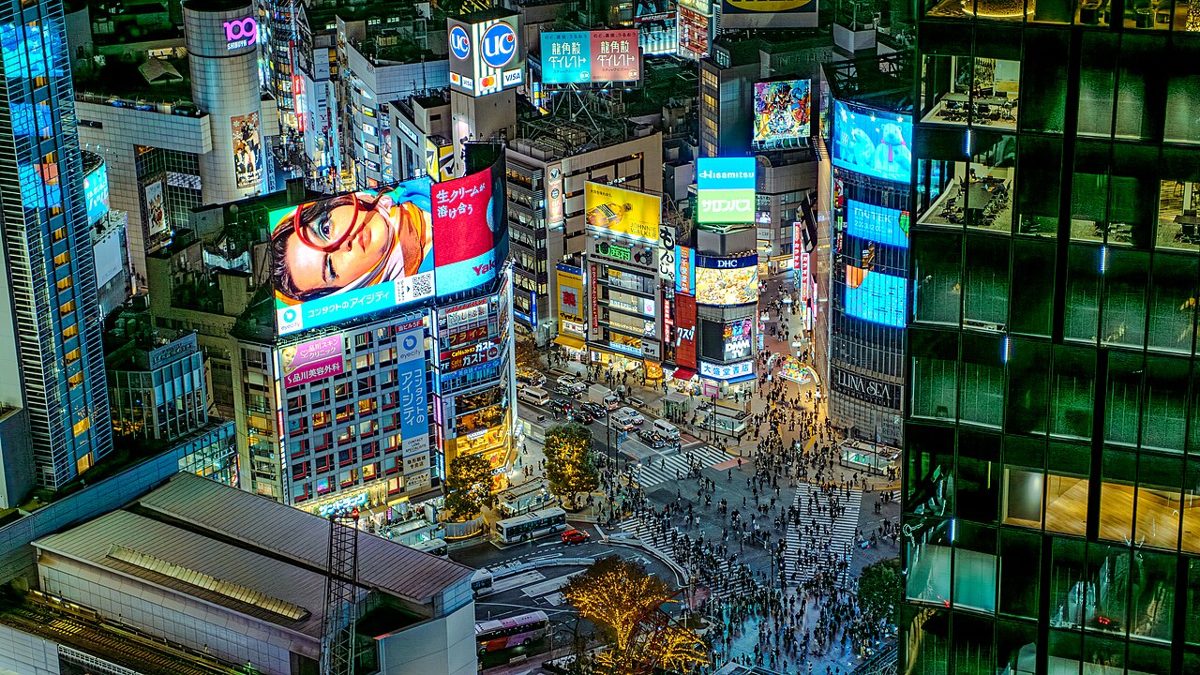
- Shibuya after dark, with Shibuya Scramble Square towering over the station — Photo: David Kernan / CC BY 4.0 via Wikimedia Commons