Tokyo Transportation · Guide №156
Tokyo Station Guide: Shinkansen Gates, Ramen Street and Not Getting Lost
Marunouchi or Yaesu, JR Central or JR East, and why the Keiyo line to Disney is a fifteen-minute walk: how Tokyo Station works, where to eat ramen and buy ekiben, and the mistakes that cost people their train.
目次 — Contents
- The shape of Tokyo Station
- Exits: which one to use
- The Shinkansen: two companies, two sets of gates
- Local lines and transfers
- Eating at Tokyo Station
- Shopping: Character Street and souvenirs
- Buses from Tokyo Station
- Luggage
- Sights at and around Tokyo Station
- Arriving at Tokyo Station, and where to go next
- The mistakes almost everyone makes
- Tokyo Station at rush hour
- Tokyo Station compared with Shinjuku
- Frequently Asked Questions
- Photo Credits
This article contains advertising. Our booking links are routed through a partner that adds commission tracking automatically, so if you book through one we earn a commission from the provider, at no extra cost to you. It never affects what we recommend. Affiliate disclosure
This Tokyo Station guide comes down to one fact: the station has two faces. The Marunouchi side, to the west, has the red-brick building and the Imperial Palace; the Yaesu side, to the east, has the Tokaido Shinkansen to Kyoto and Osaka, the bus terminals and the basement food streets. Know which side you need, and Tokyo Station is far easier than Shinjuku.
Below: how the station is laid out, which Shinkansen leaves from where, how long transfers actually take (the Keiyo line to Disney is further than you think), where to eat ramen and buy ekiben, the character shops, luggage, and what to see if you have an hour. For the trains themselves, see our Shinkansen guide.
The shape of Tokyo Station
Tokyo Station is Japan’s main intercity rail hub and the terminus of most Shinkansen lines. It is less chaotic than Shinjuku, because almost everything is run by JR, but it is enormous, with more than twenty platforms and several levels of shopping above and below them.

Picture it as a long rectangle running north to south, with the platforms lined up side by side across it.
- Marunouchi side (west): the historic red-brick station building, the Tokyo Station Hotel, the Marunouchi business district, KITTE and the walk to the Imperial Palace. The Tokyo Metro Marunouchi line is underneath.
- Yaesu side (east): the Tokaido Shinkansen gates, the Daimaru department store, the Gransta Yaesu shops, highway and airport buses, and the underground First Avenue mall with Tokyo Ramen Street and Tokyo Character Street. Nihonbashi and Kyobashi are a short walk.
- In between: the platforms, with the local JR lines towards the Marunouchi side and the Shinkansen towards the Yaesu side, and a large inside-the-gates shopping area, Gransta Tokyo, on the ground floor and basement.
There is one more important piece: the Keiyo line, for Tokyo Disney Resort, has its platforms deep underground far to the south of the main station, connected by long moving walkways. We will come back to that.
Exits: which one to use
| Exit | Side | Use it for |
|---|---|---|
| Marunouchi North Exit | West | The north dome, Tokyo Station Hotel, Otemachi, Imperial Palace East Gardens |
| Marunouchi Central Exit | West | The station’s front plaza, Gyoko-dori avenue to the Imperial Palace, photos of the facade |
| Marunouchi South Exit | West | The south dome, KITTE, Tokyo Station Gallery, the Marunouchi line |
| Marunouchi Underground exits | West | Underground walks to Otemachi, Marunouchi office towers, the Marunouchi line |
| Yaesu North Exit | East | Daimaru, Gransta Yaesu, Tokaido Shinkansen |
| Yaesu Central Exit | East | Tokaido Shinkansen gates, Ekibenya Matsuri inside the gates, Nihonbashi |
| Yaesu South Exit | East | Highway and airport buses, Tokyo Midtown Yaesu, Kyobashi, Ginza |
| Yaesu Underground Central Exit | East | First Avenue: Tokyo Ramen Street, Tokyo Character Street, Tokyo Okashi Land |
| Nihombashi Exit | North-east | A direct exit from the JR East Shinkansen area towards Nihonbashi |
If you exit on the wrong side, you can cross outside the ticket gates using the passages at the north end of the station and through the underground malls. Crossing inside the gates is quicker if you have not tapped out yet.
The Shinkansen: two companies, two sets of gates
This is the part that matters most, and the part that trips people up. Tokyo Station’s bullet trains are run by two different railway companies, with their own platforms and their own ticket gates.
| Shinkansen | Operator | Platforms | Destinations | Main gates |
|---|---|---|---|---|
| Tokaido / San’yo | JR Central (and JR West) | 14–19 | Nagoya, Kyoto, Osaka, Hiroshima, Hakata | Yaesu side, by the Yaesu Central, North and South exits |
| Tohoku, Hokkaido, Yamagata, Akita, Joetsu, Hokuriku | JR East | 20–23 | Sendai, Aomori, Niigata, Nagano, Kanazawa and more | Nihombashi Exit and transfer gates from the JR concourse |
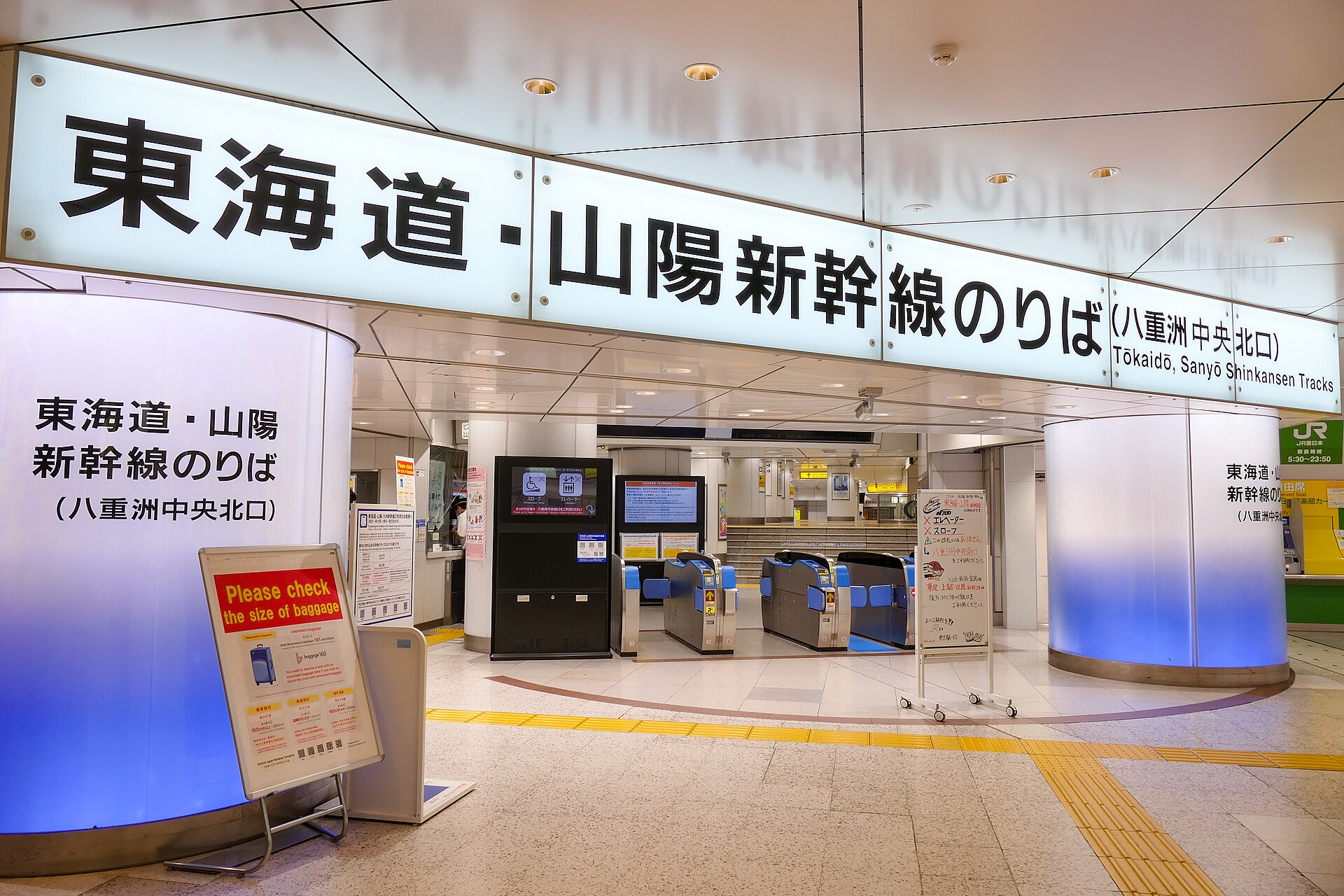
Going to Kyoto or Osaka
Go to the Yaesu side and follow the blue signs for the Tokaido Shinkansen. If you are already inside the JR gates after arriving on a local train, use the transfer gates in the central concourse, which take both your local fare and your Shinkansen ticket. A non-reserved seat to Kyoto costs ¥13,320 and a reserved ordinary seat ¥13,850. Japan Rail Pass holders who want the fastest Nozomi trains pay a supplement of ¥4,960 each way, which is why many pass holders take the Hikari, about 2 hours 40 minutes to Kyoto, instead. Our JR Pass guide explains whether the pass is worth it.
Large luggage on the Tokaido Shinkansen
If your suitcase is large — total length, width and height over 160 cm — you must reserve a seat with an oversized baggage area on the Tokaido, San’yo and Kyushu Shinkansen. It costs nothing extra if booked in advance, but bringing an oversized bag on board without a reservation incurs a fee. Most standard carry-on and medium cases fall comfortably below the limit; large checked-luggage cases often do not. Measure before you book.
Heading north or to the Japan Alps
JR East’s Shinkansen leave from platforms 20 to 23, towards the northern side of the station. Enter through the JR East Shinkansen transfer gates from the JR concourse, or directly from outside through the Nihombashi Exit.
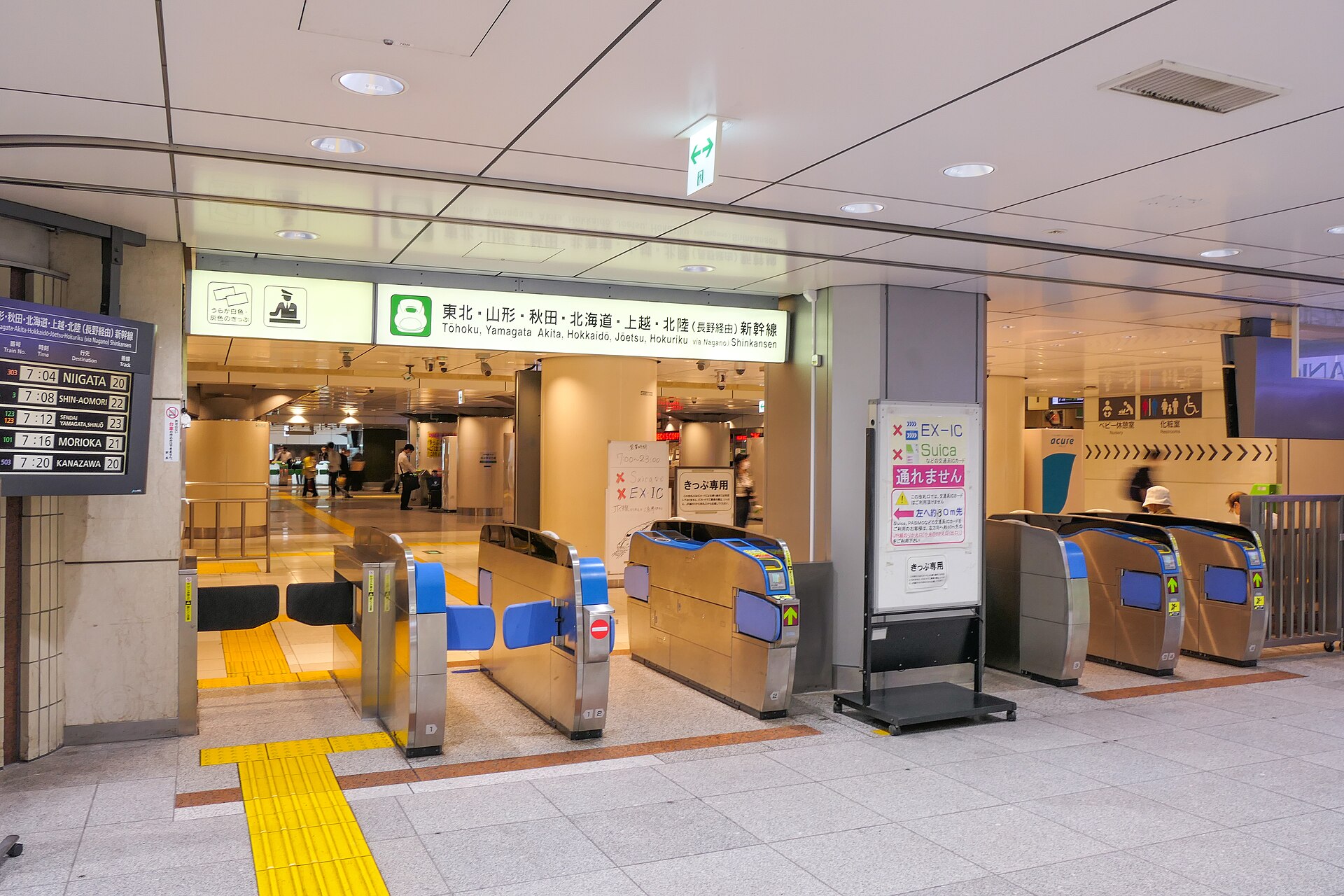
Changing between the two
Transferring from a JR East Shinkansen to a JR Central one, or the reverse, means passing through an interchange gate between the two companies’ areas. Allow 15 to 25 minutes, including time to find the right gate and buy food. More than one visitor has missed a Kyoto train because the journey planner said the connection was eight minutes.
How early to arrive
For a reserved Shinkansen, aim to be at Tokyo Station twenty to thirty minutes before departure, forty if you want to shop for ekiben or you have large bags. Trains leave exactly on time, and doors close promptly.
Local lines and transfers
| Transfer | Where | Realistic time |
|---|---|---|
| Yamanote / Keihin-Tohoku to Tokaido Shinkansen | Central transfer gates, Yaesu side | 5–10 minutes |
| Chuo line to Tokaido Shinkansen | Chuo platforms are high up on the Marunouchi side | 10–15 minutes |
| Any JR line to the Keiyo line | Long underground walkway to the far south | 10–15 minutes; 20 with luggage |
| JR to Tokyo Metro Marunouchi line | Underground, Marunouchi side | 5–10 minutes |
| JR to Otemachi (Chiyoda, Hanzomon, Mita, Tozai lines) | Underground passages, Marunouchi side | 10 minutes |
| JR to Nihombashi (Ginza, Tozai, Asakusa lines) | Yaesu side, on foot or underground | 10 minutes |
The Keiyo line and Tokyo Disney Resort
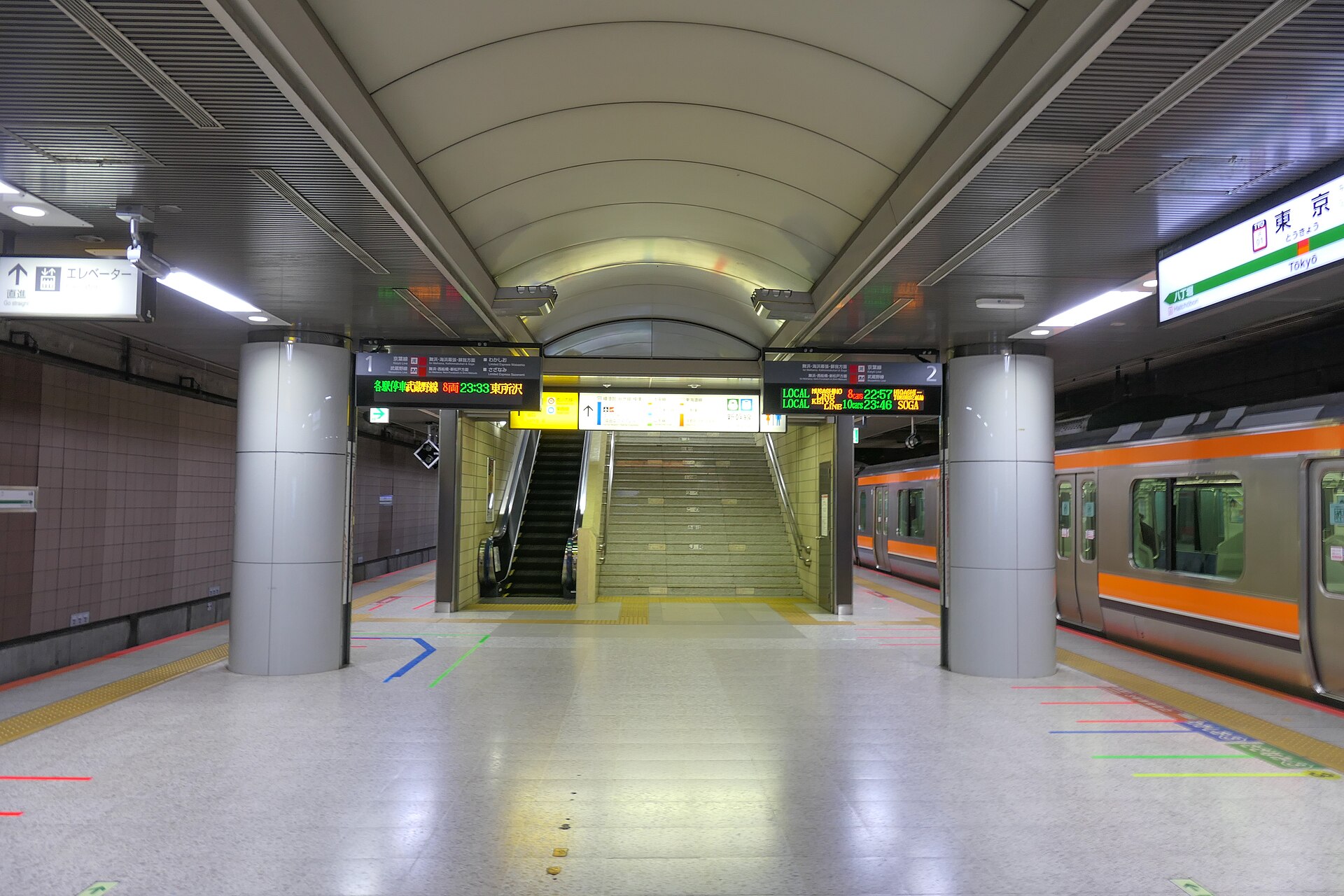
The Keiyo line to Maihama, the station for Tokyo Disneyland and DisneySea, starts from platforms far beneath the south side of Tokyo Station, closer in reality to Yurakucho than to the main concourse. The walk involves long corridors and several moving walkways, and on busy mornings the flow of families heading to Disney is a sight in itself. Allow fifteen minutes from the Yamanote platforms, more with a pushchair. Our Tokyo Disney guide covers the rest of the journey.
The Narita Express
The Narita Express to Narita Airport leaves from underground platforms beneath the Marunouchi side. The fare to Narita is ¥3,070 in an ordinary car, and the journey takes about an hour. Allow at least ten minutes to reach the platform from elsewhere in the station. Our Narita airport guide compares it with the Skyliner and buses.
Eating at Tokyo Station
Tokyo Station is one of the best places to eat in the city in its own right, with several hundred shops and restaurants inside and around it.
Tokyo Ramen Street
In the basement of the Yaesu side, in the First Avenue Tokyo Station mall, Tokyo Ramen Street gathers eight well-known ramen shops in a single corridor, each representing a different style. The most famous is Rokurinsha, a tsukemen specialist serving thick noodles with a concentrated pork and seafood dipping broth. It opens at 07:30 with a morning menu until 10:00, then serves its regular menu until 23:00, last order 22:30, and the queue is usually longest at lunch and early evening.
The trick is timing. Arrive before 11:00 or after 14:00 and most queues shrink to minutes. Most shops use ticket machines, so have cash or an IC card ready. Our best ramen in Tokyo guide puts these shops in the context of the rest of the city.
Ekiben

An ekiben, a station bento, is part of the Shinkansen experience. Tokyo Station’s great ekiben shop is Ekibenya Matsuri, inside the gates in Gransta Tokyo near the Yaesu Central Exit, which sells more than 200 kinds of ekiben from regions all over Japan and is open from 05:30 to 22:00. It reopened in July 2026 after renovation. There is a smaller sister shop, Ekibenya Matsuri Select, at the Shinkansen south transfer gate, and more ekiben counters throughout Gransta.
Go early for the best choice; the most popular boxes sell out by late morning. Eating on the Shinkansen is completely normal. Eating on commuter trains is not.
Department store food halls and sweets
The Daimaru department store on the Yaesu side has a large food hall in its basement, and Gransta and First Avenue are full of bakeries, sweet shops and takeaway counters. Tokyo Okashi Land, in the same basement mall as Ramen Street, gathers shops from big Japanese snack makers, several with station-exclusive products. Our depachika guide explains how to shop the food halls.
Shopping: Character Street and souvenirs
Tokyo Character Street is a corridor of official shops for Japanese characters, just outside the Yaesu Underground Central Exit gate in First Avenue. Pokémon, Crayon Shin-chan, Pretty Cure, Sumikkogurashi and Chiikawa are among the regulars, and it is open 10:00 to 20:30 daily. It is the best single place in the city for character goods if you have a train to catch, and a good fallback for families who could not get a booking at the Pokémon Cafe a short walk away in Nihonbashi; our themed cafes guide explains that booking.
Tokyo Station is also the capital of edible souvenirs. Gransta and the Yaesu shops sell the famous boxed sweets you see in every Japanese office after someone has travelled, including several made only for Tokyo Station. Our Tokyo souvenirs guide lists the best.
Buses from Tokyo Station
The Yaesu side is Tokyo’s second great bus hub after Busta Shinjuku. Highway buses to Kyoto, Osaka and other cities leave from the south end of the Yaesu side, including overnight services that cost a fraction of the Shinkansen fare — about ¥4,000 to ¥5,900 to Kyoto, in around eight hours. Airport limousine buses and low-cost airport buses to Narita and Haneda also leave from the Yaesu side. The main terminal sits at the base of Tokyo Midtown Yaesu; check which stop your bus uses, as not all companies depart from the same place.
Luggage
- Coin lockers are spread across both sides and inside the gates, at ¥400 to ¥1,000 a day with a three-day maximum. Large lockers go early.
- Staffed luggage storage and delivery counters operate in the station and can hold bags for the day or send them on to your hotel or the airport.
- Luggage delivery between cities is a good alternative to carrying bags on the Shinkansen. Sending a suitcase from Tokyo to Osaka costs around ¥2,300 and usually arrives the next day.
Sights at and around Tokyo Station
If you have an hour to spare before a train, there is more to see here than most travellers realise.
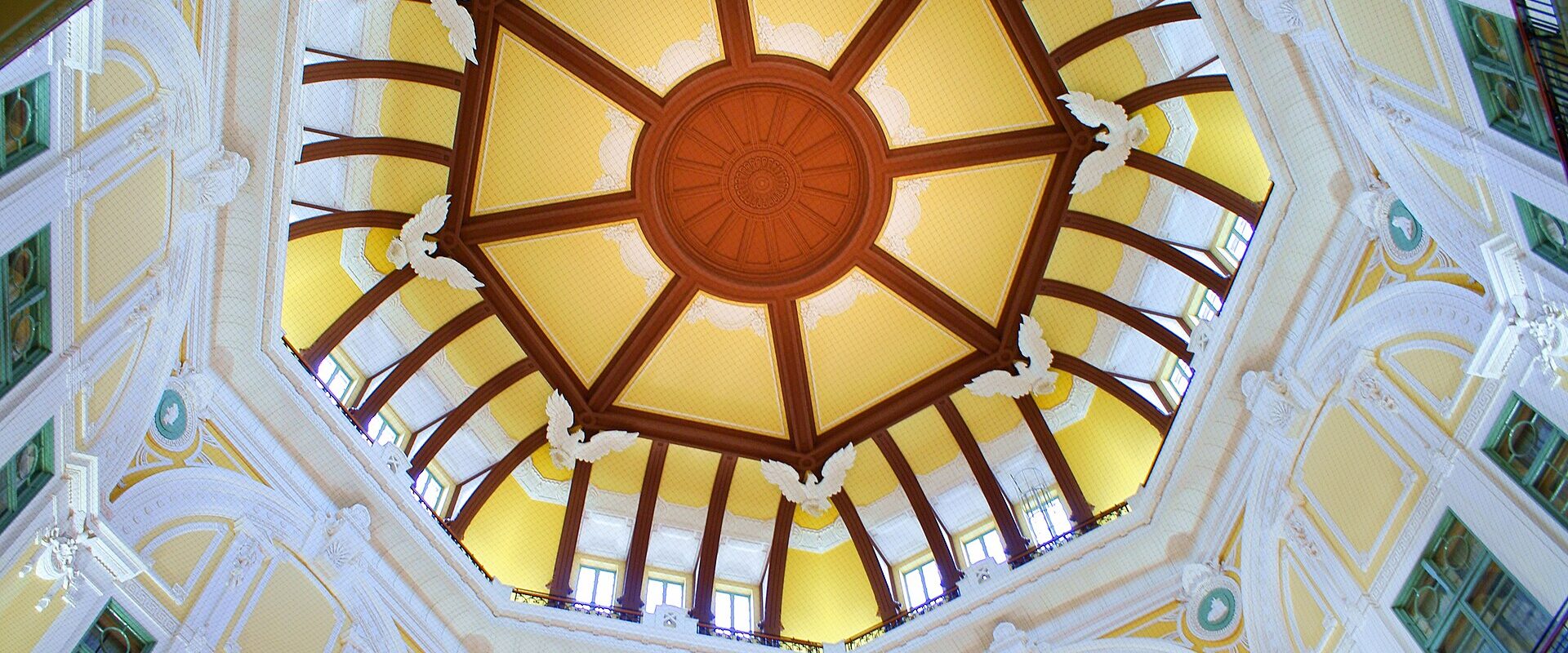
- The Marunouchi station building. Designed by Tatsuno Kingo and opened in 1914, the red-brick building lost its domes in wartime bombing and was restored to its original design in 2012. See it from the plaza in front of the Marunouchi Central Exit, and look up inside the North and South domes.
- Tokyo Station Gallery. An art museum inside the historic building, where exhibitions are hung against original brick walls.
- KITTE rooftop garden. The rooftop of the KITTE building beside the Marunouchi South Exit has a free, elevated view directly over the station and its tracks.
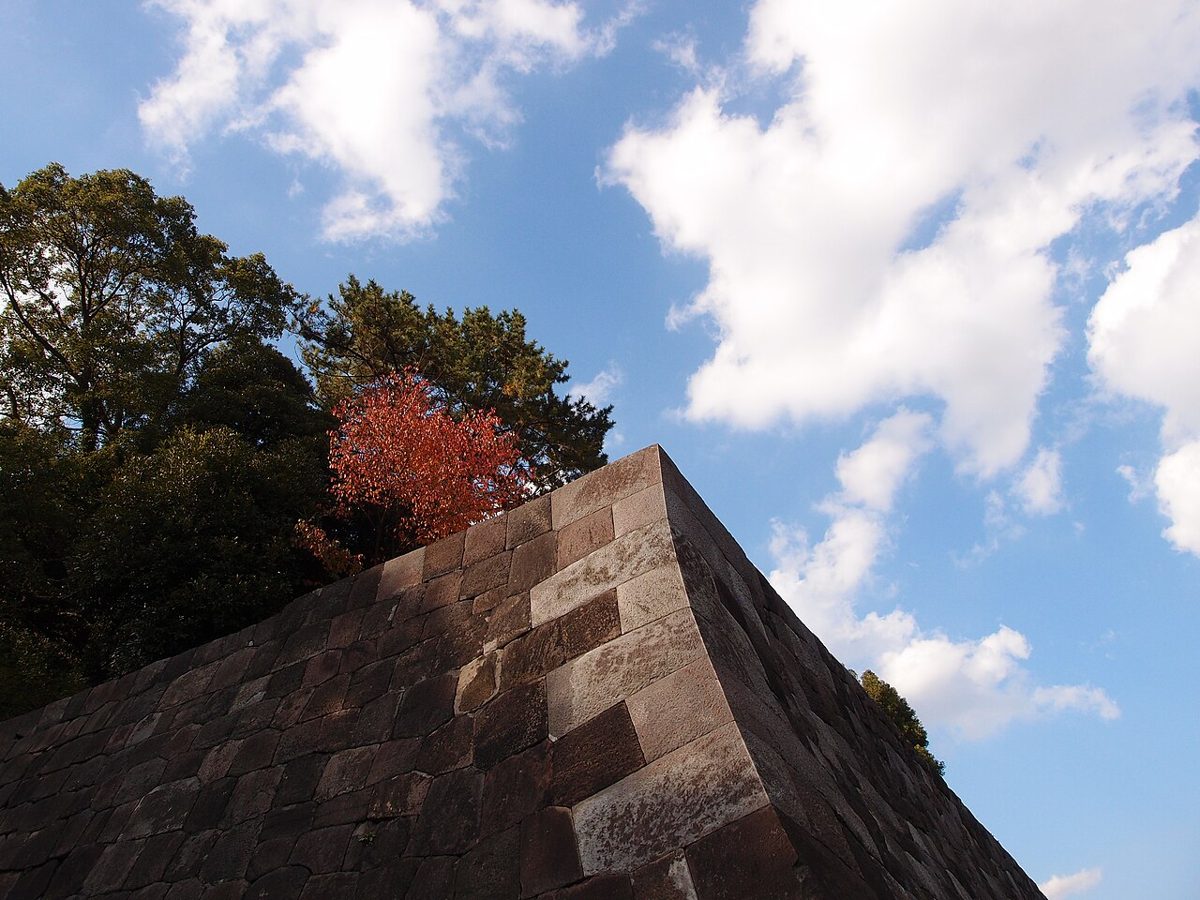
- The Imperial Palace East Gardens. About fifteen minutes’ walk from the Marunouchi side, with free entry, moats and stone castle walls. They are closed on Mondays and Fridays.
- Marunouchi Naka-dori. A tree-lined avenue of offices and boutiques just west of the station, beautifully lit in winter; see our Tokyo illuminations guide.
- Ginza. About fifteen minutes’ walk south, or one stop on the Marunouchi line. See our Ginza guide.
Arriving at Tokyo Station, and where to go next
Arriving by Shinkansen is much simpler than departing. Step off, follow the yellow exit signs, and decide at the first concourse whether you are leaving the station or changing to a local train. If you are changing, look for the transfer gates, which let you go straight from the Shinkansen area to the JR local platforms without leaving the station. Put your Shinkansen ticket through the gate; it will return any ticket you still need.
Taxi ranks are on both sides of the station, on the Marunouchi plaza and on the Yaesu side, and the queues move quickly outside the evening rush. For most central hotels, the train is still faster.
| To | Best route from Tokyo Station | About |
|---|---|---|
| Akihabara | JR Yamanote or Keihin-Tohoku line | 5 minutes |
| Ueno | JR Yamanote or Keihin-Tohoku line | 8 minutes |
| Ginza | Tokyo Metro Marunouchi line, one stop, or walk | 2 minutes by train; 15 on foot |
| Shinjuku | JR Chuo Rapid line | 15 minutes |
| Shibuya | JR Yamanote line | 25 minutes |
| Asakusa | JR to Kanda, then Tokyo Metro Ginza line | 20 minutes |
An IC card such as Suica covers all of these, including the change between JR and the subway. If you have heavy luggage, the Chuo line’s platforms are high up and involve long escalators, so allow a little extra time for the Shinjuku route. Our Tokyo Metro guide explains the subway lines.
The mistakes almost everyone makes
- Going to the wrong Shinkansen gates. Kyoto and Osaka are JR Central, on the Yaesu side. Sendai, Kanazawa and Nagano are JR East, further north.
- Underestimating the Keiyo line walk. Allow fifteen minutes, not five.
- Trusting an eight-minute Shinkansen transfer between JR East and JR Central services.
- Queuing at Ramen Street at 12:30. Go before 11:00 or after 14:00.
- Leaving ekiben shopping to the last minute. The good boxes sell out, and the queue at the tills can take ten minutes before a morning train.
- Forgetting the oversized luggage reservation on the Tokaido Shinkansen.
- Exiting on the Marunouchi side for a Yaesu bus, or the other way round.
Tokyo Station at rush hour
Tokyo Station’s commuter peaks are roughly 07:30 to 09:30 and 17:30 to 19:30, when the local line platforms and the central concourse are at their busiest. The Shinkansen areas are calmer but still busy on Friday evenings, Sunday afternoons and at the start and end of holiday periods such as Golden Week, Obon in mid-August and New Year, when reserved seats can sell out days in advance. For those dates, reserve early.
Tokyo Station compared with Shinjuku
People often ask which is harder. Shinjuku, clearly. Tokyo Station is mostly one company’s station, with logical signage and two clear sides; Shinjuku is five companies’ stations fused together and partly under construction. The main exceptions are the Keiyo line walk and the Shinkansen transfer between JR companies. If Shinjuku is on your route too, our Shinjuku Station guide explains its exits.
For every other line and ticket in the city, start with the Tokyo transportation guide.
Tokyo Station’s large coin lockers are usually full by mid-morning, particularly on the Yaesu side near the Shinkansen gates. If you need somewhere for a big suitcase, a staffed baggage counter or a booked space through an app such as ecbo cloak is more dependable. Our Tokyo luggage storage guide compares prices and options.
Frequently Asked Questions
Where do I catch the Shinkansen to Kyoto at Tokyo Station?
From the Tokaido Shinkansen platforms, numbers 14 to 19, run by JR Central. The gates are on the Yaesu (east) side of the station, next to the Yaesu Central, North and South exits. If you are already inside the JR gates from a local train, use the Shinkansen transfer gates in the central concourse. Aim to arrive twenty to thirty minutes before departure.
How long does it take to walk to the Keiyo Line at Tokyo Station?
Allow about fifteen minutes from the main JR platforms, and up to twenty with luggage or children. The Keiyo line platforms, used for Maihama and Tokyo Disney Resort, are deep underground at the far south end of the station and reached by long corridors with moving walkways.
What is Tokyo Ramen Street?
Tokyo Ramen Street is a row of eight well-known ramen shops in the First Avenue basement mall on the Yaesu side of Tokyo Station. The most famous is Rokurinsha, a tsukemen specialist that opens at 07:30 with a morning menu and serves its regular menu until 23:00. Visit before 11:00 or after 14:00 to avoid the longest queues.
Where can I buy ekiben at Tokyo Station?
Ekibenya Matsuri, inside the ticket gates in Gransta Tokyo near the Yaesu Central Exit, sells more than 200 kinds of ekiben from across Japan and opens from 05:30 to 22:00. A smaller branch operates at the Shinkansen south transfer gate, and there are many other ekiben counters throughout Gransta. Go early for the best choice.
What is the difference between the Marunouchi and Yaesu sides of Tokyo Station?
The Marunouchi side, to the west, has the historic red-brick station building, the Tokyo Station Hotel, the Marunouchi business district and the route to the Imperial Palace. The Yaesu side, to the east, has the Tokaido Shinkansen gates, the Daimaru department store, highway and airport buses, and the basement mall with Tokyo Ramen Street and Tokyo Character Street.
Photo Credits
- The dome inside Tokyo Station’s Marunouchi entrance – Relief of North and South domes in Tokyo station by 名無し野電車区, CC BY-SA 3.0, via Wikimedia Commons.
- Tokaido Shinkansen gates on the Yaesu side of Tokyo Station – JR-Central-Tokyo-STA Yaesu-central-north-Gate by MaedaAkihiko, CC BY-SA 4.0, via Wikimedia Commons.
- JR East Shinkansen transfer gates at Tokyo Station – JR-Central-East-Tokyo-STA Shinkansen-North-transfer-Gate by MaedaAkihiko, CC BY-SA 4.0, via Wikimedia Commons.
- Keiyo Line platforms at Tokyo Station – JRE-Tokyo-STA Keiyo-home 1-2 by MaedaAkihiko, CC BY-SA 4.0, via Wikimedia Commons.