Tokyo Food · Guide №041
Best Sushi in Tokyo: From ¥120 Belts to ¥50,000 Omakase
A complete guide to the best sushi in Tokyo for every budget — conveyor belt to Michelin omakase, with 2026 prices, top shops, neighbourhoods, booking and etiquette.
目次 — Contents
- Sushi vocabulary: what you’re actually ordering
- How omakase works
- How to book — including Michelin sushi
- Best budget and standing sushi
- Best conveyor-belt (kaitenzushi) chains
- A price-tier comparison
- Best neighbourhoods for sushi
- Sushi etiquette: the rules that actually matter
- Dining solo
- Mistakes to avoid
- What a typical omakase sequence looks like
- Sushi by season: what to order when
- First-timers, kids, and dietary needs
- Paying, tipping, and other practicalities
- Frequently Asked Questions
- Photo Credits
This article contains advertising. Our booking links are routed through a partner that adds commission tracking automatically, so if you book through one we earn a commission from the provider, at no extra cost to you. It never affects what we recommend. Affiliate disclosure
The best sushi in Tokyo isn’t one restaurant or one price — it’s a spectrum that runs from a ¥120 plate of salmon circling a conveyor belt to a ¥50,000 omakase where a master places each piece in front of you by hand. The good news for visitors: the gap in quality between those extremes is far smaller than the gap in price. Eat smart and you can have genuinely brilliant sushi on almost any budget. This guide maps the whole range, with current 2026 prices, the shops worth your time, and how to order without feeling lost.
Tokyo is where Edomae sushi was born. “Edomae” means “in front of Edo” — the old name for Tokyo — a nod to the days when the fish came straight out of Tokyo Bay. The style is built on technique you can taste: rice held at body temperature, fish that’s been aged, cured, or marinated rather than just sliced, and a chef who moves fast and precisely. You’ll find it in glossy Ginza basements, under the railway arches of Shimbashi, and yes, on conveyor belts. Below, we start with the words and the rules, then work through every budget tier.
Sushi vocabulary: what you’re actually ordering
You don’t need fluent Japanese to eat well, but a handful of words turns a confusing menu into a clear one. Most of what you’ll meet at a Tokyo counter falls into a few shapes:
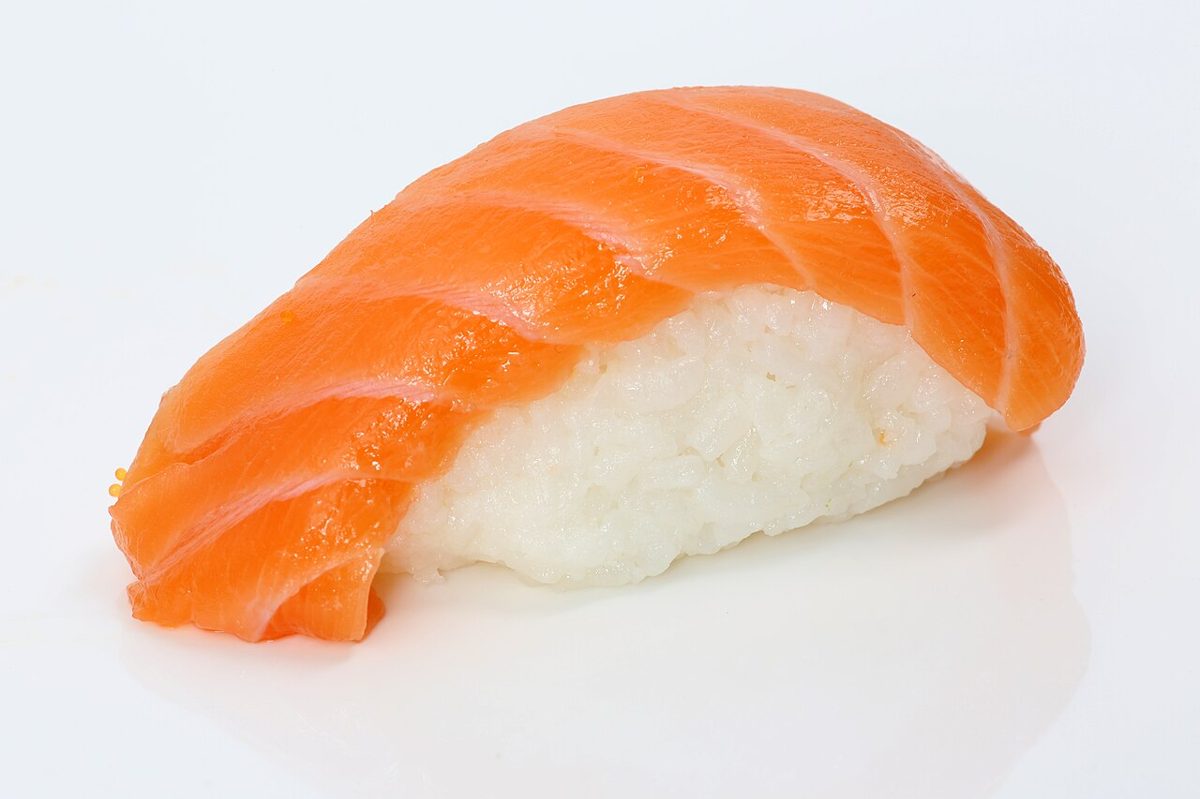
- Nigiri — the classic: a hand-pressed finger of rice with a slice of fish or seafood on top. This is the heart of Edomae sushi.
- Sashimi — sliced raw fish on its own, no rice. Technically not sushi, but it shares a counter.
- Maki — rolled sushi, rice and filling wrapped in nori (seaweed). Hosomaki is thin; futomaki is fat.
- Gunkan — “battleship” sushi: an oval of rice wrapped in a band of nori to hold soft, loose toppings like uni (sea urchin) or ikura (salmon roe).
- Temaki — a hand roll, cone-shaped, meant to be eaten immediately before the nori goes soft.
- Gari — the pink pickled ginger. A palate cleanser between pieces, not a topping.
- Agari — green tea. Murasaki — soy sauce. Neta — the topping; shari — the rice.
A few fish worth knowing by name: maguro (lean tuna), chutoro and otoro (medium-fatty and fatty tuna belly — richer and pricier as you go), hamachi (yellowtail), sake (salmon), ebi (shrimp), ika (squid), tako (octopus), anago (sea eel, usually served warm with a sweet glaze), tamago (the sweet egg omelette many chefs use as a closer), and uni (sea urchin — creamy, briny, and the piece people either chase or avoid).
How omakase works
“Omakase” means “I leave it up to you.” You sit at the counter, you don’t order, and the chef serves a sequence of pieces chosen from whatever was best that morning — typically 10 to 20 pieces of nigiri, sometimes with a little sashimi or a grilled course threaded in. The chef hands or sets each piece in front of you one at a time, and the unwritten rule is to eat it within a few seconds, while the rice is still warm and the nori still crisp.
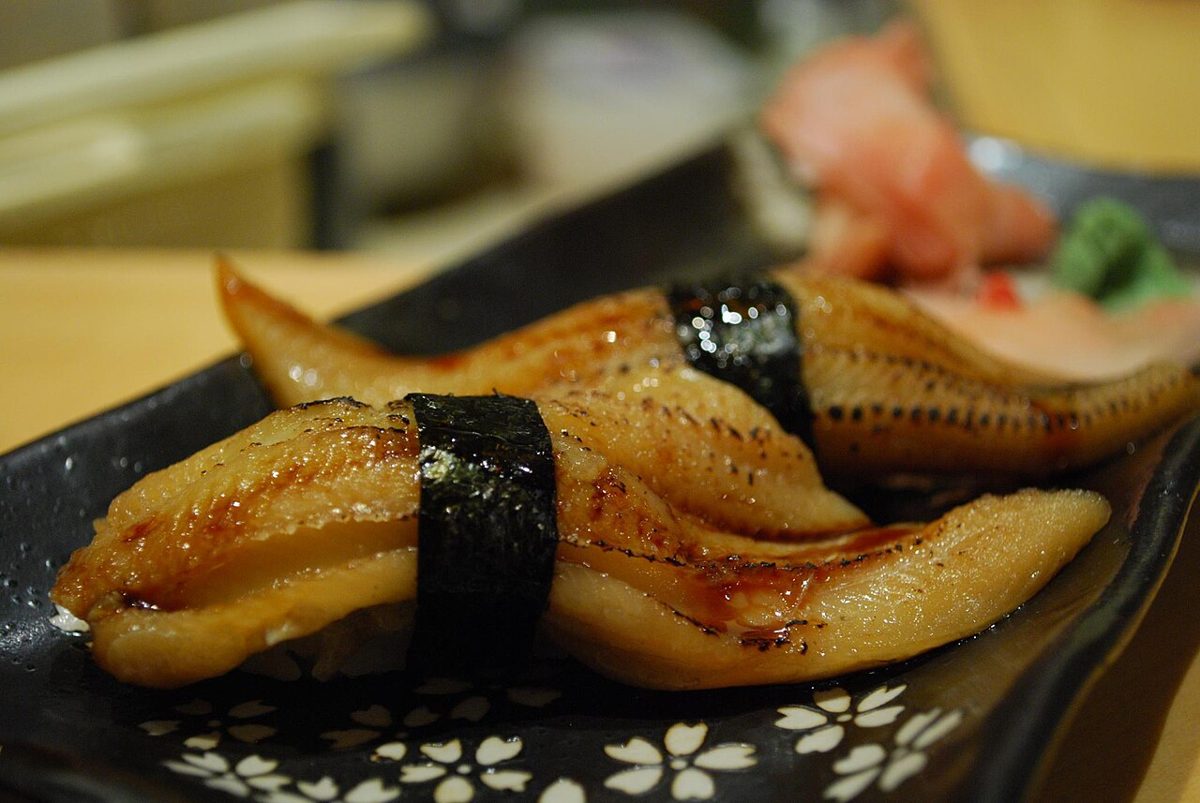
The flow is deliberate. A good chef builds from lighter white fish toward richer, fattier cuts, usually finishing with anago, a hand roll, and tamago. The counter is small — often eight to ten seats — and at the high end it’s nearly silent and intensely focused. You can usually tell the chef “I don’t eat X” before you start; most will happily adjust. Lunchtime omakase exists at many shops and costs a fraction of dinner, which is the single best hack for eating at a serious counter without the serious bill.
How to book — including Michelin sushi
The better the counter, the further ahead you book. As a rough 2026 guide: mid-range omakase in the ¥15,000–¥30,000 range wants one to three months’ notice, while the top-tier counters (¥30,000 and up, the kind that appear in the Tokyo Michelin restaurants roundup) can be three to six months out — and a few legendary rooms simply don’t take new foreign walk-ins at all. Many places take a credit-card guarantee; cancel late or no-show and you’ll usually be charged, sometimes the full course price.
- Booking platforms. Pocket Concierge (backed by American Express) and OMAKASE have full English interfaces, accept international cards, and list real availability — including waitlists for “full” restaurants. These are the easiest path for most visitors.
- Hotel concierge. A good concierge at a major hotel can sometimes land a table that looks fully booked online, because hotels hold standing relationships with restaurants. If you’re staying somewhere with a strong concierge desk, ask early.
- Phone (in Japanese). Many counters still only take phone reservations. If your Japanese isn’t up to it, your hotel can call on your behalf.
- Dress and scent. There’s rarely a formal dress code, but skip shorts, flip-flops, and — importantly — strong perfume or cologne. Heavy scent genuinely interferes with the food at a quiet counter, and it’s the one thing chefs quietly resent.
Best budget and standing sushi
Here’s the secret that makes Tokyo so good for sushi lovers on a budget: tachigui-zushi — standing sushi bars. You eat elbow-to-elbow, often standing, the fish comes straight from the same wholesalers that supply the famous counters, and a satisfying set of eight to ten pieces runs roughly ¥1,500–¥3,000. No reservation, no ceremony, no hours-long queue. Tachigui Sushi Akira is one of the best-regarded standing counters in the city — quick, precise, and far cheaper than a seated room of the same quality.
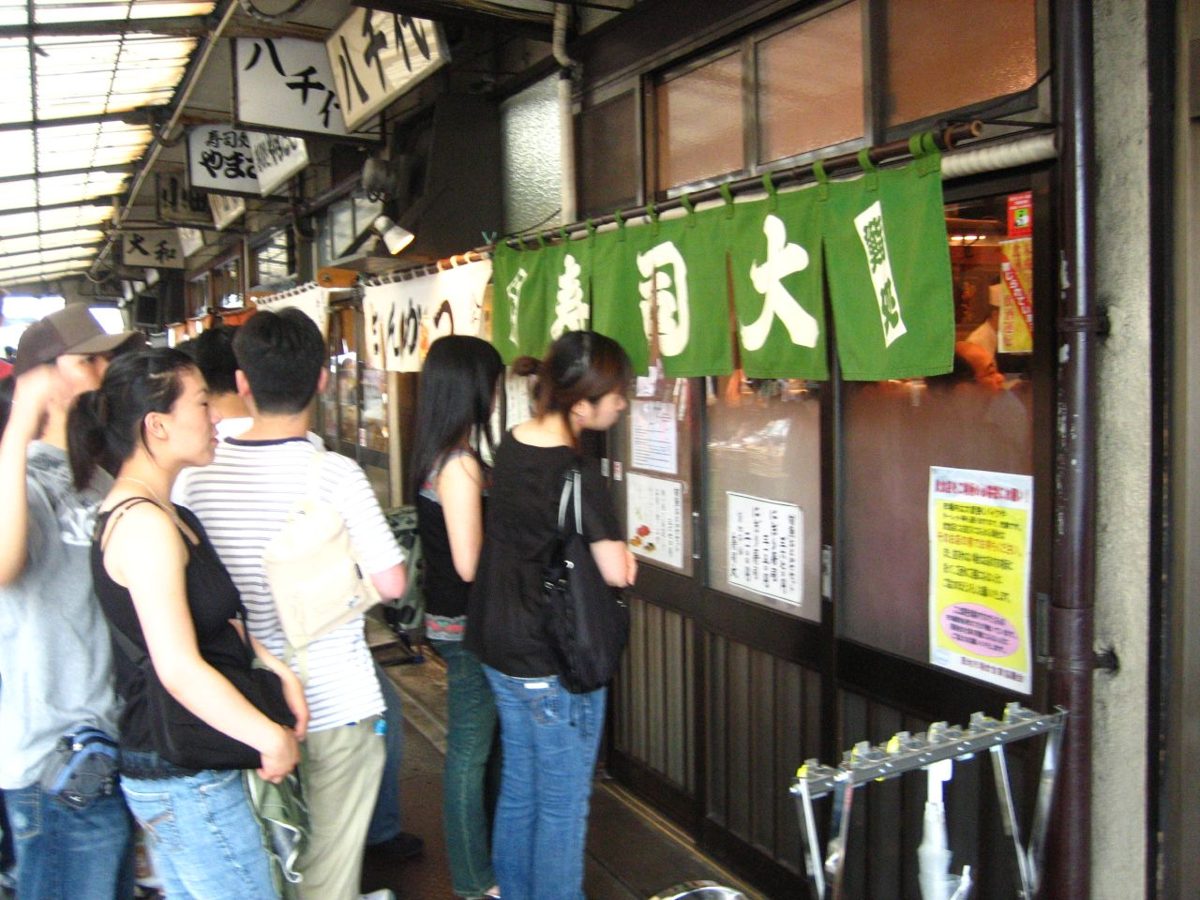
The standing counters in and around the Tsukiji and Toyosu markets are another sweet spot. Many are run by families who used to work the old inner market, and the fish quality for the price is hard to beat anywhere. A morning sushi breakfast here — eight to ten pieces for ¥2,000-odd, eaten next to chefs on their day off — is one of Tokyo’s great cheap luxuries. For a fuller picture of the markets, including what moved to Toyosu and what’s still at Tsukiji, see the dedicated market guide.
Best conveyor-belt (kaitenzushi) chains
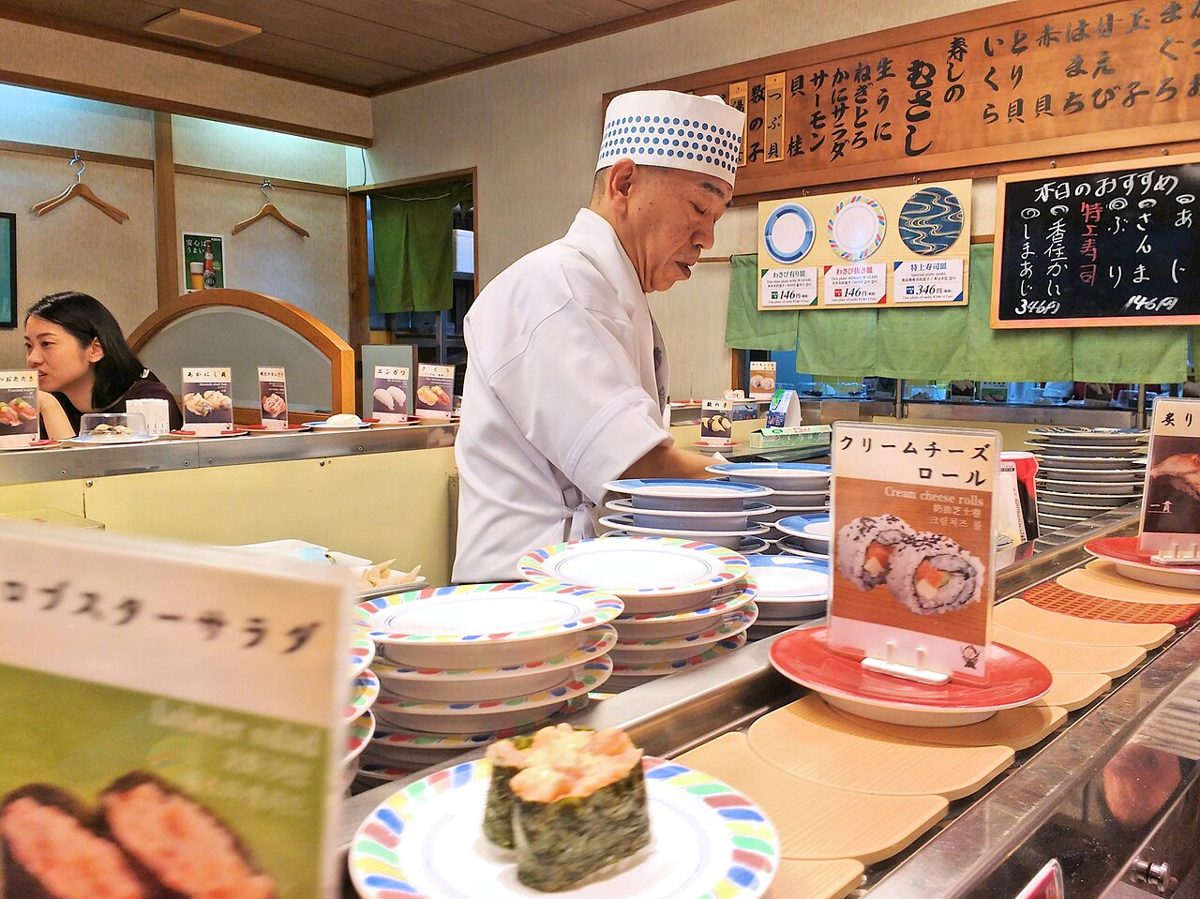
Conveyor-belt sushi — kaitenzushi — is where most visitors should start, and not as a compromise. It’s fast, cheap, fun, and you order plate by plate (or, increasingly, from a touchscreen tablet that sends your order down a separate express lane). The big chains are remarkably consistent. Standard plates run roughly ¥120–¥150 for two pieces; premium cuts like otoro, uni, and ikura climb to ¥220–¥330.
- Sushiro — Japan’s largest chain by revenue, and the quality-to-price ratio is genuinely tough to beat. Plates from around ¥120. Order from the tablet and watch it arrive on the express belt.
- Kura Sushi — plates roughly ¥115–¥220, famous for the gachapon-style prize game that drops a capsule toy when you slot in enough finished plates. A hit with kids.
- Uobei (a Genki Sushi brand, with a flagship in Shibuya) — no belt at all; you order on a screen and your plates rocket out on a track. Plates from around ¥120, and it’s one of the most foreigner-friendly setups in the city.
- Nemuro Hanamaru — a step up. The KITTE branch by Tokyo Station sources from Nemuro in Hokkaido, and you can eat very well and still keep the bill around ¥3,000. Expect a wait at peak times; it’s worth it.
- Kaiten Sushi Ginza Onodera — the luxury end of the belt. Sourcing and craft at a Ginza level, at a fraction of a seated omakase. Proof that “conveyor belt” doesn’t have to mean “cheap.”
One practical note: at kaitenzushi you’re usually billed by counting your stacked plates, colour-coded by price, so you always know roughly where your bill stands. Green tea is free — there’s a hot-water tap and matcha powder at your seat — and so is the gari.
A price-tier comparison
Roughly what you’ll pay, and what you get, across the spectrum. Prices are per person for a typical meal in 2026 and move with the season and the fish.
| Tier | Typical price | What it is | Book ahead? |
|---|---|---|---|
| Conveyor belt (kaitenzushi) | ¥1,000–¥3,000 | Plate-by-plate, ¥120+ each; tablet ordering; great for families and first-timers | No — walk in |
| Standing sushi (tachigui) | ¥1,500–¥3,000 | 8–10 pieces, market-fresh fish, no frills, eaten standing | No — walk in |
| Market sushi (Tsukiji/Toyosu) | ¥2,000–¥4,000 | Dawn-fresh breakfast counters; some famous shops at Toyosu run higher | Mostly no; queue early |
| Lunch omakase | ¥5,000–¥15,000 | A serious counter at a fraction of dinner price — the best value at the high end | Yes — days to weeks |
| Mid-range dinner omakase | ¥15,000–¥30,000 | Refined neighbourhood and Ginza counters; full Edomae sequence | Yes — 1–3 months |
| Top-tier / Michelin omakase | ¥30,000–¥50,000+ | The famous rooms; impeccable sourcing and technique; often hard to book | Yes — 3–6 months |
Best neighbourhoods for sushi
Ginza
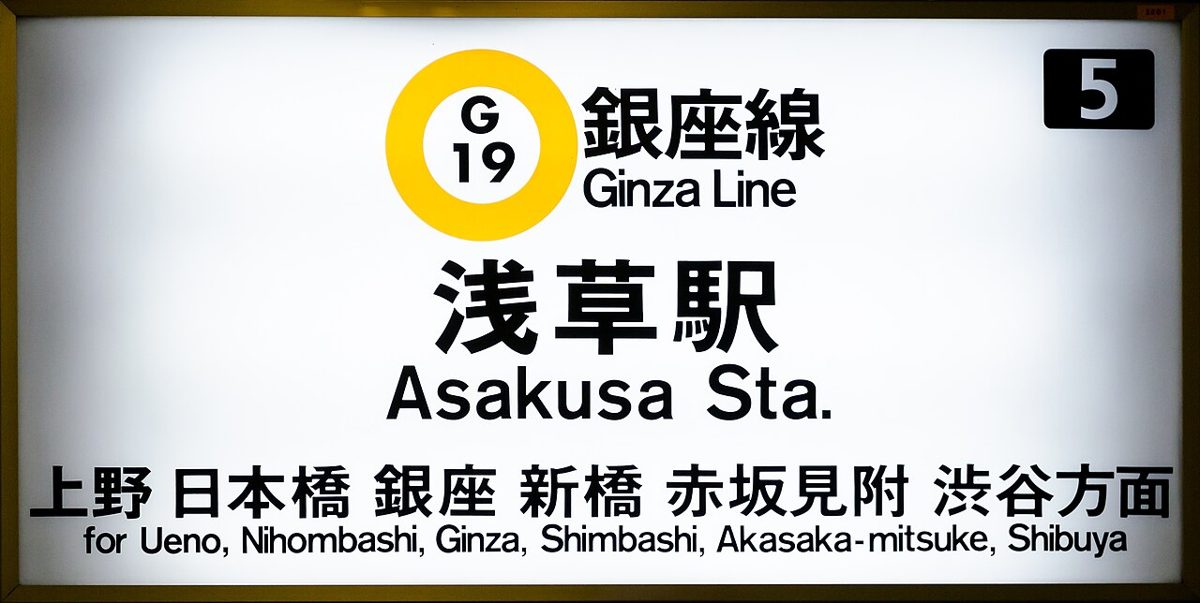
If Tokyo has a sushi capital, it’s Ginza. The greatest concentration of top counters in the world sits within a few polished blocks here — Sushi Kanesaka, Sushimasa, the Onodera group, and dozens more behind small wooden doors and down basement stairs. This is where you go for a once-in-a-lifetime omakase, but Ginza also hides accessible options: lunch sets and happy-hour counters that let you taste the neighbourhood’s standard without the four-figure bill. The nearest stations are Ginza (Marunouchi, Hibiya, Ginza lines) and Higashi-Ginza (Hibiya, Asakusa lines).
Tsukiji
Tsukiji’s outer market is still very much alive (only the wholesale auction moved away), and it’s the place for casual, market-fresh sushi and a seafood breakfast. Standing counters, kaisendon (seafood rice bowls), and sticks of golden tamagoyaki are the move here. Take the Hibiya Line to Tsukiji Station, Exit 1 — the market is a two-minute walk.
Toyosu
The modern market on the bay is where the old Tsukiji heavyweights — Sushi Dai, Daiwa Sushi, Sushi-Bun — relocated in 2018. The fish is superb and the omakase sets let the chef pick the morning’s best, but be ready for long lines at the famous names. Honestly, the lesser-queued counters here serve fish that’s just as fresh. Pair a dawn visit with the tuna auction if you’ve won the lottery.
Beyond these three, almost every Tokyo neighbourhood has a counter worth finding: Shimbashi for fast, walk-in sushi under the railway arches, Yotsuya and Akasaka for influential chef-driven rooms, Hiroo and Daikanyama for quiet, residential omakase. Sushi is only one chapter of the city’s food, of course — the same neighbourhoods reward a deep dive in our guide to Tokyo’s wider food scene, and a late-night bowl at one of the city’s best ramen shops is the natural follow-up to an early sushi breakfast.
Sushi etiquette: the rules that actually matter
Etiquette at a sushi counter is less about rigid rules and more about respecting the food and the chef’s timing. A handful of things genuinely matter; the rest is myth. Japan is relaxed about most of it, but a little care goes a long way — and it overlaps with the broader habits in our guide to Japanese manners.
- Hands or chopsticks — both are fine. Nigiri was originally finger food, and many chefs prefer you eat it by hand. Sashimi is for chopsticks. Use whichever you’re comfortable with; no one will judge you for fingers.
- Dip the fish, not the rice. Turn the nigiri on its side and touch the neta (topping) lightly to the soy sauce. Dipping the rice makes it fall apart and soak up too much salt, drowning the flavour.
- Eat it in one bite. A piece is built to be eaten whole. Biting it in half, or separating fish from rice, is considered poor form — and it falls apart anyway.
- Gari is a palate cleanser, not a topping. Eat a slice of ginger between pieces to reset your mouth. Don’t pile it on the fish. Eat it with chopsticks.
- Don’t over-soy, and don’t add wasabi at a good counter. The chef has already placed the right amount of wasabi between fish and rice. Asking for extra soy or wasabi at a serious omakase can read as second-guessing the chef.
- Eat fast. The single most useful rule. When a piece lands in front of you, eat it. Letting it sit while you chat or photograph it lets the rice cool and the nori soften.
Dining solo
Sushi might be the most solo-friendly meal in Tokyo. The counter is designed for one — you’re meant to face the chef, not a date — and a single diner is the easiest reservation to land at a busy omakase. Standing bars and kaitenzushi are built for solo eating too; you’ll often see businesspeople grabbing eight pieces alone on the way home. If you’re nervous about the high end on your own, book a lunch omakase: it’s cheaper, lighter, and the daytime atmosphere is more forgiving for a first counter experience. Traveling Tokyo on a tighter budget overall? Our Tokyo budget travel guide pairs well with the cheaper tiers above.
Mistakes to avoid
- Assuming pricey equals better for you. A ¥40,000 omakase is sublime, but a ¥2,500 standing counter or a good kaitenzushi will still hand you excellent fish. Match the tier to your trip, not your ego.
- Skipping lunch omakase. The same chefs, the same fish, often half the price. It’s the most overlooked value in Tokyo sushi.
- Showing up to a famous Toyosu counter at 9 a.m. expecting a short wait. Either queue before dawn or pick a quieter shop nearby.
- Drowning everything in soy and wasabi. It flattens the very differences you’re paying to taste.
- No-showing a reserved counter. Small rooms live or die by their seats; you’ll be charged, and rightly so.
What a typical omakase sequence looks like
If you have never sat through one, here is roughly how a Tokyo omakase unfolds, so the rhythm feels familiar rather than intimidating. It is not rigid — every chef has their own order — but the arc is remarkably consistent across the city.
- Tsumami first. Many counters open with a few small cooked or marinated bites — simmered octopus, a sliver of seasonal sashimi, monkfish liver in winter — before any nigiri appears.
- Lean white fish. The nigiri usually begins light: flounder (hirame), sea bream (tai), or squid, where you taste the rice and the knife work more than the fat.
- Silver-skinned and shellfish. Gizzard shad (kohada, the classic Edomae test piece), horse mackerel (aji), and shellfish like akagai bring acidity and bite.
- The tuna run. Lean maguro, then chutoro, then otoro — the belly cuts that melt. This is often the emotional centre of the meal.
- Warm and rich. A piece of grilled anago (sea eel) brushed with sweet glaze, sometimes uni or ikura gunkan, building toward the finish.
- The closers. A hand roll (often toro or negitoro), a bowl of miso soup, and a final slab of tamago. The tamago is a chef’s calling card.
The whole sequence runs 60 to 90 minutes at a counter, longer if there are cooked courses. A tip that helps first-timers relax: you are not expected to talk much, and there is no need to compliment every piece. Eat promptly, say “oishii” (delicious) when you mean it, and let the chef set the pace.
Sushi by season: what to order when
Edomae sushi follows the calendar more closely than almost any other cuisine, because the chef builds the meal around what Tokyo Bay and Japan’s coasts are giving up that month. You do not need to memorise this, but knowing the rough seasons helps you order well and spot when a counter is genuinely sourcing with care.
| Season | At its best |
|---|---|
| Spring (Mar–May) | Sea bream (tai), clams (hamaguri), firefly squid, sayori (halfbeak) |
| Summer (Jun–Aug) | Horse mackerel (aji), sea urchin (uni) from Hokkaido, conger eel (anago), abalone |
| Autumn (Sep–Nov) | Gizzard shad (kohada), mackerel (saba), salmon roe (ikura), Pacific saury (sanma) |
| Winter (Dec–Feb) | Fatty tuna (otoro) at its peak, yellowtail (buri), monkfish liver (ankimo), scallop |
Winter is the connoisseur’s season — cold water fattens the tuna and yellowtail — but every month has its stars. If a chef offers you something you have never heard of, say yes. The seasonal one-off is usually the best piece of the night.
First-timers, kids, and dietary needs
You do not have to love raw fish to enjoy sushi in Tokyo. Conveyor-belt chains are a gift here: they carry cooked options — grilled salmon, shrimp tempura, tamago, chicken karaage, even hamburger nigiri at some chains — alongside the raw plates, so a mixed group or a nervous first-timer can graze happily. Kura Sushi’s prize game and Uobei’s order-by-screen track make them genuinely fun for children.
Allergies and restrictions are workable with a little preparation. Soy and wheat are everywhere (soy sauce contains both), so coeliacs should carry a translation card and ask before dipping. Vegetarians can do surprisingly well with kappa (cucumber) maki, inari (sweet tofu pouch), tamago, natto rolls, and avocado; tell a kaitenzushi tablet to filter, or ask an omakase chef in advance and most will build a partly vegetarian course. For deeper city-wide food planning across every cuisine and budget, the full Tokyo dining rundown is the place to start.
Paying, tipping, and other practicalities
- No tipping. Japan does not tip. Not at a conveyor belt, not at a ¥50,000 omakase. Trying to leave extra cash can cause genuine confusion. The price is the price.
- Cash still matters. Big chains take cards and IC cards (Suica/Pasmo), but some small counters and market stalls are cash-only. Carry yen, especially at Tsukiji and the older standing bars.
- Service charge. High-end counters may add a service charge (and occasionally a seat charge, otoshi); it is disclosed and replaces any notion of a tip.
- Reservations and deposits. Expect a card guarantee at the top tier, and treat the booking like a theatre ticket — cancel with notice or pay.
- Timing your trip. Markets and many lunch counters are morning affairs; omakase is an evening event. Build a sushi day around that rhythm.
One more money note: if the high end is the dream but the budget is tight, the move is a weekday lunch at a respected counter, paired with cheap, brilliant eating the rest of the trip. Our Tokyo budget travel guide shows how to keep the rest of your days affordable so the splurge meal lands guilt-free.
If you have already had your big sushi meal, tempura is the natural second counter experience in Tokyo. The format is similar, with the chef serving each piece straight from the oil, but good lunch sets at places like Tsunahachi in Shinjuku start from around ¥1,500. Our guide to the best tempura in Tokyo covers every budget.
Frequently Asked Questions
How much does good sushi cost in Tokyo?
Almost any budget works. Conveyor-belt sushi starts around ¥120 a plate and a full meal lands at ¥1,000–¥3,000. Standing and market counters run ¥1,500–¥4,000 for eight to ten excellent pieces. Lunch omakase is ¥5,000–¥15,000, mid-range dinner omakase ¥15,000–¥30,000, and the top Michelin counters ¥30,000–¥50,000 and beyond.
Do you eat sushi with your hands or chopsticks?
Both are acceptable. Nigiri was originally finger food and many chefs prefer you eat it by hand; sashimi is eaten with chopsticks. Whatever you use, dip the fish side — not the rice — lightly into soy sauce, and eat each piece in one bite while the rice is still warm.
How far in advance do I need to book omakase?
It depends on the tier. Mid-range omakase (¥15,000–¥30,000) usually wants one to three months’ notice; top-tier and Michelin counters can be three to six months out. Use English-friendly platforms like Pocket Concierge or OMAKASE, or ask a hotel concierge. Lunch sittings are easier to book and far cheaper.
What’s the best budget sushi in Tokyo?
For value, head to a standing sushi bar (tachigui-zushi) or a market counter near Tsukiji or Toyosu, where eight to ten pieces of market-fresh fish cost ¥1,500–¥3,000. For the cheapest fun, conveyor-belt chains like Sushiro, Kura Sushi, and Uobei serve solid nigiri from about ¥120 a plate.
Is conveyor-belt sushi actually good?
Yes — Japan’s big kaitenzushi chains are consistent and genuinely tasty, and a step-up spot like Nemuro Hanamaru or Ginza Onodera’s belt restaurant rivals far pricier counters. It’s the easiest, most foreigner-friendly way to eat sushi in Tokyo, with tablet ordering and clear per-plate pricing.
Photo Credits
- Hero image — Photo: Tim Reckmann from Hamm, Deutschland / CC BY 2.0 via Wikimedia Commons
- Conveyor belt sushi image — Photo: Marek Ślusarczyk (Tupungato) Photo portfolio / CC BY 3.0 via Wikimedia Commons
- Omakase counter image — Photo: Alpha from Melbourne, Australia / CC BY-SA 2.0 via Wikimedia Commons
- Tsukiji sushi image — Photo: wondercast from Tsukiji fish market in Tsukiji, Chuo, Tokyo / CC BY-SA 2.0 via Wikimedia Commons
- Ginza image — Photo: DXR / CC BY-SA 3.0 via Wikimedia Commons