Tokyo Events & Festivals · Guide №124
Halloween in Tokyo: Where to Actually Go Now Shibuya Is Closed
Shibuya bans street drinking and closes its roads on 31 October. Here is where Tokyo's Halloween actually happens now, with 2026 dates, costs and rules.

目次 — Contents
This article contains advertising. Our booking links are routed through a partner that adds commission tracking automatically, so if you book through one we earn a commission from the provider, at no extra cost to you. It never affects what we recommend. Affiliate disclosure
Halloween in Tokyo is still one of the biggest costume events on earth — it has simply moved. Shibuya, the crossing everyone has seen the videos of, now bans street drinking, bans loitering in costume and closes its roads on the night. The party did not die. It relocated to Ikebukuro, to the theme parks, and to a few hundred bars that were always better anyway.
This guide covers where to actually go on 31 October 2026 (a Saturday, which makes the whole weekend busier than usual), what the Shibuya rules mean in practice, how costume logistics work in a city where you cannot change in a doorway, and which of it is worth building an evening around.
What happened to Shibuya
For roughly fifteen years, tens of thousands of people converged on Shibuya Scramble on Halloween night with no organiser, no permit and no plan. It produced genuinely dangerous crowd density, a flipped light truck in 2018, and — after the Itaewon crush in Seoul in 2022 — a serious institutional rethink.
Shibuya Ward’s response has been blunt. Drinking on the street around the station is prohibited, as is smoking and hanging around in costume. Convenience stores and liquor shops in the zone stop selling alcohol for the period. Roads near the station close from the afternoon of 31 October until the morning of 1 November, with barriers, one-way pedestrian flows and a large police presence including the loudspeaker officers (“DJ Police”) who marshal the crossing. The ward has spent several years running campaigns whose message is, more or less, please do not come.
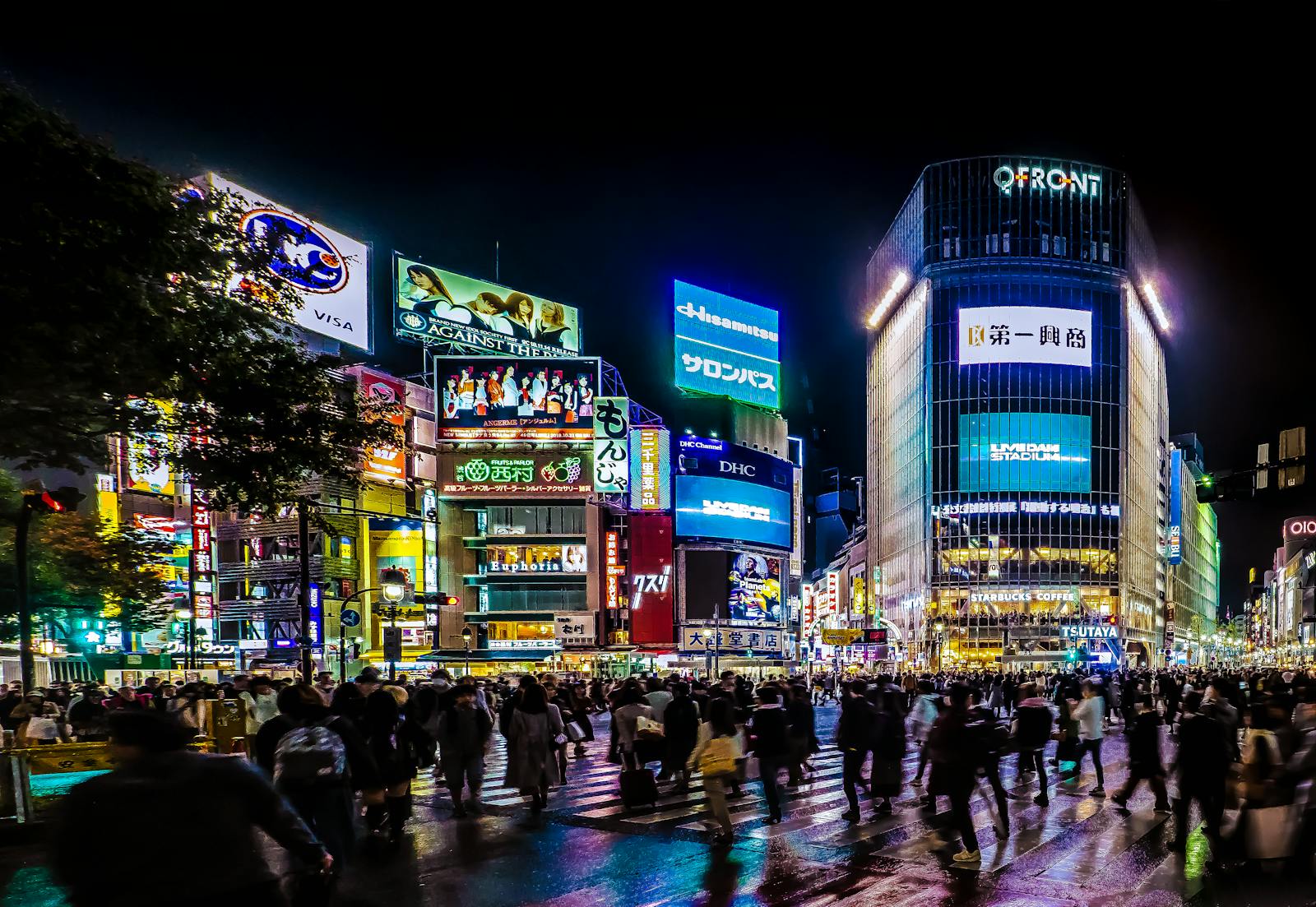
If you turn up anyway, here is what you get: a slow shuffle behind barriers, nowhere to stand still, no alcohol available locally, and officers moving you along if you stop for a photo. It is not dangerous and it is not hostile — it is just an extremely boring version of what you came for. Go on any other evening and Shibuya is one of the best nights out in the city. On 31 October it is a crowd-control exercise.
Where to actually go
| Event | When in 2026 | Cost | Best for |
|---|---|---|---|
| Ikebukuro Halloween Cosplay Festival | 30 Oct – 1 Nov | Free to watch; registration fee to cosplay | Serious costumes, photography |
| Harajuku Omotesando pumpkin parade | Late October, daytime | Free | Families with small children |
| Tokyo Disney Resort Halloween | Early Sept – 31 Oct | Adult passport from ¥8,900 | Full-costume days, decorations, parades |
| Sanrio Puroland Halloween | Through October | ~¥3,600–4,900 | Indoors, wet weather, younger kids |
| Club nights, Shibuya and Roppongi | 30–31 Oct | ¥3,000–5,000 door | Adults who want an actual party |
| Shibuya Scramble | 31 Oct | Free | Nobody, this year |
Ikebukuro Halloween Cosplay Festival — the real one
This is where the cosplay community went, and it is a far better event than Shibuya ever was. In 2026 it runs Friday 30 October, Saturday 31 October and Sunday 1 November, centred on Ikebukuro Nishiguchi Park, Sunshine City and the surrounding streets. The main parade of costumed participants moves along Sunshine 60 Street and Animate Street on the Saturday.

The thing that makes it work is structure. Cosplayers register in advance through the ticketing system, wear a visible pass, and get access to paid changing rooms — the perennial problem with costume events in Japan, where changing in a public toilet or on the street is genuinely frowned upon. Photography happens in designated areas and by asking. Nobody is drunk in the road.
Watching costs nothing. You can walk the whole area, and the streets around Ikebukuro station are lined with anime retail that leans into the weekend hard. If you want to participate rather than spectate, book the registration well in advance — it sells out, and turning up in costume without a pass puts you in an awkward position.
The Harajuku pumpkin parade — for children
The Omotesando Hello Halloween Pumpkin Parade closes Omotesando to traffic in late October for roughly a thousand costumed children, who walk the avenue collecting sweets from participating shops. It is a daytime event, it is free to watch, and participation is by lottery in advance and heavily oversubscribed by local families.
If you have small children and were dreading the idea of taking them anywhere near Shibuya on the 31st, this is your answer — with the caveat that the date is usually a weekend in the second half of October rather than Halloween itself, so check before booking around it. Either way, Harajuku in costume season is worth a wander regardless of whether the parade is on.

Tokyo Disney Resort — the only place you can wear a full costume all day
Disney’s Halloween season runs from early September to 31 October, and for most of it the parks allow full-costume entry for adults — the only large venue in Tokyo where dressing head to toe as a character is not just tolerated but expected. Rules apply: the costume must be a Disney character, faces must stay recognisable, no props that could hurt anyone, and you change in the designated areas rather than arriving in costume on the train.
Adult 1-Day Passports start at ¥8,900 and vary by date, so check the resort’s calendar for your day. Weekends in late October are among the busiest days of the entire year, so if you have flexibility, go midweek in early October when the decorations are already up and the queues are half the length. Our Tokyo Disney guide covers the ticketing and the Fantasy Springs access rules, which changed for 2026.

Universal Studios Japan runs a bigger and considerably more frightening Halloween Horror Nights — but that is in Osaka, two and a half hours away by shinkansen, and it is a trip in its own right rather than a Tokyo evening.
Sanrio Puroland — indoors, and the weather is a real factor
Late October rain is common enough that an indoor option matters. Puroland in Tama runs a Halloween season with themed shows and decoration, it is entirely under a roof, and it suits younger children far better than a theme-park queue in the dark. Tickets run roughly ¥3,600 to ¥4,900 by date. See the Sanrio Puroland guide for what is worth queuing for inside.
Club nights and bars
The adult version of Halloween in Tokyo has always been in venues rather than on the street, and 30 and 31 October are among the biggest club dates of the year. Womb in Shibuya’s Maruyamacho runs a Halloween event most years; Roppongi’s larger clubs do costume nights with reduced entry for anyone dressed up. Door prices typically land between ¥3,000 and ¥5,000, usually including a drink.
Two practical notes. First, listings change constantly and venues in Tokyo close with little warning, so check Resident Advisor or the venue’s own site in the week before rather than trusting a guide written months ahead — ours included. Our Tokyo nightclubs guide covers the scene properly. Second, the trains stop. Last services run around 00:30 and there is no all-night operation, so either commit to staying out until 05:00 or plan the exit; taxis on Halloween night are expensive and slow, and the Tokyo taxi guide explains what you will actually pay.
Haunted houses and the smaller stuff
- Hanayashiki, Asakusa — Japan’s oldest amusement park has a permanent obake yashiki haunted house, and it runs a Halloween overlay. Cheap, small, genuinely old-fashioned.
- Tokyo Dome City — seasonal attractions and decoration, easy to combine with an evening in Suidobashi.
- Shotengai decorations — the local shopping streets do Halloween on their own quiet terms, with wire pumpkins on the lampposts and shop staff in cat ears. It is the most Japanese version of the holiday and nobody writes about it.

How Halloween actually works in Japan
Worth understanding before you plan around it, because the assumptions travel badly.
- It is not a children’s holiday. Trick-or-treating barely exists outside organised events and international-school neighbourhoods. Knocking on doors would alarm people.
- It is a costume and retail event. Shops decorate from early September; Halloween-flavoured everything appears in convenience stores; the actual observance for most people is a photo in costume and a themed drink.
- The costumes are good. Japan has the deepest cosplay culture in the world, and the standard at Ikebukuro is closer to a film set than a fancy-dress party.
- 1 November is dead. Decorations come down overnight and Christmas goes up within days. There is no lingering.
The food, which is half the point
Japan does seasonal limited editions better than anywhere, and Halloween is one of the three big retail seasons alongside sakura and Christmas. From mid-September, convenience stores fill a shelf with purple sweet potato and pumpkin versions of everything — Kit Kats, pudding, chuhai, Baumkuchen, an alarming quantity of Mont Blanc. Starbucks Japan runs a Halloween frappuccino that sells out in the afternoons. Department store basements go further: the depachika floors at Isetan Shinjuku and Tokyu Food Show in Shibuya put out genuinely good seasonal patisserie at ¥600 to ¥900 a piece.
None of this is a tourist trap and all of it disappears on 1 November, which is exactly why it is worth eating. Buying a bag of Halloween konbini snacks for ¥1,500 and eating them in a park is a more accurate experience of the Japanese holiday than anything happening on a closed road in Shibuya.
Where else the costumes show up
Beyond the organised events, three areas reliably carry a Halloween crowd on the night itself without the Shibuya restrictions:
- Roppongi — the international bar district, where costume nights have run for decades and the door staff are used to visitors. Busy but not managed; expect queues at the bigger venues after 22:00. See our Roppongi guide.
- Shinjuku Golden Gai and Kabukicho — small bars, some of which do costume nights and a lot of which do not. The charm is that nobody is performing for a camera. Golden Gai has a seat charge of ¥500 to ¥1,500 per bar, so budget accordingly.
- Akihabara — quieter than you would expect, but the specialist shops run Halloween window displays and the arcades get a costumed weekend crowd. Combine it with the Akihabara shops in daylight and move on.
Costume logistics
The awkward practical problem: you cannot easily change. Japanese venues take a dim view of costumes in public transport and there is a strong norm against changing in restaurant or station toilets. Your options are the paid changing rooms at organised events, a hotel room, or wearing something that reads as normal clothing until you add one element.
For buying, Don Quijote devotes serious floor space to costumes from early September and stays open late — the Shibuya and Shinjuku branches are the biggest. For anything anime-specific, the Ikebukuro and Akihabara stores in our Tokyo anime shopping guide stock proper character wigs and accessories rather than generic party gear. Coin lockers cost ¥400 to ¥1,000 a day and fill by mid-morning on event days.
What the rules actually say
| Rule | Where | What happens |
|---|---|---|
| No street drinking | Shibuya station area | Enforced by police; local shops stop selling alcohol |
| No loitering in costume | Shibuya station area | You are moved along; no fine for a first ask |
| Road closures | Around Shibuya Scramble | Afternoon 31 Oct to morning 1 Nov |
| Costume entry restrictions | Tokyo Disney Resort | Disney characters only, designated changing areas |
| Photography consent | Everywhere | Ask before photographing a cosplayer; it is expected |
None of this is aimed at foreign visitors specifically, and none of it will get you into trouble if you behave the way you would at home. The one thing that reliably annoys people is photographing cosplayers without asking, which in Japan is a real breach rather than a minor one. The broader ground rules are in our Japanese etiquette guide.
A plan for Halloween weekend 2026
31 October falls on a Saturday in 2026, which means the whole weekend is busy and hotels in central Tokyo will be tight. Book accommodation well ahead — the where to stay guide has the neighbourhood trade-offs, and Ikebukuro is both cheaper and, this particular weekend, better placed than Shibuya.
- Friday 30 Oct: Ikebukuro in the evening for the first day of the cosplay festival, when it is busy but not overwhelming. Dinner in the east-side backstreets.
- Saturday 31 Oct, daytime: Ikebukuro again for the main parade, or Disney if you booked it months ago. Avoid Shibuya entirely.
- Saturday 31 Oct, evening: a club night, a costume-friendly bar in Shinjuku or Roppongi, or — the underrated option — an ordinary izakaya in a residential neighbourhood, where a handful of people will be in costume and everyone is having a better time than the crowd behind the Shibuya barriers.
- Sunday 1 Nov: the last day of the festival, and the calmest. Everything else has already switched to Christmas.
For what else is happening across the month, our guide to Tokyo in October covers the weather, the crowds and the festivals that are genuinely worth planning around, several of which are better than Halloween.
Is it worth planning a trip around?
Honestly, no — and this is the part most guides will not say. Halloween in Tokyo is a great thing to be present for if your dates already overlap. It is not a reason to choose late October over mid-October, when the weather is better, the hotels are cheaper, and Oeshiki and the Kawagoe float festival are both running.
Where it does justify itself: if you cosplay seriously, the Ikebukuro festival is one of the best-run costume events anywhere and is worth structuring a trip around. If you have children who would love a parade, the Harajuku event and Disney are both excellent. And if you simply want a big night out, the clubs deliver.
What is definitively not worth it is the thing most people still come for. The Shibuya Halloween of the internet videos ended, deliberately, and the ward is not bringing it back. Plan for the city as it is now and you will have a much better night. The Tokyo events and festivals calendar covers what replaces it through the rest of the year.
Frequently Asked Questions
Is Halloween still celebrated in Shibuya?
Not in any form worth travelling for. Shibuya Ward bans street drinking, smoking and loitering in costume around the station, local shops stop selling alcohol, and roads close from the afternoon of 31 October to the morning of 1 November. Police manage the crossing in one direction at a time. The costume crowd has moved to Ikebukuro and to indoor venues.
Where do people celebrate Halloween in Tokyo now?
The Ikebukuro Halloween Cosplay Festival is the main street event, running 30 October to 1 November in 2026 around Nishiguchi Park and Sunshine City. Tokyo Disney Resort runs a full Halloween season with costume entry, Sanrio Puroland has an indoor version for younger children, the Harajuku Omotesando pumpkin parade covers families, and clubs in Shibuya and Roppongi run costume nights on the 30th and 31st.
Can you wear a costume on the Tokyo subway?
You can, but it is not the norm and full costume with props or heavy makeup will draw uncomfortable attention. Most people travel in normal clothes and change at the venue. Organised events like the Ikebukuro festival sell access to changing rooms precisely because changing in station or restaurant toilets is considered bad form.
Do Japanese children go trick-or-treating?
Almost never in the door-to-door sense. Halloween in Japan is an adult costume and retail event rather than a children’s holiday. Where children take part, it is through organised events such as the Omotesando pumpkin parade, shopping-street sweet trails, or international-school neighbourhoods.
When do Halloween decorations go up in Tokyo?
Early September, immediately after the summer goods clear out. Convenience stores, department stores and shopping streets all switch over at once, and Tokyo Disney Resort starts its Halloween season at the same time. Everything comes down on 1 November and is replaced by Christmas within days.
Photo Credits
- Cosplayers at the Ikebukuro Halloween Cosplay Festival – Ikebukuro Halloween Cosplay Festival 2022 (52617100600) by Dick Thomas Johnson from Tokyo, Japan, CC BY 2.0, via Wikimedia Commons.
- Halloween decoration on a Tokyo shopping street – Halloween decorations Tokyo Japan oct 15 2017 by nesnad, CC BY 3.0, via Wikimedia Commons.